Wednesday, June 17, 2026
Home Blog Page 982

Fauci warns: Don’t party on New Years’ Eve, but House candidate Jamie Allard fundraiser shaping to be party of the year

President Joe Biden’s infectious disease adviser Dr. Anthony Fauci told CNN views on Monday that they should cancel plans for their New Year’s Eve parties due to the highly infectious Omicron variant of the Covid-19 virus, unless they can verify that everyone at their party has been vaccinated and boosted for Covid-19.

The coronavirus has been raging around the world for two years, killing millions and upending the lives of survivors and even those who have remained free from its direct effects, but suffered policy, economic, emotional, and other hardships.

There’s no reason to celebrate if your party plans include any unvaccinated persons, Fauci said.

“I would stay away from that,” Fauci said, in response to a question on the “New Day” show. “I have been telling people consistently that if you’re vaccinated and boosted and you have a family setting, in the home with family and relatives,” it’s OK to gather. “But when you’re talking about a New Year’s Eve party … [where you] have 30, 40, 50 people celebrating, you do not know the status of their vaccination. I would recommend strongly stay away from that this year.”

Candidate Jamie Allard, running for District 22 Eagle River, said there’s much to celebrate and she’s hosting a New Year’s Eve party and fundraiser for her campaign at the Marriott. There will definitely be more than the Fauci-50 attending.

In fact, there may be hundreds. People from Kenai, Fairbanks, and all over Alaska are coming, she said.

“They’re excited and donations are pouring in, and I’m having to open up the other half of the ballroom, so we’ll have the entire floor,” she said.

Allard announced her candidacy for House at the beginning of the month and held a fundraiser at the Petroleum Club; it was attended by more than 180 people.

“In Dr. Fauci’s world, we would not have our campaign fundraisers, we would not be electing conservatives, and we would not be taking back our lives,” said Allard, who is a conservative member of the Anchorage Assembly representing Eagle River and Chugiak.

For her fundraiser at the Marriott Hotel, she reserved a block of rooms (“Allard for Alaska” discounted rooms) for people to rent for the night, and “they are already sold out,” Allard said.

“Let’s celebrate life while we are living it,” Allard said. “There’s no better way than New Year’s Eve.”

Tshibaka: 2021 proved Murkowski has abandoned Alaska

By KELLY TSHIBAKA 

As we enter 2022, it’s time to examine the record of Alaska’s senior senator, Lisa Murkowski, over the last year. After strongly opposing the election of President Donald Trump and helping Joe Biden take power, Murkowski immediately set about enabling Biden’s radical agenda. 

On his first day in office, Biden blocked energy exploration in ANWR, and then nominated Deb Haaland, known as a radical environmentalist, for Interior Secretary. Even though Murkowski expressed concerns that Haaland would be harmful to Alaska, she cast the deciding vote in committee to confirm her. Except for Murkowski, Haaland never would have become Interior Secretary.

When a federal judge blocked Alaska’s massive Willow oil and gas project, Haaland refused to appeal the decision. Haaland also obstructed a federal court ruling that would re-open ANWR by claiming her Department needed to redo an environmental survey. These foreseeable Haaland decisions have cost Alaska billions of dollars and thousands of jobs, all of which reflect Murkowski’s commitment to her constituency of one—Joe Biden—rather than all the Alaskans she was elected to represent.

But Haaland’s assault on Alaska is about more than just energy.

She is pushing to close off 60 million additional acres of federal public lands to hunting next year, and she has refused to honor multiple US Supreme Court decisions that upheld Alaska’s right to manage its navigable waters. To enforce our rights, the State is expending significant resources battling the radical-environmentalist chief lawyer at the Department of Interior. Guess who cast the tiebreaking vote for his confirmation? Lisa Murkowski.

Murkowski also has helped confirm other nominees who have sabotaged our right to manage our resources, like the Secretary of Agriculture who is reinstituting the “roadless rule,” which means Alaska will no longer have access to the Tongass National Forest for tourism and timber production. This is another Murkowski vote that killed countless Alaskan jobs and favored Biden over Alaskans.

Murkowski also was the only Republican – and the tie-breaking vote – to confirm Vanita Gupta, an anti-police activist who has testified in support of defunding police departments. As a top Justice Department official now, Gupta oversees federal grants to local police departments. Given our high domestic abuse, crime, and sexual assault rates, this Murkowski vote was a direct shot at our public safety victims.

Murkowski broke from Republicans at least twelve times to confirm radical Biden nominees. And she did nothing to take a stand against Biden’s unconstitutional vaccine mandates.

Undaunted, Murkowski brags about writing Biden’s “infrastructure bill,” which really is just the Green New Deal. It punishes carbon production through heavy fines – another dagger aimed at Alaska’s heart.

What’s more, under the bill, Alaska must apply, compete, be selected to receive infrastructure dollars, and then secure the same permits and environmental surveys we have been unable to get from the Biden administration thus far! In some cases, we must create more state government offices before we can even qualify. Murkowski pretends this bait-and-switch bill is good for us, but she adamantly opposed Trump, who proposed an infrastructure bill that did not include the Green New Deal.

Murkowski’s record this year is consistent with her past. In 2011, Murkowski gushed about confirming the appointment of U.S. District Court Judge Sharon Gleason because she was a woman and nice to people in court. Gleason’s record as a non-constitutionalist, environmental activist didn’t matter to Murkowski. Gleason predictably has 1) killed the Willow oil project, 2) canceled the life-saving road to King Cove, and 3) ruled that federal agencies, not the state, have game management authority in Alaska.

Finally, during Murkowski’s time in office and on the Senate Appropriations Committee, the national debt has exploded from $6 Trillion to $30 Trillion. Murkowski was one of the few Republicans who voted to allow Democrats to increase the debt ceiling this year.

It’s little wonder that in a recent campaign finance report, only three percent of Murkowski’s donors were Alaskans. She spends her time in the Senate cultivating her political allegiances to Biden and other D.C. insiders. Her votes show that she cares more about her popularity in D.C. than she does about the people in Alaska.

There’s also no mystery why the Alaska Republican Party has censured her and prohibited her from identifying as a Republican. She has abandoned Alaska values to represent Biden and enable his radical agenda.

I have been endorsed by the Alaska GOP and by President Trump. When I’m your U.S. senator, I will represent the people of Alaska—not Biden and the DC insiders.

Kelly Tshibaka is a Republican candidate for U.S. Senate in Alaska

Michael Tavoliero: Time to move legislative sessions to Southcentral Alaska

By MICHAEL TAVOLIERO

A recent Juneau rental ad boasted a two-bedroom, one-bath apartment with high-end furnishing for $3,200 a month starting Jan. 1, 2022, through May 31, 2022.

Juneau rental owners know they have a captive audience and they’re working to get and keep top dollar. 

The unreasonable reasoning and the unreal reality of a legislative session in Juneau is affecting both Republican and Democrat legislators’ wallets, stress levels, and blood pressure. 

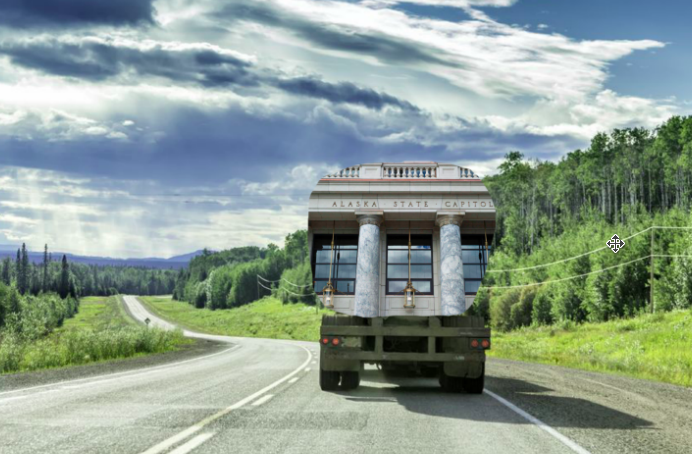
There are a couple of simple solutions to this problem: Either raise salaries and per diem or move the legislative session to Southcentral Alaska. 

The first solution is being considered by the State Officers Compensation Commission on Jan. 4.  The second is not being considered.

In 2021, a House bill was filed to move the legislative session to Southcentral Alaska, but it died in the House Finance Committee.

This has also prompted legislators to comment to the commission, which is currently considering ideas that will affect legislator salaries and per diem.

This financial dilemma is wrapped in irony because it is hurting both sides of the aisle.

For the most part, legislators’ comments have been that salaries and per diem are too low and need to be raised. When looking at the costs of moving yourself and any family to Juneau, this concern is legitimate. Historically, legislators have had to deal with Juneau’s rental market uncertainty, which can be costly.

The current salary for a state legislator is $50,400, with what appears to be excessive per diem under the rules that apply. Over the course of a regular 120-day session, this salary breaks down to $12,600, without per diem allowances.

This is also higher than the national average for legislators of $34,000. 

The SOCC’s preliminary proposal is a salary of $74,500 and an annual expense cap of $5,000 per year.  That is almost a 150% salary increase.

Under a 120-day session, this translated into $18,625 a month. Per diem would be spread over the session at $41.67 a day. 

That’s a total compensation of $79,500 per year, which is significantly higher than the average total compensation for legislative members nationally. The median income of most Alaskans in 2019 dollars is $36,787 a year. 

One legislator commented on the proposed changes, “Remember, not all special sessions are avoidable and many of them serve a much needed purpose, even if they tend to drag on.”

Seems like a reasonable point, but how can this be backed up?

The 2020 legislative session passed an operating budget. But when given the opportunity during the onset of Covid-19, Alaska’s greatest economic debacle, the Legislature did not help their constituents. The balances of the people’s 2016, 2017, 2018, 2019 and 2020 PFD’s, which was amended into the operating budget, were voted down by the majority of the 2019/2020 state legislature. 

Covid-19 obliterated much of the small business private sector, destroyed our education capacities, and overburdened our health care system. 

The 2021 legislative session had a regular session from January 19 – May 19, then 4 special sessions at the governor’s call: May 20 through June 18,  June 23 through June 28,  Aug. 16 through Sept. 14. Oct. 4 through Nov. 2. Except for the operating budget, not much was done, especially dealing with what is owed under the PFD, which never happened.

According to the Alaska Department of Revenue, the 2021 Legislature’s salary cost of $3,025,420 and $2,575,616 in per diem expenses provided an average of $93,350 per legislator.

For legislators whose permanent residence is not in Juneau, they receive up to $293 a day and no per diem. Legislators who must move to and from Juneau for regular session are entitled to be reimbursed for relocation expenses, in addition to per diem.

Some legislators believe their salaries need to be comparable with state employee salaries.

The average employee salary for the State of Alaska in 2019 was $66,963. There were 16,090 employee records in 2019 for Alaska — one state employee for every 45 Alaskans.

The average 2021 department commissioner salary was $145,000.

What other options are out there?

Like the Percent of Market Value for the Alaska Permanent Fund (the political football that effectively destroyed the simple manageable operation of issuing Permanent Fund dividends), the state Legislature has operated in the far and inaccessible reaches of Alaska’s capital city. They must be closer to the majority of the Alaskan people.

When 32 House Districts and 16 Senate Districts are all easily accessible to Southcentral Alaska, and 22 House Districts and 11 Senate Districts can drive to session and go home at night, the only solution is for the State Legislature and staff to meet in Southcentral Alaska.

In Southcentral Alaska, there are plenty of property options and a road system.

It is time to be move the session to Southcentral Alaska. 

Remember, Alaskans voted twice to move the capital to save money and bring the Legislature closer to the majority of the people.  Anchorage (over 40%) and Mat-Su (22%) represent over 60% of the state’s population.

Alaskans, when you vote in 2022, vote for candidates who are committed to this.

In the meantime, you do have an opportunity to provide your comments to the State Officers Compensation Commission.

On Jan. 4, the State Officers Compensation Commission will meet in Anchorage to receive public input on the question of Alaska legislators’ salaries and expenses. This is an important opportunity for the public to provide its comments on the changes considered.  

The public may send their comments to Kate Sheehan, Division Director, at [email protected].

Michael Tavoliero is a realtor in Eagle River, is active in the Alaska Republican Party and until recently chaired Eaglexit.

Governor awards UAA $2.1 million to train more nurses

23

Governor Mike Dunleavy announced that $2.1 million from the Governor’s Emergency Education Relief Funds have been awarded to the University of Alaska Anchorage College of Health to increase capacity to train registered nurses.           

Alaska was experiencing a nursing shortage even before the Covid-19 pandemic, which has strained the medical sector, he said in a statement. The grant will help UAA attract qualified instructors and keep faculty at the school, allowing the UAA College of Health to enroll more nursing students who will be qualified to serve communities throughout Alaska.

“Alaska’s health care system depends on qualified, highly trained nurses providing skilled and compassionate care each and every day, and that requires the highest caliber instructors we can find,” Dunleavy said. “Graduates from the UAA nursing program are highly regarded medical professionals, the more of them we can train here in Alaska, the stronger our health care system will be.”

UAA Chancellor Sean Parnell thanked Dunleavy for recognizing the need to train professionals in state: “Thank you to Governor Dunleavy for recognizing the critically important role that UAA plays in educating health and behavioral health professionals for Alaska. This investment in recruitment and retention packages will provide a mechanism to attract and retain qualified faculty in these essential fields in Alaska now and for the future.”

The grant includes $875,000 for hiring bonuses and relocation allowances for up to 23 new faculty members or current faculty relocating to areas of high need.

The grant also includes $900,000 for loan repayment of up to 15 new faculty members and 10 current faculty members. $125,000 will be used for tuition assistance for up to five bachelor’s prepared clinical instructors to receive a master’s degree required by the Board of Nursing to qualify for a full faculty appointment. The grant adds $200,000 to hire a search firm with nursing faculty recruitment experience to facilitate the searches.

The grant is funded by the Governor’s Emergency Education Relief Fund, a component of the Coronavirus Response and Relief Supplemental Appropriations Act, 2021.

Joe Geldhof: A trip-report letter to San Francisco Mayor London Breed

December 21, 2021

London N. Breed, 

 Mayor 

City and County of San Francisco

City Hall, Room 200

1 Dr. Carlton B. Goodlett Place

San Francisco, California   94102                     

Mayor Breed:

Leaving home during a winter storm, we flew into Oakland on November 19, 2021, where we set out on a ramble across the Sierras, down to Lone Pine and eventually back up to Oakland where we enjoyed a wonderful Thanksgiving celebration with family, after which we spent a couple days walking the trails and byways of West Marin County and in Sonoma.  

Waking on the 30th in Sonoma, we had what amounted to a free day to poke around prior to turning in our rental rig at the Oakland Airport and staying in a nearby hotel so we could depart for home on December 1.  

As we were in Sonoma, I thought to myself, “why not cross the Golden Gate, stop at a museum in San Francisco, perhaps have lunch and leisurely make our way across the Bay Bridge to Oakland?”  My spouse (proving she is more intelligent than I), didn’t balk entirely but raised concerns about heading into San Francisco. We weighed the prospects – acknowledging the obvious difficulties of spending time in San Francisco anymore. We batted around the obvious issues with a seemingly endless string of individuals wandering around exhibiting peculiar behavior consistent with various failed jurisdictions throughout the globe.  

We concluded San Francisco has become altogether precious in terms of the attitudes harbored by the local political caste in regards to providing hospitality and deeply dysfunctional in terms of practical municipal operations.  Why put up with the obvious hassles associated with San Francisco my smarter spouse asked?  

I had this idea that driving across the Golden Gate, cutting through the Presidio of San Francisco and spending a few hours up at the fine art museum at the Legion of Honor would be enjoyable.  “What could go wrong?” I asked, confident that the area around the Legion was a place of honor.  

So, we embarked on a pleasant trip from Sonoma, drove the bridge, maneuvered safely through the local neighborhoods on the heights overlooking the Golden Gate and arrived at the museum in the middle of a glorious, sunny day.  We locked the vehicle, walked right up to the museum, plunked down the admission fee and spent two hours trooping around various galleries, including a wonderful exhibit on the use of pastels from the Renaissance through contemporary times. We headed out to the vehicle, thinking we might have a late lunch down by Fort Mason, and were surprised that the back window of the rental rig was smashed out and all our luggage removed with the exception of the New York Times, Sunday edition, which caused one friendly wag to suggest that the perpetrators were “conservative.” My guess is they were not.  

Not being entirely familiar how to deal with this situation, we walked back to the museum where the head of security politely and with considerable conviction expressed his deepest regrets and sympathy before whipping out a pre-printed brochure titled: Car Break-In Resources.  Hmmm, I thought to myself, there is seemingly enough of this kind of conduct going on to warrant a “how to” guide on what the security staff labeled as a “smash and grab.”  

I walked back to the scene of the smash-and-grab caper noting the abundance of smashed out tempered automobile glass in evidence everywhere in the parking area that further supported the idea that this kind of activity is common.  Suffice to say my urban trail reading skills improved, even if the circumstances were post hoc.  With the sound of crunchy glass underfoot, I phoned the San Francisco police, as directed by resource guide.  The individual I spoke with at the San Francisco police department was unfailingly polite and took down the information about the contents of our stolen luggage in a thoughtful manner.  We did the rough itemization of two small “wheelie bags, a brief case, a tote and a small bag full of clothes in need of laundering. The aggregate value of all the goods removed from the locked vehicle was in excess of three-thousand dollars, a sum that was calculated in Federal Reserve Notes.  

While discussing the contents and value of the stolen goods with the San Francisco police, we observed two individuals operating a Volkswagen Jetta cruising up and down the street where our vehicle had been broken into.  The driver would stop at various vehicles and the passenger would jump out and inspect the vehicle’s interior. My wife suggested these individuals were “casing” cars, an observation that appeared correct to me.  

In turn, I passed along this observation to the San Francisco police official with whom I was speaking, who informed me, indeed, a report about two individuals driving a blue-grey Jetta while casing cars had been phoned into the department that day. The individuals in the suspicious Jetta zoomed away but reappeared in short order, causing me to wonder whether I should step out and confront them.  

I like to think of myself as not being totally passive or fearful.  At age 70, I still take a regular shift playing recreational ice hockey and in the right circumstance, will line up and block shots. On the other hand, I figured I was way out of my element confronting a couple of individuals who seemingly were engaged in conduct that is generally considered violative of ordinary social convention. Those of us living in the North have a decent feel for danger in bear habitat, how to handle avalanches, boating in ocean temperatures that are fatal if you sink and a variety of other situations but I decided I was out of my league with jerks in a Jetta.

The Jetta disappeared, nobody from the San Francisco police responded to the scene, so after a couple of hours spent on the phone and waiting around, we decided we had all the fun we could handle in San Francisco on this particular day and we headed over to Oakland. My spouse texted our family, who rallied and assembled a couple of jackets and two toothbrushes designed to make return to Alaska a bit easier. I was grateful for the loan of a jacket given temperatures back home were below freezing and all we had after the smash and grab was the clothing on our backs and our wallets.  

As we drove over Bay Bridge, I tried humming a few bars from Amarillo by Morning, the lines that go: “Everything I got, is just what I’ve got on.” My spouse, not being a particular fan of country music, didn’t really think this was the time for me to be trying out a George Strait imitation and told me to keep the tune handy for riding in the Big Horns in Montana or Wyoming, something I do with the Crow family who adopted me.  

Chastened, we pulled up in Oakland, had a sober meal with family, put a paper bag with the spare jackets and tooth brushes in the back seat and headed to a filling station to gas up the rental rig.  We have a division of labor in our household that has evolved where I pump gas (except in Oregon, where state law prohibits an individual from self-help with fueling), so I missed a portion of a phone call she received while gassing up.  What I did apprehend when I got back in the vehicle was that a police officer in Richmond had possession of our luggage. How, exactly, our luggage wound up in Richmond is a mystery not likely to be resolved but we were urged to drive up to Richmond from Oakland and claim our goods.  

This sounded almost too good to be true, to us, but we started motoring up towards Richmond in the rental rig with the smashed out rear hatch window. Along the way, we called the rental car company and procured an extension of time to extend the contract. That chore taken care of, my spouse called the Richmond Police Department and inquired whether that agency really did have an officer with the name given to her. The dispatcher confirmed that the officer was standing by with our luggage.  We apologized for sounding “paranoid,” and were told that was just being savvy in the modern world.  

As it turns out, our luggage was dumped on a dark hillside street in Richmond and co-mingled with the property of at least two other individuals who had their possessions stolen. The only way the police in Richmond knew about the gear was because an alert neighbor noticed a couple guys rifling through various pieces of luggage and discarding the contents next to his property.  He called the police, who responded promptly, which was an improvement over the response time by the cops over in the sophisticated city to the west. We helped the police sort through various pieces of luggage and were pleased most of our goods were returned.

During this sorting phase, the Richmond police officer noted this kind of smash-and-grab activity is extraordinarily common.  The officer was delighted he could help recover the property for us and noted that even if the perpetrators were caught, the likelihood of prosecution was so close to zero that returning the property was viewed as being a success. 

We were not able to reclaim all of the property stolen from the rental rig. The laptop was taken from the brief case I use. Interestingly enough, an expensive pair of field glasses were not removed from the brief case. Oh, and the perpetrators took a plastic bag of vitamin supplements.  Pills have some sort of value in the Bay Area, I guess, even vitamin D.  

We loaded most of gear into the rental rig with the smashed window, thanked the Richmond police officers and the Richmond homeowner who helped and then drove down to the Oakland Airport rental car center.  Figuring I was probably going to have to spend considerable time filling out reports related to how the rear hatch window was smashed, I was pleasantly surprised that the return agent expressed dismay and condolences before concluding that this kind of activity happens “all the time,” and whipped through the return procedures in short order.  Which brings me to the point of this correspondence.

The security personnel at the museum up at the Legion of Honor, the police in San Francisco, the cops over in Richmond and the rental car return agent all expressed in their own manner and with considerable empathy that the smash-and-grab routine is pervasive in San Francisco. They know it, the perpetrators know it, many local residents of the Bay Area know it, the staff at the de Young museums know it, which is why they implored victims of the kind of brazen lawlessness that is transpiring in your community to contact your office.  

The only folks who probably are not aware of how bad things have gotten in San Francisco are the rubes like myself who naively figure they can park in a place next to a museum in broad daylight and leave their personal effects in a locked vehicle. My supposition is that you and most of the other elected officials in the Bay Area region have at least nodding familiarity with the kind of behavior that is taking place in your community. The obvious issue is whether you have the courage and integrity to address the problem.

You may elect to consign my views as being the nattering of a privileged, entitled, heterosexual male with an unconscious exploitive belief system grounded in colonial and racial oppression.  Given that the idea of objective reality has pretty much been abandoned anymore by more than a few citizens and many politicians who have sought and acquired political control, it wouldn’t amaze me if you (or at least some of your colleagues on the City and County of San Francisco Assembly), decide to characterize this letter as the unfeeling sentiments of an individual who fails to apprehend the perpetrators of the smash and grab were really just victims of a deep legacy of colonial exploitation and a corrupt economic system.  I confess, I am somewhat inclined to adhere to many rules, e.g., those octagonal red stops commanding individuals to halt and various other prohibitions designed to protect the common good.  For what it is worth, I for one am not buying the notion that seems pervasive in your jurisdiction that the perpetrators are really oppressed and engaged in some form of redistributive justice.

I also confess I am an old, somewhat cranky Caucasian guy.  I have had a variety of experiences that afford a point of observation that cities that do not strive to maintain public safety or maintain a decent public school education system are destined to falter and possibly fail.  Having grown up in Detroit, it was impossible to avoid the impacts of dumb political decision-making, toxic racism and mindless rhetoric that plunged a once great city into chaos and decay.  There are no simple solutions to maintain a vibrant and vital community but failing to provide public safety for individuals, regardless of their creed or genetic composition or their ownership interest in property is a sure path to destruction.  Nobody suffers more from property loss than impoverished individuals when the political caste in a particular jurisdiction declines to follow the rule of law.

I do not envy your task as Mayor. You are saddled with an unbelievably creepy District Attorney who is conducting law enforcement seemingly based on very odd psychological notions about crime and punishment that are disconnected from actual human behavior. One need not be a clinician to understand Chesa Boudin is torturing your community with his odd belief systems pertaining to justice. With actors like that on the team tasked with maintaining a civilized community, your task is brutally difficult.  There are, of course, remedies to rogue law enforcement officials, even ones who are elected – cut off a bunch of the funding for Mr. Boudin.  Instead, hire competent private security and augment the dysfunctional District Attorney who is failing to maintain public safety with a bounty system, if necessary.

One need not be a historian of note or harbor a particular philosophic or partisan orientation to know that the line between maintaining a civilization and anarchy is not amendable to a mechanical formulation and is a bit imprecise.  When situations get fluid in terms of maintaining order (not to overlook civilization), it is imperative to pay particular attention to what works in terms of maintaining and promoting civilized conduct.  What’s the alternative?  Apparently, District Attorney Boudin is in favor of anarchy.  As a community or society nears anarchy, a tendency towards vigilantism emerges.  Or, individuals with will, simply up stakes and leave, at which point decline is usually inevitable.  

Think this is hyperbole?  Consider Detroit, which may have finally hit bottom but the period of time from when the National Guard troops attempted to suppress rioting in 1968, lost control and elements of the 82nd and 101st airborne troops were deployed to end the killing, up to the present have been pretty grim.  

I comprehend that San Francisco doesn’t have the same toxic mix of racial animosity that existed in Detroit in the 1960’s. The community over which you preside is composed differently, of course, and has different challenges, but however you define them if you ignore public safety there is a certainty San Francisco will not retain the allegiance of visitors. For that matter, a lot of residents are going to leave and head to someplace with less drama and fewer public safety issues evident on a weekly or daily basis.  

Most of us hanker to be guests, not victims, when we visit someplace.  I am fortunate in having resources that allow my family to travel. I elected to travel to San Francisco. This was my mistake, but I had fond memories of staying at the Palace Hotel and other venues with my spouse and children. We have hosted receptions in hotels in your community. Walking from North Beach across the city to the baseball park with our youngest daughter back in the day to see the Giantsplay a game was fun, as was wandering around Chinatown, shopping in and about Maiden Lane and a variety of other activities.  And, I have to say, San Francisco was a place in which I have worked over the years, including work with Peggy and Edgar Wayburn and other conservationists. I even went to a Sharks match at the old Cow Palace once upon a time.  

Let me close with a couple observations that apparently are not in play with some of your colleagues on the City and County of San Francisco Assembly. Many visitors to San Francisco, including myself, have options. Believe it or not, it is only marginally more difficult to go to Manitoba for a performance of the Royal Winnipeg Ballet than it is to fly down to San Francisco to view a ballet or opera. Not only is Winnipeg less expensive than San Francisco, the citizens are courteous and the local gendarmes do not put up with punks breaking out vehicle windows. 

Believe it or not, getting from Juneau to Paris or Milan if we want to attend an opera isn’t a whole lot more expensive than fooling around with flights into San Francisco and putting up with exorbitant hotel prices in your community, not to forget the hyper-aggressive panhandling that takes place adjacent to some of your cultural centers.  

Options abound in the modern world. Vancouver, British Columbia and other places have refreshing atmosphere with plenty of cultural and other urban activities that can be enjoyed by guests, even during this pandemic.  

As long as you and your colleagues adopt dysfunctional policies that reward naughty behavior and work against the interests of the majority of your residents and those of us who once elected to visit your community, those of us with options will take a pass on San Francisco.  All the virtue signaling and hand-wringing about the need for justice, equity and restitution may make some of your colleague feel good about themselves and serve as a balm for some of your most militant constituents but it isn’t going to make San Francisco a city in which functional humans wish to live or visit.  

I do wish you the very best trying to assemble a coalition of genuinely thoughtful political colleagues who are able to move beyond rhetoric and act rationally to address actual problems with real solutions according to a genuine understanding of human nature.

Call me if you want to discuss this matter.  But, whatever you do, kindly refrain from having some special assistant who undoubtedly had some political connection with someone in your municipal government send me a slightly modified letter of condolence about how we were treated while guests in your city.  I’ve had my fill of precast correspondence from San Francisco for a while.    

                                                               Very truly yours,

                                                               Joseph W. Geldhof

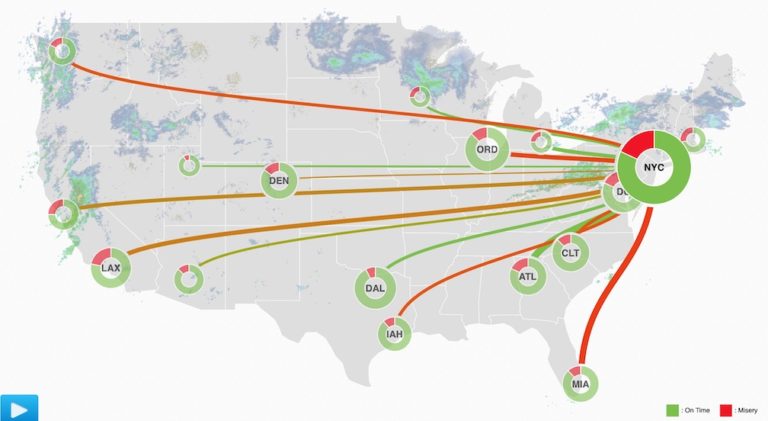
Airlines cancel thousands of flights over Christmas holidays due to Omicron

33

Over 700 flights across the United States were canceled on Friday, and hundreds have been canceled on Christmas Day, while thousands are delayed.

Airlines report that many crew members have been infected with the Omicron variant of the Covid-19 virus, and therefore there is not enough crew to keep the planes running.

According to airlines, flying is one of the safest places to be, due to the jets’ air-handling system, which processes out most impurities, including viruses.

Friday while more than 3,600 were delayed. Hundreds more were canceled Saturday morning. SeaTac Airport is crowded with stranded travelers, with Los Angeles, San Francisco, Denver, Chicago, and JFK in New York being hot spots for flight cancelations and delays.

One million or more passengers are expected to travel through SeaTac over the two-week holidays. Getting into SeaTac from Anchorage may be routine, but getting to other major destinations may involve some flexibility.

According to FlightAware website,

  • Total delays today:  6,815
  • Total delays within, into, or out of the United States today:  1,824
  • Total cancellations today:  2,695
  • Total cancellations within, into, or out of the United States today:  953

Check out the flight misery map at FlightAware.com.

If Omicron is indeed causing a crew shortage, the cancelations can be expected to continue for many days.

Tim Barto: The nuts of Christmas past

By TIM BARTO

There are three things my Dad said you can never have too much of: Extension cords, fireworks on the Fourth of July, and lights at Christmas time. The Ol’ Man loved holiday traditions. 

Christmas decorating began shortly after Thanksgiving, with hundreds of large, colorful light bulbs lining the rain gutters and house edges, thousands of white twinkle lights adorning trees and shrubs, a life-size Nativity scene on the lawn, and four-foot high letters over each of the four upstairs windows that spelled out NOEL.

Ours was the house people slowed down to look at when driving down Wisteria Way. It was garish and fantastic at the same time. 

Mom dedicated at least one full day to baking cookies by the gross and preparing Slovak pastries such as kolache and strudel, the former being dense and rich while the latter was light and flaky. 

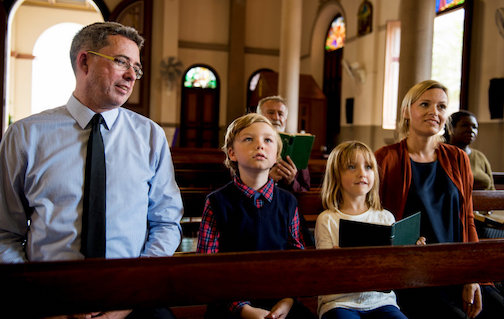
My parents, in the words of Charles Dickens, knew how to “keep Christmas well,” and Christmas Eve church services – held at midnight – were an integral part of the tradition. Suits and ties for the guys, and fancy dresses and an occasional fur for the gals.

I was 13 years old on Christmas Eve in 1975. My oldest sister, Joni, was 18, and was wearing some type of fur shawl that an overspending boyfriend gifted her in a blatant attempt to impress. We weren’t buying it, as we couldn’t identify the animal from which the garment was fashioned. It was coarse to the touch and difficult on the eyes, but she wore it like it came from Saks Fifth Avenue.


We were walking into church, trying to locate an empty pew to accommodate the seven of us. That wasn’t too difficult, as my parents made sure we were a full half hour early in order to beat those “twice yearly church attenders” that packed the church on Christmas and Easter. 

We headed up the aisle, Joni strutting in front for all to admire the as-yet unidentified mammal wrapped around her shoulders, when I heard my name from behind. I looked back and one of my brothers was motioning to stop and backtrack because we had passed a completely empty row that would fit the whole gang.  

I whispered “Joni”, but she was oblivious, walking along like she was on a fashion show runway. By instinct, I reached out to grab her and, using my thumb and forefinger, caught hold of the coarse and mysterious fur. Joni kept going full speed ahead and I heard a pop as a chunk of the “fur” pulled out of her shawl.

I was standing there with a chunk of hair in my hand the size of a mouse. Having felt the tug, my sister turned around. “What?” she said, rather annoyed at the interruption to her grand entrance.

I quickly stuffed the splotch of fur into my suitcoat pocket and motioned that we had to go back where our family was sitting. She was oblivious to the naked spot on the back of her shawl, and it appeared no one else noticed either, so it’s been my secret to this day . . . until this article posts.

All was well. The family was situated and ready for carols, candles, and dripping wax. The organist hammered out “What Child Is This?” as we followed along in our hymnals.

Now, truth be told, I was 13 at the time. All I cared about was baseball staying out of trouble. The hours I spent in church were wasted away with daydreams of ninth inning home runs, and sketches of ballparks on the backside of donation cards. I certainly did not memorize hymns. I read the words and mimicked the words silently because no one wanted to hear my cracking voice, least of all me. 

Unfortunately, I was paying attention when the following words were sung:

Haste, haste to bring Him laud,
The Babe, the Son of Mary.


Why lies He in such mean estate
Where ox and ass are feeding?

It hit Joni and me at the same time. Three hundred staid Lutherans just cursed out loud. In church. On Christmas Eve. 

My eyes widened and I looked to my left just as my sister realized the same thing. She smiled. I snickered. We both felt the need to laugh aloud, but knew we had to hold it in. 

Looking straight ahead now, I held my breath and thought it would be okay, but then turned again to look at Joni. Mouth clenched tight; her cheeks puffed out as her face turned bright red. 

And that made me want to laugh even more. In a panicked response, I breathed in, kinda’ like when you fall into cold water. It’s the reaction that leads to drowning when you’re in an icy river, but when you’re in a Lutheran church on Christmas Eve it’s the reaction that get you stern stares from others around you, and a smack upside the head after service. I had to hold it in, or I would ruin Christmas.

In an attempt to suppress a laugh and release breath, lest my lungs explode, the air went through my palate and out my nose. The result was a snort. It wasn’t that loud, but audible enough for Joni to hear. She bit her lip so hard it bled. I looked away, glancing to my right, where I caught my father’s stare. 

Again, my eyes bugged, but the need to laugh was gone. I was in for it. I looked back at him, afraid to move, and he motioned with his eyebrows. It was a questioning look, not a “You’re gonna’ get it when we get in the car” look. What could I do? He was four seats away, so I couldn’t very well explain that we just belted out the word “ass” in church.

Then he pulled out his hand from his suitcoat pocket and displayed bunch of walnuts, pecans, and almonds. Then he gave me that questioning look again. He hadn’t heard me snort. He wanted to know if I brought my required share from the nut bowl at home. 

You see, it’s this weird tradition that Barto men fill their coat pockets with nuts before leaving the house for Christmas Eve services. It came out of the tales about his brother “Chip” – a burly, blue collar man with a fondness for drink – who would have a few swigs after dinner and be so hungry by the time they left for church that he would take a handful of nuts from the holiday nut bowl and then sit in the back row and crack them with his teeth. He was tough man, my Uncle Chip.

As the legend grew, it became requisite for the Barto boys to follow Uncle Chip’s lead, and Dad now wanted to make sure I was keeping tradition alive. 

So, I reached into my coat pocket, grabbed a collection of mixed nuts and a swath of fake fur from my sister’s high fashion, and showed my Dad. He didn’t know what to make of the hair falling from my hands, but he was content to know that I upheld the family tradition.

I wasn’t in trouble after all, and I didn’t ruin Christmas. Joni did. Unable to hold it in any longer, she unbit her lip and exhaled as a high pitched giggle filled the church just as the song ended.

Tim Barto is Vice President of Alaska Policy Forum and President of the Chugiak-Eagle River Chinooks Boosters. 

Allard for House fundraiser set for New Year’s Eve at Marriott in Anchorage

6

Jamie Allard, a candidate for Alaska House of Representatives for Eagle River, has announced New Year’s Eve as the date for her next fundraiser, to be held in the ballroom at the Marriott Hotel in downtown Anchorage. Allard is running for a seat that opened up in the redistricting process, numbered House District 22.

At Allard’s first fundraiser, held at the Petroleum Club, more than 180 people attended, and the room was packed with supporters, including Mayor Dave Bronson.

Allard is currently serving as a member of the Anchorage Assembly.

Randolph Wagner: ‘Twas the night before Christmas … and the kids were lost in a snowstorm on Mt. Alyeska

(Editor’s note: A Christmas Eve memory by a lifelong Alaskan, worth reading aloud tonight.)

By RANDOLPH WAGNER

“….the horse was lean and lank, misfortune seemed his lot he got into a drifted bank and we got up sot.”

In the winter of 1981, I was installing snow-making equipment at Alyeska Ski Resort.

As a single parent with twin six-year-old sons, I was constantly adapting to the rapidly changing world of youth. My solution was to teach them how to ski.

I was proud they could get on and off a chairlift. The beginners Chairlift 3 is located at the bottom of the mountain, in full view of the lodge. The lift attendants were experts at safely loading and unloading skiers. The ski patrol was present. The boys were safe, and the lift crew knew them.

I was working nearby at the bottom of Mt. Alyeska and could watch them on trails and Chair 3. Wow — they were doing just great tackling every run in the beginners area, which was well lit. It was easy keeping track of them.

Busy? No, “outrageously busy” better describes ski resorts on Christmas Eve.

On the busiest night of the year, snow prayers were answered and maximum snowfall was in progress. All was well. It was snowing big silver dollar flakes falling so fast your ski tracks disappeared in minutes. Employees were working hard, getting most everything is order. The parking lots were filling up, the parties were starting, the sun was gone, and mountain lights kept a few runs open.

My sons knew where I was — I was working near the big Chairlift 1 that went to the top of the mountain.

The ski patrol was closing down the upper runs and “sweeping” each one to verify no one was on them.

At the top, the “round house” held the huge wheel for the lift and the unloading and loading ramps. There, you got off the chair to ski down, or you could get on the chair to ride the lift down.

About this time it became time to “get the kids.”

I searched the beginners area, the day lodge, the main lodge, the shops, bakery, the child care center, and was getting anxious. I hiked back to the cabin and, with no sign of them, called all that I knew.

This was getting serious. I notified everyone and got the same response: “It’s Christmas Eve, they’ll show up. You know how kids are these days.”

Rats!!

The mountain was completely closed.

My focus was on the many people coming to the lodge, the parking lots, the condos. I was wondering, asking, looking, again and again and agin. Yet nothing, absolutely nothing. It was getting very dark.

When I went to punch out on the time clock at Chairlift 1 hut, the lift operator looked an me and said, “Whoah! You need help what’s your problem!”

I explained the situation.

He said “Wait and minute. There were these two little kids who came over and hopped on the lift behind my back, and yelled ‘It’s ok we know how to get on and off! I looked around for parents or friends and no one was there.'”

The lift operator had assumed they had someone ahead who would meet them at the top. In those days, if you were lost, everyone met at the top or bottom of the lift.

A phone call to the top alerted a few staff, who responded no one had seen two unaccompanied children in the area.

They had got off earlier and headed down the lit trail under the lift. It was the only trail open, steep with increasingly deep powder, a racing trail with near zero visibility. They were having trouble but made it to the midway station.

Chair 1’s midway station is where folks get off if they don’t want to go to the top. You could not load there to ride down. The attendant convinced the boys to load up and return to the top where they could then ride a chair to the bottom. Back to the top they went.

And, of course, they got off at the top, rather than riding the chair back down.

Finally, communication was made and they got back on the lift to happily ride to the bottom, where they were met with a ecstatic father who rushed up to hug them — without thinking about the moving chair lift, which they gracefully jumped off as it flattened dad. They yelled “Dad! You told us never to get in front of a moving chair!”

Safe at last, we regrouped and proceeded to a dinner party at Polka Dan’s place in Girdwood near the highway and railroad tracks. It was a great party, and I was bragging about how daring my sons were.

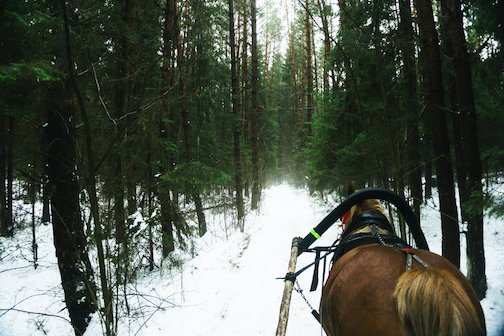
This Christmas Eve party was complete with a one-horse open sleigh. The rides were about 20-30 minutes long. Wes and William finally got their turn. The trail used was along and on the railroad track due to the heavy snow.

After a while, a train came by. Someone said, “I thought the train wasn’t running tonight. Where is the sleigh?”

Oh no — now what? Where are the kids?

They made it back that night. The sleigh had broken and what would you do if you were six years old? Walk the horse back to the barn, of course! They weren’t lost. They knew where they were (about 30 minute walk away).

When they finally talked to their mom in the Lower 48 that evening and told of their adventure, they finished by saying, “… it was just like the Jingle Bells song, mom … the horse was lean and lank, misfortune seemed his lot, he got into a drifted bank and we got upsot … but we got it off the railroad tracks just before the train came by!”

Christmas Day was lesson time. Together with we skied the whole mountain, learning how to get down most slopes, where and when to meet up, ski patrol safety, and we redefined a Merry Christmas.

Life is a daring adventure or nothing. Security does not exist in nature, nor do the children of man, as a whole, experience it. Avoiding danger is no longer safer in the long run than exposure. Merry Christmas!

Born in Alaska before statehood, Randolph Wagner has spent decades as a real estate agent for properties in Anchorage, Alyeska, Girdwood, Wasilla, Palmer, Fairbanks, North Pole, (and now) in Glennallen, Copper Center, Kenny Lake, Chitina, McCarthy, Gulkona, Tolsona, Tazlina, Gulkana, Lake Louise, Willow Lake, Pippen Lake, and Eastern Interior Alaska.