Saturday, May 9, 2026
Home Blog Page 931

Florida legislature passes 15-week abortion ban, as Murkowski seeks to codify abortion in federal law

Abortion is in the news again: The Florida State Senate on Thursday evening passed a bill that bans abortions after 15 weeks of pregnancy, with some exceptions. Gov. Ron DeSantis has signaled he intends to support it. The Senate passed the bill 23-15, after the Florida House passed it last month.

“The bill … is part of a sweeping push by Republicans to put the state at the forefront of the nation’s culture wars,” the New York Times wrote.

Meanwhile, Alaska Sen. Lisa Murkowski co-introduced a bill in the Senate that would codify Roe vs. Wade into federal law, permitting widespread ability for mothers to destroy their pre-born children.

The Murkowski legislation, offered along with Maine Sen. Susan Collins, would prevent laws like the one DeSantis appears to be ready to sign.

“IN GENERAL. — A State ….may not impose an undue burden on the ability of a woman to choose whether or not to terminate a pregnancy before fetal viability; may restrict the ability of a woman to choose whether or not to terminate a pregnancy after fetal viability, unless such a termination is necessary to preserve the life or health of the woman; and may enact regulations to further the health or safety of a woman seeking to terminate a pregnancy…”

Breaking: No campaign donation limits at all in Alaska

There are no limits on campaign donations in Alaska right now.

In light of the Ninth Circuit Court of Appeals ruling in Thompson v. Hebdon, the Alaska Public Offices Commission staff issued a draft advisory opinion last fall concerning contribution limits to campaigns, setting the new limit at $1,500. The amount was set arbitrarily by staff to be in the spirit of the previous $500 limit, struck down by the court, and to adjust for inflation to something more reasonable.

That staff opinion was struck down by the Commission itself on March 3, 2022, when the commission issued a final order, saying, “there are no longer any individual-to-candidate; individual-to-non-political party; non-political party group-to-candidate; and non-political party group-to-non-political party contributions for Alaska’s state and local elections.

At the same time, the Commission implored the Legislature to come up with new campaign limit legislation that voters would approve.

The ruling means unless the Legislature makes a new law that holds up in court, an unlimited amount of cash may be spent in Alaska races, clearly a game changer for a state that, until last summer, had the strictest limits on contributions of any state.

This story will be updated.

Dunleavy unleashes state sanctions on Russia

Alaska Gov. Mike Dunleavy issued a list of state actions and proposed federal actions to pressure Vladimir Putin to end the war on Ukraine.

“As a response to President Vladimir Putin’s war on Ukraine, we all need to do our part to support countries and people who believe in freedom,” Dunleavy said. 

Dunleavy directed state agencies to identify Russian products and contracts and divest of the relationships, and called on state-owned corporations to do the same. The governor included the Alaska Permanent Fund, directing his comments to the independent board of trustees for the Permanent Fund.

Dunleavy called on President Joe Biden to create an expedited process to permit energy projects of all kinds, and to declare a national energy emergency for all forms of energy. He asked Biden to stop buying oil from Russia and to ban Russian seafood imports.

He also reached out to Alaska businesses and entities to do the same.

“I call upon all Alaska businesses to divest from Russian companies. I call upon businesses to stop selling Russian products. I’m calling on all Alaskans to not purchase Russian products or services,” he said. He asked Alaska sister cities to cut ties with Russian sister cities and for Alaska universities to stop any cultural exchange programs with Russia, and to cut all ties with Russian contractors.

“I will work with the appropriate agencies to identify Alaska as a place of refuge for Ukrainians who pass the appropriate background checks,” he said in his statement. “The United States and our allies must become independent of Russian energy, and we must accelerate that process immediately. These decisions are not meant to hurt our Alaskan friends of Russian background or to put blame for President Putin’s actions on the people he is violently silencing.”

Dunleavy said he will work with the Legislature on any additional measures to put pressure on the Putin regime to end the war against Ukraine.

Murkowski, Manchin lead Senate effort to block Russian oil

Alaska Sen. Lisa Murkowski and West Virginia Sen. Joe Manchin led a bipartisan group of lawmakers, including Alaska Sen. Dan Sullivan, in introducing a bill Thursday that would ban oil imports from Russia, in response to its war on Ukraine. The bill would declare a national emergency with respect to the country’s national security, foreign policy, and economy.

The bill directs the president to prohibit imports of crude oil, petroleum, petroleum products, LNG, and coal from Russia. The president has already had the authority to take these actions since 1917, and this new legislation does not grant additional authority. The ban would be in place during the national emergency and either the president or Congress would be able to terminate the emergency and the import ban. 

“The world is watching in shock as Russia wages an unprovoked war on Ukraine, killing innocents as it attempts to destroy a fragile democracy. While the Biden administration has taken noteworthy steps to try to convince Vladimir Putin and his regime to stand down, we need an all-encompassing approach that uses every viable tool at our disposal. By leaving Russia’s energy exports untouched, the United States is ignoring one of our most potent options to stop the bloodshed. We must ban Russia’s energy imports into the U.S. so that Americans aren’t forced to help finance their growing atrocities and halt the Russian aggression. I’m proud to sponsor this bill with Senator Manchin and urge the Senate to pass it immediately,” said Sen. Murkowski.

“The entire world is on edge as Vladimir Putin terrorizes the sovereign democratic nation of Ukraine. The U.S. cannot continue to purchase more than half a million barrels of oil per day because in doing so, we are emboldening Putin to continue using his greatest weapon of war – energy exports,” said Manchin. “The Ban Russian Energy Imports Act would declare a national emergency with respect to Russian aggression and immediately prohibit the importation of Russian energy products. Importantly, this bipartisan bill shows our strong commitment to stand behind the valiant efforts of the Ukrainian people and the measures our allies in Europe are taking to rebuke Putin and his continued aggression. I urge Leader Schumer to quickly bring this bipartisan bill to the floor and urge my colleagues on both sides of the aisle to support it.”

Manchin chairs the Senate Energy and Natural Resources Committee, and Murkowski is the senior member of that committee. Their “Ban Russian Energy Imports Act” was also signed by Senators John Tester (D-MT), Susan Collins (R-ME), Angus King (I-ME), Lindsey Graham (R-SC), Brian Schatz (D-HI), Steve Daines (R-MT), Mazie Hirono (D-HI), Dan Sullivan (R-AK), Mark Kelly (D-AZ), Shelley Moore Capito (R-WV), John Hickenlooper (D-CO), Kevin Cramer (R-ND), Mark Warner (D-VA), Bill Cassidy (R-LA), Richard Blumenthal (D-CT) and Rob Portman (R-OH).

Reps. Brian Fitzpatrick (R-PA) and Josh Gottheimer (D-NJ) will introduce companion legislation in the U.S. House of Representatives.

In 2021, the United States imported an average of 670,000 barrels of oil and petroleum products, with a high of 848,000 barrels per day in June 2021, with imports up 24% in 2021 over 2020.

The U.S. has also imported Russian LNG and coal despite having some of the largest reserves domestically. This import strategy puts American national security at risk and supports Vladimir Putin’s ability to stay in power. 

Analysis: The ‘Walker Caucus’ House Majority coordinated with Walker campaign to announce ‘energy check’

By SUZANNE DOWNING

On Wednesday, the leadership of the Alaska House of Representatives announced a very public about-face: An additional “energy” payment to Alaskans, in addition to some, as-of-yet-determined portion of their Permanent Fund dividends.

The purpose of this this relief is something about which Gov. Mike Dunleavy and Republicans have been pounding on the table for months: skyrocketing Biden-induced inflation that is eating Alaskans’ buying power, and the steep climb of oil prices is punishing families at the gas pump and in their heating fuel bills.

The global rebound in oil prices, driven in part by Russia’s invasion of Ukraine, has also put Alaska’s treasury in a true surplus position, the first time in nearly a decade. 

The press release from the Democrat-dominated House caucus made two things clear: Anti-PFD legislators can no longer rely on arguing against paying a fair dividend by saying it is unaffordable, and the House majority is — clearly and without shame — a proxy for the gubernatorial campaign of former Gov. Bill Walker. 

Before Alaskans had time to refresh their browser on the press release from the House, Team Walker issued a glossy press statement on social media, complete with focus group tested quotes by both the gubernatorial candidate and his running mate Heidi Drygas, a former commissioner and lobbyist. Walker had advance notice from the House majority.

The timing was more than suspect, and is leading to real eyebrow raises inside and outside the Capitol. This informal collaboration is a sign of more actions that sync up coincidentally for the political benefit of the former governor. 

In September, to much fanfare, the Walker campaign announced its co-chairs, including several sitting lawmakers Bryce Edgmon, Adam Wool, Ivy Sponholz, and Andy Josephson, along with Joey Merrick, the husband of Eagle River Representative Kelly Merrick (a follow-up press release in October by the Walker campaign also announced the recruitment of Rep. Tiffany Zulkosky to the campaign co-chair coterie). 

The “Walker Caucus” in the Legislature has been consistent since 2016, when then Walker unilaterally vetoed the Permanent Fund dividend for the first time: The PFD, long an important and untouchable part of politics, was now a hindrance to the government paying itself first. The legislators in the Walker Caucus have consistently voted every single year against any form of a dividend that is not a surplus or ‘leftover’ amount for Alaskans.

In fact, when the House Majority organized in 2021 after another deadlocked beginning to the Legislature, there was one guiding principle cobbling the members together: To oppose Gov. Mike Dunleavy’s attempts to reconcile the Permanent Fund Dividend issue by acting as fiscal conservatives, and stopping any dividend payments in amounts close to what Dunleavy and Republicans proposed. 

So, what changed? 

Like the national poll-sensitive pivot of the Democrat Party away from Covid-19 mandates in schools and on citizens, Walker’s campaign and proxies in the Legislature are realizing that running against the dividend is a losing argument with voters. After three years of aggressive opposition to the efforts of Gov. Mike Dunleavy to resolve the PFD issue and to get Alaskans what they are owed, the ‘even year transformation’ is beginning, with the apparent dual goal of face saving in Juneau for lawmakers while helping unseat a governor hated by Walkerland. 

After all, the lawmakers quoted in Wednesday’s “energy relief” check announcement included Walker campaign co-chair Bryce Edgmon and Walker campaign co-chair spouse Kelly Merrick. The communication director for the Walker campaign is the former communication director for the House majority. It all fits quite nicely.

It is yet to be determined if the mainstream media is going to cast a skeptical eye on such overt politicking between lawmakers and a statewide campaign. With members of the House being open proxies for Walker in the halls of Juneau, using the media tools afforded them by tax dollars to assist a partisan campaign, we would do well to remember the old adage: Whose friends are these?

Suzanne Downing is publisher of Must Read Alaska.

Second Americans for Prosperity grassroots training set for Saturday at Hotel Captain Cook

Want to be a more effective conservative activist? More than 60 people have signed up for a second Americans for Prosperity grassroots training for conservatives, taking place Saturday at the Hotel Captain Cook in downtown Anchorage.

This is the same program as the “level one” training provided by the group last month, focusing on how to influence lawmakers, effectively communicate ideas, better advocate for freedom, and break barriers for opportunity. The first training attracted more than 100 participants, leading the grassroots organizing group to reprise the event for those who could not attend.

The training starts with breakfast at 9 am, the program beginning at 10 am, and the day ends with a cocktail hour at 4:30 pm for those who wish to stay and network.

Trainers include Steven Shadegg, state director for Americans for Prosperity Arizona; Jeff Crank, AFP regional director; and Zak Kubin, AFP strategic director, along with AFP-Alaska State Director Bernadette Wilson.

Wilson will also outline the group’s plan for advocating for some specific bills in the Alaska Legislature that her group will be working to pass that relate to medical freedom, lowering health care costs, and more.

There is no cost to attend, but those planning to join the training must register at www.AlaskaAFP.com. Be sure to get to downtown early, Wilson said, since Saturday is also the ceremonial start of the Iditarod Sled Dog Race, and parking and traffic will be challenging, with 4th Avenue closed near the start of the race at D Street. The ceremonial start begins at 10 am. The hotel has valet parking available.

Founded in 2004, Americans for Prosperity is a conservative political advocacy group funded by David and Charles Koch.

“Americans for Prosperity is dedicated to the belief that every person has a unique set of gifts and the ability to contribute to society in their own way, an idea that has inspired progress since our country’s founding. Driven by this belief, Americans for Prosperity engages in broad-based grassroots outreach to advocate for long-term solutions to the country’s biggest problems that prevent people from realizing their incredible potential — unsustainable government spending and debt, a broken immigration system, a rigged economy, and a host of other issues,” the group says on its website.

Anchorage’s Sockeye Inn soon will be used to house medically fragile homeless

The first of four pillars of the Anchorage response to the homeless problem in Anchorage moved ahead with the purchase of the Sockeye Inn, where medically fragile homeless people will be housed. Medically fragile homeless are typically defined as homeless people referred by an agency, organization, or hospital with a medically verified need for non-congregate 24/7 housing.

As the administration of Mayor Dave Bronson takes steps to recover the Sullivan Arena for its intended purposes and move the people sleeping there to various shelters, the Mayor’s Office and three members of the Assembly negotiated for months to get to this point.

Several steps are ahead in the four-pillar process.

This portion of the plan is unique in that it is a public-private-philanthropy partnership. The Sockeye Inn is being purchased philanthropic groups and the city, with the Alaska Community Foundation providing the hub for the financial part of the deal. The $4.8 million purchase will close on March 31, and the former inn at 303 West Fireweed Lane will be run as a 501(c)(3), with Catholic Social Services contracted to operate it. Half of the funds to purchase the vacant hotel came from private philanthropy, including the Rasmuson Foundation and an offshoot of the Weidner Company.

The next pillar of the four-point plan is a navigation center to get homeless people the services and help they need. After that, the plan will include workforce housing center for those who are employed but cannot afford rents, and senior housing for elderly homeless people.

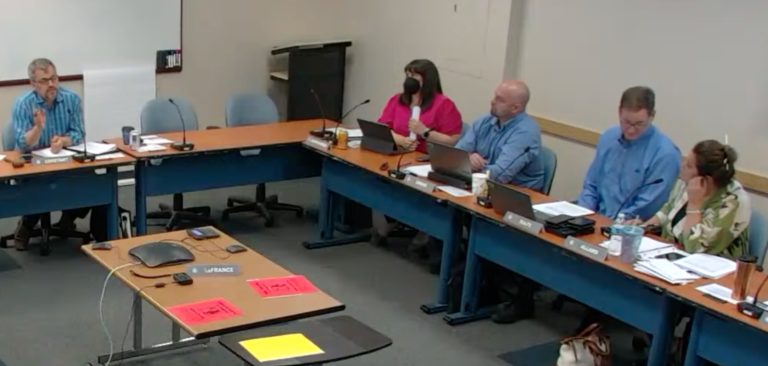
Larry Baker, on behalf of the Mayor’s Office, and two others from the administration negotiated with Assembly members Chris Constant, Meg Zaletel, and John Weddleton starting in August and, with the help of mediator Admiral (ret.) Tom Barrett, agreed to the overall framework for the exit plan for the Sullivan Arena. Each side gave a little to get to the agreement, sources told Must Read Alaska. The Assembly ultimately approved the plan over the objections of Assemblyman Forrest Dunbar.

The plan underway is a departure from the former mayor’s plan to purchase various hotels around town, including the Golden Lion on 36th and New Seward Highway, the America’s Best Value Inn on Spenard Road, and the old Alaska Club on Tudor Road. Of those, only the Golden Lion was purchased before Bronson took office, but it is not the drug addict treatment center that former Mayor Ethan Berkowitz envisioned. Neighbors in the area of town objected to having that clientele in their neighborhood.

Gender fairness: Senate bill to protect women’s athletic programs moves to Education Committee hearing

Thursday in the Alaska Senate, Senate Bill 140, the “Even the Playing Field Act,” will be taken up by the Senate Education Committee. SB 140 has the support of numerous coaches and athletes who seek to protect women competitors from unfair advantages of biological males who present as women. Sponsored by Sen. Shelley Hughes, it would ensure that women’s athletics programs in public schools are reserved for women, rather than including biological men.

Jim Minnery of the Alaska Family Council pointed out that males typically have larger hearts and lungs, denser bones, and stronger muscles. It is for that reason that women’s sports programs were carved out, “to create equal opportunities for women to have fair athletic competitions. His organization will be advocating for the bill.

The committee meets at 10 am. Bill information is at this link. Those wishing to comment on this bill may contact the Senate Education Committee at [email protected].

Alaska House says Ukraine has right to exist, and Putin is totalitarian tyrant hell bent on conquest of free people

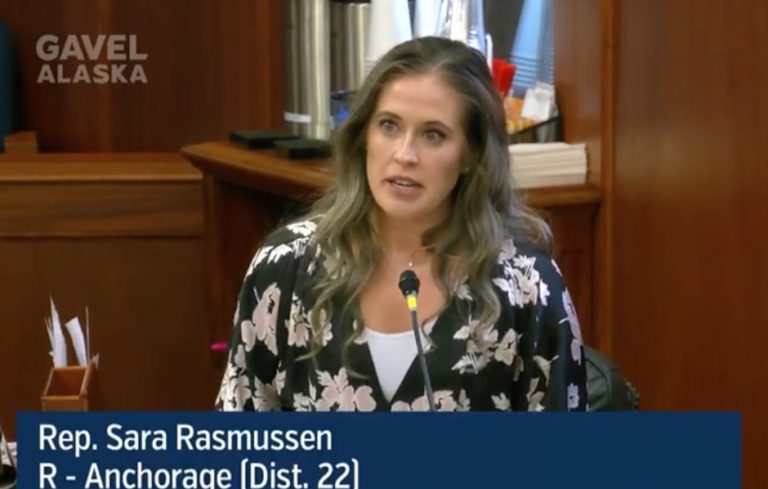
The Alaska House of Representatives, on a votes of 34-1, rebuked the “unprovoked, unlawful, and unjustifiable invasion of Ukraine by the Russian Federation in the strongest possible terms.”

Rep. David Nelson, who introduced the measure stated, “Tonight showed that the House of Representatives stands against a totalitarian tyrant that is hell bent on conquest and that we also support our allies and honor the bravery and heroism of the free people of Ukraine. I am thankful for the support of my colleges in the house minority and the House Collation.” 

Rep. Laddie Shaw, who served two tours as a US Navy SEAL in Vietnam, said, “Brave citizens taking up arms to preserve their homes and their freedom from an aggressive, totalitarian power – that’s something I’ve seen before. The Ukrainian people’s brave resistance hangs by a thread. [Russian President] Putin is doing all he can to extinguish the heroism we see out of Ukraine every day – let’s recognize their valor while it is still on display, against whatever comes.”

The “sense of the House” recognizes the bravery and self-determination of the Ukrainian people for defending their country and calls on the Biden Administration and the United States government to:

Resume the regular and uninterrupted supplying of Ukraine with military aid, including lethal aid suitable to counter Russian aggression;

Support the membership of Ukraine in the European Union; and 

Promote global energy independence from the Russian Federation, and domestic energy independence through the encouragement of domestic energy production of all types.

Rep. David Eastman of Wasilla voted against the Sense of the House.

Rep. Laddie Shaw, a Navy SEAL veteran, noted that Nelson is the only member of the House who is still in uniform, and quoted a saying that had touched him about the conflict: “If Russia stops fighting, there is no war, if Ukraine stops fighting, there is no Ukraine.”