Americans are paying attention to prices, comparison shopping like never before, and they’re cutting back on grocery purchases, according to new poll data that show inflation is taking a toll on families, especially low-income families.
The October Morning Consult poll, released Monday, shows 82% of Americans say they have been trying to buy fewer groceries due to inflation.
“Purchasing fewer items overall is an increasingly common tactic concerned consumers are employing to save on groceries amid persistent price growth in the category. Retailers and food & beverage brands alike should take note, as this could be an indication of slowing demand,” the polling company wrote.
“The most common cost-saving actions are comparing prices and buying generic or store brands instead of name brands,” Morning Consult wrote. “Consumers have consistently relied on these tactics, but recently a growing number have been employing a different approach: buying less overall.”
Heightened concern over food prices is understandable, given that food represents the second largest monthly expenditure for most people, behind only housing. “Plus, the consumer price index for food at home was up 13% year over year in September as prices for groceries continued to spike amid high demand and supply chain disruptions. This 13% growth is on top of already-high total spending,” Morning Consult said.
Since this time last year, shoppers have added new worries as they hit the grocery store. At first, it was primarily the cost of meat that concerned them.
Nearly a year ago, a high percent of consumers expressed concerns about rising prices in categories representing a greater dollar share of people’s grocery carts, like meat and produce.
“Now, as prices have risen across the store, concern has also risen in less frequently purchased categories and categories that have experienced the most price growth,” Morning Consult advised.
In October, 9% more of surveyed shoppers are concerned about the cost of dairy items, which are up 16+% since last year, one of the steepest of any food category.
In less frequently purchased categories, such as pantry items, staples, and ingredients, the percent of Americans who said they are very concerned about cost has risen up to 9 percentage points among those surveyed, since last October.
Last year, 64% of shoppers told the polling company they were cutting back on groceries as a strategy for saving money. In September, 72% said that they are buying less food. By October, that number had risen to 82%.
While President Joe Biden has publicly stated that the Covid-19 pandemic is over, the battle over federal vaccine mandates is ramping up for federal contractors and members of the U.S. Coast Guard.
In September 2021, President Joe Biden signed an executive order requiring federal contractors to comply with federal Covid-19 guidance. In November 2021, the Safer Federal Workforce Task Force, which determines the scope of that guidance, announced the Covid-19 vaccination requirement. It included contractors.
That measure was quickly challenged in court by trade groups and several states, and in December 2021, a federal district court issued an injunction blocking the new vaccine mandate.
In August of this 2022, the U.S. Court of Appeals for the Eleventh Circuit ruled that the previous court’s injunction should only apply to those states and groups that filed suit.
“The Eleventh Circuit’s decision narrowing the district court’s injunction will take effect when that court issues its mandate, which is scheduled to occur on October 18,” the Safer Federal Workforce Task Force said on its website. “In addition, several other Federal district courts have issued injunctions affecting certain states and contractors and subcontractors within those states. Those injunctions remain in effect.”
The task force said it will begin working on how the mandate will be implemented going forward, but said as of now agencies should not begin enforcing the mandate.
“Following the issuance by OMB of the initial notification to agencies, the Task Force intends to update its guidance regarding COVID-19 safety protocols for covered contractor and subcontractor workplace locations,” the task force said. “The Task Force will include in its updated guidance a timeline for implementation by contractors and subcontractors. The Director of OMB will also review the updated Task Force guidance and make a determination regarding whether the new guidance promotes economy and efficiency in Federal contracting.”
The Biden Administration extended the declaration of the pandemic public health emergency status through Jan. 11, 2023.
Those mandates and the declaration have come under further criticism since Biden said on “60 Minutes” in September that “the pandemic is over.”
Why did Joe Biden extend his emergency pandemic powers if he said the pandemic is over?” U.S. Rep. Jim Jordan, R-Ohio, wrote on Twitter.
Federal vaccine mandates have also been a contentious issue in the military where servicemembers have been discharged for refusing vaccination. Those discharges have been met with legal pushback, though.
Republican minority members of the House Oversight Committee sent a letter to the U.S. Coast Guard on Tuesday, alleging the Coast Guard has been denying religious exemption applications for the vaccine wholesale without a fair evaluation of individual requests.
“Religious freedom is protected by the U.S. Constitution and federal law. Despite these protections, information received by Committee Republicans indicates that the adjudication process for exemption applications was a pro forma exercise designed to reach predetermined conclusions – to deny requests and appeals – in nearly every single case,” the letter said. “The USCG even created a digital tool to assist in more efficiently denying appeals of the vaccine mandate instead of focusing on the merits of each individual case. Regardless of the ultimate decision to approve or deny these requests, the USCG and the other branches of the U.S. Armed Forces must afford members the opportunity to have their religious accommodations claim heard on the merits along with the right to appeal an adverse decision.”
Casey Harper is a Senior Reporter for the Washington, D.C. Bureau of The Center Square, a conservative news service partner of Must Read Alaska. He previously worked for The Daily Caller, The Hill, and Sinclair Broadcast Group. A graduate of Hillsdale College, Casey’s work has also appeared in Fox News, Fox Business, and USA Today.
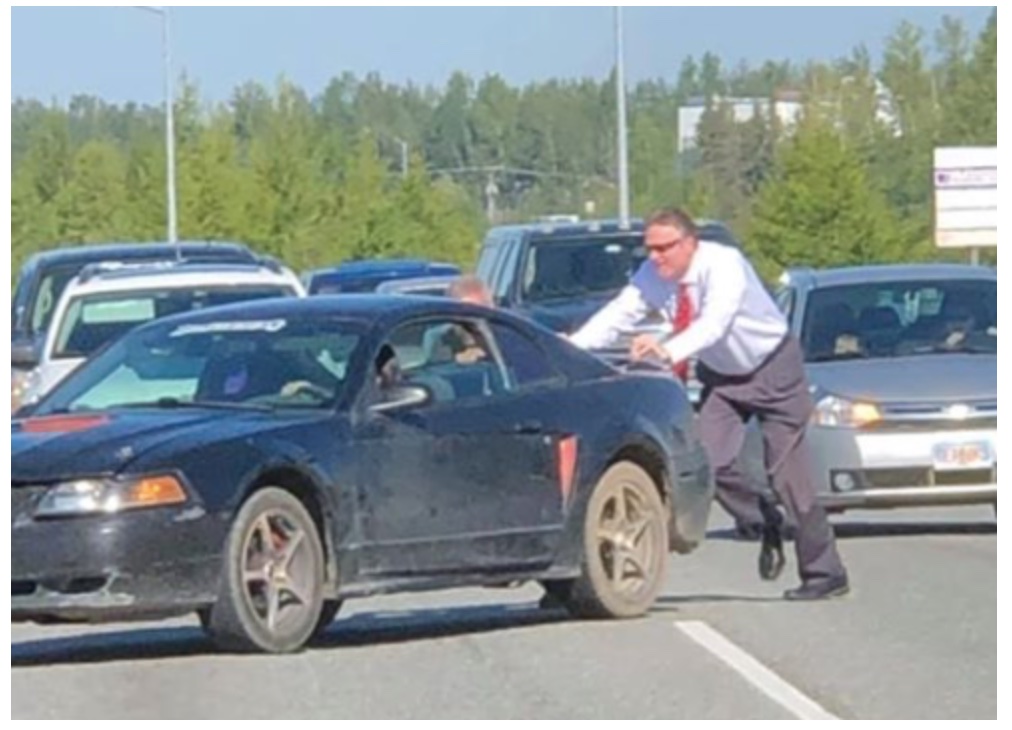
Gov. Mike Dunleavy may be the only governor of any state who has been photographed not once but twice pushing disabled vehicles to get them out of trouble. All during a day’s work as governor.
The first was a photo taken by a passing Wasilla driver in June of 2019, when Dunleavy was in his first few months of office. Already, the urban attack team from the former Walker Administration was crawling all over him with accusations and petitions to remove Dunleavy via an ultimately failed recall effort. Dunleavy, helping an Alaskan he had never met, was busy doing what he does; while driving himself to work from his Wasilla homestead, he approached an intersection where a car was stalled, and the car was obviously going no further. Dunleavy, dressed in suit and tie, hopped out of his own car and singlehandedly pushed the disabled car to safety, before heading to meetings in Anchorage.
Gov. Mike Dunleavy pushes a car out of the intersection in Wasilla in June of 2019.
Fast forward to Oct. 4, 2022, when Dunleavy was visiting the rural village of Elim, along Norton Sound, which had been hit hard by an historic fall storm, a Category 1 remnant from Typhoon Merbok. The beach sand was soggy and soft, but the road was blocked by repair trucks and earth movers, and so Mayor Paul Nagurak decided to take the beach route. Riding in a truck following Dunleavy and Nagurak were Commissioner of Transportation Ryan Anderson, Commissioner of Military and Veterans Affairs Torrence Saxe, and Director of Division of Homeland Security and Emergency Management Bryan Fischer.
Gov. Mike Dunleavy with Elim Mayor Paul Naguruk, and Commissioner of DOT Ryan Anderson.
Once the lead truck got stuck, Dunleavy and the commissioners hopped out and helped rock the vehicle out of the hole its wheel was digging, while Mayor Nagurak pulsed the accelerator.
Dunleavy, who lived for 20 years above the Arctic Circle — teaching children, running schools, raising his own Native children, hunting, fishing, and keeping his house warm in the most brutal weather on earth — seems happiest in rural Alaska, even if it means pushing a truck out of the deep sand less than a year after having had shoulder surgery. His idea of taking a break is to go hunting in rural Alaska, and donate the game to a community nearby.
Roadwork was being done, blocking access, which is why the state officials took the beach route.
Dunleavy’s lived experience in rural Alaska hasn’t been seen in the Governor’s Office since former Gov. Jay Hammond, who built a log cabin on the north shore of Lake Clark and was known as Alaska’s “Bush Rat” governor. It may be that Dunleavy is the state’s second Bush Rat Governor — a frontier leader who has, in the weeks since the storms hit the coast, traveled to villages numerous times, helping people without any media around, including offering practical advice for village and town residents with specific problems that needed a creative fix.
The iconic photo of the governor pushing a truck out of the sand is one that Alaskans from a certain era can identify with — it was just another day in rural Alaska, where people roll up their sleeves and got the work done without fanfare.
What the people of the state may also see is a guy who genuinely is at home in rural Alaska in a way that no other governor has been since Hammond was term-limited out of office in 1983.
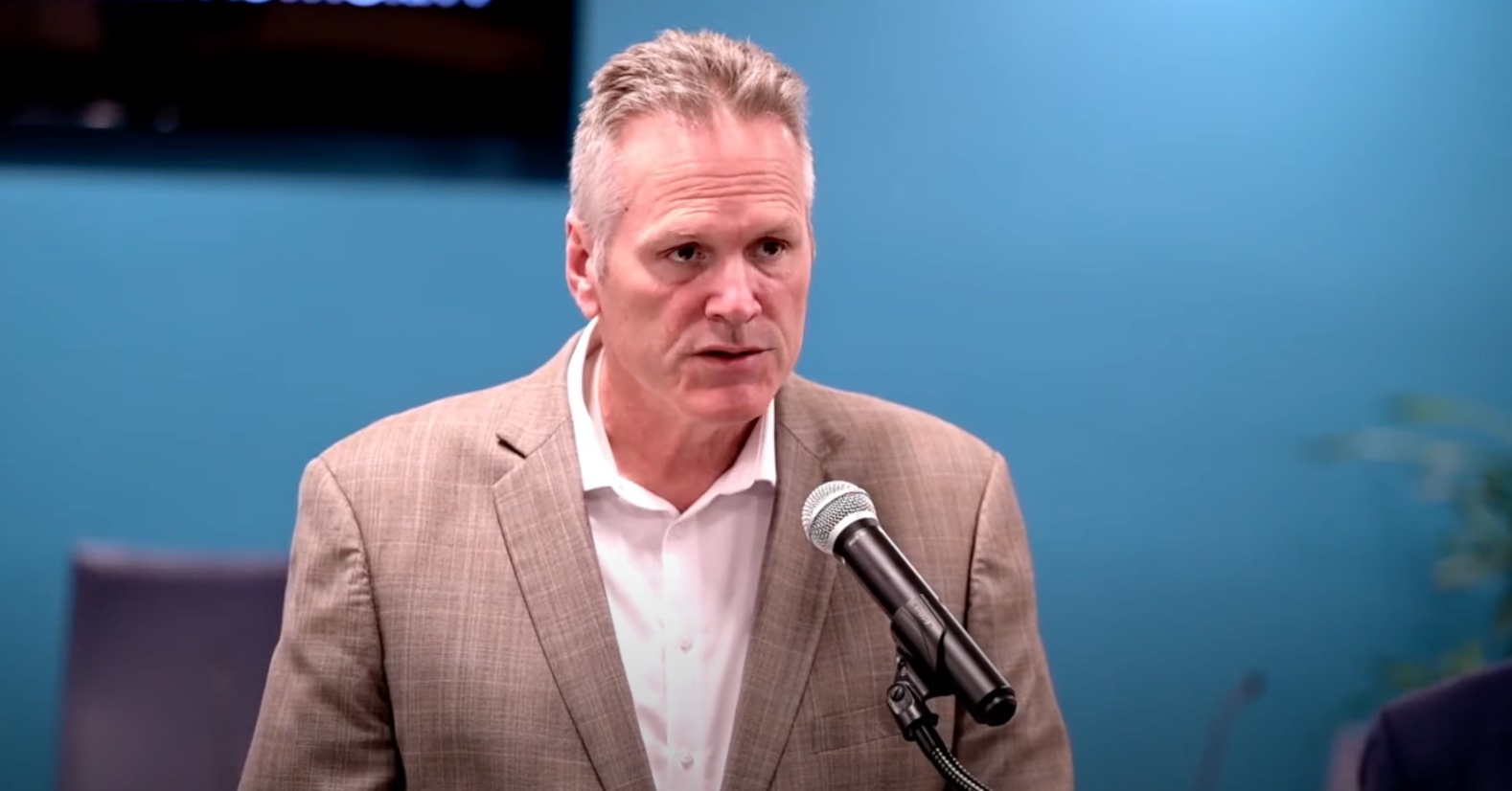
After law enforcement swept a record amount of illegal narcotics off the streets this summer, Gov. Mike Dunleavy says he will introduce legislation to crack down on fentanyl drug dealers with harsher sentences.
Under his proposal, if someone dies due to ingesting a controlled substance, whoever sold or distributed that substance to the victim will be charged with murder in the second degree, an unclassified felony that comes with a sentencing range of 15-99 years.
“Public safety has and will continue to be our number one priority. These drug dealers are killing Alaskans with illicit fentanyl and fentanyl-laced illicit opioids,” Dunleavy said. “We need to use every tool at our disposal to hold these dealers accountable to the fullest extent possible. By increasing criminal penalties and eliminating ‘good time’ credit for dealers of illicit drugs, our prosecutors can do better.”
The Alaska Department of Public Safety, along with local and federal law enforcement partners, seized over 212 pounds of illegal narcotics across the state this summer. That haul included 2.45 million potentially fatal doses of illicit fentanyl (5,000 grams), 22,441 grams of heroin, 22,865 grams of methamphetamine, 13,306 grams of cocaine, and many other illicit narcotics that were intercepted since May.
Alaska State Troopers say 25 arrests were also made between May 1 and Sept. 30, and that the amount of illegal drugs intercepted is double what was intercepted in 2021. Most of the fentanyl is coming from China through Mexico and was seized in Juneau, Fairbanks, Ketchikan, and Anchorage. Kodiak was a hot spot in September, when troopers seized $656,000 in fentanyl.
Under the proposal by Dunleavy, there would be no “good time” available to drug dealers who serve time in prison. Some crimes, he said, are just not deserving of early release. Peddling poison is one of those crimes.
The governor is also going to propose more uniform sentencing standards for vehicular homicide. Alaska criminal statute contains no specific vehicular homicide statute. State prosecutors are faced with bringing manslaughter, criminally negligent homicide, or murder in the second-degree charges in the event of a homicide involving a vehicle. This has led to prosecutors seeking a variety of sentences handed down by judges, which has created sentencing disparities.
Dunleavy’s proposal would create the following class of vehicular homicide statutes:
Aggravated vehicular homicide – Where the person causes the death of another person while operating a motor vehicle and manifesting extreme indifference to the value of human life. This offense would be an unclassified felony (99-year max).
Vehicular homicide – where the person recklessly causes the death of another person while operating a motor vehicle. This offense would be a class A felony (20-year max).
Negligent vehicular homicide – where the person acts with criminal negligence and causes the death of another person while operating a motor vehicle. This offense would be a class B felony (10-year max).
The proposal, which will come in the form of legislation for the 2023 legislative session,is at this link.
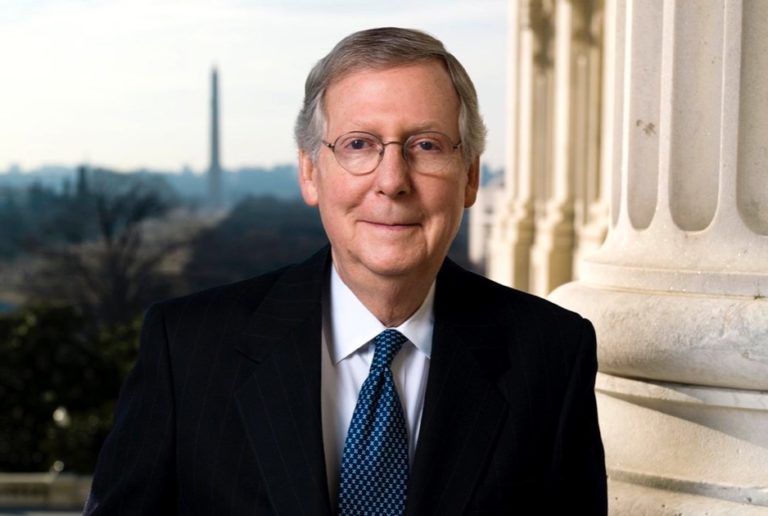
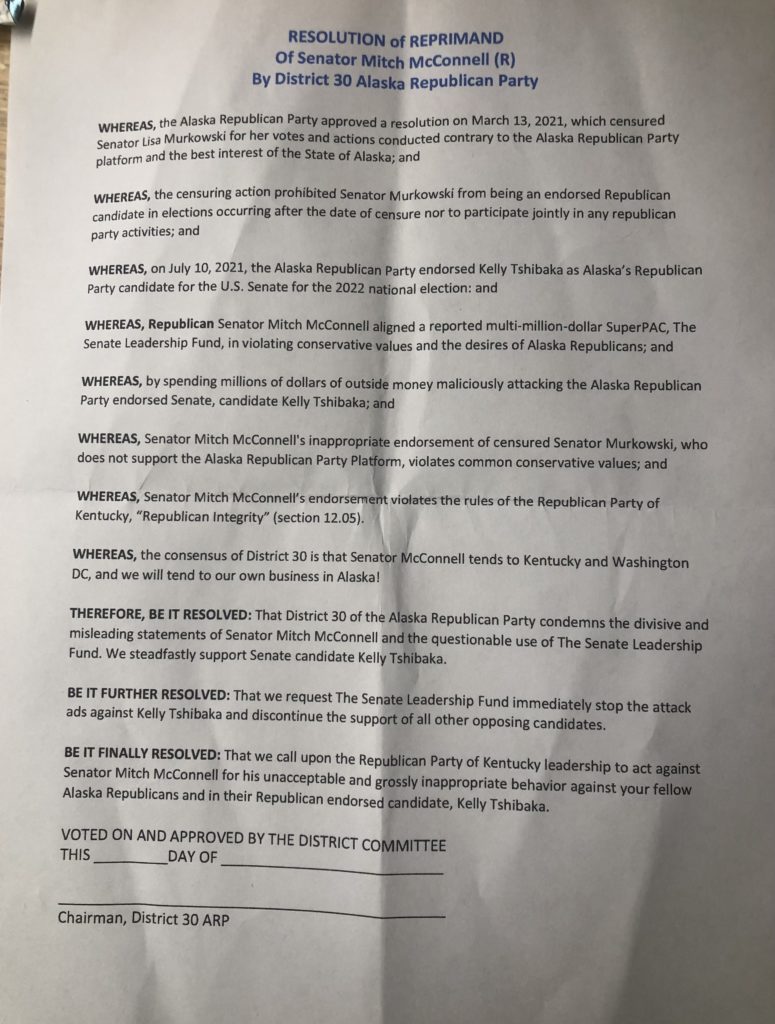
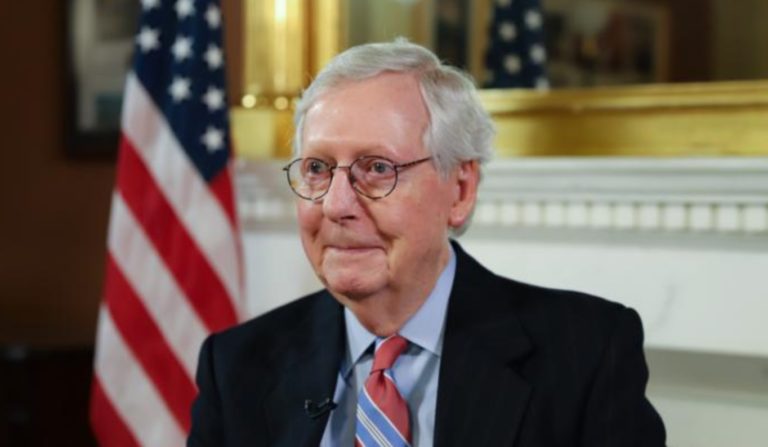
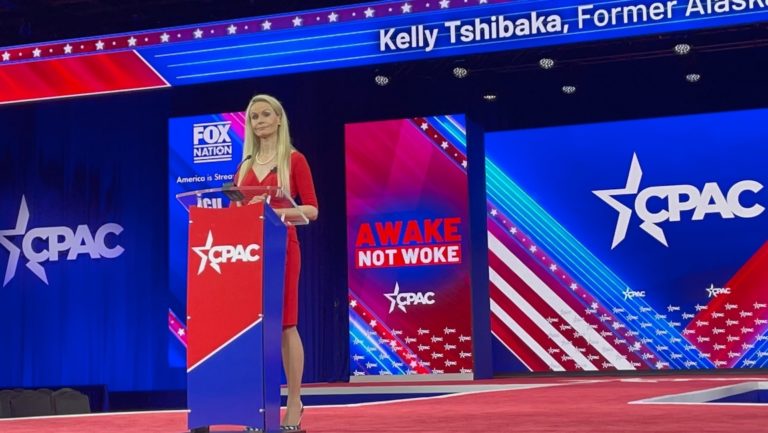
The Big Lake-Anderson-area District 30 Republican Committee met on Monday and passed a resolution of reprimand, telling U.S. Senate Majority Leader Mitch McConnell to butt out and stop his attacks on Senate candidate Kelly Tshibaka.
The resolution is similar to ones passed by GOP District Committees 6, 9, and the Anchorage Republican Women’s Club. All of the groups, which are official subdivisions of the state party, have stated that Sen. Lisa Murkowski was prohibited by the party from being an endorsed Republican candidate, and that she violated the conservative values and desires of Alaska Republicans.
McConnell has started an airwaves war against sitting Sen. Murkowski’s Republican opponent, Tshibaka, who is the party’s endorsed candidate.
“Whereas, the consensus of District 30 is that Senator McConnell tends to Kentucky and Washington, D.C., and we will tend to our own business in Alaska!” the resolution says.
Similar to the resolution approved by District 9 Republicans, District 30 has gone a step farther and asked the Kentucky Republican Party to take action against McConnell “for his unacceptable and grossly inappropriate behavior against your fellow Alaska Republicans and in their Republican endorsed candidate, Kelly Tshibaka.”
Tshibaka won the endorsement of the Alaska Republican Party in 2021 after the party had voted overwhelmingly to censure Murkowski and demand that she not run as a Republican, since she doesn’t reflect Republican values. Tshibaka is being vastly outspent by Murkowski, who now also has a $7 million boost from McConnell and his Senate Leadership Fund, which has been running harshly negative campaign ads against Republican Tshibaka.
McConnell has been inconsistent in his rationale for supporting candidates. To CNN earlier this year, McConnell said, “I don’t have a litmus test. I’m for people that get the Republican nomination, and for winning, because if we win we get to decide what the agenda is, and they don’t.”
McConnell may have said that, but he didn’t actually adhere to the philosophy when he snubbed the Alaska Republican Party endorsed candidate Tshibaka, and went with the candidate that the party clearly stated it didn’t want – the sitting senator, who the party has formally censured and attempted to boot from the party.
The party chairwoman Ann Brown has also issued a very tempered statement telling people that if they want to know about Kelly Tshibaka, they should go to her website and not listen to the ads opposing her.
Nevada is their latest target. Voters there will decide on election day if they want to join in this nationwide experiment. If experience is any judge, they’d be wise to sit this one out.
If the measure known as Question 3eventually passes (it would have to pass again in 2024), Nevada’s traditional election system will be upended. Party primaries will be replaced with a California-style “jungle primary.”
The five candidates who get the most votes will advance to the general and ranked-choice voting would be used to determine the final winner. That sounds simple, but RCV is far more complex than its proponents make it out to be.
Instead of “one person, one vote,” voters rank multiple candidates from first to last. If no candidate wins a majority of first-place votes, then the lowest-ranked candidate is eliminated. Those votes are redistributed based on each voter’s second-place picks, and this process of elimination is repeated until one candidate wins a majority of votes. Or at least, appears to.
Under RCV, if a voter’s top pick is eliminated and he has no second-place choice, his ballot is tossed out. RCV proponents euphemistically calls this ballot “exhaustion.” A better term is disenfranchisement, since exhausted ballots are simply erased from the final results, as though they had never been cast at all.
So many ballots can be thrown out in RCV elections that candidates can be elected without winning a majority of votes cast. That just happened in the 2022 Alaska special congressional election. Democratic candidate Mary Peltola won with just 48.4% of votes cast, yet was able to claim a winning margin of 51.5%.
How? Some 11,222 ballots were thrown out after the first round of tabulation, allowing Peltola to claim a majority mandate that did not exist.
This is not an isolated problem. Even George Soros-funded RCV advocacy groups like FairVote acknowledged that, on average, nearly one in three voters do not rank multiple candidates in RCV elections, leading their ballots to be tossed out if their candidate is eliminated. In fact, studies show that a significant number of votes are routinely thrown out in RCV elections. So much for RCV’s claims to promote “majority rule.”
Even more bizarrely, candidates who fail to secure the most first-place votes can go on to win the election. During the 2010 mayor’s race in Oakland, California, the candidate with the most first-place votes lost the election to “a candidate on the strength of nearly 25,000 second and third-place votes” after nine rounds of vote redistribution.
RCV advocates claim it strengthens democracy, but data suggest it may actually decrease voter participation. This effect is particularly pronounced for infrequent voters, who may be turned off by RCV’s complexity. Some on the left even express grave concerns that the burdens of RCV will fall disproportionately on low-income and minority voters.
Great pains have been taken to present RCV as a bipartisan election reform, but it is impossible to ignore that the funding to push it comes overwhelmingly from the left. Massachusetts saw a nearly $3 million effort from the left-wing Action Now Initiative to round up signatures in support of their 2020 RCV initiative. Earlier this year in Missouri, a liberal organization contributed nearly $6.8 million dollars to support a ballot measure in the state.
Most recently, $2.26 million from mainly left-wing backers have poured into Nevada’s 2022 RCV campaign.
But all this money cannot cure the single largest problem that RCV faces: the more people learn about it, the more they turn away from it. Voters rejected RCV in Massachusetts and a multimillion campaign in Missouri failed to turn in enough signatures to even qualify for the ballot. The latest polling suggests that Nevadans, too, are souring on the scheme.
Who can blame them. Like the partisan plan to nationalize elections with H.R. 1, or the left’s endless stream of election lawsuits, the aim of RCV isn’t to improve democracy but to reshape it for political advantage.
Activists are pushing hard across the country. Seattle also has an RCV proposal on the ballot this November, and RCV’s salesmen are already setting their sights on Arizona in 2024. Countless other towns and cities are in the crosshairs, too.
RCV isn’t the path to a better election system, just a more complicated one that disenfranchises Americans and fuels doubt and confusion. Ranked-choice is clearly the wrong choice for voting in America.
Jason Snead is the Executive Director of Honest Elections Project Action. His column first appeared at the Daily Caller.
The legendary Anchorage Republican Women’s Club, one of the pillars of Republicanism in Alaska, is the third subdivision of the Alaska Republican Party to condemn the actions of Sen. Mitch McConnell and his Senate Leadership Fund for its attacks on Republican Senate candidate Kelly Tshibaka.
Tshibaka has been overwhelmingly endorsed by the Alaska Republican Party. In a vote taken in 2021, the party separately asked Sen. Lisa Murkowski to leave the party and not run under the Republican banner. She did not comply and is running as a Republican. A couple of months later, the party endorsed Kelly Tshibaka, who announced her run for Senate in March of 2021, shortly after the party had voted to look for another candidate to represent Republican values, since Murkowski refused to do so.
McConnell, however, opposed the Alaska Republican Party and is endorsing Murkowski. He is spending about $7 million in Republican donor money to attack Tshibaka in his attempt to preserve Murkowski in the Senate.
“As soon as these polls came out Mitch McConnell’s Senate Leadership Fund was flooding our state with millions of dollars in a smear campaign against me,” Tshibaka said.
The Anchorage Republican Women’s Club joins District 6 and District 9 Republican committees in issuing a swift rebuke to McConnell and the Senate Leadership Fund.
Anchorage had two Republican women’s clubs. But the Midnight Sun Republican Women’s Club, which had been formed up to align with with Murkowski, has been somewhat dormant in recent months. The AWRC, however, is led by its longtime President Judy Eledge, with Vice President Portia Erickson, Treasurer Gillian Dezzutto, Secretary Susan Fischetti, and Assistant Treasurers Lindsay Williams and Carolyn Leman. The club is known for its ability to raise money and support candidates, and is a sought-after endorsement for any Republican in the state.
The resolution from the Anchorage women list, like the other two resolutions, a series of “Whereas” statements, such as the fact that Murkowski is not representing Republican values and that McConnell’s attacks on Tshibaka are libelous. The resolution asks McConnell to cease his actions that opposed Republicans in Alaska.
The news of a growing movement in Alaska to rebuke McConnell has made national media outlets, especially after District 9 Republicans, who are in Tshibaka’s home district, called on the Republican Party of Kentucky to take action against the senator for breaking the rules of the Kentucky GOP.
Forced by State of Alaska policies to use the lowest bidders, when Kelly Tshibaka returned to Alaska, her moving cost burgeoned. The lowest bidder turned out to be a rip-off, and another “lowest” bidder had to be contracted to finish the move. Then a third mover was brought in. On it went. It seemed to Tshibaka that the state procurement rules forced people to use the worst movers, who in the end proved to be the costliest. And it cost the State of Alaska some $81,000.
Tshibaka, as commissioner of the Department of Administration, worked to improve procurement processes by standardizing them throughout departments during her tenure at the Department of Administration. But the wheels of bureaucracy move slowly, and the state mostly still uses the “lowest bidder at all costs” method.
Tshibaka is now running for U.S. Senate against incumbent Lisa Murkowski. As such, all of her state records are being pulled for review by news agencies and opposition researchers. The records requests have begun, and the combing of financials. Thus, the costly move home to Alaska became an item of scrutiny for the Anchorage Daily Newsand the campaign of Sen. Lisa Murkowskiand hostile political bloggers who don’t want to know the truth.
Mary Ann Pruitt, who is senior advisor to the Kelly for Alaska campaign, explained that Tshibaka had no choice but to use the extreme low bidder:
“State officials directed Kelly to obtain multiple moving company bids and she was required to select the lowest one, despite a moving expert’s warning that an extremely low bid was a red flag for potential fraud. Sure enough, throughout the course of the move, there were contract breaches, attempts at sudden cost increases, and refusals to abide by the terms of the contracts. As a result, movers had to be changed several times, with the lowest bid required to be chosen each time. Every step of the way, Kelly urged state officials to reform the system of awarding state contracts of this nature, recommending the use of vetted and trusted vendors, rather than automatically selecting unknown and untested companies who happened to submit the lowest bids. Doing her job as Commissioner, Kelly documented all of these failures of the contractors and reported her findings to the Attorney General’s office. Kelly Tshibaka has dedicated her career to exposing waste and fraud, has returned hundreds of millions of dollars to American taxpayers, and is always mindful of the good stewardship of public funds.”
Tshibaka told the reporter at the ADN that the mover she was forced to pick was operating fraudulently, but that was lost in the crafted narrative. Since Tshibaka left state service after working for two years for Gov. Mike Dunleavy, she is not required to pay back her moving costs, but all along the way she took meticulous notes of the problem move and also advised the state to change its procedures. All of her documentation is in the hands of the state Attorney General, where an investigation into the moving companies is ongoing.
As an inspector general and a rising star for the U.S. Postal Service, when Tshibaka moved back to Alaska to work for Dunleavy, she made a downward career move, but said it was because the state of Alaska was in trouble, and she thought she could help the new governor. Her husband, an attorney, works as an assistant commissioner in the Department of Education. The couple have five children, which explains the need for a large moving van, rather than a U-Haul truck, to get their possessions back to Alaska. The state pays for up to 15,000 pounds of household goods, plus two vehicles, storage, and things like temporary housing, and house-hunting expenses.
“Reasonable and adequate competition must be solicited when acquiring commercial moving company services. If the anticipated/actual cost is over $10,000, a minimum of three verbal quotes is required. If the anticipated/actual cost is over $50,000 a minimum of three written quotes is required. If the least expensive moving company is not used, any additional cost (over what the state would have paid) of moving personal effects will be paid by the employee unless adequate documentation that justifies using a more expensive alternative is approved, in advance, by the employee’s division director (or director’s representative),” according to the the state’s moving expense guidelines.
Alaska Day: Oct. 18 is Alaska Day, a day off for state employees, except for public safety and first responders. The rest of us will be on duty because it’s three weeks exactly until Nov. 8. Candidates will be out there looking for voters.
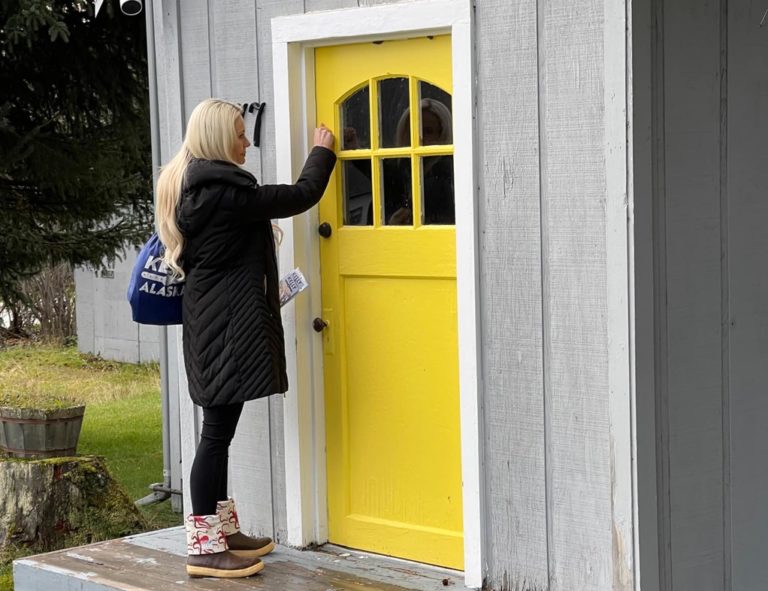
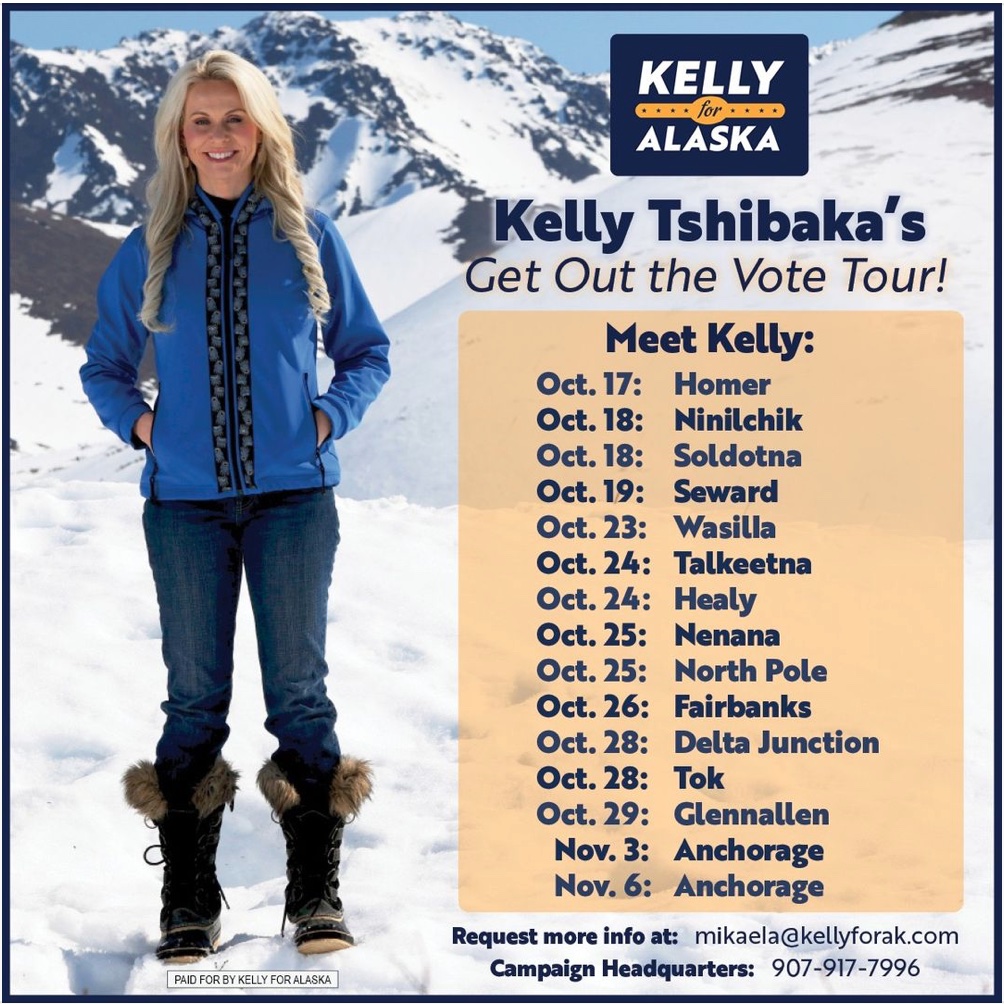
Above, Senate candidate Kelly Tshibaka went door-to-door in Homer, Alaska, introducing herself to likely voters on a crisp fall day. She is on a get-out-the-vote tour of Alaska and will be hitting many communities to make her case that “it’s time for change.”
Palin on Fox: Sarah Palin, on Fox News, said the throughput in the Trans Alaska Pipeline System is about 300,000 barrels a day. Palin, who says energy is her expertise, was off by a couple hundred thousand barrels, but at this rate and Biden’s unhelpful administration, we’ll be there soon. Indeed, if the pipeline drops to 300,000 barrels a day, plans would be already underway to shut it down and dismantle it. Year to date for TAPS: 480,952 barrels per day.
Nick Begich in Homer: House candidate Nick Begich is on his way to the Kenai Peninsula for various get-out-the-vote events, meet-and-greets, and door knocking.
Mary Peltola: The incumbent Democrat congresswoman will be in Anchorage on Alaska Day for a fundraiser at the Alpenglow Brewery.
Which state senators endorse Forrest Dunbar? All three Democrat senators in Anchorage are supporting Rep. Geran Tarr over Anchorage Assemblyman Forrest Dunbar for State Senate. That includes Sen. Elvi Gray Jackson, Bill Wielechowski, and Tom Begich. Not only did the voters in Anchorage not want Dunbar as mayor, it appears the Democrats in the Senate don’t want to work with him either.
Rep. Nick Begich, congressman for Alaska.
Oct 16, 1972: The 50th anniversary of the plane crash that took the life of Nick Begich I came and went on Sunday, and no one seemed to notice. Not the media, anyway, although maybe the family made note. The congressman and three others on a flight from Anchorage to Juneau were lost over Prince William Sound that fateful day, and the wreckage was never found. He was the grandfather that Nick Begich III never got to meet, and these days would be considered a conservative.
“On Oct. 16, 1972, at just before 9 a.m., a Cessna 310C, its registration number, N1812H, laid out in 10-inch tall block letters across the lower margin of its vertical tail, departed from Anchorage International Airport’s Runway 24R (since renumbered as 25R) under gray skies and into what was, at best, marginal flying weather.
“The plane seemed fine. The evening before, the pilot had flown the light twin-engine Cessna down from Fairbanks just for this flight. Fresh out of its regular 100-hour maintenance check and fully fueled up again in Anchorage for the charter flight, the 1959 Cessna 310C was in game shape for the planned 575-mile jaunt down to Juneau. No one took special notice. It was just a small plane with four men aboard heading down the coast, just as thousands of small planes had done before and thousands more have done since,” Plane and Pilot magazine wrote at this story.
Events:
Anchorage Republican Women’s Club endorsements:
US Senate
Rank 1: Kelly Tshibaka (ARWC endorsed).
Rank 2: Buzz Kelly (Club is not ranking Lisa Murkowski second.)
Congressional Race
Rank 1: Nick BegichRank 1: Sarah Palin
Rank 2: Sarah PalinRank 2: Nick Begich
“ARWC asks you either rank Nick Begich first or Sarah Palin first. We are not endorsing either but you MUST pick the other one 2nd as shown above. We believe neither can get enough votes alone to beat the democrat. We believe ranking in this race is our only chance to win.”
Alaska Governor
Rank 1: Mike Dunleavy (ARWC endorsed.
“He will win this race over Charlie Pierce, but ranking Charlie Pierce 2nd will ensure our totals beat that of Walker and Gara.”
Rank 2: Charlie Pierce
Senator Districts
District E
Rank 1: Roger Holland (ARWC endorsed).
Rank 2: None.
(The only other Republican in race is Cathy Giessel, who is on Bill Walker’s team).
District F
Rank 1: James Kaufman (ARWC endorsed. Only Republican in race).
Rank 2: None
District G
No endorsed Republican candidate.
District H
Rank 1: Mia Costello (ARWC endorsed).
Rank 2: None
District I
No Republican or endorsed candidate in the race. You have to choose undeclared if not voting for democrat.
District J
Rank 1: Andrew Satterfield (Only Republican in the race but not endorsed by ARWC or do we know much about him).
District K
Rank 1: John Cunningham (Only Republican in the race but not endorsed by ARWC or do we know much about him).
District L
Rank 1: Ken McCarty (ARWC endorsed).
Rank 2: None
(Kelly Merrick, even though listed as an R joined the democrats last session in the House).
House Districts
District 9
Rank 1: Laddie Shaw (ARWC endorsed. No other Republican in race).
Rank 2: None
District 10
Rank 1: Craig Johnson (ARWC endorsed. No other Republican in race).
Rank 2: None
District 11
Rank 1: Julie Coulombe (ARWC endorsed).
Rank 2: Ross Beiling
District 12
Rank 1: Jay McDonald (ARWC endorsed. No other Republcian in race).
Rank 2: None
District 13
Rank 1: Kathleen Henslee “Kathy” (ARWC endorsed. No other Republican in race).
District 14
Rank 1: Nicolas Danger (Only Republican in race, but know nothing about him).
Rank 2: None
District 15
Rank 1: Tom McKay (ARWC endorsed).
Rank 2: David Eiback
District 16
Rank 1: Liz Vasquez (ARWC endorsed. No other Republican in race).
District 17
“We are so sorry you live in this district. No Republican in the race.”
District 18
Rank 1: David Nelson (ARWC endorsed. No other Republican in race).
Rank 2: None
District 19
“We are so sorry you live in this district. No Republican in the race.“
District 20
Rank 1: Paul Bauer (ARWC endorsed).
Rank 2: Jordan Harary
District 21
Rank 1: Forrest Wolfe (ARWC endorsed. Only Republican in the race).