Tuesday, August 11, 2026
Home Blog Page 756

Flying community abuzz over indictment of restaurateur who endangered floatplane passengers in Halibut Cove

A federal grand jury charged Marian Tillion Beck of Halibut Cove last week with willfully harassing the pilot of an aircraft, Eric Lee, who was attempting to taxi his floatplane out of the cove on Aug. 23. Lee operates Alaska Ultimate Safaris in Homer and was preparing to take a group of people on a flight-seeing tour, when Beck operated a boat “in a grossly negligent manner that endangered the life, limb, or property of a person.”

Beck owns the Saltry restaurant in the quaint settlement across Kachemak Bay from the Homer Spit. A video that was shared on Facebook showed a boat buzzing the de Havilland DHC-2 Beaver, and appearing to threaten it with collision. The plane, with seven aboard, at one point wobbled and a propeller hit the water. The boat appeared to be within inches of the plane.

In all his years of flying, Lee said last summer, he had never encountered such an incident like the one that day.

There are two counts in the federal indictment: 1. Attempted destruction of aircraft, and 2. Gross negligent operation of a vessel.

Beck, the daughter of the late Sen. Clem Tillion and artist Diane Tillion, is a lifelong Alaskan who is a licensed maritime captain and the owner of the Kachemak Bay Ferry, the M/V Danny J., which her father operated for decades as the private ferry to the cove. Born in Seldovia, she attended high school in Homer and college at CalPoly.

An artist like her mother, Beck owns the Halibut Cove Experience Gallery, and she runs the Saltry Restaurant in Halibut Cove. Observers say that she was annoyed with all the tourism activity in the cove, which is on an island largely owned and controlled by the Tillion family for generations.

Agencies involved in the investigation included the U.S. Coast Guard, which submitted its findings to the U.S. Attorney for review and possible action. Amanda Gavelek, a lieutenant in the U.S. Coast Guard, was copied on the indictment. Assistant Federal Public Defender Jane Imholte has been assigned to represent Beck until such time as Beck can financially secure her own representation.

Destruction of an aircraft is a serious crime and may be subject to a fine as much as $10,000 and prison of not more than twenty years, or both, although the Beck case is more about endangering the lives of seven people in what appeared to be a reckless disregard for human life.

According to 18 U.S. Code § 32 – Destruction of aircraft or aircraft facilities, as found at Cornell Law School’s website:

(a)Whoever willfully—

(1) sets fire to, damages, destroys, disables, or wrecks any aircraft in the special aircraft jurisdiction of the United States or any civil aircraft used, operated, or employed in interstate, overseas, or foreign air commerce;

(2) places or causes to be placed a destructive device or substance in, upon, or in proximity to, or otherwise makes or causes to be made unworkable or unusable or hazardous to work or use, any such aircraft, or any part or other materials used or intended to be used in connection with the operation of such aircraft, if such placing or causing to be placed or such making or causing to be made is likely to endanger the safety of any such aircraft;

(3) sets fire to, damages, destroys, or disables any air navigation facility, or interferes by force or violence with the operation of such facility, if such fire, damaging, destroying, disabling, or interfering is likely to endanger the safety of any such aircraft in flight;

(4) with the intent to damage, destroy, or disable any such aircraft, sets fire to, damages, destroys, or disables or places a destructive device or substance in, upon, or in proximity to, any appliance or structure, ramp, landing area, property, machine, or apparatus, or any facility or other material used, or intended to be used, in connection with the operation, maintenance, loading, unloading or storage of any such aircraft or any cargo carried or intended to be carried on any such aircraft;

(5) interferes with or disables, with intent to endanger the safety of any person or with a reckless disregard for the safety of human life, anyone engaged in the authorized operation of such aircraft or any air navigation facility aiding in the navigation of any such aircraft;

(6) performs an act of violence against or incapacitates any individual on any such aircraft, if such act of violence or incapacitation is likely to endanger the safety of such aircraft;

(7) communicates information, knowing the information to be false and under circumstances in which such information may reasonably be believed, thereby endangering the safety of any such aircraft in flight; or

(8) attempts or conspires to do anything prohibited under paragraphs (1) through (7) of this subsection; shall be fined under this title or imprisoned not more than twenty years or both.

(c) Whoever willfully imparts or conveys any threat to do an act which would violate any of paragraphs (1) through (6) of subsection (a) or any of paragraphs (1) through (3) of subsection (b) of this section, with an apparent determination and will to carry the threat into execution shall be fined under this title or imprisoned not more than five years, or both.


Anchorage schools add 30 minutes to school days starting Monday through March 9 to make up for snow days

Anchorage students will be in school for an additional 30 minutes starting on Jan. 30 through March 9. The Anchorage School Board voted to extend the days to make up for several snow-day closures during December’s epic snowfalls.

Students in the public schools have lost seven days of classroom time due to snow this year. By adding a half hour every day, the school district will recover three full days.

Another lost day will be made up by the district making Feb. 22 and 23 into school days. They were previously half days, in order to hold parent-teacher conferences. An in-service teacher preparation day — Feb. 24 — will be another learning day instead. The final two other snow days were already worked into the schedule and won’t need to be made up.

March 10 marks the end of the third quarter and the beginning of a week of Spring break. The school year is currently scheduled to end May 23.

Arab and North African: Biden Administration revising Census forms to add in new race and ethnic categories

The Office of the Chief Statistician in the Biden Administration is revising categories for race and ethnicity to be finalized before the next U.S. Census, which takes place in 2030.

The draft recommendation is to:

  • Collect race and ethnicity together with a single question;
  • Add a category for Middle Eastern and North African, which would be separate and distinct from the “White” category; and
  • Update Statistical Policy Directive 15, which defines race, with new terminology, definitions, and question wording.

The recommendations are preliminary and the agency is asking for input from the public by April 12.

A change in the racial designation of Americans from Arab and North African ancestry could dramatically change the result of the next Census. Currently, there are thought to be nearly 3.5 million Arab Americans in the United States, with 94% living in major metropolitan areas, such as New York, Los Angeles, and Chicago. In 2013, the Census Bureau reported less than 1.5 million Arab Americans, although that number is not based on actual Census data.

In the early days of U.S. immigration from the Middle East, Arabs seeking to gain citizenship in the United States had to check the “white” race box to become naturalized. In 1977, the Office of Management and Budget issued Directive 15, officially classifying as white those who descend from Europe, the Middle East, and North Africa. Defining the boundaries of the Middle East and North Africa have never been without controversy.

In 2010, Arab-American activists started a campaign to change how they are classified, resisting the idea that they are white. The Arab American Institute has taken a leadership role and wrote to the Census Bureau, requesting a new set of categories. The official effort began in earnest in 2014 under President Barack Obama, but ended during the Trump Administration in 2020. The Biden Administration has picked up the initiative to continue creating new race and ethnic categories.

The Working Group’s new website and the Federal Register Notice have more information and provide a place for feedback from the public.

“We are committed to a full, transparent revision process, guided by input from the American people. Your participation in this process will play a critical role in helping us improve the way Federal agencies safely and accurately collect and use information on the race and ethnicity of our diverse America. This is vital to ensure our programs and policies are effective across the Federal government—and we look forward to sharing additional updates in the months ahead. We are on track to reach the goal of completing these important revisions by the Summer of 2024,” said Karin Orvis, chief statistician of the United States.

Utah bans giving gender-changing hormones and performing transgender surgeries on children

Gov. Spencer Cox of Utah signed legislation Saturday banning the use of puberty-blocking hormones on children to begin their chemical transition into transgendered children. Surgeries, such as the removal of breasts of girls and and the castration of boys, would be banned.

A major industry has developed in the transgender field, with doctors growing lucrative practices around these irreversible procedures, most of which are paid for by taxpayers or insurance companies. Utah is the first state in 2023 to enact such a ban, and lawsuits will likely follow from transgender activist groups and their legal teams.

SB 16 sponsor Sen. Michael Kennedy, a family doctor, said he understood the risk of lawsuits and would “bet every dollar that I have in my bank account right now that this will be litigated.” 

SB 16 bill passed 20-8, with two Republicans crossing over to vote with all Democrats against the bill. The bill had already made its way to the House, where it was modified from its original version, which had a four-year moratorium on these procedures and surgeries. It came back to the Senate with stronger provisions that place an indefinite moratorium on hormonal treatments for children and teens who have not been treated for gender dysphoria for at least six months. In the House, a provision was also added that will allow a minor to bring a malpractice lawsuit against health care providers who do these treatments if the young person later changes his or her mind, up until the patient is 25 years old.

On the Senate floor, Sen. Kennedy said, “I’m committed to doing my best in this area. I’m afraid that I’m going to be working on this for the rest of my political life. But I’m happy to partner with honest, professional people to try to do justice to this community. Because I have great respect for them and want nothing but the best for the children in all of our state.”

Gov. Cox said S.B. 16 may not be perfect, but it’s thoughtful: “Legislation that impacts our most vulnerable youth requires careful consideration and deliberation. While not a perfect bill, we are grateful for Sen. Kennedy’s more nuanced and thoughtful approach to this terribly divisive issue. More and more experts, states, and countries around the world are pausing these permanent and life-altering treatments for new patients until more and better research can help determine the long-term consequences. 

“We will continue to push the Legislature for additional resources to organizations that work to help this important Utah community. While we understand our words will be of little comfort to those who disagree with us, we sincerely hope that we can treat our transgender families with more love and respect as we work to better understand the science and consequences behind these procedures.” 

Another bill is working its way through the Utah Legislature that prohibits the changing of a birth certificate to indicate a non-biological gender designation for a minor. S.B. 93 would prevent people under the age of 18 from being able to have their birth certificate altered to show that they are a different gender than they actually are.

F is for free speech, unless you’re a bar in Anchorage, in which case trolls will try to destroy you

F Street Station, a popular watering hole in downtown Anchorage, is being dragged through the proverbial mud by radical leftists on social media this week, after the bar management posted a clever and brutally honest comment on the company’s well-known comment chalkboard:

“We now live in a world where your kid cannot pretend to be an Indian … But a grown man can pretend to be a woman.”

The leftists went nuts. Several started a social media campaign to destroy the bar: “Allies, time to do your thing,” wrote one, and included the F Street Station phone number.

Another wrote, “…if y’all work there I’d fuckin quit asap…unless of course you’re racist and transphobic too.” It appears the words “transphobic” and “racist” have been the most popular among the haters on Twitter, referring to the popular saying about kids, Indians, and men-as-women that has been making the rounds.

The Mudflats (a former leftist blog with a Twitter account) wrote more civilly than most and with less acidity than usual: “This is F Street Station in Anchorage. Time to learn to make your own French onion soup, people.”

One person suggested that the Anchorage Chamber of Commerce expel the business, and a local nonprofit dedicated to LGBTQ people used the occasion to start a fundraising drive to raise money for its cause of “Celebrating Queer Alaskans.”

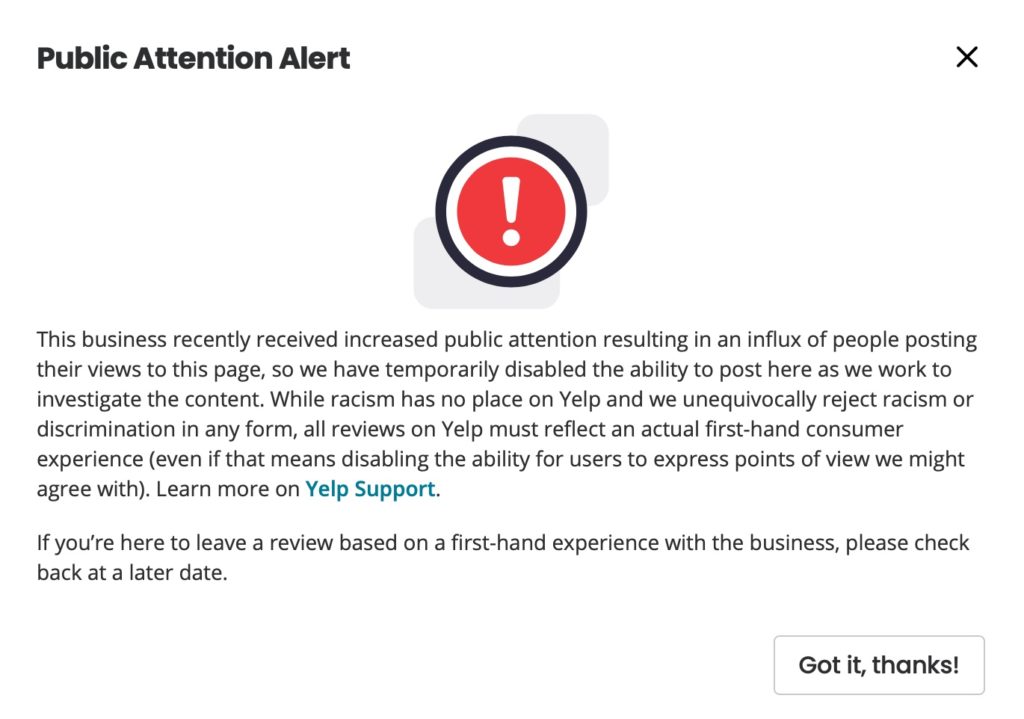
The hate came fast and furious over the past few days, with dozens of nasty comments on Twitter and so many negative reviews from fake customers on Yelp that the review website had to shut down the comment section for the bar. It was being bombarded by people who have probably never been to Anchorage and their reviews of reuben sandwiches and French onion soup were smothered with a smearing of fakery.

TripAdvisor also suspended comments on its page for F Street Station. Although the establishment has a four-star rating from nearly 1,000 reviewers, TripAdvisor said that “Due to a recent event that has attracted media attention and has caused an influx of review submissions that do not describe a first-hand experience, we have temporarily suspended publishing new reviews for this listing. If you’ve had a firsthand experience at this property, please check back soon – we’re looking forward to receiving your review.”

Even former gubernatorial candidate Les Gara got in on the Twitter action, calling on the bar to sincerely apologize.

But whether that will dissuade longtime customers is another matter. In 2015, now-Rep. Zack Fields wrote glowingly about F Street Station’s food and ambiance in a long review for the Anchorage Press:

“F Street Station has been serving food and drinks in the same downtown Anchorage location since before statehood. With brass rails at the double bars, honey-toned wood paneling, and white smocked line cooks, it is a space that suspends time for those who enter. The food is unpretentious and impeccable, served straight from the kitchen for patrons who sit at the bar,” Fields wrote.

“Eating a meal at this often-packed establishment is a privilege; in a city full of mediocre and overpriced restaurants, F Street Station is consistently flawless,” Fields wrote, and then proceeded to wax poetic about the thin-sliced roast beef cooked to perfection for the roast beef sandwiches, and the exquisite Friday French dip lunches: “This French dip ($11) is the best I’ve eaten in Anchorage or anywhere else. It is certainly the finest lunch available in Anchorage for less than $20. After countless Friday French dip lunches, I’ve never encountered dry, overdone, or underdone meat. The French bread roll has never been under or over toasted. The cheese has always been perfectly melted, broiled briefly on the rolls until it bubbles slightly. The fries are always cooked correctly, and are real fries from potatoes-a surprisingly rare phenomenon. No wonder, then, that they sell out so quickly. Most Fridays, the line cooks call out ‘last dip’ right around noon.”

Fields went on to exclaim profusely about the buttered clams and calamari, the shrimp, and the pasta. Anyone who knows Rep. Fields knows he does not hand out compliments to conservatives, or to anyone for that matter, but he closed his review by writing:

“In some ways, it isn’t surprising F St has been around for more than a half century. It serves a very limited menu with unpretentious and expertly prepared food. The reason that certain dishes run out is because the food is sourced in limited supplies for maximum freshness. F St doesn’t have or need such trivialities as a website or Facebook page: Judging by the crowds, a significant percentage of Anchorage residents know it continues to be one of the best places to eat in town.”

F Street Station: Where the food is excellent and free speech is still a thing. For now.

Senate bill would repeal Biden $600 IRS reporting threshold

By KIM JARRETT | THE CENTER SQUARE

Eight Republican senators have signed onto a bill that would repeal the tax threshold for reporting third-party payments. 

Under a provision in the American Rescue Plan Act, business transactions over $600 annually would be reported to the IRS by the payment platforms.  

Led by U.S. Sen. Kevin Cramer, R-N.D., the Stop the Nosy Obsession with Online Payments Act, (SNOOP Act) would keep the threshold at $20,000 a year for at least 200 transactions. 

“Small business owners and independent contractors need rescuing from this American Rescue Plan Act provision, which, fortunately, has yet to be implemented by the IRS,” Sen. Cramer said in a news release. “Our bill would prevent enforcement of the onerous regulation and institute a more reasonable reporting threshold.”

Cramer co-sponsored a similar bill last year. According to congressional records, it was assigned to the Senate Finance Committee but never made it to the Senate floor for a vote. 

The IRS has delayed enforcing the regulation for the 2022 tax year. 

“This invasion of taxpayer privacy is another example of overreach by the Administration and should be stopped in its tracks,” he said.

“The IRS and Treasury heard a number of concerns regarding the timeline of implementation of these changes under the American Rescue Plan,” Acting IRS Commissioner Doug O’Donnell said in December. “The additional time will help reduce confusion during the upcoming 2023 tax filing season and provide more time for taxpayers to prepare and understand the new reporting requirements.”

Sens. John Hoeven, R-N.D, Bill Hagerty, R-Tenn., Cynthia Lummis, R-Wyo., Ted Cruz, R-Texas, John Kennedy, R-La., John Barrasso, R-Wyo. and James Lankford, R-Okla. are co-sponsors of the bill.

Peltola says she missed Strategic Petroleum Reserve vote because she used the bathroom and then left early

Alaska’s only representative in Congress missed a critical vote on Friday because, as she later explained to the Anchorage Daily News, she had to use the bathroom.

The record shows that Peltola was present to vote over the course of two days on multiple amendments on a bill that is key to America’s national security and energy independence.

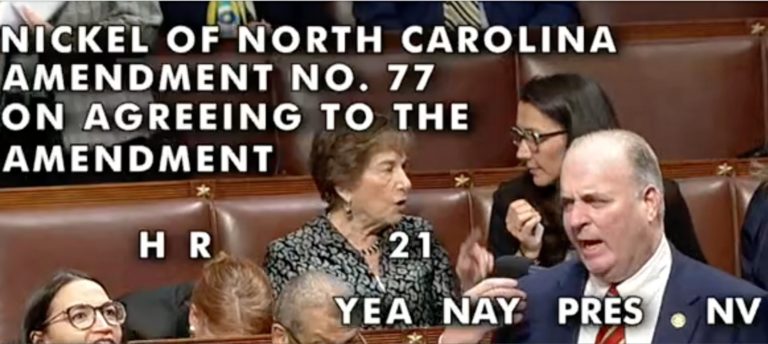
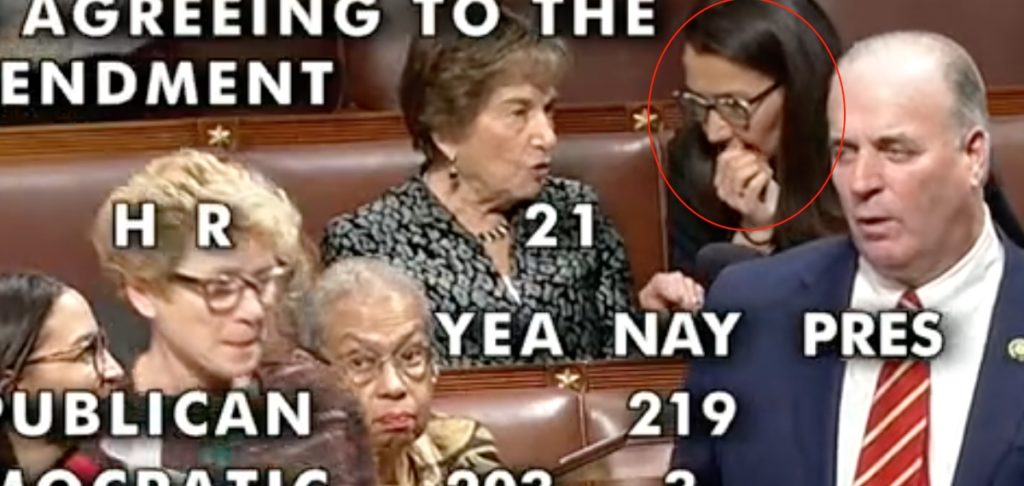
Rep. Mary Peltola was present in the chambers on Friday at least until the final 17 seconds before the end of voting on Amendment 77, as seen on CSPAN. It was after this image was captured and before the main vote started — about a two-minute timeframe — when she would have walked out of the chambers and not voted on the bill.

Amendment 77 was the final amendment to House Bill 21, the Strategic Production Response Act, before the main vote on the bill would be taken. After Peltola voted no on that final amendment, she sat chatting with a colleague until the vote was finished and the main vote was pending.

Votes on amendments were taking about 2 minutes and there were short procedural moments between votes when representatives could take care of private business. But instead of waiting for the final vote to start, Peltola slipped out.

The bathrooms outside the House Chambers are right outside the doors in an area sometimes called “the bubble,” and the vote on the final version of the bill went on for six minutes.

Later, when asked by the ADN reporter about why she missed the vote, Peltola brushed off the importance of her bathroom run, saying that because the Senate is controlled by Democrats and because the Democrat president has already said he will veto the bill, it has no chance of passing.

That may or may not be the case in the Senate. Sen. Lisa Murkowski has signed on as an early co-sponsor of the legislation and she may have the ability to call in some favors from the Democrats in the Senate, such as Sen. Joe Manchin of West Virginia, who is an energy-friendly colleague, and Sen. Kyrsten Lea Sinema, an independent from Arizona.

Also last week, Peltola had to explain to reporters why her college attendance is overstated on her official biographies. She overstated her attendance by over a year at one university, and ended up admitting to the reporters that she left college without finishing and could not explain how the mistake was made. She said it was a mistake she made long ago on her bio and she never changed it.

Peltola serves on the House Natural Resources Committee, and Alaska’s energy-based economy depends on her and Alaska’s two senators to make the right calls for the state’s jobs and for the nation’s energy security. It’s likely her predecessor Congressman Don Young would have voted yes. Peltola later told a reporter that she would have voted yes, had she been present.

But her husband, Gene Peltola, is involved in carbon trading, which is a relatively new and lucrative industry in the energy sector.

There is a way for Rep. Peltola to put that on the record now. Although she ducked out of being on the vote sheet, the House provides “missed votes” forms for lawmakers to fill out. Those “missed votes” don’t go into the official tally, but allow lawmakers to state on the record how they would have voted, if they had shown up. Peltola’s chief of staff, who was chief of staff for the late Congressman Young, would be familiar with the process.

That missed vote form is available at this link.

Newtok school power plant destroyed by fire

On Thursday night, the Newtok Ayaprun School power plant caught fire after the generator ran out of fuel. The power plant was destroyed; however, no other structures are reported damaged, according to the State Emergency Operations Center, in a Friday report.

The school is not connected to the village power source and the community is working with the Lower Kuskokwim School District to provide a temporary generator to keep heat and water on in the school.

The Newtok washeteria is also not working and residents have been using Ayaprun School as their water source. The village had not made any immediate requests for assistance, and the plan was to further assess damages, the SEOC reported. The agency is coordinating with local, state, tribal and other partners in support of the community.

The village, located about 95 miles north of Bethel, has about 200 residents. Newtok Ayaprun School has a fluctuating enrollment as students relocate to Mertarvik, where there is a new school built at the townsite where the entire community is planning to move, due to coastal erosion. In the 22-23 school year, there are approximately 40 students with three certified teachers, three Yugtun speaking teachers, and additional support staff at Newtok Ayuprun.

Ted Spraker: National Park Service rule on hunting in park preserves is a big lie

By TED SPRAKER

“A lie gets halfway around the world before the truth has a chance to get its pants on.” This famous saying, attributed to many, is a fitting description of the tall tale by the National Park Service and its new proposed rule to eliminate traditional harvest methods by Alaskans.

The definition of a lie is “to make an untrue statement with intent to deceive.”  Make no mistake, this is about federal government bureaucrats and their anti-hunting, anti-Alaska agenda making assertions through an agency rulemaking process to deceive the public.  

The State of Alaska has been embattled with Department of Interior agencies for decades. The State is defending traditional harvest methods implemented by the Alaska Board of Game, which go through a very public process and scientific analysis. These traditional harvest methods were protected by “saving clauses” in the Statehood Compact Act, ANILCA, 2017 Congressional Review Act, and recently the Supreme Court case Sturgeon v. Frost

Below is a list of National Park Service-proposed regulations and their distortion of the truth. 

The new proposed rule defines the term “sport hunter” as a fair-chase hunter. Most Alaskans fall under a general/sport hunting designation and hunt for food security and sustenance. The new rule would reinstate prohibitions that were in place under the Obama-era 2015 rule on “methods of harvest that are not compatible with generally accepted notions of ‘sport’ hunting.”  This is an ignorant statement by the National Park Service. “Generally accepted,” as most of us are aware, is not about Alaskans or our way of life.

The National Park Service proposal cites “public safety” concerns as the reason to eliminate all bear baiting on park preserves. The Park Service will be hard-pressed to talk about one incident where a bear bait station was a threat to the general population. Most dangerous or fatal bear encounters have been either with spot and stalk hunters or hikers enjoying the outdoors. Bears don’t habituate to food; they habituate to a site. If they only habituated to food, bears would be lined up at Safeway heading for the doughnut section. If baiting is such a distasteful harvest method, the Park Service should have included fishing using bait and duck hunting from a blind. This effort is simply another attempt to prohibit hunting.

Elimination of denning with artificial light as an unethical practice. Another big lie. Several Native elders from Huslia came to the Board of Game in 2012 requesting the board allow the use of artificial light to take a black bear in a den. Keep in mind, it has never been illegal to kill a brown or black bear in a den, if the season was open. The elders spoke of a traditional method of using artificial light when harvesting a bear, however, it was rarely practiced. This harvest method was a safety exercise used to avoid a brown bear in a den or a sow black bear with cubs. Additionally, the flashlight was used to assure an accurate shot placement. The assertion from the Park Service that the use of artificial light in bear dens is widely used by sport hunters is a false narrative and is an assault to Alaska Native traditions. In addition, the practice is only allowed in portions of four of the 26 game management units in the state where it is customary and traditional.

Prohibition of predator control. The false narrative (lie) by the National Park Service, asserts that hunters or trappers will harvest enough predators to benefit prey populations. This has never occurred in Alaska. The only time a sufficient number of predators (about 80%) have been removed from an area that benefited a prey population was under an intensive management program authorized by the Board of Game, implemented by the Alaska Department of Fish and Game, and has never occurred on federal public lands. The Board of Game does not pass general hunting regulations of predators to benefit prey species. Regulations are always justified to increase harvest opportunity. The predator control assertion by the National Park Service has no merit and is simply anti-hunting rhetoric. 

Elimination of trapping by non-rural residents is another violation of the Statehood Compact Act, ANILCA, and is anti-hunting in general. The proposed rule would prohibit any “methods of harvest that target predators for the purpose of increasing populations of prey species for human harvest. Hunting predators would be prohibited even if they do not in fact reduce predator populations or increase the number of prey species.”  ANILCA Section 1313 directs the administration: “taking of fish and wildlife for sport purposes, subsistence uses, and trapping shall be allowed in a national preserve under applicable State and Federal law and regulation.” 

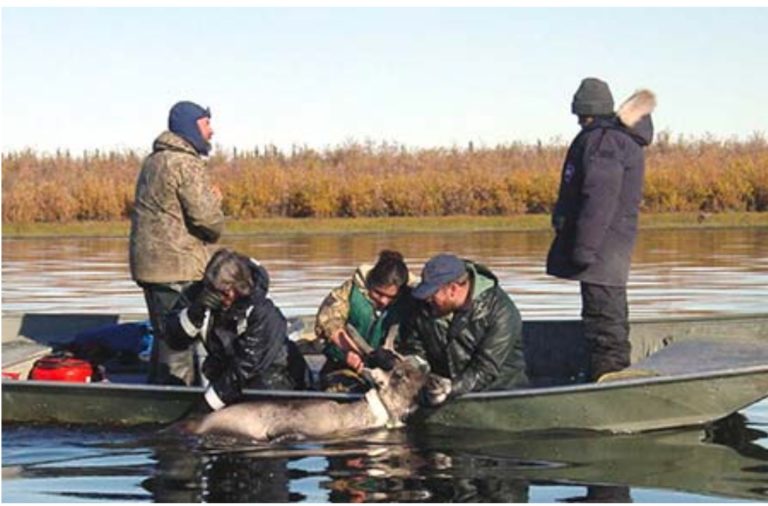
Elimination of harvesting caribou from a boat. The rural/Native traditional practice of harvesting swimming caribou from a boat was made legal in 1982 in the northwest part of Alaska by the Board of Game. The National Park Service justified a subsistence harvest as a cultural practice but must eliminate “sport or recreational” hunting because it invokes Western concepts of fairness that do not apply to subsistence practices. In other words, if you grew up in rural Alaska and traditionally used the practice of harvesting swimming caribou, then moved to a non-rural designated community, you are now automatically deemed a “sport” hunter with no ties to your traditional practices. By the same token, a teacher from Florida with no ties to Alaska can move to a rural designated community and become a subsistence hunter. 

Consultation with the Tribes and ANCSA Corporations. This one was a big whopper told by the National Park Service. In consultation with the tribes and corporations, the Park Service championed a false narrative that most “sport hunters” (i.e., Alaskans who are not federally qualified under subsistence) would be in direct competition for the resource. Non-local hunters experienced millions of acres of public lands closed by a group of unelected bureaucrats. In April of last year, the Federal Subsistence Board closed nearly 40 million acres of public lands to non-local moose and caribou hunters. It is a lie to say non-local hunters are in direct competition for the resources in the park preserves. Outmigration from rural communities to hubs and cities is expected to grow as climate change and economic prospects jeopardize the foundation and social makeup of numerous rural Alaska communities. These circumstances eliminate federally qualified status for many former rural residents.  

In a 2017 scientific publication by the National Park Service’s own biologist: “We did not detect an effect of sport hunting activity on caribou resource selection, supporting our null hypothesis. This indicates that sport hunting does not inhibit the ability of caribou to migrate through Noatak. Local hunters have harvested caribou at key river crossing locations for 10,000 years in northwest Alaska. That these locations continue to be used by caribou and local hunters to this day may support our findings. Further, studies elsewhere have also found environmental factors have a greater impact on animal space use than hunting. Our finding of a lack of effect of sport hunting activity on the likelihood of caribou migrating through Noatak does stand in apparent contrast to concerns voiced by local hunters regarding the negative effects of sport hunters and commercial air transporters.”

The National Park Service reaching out to consult with the tribes and corporations on this false narrative of competition between Alaskans, contradicted by their own biologist, is not only deceitful, but disgraceful. 

ANILCA clearly recognizes Congress’ principal intent to maintain sound wildlife populations, to preserve untouched ecosystems, to safeguard resources for subsistence, and to preserve opportunities related to sport hunting.  Wildlife populations managed under state regulations have remained healthy and viable on preserves for over 30 years after the passage of ANILCA. The proposed rule has outcomes that upset Congress’ intended balance by unnecessarily pitting rural and non-rural hunters, and park values against each other.   

Alaskans should speak out against the National Park Service’s dishonest justification for these new proposed rules, its anti-hunting agenda, and the agency’s attack on the people of Alaska. 

I encourage all Alaskans to submit one simple comment under the rule making portal: “The NPS proposed rule on hunting in the park preserves to eliminate “sport” hunting and predator control is a big lie!” Send your comment to the Federal eRulemaking Portal: http//www.regulations.gov. The Regulation Identifier Number is 1024-AE70 .

Ted Spraker of Soldotna was a ADF&G career wildlife biologist, six term member of the Alaska Board of Game, and president of the Kenai chapter of Safari Club International. Photo credit: ADF&G.