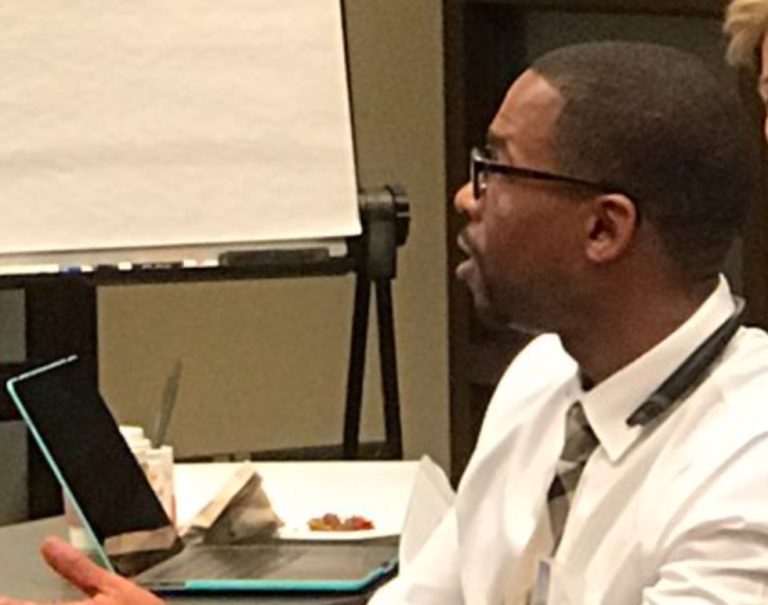
When calling in to testify, do not use a speaker phone. Speaker phone audio quality is poor and makes it difficult for legislators to understand you.
There will be periods of silence – don’t hang up. Prior to a meeting beginning the line will be silent. Be patient and wait for the meeting to begin. After the meeting begins, the committee may take an “at ease”. The line will be silent when the committee is not on the record.
Ensure you are in a quiet setting when testifying. Background noise diminishes the quality of your testimony. If you are inaudible, the chairman may ask you to try and remedy the situation. If it is not improved, they may ask you to submit written testimony instead.
Written testimony may be provided if time doesn’t allow you to wait. Written testimony should be directed to the committee. Committee email address are located here: http://akleg.gov/docs/excel/Committee-Email-Addresses.xlsx
If you need further assistance, contact the Juneau Legislative Information office at 907-465-4648.
Rep. Alyse Galvin of Anchorage District 14 is smart enough to know a big income tax will never fly, but she’s hoping that a modest income tax will reopen the door to taxation of Alaskans’ paychecks.
HB 156 is that starter tax to get things going and get the money flowing into state spending accounts. Anyone making over $200,000 a year would pay the state 2% of their income over the $200,000 threshold. Everyone else would pay $20 to the state. She says it will bring in $120-150 million a year in new revenue for state coffers.
The bill will be heard in House Way and Means Committee on Monday evening. It’s one of several bills in the House and Senate that would generate new money for the State of Alaska through income and corporation taxes, or even a statewide sales tax.
The last time Alaska had an income tax was in 1980. There have been many who tried, and all of them said that without an income tax, the State of Alaska would go broke. But even when oil was $9 a barrel, legislators did not bite on the taxation solution. Through the years, the budget has continued to grow, but not quite as fast as Democrats and their no-party allies would like. Alaska is the only state to have repealed an income tax once it was on the books.
Galvin has produced no fiscal note for the bill but past proposals saw the cost of state collection of such a revenue eating up at least half of the revenue.
According to the Tax Foundation, Alaska state revenues were close to $30 billion in FY 2021—about $117,000 per household. The median household income in Alaska is $80,287, according to the Census Bureau, and total personal income in the state was $49.2 billion in FY 2021. While some Alaskan incomes well exceed the median, Alaska’s state government revenues that year were 60.6 percent of state total personal income, the Tax Foundation says.
A starter tax like HB 156 would get a tax back on the books for Alaska and could then be adjusted upward in future years.
In 2017, former Gov. Bill Walker called for an income tax. Walker even called for a special session to consider his tax, but it was a nonstarter and he lost the 2018 election.
April 16 is Day 90 of the 2023 Alaska Legislature. By Alaska Statute, it would be the final day of business, a day to gavel out. But the Legislature has not ended its work by that day since one year after the law was passed by voters in 2006. That’s because there’s also the constitutional limit of 121 days, and lawmakers never have been able to take care of business in the 90-day limit. Once they blow past 90 days, things usually start moving more quickly.
The main job of the Legislature is to pass the various budgets, including supplemental budget, operating budget, capital budget, and mental health budget.
On Monday at 9 am, the Senate Finance Committee will continue working through the pieces of the budget, to include the close-out of the work on the University of Alaska Fiscal Year 2024 budget. The committee will also consider SB 98, a bill establishing a Power Cost Equalization endowment fund, and SB 107, a bill to establish new formula for the Permanent Fund dividend that would give government 75% of earnings from the Permanent Fund and save 25% for Permanent Fund dividends. A committee timeline for the disputes over the Permanent Fund earnings is at this link.
At 1:30 pm, the Senate Finance Committee will hear SB 34, an act reestablishing Act reestablishing the Citizens’ Advisory Commission on Federal Management Areas in Alaska.
The committee will also hear SB 122, a rewrite of Alaska’s corporate income tax by Sen. Bill Wielechowski, for taxpayers who operate in multiple states. To avoid taxpayers having to do separate accounting in each state, states have adopted mathematical formulas to determine tax apportionment. Wielechowski argues that the multi-state compact was designed for a brick and mortar business world.
“In the modern digital economy a corporation can target advertising to Alaska, sell a product through Alaska’s broadband infrastructure, and ship it through Alaska’s roads, ports and airports without having any property or payroll in Alaska,” his briefing paper says. The tax change will impact online commerce. Read it here.
In House Finance Committee at 1:30 pm, the committee will hear HB 3, which reinforces constitutional rights to use gold and silver as legal tender for payment of debts. Read the main sponsor’s statement here from Sen. Kevin McCabe.
The committee will also hear HB 83, similar to SB 34, reestablishing the Citizens’ Advisory Commission on Federal Management Areas in Alaska.
At 6 pm, House Ways and Means Committee will hear HB 156, a bill that would reestablish an income tax in Alaska, sponsored by Rep. Alyse Galvin and Rep. Cliff Groh. There is no fiscal note or documentation and Monday’s hearing will be the first for the bill.
A new survey by Intelligent.com shows how the artificial intelligence application called ChatCPT is pervasive in school curriculum as teachers increasingly use it to develop lesson plans, and students embrace it to do their homework.
The downtown Seattle-based company, which is privately funded by unknown entities, assists students through their study challenges, college application process, as well as navigating financial aid.
The company said it surveyed 1,000 teachers and found that 8 in 10 teaches approve of students using ChatGPT, and nearly all teachers are using it to help them manage their work.
Key findings from the survey include:
95% of teachers are aware of ChatGPT
98% of teachers use ChatGPT
79% approve of student use
84% of teachers that approve of its use have spent time teaching their students how to use it
35% believe most or all of their students turn in assignments they used ChatGPT to complete
71% say their school doesn’t have a policy surrounding ChatGPT use
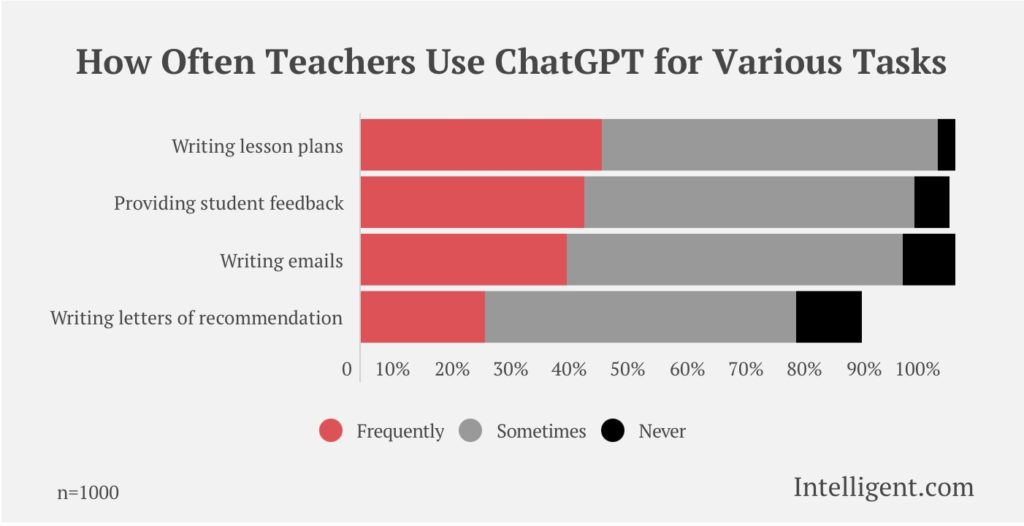
The survey also revealed that 97% of teachers were frequently or sometimes using ChatGPT to write lesson plans, while 93% were using it to help them grade and provide feedback to students. Some 91% of teachers were using it to write emails and 89% to write letters of recommendation.
ChatGPT and other artificial intelligence programs are newly available to the public. ChatGPT was launched in November and has come under criticism for having a strong left-leaning bias.
Earlier this year, Must Read Alaska asked ChatGPT to write about why drag queen story hour was a bad idea for children, and the chat bot would not do it, but did provide a glowing story on the benefits of drag queen story hour for children.
Others have conducted similar experiments and found strong biases. Some express concern about whether students are really learning when they are relying so heavily on a chat bot to do their homework.
An example of how chat bots can do assignments is beyond just answering a series of questions: A computer programming teacher can assign students to write some code that performs certain functions. The students can ask ChatGPT to write the code for them and complete the assignment in a few seconds.
ChatGPT can also write creative stories, academic reports, poems, and compositions of various types. As artificial intelligence, it learns quickly and improves its quality by the second, as it picks up new information from the internet constantly.
Other forms of AI can produce completely realistic-looking photographs and artwork that looks like it was painted by a master.
The top reason the surveyed teachers give for using ChatGPT was time-saving, with 42% of teachers citing it as a factor. Many teachers also found that it provided good suggestions (41%) and helped them understand ChatGPT’s capabilities (17%).
The survey indicated that teachers who used the tool generally approved of their students using it as well. Two-thirds of teachers surveyed believed that many students were turning in assignments generated by artificial intelligence. The results showed that 6% of teachers believed all of their students turned in work generated by ChatGPT, with 30% believing most students did so, and 30% thinking many students used it. Conversely, 25% of teachers thought only some students used it, and only 1% believed none of their students used it.
The survey also found that a third of teachers believed that all (6%) or most (28%) of their students used ChatGPT during class. Another 25% thought that many students used it, while 27% thought that only some did. Only 5% believed none of their students used it in class.
Nearly three-quarters of teachers survey (71%) said that their school did not have a policy surrounding ChatGPT use.
eLearningIndustry.com says there are many good reasons to incorporate AI into the classroom.
“One of the key benefits of incorporating AI into the classroom is the ability to provide students with a more personalized learning experience. AI algorithms can analyze student data and adapt to their learning styles, providing feedback and recommendations that are tailored to their individual needs and abilities. This can help to keep students engaged and motivated and can lead to improved academic performance. Another benefit of incorporating AI into the classroom is the opportunity to deepen students’ understanding of this rapidly-evolving technology. By incorporating AI into the curriculum, teachers can help students develop a critical perspective on this technology, and prepare them for the challenges and opportunities of the digital age. Finally, incorporating AI into the classroom can also help students develop important 21st-century skills, such as problem-solving, critical thinking, and collaboration. These skills are essential for success in the digital age, and they can be developed through hands-on experience with AI tools and applications,” the trade group writes.
The group also cautions that there are drawbacks, including training and integration of the technology among teachers, and ethical challenges. But in general, the education industry group speaks favorably of the new technology.
The twisted world of males playacting as women and competing in women’s sports competition categories continues to find its way to court.
Now, Anchorage-based USA Powerlifting, a national organization that hosts competitions around the country, has been ordered by a district judge to leave Minnesota, while a lawsuit proceeds that would force the competition organization to allow transgenders to compete in the women’s division.
Judge Patrick Diamond made the order despite the fact that the transgender who is suing the organization not requesting it.
JayCee Cooper, a transgender weightlifter, won a discrimination lawsuit earlier this year against USA Powerlifting, after being banned from competing in the women’s powerlifting division in Minnesota due to the fact he is a biological male. Judge Diamond has already indicated that he sides with Cooper in this dispute.
“The harm is in making a person pretend to be something different, the implicit message being that who they are is less than,” Judge Patrick C. Diamond in his earlier ruling in March, ordering the organization to immediately revise its policies.
“The USAPL’s evidence of competitive advantage does not take into account any competitive disadvantage a transgender athlete might face from, for example, increased risk of depression and suicide, lack of access to coaching and practice facilities, or other performance suppression common to transgender persons,” Diamond wrote in his March decision.
Now, with USA Powerlifting standing its ground, Diamond has banned the organization from the state while an appeal is under way.
The decision impacts the organization’s ability to host the Central and Midwest regionals May 27 and 28.
The case goes back to 2021. Cooper was born male and up until 2015 he participated in competitive sports as a male. He had been a member of the U.S. Junior National curling team and competed in the the World Junior Curling Championships in 2007. Cooper then changed his name from Joel to JayCee and started presenting as a female. In 2016, in his mid-20s, Cooper started competing in women’s roller derby, and in 2017 or 2018, he started powerlifting.
Cooper, now a 35-year-old Minneapolis transgender, filed the discrimination lawsuit in 2021 against USA Powerlifting, after the organization said Cooper could not compete in the women’s division.
“The judge acted solely on his own, and consistent with his prior stance in advocating for the plaintiff’s position. We believe the judge has misinterpreted Minnesota law in this regard and exceeded his authority in terms of the conduct of our service to our members. We will appeal this highly unusual ruling. However, while these proceedings play out, we are ordered to suspend competitions in Minnesota and cease selling memberships to Minnesota residents. We are investigating relocating Midwest Regionals and further information will be forthcoming,” the organization said through its President Dr. Larry Maile of Anchorage, a retired psychologist.
Maile says that studies show men have a 43% advantage over women in weightlifting. The study his group did looked at 17,000 appearances of powerlifters, and balanced out things like weight to come up with the statistic.
“That’s a concern for us,” he said. “And the question is, how do you normalize that and how do you make it fair in that circumstance. Our objective is to include everybody. But it’s not to include everybody in a way that’s unfair to one group. And so our decision that trans women can’t compete in the women’s division is based on data. We have offered several alternatives.”
Among those is the organization’s MX division, which provides a safe, inclusive option for athletes of all genders and gender identities to compete within USA Powerlifting.
We published a podcast about Judge Patrick Diamond's decision to order us to cease operations in Minnesota. Here is a clip of USA Powerlifting President Dr. Larry Maile sharing our data on transwomen competing against women in powerlifting – men have a 43% advantage over women. pic.twitter.com/8Cbph14gkC
A women’s group of athletes agrees with USA Powerlifting’s stance to protect women’s divisions in sports. The Independent Council on Women’s Sports (ICONS), a network of women athletes and supporters advocating for female-protected categories in sports, said “The sport of powerlifting has been destroyed for both men & women in MN. We applaud USA Powerlifting for its commitment to fighting this injustice & offer our support in this battle to #savewomenspowerlifting.”
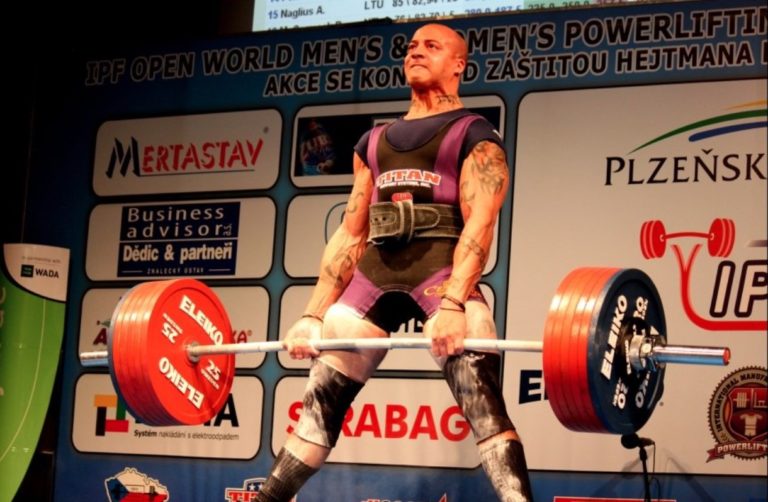
In 2019, the hip-hop artist known as Zuby set out to demonstrate that athletes who are genetically male were unfairly competing as women.
Ruby posted a video of him smashing the British women’s deadlift record, while he said he was “identifying as a woman”. The video has had millions of views on Twitter.
I keep hearing about how biological men don't have any physical strength advantage over women in 2019…
So watch me DESTROY the British Women's deadlift record without trying.
Night owls are in luck: The Lyriad meteor shower will be visible later this week in the north sky, on the tail end of International Dark Sky Week, and also about the last time Alaskans will see a dark sky until autumn.
The orbital path of Comet Thatcher signifies the end of a meteor shower drought that lasted for the past few months. In Alaska the shower runs annually from about April 16 through April 25, and this year will peak the night of April 22. The meteors can sometimes produce bright trails of dust that can be seen for several seconds.
At the same time, a thin crescent moon will set early in the evening. Best viewing time for the meteor shower will be after midnight from a dark location, according to the University of Alaska Fairbanks. Those in the Arctic probably won’t see the starry show because the skies are now not getting dark enough. But Southeast may have partly cloudy weather and a chance for star gazing midweek.
The new moon is April 19, at about 8:15 pm Alaska time, and late that night will be a great time to observe fait objects like star clusters and galaxies, if the skies are clear enough.
The Lyriad meteor shower has been recorded for as far back 687 B.C by Chinese astronomers. Learn more about the meteor shower atDarkSky.org.
Photo: Night sky, Lake Clark by D. Khalsa National Park Service
Rep. Mary Peltola has raised $369,000 in the first quarter of 2023 for her reelection campaign for next year’s congressional race.
She has spent more than $579,000 in the same time period. Much of the spending was on fundraising. She has $483,556 cash on hand, a 30% decrease over what she started with in January.
Peltola’s campaign spent lavishly, and has purchased over 40 airline tickets from Alaska Airlines, eight tickets from American Airlines, more than a dozen tickets from Delta, and tens of thousands of dollars in hotels and catering in Alaska and elsewhere.
She has contracted with GA Campaigns, also known as GrassRoots Analytics, a Washington, D.C. company that also gave its best effort to the Bill Walker/Heidi Drygas campaign for Alaska governor/lieutenant governor last year.
FEC records show Peltola’s campaign, whose treasurer is Democrat former State Rep. Eric Croft, has paid GA Campaigns over $220,000 in the first quarter.
Other than Peltola, no other candidates have filed with the FEC for the 2024 congressional race.
On April 13, a Juneau grand jury indicted Juneauite Mitchell Watley for terroristic threatening in the second degree.
According to Juneau police and FBI, Watley left threatening notes at various places of business in Juneau, featuring the transgender flag and an image of an assault rifle, with the words “feeling cute might shoot some children” printed on the cards. The words were in reference to a popular meme on social media known as the “feeling cute, might… challenge” and the transgender version of this note was posted right after a transgender in Nashville shot and killed six Christians as a school before being stopped dead by police.
It’s not clear if the notes were a threat or a commentary on current events and the state of society.
Upon receiving reports of the notes, officers launched an investigation and compared security camera footage to the locations where the notes were found. This led to the arrest of Watley, who was found to be present at one of the locations at the time a note was delivered.
Watley’s preliminary hearing, originally scheduled for April 21, was vacated. His next hearing is set for April 25 at 2:30 p.m.
Watley is a well-known Alaska-themed children’s book illustrator of books such as “I Would Tuck You In,” and “I Would Teach You To Fly,” and is currently out of jail on a $10,000 bond. His arrest sparked a wave of anger in the community, and most, if not all, sellers of his books have pulled them from the shelves and his publisher, an imprint of Penguin Books, has discontinued its relationship with Watley.
After an unsavory series of text messages allegedly involving Robert Service High School Principal Allen Wardlaw and others, Wardlaw is now on administrative leave.
The school district sent a team to meet with faculty and staff at the high school on Wednesday, said Communication Director MJ Thim, who added that Assistant Principal Imtiaz Azzam has been named acting principal during the investigation.
The district wanted to reassure the school community it was taking their concerns about Wardlaw seriously.
In early afternoon Wednesday, the district sent a letter to the Service High School community, including teachers and staff:
Good afternoon Service HS Families and Staff,
I want to make you aware of a leadership change that has occurred today.
The District has begun an investigation into community concerns about Principal Allen Wardlaw. He has been placed on administrative leave and Imtiaz Azzam has been named acting-principal during this time—she brings strong leadership and a student-first perspective to this important role.
We understand you have many questions. As we work through this matter, we will provide updates in a timely manner when we can. Because this is a personnel matter, we can’t comment further at this time.
Ensuring a safe and stable learning environment for students and staff is a top priority for us. We are committed to making sure that continues for you.
If you have any questions and/or concerns, please contact my office directly in order for our staff to stay focused on educating our Service High School students. You can email me ([email protected]) or call 907-742-4256.
The letter was signed by Senior Director of Secondary Education Kersten Johnson-Struempler.
The allegations evolved over several days after a person posted text messages purported to be between Wardlaw and a woman who was not his wife, but who is also employed by the district.
After students started passing around sordid text messages on social media, especially over SnapChat earlier this week, several parents contacted Rep. Jamie Allard, who serves as co-chair of the House Education Committee. They said they were getting no answers from the school district, and they wanted to know what is going on at Service High, because their children were being exposed to some pretty raw material.
On Wednesday afternoon, Must Read Alaska reported about the text messages that were, by Tuesday night, being shared throughout the Anchorage School District. The district responded a few hours later with its answer: The administration has taken the appropriate steps to protect Wardlaw’s personnel rights, while ensuring the safety of students and stabilizing the learning environment.
The text messages, full of demeaning and grotesque sexual remarks, pertain to educators having what are evidently sado-masochistic, bondage-play extramarital sexual relations, using illegal drugs, and texting demeaning messages to each other, including direct sexual accusations.
Rep. Jamie Allard said she had received several emails and texts about the situation.
“Once again, we see how important it is for parents to be made aware of whats taking place in their kids’ school. There is nothing that goes on in schools that the parents shouldn’t be allowed to know,” Allard said.