Saturday, August 15, 2026
Home Blog Page 691

Doug Vincent-Lang: Yet another unjustified attack by feds on Alaska

By DOUG VINCENT-LANG

The National Park Service is once again dividing Alaska by unjustifiably undermining the state’s sustainable management of Alaska’s wildlife. In the latest attack, the National Park Service has proposed rule making that prohibits traditional methods and means of hunting throughout national preserves in Alaska.  

The Alaska National Interest Lands Conservation Act passed by Congress in 1980 is the single largest expansion of protected lands in U.S. history. Nearly 40% of Alaska was set aside for conservation and preservation purposes.

During the drafting of ANILCA, many Alaskans attended congressional hearings throughout Alaska as well as traveled to Washington D.C. to voice their concerns for how important it was to have continued access to resources on what would be new conservation system unit lands.

Based on this testimony, Congress included clear provisions protecting Alaskans’ traditional way of life and our ability to use the newly set aside federal public lands, and the resources on those lands, for our cultural, social, and economic needs.

ANILCA’s provisions are clear. They allow Alaskans to continue to access and hunt on the federal preserve lands Congress created in Alaska. Congress specifically designed ANILCA to allow all Alaskans to access our fish and game resources and for the State to manage these resources and the methods and means of hunting. 

Despite this, the National Park Service has repeatedly tried to reinterpret this agreement and law and restrict Alaskans’ access to cherished State resources. This is unacceptable. Alaskans must rally to protect the balance Congress promised—a balance that maintains our resources for use by future generations. 

By taking away our opportunities to hunt and be out on our lands, the National Park Service erodes the terms of our agreement memorialized in ANILCA to ensure this balance. Fish and wildlife are primary food sources for Alaskans and are vital to cultural and traditional heritage. 

In its current rule making, the National Park Service is trying to rewrite ANILCA and dictate not only where, but also how, Alaskans can hunt on park service lands. The National Park Service is claiming they need to ban certain state general hunting regulations that they claim are incongruent with their park values and represent unfair hunting practices. Yet despite this, the very regulations they are proposing to ban under state regulations, they propose to implement through the authority of the Federal Subsistence Board.

We are perplexed by this seemingly incongruent logic.  

To begin, the National Park Service is claiming Alaska has “sport” hunting regulations.  Alaska does not have sport hunting regulations. Alaska has general hunting regulations that provide for subsistence and general hunting. In contrast, the Federal Subsistence Board regulations only allow rural qualified users to participate. 

When the National Park Service replaces state general hunting regulations with federal regulations they limit participation. State regulations provide the opportunity to hunt on park service land for Alaskans who have customary and traditional ties to wildlife, but are displaced to urban areas for health, educational, and socio-economic reasons. Federal regulations do not. But they do allow for a new rural resident who has no customary ties to resources here to hunt. So, the proposed rule must not be to provide for customary and traditional practices. And the rule making must not be because the hunting methods are against park values. If it were, the National Park Service would ban the practices entirely. Yet they have not. They allow these practices by rural residents. 

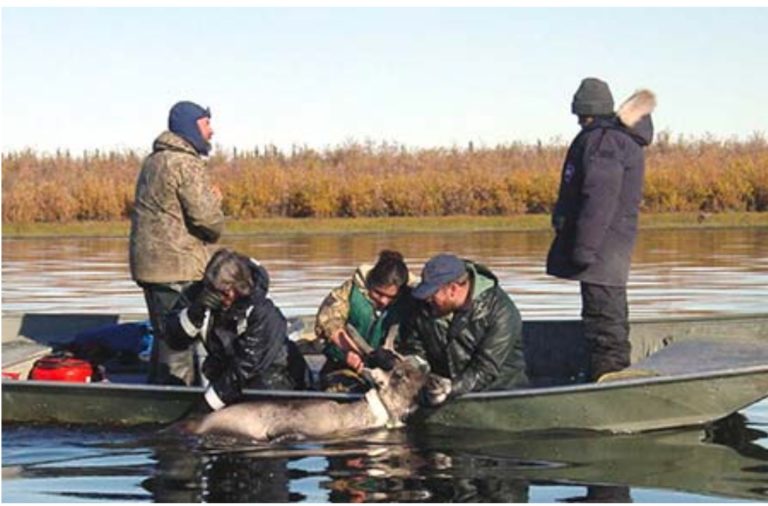
One is left to wonder how it can be within park values to allow the taking of a swimming caribou by a new rural resident who has no tie to this method while barring a person who has a history of traditional and cultural hunting practices but now is displaced to an urban center from hunting. 

The National Park Service also has no conservation concerns for our wildlife driving this rule making. They agree our populations are healthy and appropriately managed throughout Alaska preserves.

In sum, their rulemaking is not providing customary and traditional practices, they are not re-enforcing park values, and there is no conservation concern. It’s simply an example of making hunting rules that are unneeded, to solve problems that don’t exist, by bureaucrats that don’t hunt. It is not what Congress intended.

Congress enacted ANICLA to allow Alaskans to hunt on newly created preserve land.  ANILCA is supposed to allow all Alaskans to access our fish and game resources.  Now the park service seems to be saying that they can rewrite this law and unilaterally determine how, in addition to where, Alaskans can hunt on National Park Service land.  This appears to be a desire to replace state management with federal management and abandon finding ways to fulfill the commitments made to Alaskans in ANILCA.  

Expect Alaska to continue its fight to ensure the bipartisan commitments made to our state at statehood and reconfirmed under ANILCA are maintained and not eroded by unilateral federal actions. 

We, as Alaskans, should be in control of Alaska’s resources, not federal agencies in Washington D.C. who are more interested in forwarding preservation agendas than honoring the rights of Alaskans. Please join in this fight.

Doug Vincent-Lang is the commissioner of the Alaska Department of Fish and Game.

Spotted: Northern Edge exercises have brought a drone to Alaska

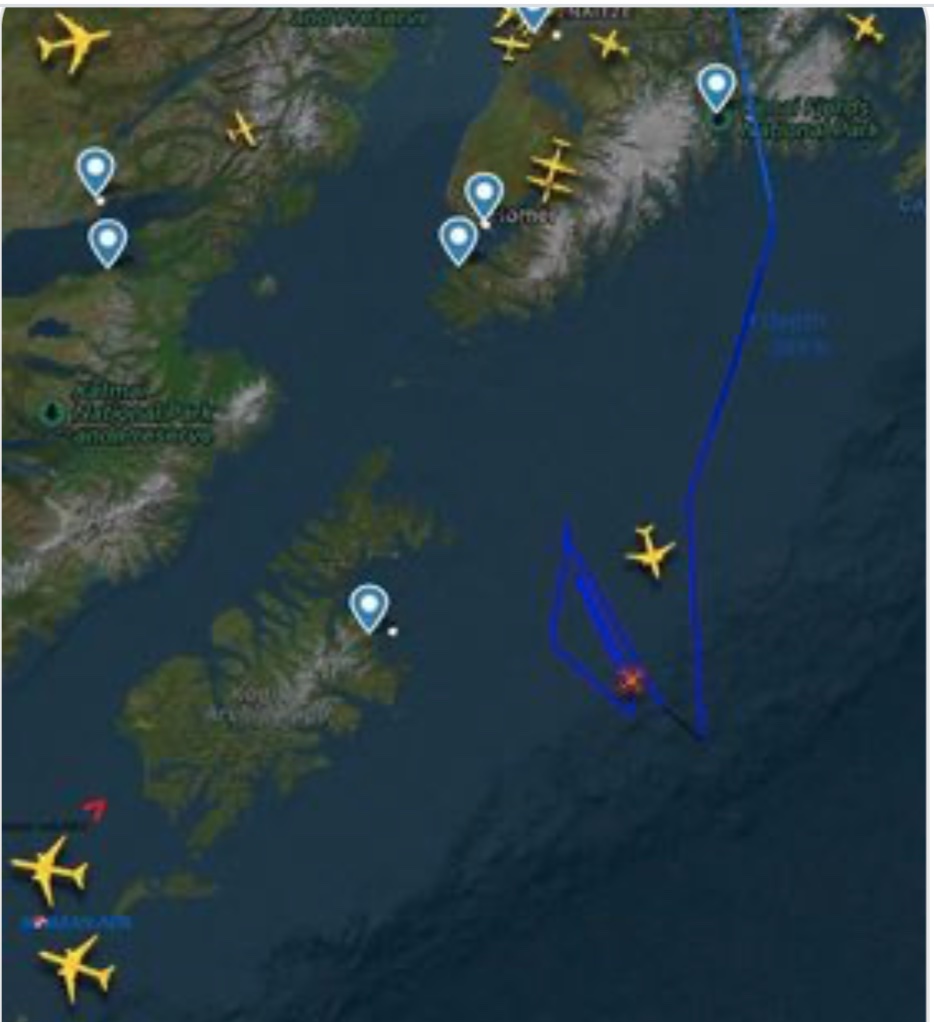
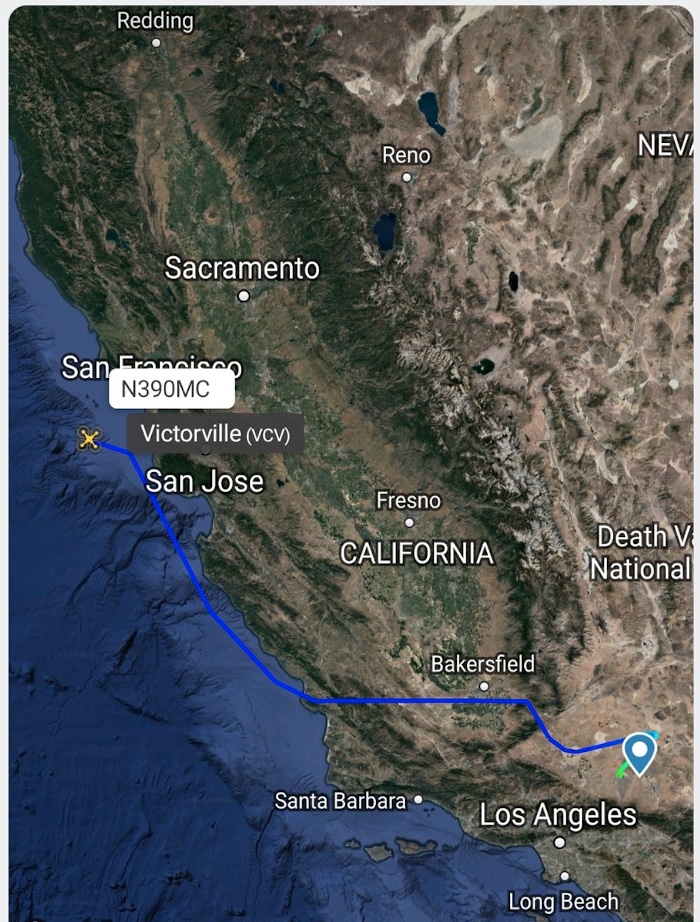
Spotted on radar tracking websites by hobbyists in Alaska this week was a large drone, which was appearing to take part in the Northern Edge military exercises that have been in the skies over Alaska. (The drone in the photo above is of the type that is in Alaska, an MQ-9B Sea Guardian, but the photo is from the skies of California.)

The drone appeared south of Kodiak airspace on Wednesday, along with what appeared to be a Navy jet.

MQ-9B N390MC by General Dynamics came up the California coast from El Mirage Field Airport, after having recently finished working in the Navy’s Group Sail exercise.

Northern Edge 2023, a joint military training exercise, will continue through May 19. Operating locations include Joint Base Elmendorf-Richardson, Eielson Air Force Base, Fairbanks International Airport, and Ted Stevens Anchorage International Airport, among others.

Alaskans have noticed a lot more warbird activity in the skies as a result. The training area involved is mainly the 65,000 square miles of airspace above the Joint Pacific Alaska Range Complex, and another 42,000 square miles in the Gulf of Alaska.

About 10,000 U.S. service members, five ships, and more than 150 aircraft are participating this year. Also taking part are military personnel from the United Kingdom and Australia.

Senate votes to add another day off for State workers: Juneteenth

The Alaska Senate has passed Senate Bill 22, sponsored by Sen. Elvi Gray-Jackson, an Anchorage Democrat. If passed by the House and signed by the governor it would bring the number of official state holidays to 12, by the addition of June 19, also known as Juneteenth.

The recognition marks a day in 1865 when Union soldiers arrived in Galveston, Texas, and proclaimed the Civil War had ended and that all enslaved people were free. The slaves and their ancestors called the day Juneteenth, the emancipation of people who had been sold into slavery and brought to the Americas starting in colonial times.

Then-Rep. Lesil McGuire sponsored a bill in 2001 that recognized the third Saturday of June as Juneteenth Day.

That was not enough for Sen. Gray-Jackson and most of the members of the Senate. They want to shut down the productivity of the State of Alaska by making it a paid holiday.

The current schedule of government shutdown days in Alaska are:

  • New Year’s Day (January 1)
  • Martin Luther King Jr. Day (3rd Monday in January)
  • President’s Day (3rd Monday in February)
  • Seward’s Day (Last Monday in March)
  • Memorial Day (Las Monday in May)
  • Independence Day (July 4)
  • Labor Day (1st Monday in September)
  • Alaska Day (October 18)
  • Veterans Day (November 11)
  • Thanksgiving Day (4th Thursday in November)
  • Christmas Day (December 25)
  • Every Sunday

The fiscal cost of another government holiday are unclear, and the fiscal notes are muddy. But those state workers who must work that day would be paid double the salary, so the entire Department of Corrections, Public Safety, and various divisions of other departments would incur significant costs.

The Assembly in Anchorage has recently added Juneteenth to the list of paid city holidays. President Joe Biden also shut down the federal government on that day, by executive order.

“This is an important process to bring awareness to the significance of Juneteenth and honor the end of slavery within this nation and acknowledge our history,” said Sen. Gray-Jackson. “It is a moment to reflect, celebrate, and become empowered as a free people. I hope that the passage of this bill will ensure that we as a nation and a state do a better job in talking about what’s painful and create a more just future for all the country.”

Voting for the new state holiday were Sens. Click Bishop, Jesse Bjorkman, Matt Claman, Forrest Dunbar, Cathy Giessel, Gray-Jackson, Lyman Hoffman, James Kaufman, Scott Kawasaki, Jesse Kiehl, Kelly Merrick, Donny Olson, Bert Stedman, Gary Stevens, Loki Gale (she/her) Tobin, and Bill Wielechowski.

Voting against the bill were Sens. Mike Shower, Rob Myers, Shelley Hughes, and David Wilson.

The bill is now in Alaska House, where it will probably not make it to the floor for a vote during the final days of this legislative session.

FedEx pilots on informational picket Wednesday say they’re done negotiating, ready to walk

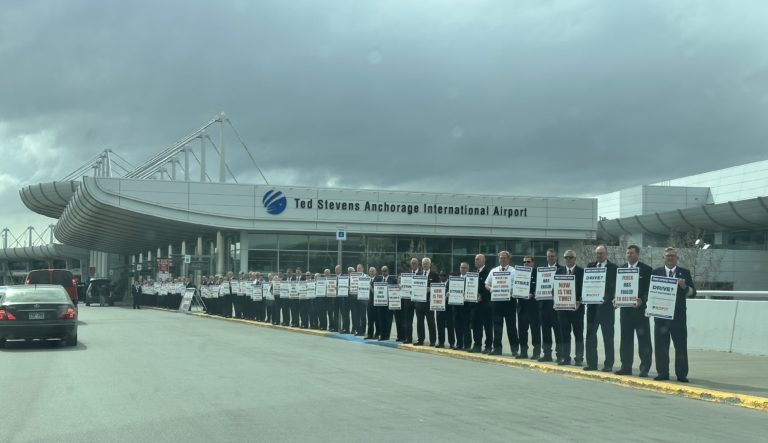
Anchorage is home to more than 500 FedEx pilots. About 80 of them were on the picket line at the Ted Stevens Anchorage International Airport departure drive-through on Wednesday, saying they want a contract now and are done negotiating. Others who didn’t make the picket were in the air or in far-flung airports such as Shanghai or Memphis International Airport, the busiest cargo airport in America.

The Air Line Pilots Association, International represents the pilots, and negotiations have gone on since May of 2021. In April of this year, the association leaders called for a strike authorization vote of the member pilots.

The strike authorization ballot closes on May 17. After that, the association will be authorized to call a strike at any time, which could have an effect on the flow of cargo throughout the country and could cause uncertainty in Alaska’s cities, towns, and villages that rely on air cargo

 Nationwide the company has over 5,000 pilots, which makes Anchorage a significant center for the company workforce.

House passes governor’s bill to increase penalties on drug dealers

The Alaska House of Representatives has passed the governor’s bill, HB 66, which establishes harsher penalties for those who have distributed drugs that directly lead to a user’s death, including fentanyl. It’s now in the Senate for consideration, but the legislative session ends next Tuesday, and it may be a bill that is held until next year.

HB 66 was crafted to combat the State’s drug problem at the distribution point. By putting drug dealers on notice with harsher penalties and less leniency for first-time offenders, the Alaska House Majority and governor hope for fewer fentanyl deaths.

“Alaska has been hit hard by fentanyl. It’s imperative that we take action to address it,” said Speaker Cathy Tilton. “House Bill 66 is an important step in that direction. We are sending a clear message that those who engage in these dangerous activities will be held accountable for their actions. This is about justice for the victims and their families and ensuring that our communities are safe.”

The Department of Health’s 2021 Drug Overdose Mortality Update shows that Alaska experienced the largest percent increase of drug overdose deaths compared to all other states. While fentanyl is not the sole perpetrator, it remains one of the leading causes of overdose deaths, and the numbers continue to climb.

“This drug has caused countless deaths in our state, and we must do everything in our power to prevent more Alaskans from falling victim to its devastating effects,” said Rep. Craig Johnson, chair of the Rules Committee. “I am thankful to the governor for submitting the bill to us, grateful for our members working diligently toward its passage, and optimistic that the Senate will take swift action so we can show our cities and towns that their elected officials care about their health and safety.”

The House majority said it’s a critical moment for Alaska’s defense against drugs and those who distribute them.

“The Alaska House Majority anticipates swift passage through the Senate. While we recognize there is more that must be done to protect our communities and homes across the state, we are proud of this vital step forward,” the caucus stated.

Win Gruening: Connecting the dots on Alaska’s higher cost of living

By WIN GRUENING

It’s no secret that Alaska continues to be among the most expensive states in the country in which to live.  

Our state legislature, nearing adjournment, will likely fail to reach a long-term solution that balances changes to the Permanent Fund and taxes to help address the rising cost of living.

According to a recent survey by the Alaska Department of Labor, housing became less affordable in all parts of Alaska in 2022. Alaska’s three largest cities usually rank 30% higher than the national average in the overall cost-of-living index which covers 56 other items in addition to housing.  Groceries, utilities, and healthcare, in particular, are among the highest. 

Meanwhile, Alaskans’ per capita income has shrunk in relation to the rest of the U. S.

It seems likely that a tax revenue measure may emerge from the Legislature this year, propelling Alaska’s cost of living even higher.

This will be further aggravated by statewide demographic changes that are not in dispute.  Outmigration patterns and lower birthrates signal a trend that will be hard to reverse.  As Alaska’s population ages and the number of our working-age Alaskans decline, we will see even more “labor shortages, slow or stag­nant economic growth, less consumer demand, increased dependency ratios, and difficulty funding social programs.”

Without any major state-wide economic projects or an increase in oil prices on the short-term horizon, local municipalities will be tasked with tempering these impacts through proactive initiatives and tax and regulation policies. If locally elected officials fail to recognize these connections, it will exacerbate the problem.

Examples continue to occur around the state where city leaders squander opportunities to expand their local economy, spend unwisely, and rely too heavily on increasing taxes. 

This is the exact opposite of what local governments should be doing to lower the long-term cost of living in their communities.

One of most important levers available to local governments is their ability to foster economic growth. When bureaucracy, over-regulation, NIMBY-ism, and resistance to change rule the day, companies and entrepreneurs look elsewhere to do business. The promotion of foundational economic growth is necessary to stabilize the working-age population, increase the tax base and thereby lower the overall cost of living.

In Juneau, anti-cruise and anti-mine activists fail to appreciate the contributions core industries make to Juneau’s economy.  The visitor/cruise industry is responsible for nearly half of Juneau’s collected sales taxes.  Juneau’s two mines are collectively one of Juneau’s largest employers and its largest property taxpayer.

In light of this, a reasonable question might be, what efforts have our elected officials taken recently to  encourage and support these industries?

Since 2020, Greens Creek Mine has been seeking a routine expansion of its operation on Admiralty Island 18 miles outside of Juneau.  Mine operations could shut down by 2025 unless this expansion is approved. Predictably, by claiming their study shows the mine has caused environmental damage, opposition by a local environmental group may stall the expansion. Both the Forest Service and the Alaska Department of Environmental Conservation have disputed this questionable study. Thus far, the City and Borough of Juneau (CBJ) Assembly has written one letter of support.

CBJ is currently reviewing a request by Huna Totem Corporation to build Aak’w Landing, a new cruise ship dock in downtown Juneau.  Potentially, this development could attract an estimated $150 million in private investment when all phases are complete. The city began the process by allocating $300,000 for a duplicative study intended to facilitate CBJ planners in micro-managing the project. It remains to be seen if city bureaucracy eventually kills the development.

The CBJ Assembly recently reversed its initial position and denied a permit request for a locally established company, iRide, to operate limited e-bike tours on a remote city-owned gravel road. The new tour would have supported new jobs and mitigated downtown cruise impacts.

Meanwhile, food banks in Juneau (and across the state) are dealing with a long-standing hunger crisis worsened by the pandemic and inflation. Businesses and homeowners are struggling with a precipitous increase in Juneau’s real property taxes. The Assembly’s response has been to propose $120 million in new government buildings.

Furthering the economy, lowering the property tax millage rate, and more prudent government spending will lower the cost of living.

When will city leaders connect the dots?

After retiring as the senior vice president in charge of business banking for Key Bank in Alaska, Win Gruening became a regular opinion page columnist for the Juneau Empire. He was born and raised in Juneau and graduated from the U.S. Air Force Academy in 1970. He is involved in various local and statewide organizations.

Win Gruening: Legislature dives into perilous waters with state workforce, retirement issues

Alex Gimarc: On gerrymandering, the North Carolina decision changes everything

By ALEX GIMARC

The Alaska Supreme Court has been mucking around in the redistricting wars for over 40 years.  This year was no exception, as the justices issued a ruling striking down the Redistricting Board map that favored Republicans and replaced it with their own map that favored democrats.  

Suzanne Downing a few weeks ago captured the game nicely, pointing out that apparently gerrymandering is bad unless done to favor Democrats, which automatically is a good thing to the Alaska Supremes.  

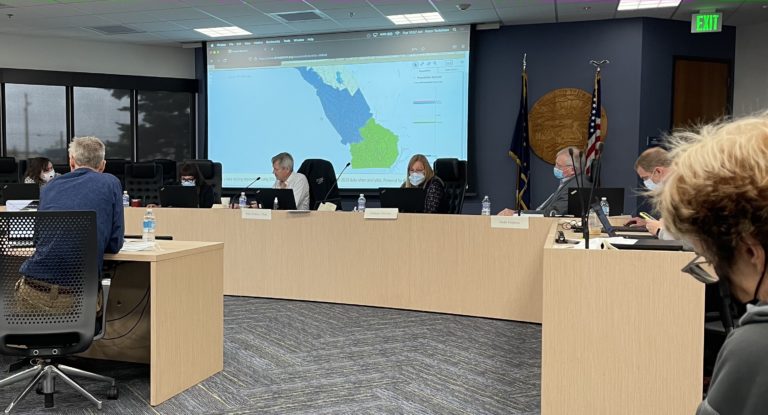
The case has been remanded to Superior Court where the Redistricting Board has 90 days to argue in favor of their final map and against the judicial takeover of the redistricting process. 

It would seem a lost cause, as the Alaska Supremes just anointed themselves the redistricting board in the future, and that the only allowable gerrymandering is that which favors democrats in the future.  

What has changed since they disgorged their 144-page list of legal excuses installing themselves as an extraconstitutional Redistricting Board?

North Carolina changed. And with it, maybe the entire shape of redistricting wars at the state level nationwide.

North Carolina is nominally a purple state, not unlike what Virginia has become over the last several decades, with a Democrat governor, the occasional Republican legislature, and an elected Supreme Court that swings from side to side. 

Breitbart: North Carolina Supreme Court strikes down redistricting maps

They are not so different from Alaska, with a very liberal judiciary, a closely split legislature, and the occasional Democrat governor (Gov. Bill Walker was our last one).

The last time Democrats were in charge of the whole mess, the Democrat majority on their Supreme Court struck down a Republican-drawn redistricting map by a 4-3 vote. 

This effort was led by Mark Elias, the legal point man for all Democrat attempts to rewrite state election laws and redistricting maps over the last couple decades.  Elias has his grubby little fingerprints all over the successful challenge and the NC Supreme Court opinion throwing it out.

But elections have consequences, and today there is a solid Republican majority on the NC Supreme Court and in the legislature. That court issued a couple opinions over the last few weeks. One reinstated the original redistricting map; the other reinstating a photo ID for voting.  You can find the 218 page redistricting opinion here.

It is an interesting read, as the majority noted that the state courts are not the place to decide policy fights, an opinion that echoes the Supreme Court “Dodd Opinion” on abortion last year, moving it from the high court back to the state legislatures to figure out.

If you take a look at the 144-page exercise in legalistic excuse making issued by the Alaska Supremes, you’ll be quickly struck by the incredibly twisted logic of the majority, noting that discrimination is bad unless they are the ones that get to do the discriminating; gerrymandering is bad unless they are the ones that get to do it; and the actions and interests of every single participant in the process ultimately meaningless unless their (the Alaska Supremes’) chosen side (Democrats in this case), get what they want.  

Basically, their action in adopting the democrat map completely undermines their excuse for throwing out the Redistricting Board’s original map.  

This is not impartial.  This is the majority installing themselves as a super legislature.  

If it were me, I’d march into court with the North Carolina opinion and point out that the courts are installing themselves as a political body in this, something unconstitutional under both the US and Alaska Constitutions, neither of which allow courts at any level to determine the apportionment for voting.  I’d also point out the mutually exclusive rationale and action by the Alaska Supreme Court.  

When the trial court and the Alaska Supremes issue their final ruling, installing the democrat map as state law, I’d appeal the entire mess to federal court with the argument that the Alaska courts are acting extra constitutionally, something they’ve been doing with elections for years.

I get it that redistricting is fundamentally a political process, and like all political processes here in the US, it is noisy, ugly, and chaotic. But that is our system of governance. 

When the courts install themselves as the ultimate arbiters of policy, they usurp the political power of everyone else in the state. 

When they actively exercise that usurped power in favor of one side of the political divide, they have ceased being judges and moved smartly into the realm of authoritarians and dictators, which I suppose is a cleaner form of governance, though it is hardly American.  

Alex Gimarc lives in Anchorage since retiring from the military in 1997. His interests include science and technology, environment, energy, economics, military affairs, fishing and disabilities policies. His weekly column “Interesting Items” is a summary of news stories with substantive Alaska-themed topics. He was a small business owner and Information Technology professional.

Brace for impact: Title 42 expiration means illegal immigration will triple, Sen. Sullivan warns

The Trump-era Title 42 policy for the U.S-Mexico border, expires Thursday.

A border that is largely being controlled by Mexico-based drug cartels and human traffickers has seen millions of illegal immigrants streaming across it over the past two years, and it’s about to get a lot worse, as the Biden Administration gives up the sovereignty of the country and the security of her borders by allowing Title 42 to expire.

U.S. Sen. Dan Sullivan on Thursday called the situation an unprecedented catastrophe.

“The biggest falsehood being peddled in Washington, D.C. right now and to the American people is that our border is secure,” he said in a press conference today.

“There have been more than six million illegal crossings since President Biden assumed office. Now that Title 42 is expiring, daily illegal crossings are expected to triple. Alaskans and Americans in all 50 states are experiencing the toll of this avoidable tragedy,” Sullivan said in a written statement.

Border Patrol agents have been instructed to release illegal immigrants into the country without any requirement for a court hearing. Over 40,000 have amassed at the border in anticipation of the flood gates opening. In Mexican towns along the Rio Grande, stores have not been able to keep up with inventory of pool floats and life jackets for migrants preparing to swim across the Rio Grande River into Brownsville Texas. In Tijuana, thousands have been camping along the border fence waiting for Thursday.

Border Patrol Chief Raul Ortiz sent the instructions Wednesday, asking senior officials in the agency to begin the mass parole of illegal migrants ahead of the end of Title 42, according to The Daily Caller, which received exclusive documentation of the new parole policy. The illegal immigrants will be “parole[d] with conditions,” that require them to schedule a court date with Immigration and Customs Enforcement or request service of a Notice to Appear according to the instructions. But they’re being paroled into America with no tracking technology, and will be completely unsupervised.

“It is a humanitarian crisis. It is a national security crisis. It is a health crisis. Hundreds of thousands of children have been trafficked and exploited. Based on the numbers of those apprehended, it is obvious that thousands of criminals, including individuals on the terrorist watch-list, are illegally entering our country. Drug overdoses – largely driven by fentanyl – are now the leading cause of death for Americans ages 18 to 45. In 2021, drug overdose deaths in Alaska increased by the largest percentage of any state,” Sullivan’s statement said.

“Even the most rural parts of Alaska are feeling the impact of Biden’s open southern border. And believe me, it is wide open. Anyone in the Biden administration or media who continues to peddle the falsehood that the border is secure should just go there and watch illegal immigrants cross the Rio Grande in the middle of the night by the hundreds.

“As I’ve said before, this is a dereliction of duty by the President. President Biden has created a tragedy of immense proportions. In his first 100 days, Joe Biden stopped construction of the border wall, halted deportations and suspended the successful ‘remain in Mexico’ policy. He continues to threaten to veto legislation that would mandate many proven solutions and also continues to advocate for real cuts to the Border Patrol. The President needs to do his job, enforce the law, and end the incentives feeding this crisis immediately.”

Sullivan is a co-sponsor of the Border Security Act which would redirect $15 billion from IRS enforcement funds that were included in the Inflation Reduction Act to instead be spent on border security. The legislation is endorsed by the National Border Patrol Council, the exclusive representative of approximately 18,000 Border Patrol agents and support personnel assigned to the U.S. Border Patrol.

In March 2021, Sullivan visited the southern border on a congressional delegation trip with U.S. Sens. Ted Cruz (R-Texas), John Thune (R-S.D.), John Barrasso (R-Wyo.), Susan Collins (R-Maine), John Hoeven (R-N.D.), Mike Lee (R-Utah), Steve Daines (R-Mont.), Cindy Hyde-Smith (R-Miss.), and Mike Braun (R-Ind.).

In August 2022, all 50 Senate Democrats blocked Senator Sullivan’s amendment to the Inflation Reduction Act that would have directed $500 million to be allocated to the U.S. Customs and Border Protection to secure the southern border. The funds were instead earmarked for sustainability and environmental programs at the Department of Homeland Security.

David Williams: Devastating Alaska’s oil industry won’t help taxpayers

By DAVID WILLIAMS | TAXPAYER PROTECTION ALLIANCE

Alaska is at a crossroads. The state is facing a challenging budget situation that has been exacerbated by inflation, Covid, and the Biden Administration’s failed economic policies. Which road it chooses now will determine its economic future. One road leads to renewed prosperity. The other leads to more economic pain for consumers and taxpayers.

The Taxpayers Protection Alliance has seen successful models for how to grow a state economy out of fiscal challenges. TPA has also seen how bad ideas can make a difficult situation much worse. 

A state like Alaska doesn’t always want the advice of groups from the Lower 48 states.  However, the currently proposed 40% tax on oil and gas production in Alaska is one of the most extreme examples of a disastrous idea for any state’s economy.

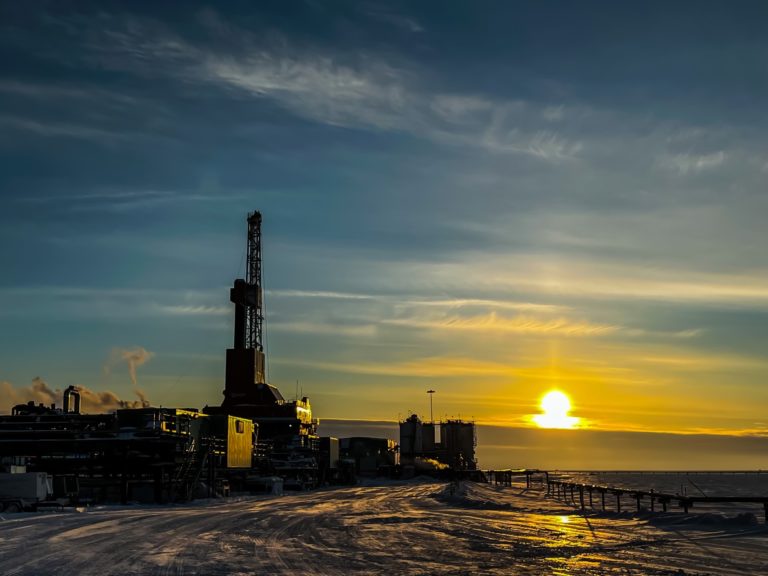
On paper, this tax hike might raise substantial revenue, but in the real world it would backfire and create economic and fiscal devastation. At a time when the oil and gas industry is under daily assault from the Biden administration and green activists, Alaska’s energy industry would be driven to other states and countries. The jobs, businesses, and revenue it generates – including threatening the future of critical oil drilling projects like Willow and Pikka on the North Slope – would go along with it.

Worse, the proposed tax hikes unfairly target small and medium-sized businesses that are the backbone of Alaska’s economy. These companies have been particularly important to Alaska’s economy in recent years because they are less susceptible to pressure from outside environmental groups.

As larger corporations have pulled back from Alaska to avoid attacks from activists, these small and medium-sized businesses have increasingly picked up the slack and powered Alaska’s economy.

It makes no sense why Alaska would consider this act of self-sabotage. Extreme environmental activists are working to capitalize on Alaska’s budget problems and deal a major blow against energy producers in the state, eliminating critical Alaska jobs in the process. With the Biden Administration already doing their bidding at the federal level, states like Alaska are the last refuge for responsible energy production.  

Gov. Mike Dunleavy is building a legacy as a real conservative and a more than capable governor. Rejecting these tax hikes would be in keeping with this legacy. One reason why Gov. Dunleavy became the first Alaska Governor in 25 years to win re-election is because he kept his word not to raise taxes on Alaskans without a statewide referendum. Voters typically reward politicians who keep their promises. Energy independence, especially with geopolitical threats from adversaries like China and Russia looming, is as important as it has ever been. Gov. Dunleavy has championed these efforts. Now is not the time to abandon those principles.

Many political leaders – including conservative and moderate Democrats – are standing up to reject these reckless tax hikes. They should be applauded for their willingness to put Alaska first despite the overwhelming outside pressure being exerted on the state.

Alaska’s energy industry has been a critical part of its economy for decades, and it will continue to be so for years to come. The state has abundant natural resources that provide good-paying jobs, support local businesses, and contribute significantly to the state’s revenue. A tax hike on oil and gas production will only serve to weaken Alaska’s economy, harm its citizens, and hinder America’s energy security.

Alaska’s leaders must reject these reckless tax hikes on energy production and focus instead on strengthening Alaska’s energy economy, encouraging the creation of good paying jobs, and protecting America’s national security. This approach will ensure that Alaska’s energy industry continues to thrive, even in the face of challenging economic times.

With the war on energy harming Americans every single day, the last thing needed is more states piling on, too – especially energy producing states like Alaska. 

David Williams is the President of the Taxpayers Protection AllianceThis column first appeared at Real Clear Energy. Top photo copyright by Rob Bussell.