Note: This story is likely to be updated several times in the coming hours as information becomes available.
The National Transportation Safety Board is responding to a plane crash in Western Alaska, in the area of Shaktoolik and Unalakleet. Troopers are en route to the site but as of this writing have not reached it.
Troopers issued a statement:
On June 16, 2023, at 11:48 am, Alaska State Troopers were notified of an SOS activation from an InReach device. It was reported that there had been a plane crash 35 miles Northeast of Shaktoolik. The Cessna 180 aircraft was witnessed taking off but not climbing and then crashing. Subsequent information was reported that both occupants of the aircraft were deceased. AST responded from Nome and recovered the two bodies from the crash site. Tentative identification of the deceased is Pilot Jim Tweto, age 68 of Unalakleet, Alaska, and passenger Shane Reynolds, age 45 of Orofino, Idaho. Next of kin has been notified. The bodies are being transported to the State Medical Examiner’s Office in Anchorage. NTSB was notified of the crash.
Earlier Must Read Alaska report:
Reports from pilots in the area say two souls were on board — the pilot, Jim Tweto, and a bear hunting guide. Tweto, who is from the Unalakleet flying community, is a very experienced bush pilot and typically flies a Cessna 180 or 207.
A helicopter from Bering Air was en route to the scene, sources say. The pilot community is not optimistic about the fate of the two on board, based on reports.
His daughter Ariel confirmed Jim’s death in a heart-wrenching post on social media:
“NTSB investigating the crash of a Cessna 180H airplane near Unalakleet, Alaska,” is the terse statement on Twitter from the federal agency in charge of aviation incidents.
Tweto was featured on Flying Wild Alaska, a Discovery show that finished its last season 12 years ago. He was born in Kansas, raised in Minnesota, and made his way to Alaska at age 18 with a hockey scholarship to University of Alaska Anchorage. He settled in Unalakleet, where he married Ferno Tweto.
In 1990, the Twetos’ flying company merged with Hageland Aviation, which merged with with Era Alaska in 2008. Jim became the chief operating officer of Era when they merged with Frontier Flying Service in 2009 and became a major regional air carrier in Alaska. A community leader in the region, Tweto is a household name in Western Alaska.
“He has helped so many people out in good times and bad, he was just that kind of guy,” said one source who asked to remain anonymous. “He was a highly respected and generous man.”
Another source said, “He was a good guy,” adding that the aviation community is close knit, and in shock.
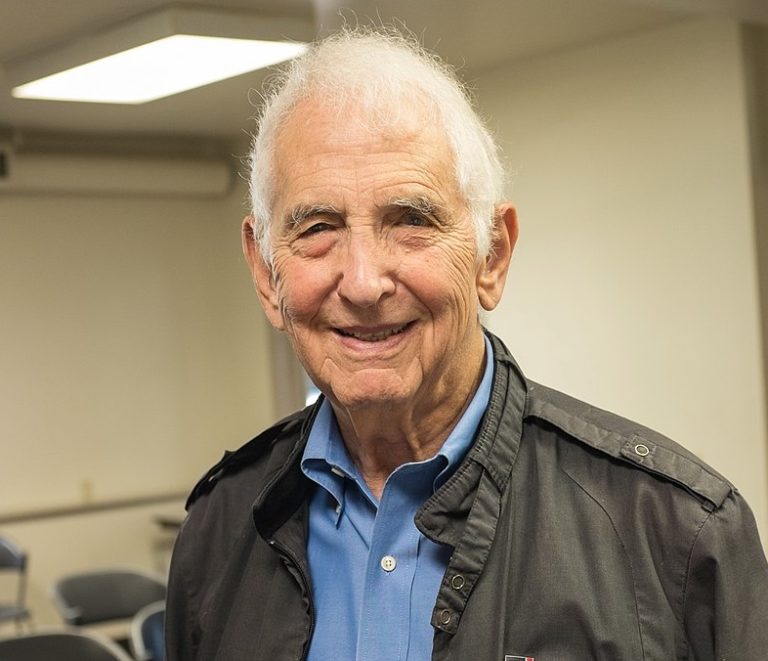
Daniel Ellsberg, who leaked a classified documentation of the decisions being made by the United States in Vietnam War, died June 16at his home in Kensington, Calif. at age 92. He had announced in March that he had pancreatic cancer and was not going to take chemotherapy.
Ellsberg, who had a Ph.D. in economics from Harvard University, worked for the Rand Corp as a military analyst, and for the State Department. On a trip to Saigon, South Vietnam, in 1965, he was traumatized by what he saw and turned into a peace activist and whistleblower.
He leaked the top-secret Pentagon Papers to the New York Times in 1969. Soon, the Times and Washington Post were embroiled in court defending their right to publish the contents of the Pentagon Papers.
While that legal process continued in the Supreme Court, Alaska Sen. Mike Gravel received another copy of the Pentagon Papers from Ellsberg, and inserted them into the Congressional Record, making them a legal public document, and making the court case irrelevant to the moment. The newspapers were set free to report on the shocking documents.
That document transfer took place 52 years ago on June 15, 1971 in the dark of night in Washington, D.C., with Ben Bagdikian, an editor at the Washington Post, making the curbside handoff to Gravel.
Gravel read some of the documents into the record. and continued late into the night and early into the morning. This ultimately took down the Nixon Administration, which had inherited the war, and which ultimately ended the war.
Sen. Mike Gravel, a Democrat who later ran for president twice, passed away at age 91 in 2021, at his home in Seaside, Calif. Bagdikian, who went on to write the book, “Reporter of Broad Range and Conscience,” and “The Media Monopoly,” died in 2016 at the age of 96.
Sen. Shelley Hughes, a conservative in the Alaska Legislature for District M, was shocked to get a letter from the Satanic Temple in Salem, Mass.
The letter thanked her because a donation had been made to the satanic center in her name. The letter said that the donation would go toward the group’s “Samuel Alito’s Mom’s Satanic Abortion Clinic,” which provides satanic abortion rituals. The “clinic” mails abortion medication to people who “wish to perform The Satanic Temple’s Religious Abortion Ritual.”
Hughes, who represents one of the most conservative parts of the state and has been in the Legislature since 2013, was taken aback by the brazen act. She is known as very pro-life.
On the other hand, her heart was not that troubled. She figures she must be over the target.
“I’ve always liked the Joanne Clancy saying, ‘Be the kind of woman who, when your feet hit the floor each morning, the devil says Oh, no! She’s up.’ And that’s the kind of advocate I always hope to be for the people of Alaska,” she said.
Naming the abortion clinic after U.S. Supreme Court Justice Sam Alito’s mother is beyond the pale, Hughes said.
Hughes added that if people feel so moved, they could counter the donation made in her name by tithing to a good cause in Alaska, such as a church; pro-life pregnancy support center; MyHouse, for homeless youth in the MatSu Valley; or Downtown Hope Center in Anchorage, which supports homeless people with meals, and provides safe places for women who are homeless to sleep.
“There are many good causes to contribute to in Alaska,” Sen. Hughes said. “The kind and caring people of Alaska are working to make the world a better place.”
The Satanic Temple, which is a political organization that is pro-abortion, was given the same same tax-exempt status as churches by the IRS in 2019.
In addition to promoting a type of child sacrifice as a religious ritual, the group works to defeat conservatives at the ballot box, and has chapters across the country that have been successful at putting an end to invocations at the outset of public meetings, by insisting that “Hail, Satan” priests must be permitted to pray aloud, if other spiritual leaders, such as pastors and rabbis, are permitted.
My last column referenced two bills seeking to reform Alaska’s judiciary, currently pending in the Senate State Affairs and House Judiciary Committees.
In support of their bills, sponsors Sen. Mike Shower and Rep. George Rauscher invited testimony this past spring from former Lt. Governor Loren Leman.
Leman testified that back in the early 1990s a leader in the Alaska House boasted to him that the Democrat Party would always control the judiciary because of the way Alaska selects its judges.
Leman’s testimony should send chills through the spine of any Alaska lawyer or judge who cares about democracy. One of their preeminent organizations, the American College of Trial Lawyers, leaves no doubt that we must change this reality with the following statement:
“The concept of judicial independence — that judges should decide cases, faithful to the law, without ‘fear or favor’ and free from political or external pressures — remains one of the fundamental cornerstones of our political and legal systems, both federal and state.”
I quoted this statement in a November column, but it’s worth repeating. A few months later, Sens. Matt Claman and Bill Wielechowski, and Rep. Cliff Groh, sat in their committee seats and listened to Leman’s testimony. Each of these elected officials are members of the Democrat Party and the Alaska Bar Association.
None of them challenged Leman. They challenged other individuals testifying in support of the judicial reform bills, but not Leman. Perhaps these lawyers knew his testimony was unimpeachable, and they didn’t want to draw additional attention to it.
After all, Leman is a Republican and they’re Democrats. In the burgeoning field of partisanship politics, the truth is becoming increasingly ignored if it is spoken from across the aisle.
Claman, Wielechowski, and Groh can’t ignore Edgar Paul Boyko, however. He was one of them.
Boyko was a prominent leader in the Alaska Democrat Party when our Constitution was formed. He was a delegate to the territorial conventions of 1954 and 1956, and chairman of the platform committee in 1956.
Born in Austria, Boyko was educated at the universities of Vienna and St. Andrews and became a research chemist. He and his Jewish wife immigrated to America in 1940 to escape Nazism. They had $100 to their names. He then entered the legal profession, licensed to practice in Maryland, D.C., Alaska, and California. From 1967-1968 he served as the Attorney General in Alaska.
Towards the end of his career Boyko became a very outspoken critic of Alaska’s judicial system. In 1990 he took advantage of a rare, unbiased public platform to voice these concerns, a forum unfiltered by judges and what he termed our “establishment media.”
From August through November 1990, the Senate Family Law Task Force, chaired by Senator Jack Coghill, held six days of public testimony. More than 250 Alaskans testified about the nightmares harming their families caused by judicial decisions on divorce, child custody, child support, and foster care issues.
Boyko, a father of six children, testified twice and didn’t mince his words.
Boyko began by saying he had quit practicing family law about 10 years earlier because it was “too tough on my heart muscle. There is just too much misery and too much injustice and too much failure on the system day in and day out and I couldn’t handle it.” He later added that family law matters were just “the tip of the iceberg as far as our judicial system is concerned.”
Boyko was known as the “Snow Tiger.” Former Gov. Wally Hickel said, “You could never intimidate Ed.” If Alaska’s family law practice could frustrate such a legendary lawyer to quit, no wonder AK Mom’s family can’t obtain justice.
Boyko also heaped considerable criticism on the predecessor to the Office of Children Services, saying a lot of its functions should be taken away: “They are overloaded. They are basically unqualified. They tend to be dictatorial being … unaccountable appointed bureaucrats.”
Boyko cited Lord Acton’s axiom — that power tends to corrupt, and absolute power corrupts absolutely.
He said, “We have given too much power to various functionaries of our government, particularly the judiciary, but also other parts of the government. We have given too much power to our government. We have given too much power to the judges. We have diluted accountability, by having only one statewide, two statewide officials elected and everyone else appointed.”
Boyko testified, “There’s a number of reforms that are crying out to be made in the judicial system in this state.” He said many constitutional delegates didn’t know much about running a state and we had “some ultra-liberals in there who had ideas that have now been disproven across the world … They created some really horrible things.”
The curriculum vitae Boyko submitted to the Senate Task Force concluded with his motto:
“To try to live each day in such a way that I may look myself in the eye in the mirror the next morning; without shame or embarrassment; to hold integrity above material gain; truthfulness and principle above popularity; to stand fast against oppression and injustice; to avoid confrontation – but never to run from it; to prefer love of God and man to religious self-righteousness; love of country to chauvinism or jingoism; to disdain, reject and fight against cruelty, hypocrisy, greed and bigotry, as the most despicable of human failings; to walk proudly among men and humbly before God and his universe.”
Bokyo suffered a series of strokes in 1998 and died Jan. 1, 2002. Well said and done, Snow Tiger. May you rest in peace.
Senators Claman, Wielechowski, and Representative Groh, do you look in the mirror every morning and ask yourselves if you’re following that same motto?
I imagine you’ve earned and continue to earn a very comfortable living appearing before this flawed judicial system, which Boyko said “works wonderful for the people on top.”
But the system you’re defending doesn’t work well for most Alaskans – people like AK Mom’s family, whose lives have been torn apart the past two years; people like Thomas Jack, Jr., who are denied by your judges a jury of their peers and a fair trial, families struggling financially who are denied their full Permanent Fund dividends, or Alaska Natives who fill our prisons at twice the rate they populate our state.
You ignored Loren Leman. Will you ignore Edgar Paul Boyko too?
David Ignell was born and raised in Juneau, where he currently resides. He holds a law degree from University of San Diego and formerly practiced as a licensed attorney in California. He has experience as a volunteer analyst for the California Innocence Project, and is currently a forensic journalist and author of a recent book on the Alaska Grand Jury.
Just when it seems the entire nation has gone off the rails with identity politics, Galluphas revealed a notable shift in the social ideology of Americans, with more identifying as very conservative or conservative on social issues.
The survey, known as the Values and Beliefs survey, was conducted from May 1 to May 24, and shows a big change in Americans’ views compared to the past decade.
According to the survey results, 38% of Americans now consider themselves very conservative or conservative on social issues, up from 33% in 2022 and 30% in 2021.
Simultaneously, the percentage of individuals identifying as very liberal or liberal has declined to 29%, down from 34% in both 2022 and 2021.
Between the drop in liberalism and the affinity for conservative values, it’s a 10 point swing.
The portion of Americans describing themselves as moderate remains relatively stable at 31%, accounting for roughly one-third of the population.
This year’s figure of 38% identifying as socially conservative is the highest number since 2012.
The surge in conservative identification coincides with ongoing debates and discussions surrounding several key issues in the country, including transgender policies, abortion, crime, drug use, and the teaching of gender and sexuality in schools.
The trend of increasing conservative identification on social issues is evident across various political and demographic groups.
Republicans have witnessed one of the most significant jumps, with 74% identifying as very conservative or conservative in 2023, compared to 60% in 2021.
Independents also saw a modest increase of five percentage points, rising from 24% to 29%. In contrast, there was no change among Democrats, with 10% identifying as conservative in both 2021 and 2023.
The shift towards conservative social ideology over the past two years is particularly pronounced among middle-aged adults, ranging from 30 to 64 years old. This demographic experienced double-digit increases in conservative social views. Conversely, older Americans have maintained stable social ideologies, while young adults have shown a modest increase in conservative social views.
When it comes to economic issues, the survey reveals 44% of Americans identify as very conservative or conservative, while 33% consider themselves moderate and 21% describe their views as very liberal or liberal. The conservative identification on economic matters averaged at 40% between 2020 and 2022, making the current figure the highest since 2012 when it reached 46%.
The findings highlight a consistent pattern in which Americans tend to identify as conservative on economic issues rather than liberal, with a gap of no fewer than 16 percentage points between the two ideologies.
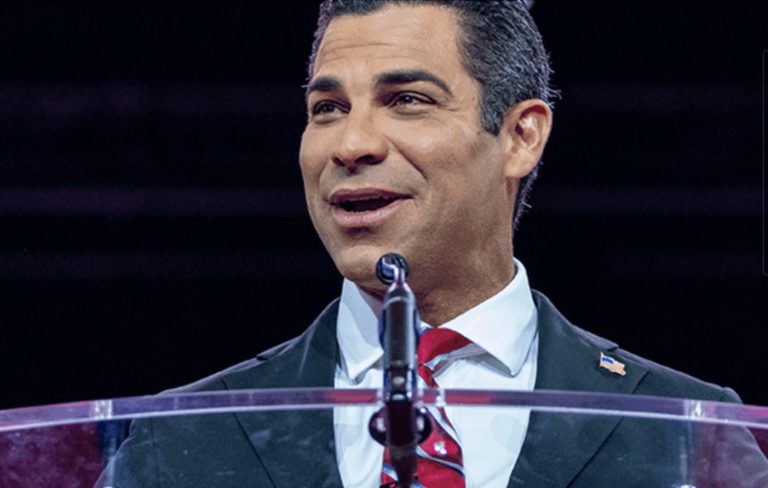
Miami’s Republican Mayor Francis Suarez on Thursday joined the Republican field of candidates that already includes two other Floridians — former President Donald Trump and Florida Gov. Ron DeSantis — vying for the White House. He is the first Hispanic to throw his hat in the ring for 2024 for any party.
Known for his focus on attracting tech businesses to Florida, reducing crime, and capturing the Hispanic vote, Suarez believes he can lead the party in a positive direction and appeal to moderates by addressing climate change.
A real estate attorney and son of former Miami Mayor Xavier Suarez, he was first elected as Miami Mayor in 2017 with over 81% of the vote, and overwhelmingly secured re-election in 2021, with 78% of the vote.
Suarez, the son of a highly popular Miami Mayor, Xavier Suarez, is the president of the U.S. Conference of Mayors. During his tenure, he gained recognition for his efforts to attract technology investors to Miami, meeting with prominent figures like PayPal co-founder Peter Thiel and Tesla CEO Elon Musk. Suarez is deeply interested in the role of cryptocurrency, and wants Miami to be the leading hub for digital currency.
Suarez may be more interested in simply advancing his career after he leaves office, either in the cabinet of a Republican president, or in business.
In March, Suarez was a featured speaker at CPAC, a gathering of conservative thought leaders, where past, present, and future conservative speakers are invited to present.
In addition to the three from Florida, several others have filed with the Federal Elections Commission to register their presidential bids: U.N. Ambassador Nikki Haley, former Arkansas Gov. Asa Hutchinson, South Carolina Sen. Tim Scott, media personality Larry Elder, tech mogul Vivek Ramaswamy, former Vice President Mike Pence, North Dakota Gov. Doug Burgum, and New Jersey Gov. Chris Christie.
It’s a diverse field on the Republican side, with two candidates of East Indian descent (Haley and Ramaswamy), two blacks, one from Italian heritage, and now Suarez, a first-generation American of Cuban immigrants.
On the Democrat side, there is the 80-year-old President Joe Biden, Marianne Williamson, and Robert F. Kennedy Jr.
A super PAC is already placing ads favoring Suarez. On Wednesday, SOS America PAC released a two-minute ads in New Hampshire, Iowa and Nevada, according to a press release.
“America needs a leader who supports our police, is tough on crime, and has the proven ability to save America’s economy,” the PAC says on its website. “Conservative Miami Mayor Francis Suarez has backed the blue, cut crime to record lows, and revitalized Miami’s record-breaking, innovative economy.”
Jamie Heinz has been appointed as the acting Anchorage Municipal Clerk following the retirement of Clerk Barbara Jones, who retires at the end of June. The decision was made by the Anchorage Assembly, who cited Heinz’s experience in municipal administration and elections as the basis for their selection. The formal approval of Heinz’s appointment, scheduled for the Assembly’s regular meeting on June 23, is all but certain.
Heinz’s responsibilities as the Anchorage Municipal Clerk will encompass overseeing the Anchorage Assembly and managing the administration of the city’s primarily mail-in ballot elections. The importance of these duties directly impact the fairness and transparency of the electoral process, as well as the efficiency of local government operations.
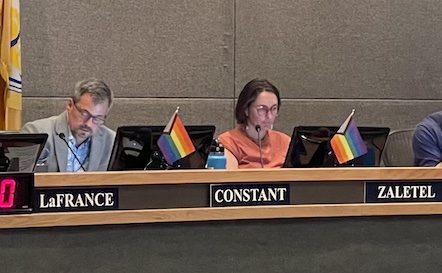
Assembly Chair Christopher Constant, who nominated Heinz for the position, highlighted her supposed track record of leadership in public service within the Municipality and other Alaskan jurisdictions. In a written statement, Constant said Heinz will carry on the traditions of Jones.
According to Constant, a national search was conducted before settling on Heinz as the next Municipal Clerk. The vote will be taken in the absence of Assemblywoman Meg Zaletel, who has disappeared for an extended period that she described as medical leave. But the vote is likely to be unanimous for Heinz.
On Thursday, Alaska Rep. Mary Peltola voted with all Democrats against the Separation of Powers Restoration Act, a bill aimed at reinforcing the separation of powers in the United States government. The legislation, also known as SOPRA, passed in the U.S. House of Representatives with a mostly party-line vote of 220-211.
H.R. 288 addresses a long-standing concern regarding the ballooning power of the executive branch in relation to federal regulatory authority.
SOPRA would shift some of the authority back to Congress, curtailing what some conservatives see as excessive regulation by the White House that costs American citizens greatly.
At the core of the issue is a 1984 Supreme Court case, Chevron v. Natural Resources Defense Council, which introduced the concept of “Chevron deference.”
This so-called Chevron defense suggests that courts should defer to federal agencies’ interpretations of statutes, as long as those interpretations are considered reasonable. Over the years, this doctrine has given federal agencies enormous power to put their boots on the throats of Americans and American businesses.
Rep. Scott Fitzgerald, a Republican from Wisconsin and the sponsor of SOPRA, argued that the Chevron ruling had granted the executive branch undue authority to regulate without proper checks and balances, often conflicting with Congress’s original intentions of legislation passed.
The passage of SOPRA represents a difference between Democrats, who long for more regulation and shutdown of American business, and Republicans, who have long sought to rein in the powers of federal agencies and restore legislative authority.
By taking steps to limit the ability of executive agencies to impose regulations unilaterally, proponents of the bill aim to ensure the laws made by the legislative branch are not expanded on incrementally by the White House and its agencies.
Rep. Peltola’s decision to vote against the bill draws attention to how she is wedded to Democrats and the Biden Administration, and the role of Big Government in the lives of Americans.
With Father’s Day approaching, a surprising twist may bring good news for the dads of America: There are signs that the “woke bubble” is nearing its bursting point.
Last week, CNN reported a shift in the beer market: Modelo took over Bud Light as the top-selling beer in the United States, ending Bud Light’s 20-year reign. This change, among others, reflects a massive consumer revolt is working.
For years, the ESG (Environmental, Social, Governance) scoring system has been touted as the new frontier for socially conscious business practices. It’s the bright, shiny object that started even before the creation of the “B corporation” concept — businesses certified by groups like B Lab as meeting certain standards of social and environmental performance, accountability, and transparency.
As with Bud Light, there is growing evidence that all this wokeness has jumped the shark and overstayed its welcome. Many companies that have prioritized ESG and DEI (Diversity, Equity, Inclusion) values have started to face an economic backlash.
Take Starbucks, for instance. The coffee giant, once the pride of downtown Seattle, went national a couple of generations ago, and is now just another corporation in a neverending public “struggle session” with its workers and unions.
The coffee company and its unions are arguing over over the extent of Starbucks’ “Pride” displays: Did Starbucks really start pulling back the displays, as the unions claim, or has this become just another way for the unions to attack the corporation? It has become the War of the Roses, with both sides swinging from the woke chandeliers.
Starbucks also faces a $25.6 million settlement with a woman who says she was fired because she’s white. A jury ruled in the woman’s favor last week.
A month earlier, a woman who worked at a high-end gym said she was fired for being black. The jury awarded her $11.5 million.
It seems ESG and DEI cultural norms have created a cannibalistic cycle, with companies, their workers, their investors, and their stakeholders in perpetual discord over what constitutes ‘enough’ wokeness.
The trajectory of this ‘woke bubble’ resembles a typical business bubble cycle. It begins subtly, as early adopters seize opportunities. Soon, institutional investors follow suit, sparking intrigue, building perceived value. As public awareness grows, so does the bubble, inflating values beyond what is sustainable. Ultimately, the bubble bursts, triggering a rapid disinvestment and leaving a trail of economic casualties.
It appears that the ‘woke bubble’ may be on the brink of this final phase. Woke is about to crash.
Recently, S&P Global Ratings announced an upgrade in its ESG evaluation for Philip Morris International, pushing it to 62 from 60 on a scale of 1 to 100.
Meanwhile, Tesla, an electric vehicle leader, received a disappointing score of 37 – this was after having been removed from the ESG ratings altogether the year before.
S&P Global Ratings rank cigarette brands higher on their scale than electric vehicles? It’s just more evidence the woke bubble has reached maximum inflation.
Target and Bud Light suffered a significant market loss of a combined $28 billion by the end of May, just as Pride Month commenced. Both companies are in panic mode, as they will have to answer to stockholders at the next quarterly meetings, which will come in August, when second quarter results are announced and when savvy stockholders will ask uncomfortable questions.
Meanwhile, in the energy sector, titans like Exxon, Shell, and BP have begun to scale back their climate change commitments.
The daunting reality is dawning on them: Transitioning to non-oil energy sources by 2030, or even 2050, could have severe global implications, including societal upheaval and widespread food shortages, particularly in impoverished countries.
Shell made headlines last year when then-CEO Ben van Beurden announced a bold target to achieve net-zero emissions by 2050. Now, however, under new leadership, the oil and gas behemoth is retracting this commitment.
While the coffee, consumer goods, and energy sector are taking hits, even the children of America have seen the woke agenda for what it is. They realize the emperor has no clothes.
In Burlington, Mass., middle school students organized a protest against forced participation in Pride Month activities, voicing their discontent with a resonating chant: Their pronouns are “USA.”
The signs are all there. Americans are growing weary of forced pronoun usage, aggressive virtue-signaling, and businesses co-opting social issues. The backlash is not just consumer behavior; it’s a national resistance against the dismantling of the solid values that built America.
We are witnessing the ultimate pump-and-dump. Overinflation of the ‘woke index’ suggests a looming crash is just ahead.