Sunday, August 16, 2026
Home Blog Page 666

Deepfakes: FEC to consider use of artificial intelligence in campaigns

It’s getting harder and harder to sort truth from visual representations made through artificial intelligence. That may prove to be a big challenge in the coming election cycles.

The Federal Election Commission is taking up the matter of the use of artificial intelligence in political campaigns at its regular meeting on June 22.

The commission received a petition for rulemaking from Public Citizen, a non-profit consumer advocacy organization, requesting that the FEC use the existing rules that cover fraudulent misrepresentation and apply these rules to deceptive artificial intelligence-generated campaign advertisements.

“The extraordinary advances in ‘Artificial Intelligence’ (AI) now provide political operatives with the means to produce campaign ads with computer-generated fake images of candidates that appear real-life to portray fraudulent misrepresentation of those candidates. Public Citizen requests that the Federal Election Commission clarify when and how 5 U.S.C. §30124 (‘Fraudulent misrepresentation of campaign authority’) applies to deliberately deceptive AI campaign ads,” Public Citizen wrote.

The FEC has drafted a public comment period, seek public input on whether the commission should initiate a full rulemaking on the proposal. The process will be published in the Federal Register, allowing the public to provide perspective and inform the process. It is almost certain that computer-generated input will be sent in through the use of artificial intelligence, which is starting to show up in the public comment process all over the country.

The petitioners argue that while current technology allows some viewers to spot deepfakes created with AI, advancements may make it increasingly difficult for the average person to distinguish deepfake media from authentic content.

“Deepfake technology, driven by generative artificial intelligence (AI), has seen remarkable advancements, raising concerns about its potential for political deception. With each passing day, new and more convincing deepfake audio and video clips are being disseminated, blurring the lines between reality and fiction. Recent examples include a fake audio recording of President Biden, a video featuring the likeness of actor Morgan Freeman, and an audio clip of actress Emma Watson reading Mein Kampf,” Public Citizen said.

While careful examination can sometimes reveal flaws in deepfakes, the quality of these fabricated media pieces is increasingly impressive, capable of fooling even discerning listeners and viewers. It raises the question of whether digital technology experts can reliably detect and expose falsified creations, the group said.

Imagine, for instance, a high-quality deepfake video that goes viral just before an election, without voters having the time or bandwidth to know if it is real.

“The implications of this technological evolution are far-reaching, particularly in the realm of politics. Deepfake videos and audio clips could be exploited by political actors to deceive voters, transcending the boundaries of First Amendment protections that safeguard political expression, opinion, and satire. Political opponents may employ AI technology to craft videos purportedly showing their rivals making offensive statements or engaging in corrupt activities. These manipulated media pieces would not merely characterize opponents but deceitfully convey that they genuinely uttered or performed the depicted actions, despite the falsehood,” the group’s president Robert Weismann said.

“In view of the novelty of deepfake technology and the speed with which it is improving, Public Citizen encourages the Commission to specify in regulation or guidance that if candidates or their agents fraudulently misrepresent other candidates or political parties through deliberately false AI-generated content in campaign ads, that the restrictions and penalties of 52 U.S.C. §30124 are applicable,” Weismann said.
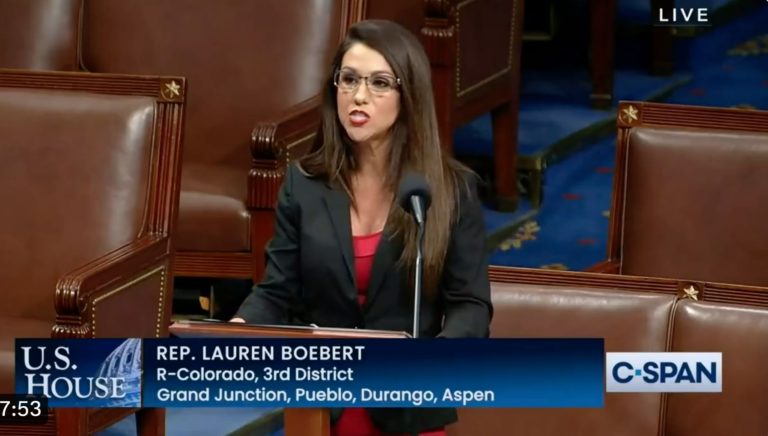

Rep. Boebert brings articles of impeachment to floor of House

Rep. Lauren Boebert, a Republican from Colorado, says President Joe Biden intentionally ceded command and control of the southern border to cartels, and he should be removed from office.

“His dereliction of duty caused the deaths of over 900 Coloradans from fentanyl, enabled sex-trafficking, and allowed an invasion. I brought my articles of impeachment up via a privileged motion to force a vote,” she said.

“In his failure to uphold the rule of law President Biden has demonstrated that he will neglect his duty to execute the office to which he has been entrusted, violating his oath to the constitution if allowed to remain in office,” Boebert said.

This means members of Congress would have to vote on impeachment of the president. It’s part of a pattern in the House among the Freedom Caucus. In May, Rep. Marjorie Taylor Greene of Georgia Announced articles of impeachment against Biden, Attorney General Merrick Garland, FBI Director and U.S. Attorney General Chris Wray. Another articles of impeachment has been made against Vice President Kamala Harris. But this one is the most striking of them all, as it bypasses committees.

Boebert technically introduced the articles of impeachment earlier this month. But she surprised everyone by bringing it to the floor as a privileged motion on Tuesday night.

There are two impeachment articles in the document, including one relating to Biden’s abuse of power, and another accusing him of dereliction of duty.

House Democratic Whip Katherine Clark said that Democrats will make a motion to table the resolution when it comes up for a vote on the floor, a procedural move that could block the resolution from being voted on altogether.

The articles of impeachment can be read at this link.

Rumors of serial killer on the loose are wrong, say Troopers, Anchorage police

In response to online rumors about a serial killer targeting residents of the Mat-Su Valley and Anchorage area, both Alaska State Troopers and Anchorage Police Department issued a statement on Tuesday clarifying that there is no evidence to support such claims.

Investigators examined the recent homicides in the region and found no connections.

The law enforcement agencies said in the statement, “If a serial killer were to be known by the Alaska State Troopers or Anchorage Police Department, we would not hesitate to notify the public.”

Mia Costello signs on to help Mayor Bronson navigate legislative issues

Mia Costello, a former Alaska state senator, has been appointed as the director of Legislative Affairs by Mayor Dave Bronson.

The announcement was made Tuesday. Costello, a lifelong resident, served in the Alaska Legislature for 12 years, with four years in the House and eight years in the Senate.

During her tenure, she was on the House Finance Committee, chaired of the Senate Labor and Commerce Committee, and was Senate Majority leader. After district lines were shifted during redistricting, she lost to Sen. Matt Claman, a Democrat.

Prior to her political career, Costello worked for Gov. Frank Murkowski and Gov. Walter Hickel. She has a bachelor’s degree in government from Harvard University and a master of arts in teaching from the University of Alaska Southeast.

She taught social studies, government, and history at Service High and Juneau-Douglas High and played crucial role in assisting at-risk youth in obtaining their diplomas at Nine Star Education & Employment Services.

Mayor Bronson expressed his confidence in Costello’s abilities, stating, “Mia is a devoted public servant and competent leader. Her experience in both the legislative and executive branches of government, combined with her diverse history serving our community, make her an ideal choice for this position.”

He further emphasized the shared goals of his administration, including modernizing the Port, enhancing public safety, and fostering a more competitive business environment in Anchorage.

“I love our city and look forward to helping advance Mayor Bronson’s vision of a prosperous and vibrant Anchorage. I’m honored to have been selected to fill this role, and am excited to work with the Assembly, state lawmakers, Congressional delegation, and Governor Dunleavy’s administration to make Anchorage a more desirable place to live, work, and play,” Costello said.

Costello’s first day in her new position is set for June 20.

Ben Carpenter: Legislature still needs to settle on long-term fiscal solution

By REP. BEN CARPENTER

Yesterday, the governor announced the vetoes he made to the FY24 budget. The governor’s vetoes amount to a substantial $202 million in reductions, including $145 million from the operating budget and $57 million vetoed from the capital budget.

With amendments on the first and final day of the special session, the Legislature had appropriated a total of $6.2 billion Unrestricted General Funds for FY24, including operating and capital appropriations.

The FY24 budget as passed by the Legislature included a 6.5% increase ($262 million) in agency operations over the FY23 budget, including supplemental budgets. Considering agency operations is most of the state bureaucracy, the governor’s vetoes reduced the FY24 state bureaucracy growth from 6.5% to 3.5% more than the FY23 budget.

In other words, the vetoes amount to a 3.5% reduction in agency operations from what the Legislature appropriated, and allow a 3.5% increase over last year’s agency operations.

I’m thankful for the governor’s reductions in agency operations. However, focusing on the dollar amount of vetoes, or what programs were vetoed, or even which districts are impacted by the vetoed funds is to miss an opportunity to see the bigger picture. FY24 agency operations are 11% greater than they were in 2019.

The cost of our state bureaucracy continues to grow, and that growth is fueled by Permanent Fund earnings.

The Permanent Fund dividend in the FY24 budget was reduced by $881.5 million to pay for state government. In other words, a portion of $881.5 million won’t be spent on small business in Alaska in FY24. The growth in the cost of bureaucracy also comes at the cost of reduced capital budgets and a delay or complete rejection of capital projects that would enable private sector economic growth.

At this rate, it is only a matter of time before our private sector economy will cease to directly benefit from the Permanent Fund because our state bureaucracy will consume all Permanent Fund earnings. Who will pay for government growth then?

Meanwhile, our private sector economy has been in decline since oil prices dropped precipitously in 2014-2016. Eleven percent growth in agency operations has hurt, rather than helped, Alaska’s economy.

Our state government spends much more per capita than most other states, but when national rankings of performance metrics in key social and economic areas are released, we often come close to the bottom, if not dead last. Poor performance and wasteful spending go hand in hand. Alaskans, their businesses, and our investment earnings are paying for costly state bureaucracy that is underperforming. Our state bureaucracy’s results do not justify the cost, nor the increase in spending over the past five years.

Our roads and ferries aren’t 11% better maintained than they were five years ago. Our students aren’t performing 11% better now that their Permanent Fund dividends are paying for their school district expenses. Families aren’t better off because they are dependent on government funded childcare.

For many Alaskans not dependent on state government spending, hope is short-lived. Alaskans who have the means are leaving Alaska in greater numbers than people who are arriving. More state government isn’t going to halt our outward migration or economic decline.

The annual budget fight isn’t going to solve our socioeconomic problems. Private sector economic growth and better management of state government will.

We must lead our state government through a period of innovation and improved management. Doing so will provide productive alternatives designed to improve the annual nearsighted budget fight; alternatives focused on improving communication and performance. Better management will benefit the bottom line. Our government needs to get good at and habitually perform the common management practice of measuring results and comparing those results to stated objectives. The Legislature is statutorily required (AS 37.07.014) to promote results-based government, but it is not doing so.

Two bills currently under discussion in the legislature will help improve the management of our state government.

HB190, introduced this past session in the House Ways and Means Committee, creates an independent review of state operations under the auspices of the lieutenant governor. The Sunset Review Commission will be made up of appointed Alaskans and has teeth to ensure compliance. The commission will have investigative powers and the authority to propose policy, management, and financial reforms to state departments and the legislature that must be acted upon, otherwise the entities will be sunset. The legislation is modeled after the successful Texas Sunset Commission that has been in existence since 1977 and has saved over a billion dollars in state and federal funds.

HB194, also introduced this past session in the House Ways and Means Committee, improves our existing management statutes. This measure will help the government hold itself accountable through quality control measures, systematic performance reviews, and required planning for improvement. HB194 will also improve communication between the legislature and the executive branch by implementing planning conferences on important functions tied to state spending decisions.

We won’t get better without better management.

By following our own management statutes and by gleaning the most beneficial practices from other states, we can improve our state government. By implementing HB190 & HB194, and a long-term fiscal plan, the legislature, the governor, and the lieutenant governor can lead our state through a period of improvement that includes better management of state government and better socioeconomic outcomes for all Alaskans.

I call on the Legislature and the governor to meet in special session this year specifically to address a long- term fiscal plan that prioritizes economic growth for all Alaskans. We need all hands-on deck to right this ship!

Ben Carpenter is a state representative for the northern Kenai Peninsula. He is the chairman of House Ways & Means and Legislative Budget & Audit Committees.

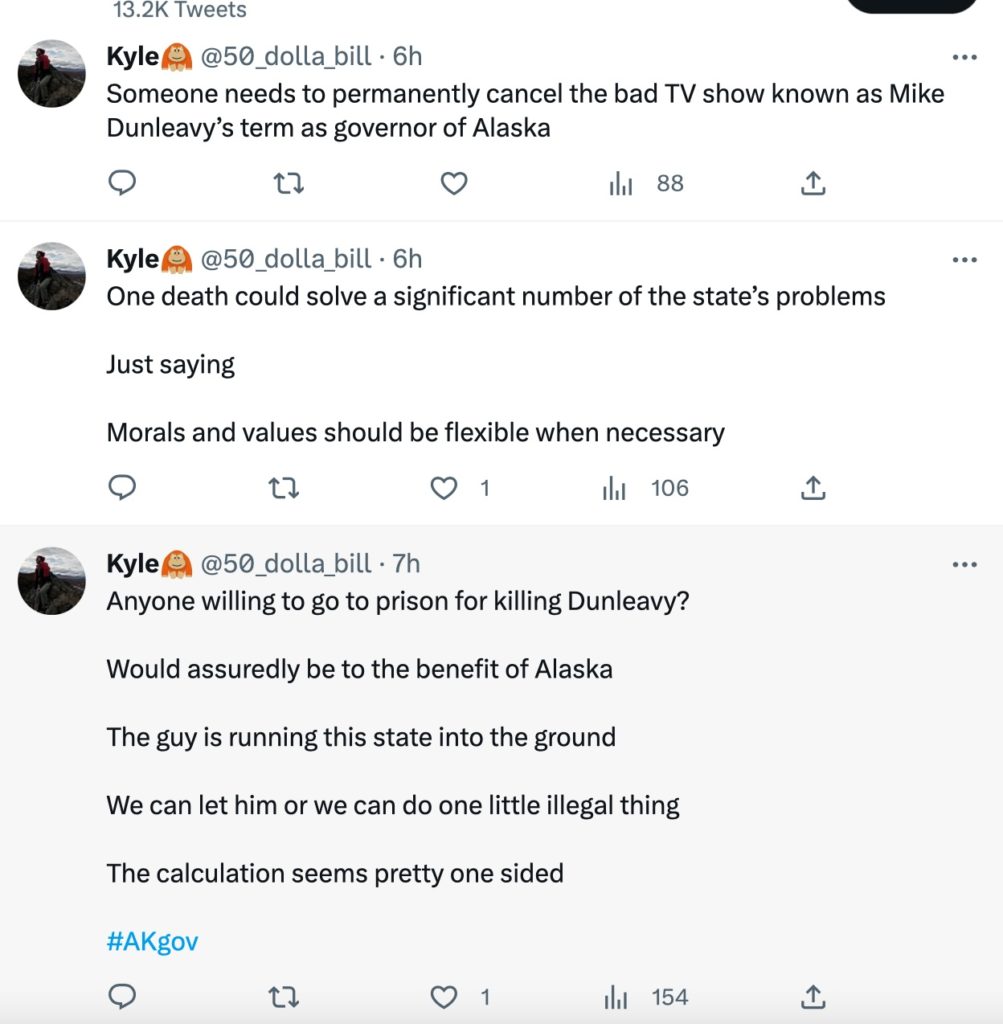
Anchorage social media ‘Kyle’ makes terroristic threats against governor

35

A government worker who is protected by his union has appeared to threaten the life of the governor of Alaska by calling for his assassination.

A Twitter post in the account owned by “Kyle” says that someone should kill the governor as a service to Alaska.

“Anyone willing to go to prison for killing Dunleavy? Would assuredly be to the benefit of Alaska / The guy is running this state into the ground / We can let him or we can do one little illegal thing / The calculation seems pretty one sided / One death could solve a significant number of things / Just saying / Moral and values should be flexible when necessary / Someone needs to permanently cancel the bad TV show known as Mike Dunleavy’s term as governor of Alaska,” Kyle’s Twitter account wrote.

A search of his past, which is a mostly profane and angry social media history, links this account to an employee of the Municipality of Anchorage, where he works for Maintenance and Operations at a desk job. He is protected by the Anchorage Municipal Employees Association union.

Several readers have forwarded the Twitter message to law enforcement, including the FBI, Anchorage Police, State Troopers, and the head of the governor’s security team. Although the threats were made Monday, they are still available on Twitter under Kyle’s user name, “@50_dolla_bill.”

Kyle has also written his leftist political opinions in the Anchorage Daily News, where he penned a letter that was printed several months ago: “The Anchorage Assembly recently passed an ordinance allowing for them to remove the mayor for a breach of public trust. They should seriously consider acting on that ordinance. The current mayoral administration has demonstrated time and again that its members will lie, cheat and steal anything they can from the municipality and the taxpayers. Last fall, we had the whole fluoridation incident at the water processing facility. The administration then lied about that. Then lied about lying about it.”

A year ago, he wrote, “Is Alaska really going to elect Sarah Palin again? She quit on us as governor halfway through her term to go make money grifting the Lower 48 and selling out Alaska. She has shown herself to be the worst among us as a Donald Trump-loving, lying grifter. Any Alaskans who were around for Gov. Palin should be ashamed and embarrassed of themselves if they voted for her in this election. When a person shows you who they are, believe them. Alaska needs better representation. Vote for Mary Peltola.”

Hunter Biden cuts a deal, gets off easy

Hunter Biden, the son of President Joe Biden, struck a plea deal with federal prosecutors to resolve a five-year investigation into his massive federal tax dodge, and the purchase and possession of a firearm in 2018, while he was doing illegal drugs.

The agreement, made public on Tuesday, includes Hunter Biden pleading guilty to two misdemeanor tax charges, while the more serious charge of possessing a firearm while being a user of illegal drugs – a felony – will be dismissed if he successfully completes a two-year probation period.

Biden has a well-documented history of illegal drug use and is a key figure in a massive influence-peddling scheme that involves the president and other members of the Biden empire. But these charges are not part of that investigation, which is now being probed by the House Oversight Committee.

Hunter Biden’s attorney, Christopher Clark, announced that the plea deal would “resolve” the long-standing criminal probe by the Justice Department.

Clark acknowledged Hunter Biden’s responsibility for the misdemeanor tax charges, attributing them to a period of turmoil and addiction in his life.

The White House responded to the plea deal, asserting the unconditional love and support of President Biden and First Lady Jill Biden for their son. White House spokesman Ian Sams stated, “The President and First Lady love their son and support him as he continues to rebuild his life. We will have no further comment.”

However, former President Donald Trump wasted no time in criticizing the plea deal, taking to his social media platform, TruthSocial, to express his opinion: “Wow! The corrupt Biden DOJ just cleared up hundreds of years of criminal liability by giving Hunter Biden a mere ‘traffic ticket.’ Our system is BROKEN!”

Critics argue that the plea deal raises questions about the impartiality of the justice system and whether influential individuals are held to a different standard.

Anchorage Assembly hearing Tuesday: Formalized homeless camps

The Anchorage Assembly will hear from the public on Tuesday evening about the Assembly’s plan to establish formalized, or “allowed,” homeless encampments in the city.

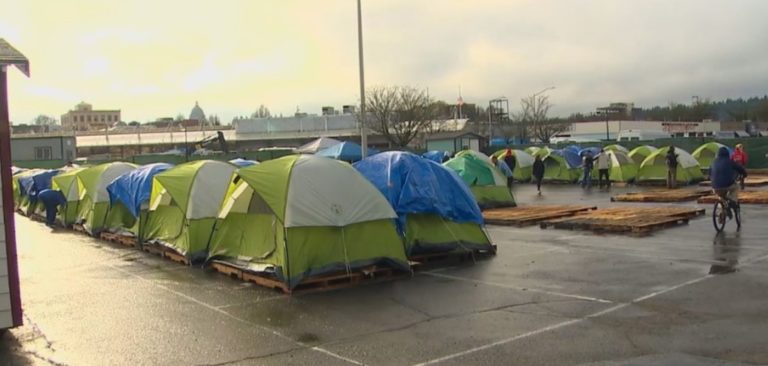
The plan is modeled after similar ordinances in Denver, San Diego, and Santa Cruz, where tent encampments are established, covered by insurance, and maintained by paid staff. It’s part of a number of solutions to deal with a section of society that has fallen and can’t seem to get up. Other solutions include the purchase of “Pallet homes,” which are tiny structured shelters that provide more comfort than tents.

Currently, random and sometimes sprawling homeless camps have spread throughout Anchorage, causing concern to taxpayers about the filthy and dangerous state of greenbelts and trails, many of which have been overtaken by outlaws, addicts, and vagrants.

As more unemployed people move from rural Alaska to Anchorage, they’re met with a spectrum of services that enable them to live on the margins of society, forming their own networks of people who are satisfied with just the basics in order to pursue a life of recreational drugs, alcohol, crime, and a form of freedom from responsibility.

Sponsored by Assemblymen George Martinez, Zac Johnson, and Kevin Cross, the ordinance amending Anchorage Municipal Code Chapter 16.125, Title 21 and Title 23 would define and establish sanctioned camps in the Municipality of Anchorage. There would be permits granted to campsite operators, who would be able to provide ancillary buildings for sanitation and emergency shelter. The entire program would be outside the authority of the Planning and Zoning Commission.

Pictured above, a sanctioned camp in Denver, Colo. is one of the examples of what a similar one in Anchorage might look like, according to the makers of the ordinance.

Currently, Anchorage Municipal Code subsection 25.70.040A.1. prohibits camping on municipal land, and section 8.45.010 prohibits trespass on both public and private land. However, this is widely disregarded by the homeless encampments that have spread across sections of the city, and it has not been enforced.

One version of the amended code can be read at this link.

A second version of the amended code would create more limits, so that rather than encouraging numerous sanctioned camps to spring up all over the city, there would be one camp on municipal property as a pilot program. That substitute version of the proposed ordinance can be read at this link.

The public hearing on this item may come toward the end of the meeting, which starts at 5 pm on the ground floor of the Loussac Library, which is at the corner of Denali St. and 36th Ave. The entire agenda packet can be viewed at this link.

David Boyle: Mississippi shows Alaska that all kids can read

By DAVID BOYLE

For years, Mississippi was near the bottom when it came to teaching its children how to read.

The other southern states would say, “Thank God for Mississippi,” because they could rely on the fact that no matter how bad their education systems were, Mississippi would always be at the bottom. 

At least they were not as bad as Mississippi when it came to reading.

Mississippi knew this and decided to transform its educational system. In the last 10 years, all its energy has been placed into getting all children to read at the third-grade level by the time they complete third grade. 

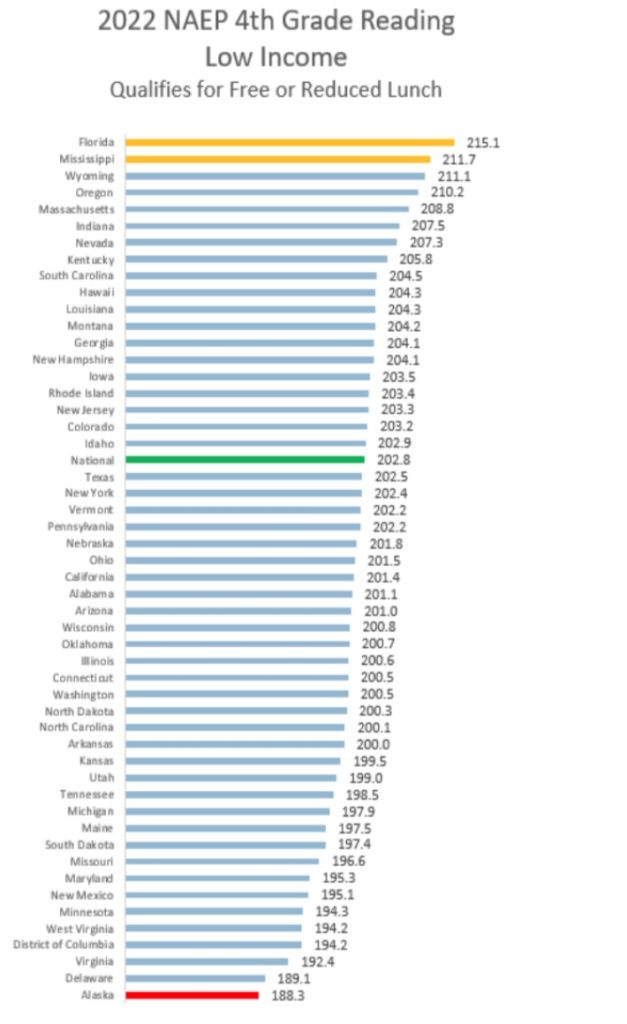
The results are astounding.  On the National Assessment of Educational Progress test, Mississippi is soaring in national rankings.  In the 2022 NAEP tests its low-income 4th grade students ranked second in the Nation.

Meanwhile, Alaska was dead last.

Was this accomplished by lower classroom sizes? By social promotion?  After all, Mississippi had a lot to overcome. Mississippi ranks dead last in child poverty. It was near the bottom of the NAEP tests too.

No, it placed its energy into getting all children to read. 

Now among low-income students, Mississippi fourth-graders are tied for best in reading and rank second in math!  

Poverty isn’t the reason kids can’t learn.  Mississippi proves that. Poor kids can learn just as well as other kids!  

Here is how Mississippi improved its NAEP ranking for low-income 4th grade students since it implemented its reading program:

 20132015201720192022
Mississippi45382832
Alaska5151515151

Note that Alaska ranked dead last for low-income fourth-grade students for five consecutive years.

One of the most important elements of the program is the third-grade reading test. If a child does not pass this test, he/she is held back—no social promotion. 

Would this stigmatize children? No!  

It put accountability into the program–everyone, parents, teachers, and kids were energized.  

And about 9% of third-graders fail the test in their third and final attempt.

Here’s the very interesting part: Those held back did not have any negative outcomes. In fact, they did much better several years later on sixth-grade English tests compared with those who had just missed being held back. 

It seems as if they were incentivized to succeed.

The state did not reduce class sizes as many in the Alaska education community support.  Instead, it spent the money on teacher coaching and tutoring.

And it had nothing to do with the color of a student’s skin or a family’s income level.

In the 2018-19 school year, 48% of students in public schools were black and 44% were white. And 75% were low income.

So, regardless of race, ethnic group, and income level, Mississippi has shown the nation that all kids can learn.

Let’s not focus on diversity, equity, sexual orientation, and restorative justice.  Instead let’s focus on teaching kids how to read—at least by the fourth grade. 

It may take many years to note the success of Alaska’s new reading program. The Alaska Reads Act, modeled after the Mississippi program, has given us the tools. Now let’s get it done.

This is the core business of our K-12 education system. 

And Thank God for Mississippi!  It has shown us the way.

David Boyle is the Must Read Alaska education writer.