Home Blog Page 648

Rep. Jennie Armstrong asks for help retiring her legal bills, but is it legal?

Rep. Jennie Armstrong, whose candidacy was once legal challenged because she had barely arrived in the state from Louisiana before filing as a candidate for office, now wants donors to help her retire her legal bills for the escapade.

She says she still owes her lawyer Scott Kendall $45,000 and wants Alaskans to help her retire the debt by its due date, which is Aug. 31.

Armstrong, however, mentioned no such debt on her Public Official Financial Disclosure, which she filed in March. The POFD is something all public officials must complete so the public understands their conflicts of interest.

She also did not disclose this major debt in her campaign Alaska Public Offices Commission reports.

And so the debt to Kendall has not been disclosed personally or by her campaign.

What makes it even more interesting is that Kendall, who defended Armstrong successfully in court so that she could proceed as a legislative candidate, is not only the architect of Ballot Measure 2 (open primaries and ranked-choice general elections), but he is an aggressive political operative who gets involved in many election controversies. He has two current complaints filed against conservative groups — Preserve Democracy and Alaskans for Honest Elections.

The argument could be made that such a large debt to a political operative is something that should have been disclosed to the public by Armstrong.

But it wasn’t disclosed. Kendall has for the past year, since helping Armstrong win her case, more or less owned Armstrong with a five-figure debt that she is only now revealing.

It’s no small fact that Armstrong earned up to $200,000 as a consultant with Outside clients in 2022, for groups with names such as Equitable Evaluation Initiative and the Kera Collective.

Armstrong has also already transferred over $10,000 into a future campaign account and $9,000 of campaign money into her legal defense fund.

Thus, it’s apparent she incurred at up to an $80,000 debt to Kendall to defend her right to be a candidate last year, against all odds, since she had scant evidence that she had lived in the state long enough.

Jay McDonald, a citizen activist, has filed a complaint with the Alaska Public Offices Commission about the apparent problem that Armstrong has created for herself.

Armstrong, using her campaign to pay off a non-campaign debt, may also have a problem with the Legislative Ethics Committee. That is a closed process inside the Legislature.

The nondisclosure appears to be on several levels, and the fine could be as much as $500 a day, which could amount to well over $150,000.

Here’s the complaint filed with APOC:

Downing: The courage of Chloe Cole against the cult of transgendering America’s children

By SUZANNE DOWNING

A 19-year-old girl from California is leading the national discussion about one of the most pressing issues of our time: The wrongful gender transitioning of children.

Chloe Cole stopped by Anchorage on a recent summer day to give her side of the transitioning story. She visited at the invitation of Alaska Family Council to tell Alaskans the aspects of the transitioning racket that the mainstream media, the public education regime, and medical establishment don’t want us to hear.

She was boyish as a child and had undiagnosed autism. My guess, having listened to her speak, is that she has genius-level IQ. She identified more with boys than with girls, was more like her dad than her mom, and she was unusually headstrong. So when she learned online about how she could avoid going through female puberty by taking puberty blockers, testosterone, and other hormone-bending medications, and later undergoing the knife, she insisted that is what she wanted to do.

Chloe Cole speaks at an event in Anchorage in August, 2023.

Her parents complied with the advice of doctors, who told them that without the transitioning procedure Chloe would probably kill herself. What parent wants that? Between their headstrong daughter and the doctors eager to perform these gender transitions, Chloe became, by all outward appearance at least, a boy. By the time she was 15, the doctors had chopped off her breasts.

Then she matured, and at 16 started having deep-seated regrets. She regretted that she would never be able to be a mother. Although she looked like a boy, she knew in her heart she would never be a boy. She couldn’t date girls, because she wasn’t attracted to girls. The boys who wanted to date her were gay, and she wasn’t attracted to them either. Older men seemed unnaturally interested in her.

Chloe, by 17, had bravely begun the process of “detransitioning.”

Today, she speaks boldly to all who will hear: The transitioning of children is a threat to our society because it is targeting our future. Children cannot reasonably give consent to such drastic procedures. Parents must defend childhood and let kids be kids.

Her story reinforces the uneasy sense that transgenderism is much like a cult, and that during the Covid pandemic, when children stayed home and were glued to their computers, our young people were exposed to websites where transgendered adults reached out to them and welcomed them into the “community.” Th lockdowns may, in fact, be a reason that there’s been such a sudden increase in transgendered youth.

That online community is a place, as Chloe describes it, that appears to be filled with love and happiness, where a child’s insecurities about their bodies or fears about going through puberty can be addressed by kindly community members who tell them how they can actually choose to be a boy or can opt into being a girl. It’s so reaffirming to a child who is suffering from gender dysphoria.

Websites like the Trevor Project specialize in this grooming and encouragement to curious children, and even have “escape” buttons that allow a child to quickly close the site, should a parent come into the room.

The Trevor Project has a welcoming message that can seem benign to children who discover it.

Chloe encountered this transgender online community and it embraced her in all her confusion and self-perceived imperfections. With her prepubescent years flying by, she was a victim of the cult of transgenderism.

It’s a cult that you can get into, but woe to the person who decides to leave.

Chloe describes how when she decided to return to girlhood, the community members told her that she “should have known better” and that her transgendering was her own choice, not their concern. She was 16, and she was now shunned. 

Today, she travels with security as she testifies across the country in legislatures and in the committees of Congress. As it turns out, the transgender fringe is as unhinged as any other cult fringe. What makes it different from a traditional cult is that there is no charismatic leader, but otherwise, it contains many of the elements of a closed and secret religious faction. It can be intimidating.

Evidence continues to build that shows how gender dysphoria is highest among youth of European descent, especially among girls with exceptionally high intelligence combined with a history of mental health challenges. That is Chloe – female, brilliant, and also had mental health issues as a child.

With more poise and composure than most adults can muster, Chloe is on a mission to save the children of America from the doctors who would mutilate them. She speaks honestly about her experience, and does not back down to the tyranny of the transgender agenda that now defines the Left. She will not be bullied.

Wherever she goes, whether it’s Alaska or Minnesota or Mississippi, Chloe says she hears from a lot of middle-aged women who tell her that they, too, once were tomboys and they know if they’d been given a choice as a child to transition, they would have done so in a heartbeat, without realizing what they would have given up in life. These grandmothers are some of Chloe’s biggest supporters.

You can support Chloe’s travel here.

The courage of Chloe Cole is an inspiration to young and old in America. By choosing to not bury her gifts or diminish her own bone-chilling life story, she advocates for letting children be children. Still a teen, she endures the insults, slings, and arrows that come from taking a stand against the cult of transgenderism. That is courage by any measure.

Suzanne Downing is publisher of Must Read Alaska.

Alex Gimarc: Death by government in Maui are lessons for Alaska

By ALEX GIMARC

Now that we are a couple of weeks past the devastating wildfire that roared through Lahaina on Aug. 8, we have a clearer picture of what happened, and can start the discussion on why it happened.  

I’ll frame this initial discussion in terms of investigating aviation accidents, introducing the notion of chain of events. 

The chain of events is a sequential list of things that had to happen for the aircraft to crash.  The thinking is that if you disrupt that chain anywhere, cause one thing not to happen when it did happen, no accident.  

In the real world, if you disrupt one chain, you always set the stage to forge another link that will complete the chain in another way, leading to another similar accident. 

Let’s take a look at the Maui fires and see if we can identify any links in the chain.  Interestingly, all of these links have some sort of government involvement, taking us full circle back to the notion of Death by Government.  

What happened? August was a rough month across Hawaii with multiple wildfires breaking out. Most were contained by Aug 4. The fires on Maui were driven by a strong, gusty, dry downslope wind. Wind warnings were issued on Aug 7. Fuel for the fires on Maui were grasses that had grown on abandoned pineapple plantations, which grew nicely in a wet spring.  

The dry downslope winds dried the grass, downed powerlines with gusts up to and over 100 kph, sparked the conflagration, which was driven downslope into the seaside town of Lahaina.  

WUWT has a good explanation of how this sort of mountain wave worked.  We see this sort of thing here in Anchorage and California with downslope Chinook winds.  Those winds in California drive wildfires. 

The first government failure was the lack of a reasonable weather forecasting network and modeling on Maui. Such a capability exists on the Big Island and Oahu, but Maui somehow never got involved.

Once the fires were active and being driven into town, local government officials decided not to use their tsunami warning siren network. The reason? They were afraid the warning would drive fleeing residents into the flames. Why? The network had never been used to provide anything other than tsunami warning, another government failure of vision.  The expected response to a tsunami warning? Get as high above sea level as possible. 

This was government failure number two. Why? Once you have a siren network, you can use it for more than one thing. Gasp, who knew? All you have to do is modulate the sound, say a constant pitch for tsunami and a variable pitch for something else. Public education is important here, as if you are going to use the system for more than one thing, you really need to tell the public what that second or third reason is going to be, and what their expected response needs to be. 

The network has verbiage touting multiple uses for sirens. Local government never made any attempt to use it for anything other than tsunami warning. Consider this government failure 2a.    

Next up is Hawaiian Electric, which was aware of infrastructure issues that could contribute to wildfire threat but chose to focus on shifting toward renewables instead. 

As far back as 2019, it had concluded that it needed to invest in preventing its power lines from emitting sparks and other wildfire risks. It studied what California had been doing and came up with a plan to replace conductors with insulated conductors and utility poles with fire resistant poles. 

Over the period, it spent just a quarter million dollars on wildfire mitigation. Contrast that to 100x spent on transitioning to renewables over the same period. 

Hawaiian Electric did not request permission to increase rates for wildfire mitigation until 2022. Instead, it chose to focus its resources on the state-mandated shift toward renewable energy. The statewide political focus was on renewables, so that is what they did. 

There are videos of utility poles snapping off during the winds, and electric sparking as the lines came down. 

For its part, the utility tried to respond quickly to downed poles, and appropriate response.  But no good deed goes unpunished, as their trucks ended up blocking escape routes for those fleeing the fires. This is the third government failure, and one that should be well considered by every single electric utility currently falling kettle over teacup to change over to renewables, while ignoring the boring, mundane job of simply keeping the lights on. 

Keep that in mind when the newly ensconced majorities on the Chugach Electric and MEA Boards start prattling on about net zero and carbon free electricity. What daily care and feeding of a reliable generation, transmission and distribution operation are they ignoring as they refocus in their pursuit of the new shiny? Are they reprising what Hawaiian Electric did, pursuing the politically popular goal at the expense of everything else?  

Next on the hit parade of incompetence was M Kaleo Manuel, Hawaii’s DLNR Deputy Director of Water Resource Management. While based Oahu, he was in charge of approving requests to divert water statewide for emergency use. Unfortunately, being an activist, he decided his job was to “focus on bringing planning and indigenous knowledge to the fields of water advocacy and management in Hawaii.” He made public comments about water use requiring some sort of “true conversations about equity.’ How equity had anything to do with water will become apparent in a bit. 

As the DLNR water guy, Manuel fielded requests early on to divert water for firefighting.  His response was to demand the requestors contact downstream indigenous farmers for permission. That took five hours, by the end of which it was too late, and the hydrants were dry. 

Apparently letting your neighbors burn to death is a positive lifestyle equity choice for native Hawaiians and their governmental advocates. As of this writing, due to public heat, he has been temporarily reassigned, buried in the bureaucracy until it is safe for him to crawl out from under his rock to kill again. 

This is banality of evil, death due to bureaucratic inaction, government failure number four.

Here in Anchorage, the Assembly rewrote traffic laws in August for bicyclers from the perspective of equity. One of the changes allows bicyclists to blast through stop signs at intersections.  The Assembly made no attempt to educate or even to persuade the general public that this was somehow a necessary and good thing. How many bikers running stop signs and red lights will end up in fatal accidents due to the Assembly’s new rules?  Whatever that nonzero number is, at least equity has been served.  

The final major government failure was local law enforcement blocking escape routes and keeping parents from rescuing their children at home. This is particularly heinous, with the true scope of what happened being buried behind the Blue Wall. 

As of this writing, death toll is around 115, with perhaps 1,000 missing. It appears that the local government is slow-rolling release of those names although names and ages of the missing are all known. As I understand the timing, local schools in town on the beach released their students around noon due to the fire threat. Kids walked home. By the time they got home, power and communications started going down (cell, landline, TV and radio). No siren ever went off. There were no warnings received. The fires arrived and the children were burned to death at home along with their mothers (if the mothers were there). 

Frantic parental attempts to drive to the homes were blocked by local law enforcement at roadblocks. As Hawaii is a high gun control blue state, generally law enforcement was armed while the public wasn’t, meaning they couldn’t force their way in. 

Speculation is that local government is delaying the release of names and numbers to allow an incensed public to calm down a bit. Somehow, I don’t think that is going to work.  Consider this sort of action by local law enforcement in the event of a wildfire on the Hillside.  Does anyone think residents are going to sit meekly by while their homes and families burn?  

Overall, this was a really ugly event, and my sense is that it is going to get worse as more information is released. Political reaction has been predictable with all the usual suspects on the left blaming the entire mess on climate change. Biden was in Maui this week making that precise case.

Bjorn Lomborg wrote in The Daily Caller Friday that politicians are hiding behind climate change to duck their responsibility for their predictable failures. Lomborg is spot on with this analysis.  

Perhaps we need to take a step back and consider the enormity and utter predictability of destruction wrought by leftist governance, especially long term, entrenched Democrat governance. It is not so much that this governance is intrinsically evil. Rather, it is by its very nature, it is mind numbingly, stupefyingly incompetent.  

That incompetence manifests itself by spending an inordinate amount of time on shiny objects important to leftist ideology like equity, climate change, renewables, ESG, CRT, LGBTQWTF, and the rest of their odious laundry list. 

The problem is that there are only so many brain cells to go around, and when you use most of them pursuing ideological foolishness, there is not a lot of brain power remaining to take care of the day-to-day business of simply keeping the lights on and keeping people safe. And when the predictable disaster happens, those governments will always blame the other side, pointing their fingers at their political opposition backed up by lockstep cheerleading by local, statewide, and national media. 

The end result of this process is the utter destruction of communities and physical cities, something we are seeing in blue cities nationwide, making them just as unlivable as the US made Hiroshima and Nagasaki 80 years ago. The difference is that it was a World War and the military attack took seconds to destroy both, while it is taking decades of political incompetence to destroy the targeted American cities. 

The other difference is that the Japanese cities were rebuilt. The American cities won’t be until something fundamentally changes politically at the local level, something that may or may not happen at all. Proof of this are sections of cities that burned during the 1960s riots that have not yet been rebuilt.  

With Maui, we saw a reminder of the power and destructiveness of leftist governance.  Through sheer incompetence they managed to burn down a town of over 13,000, killing over 115, with another 1,000 or so missing, presumed dead. 

Their excuse? Climate change, equity, not my fault, or some other smarmy excuse, things we would have dismissed outright from a 5-year-old. Yet we allow Democrats to make these excuses, aided and abetted by their media cheerleaders.

Elections are important, folks. And the very most dangerous government we know about is the long-term, entrenched blue government at the local and state level. Maui just demonstrated that. Keep this in mind during the next utility, local and state election here in Anchorage.

Alex Gimarc lives in Anchorage since retiring from the military in 1997. His interests include science and technology, environment, energy, economics, military affairs, fishing and disabilities policies. His weekly column “Interesting Items” is a summary of news stories with substantive Alaska-themed topics. He was a small business owner and Information Technology professional.

Quintillion waits out ice, as summer begins to wane in the Arctic

Quintillion Global, which is trying to repair a broken undersea fiber optic cable in the Arctic, has kept the repair vessel waiting in Wainwright due to lingering ice conditions around Point Barrow and the area where the cable is broken.

Quintillion, a provider of undersea fiber optics cable that stretch under the Arctic Ocean and all the way down the Bering Strait to the Aleutians, has been trying to reach the broken cable since the incident occurred June 13. Quintillion at the time estimated the break could mean up to eight weeks of no internet service in the Arctic. Other service providers have filled in to a limited extent.

Quintillion’s cable broke as a result of an ice scouring event, at about 55 km north of Oliktok Point. Ice scouring happens when floating ice drifts into shallower areas and grinds the seabed, damaging the cable infrastructure.

The outage affected communities of Nome, Kotzebue, Point Hope, Wainwright, and Utqiagvik, Bethel, and others in between, forcing them to search for satellite alternatives. 

Ice continues to drift to the east and north, the company said. Much of the ice continues to fracture into smaller pieces aiding in the melt process and flushing out into the southern Beaufort Sea.

The company estimates are that the vessel can make the transit later this week if ice continues to abate on the current trend. The vessel will engage at the first clear and safe opportunity, Quintillion said. Last week, the hope was to reach the break site by Aug. 22.

Weather in Wainwright this week will reach the mid-40s and drop into the 30s at night as the days grow shorter. Right now, there are about 17 hours of daylight in the far north, but that is reduced by roughly 10 minutes a day at this time of year.

No safe way to recover Alaskans who perished in Denali National Park small plane crash

Denali National Park and Preserve rangers have decided that safe recovery of the wreckage and passengers from the PA-18 aircraft that crashed on a tributary of the West Fork of the Yenta River on Aug. 9 is currently unattainable.

Over the past week, Denali National Park rangers made attempts to access the accident site through a series of five flights.

The rangers employed technical rope lowering techniques to navigate the rugged terrain, but each attempt encountered a formidable obstacle — significant overhead rockfall hazards that posed a threat to the rescue team.

In an effort to recover the remains of the pilot, Jason Tucker of Wasilla, and passenger, Nicolas Blace of Chugiak, rangers teamed up with TEMSCO helicopter pilots to explore the feasibility of using a mechanical “grabber” attached to a 450-foot-long line.

The equipment was tested at a Talkeetna gravel pit, but it was determined that utilizing the long-line method could endanger the helicopter pilot and spotter due to the uncertainties surrounding the weight and transportability of the wreckage, as well as the limited rotor clearance amidst steep, narrow terrain.

“With great empathy for the families of the deceased pilot and hunter, we have made the difficult determination not to attempt a recovery effort at this time. The steep and perilous terrain at the accident site would escalate the dangers to a level that is unacceptable, risking the lives of our dedicated rangers,” said Brooke Merrell, Denali Park superintendent.

If and when environmental conditions change, such as lower water volume or when the river freezes and allows access on the ground, the Park Service will consider another recovery attempt, the agency said.

Biden approves disaster assistance to flood areas after spring breakup

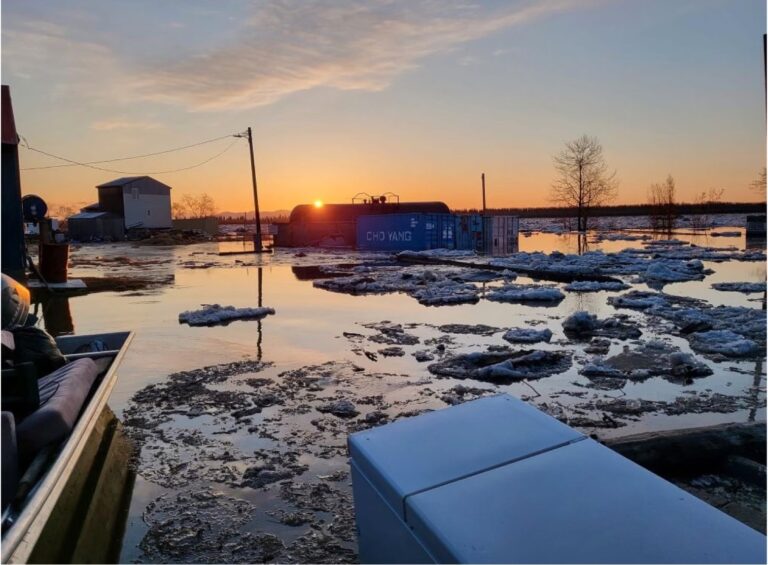
FEMA announced that federal disaster assistance has been made available to the State of Alaska to supplement state, tribal and local recovery efforts in the areas affected by flooding from May 12 to June 3.

President Joe Biden’s action makes federal funding available to affected individuals in the Copper River Regional Educational Attendance Area, Kuspuk REAA, Lower Kuskokwim REAA, Lower Yukon REAA, and Yukon Flats REAA.

Assistance may include grants for temporary housing and home repairs, low-cost loans to cover uninsured property losses, and other programs to help individuals and business owners recover from the effects of the disaster.

Federal funding also is available to state, tribal, and eligible local governments and certain private nonprofit organizations on a cost-sharing basis for emergency work and the repair or replacement of facilities damaged by the flooding in the Bering Strait School REAA, Copper River REAA, Kuspuk REAA, Lower Yukon REAA, and Yukon Flats REAA. Federal funding is also available on a cost-sharing basis for hazard mitigation measures statewide.

On May 13, Alaska Gov. Mike Dunleavy declared a state disaster emergency for the Alaska Gateway, Yukon Flats, Kuspuk, and Copper River Regional Education Attendance Area (REAA)s due to flooding.

A week later, Dunleavy added the Northwest Arctic Borough, the Iditarod REAA, Lower Kuskokwim REAA, and Lower Yukon REAA to the declared disaster areas.

Lance E. Davis was named the federal coordinating officer for federal recovery operations in the affected areas. Additional designations may be made at a later date if warranted by the results of damage assessments. Residents and business owners who sustained losses in the designated areas can begin applying for assistance by registering online at www.DisasterAssistance.gov, by calling 800-621-FEMA (3362), or by using the FEMA App.

Sparks fly at GOP debate, as Vivek Ramaswamy spars with field

Florida Gov. Ron DeSantis came roaring out of the gate as the first speaker during the first Republican presidential debate, held in Milwaukee on Wednesday. The crowd loved him.

“Our country is in decline. This decline is not inevitable. It’s a choice,” DeSantis said, saying that the country needs to send President Joe Biden back to the basement, reverse Bidenomics, and “We cannot succeed as a country if you are working hard, while Hunter Biden is making hundreds of thousands of dollars on lousy paintings.”

Both DeSantis and entrepreneur Vivek Ramaswamy landed some of the most powerful and well-received lines of the night, attacking Joe Biden and his economic policies that have harmed the American economy, and refraining from attacking former President Donald Trump.

In fact, it was Ramaswamy who launched the most vociferous defense of Trump, saying that under Joe Biden, the justice system has been weaponized. His statement drew a huge round of cheers from the crowd in Milwaukee.

Former New Jersey Gov. Chris Christie drew repeated boos from the Republican audience at various points that started from the moment he was introduced. He attacked Ramaswamy as a “Chat GPT” candidate and swiped at Trump repeatedly. He also delivered a strong law-and-order message, saying he would demand U.S. Attorneys pursue criminals more aggressively than Biden has.

The candidates were asked if they’d support a convicted Trump as the Republican Party’s choice. Ramaswamy immediately put his hand up, with Nikki Haley and Tim Scott following him. DeSantis hesitated before raising a hand, and Mike Pence then raised his followed by a reluctant hand from Christie.

Former Vice President Mike Pence surprised many with his strong commitment to conservative principles, including the right to life. The audience gave him a lukewarm response, although there was no outright disrespect.

As the two-hour debate continued, the leading candidates piled on Ramaswamy, who has climbed the polls recently, to the point where he is surpassing DeSantis.

“You have no foreign policy experience and it shows!” said Haley, referring to the 38-year-old candidate’s stance on Ukraine, as she and Ramaswamy talked over each other and pointed. At another point, Pence insulted Ramaswamy by saying he would repeat something for him, but more slowly.

When the eight were asked if they would support Ukraine, Ramaswamy was the only candidate to to say no.

“I think this is disastrous that we are protecting an invasion across somebody else’s border when we should use those same military resources to prevent the invasion of our own southern border,” he said. “I find it offensive that we have professional politicians on this stage that will make a pilgrimage to Kyiv to their pope Zelensky without doing the same think for people in Maui or the south side of Chicago…”

Although the topic of former President Trump came up time and again, it didn’t dominate the debate.

“We have to face the fact that Trump is the most disliked politician in America. We can’t win a general election that way,” Haley said. She also attacked the Republican Party, saying Republicans drove up spending during the Trump Administration.

Christie bashed Trump and said that the former president said he would suspend the Constitution. Moderator Brett Baier had to scold the audience to stop booing.

“If folks at home want to watch a bunch of people blindly bash Trump, they can just flip the channel and watch MSNBC right now. But I’m not running for President of MSNBC, I’m running for President of the United States,” Ramaswamy said.

One unusual aspect of the debate was that perhaps for the first time in history, the candidates were asked about UFOs.

Over on Twitter, Trump held forth with Tucker Carlson in a 45-minute interview that drew more than 74 million viewers in the first hour alone.

The closing arguments of the debate itself were not just about style, but substance. Pence emphasized themes of faith in God and faith in the American people.

Ramaswamy gave the most powerful close of the eight: ” This is our moment to revive those common ideals [of the 1776 revolution]. God is real. There are two genders. Fossil fuels are a requirement for human prosperity. Reverse racism is racism. An open border is not a border. Parents determine the education of their children. The nuclear family is the greatest form of governance known to man. Capitalism lifts us up from poverty. There are three branches of government, not four. And the U.S. Constitution is the strongest guarantor of freedom in human history. That is what won us the American revolution. That is what will win us the revolution of 2024.”

Anchorage Assembly denies mayor library advisory board picks again

All four of Mayor Dave Bronson’s nominees to the Anchorage Library Advisory Board were voted down on Tuesday night by the anti-Bronson Assembly, on a vote of 7-4.

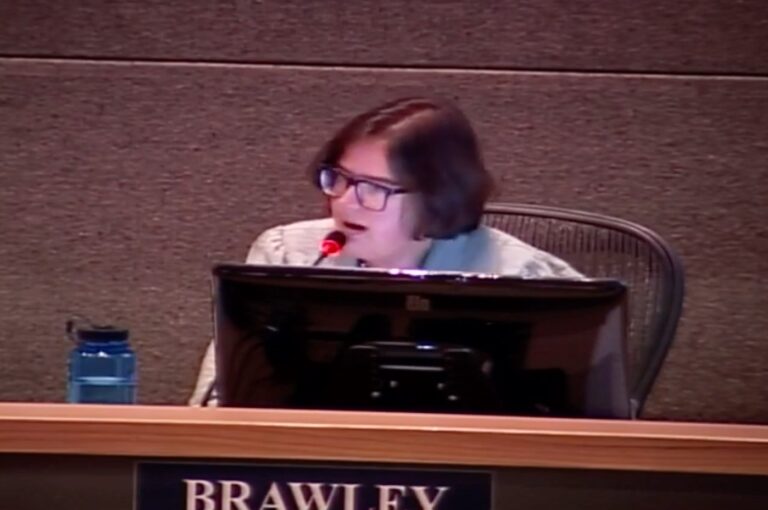
Assemblywoman Anna Brawley led the discussion about the mayor’s choices, saying she could not support any of them because she feels they are part of a partisan plot to take away things like Drag Queen Story Hour and other controversial programs and materials at the library.

Brawley said they are part of what she called a battleground that centered on public libraries. She said believes the mayor is trying to ban books by remaking the library advisory board, which has already been stripped of its book-banning powers by the Assembly.

She recommended a no vote on all four because they would join what she sees as ” body to advance a partisan purpose.”

Listen to some of the discussion regarding the library board:

Aimee Sims, Stacey Lange, Windy Perkins, and Donna Moats had been nominated by the mayor, and the Assembly decided to postpone action from the meeting of July 25. Earlier this year, the Assembly rejected all three nominees to the Library Board.

Chief of Staff Mario Bird asked Brawley if the same rubric would be applied to nominees if they shared different views from the ones that were nominated. Assembly Chairman Chris Constant cautioned Bird that his question was not welcome.

The current Assembly has made history by repeatedly not approving the mayor’s appointments, something never before seen in Anchorage.

The nine-member board of the library advisory panel is a battleground for the Assembly, which is playing a waiting game, hoping that a new mayor will be elected in April. Meanwhile, it appears unwilling to approve any of Mayor Bronson’s nominees.

Three more members reach the end of their service in October, leaving just two members — Dennis Dupras and Doug Weimann. If no members are replaced, the expiring members may serve another 120 days, or resign.

  • Cristy A. Willer, Chair, Term expires October 14, 2023
  • OPEN, Vice Chair, Term expires October 14, 2022
  • OPEN, Secretary, Term expires October 14, 2022
  • Debra Bronson, Term expires October 14, 2023
  • Dennis Dupras, Term expires October 14, 2024
  • Alice Qannik Glenn, Term expires October 14, 2023
  • Doug Weimann, Term expires October 14, 2024
  • Teen Advisory Board Member: Vacant

The August meeting of the Library Advisory Board, which meets on the third Wednesday of every month, had to be canceled due to a lack of a quorum.

State petitions Supreme Court to enforce Janus’ free speech ruling

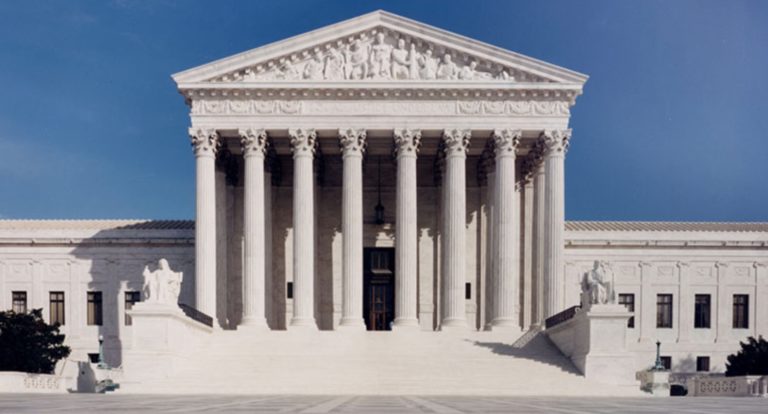
The Dunleavy Administration has petitioned the U.S. Supreme Court to uphold the First Amendment rights of state employees, calling for greater protection of free speech rights within the workplace, as it pertains to forced dues to unions that use the money for political campaigns.

Attorney General Treg Taylor is spearheading this effort, citing concerns over current Alaska law’s compliance with the landmark 2018 Supreme Court ruling in Janus v. American Federation of State, County, and Municipal Employees Council 31. This ruling established that states cannot compel public employees to financially support union speech with which they disagree.

According to the state’s legal filing, Alaska state law appears to contradict the principles outlined in Janus by mandating the State to forcibly take union dues from employees’ paychecks based solely on written authorizations received from the union.

The automatic deduction from workers’ paycheck raises questions about employees’ awareness of their rights and whether they have knowingly consented to such deductions. Furthermore, the state is required to continue these deductions even after an employee requests a cessation.

“Across the country, states will deduct dues simply because the union asserts that it has the employees’ authorization,” Taylor said.

Instances of unions compelling non-consenting employees to contribute dues have emerged since the Janus ruling. For example, in one case, over 5,000 individuals in the State of Washington were forced to pay dues despite explicit objections to union membership.

“Before we take any money from the paychecks of state employees, we need to ensure that the employees were properly advised of their rights and consented to the deduction,” Dunleavy said. “And if employees disagree with union speech, they need to be given an opportunity to opt out. Our payroll system does not adequately protect the constitutional rights of our employees and changes must be made.”

This move by the State of Alaska to seek Supreme Court intervention marks another chapter in the ongoing debate surrounding the rights of state employees and the application of Janus principles.