Thursday, August 20, 2026
Home Blog Page 622

News-Miner eliminates Saturday edition, combines with Sunday

28

The Fairbanks Daily News-Miner eliminated its Saturday edition this weekend and moved to a weekend edition published on Sundays.

The newspaper is the latest to reduce its newsprint editions. It is now owned by the Helen E. Snedden Foundation, which purchased the newspaper in 2016. It remains the second-largest newspaper in Alaska, after the Anchorage Daily News, and is the farthest-north daily newspaper in America.

The announcement of the change was made in early August by Publisher Virginia Farmier, who is also the executive director of the Helen E. Snedden Foundation, nonprofit created in 2012.

The Fairbanks newspaper had $4,511,534 in revenues in 2020, down from $5,394,499 in 2019.

Earlier this year, the Juneau Empire, the third largest newspaper in Alaska, moved to a Wednesday and Saturday print edition. The Anchorage Daily News ceased printing a Saturday edition several years ago, and the Anchorage Press stopped print publication earlier this year.

Report: States with weak marijuana laws see more impaired driving

By CASEY HARPER | THE CENTER SQUARE

A new report found that states with less restrictive marijuana policies have higher incidents of residents driving while high.

A new report shows that states that have legalized or weakened restrictions around high-THC marijuana, either for medical or recreational use, saw 32% more marijuana-impaired driving than states that have not adopted the same policies.

According to the Drug Free America Foundation study, the 18 states with less restrictive marijuana policies have seen far more cases of impaired driving of this kind, something that medical research shows can be very dangerous.

“In 2017, eight states had adopted full recreational marijuana programs (Alaska, California, Colorado, Maine, Massachusetts, Nevada, Oregon, and Washington) and ten states had enacted higher-THC medicinal programs (Connecticut, Delaware, Florida, Illinois, Maryland, Minnesota, New York, Ohio, Rhode Island, and Vermont),” the report said. “Incidentally, seven of these states have since adopted full recreational programs. Adding to the concern is the fact that fatalities in the U.S. from marijuana-impaired drivers have risen dramatically between 2000.”

The report also points out that the potency of marijuana has skyrocketed in recent decades. This can lead to users taking in far more THC than they realize before getting behind the wheel.

“With these new products out there…especially with edibles and things, you might use one edible and not feel anything for the first 15 or 20 minutes, so next thing you know, you’ve eaten seven gummy bears or five cookies, and you don’t know when it’s going to hit you or how bad it’s going to hit you,” Amy Ronshausen, who leads DFAF, told The Center Square.

“And if that’s happening when you are behind the wheel of a car, that’s not a good thing,” she added.

Research from AAA and others has found that marijuana use significantly impairs drivers. On top of that, mixing alcohol and marijuana can create greater effects than either substance taken on its own.

“Research shows that marijuana can impair drivers in a variety of ways,” said AAA, which has conducted its own research backing this idea. “It can affect psychomotor functions such as attention, reaction time and coordination, but generally it appears to affect automated or routine driving more than tasks requiring conscious effort. Further, numerous laboratory-based studies have demonstrated that marijuana use impairs many aspects of cognitive and physical function that are necessary for safe driving.

“Marijuana can decrease car handling, can impair performance and attention while increasing reaction times, following distance and lane deviation,” AAA added.

Ronshausen said while most Americans are aware of the impact that alcohol can have on their driving, there is less awareness about the impact of marijuana.

“The general public, they see marijuana as somehow safer,” Ronshausen said. “We did a really good job at the ‘Don’t drink and drive’ message, but apparently we have not done as well of a job at the impaired driving message overall.

“You have a lot of people who haven’t really used marijuana since they were in college, and today’s marijuana is such a different product,” she added. “It’s such a higher potency. Like all drugs today, they are a higher potency and more pure…”

Ronshausen added people are often taking THC products that are far more potent than they realize.

“And there’s such a wide variety of products out there that do run the spectrum of potency, and with alcohol that’s more understandable,” she said. “You know that there’s going to be a difference between a glass of wine and Everclear, but when you are looking at these products, most people probably don’t look to see or even know, depending on how they are getting their product, what the potency is.”

Use among youth is also an issue.

“It is critical that these results impact future policy debates, especially since enforcement

data shows that between 11 to 23 percent of recreational marijuana sold ends up in the hands of minors,” the DFAF report said. “On top of that, consumption lounges, now legal in seven states (Nevada, New Jersey, New York, New Mexico, Illinois, Colorado, and California), and drive-up pot shops will keep spurring increased occurrences of marijuana intoxication and driving.”

Burning Man now Flooding Man

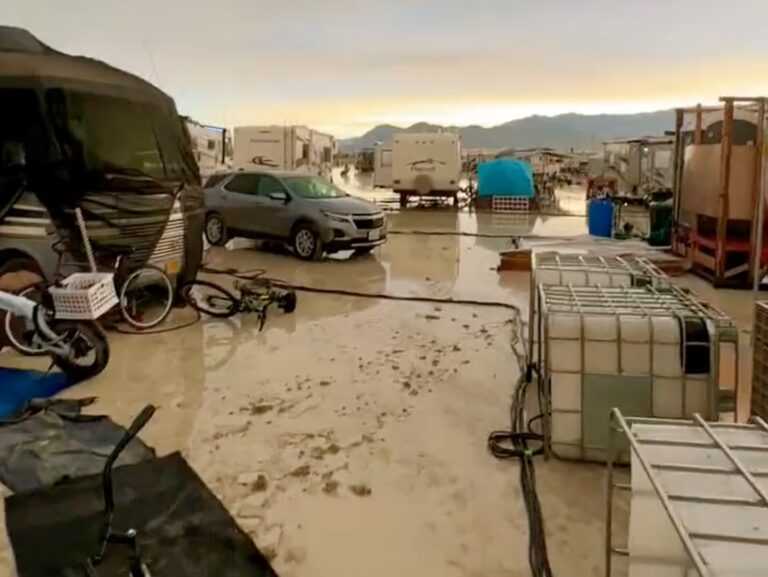
Seventy-three thousand people at the Burning Man counter-culture festival are stranded after overnight rain dropped more than a half inch of rain on the venue near Black Rock City, Nevada.

Festival-goers have been warned to shelter in place, and conserve on their food and water, as they cannot get in or out due to the deep mud. The festival declared itself in a “national emergency.”

Access to the festival is closed, the organizers wrote on the website, as “rain returns early Sunday morning and continues through the afternoon as the low pressure system moves eastward across Black Rock City and exits the region; rain is possible at any time but is most likely from sunrise to late morning. There is a 35% chance of more than 0.25″ of rain from early Sunday morning to late Sunday night, with a 10% chance of more than 0.5″. Rains will stop and skies will clear after 5 PM. Thunderstorms, which can bring gusty winds and lightning, remain unlikely but possible, particularly after 5 PM Sunday.”

The festival started Aug. 27 and was set to end on Labor Day. The Bureau of Land Management and Pershing County Sheriff have closed the entrance, and the Reno Gazette-Journal reports organizers are rationing ice.

Jan. 6 protester dies a month after being arrested; had spent his summers in Naknek

46

Nejourde Thomas “Jord” Meacham, age 22, of Pleasant Valley, Utah, died Aug. 28, while awaiting legal proceedings for his role in the Jan. 6, 2021 protests at the U.S. Capitol. The cause of his death has not been revealed.

Meacham had a link to Alaska, spending his summers at Leader Creek Fisheries in Naknek, where he had many friends.

His funeral was Saturday at Myton Chapel of the Church of Jesus Christ of Latter-day Saint in Roosevelt, Utah.

“Nejourde Meacham was arrested less than a month ago, and faced the four basic misdemeanors that often result in plea deals and probationary sentences,” according to Ryan J. Reilly, author of “Sedition Hunters: How January 6th Broke the Justice System.”

Reilly, who reports for NBC, reported on X/Twitter that Meacham’s death had been confirmed by a published obituary and also by a court filing that cited a police report of his death.

“Jord worked on the family’s ranch, and enjoyed riding horses, hunting, fishing, and doing anything outdoors,” according to his obituary. “He was a big history buff and was a good cook — soup being his specialty.”

He was born June 16, 2001, in Pleasant Valley, Utah, to Thomas and Kelli Yardley Meacham.

Two Proud Boys members sentenced for seditious conspiracy

By SHIRLEEN GUERA | THE CENTER SQUARE

Former leaders of the Proud Boys organization, Joseph R. Biggs and Zachary Rhel, were sentenced for seditious conspiracy and other charges concerning the U.S. Capitol on Jan. 6, 2021.

Biggs and Rhel disrupted a joint session of the U.S. Congress that was actively counting electoral votes for the 2020 election.

Joseph R. Biggs, 39, of Ormond Beach, Florida, was sentenced to 17 years in prison and 36 months of supervised release.

Zachary Rehl, 38, of Philadelphia, Pennsylvania, was sentenced to 15 years in prison and 36 months of supervised release.

According to court documents, a jury convicted Biggs and Rehl as well as three other co-defendants on multiple felonies, including seditious conspiracy and conspiracy to obstruct an official proceeding on May 4, 2023, for actions regarding the breach of the U.S. Capitol on Jan. 6, 2021.

Evidence presented during the trial shows that the Proud Boys organization played a prominent, often violent role in Washington, D.C., rallies in November and December of 2020.

Biggs and Rehl served in the chapter “Ministry of Self-Defense” of the Proud Boys.

After Dec. 19, 2020, Biggs and Rehl both conspired to prevent, hinder, and delay the Electoral College vote and to oppose the authority of the government of the United States.

Days before Jan. 6, Biggs, Rehl, and other co-defendants Henry “Enrique” Tarrio and Ethan Nordean hand-selected co-defendant Dominic Pezzola and others known as “rally boys.”

The “rally boys” decided on a chain of command and chose the time and place to gather while recruiting others who would also engage in physical violence.

At 10 a.m. on Jan. 6, the Proud Boys and their recruits of nearly 200 began their walk to the U.S. Capitol. At 12:50 p.m., the group started the chant a short time later, led by Biggs, “Whose Capitol? Our Capitol!” and “Whose house? Our house?”

After breaching several barricades and fences, Biggs stated, “We’ve gone through every barricade thus far.”

The group, still led by Biggs, would push forward when Law enforcement attempted to control the crowd.

While at the steps of the Capitol, Rhel sprayed an officer in the face while Pezzola smashed a window, allowing others to enter the Capitol, followed by Biggs at 2:11 p.m.

Many group members recorded and took photos on the west lawn of the Capitol, stating, “Jan. 6 will be a day in infamy.”

Rhel also made social media posts naming Jan.6 a “historical day” while telling his mother that he was “so fucking proud” of the Proud Boys’ “raid of the capitol.”

Biggs also recorded an interview, calling the Jan. 6 breach a “warning shot” that showed the government “how weak they truly are” from being “bitch-slapped… on their own home turf.” he went on to say that “Jan. 7 was warning shot to the government -look, we started this country this way, and we’ll fuckin’ save it this way.”

U.S. District Judge Timothy J. Kelly added the federal crime of terrorism to the defendant’s sentence.

The U.S. Attorney’s Office prosecuted the crimes alongside the District of Columbia, the National Security Division’s Counterterrorism Section, and the Criminal Division’s Organized Crime and Gang Section.

The FBI Washington Field Office investigated the case, and the charges are a direct result of the cooperation across several FBI Field offices and law enforcement agencies.

As of Friday, more than 1,106 individuals have been arrested across the U.S. related to the breach Jan. 6 Capitol breach, resulting in more than 350 of those charges for assaulting or impending law enforcement.

Coast Guard rescues 18 from boat run aground near Valdez

10

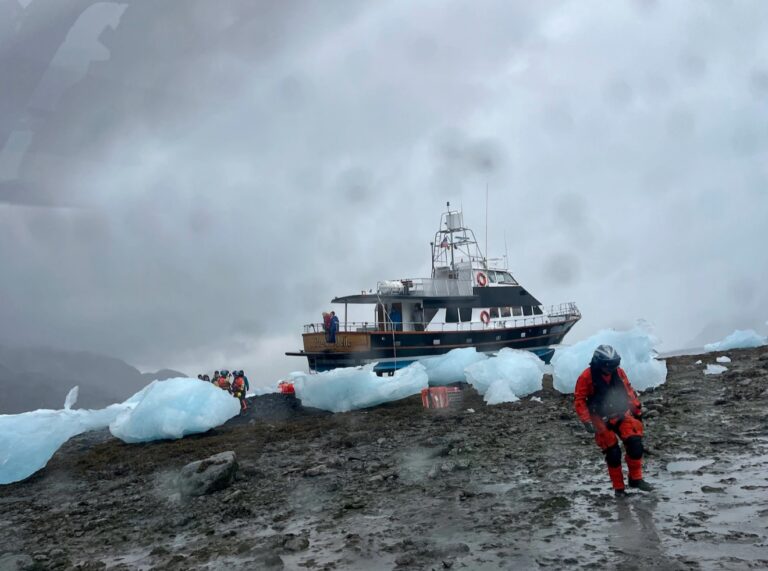
The Coast Guard rescued 18 people from a 75-foot passenger vessel that ran aground near the Columbia Glacier on Thursday.

At 4:35 p.m., Coast Guard Sector Anchorage command center watchstanders overheard the ferry Aurora communicating with a vessel in distress. The watchstanders relayed communications through the crew of the Aurora and determined that Lu-Lu Belle, a glacier tour boat, had run aground in Columbia Bay with 19 people aboard.

Coast Guard Sector Anchorage dispatched an MH-60 Jayhawk helicopter aircrew from Air Station Kodiak, an MH-65 Dolphin helicopter aircrew from Aviation Support Facility Cordova, and a 45-foot Response Boat – Medium crew from Station Valdez to respond to the situation.

Lu-Lu Belle became grounded near the glacier, and the passengers disembarked to affect rescue. The Coast Guard aircrews landed next to the vessel and safely transported all the passengers and crew to the Valdez airport by approximately 9:25 p.m. No injuries were reported.

“I want to commend all of our teams on their swift and decisive actions resulting in a flawless rescue last night,” said Coast Guard Cmdr. Scott Farr, search-and-rescue mission coordinator at Sector Anchorage. “The safe and effective rescue of every passenger on the Lu-Lu Belle is a testament to the attentiveness of our watch standers and readiness of our response crews from all of our units. We are also extremely grateful to the crew of the Aurora and the City of Valdez Fire Department, Building Maintenance, and Harbor staff, whose efforts were instrumental in the success of this case.”

The captain of the Lu-Lu Belle stayed aboard overnight and was able to refloat the vessel at high tide. Coast Guard Marine Safety Unit Valdez is working with the crew of Lu-Lu Belle to conduct salvage operations and investigate the cause of the marine casualty.

Judge rules against complainant who says 14th Amendment stops Trump from being president

A federal judge in Florida has dismissed a lawsuit brought by a Florida attorney who said former President Donald Trump cannot run for office on the basis of his having fomented an insurrection on Jan. 6, 2021, the day that protesters swarmed the U.S. Capitol to protest the certification of the election of Joe Biden.

Judge Robin L. Rosenberg of the Southern District of Florida ruled that attorney Lawrence Caplan, who filed the legal challenge, has no standing for lawsuit regarding Trump and the 14th Amendment. 

“Plaintiffs lack standing to challenge defendant’s qualifications for seeking the presidency, as the injuries alleged are not cognizable and not particular to them,” the judge wrote in her opinion.

Caplan and other “Never Trumpers” say that the 14th Amendment says those who “have engaged in insurrection or rebellion” against the government cannot hold elected office.

Trump is far-and-away the leading Republican candidate in every poll, and barring an unforeseen incident, is heading toward a possible nomination by the Republican Party.

“The bottom line here is that President Trump both engaged in an insurrection and also gave aid and comfort to other individuals who were engaging in such actions, within the clear meaning of those terms as defined in Section Three of the 14th Amendment,” the attorney wrote in his complaint, now thrown out by the judge.

Judge Rosenberg, appointed by President Barack Obama, did not rule on the question on fate 14th Amendment applying to Trump, but only on whether the man who brought the lawsuit has standing.

Shell Oil drops carbon credit focus as doubts grow about climate impact

33

Six months after becoming chief executive officer at Shell Global oil company, Wael Sawan has apparently ended the world’s biggest corporate plan to develop carbon offsets, the environmental projects designed to counteract the supposed warming effects of CO2 emissions.

In reporting from Bloomberg News, it appears Sawan is making a pivot by abandoning the company’s carbon offset initiative.

According to Bloomberg, the shift was revealed during an all-day investor event in June, when Sawan presented his updated strategic roadmap for the company, which focused on cutting costs and maximizing profit, but had no reference at all to the company’s previous climate pledge of up to $100 million annually for the development of a comprehensive “carbon credit portfolio.”

The carbon credit initiative formed a cornerstone of Shell’s commitment to achieving net-zero emissions by 2050.

The Dunleavy Administration has been pursuing carbon credits as a revenue stream for the state. One of the aspects of this initiative is to sell carbon storage to energy companies doing oil and gas development.

Shell has yet to disclose any new targets for future offset development or provide specific insights into how it intends to fulfill its forthcoming climate obligations in light of these developments.

Sawan’s realignment shows recommitment to Shell’s core oil and gas operations, which have historically been the backbone of the company’s profits, as well as an acknowledgment that the aspirations related to carbon offsets were fundamentally unattainable.

The carbon market has been lucrative, but is still in its infancy. Shell first set a budget of $200 million for carbon projects from Africa to South America, but results have fallen short of expectation, Bloomberg reports.

“Until now, much of the criticism has focused on quality. Many investigations, including several by Bloomberg Green, have found that many offsets don’t deliver the environmental benefits they promise. Shell set out to solve that problem, with stringent requirements, deep pockets and more than a century of engineering expertise, and quickly learned that focusing on quality limited supply. It could have good offsets, or a lot of them, but not both,” Bloomberg reported.

“It’s really hard to get scale from high-quality credits,” said Gilles Dufrasne, carbon policy officer at Carbon Market Watch. “The two forces”—volume and quality—“work against each other.”

Read the story at this link.

Breaking: State goes to court against Feds for taking over management of Kuskokwim salmon, subsistence

34

Who manages the Kuskokwim River subsistence salmon fisheries?

Federal agencies? They think they do, because of something called the “reserved waters doctrine.” The State of Alaska? It believes it does, by authority of the Statehood Compact.

It’s going to have to be worked out in court. The federal government has already sued the State of Alaska over who controls salmon fishing decisions on the Kuskokwim River. That lawsuit is simmering on the back burner.

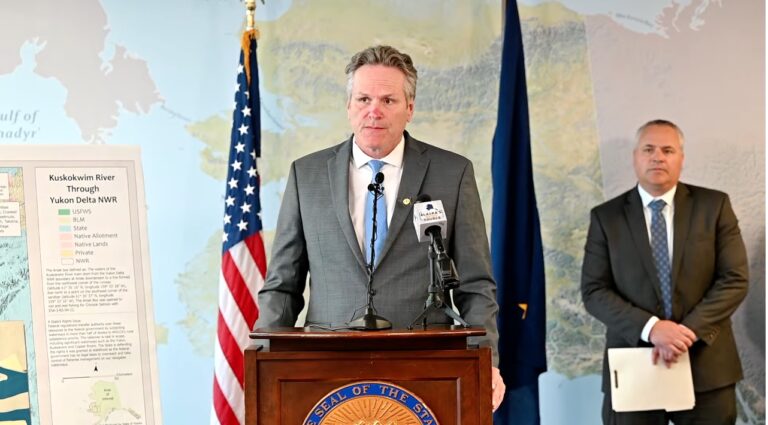
On Friday, Gov. Mike Dunleavy’s Administration filed a cross motion for summary judgment in federal district court to establish Alaska’s primacy in managing the river fisheries across the state.

“We didn’t choose this fight. The Feds foisted it on us,” Dunleavy said in a press conference on Friday.

The 702-mile Kuskokwim River subsistence salmon fishery is one of the biggest subsistence fisheries in the state, with more than 1,500 households currently fishing it.

In spite of the Statehood Compact giving Alaska the authority to manage its fishery resources on navigable waters, the federal government keeps seizing control, as the National Park Service did when it tried to take control of the Nation River, and lost in court in Sturgeon v. Frost.

For the past few years, the federal government has also encroached on state rights on the Kuskokwim, which empties into the ocean near Bethel. The Feds are trying to establish their primacy.

But these are rights granted to Alaska at Statehood, and Gov. Dunleavy isn’t going to kick the can down the road.

Currently, the management tug-of-war has the federal government stepping in whenever it believes the State of Alaska is not protecting rural users in the Lower Kuskokwim enough. The State, however, is required by its own constitution to also manage fisheries for future generations, as well as for all Alaskans, including those in the Upper Kuskokwim.

The federal open-shut orders often conflict with state orders, and at time leave few fish for the people of the upper Kuskokwim, north of Aniak and McGrath.

This whole “who manages” question is full of twists and turns, legal bunny trails, and a lot more nuance than can be netted fully in one news story. But referring back to the Sturgeon v. Frost lawsuit, it was established at the Supreme Court that navigable rivers are state owned and managed and are exempt under the Alaska National Interest Lands Conservation Act from federal regulatory authority.

The governor says that if Alaska doesn’t defend itself on the Kuskokwim, the federal government will move into controlling the Yukon River and the Copper River salmon fisheries, too, including the popular dip net, personal use fishery at Chitina. 

There appear to be two main points to the Dunleavy Administration’s legal move:

First, the Administration is tiptoeing around the “Katie John” decision, which involves Alaska Native subsistence rights and the concept of “reserved waters doctrine.” Decades ago, the Ninth Circuit Court of Appeals issued a more narrow ruling than the lower court had determined regarding fish-wheel operator Katie John’s claim based on the “reserved waters doctrine.” Gov. Tony Knowles decided to not appeal on the state’s behalf in that Katie John decision of the 1990s.

In this case, the State is trying to not step into the Katie John mess, but it does own the submerged lands and it plans to ask the Supreme Court to determine if, under the Alaska National Interests Land Claims Act, there is a subsistence priority, and for who. Who has the ownership of the rivers in Alaska?

Second, the State is saying that the federal government, through the Department of Interior and the Department of Agriculture, defaulted the decision on fishery management to a federal subsistence board, which then defaulted the decision to professional federal staffer. Thus, decisions about federal management are being made by the administrative state.

The way that the State manages the resources is via the State Constitution, which includes all users. The federal government manages for just some users, and it’s not as simple as a race-based decision. There are tens of thousands of urban-based Alaska Natives who are cut out from traditional subsistence fishing by the Feds, because they have been displaced to Anchorage or Fairbanks for a variety of reasons.

As an example, First Lady Rose Dunleavy no longer lives in Noorvik, and so is prevented from participating in subsistence fishing near her hometown under the federal management rules.

“It has to do with sovereignty over our waters,” Dunleavy said. The state had to file today to meet the court deadline.

“This is a very important case for Alaska, it strikes at the heart of what in some cases why Alaska became a state. The ability to manage its own resources was a big part of that.”

The press release in its entirety from the Department of Law:

Today the State of Alaska filed a motion for summary judgment asking the U.S. District Court in Alaska to reject claims brought by the federal government that would strip Alaska of its right to manage fisheries on the Kuskokwim River.

The Biden Administration’s Department of Justice filed suit against the State of Alaska in May 2022 after two years of conflicting management emergency orders. The dispute focuses on implementation of subsistence priority for fishery management, and more specifically, the applicability of a priority for “rural” subsistence for fishery management on the Kuskokwim.

In 2021 and 2022, the Federal Subsistence Board, FSB, issued emergency special actions for the portion of the Kuskokwim River that is within the Yukon Delta National Wildlife Refuge. The Alaska Department of Fish and Game also issued emergency orders for the Kuskokwim River during that time frame. The orders from the Federal Subsistence Board and those from ADF&G conflicted. For example, one of the FSB’s orders purported to authorize limited subsistence fishing on the Kuskokwim only for rural residents, but ADF&G’s order opened the Kuskokwim to subsistence fishing for any Alaskan eligible for subsistence fishing. The full account of conflicting management can be found in a sworn declaration by Commissioner Vincent-Lang 

The State argues that the federal government does not have the authority to manage the fishery on the Kuskokwim because the Kuskokwim River is not “public land” under the Alaska National Interest Lands Conservation Act. Furthermore, the appointments to the Federal Subsistence Board violate the Appointments Clause of the U.S. Constitution, and federal orders that violate the Appointments Clause have no effect.

The State’s defense is supported by the 2019 U.S. Supreme Court decision in Sturgeon v. Frost and is further supported by other recent SCOTUS decisions.

The State is defending the rights it was granted at statehood, and the federal government has no legal basis to overreach and take control of fisheries management on the lower stretch of the river to the detriment of the upper part of the river.

If the Biden DOJ is successful in its lawsuit, it will set precedent to cede management of Alaska fisheries to the federal government – reverting to a situation that was the primary motivating factor for Alaska statehood in the first place.

“If this federal overreach is allowed to stand, it opens the door to the State losing its right to manage Alaska fisheries on significant waterways beyond the Kuskokwim, including the Yukon and Copper Rivers,” said Governor Mike Dunleavy. “Not only was fisheries management a right granted at statehood, but sustainably managing our fisheries is a principle enshrined in the Alaska Constitution. The Biden Administration has been growing more and more aggressive in its efforts to take over State management of our resources, and we have essentially been backed into a corner. Alaska has no choice but to fight for its rights and its citizens.”

“For years, the State and federal government peacefully co-existed, with federal management relying on the State’s science and sustainability goals. But that ended when the federal government sued us over our actions taken to protect not only downriver subsistence fishermen but upriver as well,” said Alaska Attorney General Treg Taylor. The federal government is doing everything it can to seize fish and game management authority that rightfully belongs to the State as the State tries to fulfill its constitutional mandate to manage these resources for all Alaskans, including former rural Alaskans who are not allowed to participate in the federal subsistence fisheries. Comprehensive management based in sound science to protect subsistence and future returns is what is needed, and that is exactly what the State provides. The federal government’s picking of winners and losers without regard to future returns is an assault on all Alaskans,” Attorney General Taylor said.

“Management of our natural resources was a primary driver in Alaska for statehood,” said Doug Vincent-Lang, Commissioner of the Alaska Department of Fish & Game.  “Alaska’s right to manage our fishery resources was guaranteed under our Statehood Compact with the federal government and reaffirmed under ANILCA. Now the federal government is reneging on these agreements and replacing State management with federal management on State-owned waters. This is resulting in differential treatment of Alaskan citizens with some gaining priority access to resources while others who have cultural and traditional ties are excluded, based solely on where in our great state they live. This runs contrary to the Alaska Constitution, ANILCA, and more importantly, to how Alaskans treat Alaskans. Our defense stands up for all Alaskans. It is unfortunate that we have been put into a position by the federal government to defend our Constitution and our right to manage in the best interest of ALL Alaskans. In this time of fiscal uncertainty, money and resources could be better spent restoring depressed salmon runs,” Commissioner Vincent-Lang said.

Read the Kuskokwim FAQs here. 

See the map of the region here.