
Thursday, August 20, 2026
Home Blog Page 623

The Left quickly attacks Board of Education decision to save girls sports

By DAVID BOYLE

The Alaska State Board of Education voted unanimously to save girls’ sports for biological girls. The student advisor, Felix Myers, voted against the regulation, but his vote is advisory. The military advisor, Lt. Col. James Fowley, abstained.  His vote is also advisory.

Within two hours of the state board’s decision, Anchorage School Superintendent Dr. Jharrett Bryantt and Anchorage School Board president Margo Bellamy had their preplanned press release loaded into the cannon and ready to fire. 

They were ready for this decision, but when it comes to students’ test scores, parents in Anchorage still do not know their students’ test results, even though the test was administered last April.  

The superintendent and school board president wrote:

“With all of the current challenges facing Alaska’s public schools, it’s quite perplexing that this topic is a top priority for the Alaska State Board of Education (SBOE). Where is the data that indicates this is a widespread issue in Alaska which provides an unfair competitive advantage and/or risk to student safety? An urgent public school problem does not appear to exist. Why is this such a priority for the SBOE?
 
“The mission of the Anchorage School District (ASD) is to educate all students for success in life. We accept and support all students. Regardless of today’s decision, ASD will continue to provide a safe and welcoming school environment for all students. We will continue to ensure an inclusive, nurturing, and respectful school experience for our diverse community.  
 
“We would like to applaud SBOE student advisory member, Felix Myers, for his advocacy and support for all students. The voices of our youth give a special glimpse into the values that will shape Alaska’s future. 

 
Margo Bellamy
President, Anchorage School Board
 
Jharrett Bryantt, Ed.D.
Superintendent, Anchorage School District”

Bryantt and Bellamy ask why the issue of transgenders participating in girls’ sports is of a high priority for the state board. 

Interestingly, the Anchorage School District has published Administrative Guidelines for Gender Identity and Transgenders for its staff and students.  It’s a 10-page document that appear to be a high priority for the district.

Where was the high priority for these guidelines, which seem to have a higher priority than reading, writing, and math, the supposed core competencies of our educational system? The irony is overwhelming.

Perhaps, it was because the NEA-National spoon-fed the guidelines to all school districts across America.

Bryantt and Bellamy further say in their press release that they “applaud the SBOE student advisory member, Felix Myers” because he gives a “special glimpse into the values that will shape America’s future.”

Do these values of America’s future include the destruction of girls’ sports? 

Here’s just one instance where a transgender negatively impacts an entire girls’ athletic team.

Perhaps that is the goal of the Woke agenda: Destroy girls’ sports and allow men to compete as women so that women will once again be discriminated against.  

Not to be outdone, Anchorage Assembly members Chris Constant and Felix Rivera issued their own statement. They bemoan the fact that, “Today is a sad day for Alaskans.”

It’s an even sadder day for students when the school district cannot even teach our children how to read.

Constant and Rivera continue by attacking the “…small homogeneous group” of state board members.  The board is made up of 3 males and 4 females so it is not  “homogeneous” as Constant and Rivera say.  

Unbelievably, they call the board’s decision a “blatant act of discrimination” which will not go unnoticed.  

Bring on the ACLU, the NEA and a host of lawyers.

Then the Constant and Rivera duo threaten to remove the Anchorage School District from participating in any of the Alaska School Activities Association activities. They must believe they are on the Anchorage School Board.  

Apparently, this duo does not really care about students and would rather keep all students from participating in any sports if they cannot get their way.

The final blow from Constant and Rivera comes when they “condemn the decision by the Alaska Board of Education.”  It’s too bad these two Assembly members are not holding the school district accountable for students learning to read. And they do have a role, by approving the school district budget.

Assembly member Anna Brawley also put in her two cents on social media: “The #1 crisis facing our education system is our inability to sustainably pay for high-quality education people expect”.  Talk about deflection!

If member Brawley would check out the latest ASD ACFR audited report, she would see that the ASD per student spending is at a whopping $19,150.

How much more does she want to throw at the problem of K12 in Anchorage?

The State Board of Education voted to save girls’ sports for biological girls.  It also set aside a division for students who identify with either sex or gender.  These align with the current Title IX law and align with the Biden Administration’s proposed changes to the law.

So, what’s the problem?

David Boyle is the Must Read Alaska education writer.
Duck hunting season starts with a blast of wind and water

7

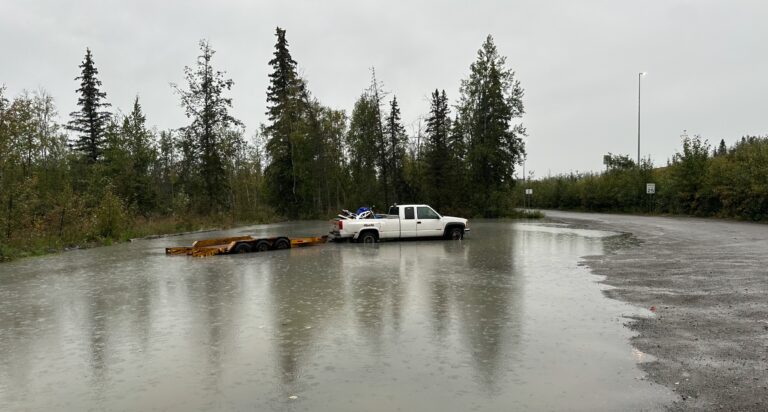
High winds and high tides mark the opening of waterfowl hunting season in parts of Alaska on Friday, but some duck hunters say they’ll sit this day out, due to the howling weather in the Southcentral region.

It’s the kind of weather and tide combination that can swamp tents, cabins, and can leave skiffs stranded far from the receding tide. Anchorage will see a 33-foot tide Friday morning, with winds up to 20 mph with gusts up to 40 mph. It’s the kind of weather that can push water far inland, make it hard to hang onto your duck decoys, and can flip airplanes. It’s tent-swamping, boat-bailing, and wader-testing kind of weather.

But at least it’s a warm wind for those who get stranded. The temperature today will reach around 60 degrees.

There have already been a lot of search and rescues of hunters so far this season, according to the Department of Public Safety. Alaskans might expect search and rescue teams to be called out this weekend to save a few lives.

The 2024-24 waterfowl regulations from the Department of Fish and Game can be found a this link.

State Board of Education votes to save girls’ sports for girls

By TIM BARTO

Alaska took a big step towards becoming the 23rd state to protect girls’ sports for girls when the State Board of Education voted overwhelmingly to approve a resolution to keep biological males from competing with and against biological females. 

The following board members voted in favor of the action to support female athletes:

  • James Fields, Board Chair
  • Lorri Van Diest, First Vice Chair
  • Jeffrey Erickson
  • Bob Griffin
  • Sally Stockhausen
  • Barbara Tyndall
  • Pamela Dupras

The board’s military advisor, Air Force Lt. Col. James Fowley, abstained; while the lone no vote went to student advisor Felix Myers. 

Also in attendance were five non-voting participants, including Commissioner of the Alaska Department of Education & Early Development Dr. Deena Bishop, Deputy Commissioner Heidi Teshner, Assistant State Attorney General Susan Sonneborn, Alaska School Activities Association Executive Director Billy Strickland, and board Executive Secretary Janell Andrews. 

This was a special meeting, conducted virtually, and called for the sole purpose of discussing and voting on the resolution. It lasted almost exactly one-and-one-half hours, and accomplished exactly what was needed to protect girls’ sports from the intrusion of boys who identify as girls, as well as those who seek to deconstruct Title IX and use the public education system to further their radical views on human sexuality.

Most of the comments were in favor of the resolution to protect girls’ sports.

Lorri Van Diest argued for common sense in acknowledging that male athletes have physical and physiological advantages over female athletes, and she provided examples from around the country where biological males took away hard-earned victories away from female athletes and teams. Additionally, Van Diest provided an example in which a biological male volleyball player spiked a ball into the head of an opposing player (a true female), causing long-term injury. 

Billy Strickland forwarded the idea that school sports would continue to be organized in their present state: there will be a sport and there will be a girls’ sport. Transgender athletes will be encouraged to participate, but will need to do so in the main sport – not the girls’ sport.

Similarly, a biological girl who wants to play a traditionally male sport such as football but who would rather play tackle football instead of on the girls’ flag football team, can opt to try out for the tackle football team. So, essentially, there will be an open sports category (the traditional male teams) open to everyone, and the female teams that will be limited to true females.

A few of the members acknowledged the overwhelming input provided by Alaskans during the 30-day open comment session, noting that there were arguments made on both sides of the issue. Cited statistics revealed an overwhelming majority of Americans support keeping girls’ sports for girls only, and it was noted that Alaska Family Council provided over 2,000 signatures on its statewide petition to save girls’ sports. 

The lone voice of dissent was Felix Myers who, despite acknowledging that there are, in fact, differences between males and females, still called for a no vote on the resolution. Time and money, he argued, would be better spent on helping female athletes with eating disorders and providing more funding for girls’ sports (which would, of course, include biological males who identify as females). 

Almost immediately after the vote, Anchorage School Board president Margo Bellamy, and Anchorage School Superintendent Jharrett Bryantt, issued a joint statement, praising student member Myers and questioning why the board was prioritizing the issue. Bellamy and Bryantt do not see this as an urgent matter. The board members, with the exception of Myers, disagreed. 

The speed at which transgender issues are developing, and disrupting the entirety of human existence, is alarming, and the topic of female-identifying males competing against true females is not going away.

It is just a matter of time before the issue becomes a major issue in Alaska, as it has throughout the United States. The Alaska Board of Education found that it was time to draw the line, and did so without further delay.

Tim Barto is Vice President of Alaska Family Council.

Peltola and AFL-CIO warn FTC against merger of Fred Meyer and Safeway

U.S. Rep. Mary Peltola is putting her thumb on the scale again, asking the Federal Trade Commission to not allow Kroger/Fred Meyer and Albertsons/Safeway to complete their $25 billion national merger. She is worried about a monopoly in Alaska.

In a letter to FTC Chair Lina Khan, Peltola said the threat the merging of the operations would harm competition and food security in Alaska.

“If the merger goes through, nearly all grocery stores in the Fairbanks North Star Borough would fall under the same ownership, with the exception of Costco and Walmart,” Peltola warned.

That is not exactly true, however. Other grocery stores in Alaska, however, include Three Bears, Target, Alaska Commercial Company, IGA, and several smaller stores, buying clubs, and food coops. Organic produce delivery service Full Circle Farms operates in 17 Alaska communities. Alaska has roughly the same variety of grocery stores as other states, although in the largest state in the union, competition is not always close, as it is in the Lower 48.

Peltola wrote, “Alaska already has an incredibly concentrated grocery store market, and potential divestments of stores resulting from the merger would threaten both competition and basic food security in many communities across the state. The five largest jurisdictions by population in Alaska are Anchorage, the Matanuska-Susitna Borough, Fairbanks, Juneau, and Kenai-Soldotna. In each of these communities, Fred Meyer (Kroger) and Carrs (Albertsons) are the primary competitors selling groceries and household goods. If the proposed merger goes through, store closures and reduced competition could result in a significantly reduced competition, or even a near-monopolistic landscape in a state that already has some of the highest costs of living in the United States.”

Joelle Hall, President of the Alaska AFL-CIO, agreed with Peltola. The AFL-CIO is one of Peltola’s biggest supporters and Peltola does not ever stray from the big union message that she is asked to support.

According to Supermarket News, the federal government has tightened its fist over mergers. The FTC sued Microsoft to stop it from buying Activision-Blizzard and crushed the Penquin Random House / Simon & Shuster publishing merger.

“The Kroger-Albertson deal is receiving more negative attention from those outside of Washington, D.C. A group of consumers have filed a class-action lawsuit and the Arizona Attorney General is looking into the merger. Unions representing more than 100,000 Kroger and Albertsons workers have been protesting the deal since it was first announced.There also has been two rounds of questioning from the FTC,” Supermarket News reported.

Win Gruening: Misconceptions about cruise industry need clarification

By WIN GRUENING

Recently, Juneau resident Jennifer Pemberton penned an Anchorage Daily News op-ed in which she described a cruise that she took in August when she was required to pay a fine incurred due to her misunderstanding of a rule governing U.S. maritime travel.

Ms. Pemberton apparently purchased a 7-day cruise between Seward and Vancouver for herself and her son. Unbeknownst to the cruise line, she intended to leave the ship in Juneau. When disembarking in Juneau, after several days of what she portrayed as a wonderful experience, she was informed of her responsibility for a $1,882 fine levied by Customs and Border Protection for a violation of the Passenger Vessel Service Act (PVSA).

She said she was stunned and felt like a criminal. “We jumped ship and were now in a category with stowaways. We were in a building where the officers had guns and the signs were in many different languages.”  Her story has since spread far and wide on travel-related social media websites.

Most everyone in Southeast Alaska is familiar with the PVSA. It played a critical role in the economic downturn in Alaska during the pandemic as it requires foreign-built ships to originate, terminate, or transit a foreign port in order to carry U.S. domestic cruise passengers. 

Practically speaking, this means most Alaska cruises must visit Canada at some point during their voyage. Since Canada banned cruise ships during the pandemic, these cruises were effectively prevented from traveling to Alaska. Thanks to a limited exemption later brokered by Alaska’s congressional delegation, cruise lines eventually operated during the pandemic without stopping in Canada.

That exemption has now expired and, in leaving the ship before it reached Vancouver, Ms. Pemberton triggered this law, subjecting the cruise line to a fine, which they required her to reimburse.

Ms. Pemberton evidently didn’t realize the PVSA applied to her but cruise lines typically include verbiage in their cruise purchase contracts related to unauthorized disembarkation including reimbursement of any related fines incurred. Few passengers bother to read the fine print in their contract, but it’s somewhat ironic that Ms. Pemberton acknowledged that as a journalist who reported extensively on cruise industry impacts in Juneau as well as the PVSA she should have been aware of the rules.

If Ms. Pemberton had simply ended her opinion piece there, readers might have empathized with her mistake. After all, it was her first cruise ship experience and she was just getting her feet wet, as it were.

Instead, in venting her frustration she proceeded to lambaste the cruise industry with a litany of irrelevant half-truths and fallacies. She claimed cruise lines operate under the laxest labor laws and most advantageous tax schemes they can find, exploit loopholes right and left, and operate in Alaska with impunity. So, in her words, why should she be “the one who paid almost $2,000 in federal fines?”

In her parting shot, she says, “the way they get around the PVSA is by stopping in Canada.” Regrettably, she has that completely backwards. Foreign-built cruise ships are complying with the PVSA by stopping in Canada.

What Ms. Pemberton failed to mention is that the PVSA, originally passed by Congress to protect the shipbuilding and marine industries, has accomplished just the opposite. There are no longer any shipyards in the United States capable of building a cruise ship the size of the one on which she traveled. These ships are built overseas by necessity, travel globally, and are staffed necessarily by international crew members. Cruise vessels like these made it possible for her to book this cruise for only $299 plus taxes per person, which she admitted was “a screaming deal.”

Ms. Pemberton should feel good about what she finally paid including the fine. Smaller domestically-built cruise vessels operating in Southeast Alaska advertise 7-day cruises for $3,500 to $6,500 per person plus taxes. And they don’t offer bottomless baskets of fries, 24/7 ice cream, or the giant movie screens that she said she enjoyed.

The cruise industry in Alaska plays an out-sized role in our state economy, especially in the Southeast Alaska region. The industry’s financial impact cannot be overstated. Overall, the industry and the visitors they serve account for $3.0 billion of the state’s economy.

Certainly, these economic benefits don’t make the cruise industry immune from critique when warranted.

But the public is not well-served with the biased misconceptions promoted in Pemberton’s opinion piece. 

After retiring as the senior vice president in charge of business banking for Key Bank in Alaska, Win Gruening became a regular opinion page columnist for the Juneau Empire. He was born and raised in Juneau and graduated from the U.S. Air Force Academy in 1970. He is involved in various local and statewide organizations.

Win Gruening: Juneau Assembly’s Transparency Deficit Disorder

Court allows Texas law banning doctors from doing transgender procedures on youth

The Texas Supreme Court allowed a new state law to go into effect Sept. 1, which bans medical transgender procedures on minors, including mutilations and puberty-blocking hormones.

Texas will be the most populous state with such restrictions on transgender procedures on children — procedures that leave the children sterilized. Nineteen states in all now ban the procedures in one way or another, while states like California and Washington have not only embraced them, but will even shelter children who want these procedures from their parents who may oppose the medical treatment.

The American Civil Liberties Union and other groups had sued Texas, saying Senate Bill 14 and the high court’s decision is “cruel” and calling the fight “far from over.”

In response, the 201st Judicial District Court of Travis County, Texas had earlier this year granted an injunction to pause the state’s ban on these transgender treatments.

CNN defends the transgender medical procedures, saying they are proven to be medically necessary: “Gender-affirming care is medically necessary, evidence-based care that uses a multidisciplinary approach to help a person transition from their assigned gender — the one the person was designated at birth — to their affirmed gender, the gender by which one wants to be known.”

While the conservative Texas Supreme Court lifted the injunction, the order did not address the lower court’s ruling that the law is unconstitutional. A hearing is expected on that aspect later, but in the meantime, the law will go into effect, and the court’s ruling today is seen by some as an indication of how it will rule on the underlying law.

States that have made it a felony to medically distort a child’s gender include Idaho, North Dakota, Oklahoma, Alabama, and Florida. Other states with laws curtailing this relatively new trend in medicine are Mississippi, Indiana, and Iowa, while a handful of states have laws barring state funding or the use of state property for the procedures on children.

Some states have passed laws that allow those children already undergoing hormone treatment to either continue those, or has a provision ordering doctors to systematically reduce their prescriptions to wean them off of the hormones.

The Mississippi law also allows people who underwent these procedures to later sue doctors for doing the transgender work on them, giving patients a 30-year statute of limitations to do so.

Alaska has no protections for children and youth against the doctors who are taking advantage of them for profit or because of some underlying belief that children would be better off sterilized. The Anchorage clinic run by Identity Inc. was highlighted by Heath Assistant Secretary Rachel Levine for its work to convert children to a transgender life, and Rep. Mary Peltola publicly supports the gender “reassignment” of children through puberty blockers and surgeries.

Tim Barto: Alaska Baseball Commissioner Chip Dill has the feel for saving our summer league

By TIM BARTO

The Alaska Baseball League is in a sort of baseball purgatory. The summer college league used to garner the attention of big league scouts, local baseball fans, and the media. Alaska was the place to play summer ball for serious college players looking to make the game their profession, and it had the respect of coaches from around the country.

The list of ABL alumni who made it to the promised land of professional baseball is extensive and impressive, but it’s also outdated. The list reflects many players from years past but not too many from years not so past. 

Twenty-thirty years ago, the daily newspapers, nightly newscasts, and morning radio shows highlighted Alaska Baseball League action, but recent reporting on league action has an obligatory feel to it. It exists, but there’s something of an obligatory feeling about it, as if the media feels it should be reported so it’s given some attention out of respect for what once was . . . and perhaps a desire for what it could become again. 

These issues are not unknown to the general managers and coaches of the five ABL teams: the Kenai Peninsula Oilers, Mat-Su Miners, Chugiak-Eagle River Chinooks, and the two Anchorage teams – the Bucs and the Glacier Pilots (and the outlier that is the Fairbanks Goldpanners; more about them later).

The Cape Cod League in New England is the acknowledged heavenly summer ball realm, and has been for over a decade. Other successful leagues inhabit the Midwest, Great Lakes, and southern regions, but the Great Land is not as prominent in the discussion as those other leagues. The Alaska Baseball League is still acknowledged as a good summer league, but good is not good enough; again, like purgatory. 

If the five teams want to continue existing, let alone prosper (and they all do), then an infusion of energy and innovation is needed to elevate it to the higher strata. That is why the league hired a commissioner, an individual to coalesce the teams into a unified coalition that will attract not only top college talent but national attention, increased revenue streams, and new fans; and this latter goal – new fans – is crucial.

Without people coming to the ballpark, following their teams, taking an interest in the players, and buying tickets, concessions, and merchandise, the Alaska Baseball League will not prosper and, worse, will cease to exist. Sponsors aren’t going to pay for outfield banners or program ads if there aren’t people at the various ballparks to take in the subliminal messaging and appreciate their community support.

Enter Chip Dill, who has just completed his first season as Alaska Baseball League commissioner. Chip loves baseball and appreciates the legacy of the game in Alaska. He lives in Tennessee, but spent summer here, attending games every night, meeting with team leadership, assessing the ballparks, talking with fans, and getting a feel for Alaska baseball. 

Feel is a term often used by baseball people. It’s an intangible, sort of like reading the room when it comes to politics, or exhibiting a presence in a business meeting. If a player always knows the game situation, has the instincts to analyze an opposing pitcher well, and correctly anticipates what is likely to happen next, he is said to have a feel for the game. Conversely, a player who isn’t on top of the game and picks the wrong time to lay down a bunt or take an extra base is said to have no feel.

Chip Dill has feel.

Chip brings not only a love of the game, but the teamwork and leadership he honed as a career fire captain and the business acumen from founding and running a sports data company. He used his experience to analyze the league and come up with a four point plan to make it prosper:

  • Restructure the League. Closer planning and fiscal cooperation between the five teams is key, and will be overseen by a board of directors. New staff positions will include scorekeepers, information directors, and video/photographers. 

Restructuring includes expanding, as in bringing the charter member of Alaska Baseball – the Fairbanks Goldpanners – back into the league. Talks intensified and will continue throughout the off-season. The hope is to reintroduce the Goldpanners by 2025, perhaps as early as 2024. 

  • Pique Athlete & Coach Interest. This is where things get tricky, especially for us who consider ourselves baseball purists. Change in baseball, more than any other sport, is often met with derision, even ridicule and disgust. I know because I am one of those who likes the game just the way it is . . . well, just the way it was, before the sacrileges of artificial grass, designated hitters, and interleague play arrived. But the ABL is not the major leagues. 

Summer ball is in a different category within the game, especially when it comes to pitching. College coaches have their pitchers on throwing programs and impose innings restrictions and pitch counts that limit the players’ time on the mound. This is simply part of today’s game, especially at the collegiate level. A summer team manager cannot just let a player take the hill and throw as long as the pitcher is looking good and feeling strong. This changes the dynamics of team structures and game strategy but, again, it’s an integral and unavoidable part of the game.

So, Commissioner Dill and the league are considering various alterations, including reducing the season from eight weeks to seven; shortening games from seven innings to nine (at least during the early part of the season); and expanding the rosters to 28 or 30 players, plus four locals.  

  • Increase Attendance. Some of the ballparks around the league are in disrepair and need maintenance and repairs. Out in Chugiak, increased stadium seating is desperately needed for the increased crowds that show up at Loretta French Park. The league will need to get more local media coverage and expand league-centered merchandising. 
  • Attract National Attention. As Alaskans, we know that the uniqueness of our state attracts attention. The league needs to use this uniqueness to make it appealing to people outside the state, to include broadcasting games via national networks, such as D1, ESPN, and Fox Sports.

These are ambitious goals, and some of the proposed ideas will probably not make it into the finalized plan, but an attempt must be made. Negotiations and concessions need to be made in good faith with the knowledge that the future of the Alaska Baseball League is on the line. 

It’s a great league with a rich history, and it deserves to be saved.

Tim Barto was an Assistant Coach for the ABL’s Chugiak-Eagle River Chinooks, and past president of their Booster Club. When not volunteering his time for love of the game and flattering himself that he has a feel for it, he works as Vice President of Alaska Family Council.

Downing: Father Time is coming for the gerontocracy

Time waits for no man and it’s not waiting for the decrepit members of the Senate and House of Representatives.

The issue of age in American politics is increasingly impossible to overlook. While President Joe Biden is at the center of this discussion, the reality of being too old to govern extends beyond the presidency to encompass a cadre of aging lawmakers.

Increasingly, it appears that these elected officials are figureheads, with their day-to-day responsibilities being managed by their unelected staff, as they clutch tightly to the titles and prestige that come with public office.

Recently, Senate Minority Leader Mitch McConnell (R-Ky.) experienced another momentary lapse, pausing for an uncomfortably long period when asked about his plans for reelection in 2026. It seemed like an eternity. This episode echoes a similar incident that occurred in July, during which he seemed to lose his ability to respond to a straightforward question from journalists.

In addition to these nonverbal stumbles, McConnell has had a series of health issues. In 2019, he suffered a fractured shoulder after a fall at his home in Louisville. More alarmingly, in March of this year, he endured a concussion after falling at the Waldorf Astoria hotel in Washington, D.C., sidelining him for six weeks and putting his minority leadership in question. As he approaches his 82nd birthday in February, it raises legitimate questions about his ability to perform the duties of his office effectively until the end of his term in 2026.

McConnell’s staff members, rather tellingly, were ready to step in during this latest episode. While their intervention might be seen as dutiful, it also points to a larger concern: Who is truly at the helm of our government — elected officials or the aides that are keeping them going?

Sen. Dianne Feinstein of California, the oldest member of Congress at 90, serves as another case in point. Multiple reports suggest that she shows signs of cognitive decline, and her staff strategically keeps her away from media scrutiny. Last year, lawmakers informed the San Francisco Chronicle that they had to reintroduce themselves to Feinstein multiple times during policy discussions.

“Feinstein, 88, repeated the same small-talk questions, like asking the lawmaker what mattered to voters in their district, the member of Congress said, with no apparent recognition the two had already had a similar conversation,” the newspaper reported.

Former House Speaker Nancy Pelosi, who will turn 84 next March, and former President Donald Trump, who would be 82 at the end of a hypothetical second term if elected in 2024, are also part of this aging political landscape. While both seem to be in relatively good health, age is a factor that is inevitably ticking against them.

The consequences of politicians holding onto office well past their prime can be far-reaching. For instance, Alaska faced an unexpected shift in representation when Congressman Don Young passed away in March 2022 at the age of 88. His sudden death led to the election of Mary Peltola, a far-left Democrat, resulting in a significant ideological swing for the state in Congress, putting Alaska in the minority with a representative who voted 18 times for Rep. Hakeem Jeffries for speaker, and who voted against parents’ rights, against women’s athletic integrity, and in favor of D.C. street criminals.

This begs the question: Are lawmakers prioritize governance over the allure of holding onto power, especially when their ability to serve effectively is in severe decline? States like Kentucky and California are now grappling with the same issues Alaska faced last year. Will McConnell and Feinstein fizzle to the finish line, or will they, like Young, exit office in a manner that disrupts their entire state?

It’s time for a candid national discussion about the implications of an aging political class. George Washington became president when he was 57, and he died at age 67. Thomas Jefferson was 33 when he became the youngest member of the second continental Congress, and he was 57 when he was elected president. James Madison became president at age 57, and died at 85.

Today, people are living longer, so even though the bulge of Baby Boomers is nearing its end, this tendency to stick around as a seat-warmer in the halls of Congress is not going away.

We already do have age limits: In the House, members must be at least 25 years old to serve, and it’s 30 in the Senate. Rather than allowing ego and power to supersede good governance, we must consider whether an age cap at the other end of the spectrum could better serve us in the House and Senate, which are after all, meant to be a representative democracy, not God’s waiting room.

Suzanne Downing is publisher of Must Read Alaska.

Linda Boyle: It’s back! Covid insanity is a chronic condition

39

By LINDA BOYLE

I feel like we are living in a version of the “Ground Hog Day” movie. I frequently hear in my head the Broadway show tune, “Stop the world, I want to get off.”

Or I think of Albert Einstein’s definition of insanity: “Doing the same thing over and over again while expecting different results.” 

It’s as if the CDC, WHO, NIH, Big Pharma, government schools, and big government didn’t learn a thing from our last go-around with Covid, even though they had three years to learn. 

We’ve already seen the jabs didn’t work, masks didn’t work, and lock downs didn’t work. And proven early treatments were not allowed as they did not fit the government’s agenda. 

The government had to get Emergency Use Authorization to use experimental mRNA injections and did so by inflicting fear on the entire country. It couldn’t do that if there were any effective medications available. And there were, but that voice was shut down.  

After act one was over, they said the masks didn’t work, the jabs didn’t prevent Covid transmission, the lock downs caused mental health issues and children lost more than a year of learning.  

They destroyed our economy leading to mass giveaway programs and rampant inflation.  Many stated we had to do better next time.

And the Atlantic magazine even had the audacity to write an article asking for us to give them amnesty.

Yet here we are again. The CDC told us a new “vaccine” would be out mid-September or early October 2023.  They “thought” it might work against the new Eris variant. The CDC is voting to approve this new “shot” on Sept. 12.

But wait! There is now an even newer virus variant.  And the researchers say that this newest booster shot getting approved in September probably won’t work against the newest variant.

There’s even more risk ahead for those who have already been vaccinated or had Covid.

The CDC risk assessment states “BA.2.86 may be more capable of causing infection in people who have previously had COVID-19 or who have received COVID-19 vaccines.” 

But fear not. President Biden has announced he is asking Congress for more money to create a new “vaccine” and he is thinking about recommending everyone get this new jab that hasn’t even been created yet.

The Washington Examiner recently stated that some pretty impressive public health institutions have been “caught exaggerating or flat-out misrepresenting the evidence for their doctrines.”   The article also said Paul Offit, a member of the FDA’s Vaccines and Related Biological Products Advisory Committee, acknowledged these bivalent boosters for Covid would only provide moderate and short-lived protection from the illness.

Even Dr. Anthony Fauci, AKA Dr. Science, stated the Covid jabs were “suboptimal.”

Analyses by University of California, San Francisco, epidemiologist Vinay Prasad, and his colleagues suggested the CDC overstated the threat of Covid to children, and the CDC journal frequently published flawed articles with conclusions that weren’t warranted concerning the effectiveness of masks.  

One would think these government elitists would understand our lack of faith in their agencies.  There is real danger in assuming the government agencies are never wrong.  That does not appear to be a lesson those elitists are willing to learn.

A recent survey demonstrated 25% of Americans do not trust the CDC and an additional 37% have only some trust. It’s no wonder.  

The CDC continues to change its stance on “prevention measures” for Covid yet keeps doing the same thing over and over again. Schools are again masking students; people are social distancing.  

Add to this a recent NIH study that showed an autoimmune phenomenon occurring after Covid-19 “vaccine” to include new onset of neuro diseases, liver disease, rheumatoid arthritis, and blood disorders, to name a few. The NIH went on to say this premise is controversial, they are just pointing it out.   

You may want to learn more about some of these autoimmune phenomena that are occurring.  If so, you are in luck. The Alaska Covid Alliance is having a Covid Conference titled “Covid and Beyond: The Establishment and You” on Oct. 13 and 14.

Topics like this will be discussed by nationally known experts.  

Visit our web page at www.alaskacovidalliance.com to register for this exciting event. 

Stay informed because the lockdowns, masking and school closures are coming. And vaccine mandates are just around the corner. Be armed with the knowledge you need to protect yourself and your family.

Linda Boyle, RN, MSN, DM, was formerly the chief nurse for the 3rd Medical Group, JBER, and was the interim director of the Alaska VA. Most recently, she served as Director for Central Alabama VA Healthcare System. She is the director of the Alaska Covid Alliance.