Wednesday, August 19, 2026
Home Blog Page 605

Downing: Tell me government is too big without telling me it’s too big

By SUZANNE DOWNING

An unlikely symbol of bloated federal excess has emerged from the Alaska wilderness: Fat Bear Week. 

The annual weight-guessing contest organized by the National Park Service, Fat Bear Week has gained international notoriety for its playful voting to decide the Alaska grizzly bear that has packed on the most pounds during a summer of feasting on wild Alaska salmon at Brooks Falls in Katmai National Park.

Viewers take part in an online tournament-style elimination-bracket game, advancing to the next round of voting until a bear is crowned the fattest of them all. Last year, more than a million votes were cast and there was even a scandal around the ballot box having been stuffed.

The celebration of fantastically obese bruins begins Oct. 4 and runs through Oct. 10. Park Service employees count the votes and post them on social media platforms like X and Facebook.

Only this year, it won’t happen. Word comes to us from none other than Alaska Rep. Mary Peltola that – gasp! — Fat Bear Week will be canceled due to the government shutdown. 

“The bears will continue to get fat,” Peltola sighed on X. “Losing Fat Bear Week is far from the most severe consequence of a shutdown, but it is disappointing for Alaskans and many worldwide who enjoy following the bears of Katmai. If the bears can keep doing their job, why can’t Congress?”

First of all, her lecturing the United States Congress is rich. She is Congress, yet Peltola has the worst attendance in the House of Representatives, and not just because of the tragic death of her husband earlier this month. She was 12th from the bottom in recorded votes before that awful day.

But to my main point, this is how we know government in America is too big – agencies have so much fat on them that they now are entertainment venues devoted to bears porking up for hibernation. The game has become a sacred cow to Alaska’s representative, who in the most cringeworthy way possible compares the fattening bears to Congress.

We get it, Rep. Peltola. Taxpayers do indeed feel like we’re the fish jumping into the hungry mouths of the tax collectors.

It was just four months ago that the U.S. came close to defaulting on its obligations when it hit the debt ceiling of $31.4 trillion. That crisis was averted when the debt ceiling was magically lifted until Jan. 1, 2025.

In the four months since the debt ceiling was suspended, the country has added $3 trillion in debt, and is now shutting down some of its operations.

Who owns that U.S. debt? Thirty percent is owned by foreign nations, with Japan and China in the lead. Every dollar that Congress is voting on right now is borrowed money. 

For this fiscal year, the United States will borrow 9% of gross domestic product, which means 9% of the entire economy is simply Congress taking out a loan.

The looming Social Security trust fund crisis is next, estimated to run dry in 2034, one year sooner than last year’s projection from the Social Security Administration.

The party is over. It’s been great and it’s been fun, but everyone knows it’s over, even while the drunken spenders in Congress party on, with each member like Rep. Peltola beer-ponging this budget to the bitter end. 

But now the bottles are empty, the lights are going to be shut off, and the cops are on their way, so our spenders are grabbing the silverware and with one last drink in hand, will swing from the chandeliers until they come crashing down.

This was a great exercise in self-governance by the people, but it’s not what our Founders had in mind. It’s what they fought against.

We have some in Congress who get the gravity of the situation and the depravity of what has happened over the past 20 years.

Instead of calling them “ultra-Maga radical extremists,” we should consider what these fiscal hawks are saying: We have an opportunity to staunch the bleeding now. We won’t have that opportunity in the future. We’re at a now-or-never moment for America with fiscal conditions and economic indicators colliding like we’ve never seen before.

Fat Bear Week is no sacred cow. If our members of Congress — the ones who show up to work — aren’t willing to challenge the status quo and drastically reduce spending now, then we are all just prey leaping into the mouth of the apex predator.

Suzanne Downing is publisher of Must Read Alaska.
The Anchorage Assembly rushed federal ARPA grant funds out to the couple now accused of fraud — before Mayor Bronson took office

36

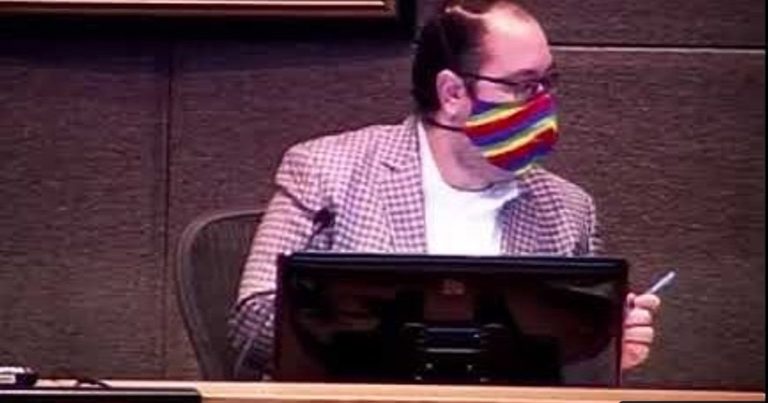
During the time when the Municipality of Anchorage was awash in money to hand out to just about any entity in city limits from the 2021 American Rescue Plan Act, Austin Quinn Davidson was acting mayor.

She had ascended to the position after the hasty departure of former Mayor Ethan Berkowitz in October, 2020. The leftists controlling the Assembly refused to hold a special election, as required by law.

There has been finger pointing from the left, with Democrats and their media lapdogs saying it’s Mayor Dave Bronson’s fault that the House of Transformations was not properly vetted before it received a $1.6 million grant.

But a look at the facts shows that Bronson was not even mayor at the time the appropriation was made.

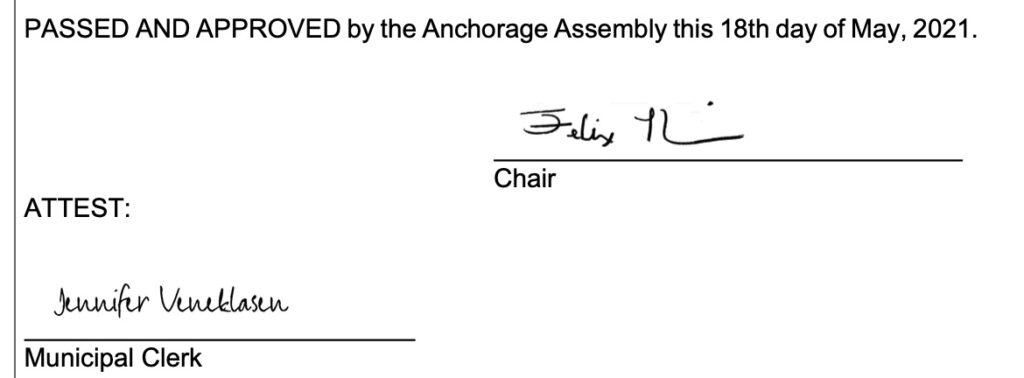
In the spring of 2021, the Assembly was rushing to get more than $50 million appropriated before Mayor Dave Bronson took office. The check for the House of Transformations, $1.6 million, was issued in August under Bronson, but only because the appropriation had been made on May 18, 2021, and Bronson was sworn in on July 1. He was required to issue the checks to the organizations chosen by the Assembly and former acting Mayor Quinn-Davidson.

In May, when the Assembly approved the funds for House of Transformations, Felix Rivera was the acting chair of the Assembly, and it’s his signature that is on the appropriation resolution.

That same resolution approved numerous other appropriations, including $437,000 to the Alaska Black Caucus so it could buy an office building.

Some of the other grantees included in this first large tranche of ARPA funds were:

$300,000 to Shiloh Community Housing to provide accessible, affordable, and quality housing for young adults 16-24 years of age. Funding will support their transitional housing program for young adults experiencing homelessness who also experience employment barriers.

$500,000 to Choosing our Roots to acquire a multi-unit dwelling, to be used to temporarily house for transgender and gay youth ages 18-24 awaiting host home placement.

$56,000 to Northern Culture Exchange to produce a targeted economic impact study, ecosystem assessment, and set of strategies and policy recommendations to reignite the creative economy and ancillary businesses in Anchorage.

$150,000 to SALT and Northern Compass Group to continue work on the Roadmap for a Vital and Safe Anchorage for the another 18 months.

$100,000 to the Business Boutique, owned by Jasmin Smith, to communicate funding opportunities to BIPOC (black, indigenous, people of color) owned small businesses.

House of Transformations was just one of many grants that are listed in the nine-page resolution passed by the Assembly. Rosalina Natazha Mavaega, 41, and Pastor Esau Malele Fualema Jr., 44, now stand accused of using those House of Transformations funds improperly and obtaining the funds through fraudulent business practices. The entire list is linked below:

The Anchorage Daily News has pivoted its news coverage to reveal, breathlessly, that Mavaega was appointed by Bronson as a member of the Anchorage Equal Rights Commission, and is on the city housing and homelessness committee. And the newspaper makes the story about how Mayor Bronson won’t fire her from these commissions, which is something he doesn’t have the authority to do on his own.

But those are distractions compared to the $1.6 million grant that federal authorities now say is improper, and that came with the blessing of Austin Quinn-Davidson, Felix Rivera, and the other liberal elected officials running Anchorage, grants that were hastily made in an effort to spite the incoming, more fiscally conservative mayor.

Joe Geldhof: The question of paying for new city hall looms over election

By JOE GELDHOF

Juneau’s local election voting concludes on Oct. 3.  Various hot-button issues are being kicked round by the candidates for office this year, including housing, homelessness, and childcare and whether to build a new city hall.  

A huge field of candidates are vying for election to the local assembly, seeking the opportunity to govern Alaska’s Capital City.

The overarching issue facing Juneau’s electorate is which candidates will genuinely address important issues like high housing costs, a declining population and diminished economic opportunity. Decisions by the existing City and Borough of Juneau Assembly have postponed difficult choices, increased spending without obvious benefit for the citizens, and ignored mandates by the electorate. 

Whether Juneau voters decide to perpetuate the miserable decision-making practices of the past or elect Assembly candidates committed to positive change is what’s at stake this election cycle.

Several obvious examples of bad decision making by the current City and Borough Assembly underscore the need for change.  

Juneau’s tried-and-true election procedures were recently changed by the Assembly to mandate mail-in voting. The Assembly authorized expenditure of more than $1 million to facilitate mail-in voting. The new system is more expensive, produces slower results, creates potential for ballot abuse, and discards the system of voting that encouraged civic and community engagement. Adoption of a system that produces slower results, is more expensive, and ditched long-standing procedures that encouraged active civic involvement is a system only a dysfunctional political system could produce.

The single biggest blunder advanced by the current Assembly is the decision to borrow big via bonds to build a new city hall. Last year, Juneau’s electorate rejected a ballot proposal to borrow funds to build a new city hall. There was no organized effort to turn down the bonding proposal for the new facility. The measure lost the old-fashioned way – on the merits.

Not content with the result, the Assembly placed a big bundle of tax revenues into an account designated for construction of their new city hall despite the expressed rejection of the voters. These are funds that could have been used for tax relief, facilitating housing construction or to benefit Juneau residents. The Assembly then designed a new ballot measure attempting to borrow funds and build the city hall.  

Not only is the Assembly ignoring the will of the voters and plowing forward with the new city hall, the Assembly voted to appropriate funding to advocate for their borrowing proposal. Using the public’s tax dollars to reeducate the voters calls into question the judgment of the Assembly and has caused significant dissention.  

The propaganda produced with public tax dollars ignores obvious real-world construction costs. The City and Borough of Juneau lacks hard numbers on the actual cost to build the new city hall and lacks a financial rate-lock for borrowing the funds to build the facility.  The printed materials spread by the city using tax dollars lack clarity and fudge obvious financial factors.  There is a strong likelihood that the actual cost to build the new city hall edifice will be substantially more than the estimates floated by CBJ in their promotional literature.

The attempt by the current Juneau Assembly to ram through a new city hall where the costs to build and finance are opaque is probably the central issue in Juneau this election cycle.  There is a noticeable sense of discontent among the electorate, often as not focused on the city hall proposal.

Other issues are spurring voter discontent.  The CBJ Assembly’s adoption of property assessments based on criteria disconnected from realistic market conditions has inflated property values and significantly increased taxes for many residential and commercial property owns.  Not surprisingly, the increases on property values have generated more tax revenue to spend but harm homeowners, renters and commercial businesses.  Add to these acts and errors, the propensity of the current Assembly to conduct the public’s business behind closed doors and it is no wonder the electorate is irritated and even angry.

How the election plays out in Juneau will be a good indication of how Juneau will fare in the future.  Juneau’s economy is still weighted significantly towards government.  But Juneau can no longer count on vast infusions of government revenue to sustain jobs and a vibrant economy.  Diversification and expansion of other economic alternatives is obviously necessary if Juneau is to prosper.  

What cannot continue is a mindset among local elected officials that funds will somehow magically continue to flow into city coffers from various sources, including the state and federal treasuries or from the local taxpayers.

Juneau’s Assembly needs change.  Juneau’s citizens deserve elected officials who will demand better value from the tax dollars our community spends. We need to do more with what we have and possibly do better with less.  That starts by saying no to a new city hall with unknown costs and uncertain financing charges.

Joe Geldhof is a lawyer in Juneau. He has held several positions that require administrative and financial skills.  Joe is a District 1 candidate for the CBJ Assembly.

Feinstein took votes against Alaska’s economy, values in her Senate career

58

California Sen. Dianne Feinstein died at her Washington, D.C. home Friday morning. She was 90 years old. She had said in February she would not be running for reelection in 2024, and was observed in recent years as having a markedly deteriorated mental state, which her staff had a difficult time concealing from the public.

Three Democrat members of Congress are seeking her seat: Adam Schiff, D–Burbank, Barbara Lee, D–Oakland, and Katie Porter, D–Huntington Beach. 

“There are few women who can be called senator, chairman, mayor, wife, mom and grandmother,” Feinstein’s chief of staff James Sauls wrote, announcing announcing her death. “There is much to say about who she was and what she did, but for now, we are going to grieve the passing of our beloved boss, mentor and friend.”

After a three-month absence this year due to a serious case of shingles, the elderly stateswoman was under pressure to resign. Her inability during that time to vote on Biden administration judicial nominees, along with her obvious cognitive decline, led for many to say she had held on too long to power. Then she fell in August, and was hospitalized briefly.

Feinstein was a San Francisco-style Democrat that the Washington Post called a “centrist.” She was lauded by the Left as a climate change warrior, receiving a 96% on the scorecard published by the League of Conservation Voters.

Feinstein was known for her prime sponsorship of the “Assault Weapons Ban” of 1994, which went into effect under President Bill Clinton and banned standard-capacity magazines that hold more than 10 rounds and some semi-automatic firearm. It expired in 2004.

In 2018, a photographer in the Russell Office Building caught Feinstein in a moment of bullying of Alaska Sen. Lisa Murkowski, as Feinstein tried to get Murkowski to vote against the Supreme Court nomination of Brett Kavanaugh.

The photo of Sen. Dianne Feinstein’s body language as she corners Sen. Lisa Murkowski in the hallway of the Russell Senate Building shows how much pressure Sen. Murkowski is under in the confirmation of Brett Kavanaugh. Murkowski ended up voting “present” because she opposed Kavanaugh, but not enough to risk her political career by voting against him on the final vote.

In November of 2020, Feinstein demanded that President-elect Joe Biden end drilling in the Arctic National Wildlife Refuge, and released the following statement:

“The Trump administration is endangering the Arctic National Wildlife Refuge by rushing to approve oil and gas drilling leases before Joe Biden becomes president.

“Republicans already exploited arcane budget rules to open this pristine Alaskan wilderness to drilling. Now the Trump administration is trying to push these leases through just days before it leaves office. 

“This decision ignores the threat of climate change and needlessly exposes this pristine area to unnecessary gas and oil drilling. The Arctic National Wildlife Refuge is a unique ecosystem, home to 42 fish species, 37 land mammals, eight marine mammals and more than 200 migratory and resident birds. The land is also sacred to the native Gwich’in people, and selling access to the highest bidder is a direct threat to their way of life. 

“I plan to work with my colleagues to block or delay these sales. A lame-duck administration that lost convincingly at the ballot box two weeks ago shouldn’t push something this controversial through in its final days.”

Gov. Gavin Newsom of California has vowed to replace Feinstein with a black woman.

Democrats block Sen. Sullivan’s bill to pay military during spending freeze

34

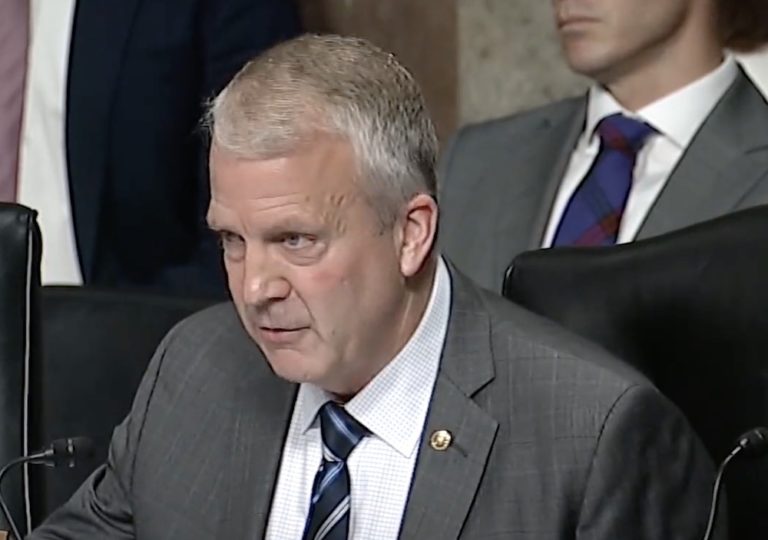
Sen. Dan Sullivan, a member of the Senate Armed Services Committee and Texas Sen. Ted Cruz attempted to pass the Pay Our Military Act of 2023 on the Senate floor Wednesday, but the legislation was blocked by Senate Democrats.

Authored by Sullivan, the legislation would ensure America’s military service members — Army, Air Force, Marine Corps, Navy, Coast Guard and Space Force — are paid in the event of a government spending freeze, which is characterized as a government shutdown on Sunday. The military will continue to serve but pay will be delayed until the dispute over spending is resolved.

Prior to requesting the legislation be passed by unanimous consent, Sullivan delivered remarks on the Senate floor, saying that before the last full government shutdown in 2013, Democrats and Republicans had come together to unanimously pass similar legislation. 

“There is precedent–very strong precedent–on this very bill, this commonsense bill that has historically received the strong support from both sides of the aisle and in both Houses,” Sullivan said. “Facing an imminent government shutdown in 2013, which ended up lasting 16 days, this bill, the Pay Our Military Act, was passed unanimously by the U.S. Senate and unanimously by the U.S. House and signed by the President. Congress recognized then the importance of uninterrupted military pay for our military members and their families.”   

“The political makeup, actually, was the same. You had a Democrat in the White House. You had a Democrat-controlled Senate, and a Republican-controlled House. So it is simple.  While I urge my colleagues to put aside their differences and come together in a spirit of unity to support this bill, I am a little concerned. . .  

“I sure hope that we can do that again, and I sure hope people who want to try to use the military as political pawns leading up to a shutdown are not going to be tempted to object to this bipartisan, much-needed bill that 10 years ago had the support of everyone.” 

Senator Sullivan also vowed to try and pass the Pay Our Military Act again in the near future.

World premiere of ‘Uncle Ted’ on Friday at Cyrano’s

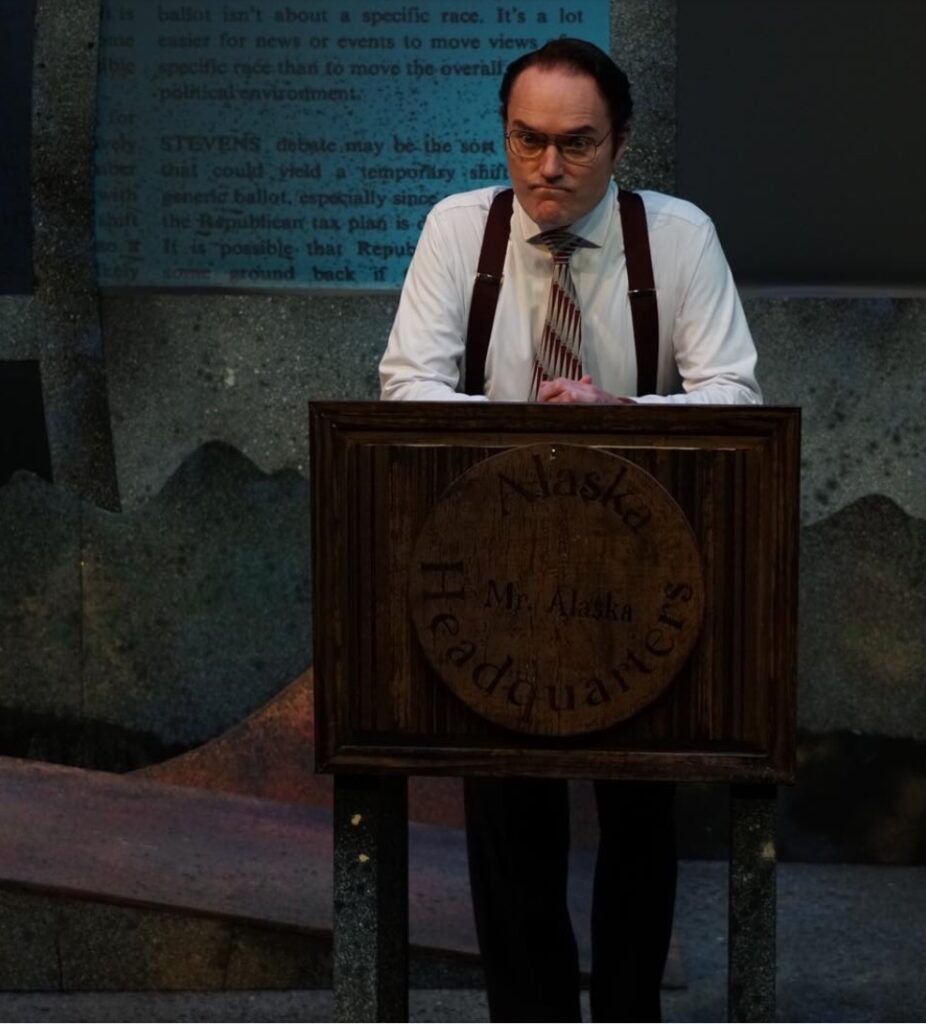
Cyrano’s Theatre Company presents the world premiere of the play titled “Uncle Ted,” Sept. 29 in Anchorage.

Billed as an homage to the “famous longtime Alaskan senator,” Ted Stevens, the play examines the reputation, the rise, and the fall of the powerful and productive senator whom many knew as “Uncle Ted.”

The playwright is none other than State Sen. Gary Stevens (no relation), of Kodiak, who wrote the two-act monologue, which is directed by Kalli Denali Randall. Dan Morrison plays the part of Sen. Ted Stevens.

The “Uncle Ted” script can be read at this link.

Tickets for the performance, which runs through Oct. 22, can be purchased at this link.

Peltola’s state director leaves

33

Josh Revak, the Republican who ran briefly for Alaska’s one congressional seat, but dropped out and supported Rep. Mary Peltola, was short-lived in her office. He is leaving to pursue other opportunities.

Revak, of south Anchorage, was named Peltola’s state director for the first few months, but has been marginalized by her increasingly partisan Democrat staff. News of his departure was not a surprise, as it had been rumored for months, and Revak himself has let it be known that he was out of the loop.

Peltola was elected in the general election of 2022 and her early staff had moderates on it, including Larry Persily and Alex Ortiz, who came into her office as chief of staff, as he had been for Congressman Don Young. None of the Republicans are left in Peltola’s office.

Peltola is bringing on Intimayo Harbison as her interim state director. He has been working as a special assistant to Peltola in her Anchorage office, under Revak.

Sullivan blasts Biden for Sinaloa Cartel targeting Alaska communities

37

The Sinaloa Cartel, once headed by notorious kingpin “El Chapo,” and others in Mexico are targeting Alaska communities with drug pipelines, adding to the overdose death toll, according to a new investigative report from the Louisville Courier Journal.

It’s difficult to reach much of the state, so there are fewer criminal networks competing for customers in Alaska, which means drug traffickers can triple or quadruple their price and net much larger profits, the report says.

“All the drug dealers are aware they can make more money selling drugs in Alaska,” said James Klugman, head of federal criminal prosecutions for Alaska’s U.S. Attorney’s Office.

Fentanyl and other illegal narcotics have saturated urban centers of Anchorage, as well as Juneau and Fairbanks. “From those main hubs, shipments are dispersed far and wide, stretching from tiny islands off the southern coast all the way up to the Arctic region, according to state and federal police,” reporter Beth Warren has written, having spent weeks in Alaska working on the story.

Recently, the city of Haines reported two deaths from fentynal within a short time span, illustrating the problem small towns are now having with illegal drugs coming in faster than law enforcement can handle.

Drug cartels have moved in as the state has also loosened regulations on marijuana. This month, Lt. Gov. Nancy Dahlstrom signed regulations that allow the state’s legal marijuana businesses to advertise more widely and to distribute free samples of marijuana at their retail outlets, adding to the culture of drug consumption that pervades many communities.

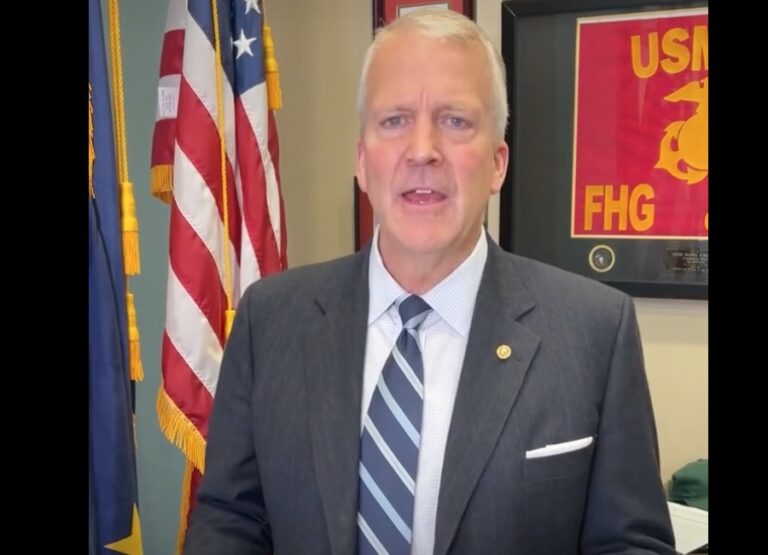
Sen. Dan Sullivan issued a reaction to the newspaper report, and he puts the blame squarely on President Joe Biden.

“I just read an article in the Courier Journal entitled Targeting the Last Frontier. Mexican Cartels Send Drugs into Alaska Upping Death Toll. This is, first of all, incredibly sad. Our fellow Alaskans dying because of Mexican cartels and fentanyl. And it’s infuriating. Infuriating. The FBI says the vast majority of the fentanyl coming in to Alaska is from Mexican cartels,” Sullivan said.

“We have a Mexican cartel invasion in Alaska and the rest of the country. Damn it. Mr. President, do your job. Secure the border. Damn it, Secretary Mayorkas. Secure the border. That’s your job. We are trying to make sure there’s not going to be a government shutdown. We have an amendment on the Senate floor that we’re working right now to help secure the border, to get the Biden administration of finally do their job,” Sullivan said on a video on Facebook.

“Mr. President, quit making sure the Democrats block it, Let them vote for it. This is what America needs. It’s going to help us keep our government open. But we need to secure the border. Alaskans and Americans are dying, and you’re responsible,” the senator said.

Beijing Biden? House committee kicks off first impeachment inquiry hearing

By CASEY HARPER | THE CENTER SQUARE

U.S. House Republicans launched the first impeachment inquiry Thursday into President Joe Biden, who faces an array of allegations around bribery and financial impropriety related to personal business dealings spearheaded by his son, Hunter Biden.

Republicans say they have significant evidence to back allegations that Hunter Biden received more than $20 million from several overseas entities in China, Ukraine, Russia and more. Hunter also faces gun and tax-related legal difficulties.

The impeachment inquiry, though, forces Republicans to focus on how much President Biden in particular was involved and benefited from these alleged dealings as Democrats argue the evidence is lacking.

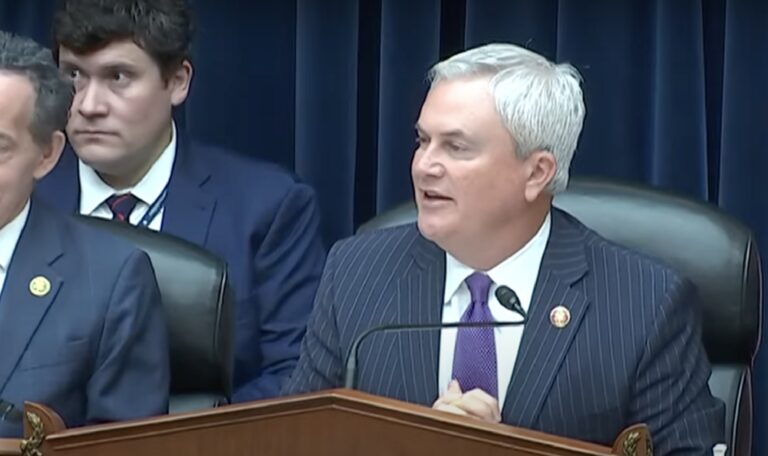
“Evidence reveals that then-Vice President Joe Biden spoke, dined, and developed relationships with his family’s foreign business targets,” House Oversight Committee Chair Rep. James Comer, R-Ky., said in his opening statement, referring in part to testimony from IRS whistleblowers and long-time business associate of Hunter Biden, Devon Archer.

“These business targets include foreign oligarchs who sent millions of dollars to his family,” Comer added. “It also includes a Chinese national who wired a quarter of a million dollars to his son.”

The wire in question from a Chinese national broke headlines this week and added further weight to the allegations against the president. Comer said this week that multiple wire transfers from Chinese nationals listed the president’s home address in Wilmington, Delaware, as the beneficiary address.

“This happened when Joe Biden was running for President of the United States. And Joe Biden’s home is listed as the beneficiary address,” Comer said. “To date, the House Oversight Committee has uncovered how the Bidens and their associates created over 20 shell companies – most of which were created when Joe Biden was Vice President – and raked in over $24 million between 2014 to 2019.

“We’ve also identified nine members of the Biden family who have participated in or benefited from these business schemes,” Comer added.

House Speaker Kevin McCarthy, who launched the impeachment inquiry earlier this month, referenced those wire transfers when speaking with reporters ahead of the hearing.

“While Joe Biden was running for president and told, and his attorney told too, that they received no money from China, we now know that yes, it came from Beijing,” McCarthy said. “It came from Jonathan Li, and the address on the wire is Joe Biden’s address. And then you find out, how did he meet this Jonathan Li? Well, he took Hunter Biden on Air Force Two when he went to China, and then Hunter had him meet the vice president then.

The vice president … he wrote letters of recommendation for his children too,” McCarthy added.

The House Ways and Means Committee also released documents and communications earlier this week, including one with Hunter Biden “bragging in a 2017 email to a Chinese business executive that he negotiated a contract for $10 million per year for ‘introductions alone.'”

Democrats remained steadfast during the hearing, arguing that there is no evidence against President Biden, specifically.

U.S. Rep. Jamie Raskin, D-Md., the ranking member on the committee, called it “preposterous,” and a “fairy tale.”

“They’ve got nothing on Joe Biden,” Raskin said, arguing that former President Donald Trump and Rudy Giuliani sparked this “conspiracy theory.”

They also pointed to the indictments facing former President Donald Trump, who faces 91 charges across several states and from the federal government for his handling of classified documents, alleged ‘hush money’ payments to an adult film star, and his role in allegedly working to overturn the 2020 presidential election results.

“It’s scandalous to use impeachment to establish a counterfeit moral equivalence between President Biden, an honorable public servant who has never been indicted or convicted of anything in his career of more than 50 years in public life,” Raskin said. “…and Donald Trump, a twice impeached president who’s recently been found in court to have sexually abused and defamed a woman and fraudulently inflated the value of his real estate properties…”

Democrats also blasted Republicans for focusing on impeachment when the federal government is just days away from shutting down if Congress does not pass a new spending measure.

“They are wasting time and taxpayer dollars in an illegitimate impeachment inquiry when we’re about 48 away or so from an extreme MAGA Republican government shutdown, and this is what they’re focused on?” House Minority Leader Hakeem Jeffries, D-N.Y., told reporters.