Sunday, August 16, 2026
Home Blog Page 549

Assemblyman resigns, but the seat won’t be on the ballot in April. Here’s why.

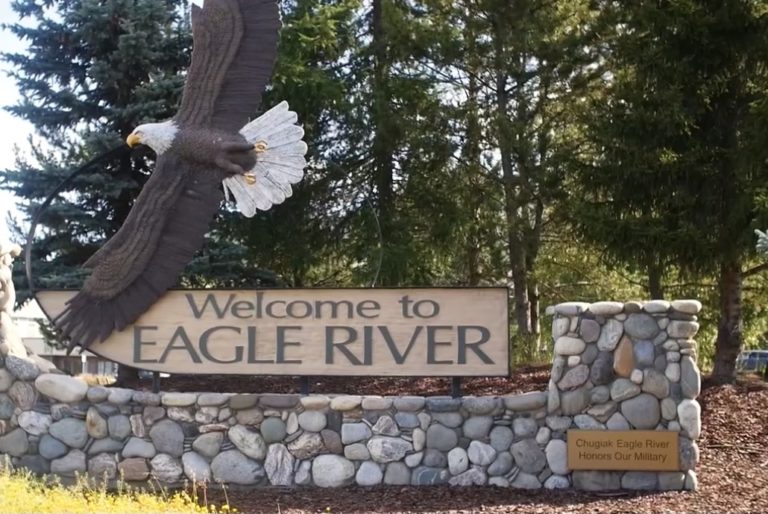
Eagle River/Chugiak Assemblyman Kevin Cross announced his resignation from the Anchorage Assembly on Tuesday night. But not until later, evidently. Sometime in April.

Unless he actually vacates the seat, it will not be open for anyone else to run for in the April 2 municipal election.

That means, when the municipal election comes around in March, Eagle River, and Chugiak voters won’t have the opportunity to replace Cross. There will have to be a special election, which cannot be even set until he vacates the seat, according to code. Meanwhile, Cross is giving the radical Anchorage Assembly the opportunity to appoint someone to fill out a major portion of his term, which ends in April of 2025.

The code governing vacancies can be found here: https://library.municode.com/ak/anchorage/codes/code_of_ordinances?nodeId=TIT2LEBR_CH2.70VAELOF

Muni election code uses the phrase “when a vacancy occurs” or “if a vacancy occurs.” There appears no provision for an anticipated vacancy at a future uncertain date.

Mead Treadwell: Arctic horizons primer and critical questions on extending U.S. territory in Arctic Ocean

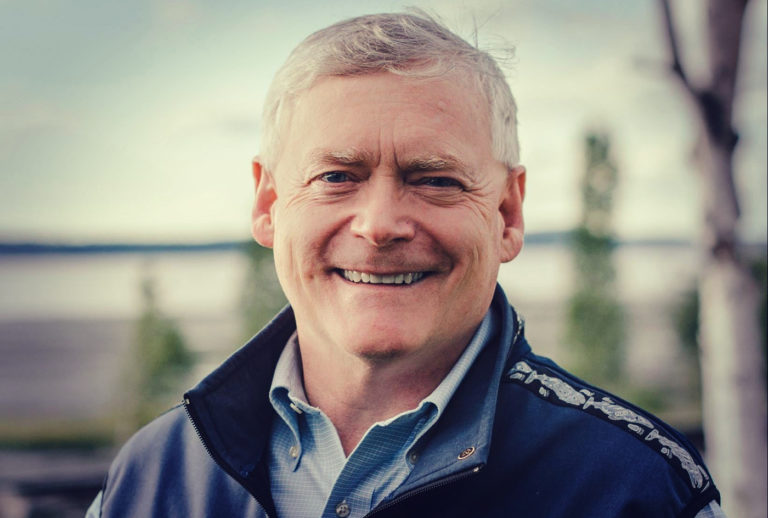
By MEAD TREADWELL

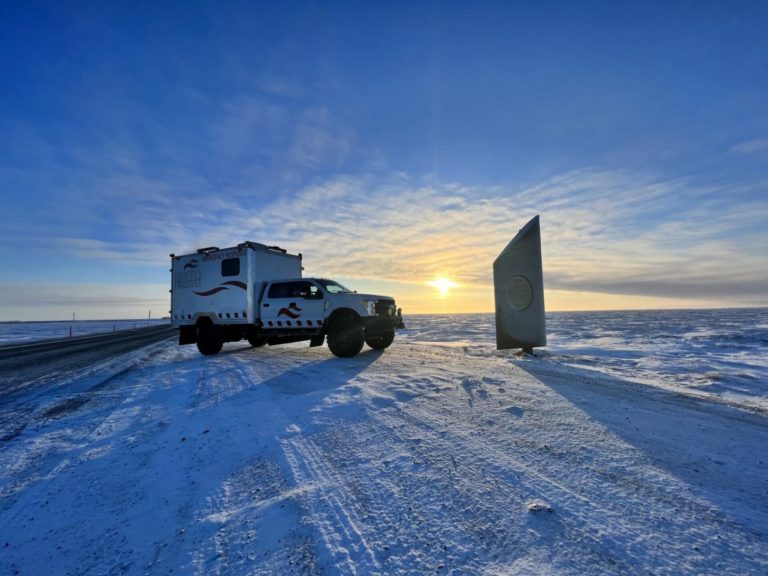
For many years now, the five Arctic Coastal states have conducted bathymetric and geologic work in the Arctic Ocean region toward what some observers have –-alarmingly but falsely — called a competitive “land grab:” the extension of national sovereignty outside the 200-mile Exclusive Economic Zone.   

A process for claiming these huge subsea lands was established by Article 76 of the United Nations Convention on Law of the Sea (UNCLOS). In the Arctic, making those claims requires nations to determine where the continental shelves of Eurasia and North America end deep in the Arctic Ocean, and to provide scientific evidence of whether certain features – the famous Lomonosov Ridge comes to mind – are an extension of Greenland, Russia, or both.

U.S. claims can be made outside the Arctic Ocean, too – any place the continental shelf slopes seaward gently enough to extend more than 200 miles from shore. But the Arctic is where claims have required the most expensive science and will have the greatest impact on the size of U.S. territory.   

Here’s a bit of a primer – from someone involved in Law of the Sea, research, Arctic policy, and business issues over the last few decades – about what’s at stake. My disclaimer:  I’m not a lawyer, but the opportunity of new territory on the scale of other giant acquisitions (not quite the Louisiana Purchase, but big nevertheless) has had me pushing for the U.S. to prepare a claim for new lands in the Arctic, both as a citizen and as a sometime government official. Given a long stalemate over UNCLOS ratification in the U.S. Senate, I –and many others – have been tantalized that the U.S. might be able to make this claim even without ratifying and acceding to the UNCLOS treaty.

  • What’s at stake?

At stake in this mapping effort is many square miles of submerged land, and control of undersea territories and resources for economic use, or if the claiming country sees fit, for preservation in its natural state. In America, as Chair of the U.S. Arctic Research Commission from 2006-2010, I told Congress that a land area “twice the size of California” could be available for a U.S. claim, offshore parts of our country where the continental slope is gentle and extends far offshore. Congress responded by funding the U.S. extended continental shelf research effort, coordinated by several agencies including the Department of State, the Department of the Interior’s USGS seismic experts, and NOAA’s bathymetric experts, initially about $80 million, and ultimately over $100 million.

  • How did we go about determining the U.S. claim?

The legal authorization in UNCLOS is complicated. After describing the science and bathymetry that country should use to set its limits, it says that a country should submit its proposed delimitation to a UN Commission on the Limits of the Continental Shelf for review and recommendations, and that “the limits of the shelf established by a coastal State on the basis of these recommendations shall be final and binding.”

For the U.S., an ad-hoc interagency committee oversaw the mapping effort. Our State Department has an official geographer. Dr. Larry Mayer, a former U.S. Arctic Research Commissioner, led the effort at the University of New Hampshire to generate the water-depth maps used to delineate our claim. The U.S. Coast Guard icebreaker Healy served as the primary platform for charting and seismic efforts in the Arctic, and our U.S. research team often cooperated with Canada for research of that country’s Arctic claim along the U.S.-Canada maritime border.   

Russia, which may have been the earliest Arctic nation to submit a proposal to the Commission on Limits of the Continental Shelf, initially sought almost 45 percent of the Arctic Ocean floor. Our vessels may have done some fact-checking in the areas of Russia’s claim close to our border, but if we had complaints, we didn’t have standing at the UNCLOS forum to voice them (or even to submit our own claim.) Some observers suggested Russia’s expansive claims near Alaska help, rather than hurt the U.S.: the more eligible continental shelf land Russia delineated near our maritime border coming north from Asia, the more land the U.S. could claim on our side of the border, even if the land was emanating from Asia.

  • Can the U.S. extend its borders without ratifying and acceding to UNCLOS?

The United States has not ratified UNCLOS, primarily because four decades of disagreement in the U.S. Senate has prevented it. It appears that the International Seabed Authority, an extra-sovereign regulating and taxing authority that shares revenues with all governments, is the source of many objections to the treaty. Politicians of all stripes have told me, however, that making a claim for extended continental shelf is in the U.S. national interest, so when there is a will, there may be a way – even without ratifying the treaty or submitting our claim to the UN Commission on the Limits of the Continental Shelf. The Department of Defense, resource industry leaders, environmental NGO’s have advocated the research and mapping process which brought us to this point.

The U.S., for example, used to complain when nations extended their fishing limits out to 200 miles. When Congress extended the limits with passage of the Magnuson Act in 1976, and President Gerry Ford signed it, we did so unilaterally without ratifying the UNCLOS treaty, and other nations respected it and pulled their fishing boats until we licensed them. When President Ronald Reagan proclaimed the U.S. Extended Economic Zone in 1983, he cited international law – without specifically naming the treaty – as empowering him to do so. Those two actions may serve as precedent. Other nations, and some in our own country, may complain if our borders expand without review by the UN’s Commission on the Limits of the Continental Shelf, but since our maritime boundaries with Russia and Canada are fairly well established (Canada and the U.S. are still arguing about a 5000-square mile, pie-shaped parcel on our Beaufort Sea border, which is not an issue for the UN panel), a U.S. claim is solid until anyone with rights and standing will challenge it.

  • As this happens, what should we do next?

When you get a big piece of real estate, it is time to establish a strategy of what to do with it.   

As an Alaskan, I have seen the borders of my state change several times in my lifetime. Alaska, for example, was claimed by Russian conquest, without respect for aboriginal ownership by Alaska Native inhabitants. Russian colonists arrived in 1741. In 1867, when Secretary of State William Henry Seward negotiated the purchase from Russia, aboriginal tribes were not part of the negotiation either. Russian America was not to become an extension of Canada, then Great Britain’s colony, as Russia was fighting Great Britain in Crimea. Once the U.S. acquired this territory, it took several decades for Congress to pass Organic Acts, allow Alaska settlers to elect a territorial legislature.  Native rights were sidestepped again.

Hard-won statehood in 1959 came with land transfers to the State of Alaska (103 million acres) and revenue sharing on most remaining federal lands (the rest of Alaska’s 365 million acres). It was the Alaska Native Claims Settlement Act in 1971 that returned 44 million acres to Alaska’s indigenous inhabitants. The 1976 200-mile limit came with a law which brought the States of Alaska, Washington, and Oregon into management of Alaska’s offshore fisheries. The Alaska National Interest Lands Conservation Act of 1980 also set new multiple management regimes up with Alaska Natives overseeing subsistence use of fish and game, and the State of Alaska, as large new federal enclaves — parks, wild and scenic rivers, and refuges — were established.

  • Yeah, but what strategy should the United States use for our new offshore lands?  If we claim it, what are we going to do with it?

Here are some suggestions for Congress, which should immediately examine the ramifications of this action. Whatever they do, they should also hear from coastal residents as even activity 200-plus miles offshore can affect people’s lives in coastal areas.

1.  The Exploration Strategy:   Remember Thomas Jefferson launched the Lewis and Clark expedition after the 1803 Louisiana Purchase extended U.S. territory to the Pacific. We should do more of the same in the Arctic. It took a lot of Arctic research to draw up the map of our claim; it will take more to know about the biological and geological assets we’ve acquired.  What’s there?  Bottom dwelling crab stocks? Critters low in the food chain challenged by ocean warming and acidification? Rare earth minerals? Hydrogen, pure or in hydrocarbon molecules in several forms?  Shorter routes across the world for fiber optic cables?  We need to know these things. 

2.   The Security Strategy:  We don’t need a fort on this new territory. But international law clearly gives a coastal state authority to manage its seabed, even for internationally authorized pipelines and undersea cables. We are likely to secure and police this territory with assets under the sea, icebreakers on the surface of the sea, and airplanes and satellites overhead. Two Congressional hearings this past month have pushed again for new U.S. polar icebreakers.  

New U.S. Arctic territory would include land in or near the Central Arctic where ten nations have signed on to the 2018 Central Arctic Fisheries Agreement. It was a US initiative with an initial fisheries moratorium in the Central Arctic Ocean, accompanied by commitments for monitoring and research. The Central Arctic agreement was perceived by some as an engraved Tiffany invitation to countries like China to establish a research presence in the region.  U.S. extended continental shelf rights may allow our Coast Guard to “inspect” or police these research vessels if we limit their activity on the Ocean bottom.  We also have a legally binding  Arctic Science Agreement in place — and it can be hoped that any new U.S. Security Strategy following extended continental shelf claims does not block access to the Arctic Ocean bottom where international cooperation has produced much important knowledge on earth history, plate tectonics, even the origin of ocean bottom lands which led to this claim in the first place. Russia has, within its 200-mile EEZ, refused permission for important international ocean drilling programs, aimed not at finding oil but determining the history and structure of Planet earth.

3.    An Intertwined Economic and Environmental Strategy:   An executive proclamation to get this undersea territory for the U.S. could be matched with executive orders to deny any economic use of this land. Joe Biden, and Barak Obama before him, did their best to eliminate all hydrocarbon exploration on federal lands Arctic offshore forever.  (Those decisions are being challenged in court.) Many groups want to eliminate seabed mining, shipping, fishing in the Arctic Ocean — often with good motives, but all before we actually know what we are setting aside. I would argue for a moratorium on moratoriums. I’d urge the U.S. to do the exploration strategy first. Environmental protection will be in place from day one, as federal law now requires an environmental impact assessment before almost any major federal authorized action in U.S. territory.

A second aspect of the economic/environmental strategy the US must consider is how and whether these lands are managed. We can assume the Department of the Interior would get a big new job, beyond the Outer Continental Shelf resources they manage at BOEM, the Bureau of Offshore Energy Management, or what NOAA’s National Marine Fisheries Service manages via regional management councils. Extended Continental Shelf doesn’t cover all fisheries — but it may cover bottom dwelling creatures in the same way it covers minerals.   As well, siting of energy import/export port facilities more than three miles offshore of every coastal state is assigned to the Department of Transportation’s Maritime Administration (MARAD), but that authority is not currently active offshore of Alaska. For MARAD to permit these kind of facilities, the 1974 Deepwater Ports Act, as amended, requires an adjacent state to have a Coastal Zone Management Program in place, or in the process of being approved.   

A third aspect of the economic strategy the US needs to consider is revenue and royalty and tax policy. Interaction with the policies, if not the rules of the International Seabed Authority will be an issue even though the U.S. does not have a seat. Federal law authorizes revenue sharing from OCS leases offshore some states, but not offshore Alaska. That issue could rise again as Congress absorbs these new lands into a management structure. 

4.  The Democracy Strategy:  When the U.S. joined the UN, it promised as other colonizing nations did, to work to provide self-determination to colonies and territories. Alaska Federation of Natives head Julie Kitka often reminds us of this promise, as did the late Alaska Independence Party head Joe Vogler. Alaskans often complain that democracy is not served when decision-making on important lands and waters of its state is made very far from home. Will an extended continental shelf claim by the U.S. change that? It could rekindle arguments about revenue sharing, local and traditional knowledge input in decision-making, shoreside connections for oil, gas, or hydrogen export facilities. The Central Arctic Fisheries Agreement does reach back to include indigenous participation and consultation. Time will tell what Congress does on this issue, too.

Another question is whether this move will, ultimately, change the stalemate in the U.S. Senate on UNCLOS ratification. In the short-term, it will bring attention to the ratification issue once again, an issue President Biden championed during his Senate career. Another issue could also affect the political calculus: dissatisfaction with UNCLOS’ International Seabed Authority is rising across the political spectrum, not just coming from conservatives. As new undersea mining projects are considered, some ENGO’s are urging reform of that body –or even elimination of ISA, just as conservative opponents of UNCLOS have for decades.

5.  The International Strategy: The U.S. has argued that it abides by the rule of law in international affairs, and a move to claim land unilaterally will raise some eyebrows. Could this move encourage China’s claims in the South China Sea, for example, that are of concern to the Philippines, Vietnam, and Japan? Could this move encourage greater cooperation on shipping in the Arctic, even though the claim only extends to the ocean floor, not the seas above it? As U.S. territorial lands move north, so does the U.S. border, and interaction with our neighbors will also likely increase – especially, for example, if one neighbor wants to mine for resources and another neighbor doesn’t. What fora – if not UNCLOS, where the U.S. is not at the table – would be the crucible? The Arctic Council?  An extension of the Central Arctic Fisheries Agreement? Let’s see what the diplomats come up with.

Mead Treadwell is former Lieutenant Governor, State of Alaska; co-chair, Advisory Committee, Polar Institute; former Chair, U.S. Arctic Research Commission


Eric Forrer: How about ‘no’ to gas production tax credit?

By ERIC FORRER

Gov. Mike Dunleavy has said that our State needs everybody to say yes to everything. For the governor’s purposes, “everything” can be defined as all industrial development.   

There seems to be a vision in the Governor’smind of a transformation from whatever Alaska was in our fond memories to a sort of northern Detroit of heavy equipment, an expanding road network, mines with attendant effluent dams, and petroleum and gas production writ large.

However, the governor is walking a pathstrewn with a lot of ‘nos.’  Consider the $70 million cuts over three years vetoed from the university in 2019.  Or how about $13 million vetoed from the ferry budget in 2020, amid other reductions. And let us not forget $87 million vetoed from legislatively approved temporary help for the public schools in 2023.   

The governor has also given a large ‘no’ to bears by sanctioning the killing of nearly 100 Browns shot by ADF&G in a single cull. Add to that the ‘no’ to wolves with half or more of the population killed in a single year on Prince of Wales Island based on biologically bogus rational supposedly toincrease the deer population.

Add to this list an existential ‘no’ to salmon(a bellwether species for the state), which are in trouble statewide with close toextinction numbers on the Yukon and Kuskokwim rivers, and a resounding “yes”to the big trawler interests based in Seattle that continue to decimate our salmon stocks and degrade the Bering Sea biosphere.

So, we find the governor’s leadership highway paved with “nos,” not just “yeses.”Our governor justifies “no” increases for funding fisheries research, “no” to wildlife scientific studies, “no” to our university, public transportation, basic level elementary school funding, and other public needs as “unsustainable increases.” He then demandsthat we Alaskans must learn to “live within our means,” an admonishment that does not extend to corporate interests inside and Outside Alaska.

But are the governor’s vetoes and downsizing of services across the spectrum really about living within our means? Does a governor who routinely proposes “unsupportable increases” in the PFD checks and calls for deficit spending really care about a ‘balanced’ budget?

In a recent article by Nathaniel Hertz in the Nov. 30th edition of the Anchorage Daily News, Governor Dunleavy is reported to be planning to reinstate something called “well head gas production tax credits.”  

Credits is the key word in this concept.

Legislation creating these kinds of credits goes back as far as Governor Frank Murkowski. These old credits were finally extinguished because of their immense cost to the public treasury (approaching eight billion dollars), and because of the credits did not increaseproduction. 

Governors Bill Walker and Dunleavy both promoted passage of HB 331, legislation that would have authorized one billion dollars in bond debt to pay off these old outstanding tax production credits, even though the payments were not debt or in default.   

In a unanimous vote in the Alaska Supreme Court, HB 331 was declared unconstitutional in its entirety.  

Had the Alaska Supreme Court not struck down the scheme to incur debt to pay off the cash-for-credit scheme, the State of Alaska would still be paying off hundreds of millions in principal and interest for a program that did not work.

The governor is seemingly prepared to slip the cost of a renewed tax credit program under the umbrella of “living within our means.”  

The implicit message here is obvious. Alaskans must make do with a double handful of ‘nos.’  But businesses involvedin exploring for gas and oil in our statedeserve a break.

There is deep, abiding hypocrisy here. The oil companies, embedded in the laissez-faire market mantra which dismisses the usefulness of government and enthrones financial and commodity markets as acontrolling force, have at no time in their existence been able to function and profit without a public fund subsidy. These subsidies have been made available by politicians at all times at every level, from infrastructure funding to loan guarantees, to price supports, ad infinitum. It’s all in the category of public risk, private profit.

Gov. Dunleavy is in lockstep with this crowd, sheltered from the needs of the people of the state under his “available resources” umbrella, and doling out state general funds in volume to private industry and its insatiable demands.   

Why the average Alaskan puts up with this kind of ruinous economic policy is a mystery.

Eric Forrer has lived in Alaska for over 60 years and is a retired commercial contractor.  He still fishes commercially and served as a Regent for the University of Alaska.  

That time Democrats removed Abe Lincoln from the ballot

The election of 1860

By LINCOLN MEMORIAL SHRINE AND MUSEUM

Two hundred years after his birth, the life and legacy of Abraham Lincoln continues to fascinate and inspire. Born into poverty on the edge of an untamed frontier, his rise from obscurity to greatness has become a symbol of the universal hope that we can all improve our circumstances in life.

(National Park Service)

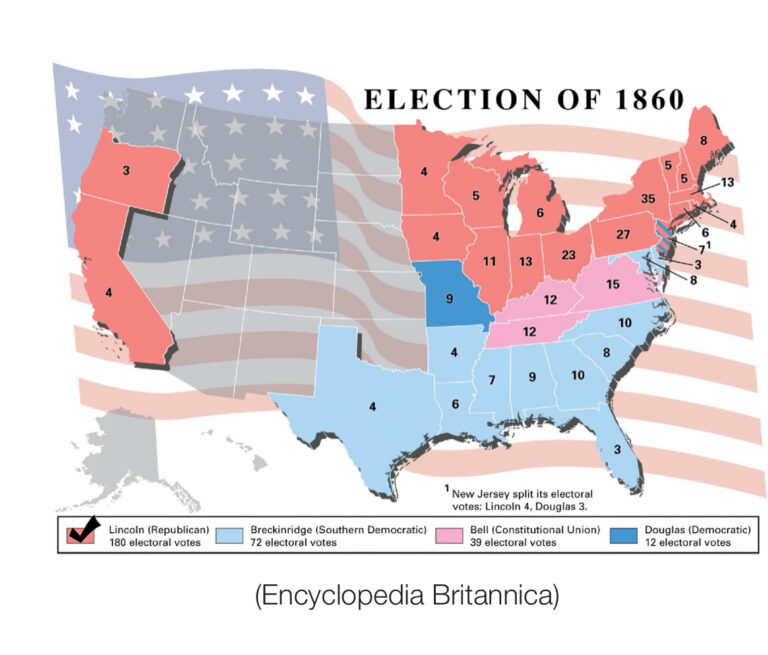
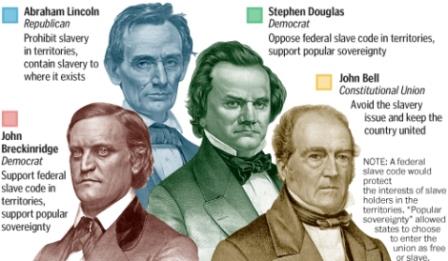
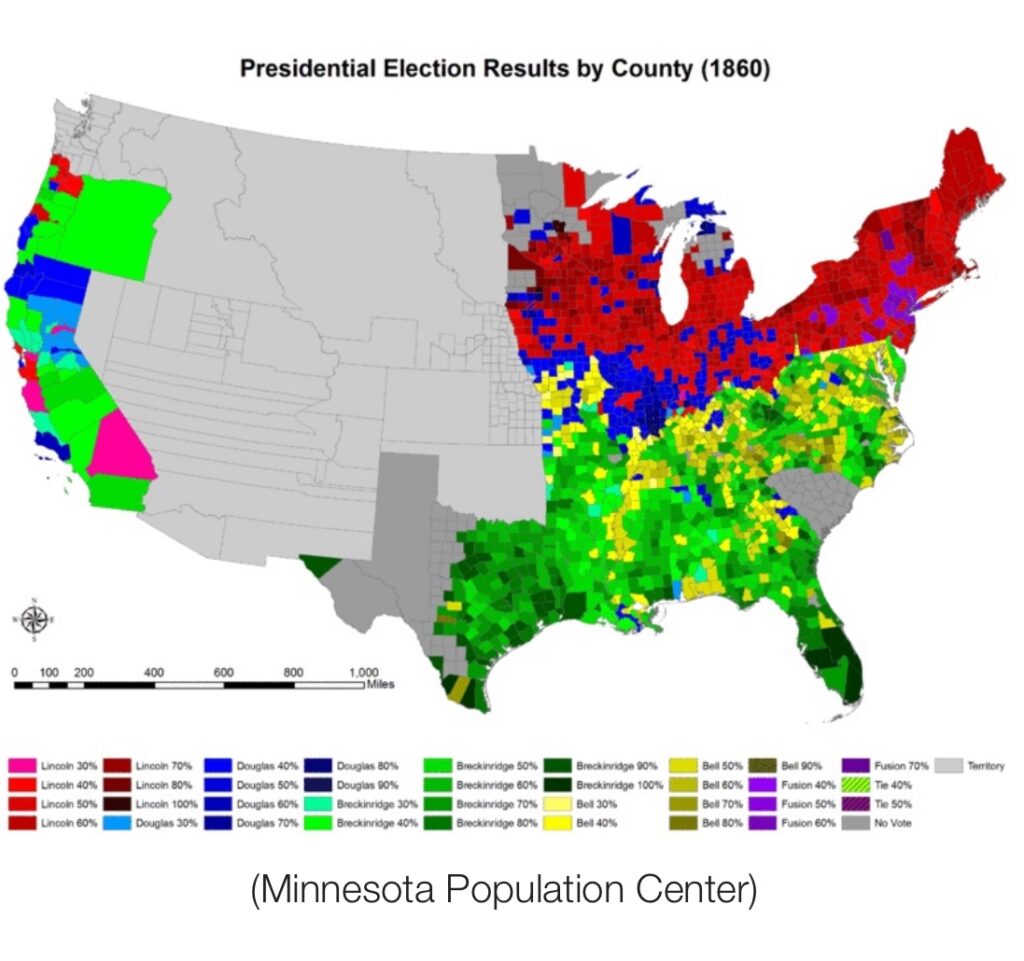
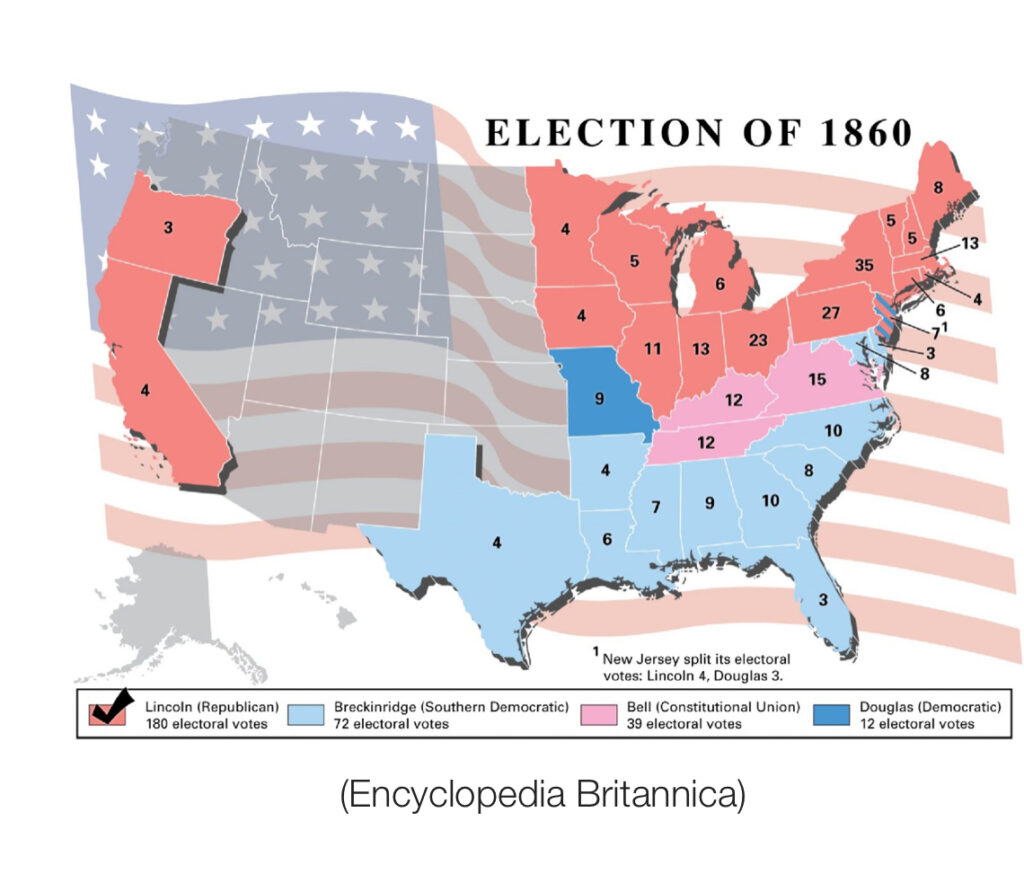
The election of 1860 might have been the most pivotal in American history. Abraham Lincoln, the candidate of the 6-year-old Republican Party, ran on a platform of keeping slavery completely out of the new territories that had been annexed from Mexico 11 years earlier. The dominant Democratic Party split into two factions over the slavery extension issue. Northern Democrats who felt the residents of the territories themselves should decide nominated Illinois Senator Stephen Douglas, Lincoln’s longtime rival, as their standard bearer. Southern Democrats who wanted slavery extended regardless of the residents’ desires nominated Vice President John Breckinridge of Kentucky. A fourth candidate, John Bell, ran as a compromise candidate under the “Keep the Union together at all costs” banner of the Constitutional Union Party. The campaign was heated. Lincoln and the Republicans were not even on the ballot in the states of the Deep South. Although Lincoln only won 40% of the popular vote, the split in the Democratic Party enabled him to secure a comfortable majority in the Electoral College.


California was one of the states that would have opted for the Democrat had they run only one candidate. The map below demonstrates county-by-county results, indicating the percentage of the popular vote earned by the winning candidate in each county. Shades of red are for Lincoln, shades of blue are for Northern Democrat Douglas, shades of green are for Southern Democrat John Breckinridge, shades of yellow are for Constitutional Unionist Bell and shades of purple for the non-Republican/Democratic “Fusion” candidates. Grey are counties with no results. (South Carolina voted overwhelmingly for Breckinridge but county results were unavailable). Note that San Bernardino County voted narrowly for Lincoln.

More at this link: https://www.lincolnshrine.org/exhibits/election-of-1860/

Assemblyman for Eagle River announces resignation

18

Anchorage Assemblyman Kevin Cross, who represents Eagle River and Chugiak, announced his resignation from the Assembly on Tuesday night at the end of the meeting, expressing his deep frustration at the Assembly not getting important things done. He will remain on until April, when a regular election will be held and someone else will sit in his seat.

Cross will have served one term, after he defeated Gretchen Wehmhoff and Vanessa Stephens in the election for Anchorage Assembly District 2 Seat A on April 5, 2022.

Colorado Supreme Court kicks Trump off ballot

By JOE MUELLER | THE CENTER SQUARE

The Colorado Supreme Court on Tuesday ruled former President Donald Trump should not appear on the state’s 2024 presidential primary ballot.

In a 4-3 decision, the state’s highest court ruled Trump is “disqualified from holding the office of President under Section Three of the Fourteenth Amendment to the U.S. Constitution.” In a 213-page document, the justices, all appointed by Democrat governors, overruled a Colorado District Court decision by Judge Sarah Wallace stating Trump’s speech on Jan. 6 “incited imminent lawless violence” but didn’t meet the definition of “engagement” found in the 14th Amendment.

“We do not reach these conclusions lightly,” the Colorado Supreme Court justices wrote. “We are mindful of the magnitude and weight of the questions now before us. We are likewise mindful of our solemn duty to apply the law, without fear or favor, and without being swayed by public reaction to the decisions that the law mandates we reach.”

Lawsuits in other states also seek to disqualify Trump from the presidential primary ballot but an appeal to the U.S. Supreme Court could now be the deciding factor.

“The Colorado Supreme Court issued a completely flawed decision tonight and we will swiftly file an appeal to the United States Supreme Court and a concurrent request for a stay of this deeply undemocratic decision,” Trump campaign spokesman Steven Cheung said in a statement on Tuesday.

Six Republican and unaffiliated Colorado voters filed a suit against Griswold on Sept. 6 to remove Trump from the ballot. When the district court ruled in favor of Trump, Citizens for Responsibility and Ethics in Washington, D.C., said it would appeal to the Colorado Supreme Court.

“I will continue to follow court guidance on this important issue,” Democratic Colorado Secretary of State Jena Griswold said in a statement after the ruling.

The justices in the majority were Monica Marquez, William Hood III, Richard Gabriel and Melissa Hart. Chief Justice Brian D. Boatright, Carlos A. Samour and Maria E. Berkenkotter dissented.

Chief Justice Boatright wrote Colorado’s election code wasn’t “enacted to decide whether a candidate engaged in insurrection. In my view, this cause of action should have been dismissed.”

The ruling stated the court’s admission of 31 findings from the “Select Committee to Investigate the January 6th Attack on the U.S. Capitol” was appropriate.

“Under the deferential standard of review that governs, we perceive no error by the district court in admitting portions of the report into evidence at trial,” the justices wrote.

The justices also wrote the definitions of “engaged in” and “insurrection” aren’t defined in the U.S. Constitution.

“Therefore, we must make a legal determination regarding what the drafters and ratifiers meant when they chose to deploy these words in Section Three,” the justices wrote. “Mindful of the deferential standard of review afforded a district court’s factual findings, we conclude that the district court did not clearly err in concluding that the events of January 6 constituted an insurrection and that President Trump engaged in that insurrection.”

Update: Republican candidate Vivek Ramaswamy issued a lengthy statement condemning the decision, saying he himself would withdraw from the Colorado primary unless Trump is allowed on the ballot, and asking other leading GOP presidential candidates to also withdraw:

This is what an *actual* attack on democracy looks like: in an un-American, unconstitutional, and *unprecedented* decision, a cabal of Democrat judges are barring Trump from the ballot in Colorado. Having tried every trick in the book to eliminate President Trump from running in this election, the bipartisan Establishment is now deploying a new tactic to bar him from ever holding office again: the 14th Amendment.

I pledge to *withdraw* from the Colorado GOP primary unless Trump is also allowed to be on the state’s ballot, and I demand that Ron DeSantis, Chris Christie, and Nikki Haley to do the same immediately – or else they are tacitly endorsing this illegal maneuver which will have disastrous consequences for our country.   Today’s decision is the latest election interference tactic to silence political opponents and swing the election for whatever puppet the Democrats put up this time by depriving Americans of the right to vote for their candidate of choice.   The 14th Amendment was part of the “Reconstruction Amendments” that were ratified following the Civil War. It was passed to prohibit former Confederate military and political leaders from holding high federal or state office. These men had clearly taken part in a rebellion against the United States: the Civil War. That makes it all the more absurd that a left-wing group in Colorado is asking a federal court to disqualify the 45th President on the same grounds, equating his speech to rebellion against the United States.

And there’s another legal problem: Trump is not a former “officer of the United States,” as that term is used in the Constitution, meaning Section 3 does not apply. As the Supreme Court explained in Free Enterprise Fund v. Public Company Accounting Oversight Board (2010), an “officer of the United States” is someone appointed by the President to aid him in his duties under Article II, Section 2. The term does not apply to elected officials, and certainly not to the President himself.   The Framers of the 14th Amendment would be appalled to see this narrow provision—intended to bar former U.S. officials who switched to the Confederacy from seeking public office—being weaponized by a sitting President and his political allies to prevent a former President from seeking reelection. Our country is becoming unrecognizable to our Founding Fathers.

Delegation sends frosty letter to U.S. Postal Service over mail increases for Alaskans and Hawaiians

39

U.S. Senators Dan Sullivan and Lisa Murkowski (both R-Alaska), and Representative Mary Peltola (D-Alaska) called on the Postal Regulatory Commission to reject consideration of the United States Postal Service’s proposal to establish higher postal rates for mail delivered to the non-contiguous United States — Alaska and Hawaii.

In a letter sent Tuesday that was signed by the Alaska and Hawaiian Congressional delegations as well as delegates from each of the U.S. territories, the members of Congress warned that the USPS proposal “to single-out select remote and rural communities for disproportionate price increases is inconsistent with the Postal Service’s Constitutional purpose and with its historical approach of a uniform price structure for customers, no matter where in the nation a resident lives.”

The USPS’ proposal would establish higher Zone 10 rates for certain “full network” products, including Priority Mail Express, Priority Mail, and USPS Ground Advantage, impacting packages destined for Alaska, Hawaii and the U.S. Territories. 

To read the full letter, click here.  

“This proposed increase in rates for Alaska and other non-contiguous states and territories is outrageous,” Sen. Sullivan said. “No state, including Alaska, should be punished by our own federal government because of geography. These hikes have the potential to severely negatively impact Alaskans—already reeling from inflation—who are more reliant on the USPS for basic goods and services than other Americans. I will be meeting with the Postmaster General soon to demand answers about the data they’re using to justify this increase, and the potential tax-payer funded monopolistic behavior of the USPS. I, along with my colleagues from impacted states and territories, will also be heavily weighing in with the Postal Regulatory Commission on this proposed rule. We will be insisting that the commission refuse to approve this rate increase, particularly because the USPS has not been transparent with any evidence justifying a change in rates.”  

“Postal Service price increases on Alaskans living in remote and rural communities are unfair, harmful, and go against the USPS mission of uniform delivery for all Americans,” said Sen. Murkowski. “The Alaska delegation calls on the Postal Regulatory Commission to decline price increases in Zone 10 and avoid harming Alaskans who already face some of the highest costs of living in the country.”

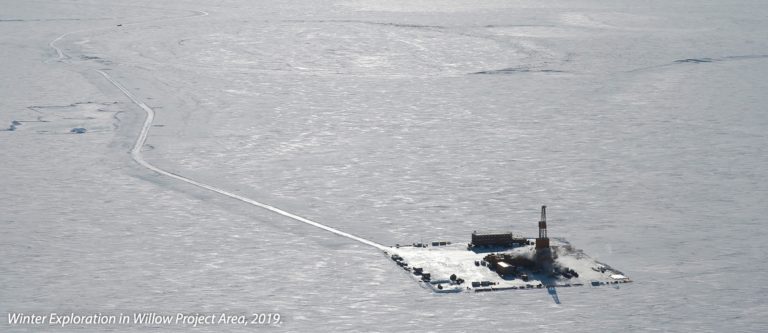
Ninth Circuit says Willow Project construction season can proceed while case is under consideration this winter

6

The group appealing to the Ninth Circuit Court of Appeals to halt progress on the North Slope Willow Project lost a round in court today. The court agreed with the lower District Court that the ConocoPhillips winter construction season may proceed, and said there will be no temporary injunction while the case is pending.

“ConocoPhillips is pleased the Ninth Circuit Court of Appeals denied the plaintiffs’ request for an injunction pending appeal. ConocoPhillips is proceeding with Willow construction as we continue to review the court’s decision,” ConocoPhillips said in a statement.

The litigants, Sovereign Inupiat for a Living Arctic, had sued because they said the Biden Administration didn’t taken greenhouse gas emissions from Willow into consideration, and that the project would contribute to climate change. The groups said that the project might damage environment important to polar bears and other animals of the Arctic. They attempted to get this winter’s construction season spiked while the appeal of the project was pending at the Ninth Circuit.

Rick Whitbeck of Power the Future commented, “Like a stopped clock having the correct time twice a day, every now and then, the 9th Circuit gets a decision correct.  Their decision to allow the Willow project to move forward once again slaps down the extremist organizations looking to harm Alaska’s bright energy future.  Willow is good for Alaska, good for the U.S., good for national and energy security, and – as shown by the decision this week – on technical and legally sound footing.” 

Willow is a major oil project on the edge of the National Petroleum Reserve-Alaska on the North Slope. Environmentalists oppose it because of climate change politics. Over the expected 30-year lifespan of Willow, it may produce 200,000 barrels of oil per day, for a total of 600 million barrels of oil, generating between $8 and $17 billion in revenue.

The court ruling said opening briefs are due Dec. 29 and the arguments will be on the court calendar for February.

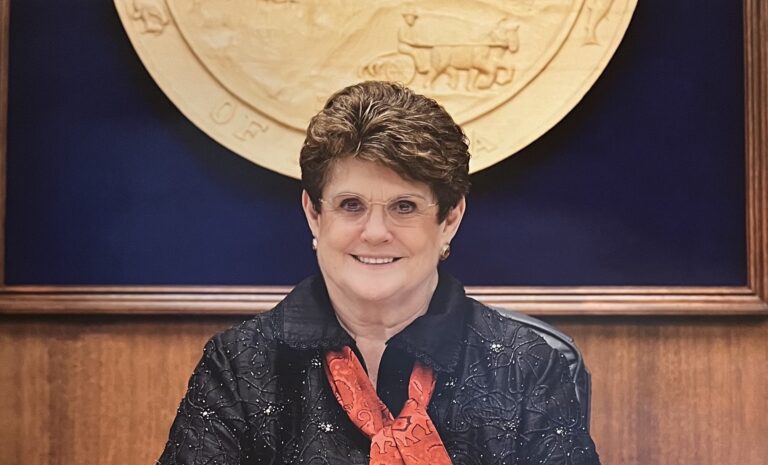
Passing: Senate powerhouse Sen. Lyda Green

Former Alaska Senate President Lyda Green died on Dec. 19, 2023 in Soldotna. She had been ill for several months and was being cared for at Central Peninsula Hospital.

She was born to Melvin and Nona (Reed) Handley on Oct. 16, 1938 in Livingston, Texas. Her family moved to Freeport, Texas in 1942, where her father was a chemist with Dow Chemical and her mother taught piano lessons.

Lyda graduated from Brazosport High School in 1956. In her youth, Lyda played basketball, sang in choir, and played football with the neighborhood boys.

Throughout her life she kept friends from childhood, many of whom gathered each year in Freeport for reunions. She attended Sam Houston University in Huntsville, Texas and graduated in three years with a degree in Business Education.

After college she worked in Houston for an independent oil operator. She met her future husband of 62 years, Curtis Green, when she and her roommate needed substitutes for a bridge party. They invited the handsome young men in the apartment across the hall to join them. Curtis and his roommate readily accepted. Six months later, on April 1, 1961, she married Curtis Glen Green Jr. in Mexico City, Mexico. They called their parents (collect) to let them know they had eloped.

After marrying, Curtis let Lyda know he always wanted to return to Alaska, where his family had relocated to in 1955. Lyda had never seen snow but readily accepted. In 1962, Lyda taught for a year at West (Anchorage) High School, then went to work for Pan American Petroleum. She and Curtis were in their tiny Spenard home during the 1964 earthquake, watching their piano dance across floor.

In 1965, their first child, Bradley, was born in Anchorage. Curtis’ work with Texaco took them to Louisiana, and then with Bechtel Engineering to San Francisco and Lusaka, Zambia.

Lyda gave birth to Kristie Green (now Babcock) in 1967 in Lusaka, Zambia. In 1968 the family returned to Anchorage. During their Anchorage years, Lyda served as Girl Scout and Cub Scout mom, chair of the Miners and Trappers Ball, an active Lion, guest cook on the Theda Comstock Show, hostess of dinner and bridge parties, volunteer at First Baptist Church Anchorage, co-owner of the Anchorage Racquet Club and a founding member of the Alaska Youth Tennis Foundation.

Their family grew as Lyda gave birth to Shelton in 1976.

In 1984, they began their Wasilla years on the shores of Mudd Lake, hosting annual summer picnics, supporting youth hockey, and being active in First Baptist Churches of Wasilla and Willow. Lyda opened The Study in her home, where she tutored hundreds of children and adults. She served on the Governor’s Council on Disabilities and Special Education.

In 1994, Lyda was elected to the Alaska State Senate in an upset election against longtime incumbent, Democrat Jalmar M. “Jay” Kerttula, who at the time was the longest-serving member in the history of the Alaska Legislature.

Representing the greater Wasilla-Palmer area, Lyda went on to serve 14 years in the Alaska State Senate, where she sponsored major reform in pensions, welfare, education, agricultural lands, the right to keep and bear arms, and many other major policies.

Her public service and private life were always guided by her strong moral, religious, and political principles. From both sides of the aisle, Lyda was respected for her honesty, decorum, and conviction.

Her last two years in the Alaska State Senate she served as Senate President.

In 2016, after 55 years in Alaska, she and Curtis moved full time to Texas. They hosted their children, grandchildren, greatgrandchildren and others on numerous occasions in Kerrville and Ingram. They sang and worshipped at Trinity Baptist Church of Kerrville. Curtis and Lyda returned to Alaska in May 2023.

Lyda will be remembered for engaging conversation, devotion to family, love of God, hospitality and welcoming nature, and fondness for sewing and gifting beautiful items. Lyda was preceded in death by her father, mother, and brother Marvin. Lyda is survived by husband Curtis, son Bradley Green (wife Dianne); daughter Kristie Babcock, (husband Tuckerman); son Shelton (wife Heather); grandchildren Kelsie (husband Joshua) Edgren, Cori Leaf, Noah (wife Treava) Leaf, Jiabao Leaf, Meijan Leaf, Caleb Green, Daniel (and Serena), Victoria Green, Everly Green, Sutton Green, and Anderson Green; and sister Vickie Symington. 

Cards may be sent to the family at 36815 Hakala Dr. Soldotna, AK 99669. Services will be planned at a later date.