Saturday, August 15, 2026
Home Blog Page 530

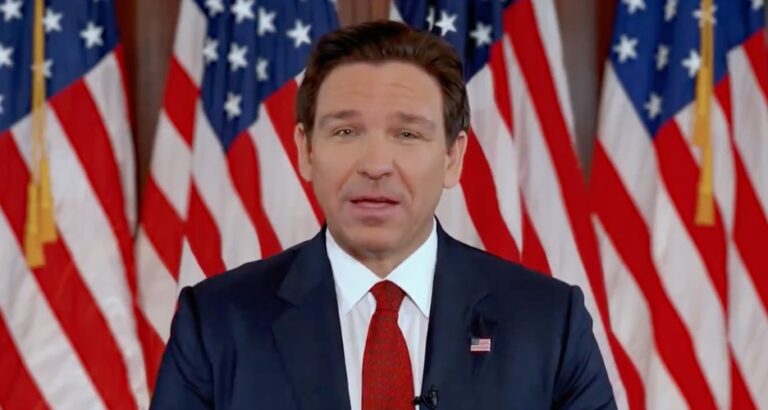
Watch video: DeSantis drops, endorses Trump

After ending all of his upcoming events on his campaign website on Sunday morning, Florida Gov. Ron DeSantis made it official: He has suspended his campaign for president and endorsed Donald Trump for president in advance of New Hampshire’s Tuesday primary.

DeSantis made his announcement on X/Twitter.

He was polling in single digits and earlier this weekend canceled his CNN interview and his appearance on NBC’s Meet the Press.

Nikki Haley, when asked her impression of her two main remaining contenders, said that Biden and Trump were equally bad, which is why she is running. Sen. Rand Paul wrote, “I don’t think any informed or knowledgeable libertarian or conservative should support Nikki Haley. I’ve seen her attitudes toward our interventions overseas. I’ve seen her involvement in the military industrial complex, $8 million to become part of a team.”

Holtan Hills housing development in Girdwood is up for Assembly vote again on Tuesday

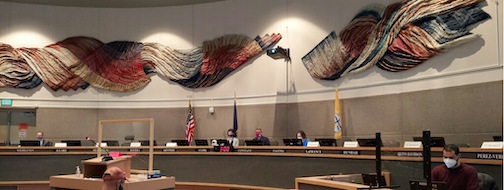
The Anchorage Assembly has the controversial Holtan Hills residential development in Girdwood on its agenda for Tuesday. The Assembly meeting starts at 5 pm on the ground floor of the Loussac Library.

The Assembly voted down the project a year ago. A new proposed ordinance breathes life back into the 100-dwelling project, a mix of homes, condos, and townhouses near the Alyeska Resort. The ordinance would allow the city to dispose of land it has in the Heritage Land Bank to a private developer.

The details of the plan, which had been postponed indefinitely last year after community resistance and other political considerations, can be found in the ordinance at this link.

Public hearing: New short-term rental licensing, fees, and fines proposed for Anchorage

Should Anchorage put regulatory guardrails, restrictions, fees, and associated fines on short-term rental establishments?

That’s up for public discussion at Tuesday’s Anchorage Assembly meeting, where an ordinance is being considered to license and regulate these mom-and-pop operations that have popped up in recent years.

The problem the Assembly appears to be trying to solve is that, with this new business model, “there is a need to understand this market and ensure proper operation of the STR [short-term rentals] for the enjoyment of the renter and the neighborhoods in which they operate.”

The sponsors, Meg Zaletel and Randy Sulte, say in their proposed ordinance, introduced in October, that “there is a desire to provide additional assurances that STR units meet current applicable provisions of the land use, fire, health and other applicable Anchorage Municipal Codes for the safety of renters and property owners,” and that neighbors are able to still have “peaceful enjoyment” of their homes.

The ordinance establishes a short-term rental license and permitting process, and gives the Municipal Clerk leeway to promulgate regulations. Starting in May, anyone operating a short-term rental would have to have such a license, which would not be transferrable to a new owner of the property. The license would have to be renewed every two years at the Clerk’s Office. Property owners would have to carry at least $500,000 in insurance, or show that their online reservation system or hosting platform (AirBnb) provides the insurance.

License fees are set at $400 per unit, to be paid to the Municipal Clerk. There is no wording in the ordinance that would set a limit on how many short-term rentals can be licensed.

In the Alaska Legislature, Rep. Andrew Gray has a bill that would limit each Alaskan to being able to own just one short-term rental unit. Sen. Forrest Dunbar has a bill to force short-term rental owners to rent to Alaskans.

Current state requirements for short-term rentals can be found at the Department of Commerce.

Other provisions in the ordinance can be found at this link.

The Anchorage Assembly agenda is at this link. Live-streaming of the Assembly meetings, which start at 5 pm at the ground floor meeting room of the Loussac Library, can be found at this link.

New Hampshire is a Live Free or Die state for DeSantis and Haley, as Trump surges in polls

Florida Gov. Ron DeSantis canceled his appointment to appear on NBC’s “Meet the Press” on Sunday. He canceled his appearance on CNN. He has just one item on his campaign calendar Sunday — a 4:30 pm stop at a coffeeshop in New Hampshire, where the first presidential primary of the year takes place on Tuesday, Jan. 23. The rest of DeSantis’ online campaign calendar has been wiped clean.

Polling shows that New Hampshire is coming down to Donald Trump and Nikki Haley for the Republican voters. Trump is polling at over 55% and Haley is in the mid-30s, with DeSantis in single digits. New Hampshire may be where DeSantis’ campaign goes to die, and where Trump cinches the title of presumed nominee for Republicans.

DeSantis came in second in Iowa, but still lagged 30 points behind Trump, who took the victory by an historic margin of 51% in the caucuses last week. Vivek Ramaswamy dropped out and pledged his caucus delegates to Trump, giving him a running start in the nominating process with 23 delegates.

Meanwhile, Haley, whose campaign and allied political committees spent $37 million in Iowa alone, has spent nearly as much in New Hampshire. Three super PACs that back her — Americans for Prosperity, Independents Moving the Needle, and SFA Fund, spent at least $25 million in media ads targeting New Hampshire likely Republican voters. Haley’s campaign has spent at least $5 million. The final tally will show these amounts higher.

The state after New Hampshire’s primary is South Carolina on Feb. 24. That’s where DeSantis spent Saturday stumping for votes, almost an acknowledgment of his low probability for coming in second in New Hampshire.

“I’m asking for your support as we get into this primary next month,” DeSantis told supporters at a restaurant in the town of Florence, which is in the middle of the state. “I’ll be a candidate that will be able to bring our party together up and down the ballot, just like I did in Florida. I will always be a candidate that you can be proud of. As president, I will get the job done.”

New Hampshire has just 22 delegates — less than 1% for the GOP nomination. South Carolina, on the other hand, has 50 delegates who will attend the 2024 Republican National Convention. DeSantis currently has 9 delegates, while Haley has 8.

To win the Republican nomination, candidates must get support from a majority of national delegates, which is approximately 1,215.

Ramaswamy said on Sunday that DeSantis “would do the GOP & the country a great service if he drops out tonight & sends an unequivocal message to the neocons: America-First is the way. This movement can’t be about ego or ambition. He deserves immense credit if he does. This primary needs to end on Tuesday.”

According to FiveThirtyEight.com, which tracks opinion polls, Trump is polling nationally at over 66% with Republican primary voters, with Haley at 12% and DeSantis at 11%.

Fighting the New World Order, a Defund Davos Act introduced in House of Representatives

A group of U.S. House members led by Rep. Scott Perry of Pennsylvania introduced the Defund Davos Act, aimed at halting American funding to the World Economic Forum.

Representatives Tom Tiffany of Wisconsin, Paul Gosar of Arizona, Diana Harshbarger of Tennessee, Andy Ogles of Tennessee, and Matt Rosendale of Montana joined Perry as cosponsors.

The legislation is simple: It would prohibit the Department of State and the United States Agency for International Development from allocating funds to the increasingly controversial World Economic Forum. The move reflects growing concerns among conservatives in Congress about the expenditures and the focus of the forum’s annual conference held in Davos, Switzerland. The weeklong 2024 conference, on the theme of “Rebuilding Trust,” ended Friday.

Read an WEF annual report at this link to understand more about the goals of the organization.

“Forcing American Taxpayers to fund annual ski trips for insular, global elitists is absurd – not to mention reprehensible. The World Economic Forum doesn’t deserve one cent of American funding, and it’s past time we defund Davos,” Rep. Perry said.

The World Economic Forum is known for its annual conference that assembles CEOs, world leaders, and other influential figures to discuss various global issues.

At the most recent meeting in Davos, numerous federal officials attended at the expense of U.S. taxpayers to hear people like WEF founder and CEO Klaus Schwab and Biden Administration Climate Envoy John Kerry, who told the gathering that farmers are the next target: “Agriculture contributes about 33% of all the emissions of the world. And we can’t get to Net Zero—we don’t get this job done—unless agriculture is front and center as part of the solution … You just can’t continue to both warm the planet, while also expecting to feed it. It doesn’t work. So we have to reduce emissions from the food system.”

Rep. Perry and other conservatives have expressed concerns over the nature of the elitist organization that fields topics ranging from global governance to new solutions to world hunger, like encouraging people to eat insects.

Historically, the United States has contributed millions of dollars to support the forum and its conferences, which conservatives view as dystopian.

The conference has been a platform for leaders from nations like China and Iran to oppose U.S. interests and explore ways to enforce global governance.

Rep. Tiffany echoed Perry’s statements, saying, “The wealthy WEF globalists should not receive Americans’ hard-earned tax dollars. The Defund Davos Act would ensure that U.S. tax dollars are not funding the World Economic Forum and their reset on our way of life. I thank Congressman Perry for leading this important effort.”

Read Secretary of State Antony Blinken’s speech about agriculture at this link.

American Majority CEO Ned Ryun told Fox News host Laura Ingraham that the WEF is an extremist organization:

“The WEF is a fanatical political organization that uses fear and manipulation, like Covid hysteria, like the hoax of global warming, to really facilitate people thinking that somehow they’re the saviors,” Ryun said. “But really all you’re doing is helping them accomplish their goal, which really is a global public-private fascist movement, and fusion of big government, big tech, big money, to create a technocratic ruling elite, which conveniently is them. They want to create feudalism 2.0, in which we are serfs, and they are the lords ruling over us. That’s what they’re aiming for.”

The Defund Davos bill reflects concerns about the forum’s objectives, which include establishing a global financial system, promoting policies like mandatory electric vehicle purchases and car sharing, and leveraging Artificial Intelligence in driving the economy and societal functions. It has a good chance of passing the U.S. House of Representatives, but almost no chance of getting by Senate Majority Leader Chuck Schumer of New York and the Democrats who control the Senate.

The full text of the bill can be read at this link.

House Rules schools a Senate bill: Started out as a boost for rural classroom internet, now has modest increase to per-student funding formula

After a day of public testimony, the House Rules Committee passed a major re-write of SB 140 to address education funding, including a $300 per student increase to the funding formula for school districts. It’s up to districts how they spend that money; it does not necessarily go to classrooms.

Other components include teacher incentives, transportation, assistance for deaf and hard-of-hearing children, high-speed internet for rural schools, and support for charter and correspondence schools. 

It’s highly unusual for the House Rules Committee to hold hearings, much less ones that last for five hours and ends up with major changes to bills. The Rules Committee is usually more of a gatekeeping committee before a bill hits the House floor.

The next stop for SB 140 is the House Chamber on Monday, where there is a fragile Republican-led majority and a testy Democrat minority. The changes to SB 140 are extensive enough that, if it passes, it will have to be negotiated with the Senate.

The $300 increase to the Base Student Allocation would be the largest increase in over a decade. The funding formula has been held at bay by the governor since he took office while the state has struggled with flat revenues. Education union officials say $300 is not nearly enough but education inflation is outstripping other forms of inflation throughout the economy, while Alaska’s education outcomes are some of the worst in the nation. Gov. Mike Dunleavy has had other funding for schools in his budget, but not just a guaranteed increase to the formula that comes without any accountability from school districts.

The $300-per-student increase represents $77 million for one year.

Rep. Craig Johnson, (R-Anchorage), chair of Rules, said, “It was critical for the Alaska House Majority to propose a comprehensive package of measures to improve Alaska’s schools and support our students. One-time funding is a band-aid, at best. Our vote today represents a long-term investment in education.” 

The bill also provides support for deaf and hard of hearing students throughout the state, which was originally sponsored by Rep. Jamie Allard (R-Eagle River). 

“Previous majorities have talked extensively about supporting education, but the current majority has finally delivered. I’m proud to be a part of this historic effort,” Allard said.

House Speaker Cathy Tilton (R-Wasilla), a member of the Rules Committee said, “The new version is our caucus’ affirmation of our constitutional obligations to provide quality education for all Alaska’s children. We look forward to a spirited and productive discussion with our colleagues in the State Senate as the bill moves forward.”

The vote came after the joint House and Senate failed to override the governor’s partial veto of additional funding for education passed by the Legislature last year.

Curtis Schube: ‘Natural Asset Company’ scheme by Securities Exchange Commission invites fraud

By CURTIS SCHUBE | REAL CLEAR MARKETS

Just before Christmas, the Securities and Exchange Commission announced that it would reopen public comments for a proposed rule that would completely transform the economy.

The SEC proposed a rule to allow the creation of a new type of company to be listed on the New York Stock Exchange called “Natural Asset Companies (NAC).” This decision to reopen comments came after heavy criticism of the SEC for its unusually quick comment period for a rule that could significantly impact the economy.

If finalized, this proposal would open the doors to the biggest transfer of federal land in the history of the country to wealthy special interests – including foreign adversaries – with the effect of forever prohibiting any responsible development from taking place.

The cherry on top is that the rule uses a new accounting scheme to value land “assets” (aka things like “air”) to be moved on to these private NAC balance sheets at around 5 quadrillion dollars. Perhaps not conveniently, this accounting scheme would be regulated by a company in which the NYSE itself invests.

Many have rightly focused upon the danger of the Natural Asset Companies as a concept. But another question remains: does the SEC have the authority to approve such a historically significant rule?

In West Virginia v. EPA, the Supreme Court struck down the Environmental Protection Agency’s so-called Clean Power Plan. Under the Plan, EPA relied on a seldom-used section of a fifty-year-old statute to find for itself the authority to drive an “aggressive transformation in the domestic energy industry,” seizing the power to control the entire electric system from beginning to end, from generation through consumption.

The transformation was to be achieved by compelling a rapid transfer of power generating capacity from existing sources to unproven wind and solar.

According to the Supreme Court, even “EPA’s own modeling concluded that the [Plan] would entail billions of dollars in compliance costs (to be paid in the form of higher energy prices),” reduce the amount of electricity generated, including by “requir[ing] the retirement of dozens of coal-fired plants, and eliminate tens of thousands of jobs across various sectors.”

Other government agencies similarly concluded that the plan would cause retail electricity prices to remain persistently higher in many states and would reduce GDP by at least a trillion 2009 dollars by 2040.

Significantly, Congress had conspicuously and repeatedly declined to enact the very authority that EPA sought to grant itself. The Supreme Court ruled that federal agencies cannot claim authority to regulate if the regulations have major political or economic significance without Congress explicitly granting that authority and that the EPA’s Clean Power Plan improperly usurped this power.

The Court’s reaffirmation of the “major questions” doctrine, is embodied in the late Justice Scalia’s famous line stating “the Congress does not hide elephants in mouseholes.” Despite the Supreme Court’s clear holding, federal agencies appear to be taking their turns thumbing their noses at this doctrine.

The latest egregious example is the SEC’s NAC proposed rule. One would be right to think that this type of decision should probably be made by the people’s elected officials in Congress, not by unnamed and unaccountable bureaucrats at a financial regulatory agency.

Far from protecting against fraud, the SEC’s stated mission, this proposal empowers these NACs to effectively monetize the non-use of land and nature. Monetizing air may seem difficult to understand. And it is. These companies produce nothing. The way they amass value is to arbitrarily assign value to air and unusable (only by virtue of being deemed unusable) soil and minerals.

The SEC’s proposal preys upon the all-too-common theme in government where administrative agencies contort their statutory mission and authority to advance their policy agenda. These natural asset companies would be given authority to “license (rights to natural resources) from sovereign nations or private landowners.”

This type of change in federal land management policy can be seen elsewhere in the Biden administration. The Bureau of Land Management has recently proposed to elevate “conservation” above other  “multiple uses” of public lands that it manages. Although similar, the BLM proposes to wall off public land for none to use. The SEC goes further by proposing that the non-use of land amounts to money in the pockets of special interests.

This ideology driven effort is not authorized by Congress, however. The proposed Rule suggests that Congress delegated this authority through a statute stating that “the rules of the exchange are designed to prevent fraudulent and manipulative acts and practices, to promote just and equitable principles of trade, [etc.].”

But the rule would create an entirely new type of company that can take over assets belonging to the People and private landowners. That statute could not have contemplated such a significant policy change. Indeed, it was to prevent fraudulent practices. This proposal would be a classic example of the major questions doctrine.

It is telling that NACs themselves invite fraud. Their very existence would require the NYSE to create entirely new accounting standards. The NYSE has a conflict of interest with the company that develops those standards. Further, a company that creates nothing, yet profits from the resulting absence of tangible creation, establishes an appearance of “manipulative acts and practices.”

To ask that this issue be handed to Congress is a humble one. In the alternative, the SEC subjects itself to a court reminding the commission that it does not in fact have the authority to hand over America’s national parks, land and other natural treasures to environmental special interests through notice and comment.  

Curtis Schube is the Executive Director for Council to Modernize Governance, a think tank committed to making the administration of government more efficient, representative, and restrained.

This article was originally published by RealClearMarkets and made available via RealClearWire.

LaFrance files for mayor, but it doesn’t quite go as planned

Timing is everything, sometimes.

Mayoral candidate Suzanne LaFrance gathered a dozen people or so and managed to get the television cameras down to City Hall for her official filing for mayor on Friday at 3:30 pm. There were photo ops, big smiles, and signs in front of the building, where she hopes to stage a coup and unseat Mayor Dave Bronson, who is running for reelection.

But there was a hitch. When she and her supporters went inside to register with the Anchorage Clerk, it was after the day’s deadline. The Clerk’s office had closed at 3 pm. It was past 3:30 pm.

LaFrance and her crew had to hustle down to the Election Office at Ship Creek to complete the filing, which was accomplished with an hour to spare.

LaFrance has the Democrat establishment and unions behind her and is considered by many to be a threat to Bronson’s second term.

Candidates for Anchorage seats have until next Friday to file with the Clerk or Election Office.

Also filed for mayor are Bill Popp, Chris Tuck, Darin Colby, Breck Craig, Dustin Darden, and Nick Danger. Mayor Dave Bronson has yet to file his official paperwork with the Clerk’s office.

Read the final Coast Guard report on the 2019 sinking of Scandies Rose in Gulf of Alaska

5

The U.S. Coast Guard Marine Board of Investigation has issued its final report on the sinking of the 130-foot crab vessel Scandies Rose on New Year’s Eve, 2019, a tragedy that took the lives of five men on board, including the captain.

Two crew members, Dean Gribble Jr., of Edmonds, Wash., and Jon Lawler, of Anchorage, survived by reaching a life raft in the roiling the Gulf of Alaska; they were rescued by U.S. Coast Guard near Sutwick Island off the Alaska Peninsula. Captain Gary Cobban, Jr. and his son David, Seth Rousseau-Gano, Arthur Ganacias, and Brock Rainey died. Lawler died in a motorcycle accident on Oct. 31, 2021, leaving Gribble as the sole survivor of the disaster.

The Marine Board of Investigations found a major factor in the sinking was the captain’s judgment. An earlier report by the National Transportation Safety Board was more guarded in assigning blame.

The USCG conducts preliminary investigations of all marine accidents, then notifies the NTSB when an accident qualifies as a major marine casualty. But unlike in other modes of transportation, such as aviation, where the NTSB leads the investigation, the Coast Guard usually is the lead agency for marine casualty investigations, making this report an important finding.

“Specifically, the captain departed on the accident voyage and later failed to seek shelter along his planned route despite a heavy weather forecast, vessel icing, and reports from other fishing vessel captains who sought shelter from the weather,” the Marine Board of Investigations report said.

The weather conditions were well known and had been forecast to worsen.

“The Coast Guard MBI determined that the initiating event for this incident occurred around 11:30 a.m. on December 31, 2019, when the SCANDIES ROSE maintained course and speed on its planned voyage track with weather forecasted to continue to deteriorate with heavy freezing spray and gale-force storm warnings. In conversation with the captain of the fishing vessel AMATULI, the captain of the SCANDIES ROSE reported the formation of ice on his vessel the morning of the accident but did not take actions to reduce icing formation or take early and timely advantage of safe and protected anchorages along his intended voyage track,” the report said. The voyage plan was from Kodiak to the Bering Sea.

Icing and wind led to the vessel’s loss of stability, a known hazard for boats in the Gulf of Alaska.

“This loss of stability was exacerbated as the vessel developed a dangerous list to starboard after making a
50-degree turn to starboard towards Sutwik Island. Subsequent events than included a loss of maneuverability, capsizing, flooding, and the vessel’s sinking. Additional subsequent events included the loss of five of the vessel’ s crew and two surviving crewmembers entering the water, before making it to a life raft with eventual rescue,” the report said.

The primary causal factors that directly contributed to the casualty include:

1) Failure to take timely action to prevent excessive ice accumulation despite forecasted and anticipated heavy freezing spray conditions.

2) The vessel’s unsafe stability conditions due to the inaccurate stability instructions provided by the naval architect who “performed the last stability assessment and created the vessel’s stability instructions in 2019, 3) carrying nearly the maximum number of crab pots permitted in the 2019 stability instructions despite commencing a voyage where gale force weather and heavy freezing spray were forecasted.

4) Excessive ice weight accumulations from freezing spray.

5) Lack of effective federal stability regulations that do not realistically account for the dangerous effects of icing and the asymmetrical nature of icing in the Gulf of Alaska and Bering Sea.

Watch the Coast Guard video with visuals of the voyage and decision points along the way before the sinking.

Other causal factors include the captain’s decisions to:

1) not take timely action to prevent or mitigate excessive ice accumulations from the forecasted and anticipated heavy freezing spray conditions,

2) not create a means for the crew to safely move forward to observe and and clear the accumulation of ice on the vessel, and

3) not attend stability training classes that were available.

Listen to the captain’s Mayday call at this Coast Guard link.

Also contributing to the casualty was the owner’s selection of the “qualified individual ” who failed to:

1) Accurately examine the vessel.

2) Perform stability tests and the calculations necessary to properly document the stability condition for the Scandies Rose.

3) create detailed and accurate stability instructions for the captain. As a result, the owner failed to provide the captain of the Scandies Rose with accurate and detailed information to maintain the vessel in a satisfactory stability condition.

The MBI identified the need for a detailed follow—up icing study in order to better understand the stability impacts on fishing vessels laden with oversized fishing equipment on their weather decks. The Coast Guard has already taken several actions since the investigation to improve the safety of commercial fishing vessels and those efforts will continue, the report said.

The report was finished in November of 2023 and released online by the Coast Guard on Jan. 10, 2024 at this link.

The Coast Guard report specifically places more blame on the decisions of the captain, Gary Cobbans Jr., than an earlier report by the National Transportation and Safety Board, a summary of which can be found at this link.