Home Blog Page 479

Meet Fox News contributor Guy Benson on the Must Read Alaska Show

By JOHN QUICK

In this episode of The Must Read Alaska Show, host John Quick sits down with Guy Benson to delve into the impact of Joe Biden’s economic and energy policies on the nation and specifically on Alaska.

From examining the repercussions of flawed economic strategies to discussing the implications of energy decisions on a state known for its resource abundance, Quick and Benson explore critical issues facing both the nation and the Last Frontier.

They also ponder the state of the American Dream in light of recent developments. Additionally, Benson shares insights into the events he’s participating in during his visit to Alaska this week. Tune in for a thought-provoking discussion on the current state of affairs and the path forward.

Watch the show on Facebook at this link.

Listen to the show on Podbean or wherever you get your podcasts.

Benson is a columnist, commentator, political pundit, contributor to Fox News, political editor of Townhall.com, and a conservative talk radio host. This week, the 39-year-old conservative is in Alaska to meet with Alaskans and talk about economic policies of the Biden Administration and how they are impacting the lives of Americans. He’s visiting along with Will Burger, senior policy advisor for Americans for Prosperity and former senior policy advisor for the U.S. House of Representatives Appropriations Committee.

Check out the Alaska events featuring Benson and Burger this week:

Alex Gimarc: Alternate energy sources for the Railbelt

By ALEX GIMARC

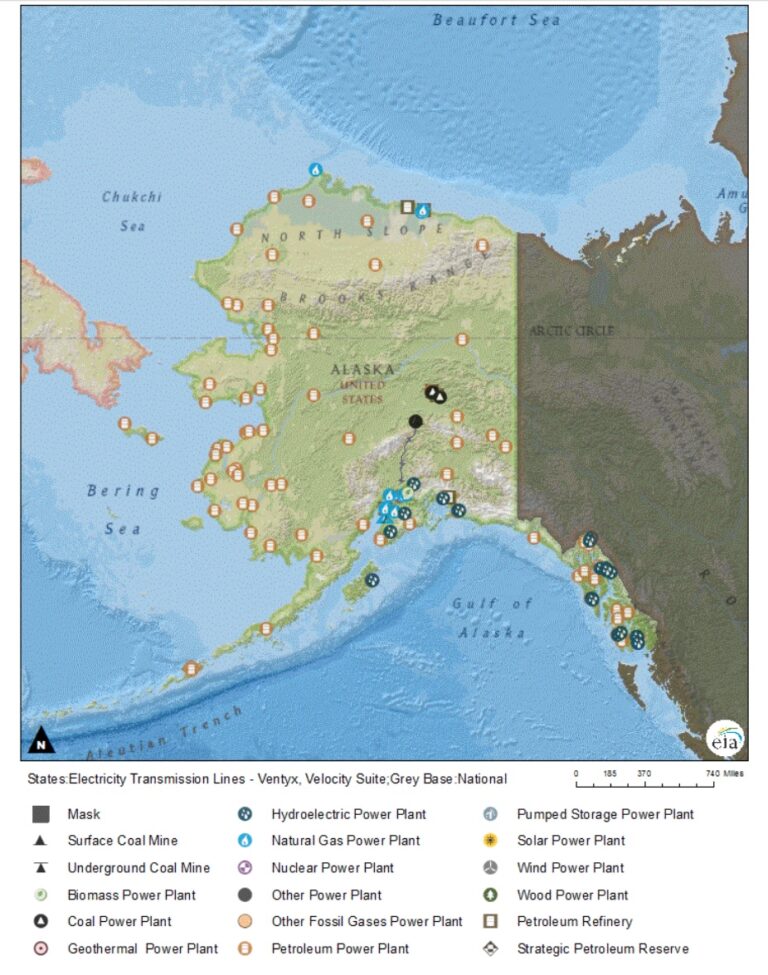
Given the ongoing discussion about renewables forced by the Alaska Center (for the Environment) and Renewable Energy Alaska Project (REAP), I thought it useful to explore or remind readers of previous energy proposals briefly considered and discarded on our way (however unwillingly) to a “net-zero” future.  

On the generation side, there are a pair of recent hydro proposals. One takes water from Lake Chakachamna across Cook Inlet.  The other is a dam across the Snow River above Kenai Lake. Either or both would provide constant, reliable, renewable, carbon free electricity to the Railbelt.

The proposal for power at Chakachamna is similar to that of Eklutna Power Station: Drill a tunnel that taps the main lake, pipe water 12 miles through the mountains, and use it to run a power station. TDX Power applied for a Federal Energy Regulatory Commission license in 2006. The proposed power station is 330 MW, about a third of total Railbelt generation needs today. The cost as of 2008 was $1.7 billion. This has been studied since at least 1983.  

A second hydro project was a 2017 proposal by Chugach Electric for a 75 MW series of dams across the Snow River above Kenai Lake.  The project was dropped in the face of public opposition by locals in Moose Pass and Cooper Landing.  

Note that the original reason for dams was flood control. The Snow River regularly floods as glacial lakes release. The most recent of these was 2023.  While these don’t impact Moose Pass, they certainly do at Cooper Landing, occasionally flooding parts of Primrose and Quartz Creek and boat docks on Kenai Lake and the upper Kenai River.  

Chugach, among others, took a close look at possible geothermal at Mount Spurr. Several exploratory wells drilled by Ormat Technologies between 2008 – 2015 found volcanic heat but did not find suitable geology to support geothermal generation. The company dropped its leases in 2015.  There has been renewed interest over the last couple of years.  

One of the things Southcentral Alaska has is coal, lots of coal. There have been multiple proposals to use that coal for energy production. ANGTL (Alaska Natural Gas To Liquids) pushed Fischer Tropsch (gas to liquids and coal to liquids) technology for many years.  The Mental Health Trust looked at leases for a coal mine upstream from Tyonek along the Chuitna River for a few years. PacRim Coal suspended all permitting for this project in 2017.  There was interest in coal bed methane in the MatSu around 2007.  Former MEA CEO Wayne Carmony proposed multiple coal plants in the MatSu in 2007, something that probably got him run out of the state.  

DoD has authorization and approval for a 5 MW GenIV reactor at Eielson.  If they can figure out how to legally award a contract, it might actually get built. 

Finally, we have the Big Dog in the discussion, the ever-popular Watana Dam, capable of powering all of the Railbelt for the next half century by itself.  

Why haven’t any of these come to pass? For some reason, we here in Alaska have gotten really good at the NIMBY (Not in My Backyard) and BANANA (Build Absolutely Nothing Anywhere Near Anything) game.  There is always environmental opposition, generally based on some perceived threat to fish populations.  Yet nobody is ever able to point out specific numbers of fish at risk, much less discuss any mitigation strategy.  But the arm waving and whining are heart rending and make for good media coverage.  

If we want to keep the lights on here in the Railbelt, at least considering some of the possibilities listed above should be the first item in the discussion.  I am fully aware that this is not going to be a fact-based, reasonable, rational discussion.  Rather, it is a persuasion based one, and persuasion needs to be the first tool used in any discussion, getting the attention of the inattentive.  

Environmental grift is well paying grift these days, with environmentalists making a very nice living opposing hydro, coal, natural gas, oil, nuclear and even geothermal, all in favor of the very most environmentally unfriendly, largest footprint, most expensive, least reliable solutions, Big Wind and Big Solar.  

Maybe someone ought to ask the Alaska Center (for the Environment) and REAP why that is so.  Perhaps like the Homelessness Industrial Complex, they are too busy banking their donations to explain.  

Alex Gimarc lives in Anchorage since retiring from the military in 1997. His interests include science and technology, environment, energy, economics, military affairs, fishing and disabilities policies. His weekly column “Interesting Items” is a summary of news stories with substantive Alaska-themed topics. He was a small business owner and Information Technology professional.

Scott Ogan: Groundhog Day, another good election bill stripped by a Democrat in committee

By SCOTT OGAN

You remember the movie “Groundhog Day,” where the main character wakes up to the same daily routine over and over. Welcome to Groundhog Day in Juneau.

Our Democrat-controlled Senate is once again killing popular election reform — this time by attempting to strip Rep. Sarah Vance’s election reform bill, House Bill 129, of its many popular provisions and to instead insert a kill-pill — same-day voter registration.   

This is called “bill stripping,” and is being performed on HB 129 by Sen. Scott Kawasaki, Democrat from Fairbanks and chairman of the Senate State Affairs Committee. 

Kawasaki did the same thing in 2022 to an election reform bill authored by Wasilla Republican Sen. Mike Shower, who intercepted his own Senate Bill 39 and said “no” to political manipulation of the public trust.

The vast majority of Alaskans do not believe same-day voter registration is necessary or even desirable in order to secure our basic freedoms and fair elections. In fact, most people believe such a provision encourages manipulation and fraud by any bad actor or party. 

The main advocates for same-day voter registration are those trying to undermine democracy. It’s more likely that any person not properly registered to vote on the day of an election in not civically engaged.  

There is nothing that makes our already weak election statutes more vulnerable to fraud than allowing anyone — legal citizen or not — to show up to the polls and register that same day to vote by signing a meaningless statement that they have lived in the district for 30 days, even without requiring a valid government ID or evidence of residency, then receive a ballot.

Grandstanding Democrats love to talk about ensuring everyone has the right to vote, and yet they fail to support reasonable safeguards against voting by those who do not have the right to vote. Nowhere is the undemocratic imposition of power over the will and interests of the people more present than in these last days of the legislative session.     

There is a valid public-interest reason Alaska statutes require a voter to be a 30-day resident of a district before they can vote and to register before the 30-day deadline.  It’s to disallow nefarious actors from suddenly showing up in districts where there are tight races and to claim to have moved there in the last 30 days so they can tip the scales in their candidate’s or party’s favor. With the weak provisions inserted into the latest version of the bill, there are no strong personal identification requirements and no language about it being a crime to misrepresent the date someone moved into a district.  

Kawasaki’s bill stripping makes it extremely easy to cheat. 

While Republicans favor tighter laws and rules securing our voting rights, Democrats seem to favor fewer rules, or rules that are easily bent or broken with no consequence. With Kawasaki’s stripping of Vance’s popular House bill, which passed 33-6 in the House, we see how sound, bi-partisan election law reform becomes self-serving — an effort to favor one party over another. In our Democat-led Senate, the ends justify any means necessary to win.  

This latest Groundhog Day version of election rigging is the Holy Grail for the Biden agenda to make Alaska poor again. 

I’m willing to bet that the complicit Republicans in the Democratic-controlled Senate will not even read the bill, let alone poll their constituents. Their priorities will be on power and money: getting money for their district and getting their pet bills passed.  It’s that point in the session where public trust gives way to the private trough. 

Biden’s no-border policy exists for a single reason: to flood our country with tens of millions of illegal aliens who will be steered to states with loose election laws — election laws like Sen. Kawasaki wants that allow same day registration with no proof of residency or citizenship.  

Kawasaki’s amendment is part of a nationwide agenda by Democrats to “stack the deck” in their favor to assure that their candidates get elected.  

Apparently, reason and public trust do not prevail with Sen. Kawasaki. Rep. Vance now has only one option: Kill her hard-earned election bill, like Sen. Shower had to do. And then, send a copy of the bill to every voter in Kawasaki’s district. 

Scott Ogan served as a legislator in the Alaska House and Senate and writes for Must Read Alaska.

Biden has been coordinating with pro-Arab, anti-Israel group to isolate Jews living in West Bank: Report

According to a new report from the Washington Free Beacon, the Biden Administration has been coordinating since as far back as early 2022 with an anti-Israel group called DAWN, with the purpose of isolating Jewish Israelis who live in the West Bank, an area that is home to more than 500,000 Israelis and 3 million Palestinians, with an additional 220,000 Israelis living in East Jerusalem, a place Palestinians claim as the capital of their state. Israel annexed East Jerusalem and controls it under Israeli law.

Internal government emails reveal the collusion between Arab World Now (DAWN) and both the State Department and Defense Department. The group has lobbied the Biden Administration to cut military aid to Israel. On Sunday, Axios reported that the Biden Administration has, indeed, cut off shipments of ammunition to Israel, the first time since the Oct. 7 attack by Hamas that the United States has halted a shipment for the Israeli military, which is fighting for the release of hostages by the terrorist organization Hamas.

Read the Washington Free Beacon report at this link.

Read the Axios report at this link.

“DAWN is leveraging its clout with the Biden administration to push fresh sanctions on Israeli military units for alleged human rights crimes, having provided the State Department with a list of Israelis to punish. DAWN’s anti-Israel lobbying campaign traces back to at least 2022, with the internal government emails shining new light on the level of access and influence it peddles inside the Biden administration,” the Free Beacon reported.

Hamas fighters killed four Israeli soldiers at a military checkpoint at Kerem Shalom crossing over the weekend. Israel has told Hamas to evacuate Rafah, a sign that a ground operation may be imminent.

“Hamas is aware that Israel has withdrawn from most of Gaza and that Hamas has achieved many of its war aims, basically getting an Israeli withdrawal from most areas and a kind of de facto ceasefire in some areas,” the Jerusalem Post reported Monday.

“However, Hamas regrouped quickly in northern Gaza in February and March. It also has regrouped in other areas. It has re-established some capabilities to fire rockets, often working with other terror groups in Gaza. This is not to say it has the extensive capabilities to manufacture long-range rockets and fire large barrages. However, it continued reference to the 114mm rocket, which is relatively short range, is a reference to a continued capability to position its munitions and projectiles around Gaza. It has also used these munitions to target the Netzarim corridor in central Gaza,” the Jerusalem Post reported. Netzarim is an Israeli settlement in the Gaza Strip about 3 miles southwest of Gaza City.

Although President Joe Biden signed an appropriation for $26 billion in military and humanitarian aid for Israel last week, he is now is balking at sending munitions.

Door plug blowback: Boeing to give Alaska Airlines $61 million in credits for future purchases

Alaska Airlines has received a promised additional $61 million in credits from Boeing, part of the compensation of the grounding of the Boeing 737 MAX-9s after one of the new aircraft lost a door plug on Alaska Airlines Flight 1282 in January, while in flight from Portland, Oregon to Ontario, California.

The credits are in addition to a cash payment of $162 million that Boeing made to Alaska Airlines in the first quarter of 2024.

The “supplier credit memos” were tucked into a regulatory filing last week. It gives Alaska Airlines $61 million in credits toward future purchases of Boeing aircraft. The $61 million in credit will not quite pay for half of the $128.9 million that a single 737 MAX 9 typically sells for.

Alaska voluntarily grounded all 65 of its MAX-9s after the incident, and the Federal Aviation Administration subsequently grounded the rest in service with other air carriers. The jets were out of service while safety checks were performed and missing bolts were put onto the door plugs, which are covers for doors that are not in use.

Alaska Airlines and Boeing are named in at least four lawsuits by passengers aboard Jan. 5’s Flight 1282. Both have told the court they are not responsible for the door plug blowout, which they say is the fault of Spirit AeroSystems, based in Wichita, Kansas, which builds the fuselages of the 737 MAX planes, andships them to Boeing’s factory in Renton, Washington.

Both Boeing and Alaska Airlines have had a rough first quarter of 2024 because of the incident, which brought into question the safety culture of Boeing. Alaska Airlines has a fleet made up of 230 Boeing 737 aircraft, with an average age of 10 years; and 85 Embraer 175 aircraft with an average age of 5.1 years.

Western Caucus, Voice of the Arctic, and Sen. Dan Sullivan celebrate ‘Alaska’s Right to Produce Act,’ but ignore vote-dodging Rep. Peltola

Rep. Mary Peltola may be a member of the Western Caucus, just like she’s a member of the Blue Dog Democrats, and the Women Democrats Caucus. It’s a club membership thing among like-minded lawmakers.

But when the Western Caucus heralded key legislation that passed the House to help Alaska’s energy-based economy, the “Alaska’s Right to Produce Act,” Peltola’s name was nowhere to be seen in the press release.

Peltola was also not mentioned by the Voice of the Arctic, which issued a press release expressing thanks to the House of Representatives for passing the Alaska’s Right to Produce Act.

“Quyanaqpak @RepPeteStauber and all those who voted today to support Indigenous self-determination on the North Slope by advancing HR 6285, or the ‘Alaska’s Right to Produce Act.’ The Senate must quickly take up and pass this bill,” said Voice of the Arctic on X/Twitter.

The Biden administration’s decisions are not aligned with the North Slope Iñupiat after it grossly mismanaged the public engagement process and cut local Indigenous elected officials out of policy discussions, said Voice of the Arctic.

“DOI Secretary Haaland herself has ignored or denied at least eight meeting requests by North Slope elected Indigenous leadership, including during her visit to Alaska in the fall of 2023,” the group said.

“Since the Biden administration announced this decision in September, our voices, which overwhelmingly reject the federal government’s decisions, have been consistently drowned out and ignored,” Voice of the Arctic Iñupiat President Nagruk Harcharek wrote. “This administration has not followed its well-documented promises to work with Indigenous people when crafting policies affecting their lands and people. We are grateful to Congress for exercising its legislative authority to correct the federal government’s hypocrisy and advance Iñupiaq self-determination in our ancestral homelands.”

The Western Caucus statement effusively praised Rep. DanNewhouse and Rep. Pete Stauber, as defenders of Alaska, ignoring Peltola, who had reversed her support of the bill at the last minute.

H.R. 6285, Alaska’s Right to Produce Act, overturns the Biden Administration’s anti-energy restrictions in Alaska’s National Petroleum Reserve in Alaska (NPR-A) and the Arctic National Wildlife Refuge (ANWR). The legislation, introduced by Rep. Stauber, passed by a bipartisan vote of 214 – 199 – 2,” the Western Caucus announced, without mentioning the only Alaska representative in Congress sat out the vote and just marked herself “present.”

Peltola, meanwhile, had instructed Democrats in Congress to vote “no” when the bill came up for a vote last week.

Alaska Sen. Dan Sullivan also thanked the House for passing the resolution, again without mentioning Peltola:

“I want to thank my House colleagues for passing Alaska’s Right to Produce Act, a bill to reverse the Biden administration’s lock-up of more than half of the National Petroleum Reserve-Alaska (NPR-A), and to undo the illegal decisions by the administration to cancel lawfully awarded leases in the non-wilderness Coastal Plain of the Arctic National Wildlife Refuge (ANWR). I want to give a special shout-out to my friend @RepPeteStauber, a fierce advocate for energy dominance and for the Alaska Native people on the North Slope, who overwhelmingly oppose the Biden administration’s lock-up of their lands and whose voices have been silenced and cancelled by this administration. I’ve sponsored an identical bill in the Senate, and am hoping that the passage in the House gives us momentum. Alaska has a right to produce our own energy for the sake of quality economic opportunities and good-paying jobs, and for the energy security of the entire nation.”

Sen. Lisa Murkowski, who has been in the Senate since 2002, stayed silent about the House passage of Alaska’s Right to Produce Act, which has a companion bill in the Senate that Sullivan and Murkowski introduced in November.

Under the Tax Cuts and Jobs Act, former President Donald Trump established an oil and gas leasing program in Arctic National Wildlife Refuge, in an area long ago set aside for oil and gas. The restricted energy development in the Coastal Plain of ANWR to 2,000 acres, and production could mean development of an estimated 10.4 billion barrels of oil.

On Sept. 6, 2023, the Biden Department of Interior announced plans to cancel all seven remaining oil and gas leases issued under the Trump administration in ANWR and at the same time locked up 13 million of acres within the National Petroleum Reserve-Alaska. Both actions were taken without notice to the Alaska Native communities most impacted by these decisions.

Read the full text of the bill here.

Murkowski last week introduced legislation last week. that would add millions of dollars to research menopause.

Bob Bird: Alaska’s judicial branch needs to be put back in its box

By BOB BIRD

Alaska is no different than the other states in one regard: We have constitutional dolts running our governments, on the state and federal level. They have not read their history, the Federalist Papers, the conditions on which the individual states accepted the U.S. Constitution, nor the plain texts of our own flawed Alaska Constitution, rendered (with important modifications) by a socialist think-tank from the University of Chicago. 

“The Constitution means whatever the Supreme Court says,” is how most congressional and state legislators think the system operates. It is absolute B.S., but the momentum of this theft has centuries of jurisprudence behind it. Thus, when legislative lawyers are asked if court interpretations should be obeyed, guess whose side they take? They have been drilled in law school that case law trumps all others, when the opposite is true.

In the latest crisis of the courts here in the 49th (there have been so many it would take five columns to list and explain them), we are told that correspondence courses cannot be reimbursed by the state. Why? Because a judge says so!

In the meantime, we are told that democracy is under threat from the conservative side of the spectrum, because the lamestream media says so. 

So … it must be true? All other voices have been suppressed and ignored, ridiculed and banished, despite the fact that in the last four years, time and time again “conspiracy theory” has turned into “conspiracy fact”. This is true from not just the Covid Hoax but also in Jan. 6, the stolen election of 2020 and the various shades of the colossal lie called the “climate crisis.”

All Gov. Mike Dunleavy needs to do is the following: “Empowered by the state constitution  with the enforcement powers granted to me, I will continue to permit the reimbursement of correspondence courses for students in this state, and recommend that impeachment articles be drawn up by the state senate for any and all judges who believe that they have enforcement powers.”

Even liberals have been known to say, “Our state constitution empowers our governor with immense authority, and is quite unique in this regard.” It may or may not be a good thing, but when there is likely a consensus from both sides of the aisle, for heaven’s sake, Mr. Dunleavy — use it! 

Here is the citation from Article III, Sec. 16:

He may, by appropriate court action or proceeding brought in the name of the State, enforce compliance with any constitutional or legislative mandate, or restrain violation of any constitutional or legislative power, duty, or right by any officer, department, or agency of the State or any of its political subdivisions. This authority shall not be construed to authorize any action or proceeding against the legislature.

With the phrase, “or proceeding brought in the name of the state,” he need not utilize the courts, who in this case are the guilty party. He needs to “enforce compliance with the state and legislative mandate” to reimburse correspondence courses. He needs to “restrain violation of any constitutional or legislative power by any officer, department, or agency of the state”, which in this case is the tyrannical judiciary.

And you will notice that there is only one exception — the legislative branch.

Not the judicial branch.

Wake up, citizens. We do not have “three co-equal branches of government” like you are always told. The judiciary branch is the bottom feeder, followed by the executive, with the legislative branch being supreme.

In the end, this may be the reason for the hesitancy of the executive and legislative branches — it will begin an unraveling of the corrupt judicial branch, and relegate them to the corner of the machinations of state government, hopefully with an enormous dunce cap.

But as the late Vic Fisher said, “Liberals will always control the judiciary,” and it is the judicial branch that has suppressed the grand juries, warped the privacy clause, and have wrapped our beleaguered state around their little fingers for so long, we are like Gulliver being tied down by Lilliputians.

Yes, all branches of government can make constitutional mistakes. For too long, however, we have viewed the judiciary as gurus and gods, and have surrendered our republic to their individual piques and political biases.

Here is the opportunity to end it.

Bob Bird is chair of the Alaskan Independence Party and the host of a talk show on KSRM radio, Kenai.

Trump hosts Rep. Byron Donalds, Vivek Ramaswamy at Mar-a-Lago, where Nick Begich was spotted

MAR-A-LAGO – On Saturday afternoon in the Grand Ballroom of the Mar-a-Lago Club in Palm Beach, more than 400 people gathered to hear former President Donald Trump, along with supporters Congressman Byron Donalds, Congressman Wesley Hunt, and entrepreneur Vivek Ramaswamy. The event raised $2 million for Trump’s presidential campaign.

Spotted at Mar-a-Lago on Saturday was Alaska congressional candidate Nick Begich, running against Rep. Mary Peltola, the Democrat who now represents Alaska. Begich endorsed Trump in the fall, far before the Iowa primary.

President Donald Trump speaks at Mar-a-Lago on Saturday.

Republican National Committee Co-Chair Lara Trump introduced Trump, who was greeted by an enthusiastic standing ovation as he strode to the stage. She presented Trump with a Billboard Music award for the No. 1 song “Justice for All.”
 
Trump spoke about the new RNC leadership and asked Chairman Michael Whatley and Co-Chair Lara Trump to join him on stage, where he talked about the America First Agenda and the newly invigorated RNC fundraising operation.

Begich is an “America First” candidate endorsed by Reps. Bryon Donalds of Florida and Scott Perry of Pennsylvania, as well as Ramaswamy.
 
Trump held forth without notes for approximately 90 minutes on a range of topics from the state of the presidential campaign, election integrity, the economy, the border, and the Biden protests at college campuses around the nation.
 
Trump cataloged Biden’s failures, including his weakness and dishonesty, and touched on the the weaponized, justice system, although not specifically about his current court case in Manhattan.
 
He highlighted poll after poll showing steady and consistent campaign trail dominance, and reminisced with the crowd about the Election Night in 2016 and the joy in proving the pundits and media wrong.
 
Trump brought featured speakers up on stage, including Rep. Jim Banks, Rep. Donalds, Rep. Hunt, and Rep. Michael Waltz. He also brought to the stage, Senators Marsha Blackburn, Mike Lee, Marco Rubio, Tim Scott. JD Vance, and Gov. Doug Burgum of North Dakota.
 
President Trump closed the event by thanking Republican leaders and donors, and raising an additional $2 million right from the podium at the event.

The event then turned into a birthday party for Dr. and Congressman Ronny Jackson of Texas, who was the White House physician in the Obama and Trump administrations. In March of 2018, Trump nominated him as secretary of Veterans Affairs, and later as chief medical advisor and assistant to the president.

Spoken token: House Bill 26 makes three dead languages into ‘official’ languages of the state

A bill by Democrat Rep. Andi Story of Juneau adds three more Native languages to the list of official languages of Alaska.

All three of them are dead languages.

House Bill 26, set for a third reading and vote on Monday in the Alaska Senate, would also change the name of the Alaska Native Language Preservation and Advisory Council to the shorter “Council for Alaska Native Languages.”

“This change would shorten the Council’s name while emphasizing the Council’s broader focus, which includes more than just language preservation, but involves language restoration. The statute establishing the Council, AS 44.33.520, states the purpose of the Council is to recommend ‘the establishment or reorganization of programs to support the preservation, restoration, and revitalization of Alaska Native languages.'”

The bill would also increase membership of the council from five to seven members.

The languages added to the list of official languages would be: Wetał (Ts’etsa’ut), Cup’ig, Benhti Kokhwt’ana Kenaga’ (Lower Tanana) and Sahcheeg xut’een xneege’ (Middle Tanana).

“This would change the total number of official languages in Alaska from 20 to 23,” the sponsor statement said. More correctly, there are 20 Alaska Native languages that are considered “official.” And then there is English, for a total of 21 official languages.

The state spends more than $13 million a year on the language preservation program, which is currently housed in the Alaska Department of Commerce at this link. The bill seeks to move the program to the Department of Education, however.

Of the new languages to be made official, the First Alaskans Institute Magazine says there are no fluent speakers of Wetal, there’s no data available on Cup’ig (originating from Nunivak Island, population 200), 1 fluent speaker of Benhti, and no fluent speakers of Sahcheeg. In reality, the last known speaker of Benhti died in 2019 at the age of 94.

The official languages of Alaska are English, Ahtna, Unangam Tunuu / Aleut, Alutiiq / Sugpiaq, Dena’ina, Deg Xinag, Eyak, Gwich’in, Haida, Han, Holikachuk, Inupiaq, Koyukon, Tanana, Tanacross, Tlingit, Tsimshian, Upper Kuskokwim, Upper Tanana, Central Alaskan Yup’ik and Siberian Yupik.

According to the 2022 report (in English) by the Alaska Native language council, a main goal of the group is to “decolonize” education in Alaska: “Recognize that Alaska Native people have a right to be educated in Alaska Native Languages, forge pathways to education through Alaska Native languages, & decolonize education throughout Alaska.” The council wants a standing committee in the Legislature dedicated to Alaska Native languages, and place Alaska Native languages “into the regular work of Alaska’s government.”

Read the 2022 Alaska Native Language Preservation and Advisory Council report and policy recommendations at this link.

Read the 2024 report here:

According to the Alaska Department of Commerce, Alaska Native languages and numbers of proficient speakers, as of 2020, are as follows:

INUIT-UNANGAN LANGUAGE FAMILY

Inupiatun (Inupiaq): Estimated <2,500 highly proficient speakers in Alaska
Yupigestun / Akuzipigestun (St. Lawrence Island Yupik): Estimated < 1,000 highly proficient speakers.
Yugtun/Cugtun (Central Alaskan Yup’ik / Cup’ik): Estimated <10,000 highly proficient speakers.
Cup’ig (Nunivak Island [Yupik]): Data unavailable
Unangam Tunuu (UnangaX Aleut): <80 highly proficient speakers
Sugt’stun / Alutiit’stun (Sugpiaq/Alutiiq [Yupik]): About ~80 highly proficient speakers

NA-DENE LANGUAGE FAMILY

Dena’inaq’ (Dena’ina): 5 highly proficient speakers.
Denaakk’e (Koyukon): Data unavailable
Holikachuk: 0 highly proficient speakers.
Deg Xinag: 2 highly proficient speakers
Dinak’i (Upper Kuskokwim): <5 highly proficient speakers—perhaps as few as one or none.
Benhti Kokhwt’ana Kenaga’ (Lower Tanana): 1 highly proficient speaker (referenced above as deceased)
Sahcheeg xut’een xneege’ (Middle Tanana): 0 highly proficient speakers.
Dinjii Zhuh K’yaa (Gwich’in): <250 highly proficient speakers
Hän: 2 highly proficient speakers in Alaska
Dihthaad Xt’een Iin Aandeeg’ (Tanacross): <10 highly proficient speakers?
Nee’aanèegn’ (Upper Tanana): ~7 highly proficient speakers; about 25 proficient second-language speakers in Alaska
Koht’aene kenaege’ (Ahtna): ~25 highly proficient speakers.
dAxhunhyuuga’ (Eyak): 0 highly proficient speakers.
Lingít (Tlingit): ~50 highly proficient, first-language speakers plus ~20 highly proficient second-language speakers.
Wetał (Ts’etsa’ut): 0 highly proficient speakers.

HAIDA LANGUAGE FAMILY

Xaad Kíl (Haida): 3 fluent speakers in Alaska plus perhaps 2 highly proficient second-language speakers

TSHIMSHIANIC

Sm’algyax: 4 highly proficient speakers in Alaska

In Alaska, there are more speakers of Russian, Spanish, and Tagalog than all of the Native languages combined: Spanish speakers total 23,629, or about 3.45% of the population. Tagalog (including Filipino) is spoken by around 18,273; there are also 4,097 speakers of Hmong, and 3,811 speakers of Russian.

The Native language council has a list of demands, which include:

Declaration of an annual Alaska Native Languages Day.
Reconfirmation of the Linguistic State of Emergency (A.O. 300) that was declared by campaigning-for-reelection Gov. Bill Walker in September of 2018, just before he lost re-election.
Funding for more ANLPAC positions, and for more council travel.
Establishing “Alaska Native Languages” as standing committees within the State House and State Senate.

Rep. Story represents the northern part of Juneau — Upper Mendenhall Valley, Haines, Klukwan, Gustavus, and Skagway. Cosponsors of the bill are almost all Democrats. They are: Representatives Alyse Galvin, Sara Hannan, Genevieve Mina, CJ McCormick, Maxine Dibert, Jennie Armstrong, Cliff Groh, Andy Josephson, Calvin Schrage, Andrew Gray, Zack Fields, Daniel Ortiz, Rebecca Himschoot, Bryce Edgmon, Will Stapp, Mike Cronk, Craig Johnson, and Donna Mears. Senate sponsors include Jesse Kiehl, Elvi Gray-Jackson, Forrest Dunbar, and Loki Tobin.

The fiscal note on the bill adds $10,000 to the state budget to cover the cost of two additional members that are being added to the language council as they travel for the council’s meetings.