Puget Sound Energy, the state’s largest utility provider, is facing a significant energy shortage by the end of the decade unless it finds more resources. One of its officials recently acknowledged the plan could initially include natural gas.
According to a recent presentation to the Northwest Power and Conservation Council, PSE’s Vice President for Clean Energy Strategy and Planning Josh Jacobs said that the utility could have a 2,700 megawatt capacity shortage by 2030.
Among the reasons for the energy shortage is a provision under the Clean Energy Transformation Act of 2019 prohibiting utilities from using electricity derived from coal-fire plants starting in 2025. According to Jacobs, it will represent a loss of 750 megawatts in electrical power moving forward that will need to be replaced with something else.
Coal is among several energy sources, such as natural gas, that has been the target of efforts to “decarbonize” the state’s energy sector. While natural gas could be kept around to aid the transition away from carbon-emitting electricity sources, new houses may not be able to use it for cooking and heating if an updated building code currently under legal challenge is upheld.
Jacobs told the council that resource adequacy is “certainly a theme within the walls of PSE.”
Overall, in just six years the utility will need to expand its current energy capacity by 6,700 megawatts to comply with CETA and meet demand, which Jacobs described as a “daunting challenge” because it “is more generation than we’ve invested in over the last 100 years.”
Although PSE could utilize energy sources that allow for four-hour storage, Jacobs said “we need to pair with something that’s longer.” While wind and solar energy has been added to PSE’s portfolio, relying on them to meet demand puts the system’s reliability at risk.
Potentially among more reliable resources is nuclear power. PSE is currently working on a feasibility study for a small modular nuclear reactor facility, while also working with Form Energy on a 10-megawatt iron-air long duration battery storage facility.
However, Jacobs warned the council that some of the technologies they’re investing in won’t go online by the time the energy demands arrive. To close the gap, he said they may need “hybrid-peaking resources that help us today but have a pathway to a sustainable future. We may need to look at resources that start on natural gas, or a percentage of natural gas, blend it with hydrogen, (and) backed it up with renewable diesel.”
Concerns about regional energy resource adequacy have been raised numerous times in the years following CETA’s passage in 2019. At a 2021 resource adequacy meeting between the State Department of Commerce and the Utilities and Transportation Commission, Benton County PUD General Manager Rick Dunn told them that the state faces an enormous energy gap that could threaten system stability in a way not seen since the 2000-2001 Western energy crisis.
An E3 study released the same year CETA was enacted warned that the entire Pacific Northwest faced a 7,000 megawatt near-term capacity shortage by 2025 and up to 10,000 megawatts by 2030, noting that “planned resource additions do not fill this gap.”
Jury selection is set to begin Monday in the first-ever criminal trial of a former U.S. president.
Former President Donald Trump has pleaded not guilty to 34 felony counts related to charges he paid hush money to adult film actress Stormy Daniels through a lawyer and covered it up as a legal expense before being elected president.
Trump has attempted to delay the start of the New York state trial several times, including three longshot tactics judges rejected this week.
What charges does Trump face in the New York hush money case?
Manhattan District Attorney Alvin Bragg has charged Trump with 34 counts of falsifying business records related to money paid to Daniels and another woman, former Playboy model Karen McDougal. Bragg has alleged Trump broke New York law when he falsified with the intent to commit or conceal another crime.
Prosecutors allege Trump falsified internal records kept by his company, hiding the true nature of payments that involve Daniels ($130,000), McDougal ($150,000), and Trump’s former personal lawyer Michael Cohen ($420,000). Prosecutors allege the money was logged as legal expenses, not reimbursements. Both Cohen and Daniels are expected to testify.
Cohen is expected to be a key witness in the trial. Daniels has said she expects to testify.
Former Manhattan District Attorney Cyrus Vance Jr., Bragg’s predecessor, did not bring the case to trial.
What happens on Monday?
Prosecutors, defense attorneys and Donald Trump are expected to be present when the trial before Judge Juan Merchan gets started Monday. The first step will be picking a jury, a process that could take a week or more depending on how things progress. The trial is expected to last six to eight weeks.
Prosecutors and defense attorneys will select 12 jurors and six alternates from a pool of potentially hundreds of people. Each juror will answer 42 questions designed to determine if they can be impartial in the high-profile trial of a polarizing former president. The jurors will remain anonymous because of security concerns.
Once a jury is seated, it’s on to opening statements, where prosecutors and defense attorneys will get to address the jury about what they plan to show during the trial.
What is Trump’s defense to the charges?
Trump has maintained he did nothing wrong and has accused Bragg of bringing a politically motivated case involving conduct in 2016 during a presidential election year as Trump faces incumbent President Joe Biden in a rematch of the 2020 election.
Trump has spoken out against the judge, the district attorney and others involved in the case repeatedly. Trump’s comments prompted a gag order from the judge who said Trump can’t talk publicly about certain people involved in the case and their families.
“The White House Thugs should not be allowed to have these dangerous and unfair Biden Trials during my campaign for President. All of them, civil and criminal, could have been brought more than three years ago. It is an illegal attack on a Political Opponent. It is Communism at its worst, and Election Interference at its Best. No such thing has ever happened in our Country before,” Trump wrote on his social media platform Truth Social this week. “On Monday I will be forced to sit, GAGGED, before a HIGHLY CONFLICTED & CORRUPT JUDGE, whose hatred for me has no bounds. All of these New York and D.C. ‘Judges’ and Prosecutors have the same MINDSET. Nobody but this Soros Prosecutor, Alvin Bragg, wanted to take this ridiculous case. All legal scholars say it is a sham. BIDEN’S DOJ IS RUNNING THE CASE. Just think of it, these animals want to put the former President of the United States (who got more votes than any sitting President!), & the PARTY’S REPUBLICAN CANDIDATE, IN JAIL, for doing absolutely nothing wrong. It is a RUSH TO THE FINISH. SO UNFAIR!”
Will Trump take the stand?
That’s not clear yet. Trump said last month that he’d be willing to testify at trial if needed.
Could Trump go to jail?
It’s too early to tell what will happen if Trump is convicted. Under New York state law, falsifying business records in the first degree is a Class E felony that carries a maximum sentence of four years in prison.
Trump’s age and lack of any prior criminal convictions could work in his favor at sentencing if he’s convicted. His attacks on the judge could have the opposite effect at sentencing. Before sentencing, the judge would look at sentencing guidelines, recommendations from prosecutors and any other pre-sentence reports.
In late March, Trump said that he wasn’t worried about a conviction when asked if he thought a conviction could hurt his chances of returning to the White House.
“It could also make me more popular because the people know it’s a scam,” he said. “It’s a Biden trial, there is no trial, there’s a Biden trial.”
Whatever happens during the trial, Trump will be protected by the U.S. Secret Service.
Even if convicted and sentenced to jail, Trump could continue his campaign to re-take the White House.
“The Constitution does not bar felons from serving as President,” said Richard Hasen, professor of law and political science at the University of California, Los Angeles.
Trump could not pardon himself from any state charges, Hasen said.
Years ago, the late President Ronald Reagan famously said, “The nine most terrifying words in the English language are, ‘I’m from the government and I’m here to help.’”
Those words ring true when we look at the government’s past Covid response and its continued response.
Glenn H. Reynolds authored an article for the New York Post where he acknowledged he had been a covidian at the beginning of this pandemic and now realizes he made a mistake. (For context, Reynolds is a distinguished professor of law at the University of Tennessee).
Reynolds stated the initial death rates announced in the news were in a range of 4% to 10% which was the reason for his concern.
But then he learned the mortality rate was much lower and deaths were mostly seen in those who were obese, had heart failure or diabetes, or were elderly — or had a combination of these conditions. He added these deaths were probably accentuated by the over-aggressive use of ventilators.
Reynolds also realized that neither the lockdowns nor maskings did any good—although “they caused a lot of trauma, inconvenience and colossal economic destruction”.
He also cited how New York Gov. Mario Cuomo moved contagious people back into nursing homes where there were a lot of vulnerable people. Reynolds’ conclusion was how the government responded to Covid was probably worse than the disease itself.
The public health bureaucrats didn’t consider that all their draconian actions would cause a horrible effect on society, jobs, education, and mental health, to name a few. Their only focus was to “stop the spread” —not that anything they did really accomplished that. Four years later Covid is still alive and well; and the government is continuing to peddle the same old solutions that didn’t work the last time around.
And they wonder why we don’t trust them.
Four years later the damage is remarkable and the people responsible for that damage haven’t been held accountable. To make it worse, many of them flouted the rules they forced on us by going to dinner parties, fund raisers, ignoring social distancing and those dang mask mandates that were good for the peons, but somehow not needed for the elite unless being used for virtue signaling.
Scott W. Atlas, Steve H. Hanke, Philip G. Kerpen, and Casey B. Mulligan published a four-year post Covid retrospectivereview. These researchers wrote this report “from a balanced perspective that includes health, economic, educational, and civil liberty considerations.”
Perhaps you remember Dr. Atlas. He had been an advisor to then-President Donald Trump and was on the White House Coronavirus Task Force. Drs. Anthony Fauci and Deborah Birx did not agree with him and said he was passing out “dangerous” misinformation. They said they could not work with him.
Dr. Atlas was against lockdowns, questioned mask wearing, and pushed for kids to be able to return to school. He resigned from his position. In retrospect, looks like he might have been right. At the time his thoughts were considered heresy.
The 10 key lessons Atlas and others came up with look very similar to other lists we have recently seen. They are as follows:
Lesson #1: Leaders Should Calm Public Fears, Not Stoke Them. This should be number one as all others that followed were based purely on this idea of making people afraid. Sadly, what would have been more helpful would be to calm fears and allow normal social functioning as much as possible.
Lesson #2: Lockdowns Do Not Work to Substantially Reduce Deathor to Stop Viral Circulation. There are non-covid excess deaths caused by these lockdowns and panic of about 100,000 per year in the United States—with zero seen in the non-lockdown country of Sweden.
In a peer-reviewed literature review concerning lockdowns by Herby, Jonung, and Hanke, they found “lockdowns in the spring of 2020 had a negligible effect on COVID-19 mortality.” Social distancing, however, may have helped.
So, it would seem a better strategy would have been to tell us the truth, let us know about the real risks and allow us to make our own decision. That was not an option.
Lesson #3: Lockdowns and Social Isolation Had Negative Consequences that Far Outweighed Benefits. According to the World Bank, “Mobility restrictions, lockdowns, and other public health measures…produced the largest global economic crisis in more than a century.” Besides all the ones previously identified, the impact on employment was huge. Over 49 million Americans were put out of work with two million still out of work in July 2022 according to Bureau of Labor Statistics survey data.
The National Bureau of Economic Research looked at the long-term impact of Covid on unemployment and its effects on life expectancy and mortality rates.
Covid effects were two to five times higher than other unemployment episodes—and will lead to “8 million additional deaths over the next fifteen years”. They believe the effect will be higher in women and in Afro-Americans.
Lesson #4: Government Should Not Pay People More Not to Work. Once it forced people out of work and created a crisis, Congress decided to give $600 per week unemployment bonuses early in the pandemic, even though they were warned the consequence of that decision would lead to “prolonged unemployment and associated economic underperformance.”
Once that bonus ended, unemployment rates plunged.
Lesson #5: Shutting Down Schools Was a Major Policy Mistake WithTragic Effects on Children, Especially the Poor. It was known as early as spring/summer of 2020 we should have left schools open. Children weren’t that affected by Covid and didn’t seem to be spreading it. “But teacher unions pressured authorities to close schools.”
No one can argue the negative effect this had on our children in school districts that succumbed to the teacher unions’ demands. No in-person learning led to a serious decrease in children’s test scores, kids dropping out of school, drug abuse, mental illness, suicide thoughts and unfortunately “300,000 cases of child abuse unreported in spring 2020.” The greatest harm was done to lower income and minority students.
Lesson #6: Masks Were of Little or No Value and Possibly Harmful. No high-quality information existed in the spring of 2020 to support masking. Randomized trials of masking for the flu showed masks were ineffective for protecting you and stopping the spread. Rather than doing studies to determine the effectiveness of masking, the government overstated the benefits even when data to the contrary was produced. The mindset that you need to mask still exists today and is already starting to make its rounds again.
Lesson #7: Government Should Not Suppress Dissent or Police the Boundaries of Science. Boy is this a big one! No dissent was allowed. No difference of opinion was tolerated. There was a horrible interplay among the MSM, Big Tech, so-called trust the science and public health community. There was censorship on opposing ideas at every level of society. This was totally anti-science.
Anthony Fauci, Director of National Institute of Allergy and Infectious Diseases made it impossible to get a different message out other than the one “they” had agreed to. And to make it worse, they failed to “run high-quality trials of repurposed drugs and non-pharmaceutical interventions.” This would include repurposed drugs such as Ivermectin and Hydroxychloroquine.
Lesson #8: The Real Hospital Story Was Underutilization. What the authors meant by this is with very few exceptions medical procedures during this time frame were canceled and people canceled potentially lifesaving medical care out of fear of going to the hospital. This was viewed by the authors as a probably significant contributor to non-COVID excessive deaths in the US.
Lesson #9: Protect the Most Vulnerable. The main goal should have been to protect the most vulnerable instead of a broad brush that included the entire population. This could have led to prioritization of limited resources. And I believe there would have been much less fear in the general population.
Lesson #10: Warp Speed: Deregulate But Don’t Mandate. Yes, we developed multiple monoclonal antibody treatments and vaccines in record time, but there were multiple failures. The government only had one solution and NIH failed to look at randomized trials of low-cost repurposed drugs. Then the government got involved in deciding who would get the monoclonal antibodies and that “created chronic shortages and politicized distribution decisions”.
Nor was the safety of the new vaccines thoroughly evaluated–with an overstatement of the benefits being the driving force for deployment. We had an all-out “vax everyone” campaign including mandates that undermined informed consent.
Conclusion: Limit Government Emergency Powers and Earn Back Public Trust. Many possible solutions were suggested by the authors that included action from Congress concerning future pandemics. However, the bottom line was this: “Unless and until key institutions openly acknowledge that lockdowns, school closures, and mask/vaccine mandates were catastrophic errors that will not be repeated in the future, the American people will – and should – withhold their trust.”
I’m not sensing that’s the direction our government is taking now or in the future. Nor do I trust it to do so. Trust must be earned. And for me, it’s not happening any time soon.
Linda Boyle, RN, MSN, DM, was formerly the chief nurse for the 3rd Medical Group, JBER, and was the interim director of the Alaska VA. Most recently, she served as Director for Central Alabama VA Healthcare System. She is the director of the Alaska Covid Alliance.
President Donald Trump’s trust in Former State Sen. Jerry Ward to oversee his campaigns in both 2016 and 2020 underscores Ward’s extensive experience and unwavering dedication to public service.
Jerry is asking for your vote to become chairman of the Alaskan Republican Party. Ward’s journey from his service in the Seabees in combat in Vietnam to his successful ventures in the real estate sector showcases his profound commitment to leadership and conservative values.
Ward’s common-sense approach supports Republican principles. Elected to the Alaska House of Representatives in 1982, he diligently represented the party’s interests, eventually securing victories in elections to the Alaska State Senate in 1996 and 2000. Throughout his tenure, Ward has strived to represent all Alaskans in his governance and policy making, demonstrating his prowess in both areas.
Ward’s involvement in community organizations like the Veterans of Foreign Wars and the American Legion underscores his commitment to veterans and their families.
Ward intends to implement rules within the Republican Party that enhance the transparency and communication to rank-and-file Republicans within the Alaska Republican Party. Communication will engage younger voters and underrepresented communities to embrace the values of the Republican party. Additionally, Jerry Ward highlights the need to address concerns about party leadership and its alignment with the values of its members.
Looking ahead, Ward sets four main objectives for his tenure as chairman of the Alaska Republican Party:
1. He aims to continue supporting President Trump’s reelection efforts in Alaska.
2. He pledges to repeal Ranked Choice Voting, ensuring its defeat in 2024.
3. Ward intends to strengthen the party’s fundraising and networking capabilities by collaborating with national partners, laying the foundation for future generations of Alaskan Republicans.
4. He is committed to putting a Republican in our Congressional seat on November 5th.
Jerry Ward’s leadership embodies a promise of a brighter tomorrow for Alaska. With his wealth of experience, resolute determination, and commitment to conservative values, Ward stands ready to steer the Republican Party towards a future where freedom and representation flourish once more.
The Alaska House voted against allowing voters the right to establish in the Alaska Constitution a requirement that legislators and the governor follow a set formula — any legal formula in statute — when establishing each year’s Permanent Fund dividend amount.
The Legislature could change the formula in statute, according to House Joint Resolution 7, but would have to then follow the law or change the law again. The key in the resolution is that the Legislature must follow the laws it writes.
Although the majority of mainly Republicans voted in favor of the resolution, it required a two-thirds vote of the House and Senate in order to go before voters. It only had 22 votes in the House, with 18 voting against it, including House Minority Leader Rep. Cal Schrage of Anchorage, who was on the Fiscal Policy Working Group that last year recommended a constitutionally sound Permanent Fund dividend.
“The FPWG unanimously recommends restructuring the Permanent Fund to be a single, constitutionally-protected account with draws limited by the percent of the Permanent Fund’s market value (POMV). Consistent with current year rolling average to calculate the POMV,” the working group wrote in its final report, which was then supported by Schrage.
Since 2016, when Gov. Bill Walker broke the trust with Alaskans and vetoed half of their annual dividend, the Legislature has essentially determined each year how little they can get away with as a dividend amount. On election years, the amount seems to go up.
Rep. Ben Carpenter and Rep. Kevin McCabe were also part of the Fiscal Policy Working Group. They voted in favor of House Joint Resolution 7, which was sponsored by Carpenter, a Republican from Nikiski.
Without constitutional protection, the Legislature is caught every year arguing vehemently over the amount the dividend will be. The matter eclipses all other topics in the Legislature and dominates each legislative session and with this vote, it appears the fight over the dividend will continue to dominate every year going forward, a gift from Gov. Walker that keeps on giving.
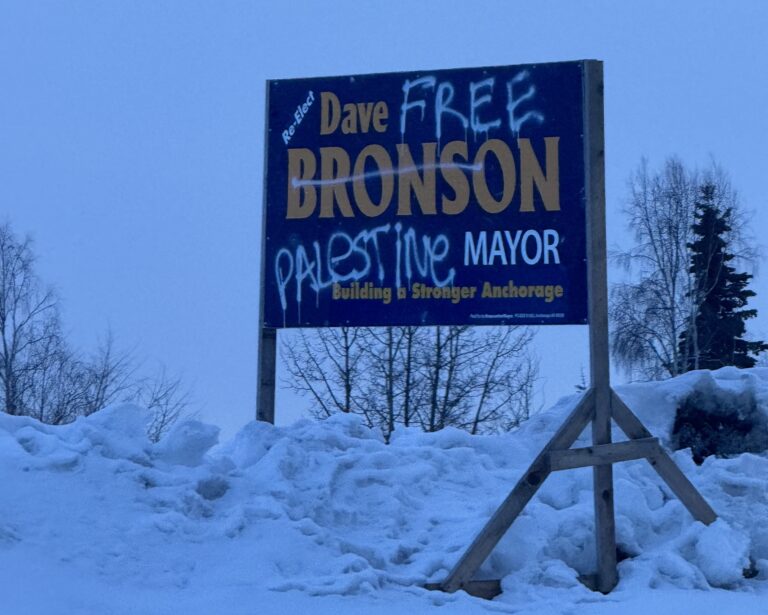
Former Assembly Chair Suzanne LaFrance is in a runoff with Mayor Dave Bronson. This is the Assembly’s second attempt to defeat Bronson. They were unsuccessful the last time around with Forrest Dunbar. It’s our job to ensure they are unsuccessful this time around too.
LaFrance has been carpet bombing local media with ads. She talks a good game but makes claims just as specious as Forest did three years ago. The difference is that she sounds almost reasonable, almost rational, something Forest couldn’t pull off.
The problem is her backers. If you take a look at her campaign web site, toward the bottom of the page is a list of 17 organizations under the “Proudly endorsed by” heading. 15 of them are unions, including one umbrella union located in Seattle (why is Seattle interested in Anchorage Muni elections?). The other two endorsements are Planned Parenthood and the Alaska Center (for the Environment).
LaFrance claims that she will be bringing people together to solve problems. Yet, her union backers, the same list of malcontents that installed the current Assembly majority, demanded, and supported the Assembly as they go scorched earth on all things Bronson over the last three years.
As Assembly Chair, she obstructed their testimony, used Covid as an excuse to shut down testimony, diddled the meeting schedule to actively ensure the Assembly heard no dissenting voice.
To LaFrance, the Assembly, and their leash holders among the unions, Planned Parenthood and the Alaska Center, bringing people together means agree with me and we will get along. Anything else, and you are roadkill.
LaFrance carps incessantly about crony contracts to the Mayor’s friends. Apparently, any contract that doesn’t go to anything other than a union in this town is a crony contract. Elect LaFrance and it will be a cold day in a very hot place before any contract is let for any other criteria than how much it will benefit a union.
I get it. When her cronies on the Assembly put Muni taxpayers on the hook for a possible lawsuit over Bronson’s objections, override his veto, and it is his fault. Nice game, that.
She is attempting to reprise Jane Byrne’s 1979 rise to Chicago Mayor following a disastrous failure to remove snow in Chicago by the incumbent. From here, with two record snow years (Dec 2022 and the winter of 2023 -2024), Bronson has done pretty good. Reaction to the initial large snowfall was a bit slow in both years, like it is every single winter. Once they got through it, snow removal was about normal, even pretty good given the amount on the ground. The Muni even came up with some innovation in clearing snow piled on the sides of the streets, something never done before. Why did this happen under Bronson? Unions don’t innovate. Conservatives do.
Finally, we have her faux concern with the “expensive homelessness crisis,” a crisis that has five solid years of her fingerprints all over it. Not only does LaFrance give fellow Assembly member Meg Zaletel, a woman whose six-figure paycheck depends on growing the problem, a pass from conflict-of-interest complaints, but she has been completely silent when the Assembly refuses to abide by agreements made with Mayor Bronson. The Navigation Center is the latest of several bait and switch deals by the Assembly. Somehow, bad faith negotiations and failure to abide by agreements by the Assembly are Bronson’s fault. LaFrance’s response? Crickets.
Elect LaFrance and we will get more of what we saw on the Assembly when she was Chair. We will get a woman with a remarkably thin skin who responds poorly to criticism, any criticism. We will get Chris Constant’s mini-me routine, with LaFrance as someone who will rubber stamp and bury whatever foolishness the Assembly decides to do next (removal of the Eklutna dam is in the on-deck circle). And we will get a Muni government owned, operated and controlled by the unions and the political left. The government will only listen to their concerns and needs, ignoring everyone and everything else. So much for bringing people together.
If you think Ethan Berkowitz’ time as mayor was a disaster, elect LaFrance and you ain’t seen nothing yet. Be warned.
Alex Gimarc lives in Anchorage since retiring from the military in 1997. His interests include science and technology, environment, energy, economics, military affairs, fishing and disabilities policies. His weekly column “Interesting Items” is a summary of news stories with substantive Alaska-themed topics. He was a small business owner and Information Technology professional.
The 23 million-acre petroleum reserve on the North Slope was set aside as an emergency oil supply, originally for the U.S. Navy, by President Warren Harding.
In 1976, in accordance with the Naval Petroleum Reserves Production Act, administration of the reserve was transferred to the Department of the Interior’s Bureau of Land Management (BLM) and renamed the NPR-A.
President Joe Biden is on the verge of locking down half of it, making it unavailable for oil and gas development. He intends to do so with a new rule that is proposed by the Biden Administration through the Bureau of Land Management, a division of the Department of Interior. The pubic comment period has ended, and the rule will be finalized soon.
Rep. Mary Peltola endorses Biden’s reelection and has had no apparent willingness or ability to reverse the impending economic damage to Alaska.
“The initiative, set to be finalized within days, marks one of the most sweeping efforts yet by Biden to limit oil and gas exploration on federal lands. It comes as he seeks to boost land conservation and fight climate change — and is campaigning for a second term on promises to do more of it,” Bloomberg reported.
While the Willow project would not be affected, this new rule appears to be more extensive than originally proposed by the Biden Administration. It threatens to make it nearly impossible to economically develop another Willow-sized project.
“That’s spooking oil companies with holdings in the National Petroleum Reserve, which — along with the rest of Alaska’s North Slope — was viewed as a major growth engine for the industry before the shale boom. Interest has surged again in recent years, fed by mammoth discoveries. Tapping the region’s reservoirs could yield decades of production,” Bloomberg reported.
“Company executives and Alaska lawmakers have increasingly raised alarm over the plan, saying it could thwart oil and gas development across much of the reserve, even on existing leases. The opposition has united a broad spectrum of foes, from Alaska Natives to lower-48 oil producers,” the news agency said.
The opposition includes Santos, which has leases on more than one million acres in the NPR-A and is developing the Pikka Unit as a joint venture with Repsol. Santos said in a letter to the Bureau of Land Management that the rule is going to mean entire projects being denied.
“ConocoPhillips, which has 156 leases in the reserve, warned the regulation would violate its contracts and “drive investment away from the NPR-A.” And Armstrong Oil & Gas Inc., whose leases there span 1.1 million gross acres, said the measure could block it from building the infrastructure needed to access those tracts,” Bloomberg said.
The new regulation would limit future oil development in some 13 million acres (20,000 square miles) of designated “special areas,” including territory currently under lease. Some 10.6 million acres would be completely locked down.
But wait, there’s more: “The proposal would create a formal program for expanding protected areas at least once every five years — while making it difficult to undo those designations. And it would raise the bar for future development elsewhere in the reserve,” Bloomberg reported in a story that is behind its paywall.
The long-postponed and necessary closure and consolidation of Juneau schools had to happen. There is no question given the huge deficit faced by the Juneau School District and the district’s long, slow steady decline in enrollment that significant change was unavoidable and likely long overdue.
The educational needs of our students required immediate action. Fortunately, five current members of the JSD School Board took action to reduce the number of underutilized school buildings in our community. These board members acted to enhance the quality of education for our student population, and they based that action on demographic and financial reality.
It should be obvious to anyone paying attention to this situation that previous school boards and upper-level Juneau School District leadership ignored the reality of declining enrollment for years.
The recent consolidation process was comprehensive and transparent and afforded the public, teachers, students, and parents abundant opportunities for participation in contemplating and planning for the necessary changes.
Now, a rump group of disaffected citizens has launched an effort to recall two school board members. This effort to recall select members of our current school board is misplaced.
The right to petition our government is fundamental and protected in our state’s constitution. This fundamental right includes the ability to recall school board members. But the passionate sentiments harbored by this small group of disgruntled citizens seeking to use their right to initiate a recall does not make the effort a good idea. Those agitating for the recall are reacting to an outcome that was carefully deliberated and, in many ways, inevitable.
The last thing our community needs now is a divisive recall campaign that ignores reality and is driven by emotion. Nor can we afford to spend taxpayer money on a special recall election.
The current recall effort is also freighted with irony. The targeted members are the two individuals who obviously demonstrated leadership by acting diligently, thoughtfully, responsibly and promptly to address a situation they inherited.
If a recall was ever justified about consolidating school, it should have been conducted years ago and aimed at former school board members who bungled budget issues and ignored obvious student enrollment declines. It is also obvious that the previous Juneau School District Superintendent was not up to the task of effectively managing the educational needs of our students or the fiscal concerns of our taxpayers. It is also apparent that mistakes were made by previous school board members that put sound educational instruction in jeopardy.
Brian Holst retired from the School Board in October 2023 after nine years on the Board, including five as School Board President. Holst led the Board in 2017 when a comprehensive Juneau School District facility master plan was delivered to the City and Borough of Juneau and the Juneau School District Board in June 2017.
This plan noted the continuing enrollment slump and presented building reconfiguration scenarios, including potential closure of one middle school and one high school, which were obvious and necessary long ago but finally enacted this spring. Holst and the members of school board ignored this comprehensive plan in 2017, essentially kicking the proverbial can down the road for the current Juneau School District Board when the issue had turned into a crisis.
Sensible citizens should ask themselves why did it take seven years for these serious enrollment issues to be brought to the public’s attention? It wasn’t based on the omissions and mishandling by the two individuals now facing a recall for acting to finally fix old problems.
The obvious mistakes made by previous school boards and senior staff in our school district are in the past. The current school board responsibly assumed the challenging task of making necessary adjustments to alleviate the significant problems facing our school system. The current superintendent has acted thoughtfully and diligently to promote educational learning for all our students in a manner that Juneau can afford.
The last thing Juneau needs now is a bitter and divisive fight seeking to recall school board members who are doing a decent job under very difficult circumstances.
If you care about providing a sound education for Juneau’s students and managing the Juneau School District based on reality instead of fantasy and magical thinking, please pass on signing a petition trying to recall members of the current school board.
Joe Geldhof a resident of West Juneau. He sometimes conducts legal work for a variety of individuals and organizations in Juneau and other communities. The thoughts he expresses reflect his belief that public schools are essential to a sustainable democracy.
A former Anchorage Police Department officer was convicted of 24 criminal counts on Thursday for his participation in a scheme to defraud a corporation of millions of dollars.
According to court documents and evidence presented at trial, Nathan Michael Keays, 44, was friends with a ConocoPhillips employee, Forrest Wright, 44.
The two conspired to use Keays’s side business, which was Eco Edge Armoring LLC, to defraud ConocoPhillips by approving contracts for goods and services that were never provided. Over the course of the scheme, Keays and Wright obtained more than $3 million from fraudulent bills for foam insulation. Wright had pleaded guilty in 2021 and is scheduled to be sentenced in May.
The scheme started in 2019 when Wright was a senior drilling and wells planner with ConocoPhillips, with responsibility for ordering materials and labor for drilling and wells projects. Wright had the authority to approve material and labor orders for up to $1 million and was trusted to recommend vendors for supplies.
Keays conspired with Wright to craft fraudulent emails and alter the Eco Edge Armoring LLC website to present the company as a major oil and gas services enterprise, when in fact, it had no employees and no ability to provide goods or services in the oil industry.
Wright sent emails from his personal account to Keays’s personal account with instructions to send technical emails to Wright’s business account to establish Eco Edge Armoring LLC as an approved vendor. Wright would then forward these emails to other personnel within ConocoPhillips to ensure Keays’s company was approved as a frequently used vendor.
After achieving the approved vendor status, Keays submitted fraudulent invoices totaling over $3.2 million for materials that did not exist and labor that was never performed.
Keays also submitted fraudulent timesheets in the name of nonexistent employees to make it appear that work had actually been performed. Wright used his position in the company to direct personnel to approve the payment of invoices by falsely representing that the nonexistent materials were delivered and accounted for and that the work outlined in the invoices was performed.
Keays received $3,087,720 in electronic payments from ConocoPhillips for the fraudulent material and labor through a bank account for Eco Edge Armoring LLC and split the proceeds with Wright by issuing checks to Spectrum Consulting, a shell entity created by Wright.
In total, Keays personally received more than $1.4 million. Keays used his proceeds of the scheme for personal expenses, including paying off loans, purchasing real estate and buying cryptocurrency.
Keays was convicted of one count of conspiracy to commit wire fraud, 11 counts of wire fraud, one count of conspiracy to commit money laundering and 11 counts of money laundering.
“This successful conviction represents closure in a complex white-collar crime case and demonstrates that no one is above the law,” said U.S. Attorney S. Lane Tucker for the District of Alaska. “To anyone thinking of committing a financial crime, know that my office, in collaboration with our law enforcement partners across the state, will work vigorously to find you and prosecute you to the furthest extent of the law.”