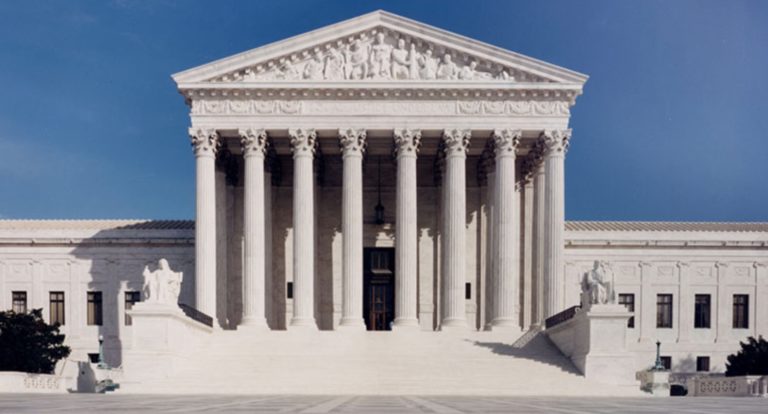
Is this the year when women will be required to sign up for the Selective Service?
Since its creation by Congress in 1917, the United States Selective Service has registered all men ages 18 through 25. But the National Defense Authorization Act that has passed from the Senate Armed Services Committee and is heading to the Senate floor, has what has become a perennial proposal: Adding women to the draft list requirement.
The NDAA authorizes funding levels and provides authorities for the U.S. military and other critical defense priorities. On June 13, the Senate Armed Services Committee voted 22-3 to advance the NDAA for Fiscal Year 2025, a proposal that would award $923.3 billion in taxpayer funds (and national borrowing from countries like Japan and China) for the nation’s defense. The legislation authorizes $878.4 billion for the Department of Defense and $33.4 billion for national security programs within the Department of Energy.
The Pentagon has not drafted anyone since the Vietnam War and there is no current movement to create a draft; the current armed forces for the country is made up of volunteered service members. Repeatedly in past years, attempts have been made to add women to the draft, as recently as in 2022. It’s been championed by Sen. Jack Reed of Rhode Island, a Democrat who is a graduate of West Point.
In 2017, Congress created a commission to study the matter of adding women to the draft. The commission’s final report, required by the 2017 National Defense Authorization Act, recommended that women be drafted.
“This is a necessary and fair step, making it possible to draw on the talent of a unified Nation in a time of national emergency,” the 11 commissioners wrote in their final report.
The effort has failed in previous years’ versions of the NDAA, but this year, it looks like it may pass.
Although the amendment to sign women up for the draft was offered by Sen. Reed, he ended up voting against the bill because of an amendment to increase overall spending, which was offered by Sen. Roger Wicker, the committee’s top Republican. Sens. Elizabeth Warren, a Massachusetts Democrat, and Tom Cotton, a Republican from Arkansas, also voted against the spending bill.
Read the Selective Service history of legislation, lawsuits, and debate over women and the draft at this link.
The Senate version of the NDAA comes at the same time the House passed its $883.7 billion version of the bill, which has a number of Republican items contained in it, including an amendment that prohibits funds for executive orders on climate change, and defunding the Defense Department’s chief diversity office; eliminating the diversity, equity and inclusion-related offices inside the military; and instituting a hiring freeze on all jobs related to diversity, equity and inclusion.
The House version also has an amendment that bans drag shows and other drag-related events on military bases.
Haines Republican Bill Thomas announced on Friday that he is dropping from the House District 3 legislative race, leaving Democrat Rep. Andi Story of Juneau with an easy walk to victory with no opponent this year. All three Juneau candidates, including Democrats Sen. Jesse Kiehl and Rep. Sara Hannan, are now unopposed.
Thomas, now in his late 70s, is a former representative who served in the House from 2005 to 2013. He told friends and supporters that he just doesn’t have the time to campaign and also commercially fish this season.
His withdrawal has not yet been made official at the Alaska Public Offices Commission. The Division of Elections’ last day for candidates to withdraw from the Aug. 20 primary is June 29.
Across America, U.S. taxpayers are footing the bill for painted rainbows on streets, and rainbow adorned literature and social media posts about LBGTQIA+ awareness during June, which by President Joe Biden’s order, is Pride Month: It’s a time to celebrate and broadcast that you have sex with someone or something other than the opposite sex human.
In the news from around the nation this month are items about kids and adults being arrested for having left skid marks on the rainbow flag crosswalks that are found on streets from places like Key West, Fla. to Juneau, Alaska. Skid markers are considered vandals of the government’s art project.
?#BREAKING: Police are actively investigating after someone driving a red pickup truck was doing burnouts and left tire marks on pride mural after it was installed three days ago ⁰⁰?#Huntington | #Westvirginia ⁰Currently, Law enforcement is currently investigating an… pic.twitter.com/kuBSLWeIY4
Now NASA is getting in on the rainbow flag action. In a social media post, it designed a “Pride flag” with the various colors that are now used to represent sexual preferences that are all and anything but heterosexual.
For the colors of its art project, NASA picked hues it has in its library from satellite images around the world and space. NASA went the extra step of adjusting the settings on its X/Twitter post so that the public is prohibited from commenting back to the government about its art project, for which the public is paying.
Screenshot
The cost to the public of the NASA Pride Month flag is minuscule, considering the $22 billion budget NASA has, but symbolic of the thousands of ways government grows into whatever container it is allowed to fill, no matter how far off-mission it may be.
A federal grand jury in Alaska returned an indictment charging an Anchorage man with allegedly making a false bomb threat at a federal building.
According to the Justice Department, on June 11, James Pearce, 40, falsely stated that he had placed explosive devices at the James Fitzgerald Federal Building and U.S. Courthouse and at six other locations around Anchorage.
“Pearce allegedly made these statements under circumstances where it may reasonably have been believed that the activity actually took place. He also allegedly made references to the terrorist groups Al-Qaeda and ISIS and the bombing of the federal building in Oklahoma City,” said the Justice Department in a statement that came from the Anchorage office.
Pearce was arrested on-site, and the building was evacuated. He is charged with one count of a bomb hoax at a federal building, in violation of 18 U.S.C. §1038(a)(1).
Pearce will appear before a U.S. magistrate at a later date and if convicted, faces a maximum penalty of five years in prison and a $250,000 fine. A federal district court judge will determine any sentence after considering the U.S. Sentencing Guidelines and other statutory factors.
The FBI Anchorage Field Office, Bureau of Alcohol, Tobacco, Firearms and Explosives Anchorage Field Office and Homeland Security Investigation, Federal Protective Service are investigating the case. The Anchorage Police Department provided significant law enforcement support the day of the incident.
Pearce has other priors on his criminal record, including robbery and assault. In 2021, he was arrested for robbery involving a knife at the 13th Ave. and Gambell Street Carrs store. When police arrived, they questioned him and he became belligerent and then challenged them to shoot him. He was taken into custody and police found a large butcher knife on him, as well as a number of items stolen from the store.
In 2023, he was charged with criminal mischief and also removing his ankle monitor to escape detention. Although it was dismissed by the prosecutor he pled guilty to violating conditions of his release. There have been other arrests for assault and possession of illegal drugs by Pearce.
On a vote of 6-3, the U.S. Supreme Court on Friday shot down a ban on bump stocks, which are gun attachments that make a semiautomatic weapon perform more like an automatic weapon, but with a key difference, which the court majority pointed out in its ruling.
The bump stock ban was put in place during the Trump Administration by the Bureau of Alcohol, Tobacco, Firearms and Explosives in 2018, following a mass shooting at a music festival in Las Vegas, in which the weapon used was enhanced by a bump stock attachment. Sixty people died and over 500 were injured, leading the AT to decide that the weapon was modified into a machine gun, which is banned or civilian use by Congress.
The decision, written by Justice Clarence Thomas, said that ATF made an error of definition when it decided a federal ban on machine guns to include bump stocks.
The argument made by the plaintiffs was not a constitutional challenge based on the Second Amendment’s guarantee of the right to bear arms, but rather because of the ATF’s misunderstanding of how guns work.
The law defines a machine gun as any weapon that can fire more than one shot automatically and “by a single function of the trigger.”
Justice Thomas wrote that semiautomatic rifles equipped with bump stocks do not fire more than one shot “by a single function of the trigger.” Instead, the shooter must release pressure from the trigger and “allow it to reset before reengaging the trigger or another shot.
The bump stock reduces the time it takes by allowing the trigger to reset quickly and even if a semiautomatic rifle that is equipped with a bump stock fires more than one shot by a single pull of the trigger, it will not do so automatically, as the law clearly states. A shooter who wants to fire multiple shots using a semiautomatic rifle with a bump stock, “must also actively maintain just the right amount of forward pressure on the rifle’s front grip with his trigger hand,” Thomas wrote.
Justice Samuel Alito concurred in a written opinion, and said that although he could understand the intent, the court must follow the law set by Congress on automatic weapons. If Congress wants the law changed, it needs to revise the statute.
“The final rule clarifies that the definition of ‘machinegun’ in the Gun Control Act (GCA) and National Firearms Act (NFA) includes bump-stock-type devices, i.e., devices that allow a semiautomatic firearm to shoot more than one shot with a single pull of the trigger by harnessing the recoil energy of the semiautomatic firearm to which it is affixed so that the trigger resets and continues firing without additional physical manipulation of the trigger by the shooter,” the explanation reads at the ATFf website.
Those who owned bump stocks were required to turn them in or destroy them.
“Current possessors of bump-stock-type devices must divest themselves of possession as of the effective date of the final rule (March 26, 2019),” ATF wrote. “One option is to destroy the device, and the final rule identifies possible methods of destruction, to include completely melting, shredding, or crushing the device. Any method of destruction must render the device incapable of being readily restored to function.”
All owners of gun stocks who ended up having to turn them in or destroy them were financially harmed by the rule that has now been reversed by the high court.
Dissenting were the three liberal women of the court: Justices Elena Kagan, Ketanji Brown Jackson and Sonia Sotomayor, who wrote the dissenting opinion that warned of “deadly consequences.”
While the policies coming out of the Covid-19 pandemic set U.S. student achievement levels back by two decades, according to the federal government’s determinations, parents were misled by that same government into thinking the school closures and quarantine policies were based on actual science.
Protect the Public’s Trust, a watchdog group, filed a complaintwith the Department of Health and Human Services regarding guidance given to the Department of Education by U.S. Surgeon General Vivek Murthy on August 26, 2021 that set the “physical distancing” recommendations to stop the spread of Covid-19 in schools. Dr. Murthy’s specific statement was that if “students maintain 3-6 feet of social distancing and are not within 3 feet of a person who has tested positive for more than 15 minutes then they do not need to quarantine.”
Protect the Public Trust filed a Freedom of Information Act request to get the evidence on which Murthy based his guidance.
“We received only a 33-page report titled, ‘Operational Strategy for K-12 Schools through Phased Prevention,’ and none of the evidence in the report supports the Surgeon General’s claims about social distancing. The five studies cited in the report did not look at the effectiveness of social distancing in isolation and did not attempt to study the correct distance to use to avoid spread. One studied SARS-COV-1, not COVID-19, ‘in a hospital setting,’ not a school setting,” the watchdog group reported.
Another claim in that study was based on a non-peer reviewed Journal of the American Medical Association opinion piece, another referenced multiple studies in which a variety of social distances were employed with inconsistent results. The other cited studies either did not address social or physical distancing at all, were silent on the optimal distanceor actually appeared to undermine the claimsmade by the Surgeon General, the group said.
“The education establishment often points to academic research demonstrating that school suspensions, even those for misbehavior, can have deleterious impacts on student performance, attendance, and behavior. Quarantining students who have been exposed to the virus is the functional equivalent of an out-of-school suspension, and was imposed on students who had merely been exposed to someone who appeared to have been affected, even though most of them never exhibited symptoms nor tested positive for COVID-19. The use of arbitrary, unproven social distances to help determine who was exposed shows how unserious these policies were,” the group wrote.
Among the principles laid out in the HHS scientific integrity policies are that “HHS agencies shall ensure that the scientific information used to inform and support policy decisions represents the best science available,” and “HHS shall convey scientific and technological information to the public such that the presentation is accurate, transparent, and informative.”
“This episode merely represents the latest revelation of an ongoing string of episodes in which, despite the Biden administration’s professed fealty to scientific integrity, these principles appear to have been cast aside or ignored. PPT has documented many of these in our Science Undermined series,” Protect the Public
The new party platform of the Alaska Democratic Party is a lot like the old one — it supports voting rights for felons, climate change dogma, and LGBTQIA+ obsessions.
But a number of important changes are in the new party guidance document that relate to the environment, energy, and climate change. One of the key changes has to do with the Arctic National Wildlife Refuge, where the 1002 Area is set aside for oil and gas energy development. That oil and gas needs to end immediately, if Democrats in Alaska have their say.
Oil and gas are the state’s economic backbone and also fund the Alaska Permanent Fund, from which Alaskans get a dividend each year as their share of oil royalties.
The Democrats’ platform was published on the party’s website after the state convention was held in Juneau in late May.
These changes that abandon Alaska energy workers came out of the party’s Climate Caucus, as revealed first here at Must Read Alaska earlier this year.
While the Alaska Democrats have not broadcast the drastic changes in any publicly facing statement, the party platform posted after the convention shows that the Democrats have finally withdrawn their reluctant and qualified support for fossil fuels and now they oppose all fossil fuel development in Arctic National Wildlife Refuge, even in the long-permitted 1002 Area of the North Slope, a slap in the face of the North Slope Borough.
The new platform sets the party agenda for a “rapid transition to renewable energy sources,” and supports “carbon pricing,” to lower the demand for petroleum and make it more expensive, so that the costly green energy can then compete. The party platform says climate change is an “emergency of the highest order.” This is in line with the national Democratic Party platform.
The changes come at a time when a petition has been filed by a consortium of environmental litigation groups with the Department of Interior, calling for the Trans Alaska Pipeline to be dismantled.
According to the new mandate from the Alaska Democratic Party: “Although the Alaska oil and gas industry historically has made, and continues to make, vital contributions to Alaska’s economy, the currently advanced state of climate disruption requires that the world transition away from fossil fuel use as soon as possible,” the new platform states. “We support a rapid transition to renewable energy sources, which are now cheaper than fossil fuels.”
The platform also says, perhaps observantly, that those with mental health issues are most impacted by climate change.
The party platform is the one that Alaska Rep. Mary Peltola must adhere to, as Democrats do not allow their lawmakers to stray from the party line. So, while Peltola may occasionally vote in support of Alaska’s economic well-being, she will also continue to work to elect Democrats who oppose Alaska’s economy, such as voting for Russian conspiracy theorist Rep. Hakeem Jeffries for House Speaker 19 times and having anti-oil Rep. Eric Swalwell from California as her special guest for her campaign fundraiser in Juneau.
The Alaska Democrats’ platform changes in the energy, climate portions of the document are excerpted below:
Because Alaska’s quality of life and robust economy depend on our natural environment, clean air, and clean water it is critical that we eliminate or minimize all forms of pollution through:
● green technologies and infrastructure ● energy efficiency in buildings and transportation ● waste reduction, especially single-use plastics ● recycling that truly achieves a circular economy for the materials involved ● proper management and cleanup of hazardous and solid waste ● strict enforcement of environmental laws
In an effort to enact measures to protect the land and water of Alaska and the Earth, we support legislation limiting the sale and production of single use plastics and support the search for environmentally safe alternatives.
We support the protection of Bristol Bay watersheds and oppose the proposed Pebble mine given the danger it poses to the world’s greatest wild salmon fishery.
We support protection of the Arctic National Wildlife Refuge coastal plain and oppose oil and gas exploration, leasing, and development as it jeopardizes the human rights of the Gwich’in Nation who depend on the health of the Porcupine caribou herd and its habitats for their subsistence and cultural survival. In addition, the coastal plain is a critical, intact ecosystem supporting polar bears, hundreds of species of birds, and other wildlife.
We support enactment and strict enforcement of regulations that protect workers and the environment. This is particularly important for resource extraction industries, which have the potential for significant environmental damage. We support restoration of Alaska’s Coastal Zone Management program.
Climate Change
Climate change and ocean acidification are caused by human emissions of greenhouse gasses (GHG), particularly CO2, and require human solutions. This is an emergency of the highest order that requires immediate, substantial mitigating choices and actions by all levels of government as well as by industry, private entities and individuals.
Climate Change has significant health impacts that are of special concern to Alaskans. The Alaskans most vulnerable to these climate-related changes are those who are most dependent on subsistence foods, the poor, the very young, the elderly, and those with mental and physical health conditions. Alaska Native communities are particularly vulnerable.
The situation is urgent. Alaska is on the frontline of climate impacts, warming 2 to 3 times faster than the global average. 2023 was the hottest year on record. World leaders at COP28 called for a transition away from fossil fuel use.
We support immediate and effective action at the international, national, state and local levels to address the climate emergency. We support the goal of keeping global average temperature less than 2 degrees Celsius above pre-industrial levels, through timely reduction of greenhouse gas emissions.
The State of Alaska must make research, mitigation, and adaptation to climate change, and transitioning away from fossil fuels, top priorities when allocating resources to communities, agencies and the University.
We support carbon pricing, implemented at either the state or the federal level, preferably in a revenue-neutral format wherein the funds collected are returned to households as dividends. The price must steadily increase to the point that demand for fossil fuels is strongly suppressed. Carbon pricing is the best way to reduce greenhouse gas emissions because carbon pricing can touch every part of the economy, from electricity to manufacturing to transportation, and because it rewards any behavior that reduces emissions. Rather than regulating exactly where and how emissions should be reduced, carbon pricing gives markets the flexibility to find the cheapest ways to lower emissions.
Energy Policy
Alaska has the opportunity to lead in the development of environmentally responsible energy technologies, efficient use of Alaska’s conventional and renewable energy resources, and enhanced energy efficiency and conservation. Alaskans deserve access to affordable, sustainable energy.
Although the Alaska oil and gas industry historically has made, and continues to make, vital contributions to Alaska’s economy, the currently advanced state of climate disruption requires that the world transition away from fossil fuel use as soon as possible. “Continuing investments in carbon-intensive activities at scale will heighten the multitude of risks associated with climate change and impede societal and industrial transformation towards low-carbon development. Meeting the long-term temperature objective in the Paris Agreement therefore implies a rapid turn to an accelerating decline of GHG emissions towards ‘net zero’, which is implausible without urgent and ambitious action.”
We support President Biden’s commitments and actions to address climate change, including rejoining the Paris Agreement, making the commitment to achieve net-zero emissions by 2050, investing in clean energy infrastructure, creating jobs in the clean energy sector, regulating methane emissions, and pausing all pending export permits for liquified natural gas (LNG) until updated criteria that consider the impact of climate change have been adopted.
We support an orderly transition away from fossil fuels, with a transition to renewable energy sources for in-state use as soon as possible
Renewable Energy
We support a rapid transition to renewable energy sources, which are now cheaper than fossil fuels. We support:
● Onshore and offshore wind, solar, geothermal and salmon friendly hydroelectric projects that minimize environmental impacts
● Research and development of renewable energy technologies, which Alaska is particularly well suited to develop, including wave and tidal power and geothermal energy
● Cold climate housing research that results in more design and construction of such housing in Alaska
● A tax credit structure that encourages renewable energy development by small energy companies and Independent Power Producers, particularly in communities and villages off the road system
● Funding for renewable energy including energy storage and transmission across the state● Fair market compensation of homeowners and businesses who produce and contribute renewable energy to the electric grid.We call for immediate creation of a roadmap for the development and implementation of renewable energy technologies and programs, to move Alaska toward an efficient, renewable energy-based economy as rapidly and cost effectively as possible.
The complete 2024 platform can be read at the party’s website at this link. The 2022 platform can be found in the Wayback Machine, the Internet Archive, at this link.
A federal judge has put a temporary injunction on the Biden Administration’s novel interpretation of “female” in Title IX laws.
The case was brought by four states: Louisiana, Mississippi, Montana, and Idaho. U.S. District Court Judge Terry Doughty put a pause on the Biden transgender-equals-female rules from going into effect pending a review by the U.S. District Court of the Western District of Louisiana.
The Biden Administration expanded the definition of sex discrimination, to include gender identity, or how a person might “feel” about their femininity or masculinity. The Biden rules prohibit single-sex bathrooms in schools that receive federal funding, which is all public schools.
The Biden scheme also applies to girls’ locker rooms, which as of Aug. 1 will have to be opened to boys who want to undress with girls.
Judge Doughty said plaintiff states showed there would be a threat of irreparable harm that could outweigh any possible benefit to opening up girls’ private spaces to boys.
Title IX, championed by Alaska Sen. Ted Stevens, came about at a time when girls were discriminated against in sports, as ending was only being used to support boys’ teams. Under the Obama and Biden Administrations, the Democrats have redefined the term “sex” to include “gender identity.” The Trump Administration ended the efforts started under President Barack Obama, but those gender-bending policies are being doubled-down on by the Biden Administration, which would end funding to schools that don’t allow boys to undress with girls.
Already, boys are now competing in girls’ divisions and taking away their trophies across the country in many different sports, from track and field to basketball.
Earlier, another federal court also sided with the girls. Judge Reed O’Connor, o the U.S. District Court Northern District of Texas Fort Worth Division, said the issue is really whether the federal government may lawfully impose conditions on a state’s educational institutions by “purporting to interpret Title IX of the 1972 Educational Amendments as prohibiting discrimination based on sexual orientation and gender identity.”
He concluded, “Defendants cannot regulate state educational institutions in this way without violating federal law,” and said the DOE and DOJ “engaged in unlawful agency action taken in excess of their authority, all while failing to adhere to the appropriate notice and comments requirements when doing so.”
Judge O’Connor said the Biden Administration “failed to follow the proper procedures. Rather than promote the equal opportunity, dignity, and respect that Title IX demands for both biological sexes, [the DOE’s] Guidance Documents do the opposite in an effort to advance an agenda wholly divorced from the text, structure, and contemporary context of Title IX.”
On Thursday, six athletes were announced to the Olympic Games Paris 2024 Track Cycling Team, including Kristen Faulkner of Homer.
Faulkner, 31, is new to the Olympic Team Pursuit squad. A Harvard graduate, she only started professionally bike racing four years ago, unlike most internationally competitive cyclists who start much younger in life.
Faulkner is the 2024 Pro Road Race National Champion and is seen in the cycling world as one of the most dominant U.S. road racers to come along in many years, stunning the cycling world by securing three Grand Tour stage wins over the past two years.
USA Cycling invited her to the Colorado Springs Velodrome last year to evaluate her potential for the Team Pursuit program. She then raced at the UCI Track Nations Cup in Adelaide, gaining experience with the Team Pursuit squad.
Also racing for the U.S.A. is eight-time World Champion and Olympic Champion Jennifer Valente of San Diego, who will be riding for her third Olympic Games. The three-time Olympic medalist is set to compete in all three women’s track endurance events: Team Pursuit, Madison, and Omnium. Valente made history in Tokyo 2020, winning the country’s first Olympic Gold in the Women’s Omnium. A month later, she made history again by winning her first individual World Title in the Omnium.
The Women’s Madison was introduced to the Olympic programming in Tokyo 2020, and Valente will return to the event with partner Lily Williams of Tallahassee, Fla. Williams was part of the World Championship-winning Team Pursuit in 2020, and the Olympic Team Pursuit bronze medal team in Tokyo. She will return to the Team Pursuit squad and compete in the Madison a few days later.
Chloé Dygert of Brownsburg, Ind. returns for her third Olympic Games. She has qualified for the road events after winning the 2023 UCI Time Trial World Championships and has now been selected to represent the United States as a member of the Team Pursuit squad for her third consecutive Games.
Making her Olympic debut, Olivia Cummins of Fort Collins, Colo. was selected for a spot on the esteemed Team Pursuit squad. While attending Colorado Mesa University full-time, Cummins trained for a spot on the Olympic Track Cycling Team, while also competing in Collegiate National Championships and ticking off a win in the Pan American Championships Team Pursuit.
With only one men’s spot available, Grant Koontz of Nederland, Colo. was selected to compete in the Omnium. Koontz has had several standout performances on the track in 2024, including Pan American Championship titles in the Elimination, Madison, and Team Pursuit, a bronze in the Adelaide Nations Cup Elimination Race, and an eighth-place finish in the Milton Nations Cup Omnium.
Over the past two years, USA Cycling has been working to qualify teams for both men’s and women’s endurance and sprint events. For Paris 2024, the USA Cycling qualified riders in the Women’s Team Pursuit, Women’s Madison, Women’s Omnium, and Men’s Omnium.
The Paris 2024 Olympic Games start July 26, 2024, with cycling competing every day of the Games. The track events begin Monday, August 5 and close out the Olympic Games on Sunday, August 11. For the full track programming, click here.