Irony lives in 2024 — at least when Fairbanks politics meets Facebook.
In recent days, a business owner from North Pole, Alaska began educating the public about the donations to Senate candidate Savannah Fletcher’s campaign.
Recent filings with the Alaska Public Offices Commission show that Fletcher’s campaign for state Senate has indeed received more than $4,000 from Kristen Schupp, who is noted for filling the Fairbanks North Star Borough Assembly meetings with pro-Hamas testimony and resolutions, when she is not on a rampage about conservative Assemblywoman Barbara Haney.
North Pole resident Keith Fons posted clips of Schupp’s Pro-Palestine testimony and screenshots of her and her husband Robert Burgess’s donations to Savannah Fletcher, as well as to House candidates Joy Beth Cottle and Ashley Carrick. Burgess is a school board member in Fairbanks and works for the Alaska Department of Environmental Conservation.
The donations to Fletcher are particularly large, as seen in these screen shots of filings with the Alaska Public Offices Commission:
In an attempt to silence Fons, Fletcher or her surrogates reported Fons’ posts to Facebook moderators as hate speech and had his comment blocked him from Facebook. She already blocks him from her Facebook campaign page.
He appealed the matter to Facebook management and his opinions were restored.
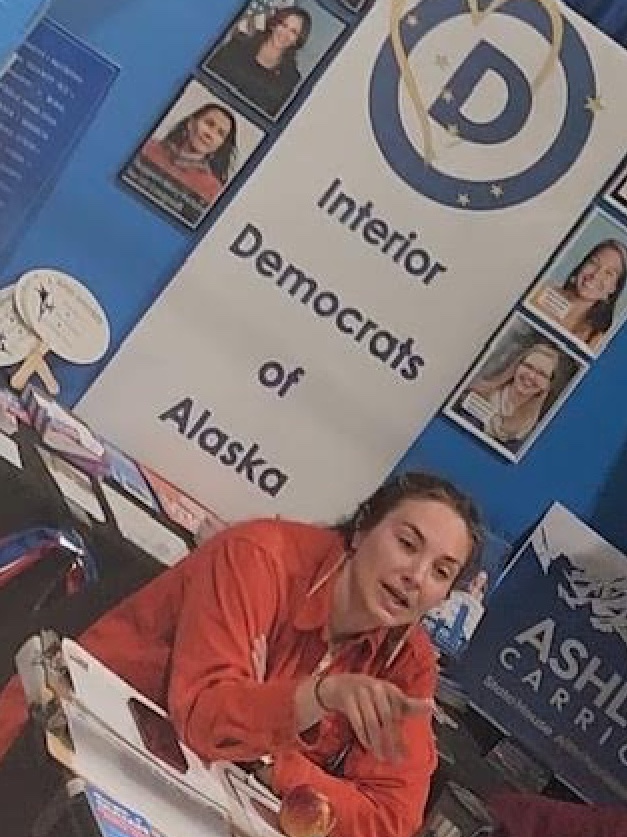
Fletcher is the presiding officer of the Fairbanks North Star Borough Assembly and is a false-flag “undeclared candidate” for the Senate Seat being vacated by Click Bishop. She has paid the Alaska Democratic Party for campaign services and has been seen doing shifts at the Democrats’ booth at the Tanana Valley State Fair.
Savannah Fletcher holds down the fort for the Democrats at the Tanana Valley State Fair, while telling voters she is an “undeclared” candidate.
The matter is particularly pertinent, given the recent cases that Fletcher has been handling as a radical attorney on the behalf of the Northern Justice Project.
In two of these cases, she went after seated legislators who blocked opponents who had been trolling their official social media accounts. Now, Fletcher is doing the same thing, although to her campaign page, as differentiated from an official government page.
Keith Fons runs a delivery service in North Pole and helped organize the American flag convoy to Denali National Park and Preserve, after the park management told a private contractor to stop flying the American flag on vehicles driving the Park Road.
The City of Ketchikan has evacuated 3rd Avenue, 2nd Avenue, 1st Avenue, and White Cliff Avenue due to a major landslide and potential for secondary landslides. Ketchikan High School has been set up as emergency shelter.
Schools in Ketchikan were scheduled to start on Monday, but will not be opening, due to the landslide. One person is said to have died, three were hospitalized for injuries, and several people were missing, according to local reports. Update 4 a.m. Aug. 26: All missing are now reportedly accounted for.
The city is in the process of evacuating approximately 100-150 people in the surrounding area, according to reports. The weather in Ketchikan has been exceptionally windy and rainy.
“The low and associated front impacting the area will continue to hang over the southern panhandle for Sunday evening. Right now, the heaviest rains remain along the southern side of the front where we are still seeing heavy rain and strong winds. These conditions will start to diminish as we head into the evening allowing for improving conditions. But some wind and rain will be expected through tomorrow morning,” the National Weather Service said at 3:30 p.m. on Sunday.
Ketchikan is Alaska’s furthest south major community, with a population of about 8,000. Fishing, tourism, and shipyard work are some of its main economic drivers. It is a naturally rainy community in the rain forest, with annual precipitation of about 140 to 160 inches of rain a year, much of it in the fall and winter.
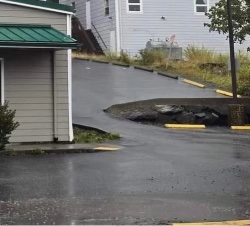
In addition to the landslide, mud running under the pavement created some sinkholes around the area.
Sinkhole developing in Ketchikan due to rainy weather.
By 7 p.m. on Sunday, Gov. Mike Dunleavy had verbally announced a disaster declaration.
“All state agencies are directed to provide whatever assistance is needed. My thoughts and prayers are with the residents of Ketchikan tonight,” the governor said on X/Twitter.
After the conviction of Donald Trump in New York City, Rep. Mary Peltola was asked a simple question: What did she think about it?
She turned on her heels, left her Democrat colleague and said “gotta go.” She went back into the safety of her offices in Washington, D.C. She just wouldn’t respond to any question about the May 30 conviction.
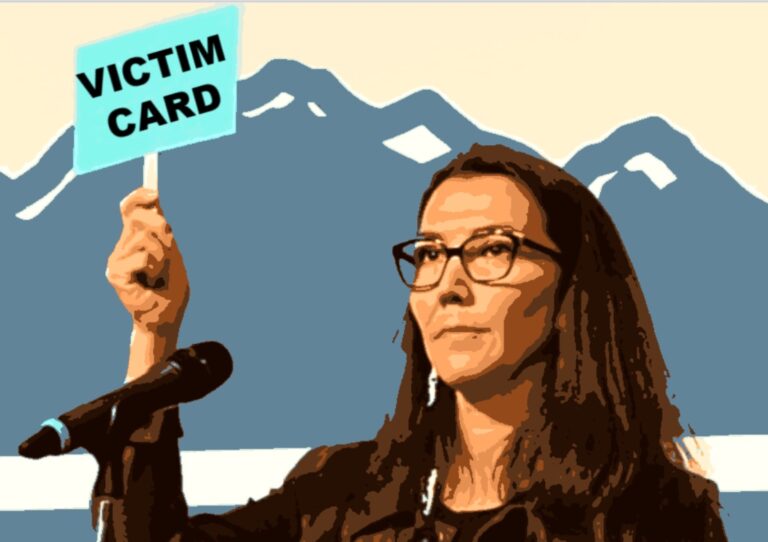
Now, she says she is a victim, approached and “heckled by random men/political trackers, like the one below who followed me last week.”
Here’s the full context of the actual exchange in early June with the Townhall conservative news site, which she falsely claimed was last week:
In her letter to potential donors, she used a screen shot from the video from nearly three months ago, right after the conviction.
It was a simple question, and if it had been Congressman Don Young strolling outside the Capitol, where reporters are everywhere, he would have told the reporter what he actually thought.
But Peltola fibbed about the incident, because that fit her victimhood narrative.
Last week, Congress was not even in session, and all of her Democrat allies were in Chicago, while Peltola stayed hidden in Alaska, trying to downplay her allegiance to the Democrats. She didn’t attend the Democratic National Convention.
“Then, every single thing I say is spun and taken out of context by groups like the NRCC, in hopes of weakening my support in Alaska,” Peltola said in her letter that asked for money for her and the Alaska Democrat Party.
In reality, it was Peltola who took the video exchange out of context, not telling her supporters that it was a legitimate question, one that any political person would be asked by a reporter worth his or her salt, and a question every member of Congress was asked by reporters. Reporters covering Peltola in Washington have given her a pass repeatedly.
In other venues, Peltola has said she simply doesn’t want to answer anything that would be controversial.
“I refuse to play the gross games and run the smear campaigns that my opponents and the special interests are playing. But I still need to fight back. So please [Friend,] will you split $25 between the Alaska Democratic Party and me before midnight so I can fend off these constant attacks and win in November?” her fundraising letter asked.
Robert F. Kennedy Jr. said Friday he is endorsing Donald Trump for president. Both Trump and RFK Jr. are former Democrats.
“I attended my first Democratic convention at the age of six in 1960 and back then, the Democrats were the champions of the Constitution, of civil rights,” said Kennedy, the son of Robert F. Kennedy and nephew of John F. Kennedy, who were both assassinated (several years apart) at the heights of their political careers.
“The Democrats stood against authoritarianism, against censorship, against colonialism, imperialism and unjust wars,” said Kennedy at a rally with Trump. “We were the party of labor, of the working class. The Democrats were the party of government transparency and the champion of the environment. Our party was the full world against big money interests and corporate power. True to its name, it was the party of democracy.
He then condemned the Democratic Party of today: “As you know, I left that party in October because it had departed so dramatically from the core values that I grew up with. It had become the party of war, censorship, corruption, Big Pharma, Big Tech, Big Ag and Big Money.”
Sir William Osler, the Father of Modern Medicine, said, “The good physician treats the disease; the great physician treats the patient who has the disease.”
Today’s healthcare delivery is based on “corporatization of medicine.” For many doctors, the joy of medicine is lost. The doctor who succeeds is the one who sees “the relationship with their patients as an arm-length transaction,” more concerned about their private time than the patient’s comfort.
Burnout among doctors is high, for those who seek to practice wholistically, with a true doctor-patient relationship.
From my nursing perspective, the demise of medicine began under managed care where the insurance companies come between the patient and doctor. The bean counters decided on how much time a doctor needed to “treat’ a patient; what diagnostic codes led to higher reimbursements from insurance companies and Medicare; “best practice” protocols became mandated protocols; and pay for performance was based on how well you met the bean counter requirements.
The art of medicine was lost. The patients being treated are on the losing end. The winners were the providers who followed all these requirements hook, line, and sinker. They were financially rewarded, sometimes at the individual patient’s expense.
Enter the Covid years. Somehow, we moved from docking some performance pay if you didn’t meet mandated protocols to going after your medical licenses if you chose to offer different solutions than what the mainstream dictators required.
Since the beginning of Covid, state medical boards have gone after those doctors who offered alternative Covid therapies that were not in step with the mainstream beliefs. This was especially true for the use of Ivermectin during the early stages of Covid.
Oddly, state medical boards don’t like to interfere with the doctor’s right to prescribe off-label medicines to treat a disease. Instead, these boards went afterwhether the doctor used the proper records documenting what they did and why; or determining if they practiced telemedicine without being credentialed to do so.
It’s fascinating to me that the boards would use the lack of proper documentation to suspend a physician’s license. In my career, I have seen major errors by doctors that did not lead to such a severe punishment.
In a 2022 report, the Federation of State Medical Boards had harsh criticism of members’ pandemic treatment, citing the increase of “misinformation” on social media “has not been accompanied by any increase in accountability for those who disseminate the misinformation and disinformation. The FSMB wanted more action taken by state boards against these doctors who did not tout the party line.
The Washington Post did a review of complaints against physicians for Covid misinformation. It received responses from 36 state medical boards. Of these responses, they identified 480 complaints involving “covid misinformation” and five doctors lost their licenses for this “egregious” action. The article went on to state all these doctors had “other findings against them involving deficient treatment of patients.” The specifics of which were not identified.
Washington State’s medical regulator has threatened disciplinary action for physicians’ stance on Covid treatment that was not within the mainstream allowable dialogue. Three of four of these doctors were charged for prescribing Ivermectin “to patients with covid-19 without documenting an adequate rationale, as well as making false statements about coronavirus vaccines liable to discourage vaccination.” The fourth doctor was a pediatrician who allegedly gave up her state license under duress from her employer.
There are other states and medical certification boards still actively pursuing doctors who dance to a different drummer.
Dr. Ryan Cole, who spoke at our Alaska Covid Alliance Conference several times, has been barred by the Washington State Medical Board for prescribing Ivermectin by telemedicine. But the board was were careful to say Cole could still do telemedicine to review pathology slides.
Dr. Meryl Nass, who also has spoken at our Alaska Covid Alliance Conference several times, is still fighting with the Maine Medical Board for suspending her license. Her crime? Prescribing Ivermectin with insufficient documentation.
Dr. Paul Marik and Dr. Pierre Kory, two of the founders of Frontline Covid-19 Critical Care Alliance (FLCCC), recently had board certifications revoked by the American Board of Internal Medicine (ABIM) for leading an organization “that promotes Ivermectin as a treatment for COVID-19.” Additionally, these doctors are offering out-of-the-box solutions for treatment of spike protein injury.
“Pierre Kory, MD, is no longer certified in critical care medicine, pulmonary disease, and internal medicine, according to the ABIM website. Paul Ellis Marik, MD, is no longer certified in critical care medicine or internal medicine. “
Dr. Nass was curious about this and checked the ABIM web page and discovered she, too, is no longer certified by the ABIM. She was shocked. There was no notification. No due process. Nothing.
That sure as heck does not pass the smell test. Anyone who is losing something as valuable to their career as board certification should have been involved in the process. But that is the big boot of the government.
Take a short trip down memory lane with our good doctors in Alaska. You may remember after our first Covid-19 Conference in 2020, local physicians were infuriated about the “misinformation” being spread. These nearly 150 physicians signed a petition to the Alaska Medical Board wanting harsh action to be taken. Fortunately, our board did not buy this dribble. The board rightly refused to approve the complaint regarding “misinformation” by our courageous Alaskan doctors.
Do you think the Covid hysteria is over? The above doctors don’t think it is. And the government is happily telling you the new vaccine is available in time for the fall. You can go ahead and get it if you think it will help. I am sure Dr. Anthony Fauci, who has had six Covid shots and has just gotten over his third Covid episode, will be lining up.
You can continue to get educated about the ramifications of Covid vaccines and vaccine injuries.
Join us on Oct. 26, 2024, for our next Covid Alliance conference.
Maligned Drs. Ryan Cole and Meryl Nass will be back telling us about the rise of cancer and the new bird flu. They may be also willing to discuss their issues with their state medical boards.
More conference information will be coming in the next week. So, stay tuned and get ready to hear more of the truth.
Linda Boyle, RN, MSN, DM, was formerly the chief nurse for the 3rd Medical Group, JBER, and was the interim director of the Alaska VA. Most recently, she served as Director for Central Alabama VA Healthcare System. She is the director of the Alaska Covid Alliance.
Seattle and Tacoma took the top two spots in the Tax Foundation’s latest publication on the highest combined state and local sales tax rates among major U.S. cities.
Earlier this week, the Washington, D.C.-based think tank released its “Sales Tax Rates in Major Cities, Midyear 2024” report, which calculates “average combined state and local sales tax rates by state, using zip code-level sales tax and population data.”
The Tax Foundation defines major U.S. cities as “Census-designated incorporated places with populations over 200,000.”
“Sales tax avoidance is most likely to occur in areas where there is a significant difference between two jurisdictions’ sales tax rates,” Tax Foundation Vice President of State Projects Jared Walczak said in a news release. “Leading research indicates that consumers can and do leave high-tax areas to make major purchases in low-tax areas.”
It’s commonplace for Washington residents to shop in Oregon, which does not have retail sales taxes. Groceries, alcohol, clothing and other items tend to be cheaper on the Oregon side of the border. Due to the sales tax difference, Washingtonians can save even more on items such as appliances, furniture and electronics.
Seattle in King County and Tacoma in Pierce County figure prominently early on in the report.
“Among major cities, Seattle, Washington, claims the dubious distinction of imposing the highest combined state and local sales tax rate, at 10.35 percent,” the report states.
Washington state has a sales tax of 6.5%, and the Emerald City imposes a 3.85% sales tax, for an overall 10.35% rate.
“The city eclipsed Tacoma, Washington, at 10.3 percent, in April, when King County (in which Seattle is situated) adopted a 0.1 percent additional sales tax to generate additional funding for nonprofits providing cultural programming,” the report goes on to note. “Tacoma’s current rate dates to 2021.”
The Center Square reached out to Mark Harmsworth, director of the Center for Small Business at the Washington Policy Center think tank, for his thoughts on two Washington cities topping the list of major cities with the highest combined state and local sales tax rates.
Taxpayers in some smaller cities get hit even harder, he pointed out.
“Ironically, the highest sales tax rate [in the state] is shared with my own city, Mill Creek, and Lynnwood – 10.6%,” Harmsworth noted in an email to The Center Square. “High sales tax rates certainly create a problem not just for retailers, but for service providers, who are subject to the same rate providing services, even remotely in some cases. A high rate drives businesses to locate in other locations.”
Mill Creek is a city of nearly 21,000 people approximately 20 miles northeast of Seattle. Lynwood, with a population of more than 43,000, is part of the Seattle metropolitan and is located 16 miles north of Seattle. Both cities are located in Snohomish County.
“I would predict the rates in Washington would be much higher if it wasn’t for the restrictions on the amount municipalities can raise taxes described in state law (RCW 35.102),” Harmsworth concluded.
Chicago, Ill., and three cities in California – Long Beach, Fremont and Oakland – tied for the third-highest combined state and major city sales tax rates at 10.25%.
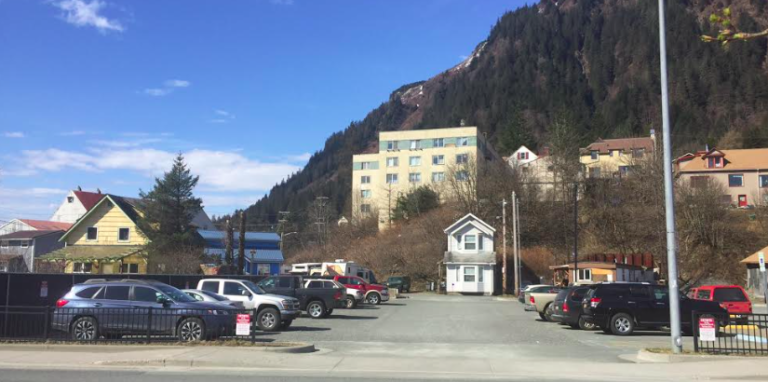
On Friday, the State appealed U.S. District Court Judge Sharon Gleason’s decision upholding a federal agency’s authority to take lands into trust in Alaska, creating a 787-square vacant lot in downtown Juneau into “Indian Country,” subject to federal law, not municipal or state law.
“ANCSA eliminated the reservation system in Alaska and left no authority for the federal agency to recreate that system on its own more than 50 years later,” Alaska Attorney General Taylor said. “The State is not going to wait for the federal agency to think of new ways to change how Alaska works. We filed this litigation so the courts can resolve this issue for good. To get such finality, we need the appellate courts to weigh in.”
In June, the Court largely agreed with the State when it vacated a U.S. Department of the Interior’s decision to take a 787-square-foot parcel of land in downtown Juneau into trust on behalf of the Central Council of Tlingit and Haida Indians because the decision was “arbitrary and capricious” and “contrary to the law.” The Court found that the U.S. Assistant Secretary could not take the Tribe’s land into trust to “restore” Indian lands because such an action was contrary to the bargain Congress struck in 1971 when it passed the Alaska Native Claims Settlement Act (ANCSA).
Although the State agrees with Judge Gleason on that important point, the Court left open the possibility that a federal agency could still place an Alaska tribes’ lands into trust and thus improperly bypass Congress to create reservations in Alaska.
Although ANSCA erased most “Indian Country” in Alaska in favor of the establishment of Native Corporations with their own land, Gleason said the federal government is entitled to create all the Indian Country that it wants, without limits.
The small parcel, owned by Central Council of the Tlingit and Haida Indian Tribes of Alaska, is big enough to park a couple of motor homes.
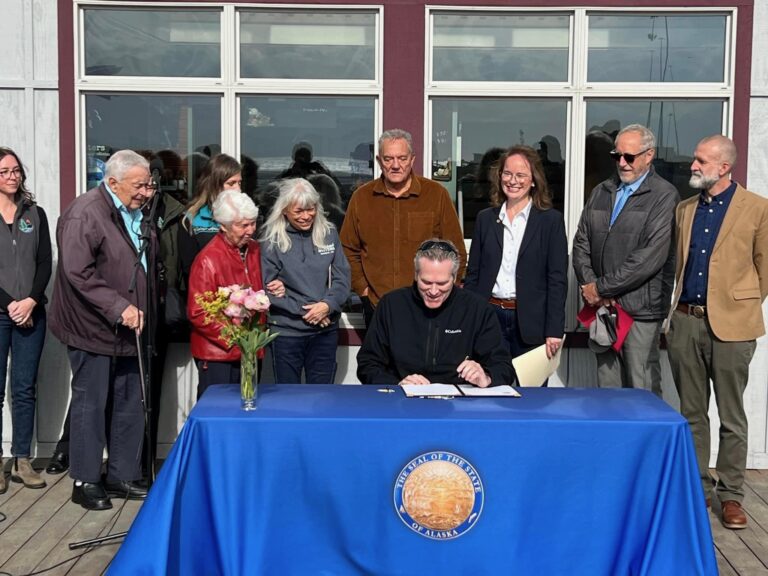
Gov. Mike Dunleavy signed House Bill 329 into law, providing help to Alaska’s fledgling aquatic farming industry.
“We celebrate a milestone for Alaska’s mariculture industry—the signing of House Bill 329 into law, which marks more than just a victory for mariculture; it is a testament to our shared commitment to food sustainability and a prosperous future for Alaska,” said Rep. Sarah Vance, the bill’s sponsor.
House Bill 329 simplifies the lease acquisition process and extends lease durations to up to 20 years.
“For far too long, prospective mariculturists have faced a convoluted, multi-agency application and review process that often took years to complete, deterring many from entering the industry,” Vance said.
Paul Fuhs, president of the Shellfish Growers Cooperative said the bill the bill provides stability to the existing tideland leasing statute of the state, which had some unintended consequences.
“For instance, upon renewing your lease, someone could over file on top of you and take your lease away through a competitive bid. This bill gives preference in renewals to existing lease holders that have made the investment in those sites. HB 329 also allows us to farm geoducks in Aleutian Islands, which is a big growth potential,” Fuhs said.
HB 329 comes at a time when Alaska’s coastal economies could benefit from diversification, due to the challenges experienced in the fishing industry.
The bill had unanimous support from the Alaska State Legislature.
With the signing of HB 329 into law, Alaska has laid the groundwork for a thriving mariculture industry that may create jobs, stimulate commerce, and safeguard the state’s marine ecosystems for generations.
“I want to thank Governor Dunleavy and the dedicated staff at the Alaska Department of Natural Resources and the Department of Fish and Game for their invaluable contributions in shaping this balanced legislation,” Vance said. “I want to recognize the relentless work of Mr. Paul Fuhs, the Alaska Mariculture Alliance, Don Fell, and Marie Bader. Their advocacy was instrumental in the passage of this bill, ensuring that the voices of our mariculture community were heard and respected throughout the process.”
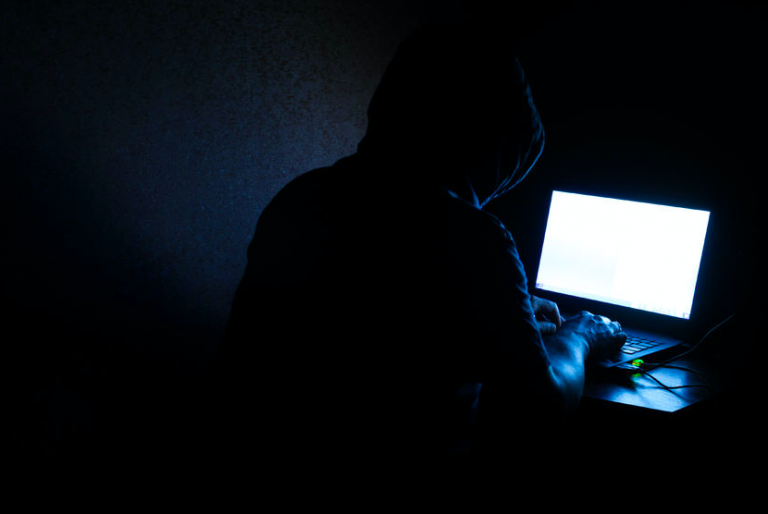
On Aug. 21, Halliburton, which is a global oil services company with operations in Anchorage for Alaska’s North Slope, was the victim of a cyber attack on its computer systems. The company filed a notification with the Securities and Exchange Commission about the incident, which forced it to take its system offline for an undisclosed period of time.
“When the Company learned of the issue, the Company activated its cybersecurity response plan and launched an investigation internally with the support of external advisors to assess and remediate the unauthorized activity. The Company’s response efforts included proactively taking certain systems offline to help protect them and notifying law enforcement. The Company’s ongoing investigation and response include restoration of its systems and assessment of materiality,” the company reported.
Although some tech writers said it was a ransomware attack, Halliburton did not reveal if this was that or a virus, nor did it say if it knows the identity of the hacker(s). The Federal Bureau of Investigations has recently warned that Iran is planning cyberattacks to disrupt the 2024 elections.
Halliburton only said, “The Company is communicating with its customers and other stakeholders. The Company is following its process-based safety standards for ongoing operations under the Halliburton Management System, and is working to identify any effects of the incident.”
The attack affected business operations at Halliburton’s north Houston campus and some of Halliburton’s global connectivity networks. Employees were told to not connect to the network. On Thursday, employees were told they could log back into the system again. But the SAP system, which provides collaboration functionality between Halliburton and suppliers, was still down.
Five days earlier, the Office of the Director of National Intelligence, the Federal Bureau of Investigation, and the Cybersecurity and Infrastructure Security Agency released the following statement:
“As each of us has indicated in prior public statements, Iran seeks to stoke discord and undermine confidence in our democratic institutions. Iran has furthermore demonstrated a longstanding interest in exploiting societal tensions through various means, including through the use of cyber operations to attempt to gain access to sensitive information related to U.S. elections. In addition to these sustained efforts to complicate the ability of any U.S. administration to pursue a foreign policy at odds with Iran’s interests, the Intelligence Community (IC) has previously reported that Iran perceives this year’s elections to be particularly consequential in terms of the impact they could have on its national security interests, increasing Tehran’s inclination to try to shape the outcome. We have observed increasingly aggressive Iranian activity during this election cycle, specifically involving influence operations targeting the American public and cyber operations targeting presidential campaigns.
“This includes the recently reported activities to compromise former President Trump’s campaign, which the IC attributes to Iran. The IC is confident that the Iranians have through social engineering and other efforts sought access to individuals with direct access to the presidential campaigns of both political parties. Such activity, including thefts and disclosures, are intended to influence the U.S. election process. It is important to note that this approach is not new. Iran and Russia have employed these tactics not only in the United States during this and prior federal election cycles but also in other countries around the world.
“Protecting the integrity of our elections from foreign influence or interference is our priority. As the lead for threat response, the FBI has been tracking this activity, has been in contact with the victims, and will continue to investigate and gather information in order to pursue and disrupt the threat actors responsible. We will not tolerate foreign efforts to influence or interfere with our elections, including the targeting of American political campaigns. As an interagency, we are working closely with our public and private sector partners to share information, bolster security, and identify and disrupt any threats. Just as this activity demonstrates the Iranians’ increased intent to exploit our online platforms in support of their objectives, it also demonstrates the need to increase the resilience of those platforms. Using strong passwords and only official email accounts for official business, updating software, avoiding clicking on links or opening attachments from suspicious emails before confirming their authenticity with the sender, and turning on multi-factor authentication will drastically improve online security and safety.”