A Dutch court overturned a ruling ordering the energy company Shell to cut its carbon emissions by 45% by 2030. Shell argued that requiring one company to reduce emissions will not reduce the demand for oil globally.
The Hague overturned the District Court of The Hague’s 2021 ruling in the case brought against Shell in 2019 by Milieudefensie/Friends of the Earth Netherlands, ActionAid NL, Both ENDS, Fossielvrij NL, Greenpeace NL, Young Friends of the Earth NL, Waddenvereniging, and more than 17,000 citizen plaintiffs who sought a ruling that Shell must reduce its CO2 emissions in line with the Paris Climate Agreement.
“As Shell has stated previously, a court ruling would not reduce overall customer demand for products such as petrol and diesel for cars, or for gas to heat and power homes and businesses. It would do little to reduce emissions, as customers would take their business elsewhere. We believe that smart policies from governments, along with investment and action across all sectors, will drive the progress towards net-zero emissions that we all want to see,” the company said in a statement.
Last Thursday, the Peninsula Oilers announced they will take a year to yearlong pause and not field a team in 2025. The Oilers are one of five teams in the Alaska Baseball League and, while their temporary departure is not a surprise, it exemplifies concern for the future of the league.
The league schedule was just about to be announced when the Oilers informed the other four teams – the Mat-Su Miners, Chugiak-Eagle River Chinooks, Anchorage Glacier Pilots, and Anchorage Bucs – of their decision, but now that schedule will have to be revamped. The state’s sixth college summer team, the Alaska Goldpanners of Fairbanks, has not been a part of the league since 2015, although team president John Lohrke was hoping his club could be readmitted.
Lohrke has done a tremendous job pulling the Goldpanners back from extinction. Attendance was dismal and the ballpark was in disarray, but now fans are filling the stands in Fairbanks and the team’s finances are in the black.
The four remaining ABL teams can go one of two ways. If they want to remain a prosperous league, one that is still among the top ten summer college leagues in the country, they need to act as a cohesive unit with a strong commissioner leading them. The second option is to essentially go their own ways, making their own team schedules and business arrangements.
As someone who has been intimately involved with the Chinooks for the better part of a decade, this writer is selfishly hoping the teams band together and form a strong league. The Chinooks are structured differently than the other teams and a strong, centralized league it is the best scenario for the fish as they don’t have the financial wherewithal to negotiate with Lower 48 teams when it comes to scheduling games and making the necessary travel arrangements to and from Alaska.
The major obstacle to a cohesive, unified league is getting the individual general managers to relinquish control and allow a commissioner to make decisions that are in the league’s best interests. There is an attitude that what works for their own team is what’s best for the other teams, especially when past success clouds the reality of the present.
The Oilers’ precarious financial situation has been known for several years. Just before the start of the 2024 season, the team let go of their general manager and issued a public notice that they faced a “significant financial challenge.” Their plan for 2025 is to find creative fundraising schemes that will put them in good enough shape to return in 2026. It will take hard work and serious negotiations, and perhaps some downright pleading, with sponsors and donors to be successful.
One seemingly untapped resource for the Oilers, as well as all the other teams, is their alumni. Many professional players spent summers up here, and quite a few of those made it to the Major League level where generous salaries are the norm. Most of the men who played in Alaska during their college years have fond memories of those years, and they seem to be an untapped resource, a veritable Prudhoe Bay income stream.
Another option is one that former ABL Commissioner Chip Dill was just beginning to negotiate: joining forces with Major League Baseball. The major leagues cut ties with many of their minor league affiliates a few years ago but made deals with summer college leagues, and those leagues are succeeding, if for no other reason than those college baseball players eyeing a shot at getting drafted have been flocking to the MLB-affiliated leagues because that is a way to be seen by professional scouts. The ABL used to hold scout weekends, during which a majority of major league teams sent scouts with radar guns and stat sheets in hand. During 2024’s scout weekend, it was difficult to spot any such creatures.
The second option for the remaining teams, that of foregoing a strong league in favor independent scheduling and finances, is the John Lohrke model: reinvigorate the community around the team as a wholesome and inexpensive form of family entertainment; find business leaders who are willing to help refurbish faded stadium infrastructure; use the lauded history of Alaska baseball to show continuity with the teams of today; and make it unabashedly fun to attend baseball games.
Both options will take dedicated efforts to succeed, especially the latter; but foregoing a centralized league does not mean the Alaska teams will not play each other. They absolute should, often and with great fanfare. Ironically, if the teams go their own ways but cooperate in bringing Lower 48 teams – and hopefully international teams, such as from Japan, Korea, or Australia – they will be helping out each other. Scheduling non-Alaska team to travel up here will make more financial sense if the teams can stay for more than just a short series against one team.
The Peninsula Oilers fielded baseball teams for 50 years, and it is sad to think that half century of community support and entertainment is coming to an end. It will be an even sadder development if Alaska loses its remaining teams.
Tim Barto is a regular contributor to Must Read Alaska, vice president of Alaska Family Council, and a diehard Chinooks fan who wants to see all the summer college teams in Alaska succeed.
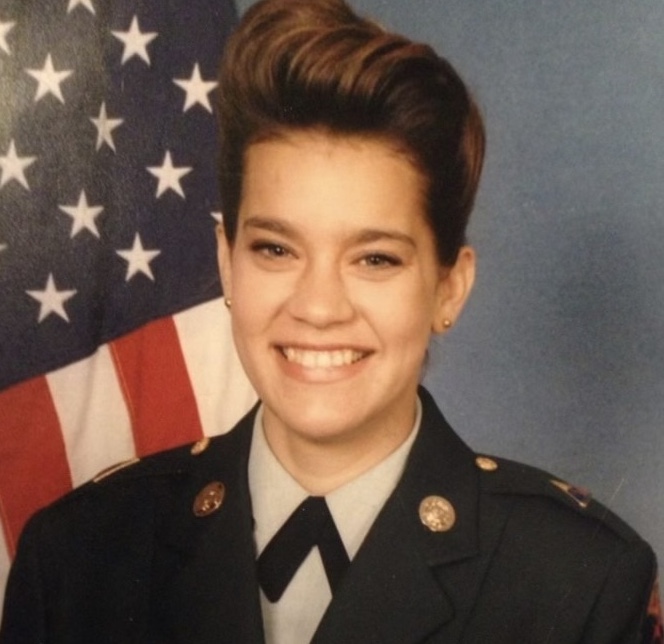
As a mother, a veteran, and a public servant, I am deeply aware of the sacrifices that our military families make each day. I have witnessed firsthand the courage, commitment, and sacrifice it takes to serve, and I’ve experienced both the pride and the fearthat comes with raising children who aspire to follow that same path.
Veterans Day is not only a day to honor those who serve and have served, but to inspire the next generation to pick up that torch for the future.
Recently as my daughters sought my input regarding their military careers moving forward at Norwich University. I asked them to wait until I knew who would be their Commander in Chief. I worried if their new Commander would know how to lead, or what they might be forced to do in the name of duty.
I recognized how important it was to each of them as both my husband and I served in the military, but I also recognized that the military today is not the same as it was in generations past. If you don’t believe in your leadership, it’s hard to follow. This election impacted me on a deep level, not just as an American, but also as mother with daughters who would be under the command of the new President. Today, I feel more hopeful than ever that my daughters, and all young people with similar dreams, will be able to serve under a government that truly understands and values what it means to put on the uniform.
This year, I was honored to be part of the 33rd legislative session, where I helped pass legislation to recognize the Space Force and honor our Women Veterans. In a time of such polarization and political vitriol, it’s crucial to come together on nonpartisan values, particularly in an era when the sacrifices of our service members, especially women, deserve acknowledgment more than ever. But advocating for these measures wasn’t easy. Some legislators questioned the necessity of these recognitions — a stark reminder that even in today’s world, not everyone fully appreciates the dedication of our veterans.
This lack of understanding has further strengthened my resolve to support leaders who support veterans. With President-elect Trump and Vice President-elect J.D. Vance, we now have leaders who not only honor our veterans, but also bring a depth of personal experience to the table. Vice President-elect Vance has lived the life of a veteran. He knows what it’s like to struggle and to overcome the unique challenges of military service. He knows how to follow and how to lead. He knows the shame it is on our Nation to see our veterans hungry, cold, and alone, struggling to receive mental and medical care. Under his leadership,we have the opportunity to give our vets the honor and care they deserve. His experience is a beacon of hope for all who have served, promising an era where our veterans’ voices will finally be heard and respected at the highest levels of government.
Serving is never just a job; it’s a calling rooted in a profound love for country, love for neighbor, and a willingness to sacrifice. Veterans leave behind their families, miss milestones, and face unimaginable trials, all for the cause of protecting our freedoms. They deserve leaders who not only respect that journey but who also know what it means to carry that responsibility themselves. I thank God we have that now, and I couldn’t be prouder to see this administration represent the values I hold dear.
As we look to the future, we must guide and inspire the next generation, particularly Generation Z. Like my daughters, they are eager to serve, but they also seek leaders they can trust, who will guide them through the toughest moments of their lives. This generation is vibrant, intelligent, and deeply patriotic. They know that America is not perfect, but they still believe in the power of its ideals. With the right support, Gen Z will rise to the challenge of defending the Constitution and standing for the freedoms that define us.
This Veteran’s Day, I feel especially hopeful. Not only are we honoring those who have served before, but we are also paving the way for those who will serve in the future. Our veterans can take pride in knowing that their sacrifices have laid a strong foundation, inspiring a new generation ready to carry the torch. They have set an example that the young people of today are eager to follow under the guidance of leaders who understand the journey because they’ve walked it themselves.
Let us remember that honoring veterans isn’t just about reflection; it’s about action, about creating a country that respects their contributions and empowers those who will continue their legacy. Today, and every day, I am committed to supporting our veterans and guiding our youth toward a future where service is respected, honored, and understood in a way it never has been before.
To all our active-duty servicemen and women and our veterans alike, we see you. We salute you. We thank you for your sacrifice. Every time I hear the National Anthem, tears fill my eyes. May you never lose that love for country that swells like the anthem and may we never lose our gratitude for your selflessness. Happy Veterans Day.
Rep. Jamie Allard represents District 23, Eagle River, in the Alaska Legislature.
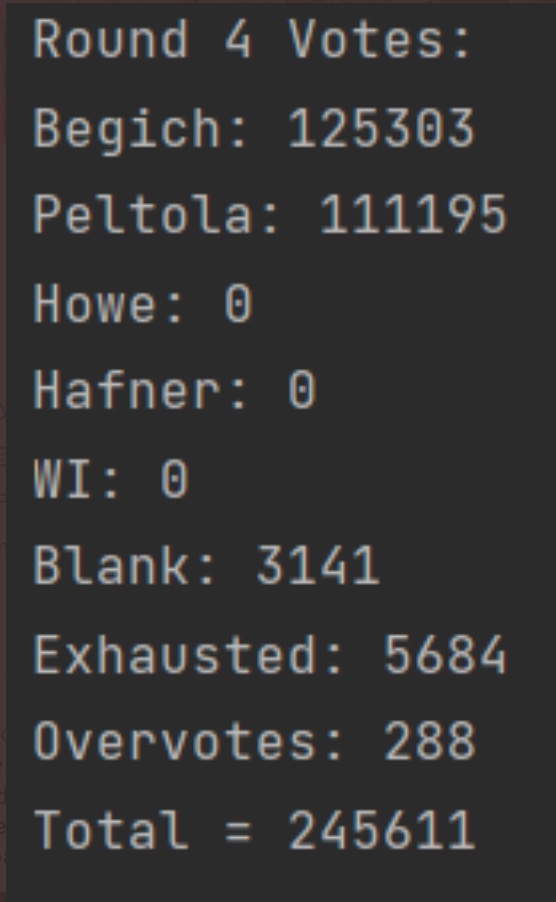
Based on data released by the Alaska Division of Elections, of votes that have been cast in the Alaska congressional race, after ranking, Nick Begich will win with 53% of the vote over Rep. Mary Peltola.
This is according to an independent analysis by @cinyc9, a conservative account at X.com that analyzes election data. Here is the result of the Round 4 of ranking:
Must Read Alaska filed a public records request for this data on Friday, and the Division of Elections was responsive, releasing it to the public on Monday so all would have access to the data files.
CINYC was the first to run the analysis of the Division of Elections numbers.
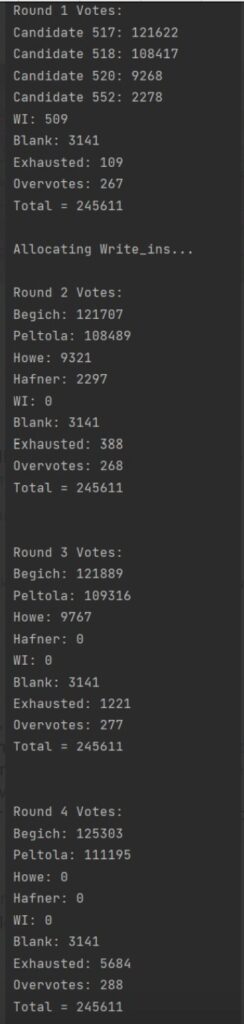
There is no guessing on these numbers, as these are votes the division has in hand. We are expecting another set of ballots to be counted on Tuesday. Here are the Round 1-3 vote distributions, according to this analysis:
Screenshot
Eric Hafner, in this vote universe, has 2,297 votes, and 833 were exhausted with no second choice, nine were eliminated for over-voting (voted Hafner twice). Begich gained 102 of the available votes and Peltola gained 827 of these votes. Hafner is a federal prisoner who is a Democrat.
When John Wayne Howe was eliminated, it was split. Democrat strategist Jim Lottsfeldt had spent $4 million to try to convince conservative Alaskans to only vote for Howe and not Begich. He convinced 4,263 to throw their votes away on Howe. Begich received 3,414 of the Howe second votes. Peltola got 1,879 of Howe’s second votes.
Must Read Alaska’s story last week looked at the numbers based on assumptions, and these assumptions are lining up with the actual numbers released by the Division on Monday. This story will be updated.
Based on this analysis, Nick Begich would make the 218th congressional representative, securing the Republican majority in the U.S. House.
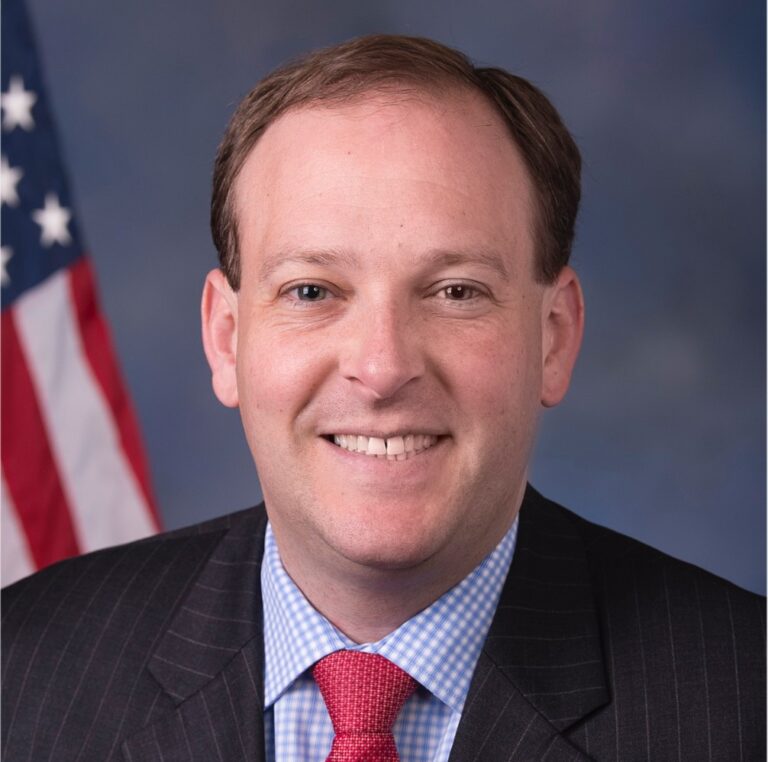
New York former Rep. Lee Zeldin will lead the Environmental Protection Agency in the new Trump Administration. He will replace Michael S. Regan as administrator. Zeldin must be confirmed by the Senate. He will likely ease some of the climate-change edicts that have come from the Biden-Harris Administration.
“It is an honor to join President Trump’s Cabinet as EPA Administrator. We will restore US energy dominance, revitalize our auto industry to bring back American jobs, and make the US the global leader of AI. We will do so while protecting access to clean air and water,” Zeldin said in a social media post.
Tom Homan, former Immigration and Customs Enforcement director, will be the “border czar” in the Trump Administration.
“I’ve known Tom for a long time, and there is nobody better at policing and controlling our Borders,” Trump wrote on Truth Social on Sunday. “Likewise, Tom Homan will be in charge of all Deportation of Illegal Aliens back to their Country of Origin. Congratulations to Tom. I have no doubt he will do a fantastic, and long awaited for, job.”
Trump also named one of his closest and longest-term top advisers, Stephen Miller, as his deputy chief of policy.
Rep. Elise Stefanik has been tapped by Trump to be his U.S. ambassador to the United Nations, according to reports. Stefanik, a staunch Trump supporter, won reelection to a U.S. House seat for New York State last Tuesday. If she leaves the House, it will make it more difficult to achieve a Republican majority. There are 204 Democrat seats to 214 Republican seats, with several, including Alaska’s, hanging in the balance.
Since the Anchorage Assembly loosened the laws covering jaywalking, deaths keep piling up on Anchorage roadways.
On Friday night, another occurred when a person was struck by a vehicle on Brayton Drive in South Anchorage, which runs parallel to the Seward Highway.
The pedestrian was in the middle of the road, police reported.
Most of the other pedestrian deaths have occurred in midtown Anchorage and north Anchorage, including downtown.
A year ago, the Anchorage Assembly changed the local law so that most jaywalking is now legal, depending on whether the pedestrian feels it is safe to be in the roadway. Police warned the Assembly to not take this action, but it was done in the name of equity for pedestrians.
Four sources inside the Biden-Harris Administration have told the Washington Free Beacon that the State Department organized an in-house therapy session for employees early Friday following Donald Trump’s election victory.
The report comes at a time when, after calling Donald Trump a fascist and Hitleresque, the Biden Administration is handing over power to the person they marked as the enemy of humanity. The trauma, evidently is real.
“Managing stress during change,” the internal State Department email sent across the agency reportedly said. It encouraged federal employees to attend a group session to talk through their feelings about the election of Trump, aided by a clinical therapist. The next one will be held Nov. 13, the notice said.
The Beacon reports that the Employee Consultation Services agency in the Bureau of Medical Services hosted the session, which one source described as a “cry session.”
“Change is a constant in our lives, but it can often bring about stress and uncertainty,” the email reportedly said. “Join us for an insightful webinar where we delve into effective stress management techniques to help you navigate these challenging times. This session will provide tips and practical strategies for managing stress and maintaining your well being.”
“Boys, if we don’t get the bats going, we’re in deep kimchee.” Coach Bob Grover’s favorite saying didn’t make much sense to a group of teenage wannabe ballplayers, but years later he told a story about his time in the Army during the Vietnam War …
Bob had a recurring dream that he was on mound in the big leagues, fooling hitters and getting outs, but on one occasion in the early 1970s, his dream was interrupted by small arms from Viet Cong guerillas. The VC’s target was the transport that Bob and his fellow Military Policemen (MP) were guarding as their boat returned from dropping off munitions to ground troops in Vietnam to a massive supply depot in South Korea.
A year earlier, Bob was enrolled at San Jose State, taking classes and playing well enough on the school’s baseball team Major League scouts took an interest in him. He lost his college draft deferment when he dropped out of school to help look after his mother, the Army not buying his deferment plea as a sole family supporter.
Boot camp and MP training preceded orders to Korea which, while not “in country” was certainly in Vietnam’s geopolitical neighborhood. Bob’s temporary relief of not being assigned to a unit inside Vietnam was soon shattered as he received an assignment to escort munitions into the badlands via boat.
Drawing fire didn’t happen every escort trip; in fact, their vessel went unscathed on the inbound journey this particular night, so the MPs figured it would probably be a quiet return trip; and it was until brass rounds pinged off steel bulkheads, waking Bob from the pitcher’s mound to the reality of war. He cursed, shouldered his rifle, and cursed the rain and darkness as he looked to find the source of the incoming rounds. The firefight ended quickly and – mercifully – without American casualties.
Bob and his security detachment made it safely back to their post as the sun began rising. After cleaning and storing their weapons, the MPs took hot showers and ate some not entirely awful hot chow. Knowing the grunts were eating cold C-rations and sleeping in tents, they suppressed the complaints they very much wanted to voice.
Heading back to his bunk, Bob picked up a copy of the American military newspaper, Stars and Stripes. Unable to quell the adrenalin brought on by getting shot at, Bob lay on his rack reading the paper when he noticed a small print announcement that shot his adrenalin even higher: tryouts were being held for a division baseball team. Tired as he was, he went over to the division special services office to sign up.
Being a collegiate ballplayer, Bob figured he had a rather good shot at making the team, but he was surprised at the elevated level of talent that showed up on the grassy field that was used more often for softball than hardball games. Batters drove the ball with authority; infielders displayed soft, quick hands; and fleet-footed outfielders hit cutoff men with strong, accurate throws.
Nevertheless, a tall southpaw with a good fastball, effective curveball, and deceptive changeup always catches a coach’s attention, so Bob received a new set of uniforms – white for home games, and gray for away.
The Army sported two baseball teams in Korea in the early 1970s, one in each division of the Korean professional league. Back then, the quality of Korean baseball was good; not as good as it is today, but these talented American athletes who had spent the better part of the past year training for combat and getting shot at in an unpopular “policing action”, found the Korean teams formidable.
Being used to walking into an American ballpark and smelling fresh cut grass, hot dogs, and tobacco smoke, Bob’s gag reflexes kicked in when he walked into his first Korean ballpark and was overwhelmed by the smell of pickled cabbage. It was often cold in that part of Asia, even during the baseball season, and fans kept warm by eating the spicy Korean staple.
Bob’s teammates, acutely aware of his distaste for kimchee, and doing what young soldiers and athletes are want to do to each other – ribbing each other mercilessly – began telling Bob he was in deep kimchee when he got himself into trouble on the mound. But that was the only negative aspect of Bob’s Army baseball experience.
Those white and gray flannels were the only uniforms Bob wore during his last five months of active duty. He made good friends and learned intricacies of the game from experienced coaches and teammates, some of whom, like Bob, would go on to play the game at a professional level.
After returning stateside and finishing college, the Minnesota Twins signed Bob to a minor league contract. After a couple seasons in the minors, Bob made it to Triple-A, the highest level before the big leagues and, after went into the last week of spring training with a shot at making the big team.
As Bob tells the story, his chance to make it to Minnesota came down to an intrasquad game. Up to bat came future Hall-of-Fame home run hitter Harmon Killebrew. Bob threw and Harmon swung, and Bob never knew a baseball could be hit so hard or so far. I’m in deep kimchee, he thought, as he watched the ball sail over the outfield wall.
It was, indeed, the end of Bob’s dream of making it to the big leagues, but he became a teacher and baseball coach at Lynbrook High School in San Jose. An honorable man who served his country during a turbulent time, he became a mentor to many young men, including this author.
Tim Barto is a regular contributor to Must Read Alaska and vice president of Alaska Family Council. Baseball is his first love, and he pestered his coaches with questions (and unsolicited strategy suggestions), so when he graduated from college, Coach Bob Grover asked him if he would like to join the coaching staff at his high school alma mater.
Republicans this weekend moved closer to securing a majority in the U.S. House of Representatives, which would give the GOP a trifecta in the federal government and a smoother path to adopting key legislative priorities.
As of Sunday, Republicans have won 216 House seats to Democrats’ 209, with 10 races still undecided. Republicans need to win at least two of those remaining 10 races to get to or surpass the 218 needed for a majority.
According to The Hill, Democrats lead in two of those remaining 10 races while Republicans lead in the other eight.
Republicans already hold a majority in the U.S. Senate with 53 seats secured to Democrats’ 46. In the one remaining Senate race yet to be called, Democrat Ruben Gallego leads Republican Kari Lake in Arizona.
And, of course, Republican Donald Trump won the White House and is now president-elect. Trump completed a sweep of the seven key swing states Saturday night when he was declared the winner of Arizona, as The Center Square previously reported. Trump also won in battlegrounds North Carolina, Georgia, Pennsylvania, Michigan, Wisconsin and Nevada.
The Arizona win lifted Trump’s Electoral College vote count to 312, well surpassing the 270 needed to win the presidency. Vice President Kamala Harris took 226 electoral votes.
U.S. House Speaker Mike Johnson imbued confidence in a post on X Friday.
“The American people have spoken and given us a mandate. We will be prepared to deliver on day one,” Johnson, who is seeking to reclaim his speakership roll when new House members are sworn in in January, wrote. “With Republicans in control, we will secure the border, grow our economy, restore American energy dominance, and end the radical woke agenda. America’s best days are ahead of us.”
Dan McCaleb is the executive editor of The Center Square. He welcomes your comments. Contact Dan at [email protected].