Thanks to the extended time to count all the ballots, Republican David Nelson beat the incumbent Democrat by 23 votes in House District 18, (Government Hill, JBER in East Anchorage.)
The same thing happened about 40 years ago, allowing my friend Rep. Terry Martin to squeak out a reelection victory.
The margin of victory in both cases was due to overseas absentees, most of them military. The Division of Elections allows extra time in order to allow all these late arriving ballots to be counted. For Republicans, it’s worth the wait.
These are mostly men and women who established Alaska residency while they were stationed here. When they’re transferred overseas, they maintain their Alaska residency. Many of them do this in order to continue their eligibility for Permanent Fund dividends. They all vote in order to bolster their claim to Alaska residency.
Their main issue, unsurprisingly, is the Permanent Fund. Since Republicans have always been the champions of the PFD (initiated by Republican Gov. Jay Hammond in 1980), and Democrats largely hostile, they all vote Republican.
Representative-elect Nelson should send them all a thank you card.
So, let’s stop with all the carping about the long wait. It’s only a problem if the good people at the Division of Elections need the extra time to steal an election. I don’t believe this has ever happened.
Some old-timers claim Gov. Hammond stole the Republican primary election from Wally Hickel in 1978. He only won by 98 votes. His Attorney General, Avrum Gross, was a little slippery, but I don’t believe the election was stolen.
All of us who worked on Hammond’s campaign (including me – I was Chairman of “Hands for Hammond”) like to think that our efforts were responsible for his victory.
And the PFD.
Fritz Pettyjohn’s first venture in politics was working for Barry Goldwater for president in 1964. He served in the Alaska Legislature in the 1980s and writes the blog ReaganProject.com.
Let’s give a nod to RFK Jr.’s nomination as the HHS Secretary and his mission to Make America Healthy Again (MAHA) by embracing a healthier way to enjoy pumpkin and other traditional Thanksgiving foods this season.
The harvest’s abundance is on full display at our Thanksgiving tables, as we slow down to spend time with our family and loved ones. While pumpkin pie has become synonymous with the holiday, savory pumpkin recipes are a way to spice up our feast with a nutritious option that complements traditional turkey as well as a variety of alternative main courses.
Including a dish of Roasted Pumpkin, Cranberries, and Pecans is a delicious way to brighten your table with a pop of color that combines our favorite holiday foods. The dish captures the essence of the season, with the pumpkin’s richness balanced by the tartness of the cranberries and the crunchy texture of the pecans.
This Thanksgiving, leave the canned pumpkin and refined sugar behind and opt for a small pumpkin, fresh cranberries, and pecans. Join the MAHA movement and enjoy a savory holiday flavor in a sensational way.
Roasted Pumpkin, Cranberries, and Pecans
Ingredients:
1 small pumpkin (approximately 2 1/4 to 2 3/4 pounds)
1/2 teaspoon of salt (divided as listed below)
1/8 teaspoon or less of nutmeg
1 sprig of fresh rosemary (substitute 1/4 teaspoon of dried rosemary)
1 1/4 cups of fresh cranberries
1 1/2 tablespoons of raw honey
1 cup of pecans
8 tablespoons of butter (divided as listed below)
For garnish if desired:
1 ounce feta cheese
Makes about 8 to 10 side dish servings
Prep time: 25 minutes
Cooking time: 1 hour
Preparation:
Preheat oven to 400°F.
Peel the pumpkin, cut it in half, and remove the seeds. Keep the seeds to roast later for a nutritious snack or salad topping.
Melt 4 tablespoons of butter in a large roasting pan in the preheated oven.
Cut the pumpkin into bite-sized pieces, approximately 1-inch cubes.
Remove the roasting pan from the oven, add the cubed pumpkin to the pan, and stir to coat the pumpkin with the melted butter.
Season the pumpkin with 1/4 teaspoon of salt and approximately 1/8 teaspoon of nutmeg.
Place the seasoned cubed pumpkin cubes into the oven and roast at 400°F for 35 minutes.
Rinse the cranberries, drain them, and place them into a small bowl.
Drizzle the cranberries with the raw honey, gently toss to coat evenly, and set aside.
After 35 minutes in the oven, remove the roasted pumpkin and gently turn over the cubes with a spatula in the roasting pan.
Place the drizzled cranberries over the pumpkins.
Remove the leaves from the sprig of rosemary and place on top of the pumpkin and cranberries.
Melt 4 tablespoons of butter in a small saucepan on medium heat. Add the pecans and stir to coat with the butter.
Spoon the pecans evenly over the top of the pumpkin and cranberries and sprinkle with 1/4 teaspoon of salt.
Turn the oven down to 350°F.
Place the dish back into the oven and roast for an additional 25 to 30 minutes until the roasted pumpkin is soft and the pecans start to toast.
Remove from the oven and garnish with small crumbles of feta cheese (optional).
Serve and enjoy.
Roasted Pumpkin Seeds
Ingredients:
Fresh pumpkin seeds from a small pumpkin
1/2 teaspoon and two or more pinches of salt
1 quart of water
Preparation:
Preheat oven to 325°F.
Separate pumpkin seeds from the flesh of the pumpkin and rinse well to clean the seeds.
Create a brine by combining one quart of water with half a teaspoon of salt.
Soak the pumpkin seeds for 15 minutes in the brine.
Rinse the pumpkin seeds with fresh water and drain well in a mesh strainer, shaking off all excess moisture.
Line a large baking sheet with parchment paper and spread the seeds out into a single layer.
Sprinkle with two pinches of salt.
Roast for 50 minutes to one hour until the seeds are crispy and tasty.
Enjoy it as a snack or use it as a topping for salads and other foods.
Brenda Josephson is a Haines resident. She is an accounting and tax professional, real estate agent, professionally trained chef, and advocate for good governance. She spends her time fishing, foraging, and savoring Alaska’s abundance of natural and wild foods with her family.
Elections have consequences and although Alaskans favored President Donald Trump in the November general elections, the Democrats flipped three seats in the Alaska House from red to blue, enough for them to assert that they have control, with the help of two breakaway Republicans.
Alaskans can expect a lot of radical legislation to be passed by the House in 2025, and at least some of it will get through the Democrat-controlled Senate and make it to the governor’s desk. They may also see spending so high that it erodes their Alaska Permanent Fund dividend even further, as one of the big initiatives of the group is to bring back defined benefits for public employees.
According to the Democrat caucus that has the turncoat Republicans, it’s a done deal. The group released the names of committee chairs for the coming two-year legislative session.
Here are the members who will be in charge of the House when Lt. Gov. Nancy Dahlstrom gavels it in on Jan. 17, 2025:
Speaker Bryce Edgmon
Majority Leader Chuck Kopp
Rules Committee Chair Louise Stutes
Majority Whip Zack Fields
House Finance Committee Co-chairs Neal Foster, Andy Josephson, and Calvin Schrage, with Sara Hannan, Alyse Galvin, and Nellie Jimmie as members from the Democrat caucus.
Natural Resource Committee Co-chairs Maxine Dibert and Robyn Burke.
Education Committee Co-chairs Andi Story and Rebecca Himshoot.
Energy Committee Co-chairs Donna Mears and Ky Holland.
State Affairs Committee ChairAshley Carrick.
Health and Social Services Committee Chair Genevieve Mina.
Labor and Commerce Committee Chairs Zack Fields and Carolyn Hall.
Community and Regional Affairs Committee Co-Chairs Donna Mears and Rebecca Himshoot.
Judiciary Committee Chair Andrew Gray.
Transportation Committee Co-chairs Ted Eischeid and Ashley Carrick.
Military and Veterans Affairs Committee Chair Ted Eischeid.
Joint Armed Services Committee ChairAndrew Gray.
Fisheries Committee ChairLouise Stutes.
Tribal Affairs Committee Co-chairs Bryce Edgmon and Maxine Dibert.
Gray Television’s recent move to yank the plug on KTVF’s local news broadcast brings an untimely and regrettable end to decades of award-winning news programming delivered to viewers across much of Interior Alaska. There is no other way to paint this pig other than to say it’s a damn shame an Outside company 4,000 miles away can turn its back on Fairbanks – as if it’s nothing.
Fairbanks is not nothing.
Airwaves are a publicly owned asset. As such, broadcasters are required to meet certain regulatory standards. In fact, a broadcast license cannot be owned. It only gives the holder the right to use a particular frequency to carry a signal. Notably, the licensee must operate in service to the “public interest, convenience and necessity” per FCC rules and regulations. If the licensee is deemed to have substantially violated the public’s interest, the FCC can revoke the broadcaster’s license.
But, apparently times have changed.
It used to be broadcasters took their public-interest responsibility seriously since the financial consequences of violating the terms of their license could be catastrophic. Furthermore, broadcast licenses were not granted in perpetuity. So, the FCC held a high hammer over the broadcaster’s head, especially during the periodic renewal process. To qualify for renewal, licensees were obligated to submit material evidence supporting their compliance with the public-interest standard, among other hoops.
How was this accomplished?
A common and effective approach was to create programing of particular interest to their community, such as local news. Back in the day, I recall Hank Hove hosting a show in March or early April featuring a local tax specialist answering viewer questions. Such programming exemplified operating in the public interest. Of course, this was a time when community opinion mattered to the FCC, so it also mattered to the broadcaster. As noted, it seems times have changed. Does the FCC even care or still matter today?
For Hank, KTVF’s local news programming was critical to sustaining the station’s long-term viability. Even when network ratings were in a down cycle, KTVF maintained competitive separation over the course of several decades (dating back to the early 1980s) due to continuous investments made in local news. He loved returning home from industry tradeshows with some new whiz-bang gadget that would elevate KTVF’s news production ever closer to how the big dogs do it.
Of course, on-air talent was always key. Many successful anchors and reporters started their careers in Fairbanks. Some even stayed. I’ve had my favorites over the years, but Ann Secrest and Mike Shultz will always be top shelf. In the early days, Hank even took a couple turns at the anchor desk. This was before KTVF had teleprompters.
I’ll acknowledge any bias, but I recall he did a better than fair job memorizing copy on deadline, especially considering this was not his regular function at the station.
In any event, it’s difficult to reconcile how a licensee can drop local news programming in favor of a relevance-challenged substitute imported from hundreds of miles away while still operating within the FCC’s long-established public-interest standard. Clearly, Gray Television doesn’t give a damn about Fairbanks. By the way, if Gray’s pull-the-plug strategy proves successful, how long can Anchorage last?
Hank Hove’s son Brian is a UAF business graduate and a 44-year resident of Alaska. Brian and his wife Marilyn currently reside in Anchorage, but look forward to a day when they can once again call Fairbanks home.
It has been interesting to see the objections to the appointment of Tulsi Gabbard as Director of National Intelligence.
These really are the objections of a failed and unaccountable agency that has done serious harm to our nation. If there ever was a need for someone outside the intelligence agencies to hold it accountable, it is now. I will provide many specific examples.
But before that, let’s remember that she is a friend of Alaska.
In 2020, the Qawalangin Tribe of Unalaska invited the 351st Civil Affairs Command of Hawaii to Unalaska for assistance with infrastructure as an Innovative Readiness Training operation.
As part of the team, Lt. Colonel Tulsi Gabbard answered the call and made the trip to Alaska to help. This commitment was near to my heart since Unalaska was my home town for many years and I was the mayor there from 1986 to 1991 as we built it into the number one fishing port in the United States.
During her stay here, she met many Alaskans who were impressed with her military experience and her straitforward and down to earth approach. Her military career is immense. From 2004 to 2005 she served as an Army specialist in the 29th Infantry Combat Team in Iraq. In 2007 she attended the Alabama Military Officers Academy where she was top of her class and in 2021 was promoted to Lt. Colonel during an assignment in the Horn of Africa. She also was elected to Congress where she was directly involved in the issues of national security and the interface of political forces at work on these issues.
In light of her current nomination as Director of National Intelligence, why does this matter? It matters because beyond showing her brave and immense accomplishments, she saw first hand the end result of the assessments and operations of the intelligence agencies. And it wasn’t the agents sitting behind a desk, watching from a satellite or drone feed, it was the soldiers on the ground who were giving their lives for their country.
This is why the failures of the intelligence community over the years is so maddening. And I am sure that this motivates Tulsi Gabbard to ensure they do not continue. The list of failures is overwhelming.
In 1964 the National Security Agency fabricated a completely false report of a Vietnamese attack on the USS Maddox, which led President Lyndon Johnson to escalate a land war in Vietnam with US troops, eventually 500,000 of them. Some 50,000 of our own soldiers were killed, many more crippled and three million Vietnamese ended up dead. They were no real threat to us and today they are our ally in the region. For details, please read the Pentagon Papers, released by our Alaska Sen. Mike Gravel.
We also witnessed the false claims of weapons of mass destruction in Iraq, causing an armed conflict with many U.S casualties and costing billions of dollars. The failure to detect the 9/11 attack was more recent. Then the assassination of Muammar Gaddafi, which led to an openly terrorist Libyan state in the region. Then the failure to detect the attack on the Libyan embassy, falsely blaming it on a video release. Then the failed withdrawal from Afghanistan and needless killing of US soldiers. Then the fake FAISA warrants used to spy on the Trump campaign.
And perhaps the most egregious was the signing of a letter by 51 former intelligence officials, claiming that the laptop of Hunter Biden was Russian propaganda. President Joe Biden then use it in his debate with President Trump. This, despite the fact that the FBI had known for two years that the laptop was real.
How many more examples do we need to see that these agencies need serious management from someone who isn’t part of the problem? Whether these failures were due to incompetence or were deliberate actions to manipulate our political leaders and the American public, they need to be addressed before we send any more of our best and brightest men and women off to unnecessary wars where there is no real plan or end game. We have been doing this for the past thirty years and it needs to stop.
Because of her legitimate questions about the Ukraine war, her opponents claim she is a front for Vladimir Putin. This is based on an interview she gave on YouTube when asked about Zelenskyy’s claim that the war was about defending democracy, while demanding $60 billion of U.S. funding. She pointed out that he had called off elections after the end of his term, had jailed his political opponent, had outlawed the opposing political parties, had closed down all media that was not supportive of him and then started attacking the Russian Orthodox Church. Sound like democracy?
This isn’t Russian propaganda, it is the truth, easily verifiable by a simple internet search.
I truly believe former Hawaii Rep. Tulsi Gabbard is the person to straighten all this out. It is sickening to see how her patriotism is being questioned by people who have never looked down the barrel of a gun. She will be a protector of our true national security.
Paul Fuhs grew up in Anchorage, attending Denali Elementary, Central Junior High and graduated from West High in 1967. He was enlisted in US Army Military Intelligence, MOS 97 Delta, and a North Vietnamese linguist during the Vietnam War era, 1969-1971.
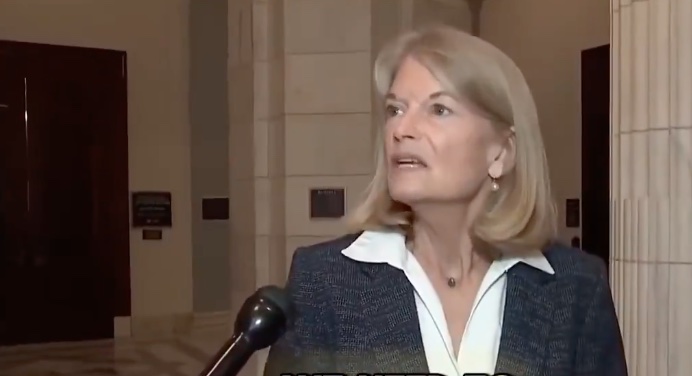
Sen. Lisa Murkowski was one of four Republicans who were hard no’s on the appointment of Rep. Matt Gaetz as Attorney General. She didn’t need an FBI report on him; she just said he was not a “serious candidate.”
But in a walk-and-talk interview with a reporter, she has now indicated that she won’t vote to confirm any of Trump’s nominations unless they all get a thorough background check by the FBI.
You know, the same FBI that raided the late Sen. Ted Stevens home in Girdwood in 2007 on a witch-hunt that later proved to be a case of government weaponized against a political figure; the same FBI that kicked down the door of a couple in Homer, Alaska in 2021, looking in vain for then-Speaker Nancy Pelosi’s laptop computer.
The background check is not an absolute requirement, but Murkowski’s words indicate she believes it to be necessary to dig into every aspect of their personal lives. That’s what they open themselves up to, she said.
President Donald Trump has already indicated that not all his appointees need to go through a FBI background check. On Truth Social on Nov. 10, he wrote, “Any Republican Senator seeking the coveted LEADERSHIP position in the United States Senate must agree to Recess Appointments (in the Senate!), without which we will not be able to get people confirmed in a timely manner.”
The constitutionally permitted recess appointment process is when a president appoints people temporarily to positions when the Senate is in recess. The appointments then are in effect until the end of the following legislative session.
Sen. John Thune will be serving as Senate majority leader. Rep. Michael Johnson is House Speaker. They would have to both agree to a late January recess.
Trump understands the challenges he faces, having been there before. Only 25 nominees have ever been sent to the Senate and failed confirmation, either by withdrawing their names or being rejected. Three of the 25 were in the first Trump term — 12% of the total.
The Trump transition team has not yet signed documents with the existing administration that would authorize the Justice Department to screen his choices that require the Senate’s consent.
BREAKING: Alaska Senator Lisa Murkowski says she will not approve any Trump nominee unless they are thoroughly vetted by the FBI. pic.twitter.com/ETeb1SswQZ
In other news relating to Murkowski leading “the resistance” to the Trump presidency, she and Sen. Susan Collins of Maine this week voted for Biden’s judicial nominees that the Democrats are ramming through before Jan. 20. They were the only Republicans to do so, helping to seat judges that will support Biden’s and the Democrats’ agenda for lifetime appointments.
In September of 2020, Murkowski was on record opposing the confirmation of any Trump appointee to the Supreme Court that close to the November elections (which she hoped he would lose).
“For weeks, I have stated that I would not support taking up a potential Supreme Court vacancy this close to the election. Sadly, what was then a hypothetical is now our reality, but my position has not changed,” Murkowski said in a statement.
Weeks later, she changed her mind and voted to confirm Supreme Court Justice Amy Coney Barrett.
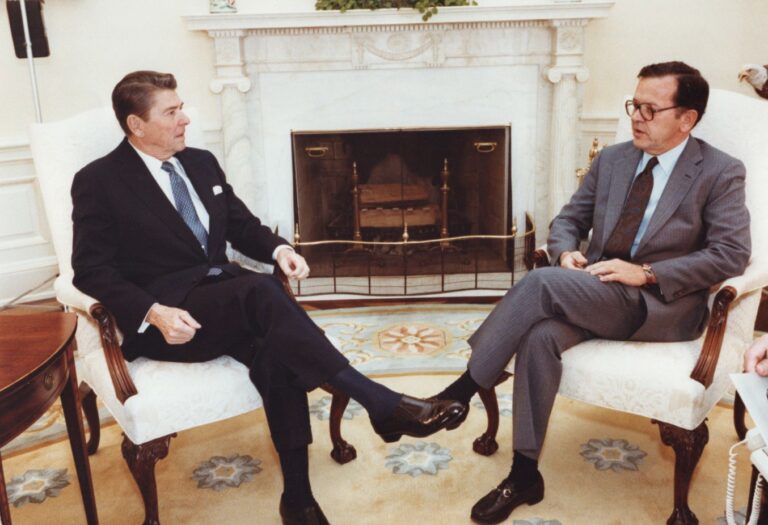
A $2 million donation from ConocoPhillips Alaska to the Ted Stevens Foundation will help create the Alaska Leaders Archive at the UAA/APU Consortium Library, the University of Alaska Anchorage announced this week.
The Alaska Leaders Archive project was launched in 2023 with the gift of the records of the late Sen. Ted Stevens to UAA by the Ted Stevens Foundation. The Stevens collection is one of the largest congressional archives in history, documenting the transition of Alaska from a territory to a state and the important legislative accomplishments of Stevens during his 4 decades in the Senate. His work shaped policy in ways that continue to impact the state and the nation today. At the time he left office, Stevens was the longest-serving Republican U.S. senator in history.
“We are excited to partner with the Ted Stevens Foundation as a lead donor to preserve and share our state’s history through the Alaska Leaders Archive,” said ConocoPhillips Alaska President Erec Isaacson. “This is an opportunity to equip future generations of Alaskans with the historical foundation to understand the challenges, triumphs, and lessons of those who came before them. ConocoPhillips Alaska is proud to be part of this significant project, which will empower future leaders and ensure that Alaska’s rich history is preserved for years to come.”
The collection showcases Stevens’ commitment to key issues in Alaska and the nation, including energy, education, healthcare, communications, Indigenous rights for Alaska Natives, amateur sports, Title IX, infrastructure, military, the Arctic, and much more.
The Stevens collection will serve as the cornerstone of the Alaska Leaders Archive, which includes historical collections totaling more than 7,000 boxes from more than 130 Alaska leaders, elected officials, and community figures.
“The Alaska Leaders Archive will provide a window into the leadership and decision making that shaped Alaska’s history,” said UAA Chancellor Sean Parnell, who was governor of Alaska when Stevens tragically died in a plane crash. “Their legacy has a great deal to teach our students and future generations of Arctic leaders.”
In collaboration with the Ted Stevens Foundation, UAA plans to renovate and expand the UAA/APU Consortium Library to house the Alaska Leaders Archive.
“Senator Stevens was a strong believer that challenges could only be solved by bringing different voices and perspectives together. The Alaska Leaders Archive brings together the rich history of that collaboration and we hope it encourages leadership in the same spirit,” said Lily Becker, daughter of Sen. Stevens, who is president of the Ted Stevens Foundation.
The creation of the Alaska Leaders Archive will involve multi-phase construction and renovation at the UAA/APU Consortium Library. The completed project will include the addition of state-of-the-art archival facilities, a teaching area, and space to display items from these important collections.
Stevens served for six decades in the public sector, starting with his service in World War II as a U.S. Army pilot, flying C-46 and C-47 transport planes in the Pacific Theatre. In the 1950s, he moved to Fairbanks to practice law and was appointed U.S. Attorney by President Dwight D. Eisenhower. In 1956, he worked in the Eisenhower Interior Department, where he became the senior counsel and solicitor. He is credited for his role in winning over Eisenhower to the idea of statehood for Alaska. He was elected a state representative in 1964 and elected to the U.S. Senate in 1968.
Stevens survived a witch hunt by a weaponized Department of Justice. Because of the devious actions of prosecutors who hid exculpatory evidence, he was convicted just days before the 2008 election, which he lost. He was later exonerated, and the prosecutors were publicly called out for their reckless professional misconduct, but they were never fired from the Department of Justice for their misdeeds. Stevens died in a plane crash Aug. 9, 2010 in Western Alaska.
During meetings in Juneau last week, United States Army Corps of Engineers (USACE) officials said it will likely take a decade or more to research and implement a long-term solution to Mendenhall River flooding.
This was not what Juneau homeowners wanted to hear.
When asked why it takes so long to conduct the modeling and studies required, officials pointed to bureaucracy as the problem. “There’s a lot of agencies involved. There’s the reality of the process of government and democracy, how fast it moves.”
USACE, U.S. Forest Service, Natural Resources Conservation Service, NOAA, the National Weather Service, and the EPA were examples of agencies that must weigh in.
USACE officials noted that Juneau’s flood mitigation project is only one of many they are working on, and their resources are limited by their budget and staffing.
That’s not to suggest that nothing is happening. The meetings last week focused on short-term mitigation measures that city officials are considering.
USACE has offered to provide four miles of HESCO barriers for free that would be used to block potential flooding along the Mendenhall River. Last month the Assembly approved spending $2 million toward the cost of installing the first phase of the project, now estimated at $7.8 million (including periodic maintenance and removal).
It’s possible the cost could be lower depending on available government programs or grants.
The exact design and placement of the barriers is undetermined and dependent on preliminary modeling/maps that should be available prior to the proposed HESCO barrier installation next March. These studies are important since some fear that partial safeguards could result in moving flood water to a different area of the river where there is less protection.
Most barriers would be placed on private riverfront properties, possibly for as long as ten years. Concerns and objections have been voiced, not the least of which is who bears the cost. The Assembly has introduced an ordinance proposing to split the entire cost 50-50 between the city and affected homeowners through an established Local Improvement District. About 466 homeowners, identified by flood inundation maps as being at risk in the event of a 16-foot flood event, would pay about $8,000 each as part of the proposed LID.
Community feedback will determine whether the LID is approved but the process will delay a final decision until next March.
Regardless of the placement, repayment structure, and final approval of the HESCO barrier project, affected homeowners are looking at the prospect of waiting 10 years or longer for a permanent resolution. They will find it extremely difficult to improve or sell their home while living under the threat of a catastrophic flood.
One citizen group that was formed in response to this emergency,Juneau Flood Solution Advocates, now includes several hundred members. They are actively working to “unite the flood-affected community of Mendenhall Valley in response to the challenges posed by glacial outbursts.”
This group’s primary concern is with the length of time it will take to study, design, and construct a long-term solution. City leaders have proceeded slowly and taken the position they must accept USACE recommendations. This seems overly cautious given that the assessed value of residential structures at risk approaches $1.5 billion.
Why accept at face value that a long-term general investigative study will cost $6 million and take five years or more to complete?
Why investigate solutions such as tunneling through mountains or bombing glaciers that are risky and unlikely to work?
Selecting one or two solutions (a Mendenhall Lake levee and diversion channels, for example) which have been proven successful elsewhere could cut study time and cost dramatically.
Yet, the Juneau officials have committed $3 million in matching funds for this $6 million study that is now stuck in limbo because funding to complete it hasn’t been secured.
Where is the sense of urgency? Can city officials not forcefully advocate for a legislative solution to bypass the bureaucratic foot-dragging inherent in projects like this? Perhaps the Assembly could consider drafting a resolution to our Congressional delegation to begin negotiations for an alternative approach that cuts cost and time.
Juneau homeowners cannot afford to remain solely at the mercy of government agency red tape and timetables.
After retiring as the senior vice president in charge of business banking for Key Bank in Alaska, Win Gruening became a regular opinion page columnist for the Juneau Empire. He was born and raised in Juneau and graduated from the U.S. Air Force Academy in 1970. He is involved in various local and statewide organizations.
This is the first part in a three-part series on Alaska election reform.
Alaska is a place where election issues are the norm, not the exception. As an Alaska Native from Bristol Bay, I am keenly familiar with the many issues that have surfaced over the years.
To list a few: the lack of access to in-person voting; the ability to destroy ballots at the precinct level; the claims that many lack access to voter identification; and irregularities like those seen in the Senate race between Joe Miller and Sen. Lisa Murkowski that re-surfaced during the 2016 House race between challenger Dean Westlake and incumbent Rep. Ben Nageak. We also know that a series of data breaches between 2012 and 2024 compromised the voting data of most Alaskans.
Cumulatively, cybersecurity failures, judicial activism, perceived bureaucratic interference, and apathy by the executive branch all add up to big problems with our elections.
I have never stated or implied that fraud is a part of our election system. However, I have identified areas where we have the potential for significant errors, inaccuracies with ballot counting, and the need for strict accountability. The data security vulnerability should alarm everyone. Every Alaskan has had their HIPPA information compromised in the past few years, and 113,000 Alaskans had every part of their voting identifiers stolen by nefarious actors.
Was your information stolen? You may never know because the Division of Elections keeps this information to itself. Where is the callout from the legislature, the Division of Elections Director, or the Office of the Lieutenant Governor to share this information with the public? Full public disclosure should be our right under the law.
The problems are systemic, and they have been around for decades. As more time passes, they compound without much improvement. The problems we see with our election system are well known, and these dysfunctions are embarrassing and undermine voter confidence.
Three overarching issues have emerged.
First, apathy by the executive branch for failing to embrace their constitutional obligation.
Second, judicial interference with the intent to undermine existing statutes and obstruct reform by circumventing the intent of the legislative branch.
Third, activism at different times by the Division of Elections.
With such a high transient population, many Alaskans need more historical background of our election woes. Others, due to the passage of time, still need to be reminded of the headlines from past election cycles.
One thing remains constant, however, which is that career bureaucrats and the judiciary outlast short-term election cycles.
Elections directors come and go, as do lieutenant governors, but all drink from the same glass. Few come in with the necessary knowledge of these problems, and fewer have the will to make the substantial changes we need, which compounds the problem. We have witnessed bureaucrats protect the status quo, not necessarily based on nefarious intent but rather on protectionism.
For years, legislators from both sides have unsuccessfully attempted to make election reforms. Sen. Mike Shower (R-Wasilla) is a long-time champion of election reform. Rep. Sarah Vance (R-Homer) has, in recent years, collaborated to propose meaningful reform. All too often, good legislation is hijacked by legislators filing amendments such as same-day registration with no voter ID—a deal breaker for 84 percent of Americans, according to a 2020 Monmouth University research poll and a 2024 Gallup poll.
Serious election issues have been an ongoing problem in Alaska since 2010 during the write-in campaign between Joe Miller and U.S. Sen. Lisa Murkowski and, more specifically, legal challenges in House District 40. Here is a brief history of the more notable problems:
In 2012, the Alaska Department of Health and Social Services (DHSS) breach had a portable hard drive stolen that exposed the personal information of approximately 500 Alaskans.
In 2014, during the hand count of mail-in and questioned ballots for the Bill Walker vs Sean Parnell race for governor, it was discovered that as many as 15 percent of Alaskans were improperly registered, resulting in the in-state legislative portion of their ballot being rejected.
In 2015, the Alaska Department of Administration experienced a cyberattack affecting over 700,000 Alaskans.
In 2016, Democrat primary incumbent Rep. Benjamin Nageak and challenger Dean Westlake experienced legal challenges and judicial interventions similar to Miller vs. Murkowski in 2010 in House District 40.
In 2020, five days before the election, Alaska’s Online Voter Registration System was breached, and nefarious foreign actors stole the personal information of more than 113,000 Alaskans, enabling ballots to be printed online and cast without your knowledge.
In 2020, amid the Covid-19 pandemic, the Alaska Legislature, before it recessed, took up the question of whether a signature would still be required for mail-in ballots. The Legislature voted to keep the signature requirement and adjourned. Anchorage Superior Court Judge Dani Crosby then ruled in favor of the plaintiffs, the League of Women Voters of Alaska, stating that the witness signature requirement unconstitutionally burdened the right to vote amid the pandemic.
In 2021, another sophisticated cyberattack compromised Alaska’s DHSS system again, exposing all Alaskans’ personal and health information.
In 2024, an Alaska Department of Corrections data exposure of the Health Insurance Portability and Accountability Act (HIPAA) exposed protected health information to incarcerated individuals.
This pattern of serious security breaches continues to expose the vulnerabilities of Alaska’s election system. There has been a lack of action, which comes down to willful apathy from politicians and bureaucrats who appear content with turning a blind eye to fixing Alaska’s election issues.
The lieutenant governor should turn over every stone—and now—to answer any questions about the vulnerability of our election system before certifying an election. A dive into the many problems with Alaska’s election system will be explored in the second part of this series. If any Alaskan thinks they know a lot about Alaska’s election issues, just wait until you see what is under the hood.
Terrence Shanigan is a lifelong Alaskan of Sugpiaq descent from Bristol Bay. He is also the co-founder of Mission Critical, is a combat veteran, an honored husband and a dedicated father.