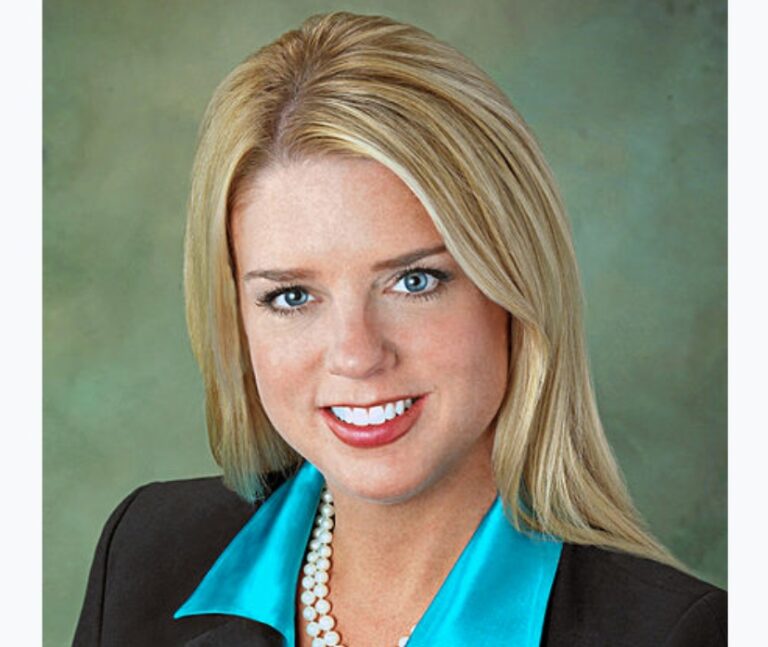
In her latest email request for funds from her supporters, Rep. Mary Peltola for the first time admitted that she is losing her race for reelection to Congress.
“I hate coming to you with bad news, but with just 14 days until the election, I have no choice. A new poll shows me losing to my extremist opponent, Nick Begich,” Peltola wrote on Tuesday. She showed an image that has her with 40% support and Nick Begich with 44% support, and she stated that 16% are undecided.
“I’m not going to sugarcoat this: It looks like the millions that Mike Johnson and his super PAC are pouring into Alaska to lie about me and my record are working,” Peltola said, lying once again to voters. She has ten times the campaign treasury that Begich has.
“But here’s the good news: This poll shows that 16% of voters are still undecided. So this race will be won by whoever gets to those undecided voters first!
Then she asks people to donate $10 to $50.
“… my campaign team and I are reaching Alaskans by foot, by mail, by TV, and phone. But to reach every undecided voter and win, I need you to fuel our campaign in these last 14 days. So please, will you split $25 between the Alaska Democratic Party and my campaign to help me win over undecided voters and defy the odds once again in November?,” Peltola’s campaign writes in an email coordinated with the Democratic Party.
Peltola must have her own secret polling, because what she is telling Alaskans in this email does not add up to the polls published in September and October by the National Republican Congressional Committee. Her numbers are off. Only 10% are undecided.
Peltola is either not being honest with voters or has her own polling data that she is not detailing.
All fall, Peltola has been spending money on “feasts” that she has been holding around the state with her supporters, and earlier this fall she had a “FREE BEER!” sign on the window of her campaign headquarters in Fairbanks.
At the end of the third quarter, Peltola had over $3.3 million cash on hand, compared to Nick Begich, who had $440,700 in his campaign account.
Ammunition is in short supply, according to Ammoland, a website dedicated to news about firearms and ammunition.
“In the wake of mounting global tensions and disruptions to key supply chains, the U.S. ammunition industry is facing significant challenges. Several recent developments are converging to create a perfect storm that could lead to a gunpowder shortage, threatening both military and civilian ammunition supplies,” the news site reports.
In May, Alliant Powders, a leading producer of reloading powders l(Bullseye and Unique), suspendedshipments of its smokeless powders, a decision driven by global conflicts — most notably the war in Ukraine. the company could not get a key ingredient — nitrocellulose — so prioritized its military contracts, diverting all nitrocellulose to ammunition production for defense purposes. This has left civilian reloaders scrambling for alternatives, Ammoland reports.
In addition to military customers being prioritized, there’s China. In August, China started restrictingexport of nitrocellulose and antimony, two critical components in ammunition production, Ammoland reports.
“Antimony, essential for hardening lead bullets, and nitrocellulose, used in propellants, are both vital to keeping the U.S. ammunition industry running. China’s decision has created widespread concern in the defense sector as the U.S. relies heavily on Chinese imports of these materials,” the report says.
In January, Alaska Attorney General Treg Taylor signed a letter to the Biden-Harris Administration, objecting to the administration’s attempt to curtail ammunition to the general public.
No transformation has been more profound than that of Sen. Cathy Giessel of south Anchorage.
Once upon a time, she was pro-life, pro-resource development, pro-PFD, foe of big labor and prototype Republican. Her metamorphosis has shed all but the empty label “Republican.”
What is the new Giessel?
Death to the PFD; death by abortion; death by taxes/regulation to business; and new best buddies with big labor (who now fund her campaigns).
She holds joint fundraisers with Democrats to raise money to defeat Republicans. She joined the Democrats as soon as she was elected. She was elected with 34% of the vote (due to the weird workings of rank voting – which she loves).
When someone does a 100% about-face, they owe an explanation. But there is none from Giessel.
The best explanation seems to be a personal lust for power, revenge of perceived personal slights and generally instability. I think we all remember her unexplained rabid opposition to the appointment of Rep. Laddie Shaw to the State Senate. Inexcusable, unjustifiable and inexplicable … but typical Giessel.
She is not on the ballot in 2024, so voters will have to wait until 2026 to rid themselves of this basket case. But she does have new “best friends” in the State Senate.
Most are Democrats. This election only one Democrat is in a serious race — incumbent Democrat Sen. Scott Kawasaki who is facing a spirited challenge from an excellent candidate, Republican Leslie Wein Hajdukovich.
Giessel’s wants power, craves power, lusts for her old title, “Senate President.” Never mind that hers was the most dysfunctional and mean-spirited tenure in State history. That is what she wants.
So who are these “Republican” candidates Giessel needs elected? Coincidentally the same ones being funded by Outside big labor bosses: Senators Jesse Bjorkman of Nikiski and Kelly Merrick of Eagle River.
Voters do have better choices: Experienced, proven conservatives: Ben Carpenter, running against Bjorkman and Jared Goecker, running against Merrick.
The decision is yours.
Electing those three challengers will tip the Senate and keep Giessel the “weasel” on the back bench, where she belongs and will deny the big labor bosses the control they crave of our Legislature.
Donate and vote. The choice is yours.
Tuckerman Babcock is the former chairman of the Alaska Republican Party, 2016-2018. He lives in Soldotna.
The Juneau Assembly voted Monday to spend as much as $2 million for a containment system along a portion of the Mendenhall River to protect homes in the populated Mendenhall Valley from future glacial flooding. Two floods have occurred this year so far, the first on Aug. 6, which impacted more than 300 homes, and left many uninhabitable. The second, which occurred last week, spared homes but caused concern since it came so quickly on the heels of the last flood.
The Hesco barriers are containers that can be filled with sand, similar to oversized sandbags. Such barriers, placed end to tend, can become a type of levee.
The flooding is now a regular occurrence. As the the Mendenhall Glacier has receded, it developed a feature known as Suicide Basin, essentially a pond of ice and water that fills up and then releases. In August, about 14.5 billion gallons of water gushed out of the glacier pond and powered through many homes, businesses, and streets, leaving a path of destruction.
Other solutions include building a large levee around a portion of the Mendenhall Lake to control the flow from the lake into the river.
That idea would take the cooperation of multiple federal and local agencies, and might be subject to environmental group lawsuits.
The Hesco solution might end up being paid for by the residents of the impacted areas through what’s known as a Local Improvement District, where the burden is shifted to those impacted. That might cost each homeowner $100,000 or more, which in turn could impact property values, assessments, and property tax collections.
The burden for some homeowners would be greater if they had those installed on their properties, even though the benefit would be provided to homes hundreds of yards away. In addition to aesthetic concerns, there is no guarantee that the Hesco barriers will actually prevent flooding.
This was a parable told to me when I examined our choices in this upcoming election.
“In a distant valley, there stood a towering tree, its branches sprawling over the land, providing shade and shelter to the people below. This tree, however, was unlike any other. It mirrored the health and nature of the community that nurtured it. When the people were diligent, cooperative, and self-reliant, the tree thrived—its leaves shimmered with vibrant green, its roots stretched deep into the earth, and its fruits were bountiful. The entire community prospered, and everyone reaped the rewards of their effort.
“But over time, some people grew complacent. They relied on others to tend the tree, leaving the work to a few. Some even began to demand more shade, more fruit, without contributing. Soon, others joined in, asking for more from the tree than they gave back. As this mindset spread, the tree began to change. Its leaves lost their luster, its roots grew shallow, and the once plentiful fruit became sparse. The tree, once the heart of the valley, began to reflect the selfishness, division, and inattention of the people who had so richly benefitted from its robustness in the past.
“One elder stood before the people and said, ‘This tree is not dying because of its nature, but because of ours. As we care for it, so it will care for us. If we are divided and neglectful, so too will it wither. But if we unite and nurture it as one, it will flourish, and so will we.’
“And so, we learned: our tree was but a reflection of ourselves. The health of the tree, like the health of our government, is a mirror of our community’s care, responsibility, and our will.”
Government, whether local, state or federal, will always be a reflection of its constituency.
The story of 1620 founding of the Plymouth Colony offers a profound lesson about the dangers of government systems that ignore human nature in favor of utopian ideals as promised in Plato’s Republic.
The romanticized version of Plymouth’s history celebrated in our public school system often misses a key element: It was not the idealism of collective labor that saved the colony, but the very opposite.
It was, instead, a failed collectivist experiment. Land and resources were shared equally among all. This proved that when there is no personal incentive to work harder with meaningful outcomes, people naturally become unproductive. In Plymouth, this led to food shortages, rampant disease, and a near collapse of the entire settlement.
Here’s where the irony thickens. In an era that loves to laud inclusion and collectivism, many forget (or conveniently ignore) that it was private property rights and individual responsibility that ultimately saved Plymouth Colony. When the leaders ditched the grand communal vision and divided the land among families, the results were nothing short of miraculous. Suddenly, people were motivated to work for themselves, their families, and their futures. The colony, once starving, began to thrive.
Today, we find ourselves staring down similar illusions. Whether it’s through our own government’s self-serving dictums, union efforts, social programs, or singular issue-driven political platforms, we see the same old collectivist ideas creeping back. Only this time, they come cloaked in the righteousness of progressivism. Candidates and propositions woo voters with promises of solving specific problems without ever addressing the larger picture.
Union-backed political figures and proposition campaigns often promise prosperity for a select group or expanded benefits for a specific class, all while proposing solutions to narrow issues like raising the “minimum wage” or promoting “voting for the best candidate” instead of the party. However, these promises fail to address the broader needs of the entire community, neglecting the long-term health and prosperity of the majority in favor of short-term gains for the few. This selective approach risks fragmenting society and entrenching government control, all under the guise of progress.
And sure enough, with each election cycle, these promises pile up like short-term bandages on a long-term wound, creating a government bloated with inefficiency and bureaucracy.
This piecemeal approach to governance mirrors the collectivist mindset that nearly destroyed Plymouth. When the interests of a select few dominate, the greater good is sacrificed. Union-controlled candidates, in particular, often push for policies that benefit their narrow constituencies but impose costly burdens on the wider population. Think of it: expanding public sector unions’ influence might bring better wages to their members, but what does it cost the average Alaskan? Higher taxes, the demise of small businesses, increased government spending, and a slow erosion of the freedoms that come with self-reliance and individual accountability.
The lesson here is as relevant today as it was in 1620: a government that tries to manage every problem through collectivist means, rather than empowering its people to solve their own challenges, will always falter. The more we allow union-backed candidates and singular-issue politicians to dictate public policy, the more we risk repeating the mistakes of Plymouth Colony—only on a much grander, more dangerous scale.
The true story of Plymouth teaches us a vital truth: A government will always be a reflection of its people. If we value personal responsibility, limited government, and individual freedom, we must demand these principles from those that represent us.
But if we continue to fall for the promises of short-term fixes and collectivist ideals, we will only find ourselves burdened with an ever-growing bureaucracy and a government that serves the few at the expense of the many.
Michael Tavoliero is a writer at Must Read Alaska.
Alaskans are tired of the failed ranked-choice voting scheme. But with over $12 million in out-of-state funding from “progressive” donors, the road to repeal will be uphill all the way
By JAKE GRANDSTAFF | RESTORATION NEWS
New polling from Alaska Survey Research shows the future of ranked-choice voting (RCV) in the state hangs by a thread with momentum going toward the “Yes on 2” repeal campaign. This has created desperation among “dark money” liberals who have dumped over $12 million into the campaign to keep RCV, including $4.4 million from a single donor on October 1.
These “dark money” groups and Democratic activists understand that keeping the failed RCV system is Democrats’ only shot at keeping the state’s House seat currently held by Rep. Mary Peltola (D). In 2020—the first year Alaska implemented RCV—Peltola’s second-preference votes sent her to Congress, despite Democratic candidates receiving far fewer votes than the Republicans, who split their vote and lost.
“You can see that the ‘No on 2’ group trying to preserve RCV is very nervous, which is why they just took in another $4.4 million from an outside group that has no obvious connection to Alaska,” Suzanne Downing, founder of the conservative news website Must Read Alaska, told Restoration News.
As we’ve written, out-of-state “dark money” bought RCV in Alaska by outspending opponents 12–1 in 2020, yet barely won by fewer than 3,800 votes. Unhappy with the results, Alaskans placed RCV repeal on the ballot, once again setting off a tsunami of out-of-state “dark money” funding to drown out their voices—and keep Peltola in office.
Rep. Mary Peltola, during the Alaska Chamber of Commerce forum with opponent Nick Begich on Monday, changed her position on the topic of men competing in women’s sports.
“I don’t think that we should have men competing in women’s sports,” she said. This is profoundly different from her previous position.
In 2023, Peltola voted in lockstep with House Democrats against a House Resolution to amend Title IX legislation and ban males who prefer to think of themselves as females from female-only competition categories in K-12 schools and colleges that receive federal funding.
Not a single Democrat voted to defend women’s sports, but the bill passed the Republican-led House, 219 to 203, and died in the Democrat-controlled Senate. Peltola stuck with the Democrats then, but has since been advised that she is out of step with her voters. Alaska voters — by a wide margin, according to polling — believe protecting fair competition is essential for the survival of girls’ athletics.
“This causes a lot of feelings for people, this is a culture wars issue,” Peltola said at the debate. “I’m not a very good activist, I’m not a champion on one side or another of most of these culture wars, because I feel like they are a complete and total waste of our time. We have real problems, we’ve got inflation, we’ve got every sector of the economy without skilled labor, skilled workforce. The list goes on and on.”
“No, I don’t think that we should have men competing in women’s sports, but you know, on the other hand, look at the number of female Olympian athletes who have been questioned about their femininity, they’re questioned, are they even a woman,” she added. “This is just not something that is number one for me.”
In the Olympic Summer games, a male boxer who identify as a woman won the gold medal in women’s boxing.
The Haines Borough Assembly unanimously terminated Kristine Kennedy from her position as Borough Clerk after just 11 weeks of employment. Her discharge occurred on Oct. 22.
Although the vote was unanimous, three newly elected assembly members were required to act on the challenging agenda item titled, “Discuss Borough Clerk’s Employment Status” within hours of assuming office.
The Haines Borough Code designates the Borough Clerk as a municipal officer who directly reports to the Assembly, thereby subjecting her employment status to the Assembly’s decision. Kennedy declined the option to have her employment status discussed in public, yielding to the preference of the Assembly. After voting to have an executive session to consider the personnel issue, the Assembly convened behind closed doors for approximately an hour. Then, the Assembly voted to terminate the clerk without cause after the executive session, effective the next day, Oct. 23 .
Mayor Tom Morphet indicated after the meeting that he was aware of turmoil in the borough office and acknowledged that people had told him he needed to act, but he considered, “It was not my place to intercede.” Morphet also indicated that his interactions with the clerk were “respectful and professional” and that if she had different relationships with others, he “did not feel it was my place to get involved in office politics.”
However, the conflicts escalated in the last week, and he witnessed a heated exchange between the Borough Clerk and the Borough Manager in the office, leading him to believe that the assembly should address the issue.
“It was a difficult position to be in for our first meeting after being newly elected, but our role as assembly members requires us to address personnel issues with borough officers. It was not comfortable,” commented Assembly Member Cheryl Stickler.
Assembly Member Gabe Thomas acknowledged the challenging timing of the personnel item on the agenda but stated that the issue “needed to be addressed sooner rather than later for the best interests of the borough and the clerk.”
According to Borough Manager Elke Doom, Kennedy was still in her employment probationary period, and her termination without cause will not result in a contract payout.
Just two days after Donald Trump staged a campaign event by working a shift at a McDonald’s franchise, the Centers for Disease Control and Prevention has issued a warning about McDonald’s.
“This is a fast-moving outbreak investigation. Most sick people are reporting eating Quarter Pounder hamburgers from McDonald’s and investigators are working quickly to confirm which food ingredient is contaminated. McDonald’s has pulled ingredients for these burgers, and they won’t be available for sale in some states,” the CDC said in a statement.
The burger chain had received enormous publicity following Trump’s visit, in which he scooped up servings of French fries and greeted customers at the drive-through window, while wearing his classic red tie and a McDonald’s apron.
Donald Trump waves from the window of a McDonald’s drive-through in Feasterville, Pennsylvania.
Immediately, the CDC attacked McDonald’s.
“CDC, FDA, USDA FSIS, and public health officials in multiple states are investigating an outbreak of E. coli O157:H7 infections. Most people in this outbreak are reporting eating the Quarter Pounder hamburger at McDonald’s before becoming sick. It is not yet known which specific food ingredient is contaminated,” the CDC said at its website.
“McDonald’s is collaborating with investigation partners to determine what food ingredient in Quarter Pounders is making people sick. McDonald’s stopped using fresh slivered onions and quarter pound beef patties in several states while the investigation is ongoing to identify the ingredient causing illness,” the federal agency said.
Also on Tuesday, President Joe Biden surprised the political world when Trump must be thrown in prison.
“If I said this five years ago, you’d lock me up: ‘We gotta lock him up,’” Biden, 81, said a Democratic campaign event in Concord, New Hampshire.
The audience in the room applauded for several seconds before Biden evidently tried to put the toothpaste back in the tube: “Politically, lock him up — lock him out, that’s what we’ve got to do.”
Meanwhile, Kamala Harris took the day off of campaigning to prepare for a pre-recorded interview with NBC, to which Trump labeled her as lazy, since there are just 14 days left to go in the general election. The mainstream media then attacked Trump for using what it said was a “racist trope.”
By racist, the Los Angeles Times and other news outlets mean that blacks are sometimes labeled as lazy. But in this case, Harris is not remotely black, so it’s unclear what trope the news agencies are referring to.