The Alaska State Troopers, NTSB, and Alaska National Guard aircraft and personnel conducted recovery efforts today at the site of the Bering Air plane crash on the ice of Norton Sound, near Nome.
Bering Air continued light operations today to serve the needs of those in the far-flung communities. At Noatak, the community came out to the airstrip and surrounded the plane and prayed for the pilot and the air service.
Meanwhile, two HH-60G Pave Hawk helicopters, a Nome-based UH-60L Black Hawk, an HC -130J Combat King II and a team of para-rescuemen worked to recover the victims from the crash site.
The bodies have been recovered and brought to Nome where they were positively identified by Alaska State Troopers. The bodies will now be transported to the State Medical Examiner’s Office in Anchorage for autopsies. Next of kin has been notified.
Alaska’s Democratic Party is meeting in Juneau this weekend and the Alaska Republican Party will be in town February 22 for their quarterly State Central Committee meeting.
The work that state political parties do is largely invisible. Consequently, there has always been a fair amount of misconception about state parties – why they matter and what they can and cannot do.
On and off for 29 years I have served on the Alaska Republican Party’s State Central Committee. While I have no clue how Alaska’s Democratic Party conducts its business, I understand how the ARP operates – and why it matters.
When you register to vote, you can register as “Non-Partisan” or “Undeclared” or pick a political party. It’s the voter’s choice to register with a party or not. Parties are opt-in organizations. No Republican party leader, nor the State Executive Committee or the State Central Committee has the authority to decide whether or not you are worthy, and no one can kick you out.
Parties exist to elect our candidates to office, promote the principles found in our platform, and recruit new members to our Party. Republicans did just that over the past year. Since the February 2024 report from the Division of Elections, Republicans have gained over 7,000 more new voters than Democrats have.
American political scientist E.E. Schattschneider once observed that democracy is “unthinkable” without parties to do the work of campaigning, organizing stable coalitions, and helping citizens make sense of political choices. Most voters simply don’t have time to dig into each candidate’s philosophical underpinnings, so party affiliation can at least provide some clue.
It is the biennial State Convention and the State Central Committee that determine Alaska Republican Party policies. Remember, every single Republican Party officer and State Central Committee member is a volunteer – no one is paid.
The primary function of our 40 District Committees is to promote the election of Republican candidates in their individual districts. This includes candidate recruitment, fund raising for Republican candidates, promotion of the candidates, and any other campaign assistance that may be requested by the candidates.
Districts are not empowered to meddle in the affairs of other districts.
Parties do have a say in deciding which candidates get Party money – to the extent that its members and leadership raise any money to disburse.
Party contributions to candidates are subject by law to laughably low limits – $10,000 per State House candidate and $15,000 to a State Senate candidate, making the Party largely irrelevant in funding campaigns.
Typically, our candidates rely on their own networks and grassroots efforts to finance their races. In Fairbanks, Leslie Hajdukovich raised over $220,000, and Jesse Bjorkman (Kenai) raised over $144,000 for their 2024 State Senate races.
When a legislative vacancy occurs during a term of office (usually unexpectedly), the Party, through the affected District Committee, recommends three names of qualified Republicans from whom the Governor may select a replacement legislator until the next election. That’s why it’s important to have functioning districts that are well-acquainted with Republicans in their district who once appointed can go on to win the next election.
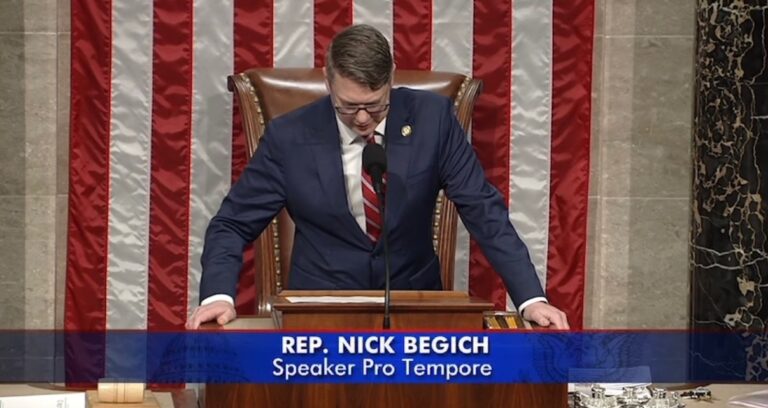
Our State Chairman oversees the Alaska Republican Party organization and affairs. The most daunting task of the Party chair is to keep our wings flying in the same direction. The November 2024 general election demonstrates why that is so challenging. In Wasilla’s District 27, Trump captured 77% of the vote and Begich won 69%. In Juneau’s District 4, Trump received 29% of the vote and Begich garnered 25%.
Republicans must turn out their base, but candidates in every district need swing voters to win. In November, Nick Begich won 159,950 votes statewide but only 66% (99,288) of registered Republicans voted in 2024.
Republicans can’t win without attracting swing voters, most of whom are unaffiliated with a party.
Alaska Republicans are a diverse and often uneasy coalition of very dissimilar districts, but at least we don’t disguise who we are.
The Democrat way of winning elections in Alaska is a model of deception. As of Feb. 3, 2025, there were 150,415 registered Republican voters in Alaska and 75,989 Democrats. Recognizing that most voters (358,451) register as “Non-Partisan” or “Undeclared,” five members of the Alaska House campaigned and won election as “Independent” or “Not Affiliated” candidates, yet all five are now serving in the Democratic-controlled majority.
Moving forward into 2026, Democrats and Republicans will fiercely compete for critical swing voters to determine control of the Alaska Legislature, the Governor’s Office, our sole Congressional seat and the Senate seat held by Sen. Dan Sullivan.
It’s all about the math. To win, Republicans must continue to add voters to our Republican ranks and attract swing voters to our candidates.
Paulette Simpson lives in Juneau and has been politically active for decades.
We, the people of Alaska and the United States, are witnessing a tragic allegory unfold. It’s a narrative where bureaucracy, once envisioned as a tool for public service and humanitarian relief, has morphed into an entrenched mechanism for maintaining political power and shielding special interests.
Some citizens have come to believe that our government institutions are infallible, as they provide jobs, manage vast funds, and supposedly care for our communities. However, this uncritical faith has led to complacency, mediocrity, and entitlement. Our freedom, strength, and willingness to face genuine challenges ultimately eroded by this state of affairs.
The narrative is almost cinematic in its depiction. Imagine politicians, under the banner of public service and humanitarian relief, pass legislation and create bureaucratic institutions intended to improve the lives of citizens. Billions of dollars flow through these institutions each year, funding programs meant to uplift and support the public. Yet, as these funds move through the system, a disturbing cycle emerges.
A portion of the money, whether through direct returns or circumvention, ends up back in the hands of the very politicians who initiated the process. This self-perpetuating loop transforms what should be a force for progress into a tool for political patronage. It has become a cycle that prioritizes the preservation of power over the achievement of genuine public good.
Education Funding: A Self-Reinforcing Loop
Consider the cycle of education funding. Every year, the legislature allocates a huge sum of money aimed at improving public schools and enriching student learning. However, a significant share of these funds is directed into union contracts, where teachers’ unions negotiate extensive benefits for their members.
These unions, with their considerable political influence, then endorse and support the legislators responsible for securing the funding. In return, these lawmakers receive campaign contributions and policy favors, effectively creating a loop: funds flow from the legislature to unions, and political favors flow back to the legislators.
Instead of fostering genuine educational reform, this cycle reinforces a system of political patronage that stifles accountability and innovation. Alaskan children’s future is denied in favor of this system.
Transportation Funding: A Cycle of Patronage
A similar cycle is evident in transportation funding. The legislature earmarks billions of dollars for transportation infrastructure projects intended to boost the economy and improve daily life. Yet, much of this money is funneled into contracts awarded to unionized construction companies and transportation workers.
These unions, leveraging their political clout, support the re-election of the legislators who secured the funds, channeling campaign contributions and favorable policy adjustments back to these lawmakers. Rather than producing efficient, forward-thinking transportation systems, this cycle often stifles innovation and accountability, ensuring that entrenched interests continue to dominate.
Health and Welfare Funding: The Loop Continues
The cycle of funding is no less problematic in the realm of health and welfare. The legislature allocates millions for public health initiatives, social services, and welfare programs designed to improve citizens’ well-being. However, a substantial portion of these funds ends up under the control of unions representing healthcare workers and social service employees.
These unions negotiate extensive benefits and, in turn, use their influence to support the legislators responsible for the initial funding. This results in a self-reinforcing loop where health and welfare funds, rather than driving substantive reform, bolster special interest groups and maintain the status quo. The result is Alaska’s people have continued health challenges amplified by this lack of substantive reform.
Alaska: A Microcosm of National Challenges
Alaska serves as a potent example of these national trends. With over 55% of its operating budget reliant on federal funds, Alaska functions more like a colony than an independent state. Its primary revenue—oil—has shaped a legislative system that often ignores long-term state interests in favor of serving special interests.
This reliance on federal money brings strings attached that constrain natural resource development and perpetuate a cycle of funding that benefits political insiders and perpetuates bureaucracy rather than private sector development. The result is widespread voter complacency and deep distrust of any change that might challenge the entrenched power structure—especially when taxpayer money is redirected to support subversive ideologies and political gain.
A Critical Question
In light of these examples, from education and transportation to health and welfare funding, we are compelled to ask: Is our current system truly designed to serve the public interest and foster genuine progress, or has it become an entrenched mechanism that merely preserves the power of a select few at the expense of accountability, innovation, and the long-term benefit of society?
This vicious cycle of special interest control, fueled by political patronage and cyclical funding flows, demands that we scrutinize and, ultimately, reform our system to ensure that it truly serves the public good.
In less than a month, the Trump Administration — bolstered by Elon Musk’s and Vivek Ramaswamy’s independent Department of Government Efficiency — has exposed the deep-seated corruption festering within our federal bureaucracy. This revelation has pulled back the curtain on a system of subterfuge that has long concealed misconduct at nearly every level of government. As these truths emerge, many Alaskans are beginning to question what is really happening in their state.
Alaska faces a unique psychological challenge. For decades, the state has relied almost exclusively on oil revenues, creating a centralized power structure that extracts taxes to maintain its collective hegemony. This dependency has bred an attitude of detachment among many citizens: if they are not directly footing the bill, why should they care about the corruption and inefficiency that undermine their future?
The exposure of federal corruption forces us to confront not only the malfeasance within government institutions but also the ingrained complacency that allows such systems to persist. We must challenge ourselves to reclaim our commitment to transparency, accountability, and the public good.
In light of all these concerns and our state motto, we must ask: Are we truly paving the way for a brighter future for our children when the very institutions meant to serve us directly foster a society marked by superficial contentment and diminished intellectual and physical vitality?
Michael Tavoliero is a senior writer at Must Read Alaska.
Former Rep. Mary Peltola ran a campaign against Nick Begich saying he would end Social Security. It was one of her biggest attacks on him.
Instead, Congressman Begich is trying to end the federal income tax on Social Security benefits.
The Senior Citizens Tax Elimination Act, H.R. 1040, would eliminate federal income taxation on Social Security benefits. The bill seeks to relieve middle-class seniors from what Congressman Begich describes as an “unjust double taxation” on their retirement income.
Peltola advocated for higher taxes on Social Security when she was in office. Begich favors lower taxes.
“After years of poor returns, the least we can do is make sure we end the practice of unjust double taxation on retirees. The money paid into social security belongs to those who paid into the system. As I made clear during the campaign, making sure that retiree programs like social security are protected from federal bureaucrats is a top priority,” Congressman Begich said.
According to the Congressional Research Service, prior to 1984, Social Security benefits were exempt from federal income taxation. However, subsequent legislation introduced a phased taxation system, wherein a portion of Social Security benefits became taxable as an individual’s income increased above a certain threshold.
The bill’s prime sponsor is Congressman Thomas Massie, a conservative Republican from Kentucky’s 4th Congressional District.
Congressman Massie recognized Begich joining as a co-sponsor: “Thank you to @RepNickBegich for cosponsoring H.R. 1040, the Senior Citizens Tax Elimination Act. This bill assists middle-class seniors by eliminating the unjust double-tax on Social Security benefits.”
Massie said that although seniors have already paid tax on their Social Security contributions via the payroll tax, they are still required to list these benefits as taxable income on their tax returns.
“This is simply a way for Congress to obtain more revenue for the federal government at the expense of seniors who have already paid into Social Security. My bill would exempt Social Security retirement benefits from taxation and boost the retirement income of millions of older Americans,” he said.
The proposed legislation has gained support from organizations like the Association of Mature American Citizens (AMAC) Action.
“Every year, millions of seniors become eligible for either Social Security or tier I railroad retirement benefits. After working for decades, paying taxes on their hard-earned income to fund these federal programs, some seniors are forced to pay income tax on the benefits they receive from the federal government. Taxing benefits which were created from already taxed funds is nonsensical and curtails retirement benefits seniors have been promised. Seniors deserve to reap the full benefits of their hard work from career-long contributions to Social Security and the Railroad Retirement Plan,” said Andy Mangione, Senior Vice President of AMAC Action.
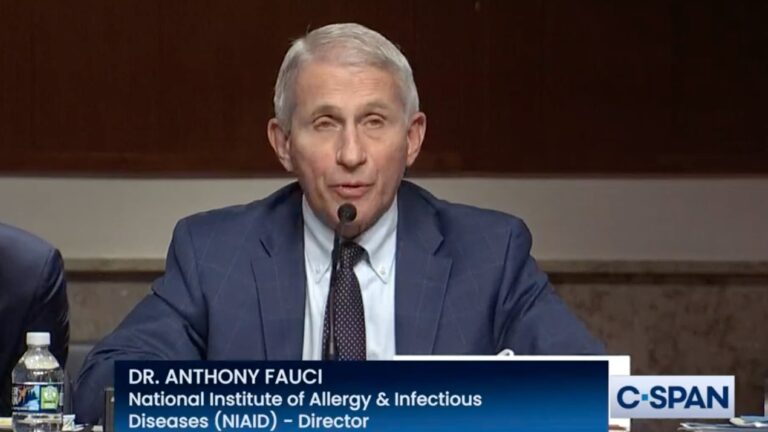
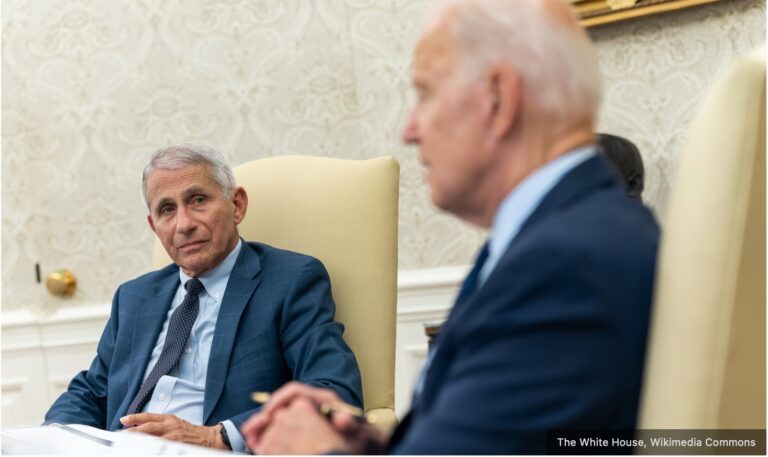
Literally, minutes before President Donald Trump was sworn in on Jan. 20, President Joe Biden issued a “preemptive” pardon to Dr. Anthony Fauci along with Gen. Mark Milley, former Rep. Liz Cheney, and the entire House Jan. 6 Committee.
Upon hearing the news, Dr. Fauci stated, “I really truly appreciate the action President Biden has taken today on my behalf.” Fauci went on to state he had committed no crimes, nor did he believe there were any “possible grounds” for criminal investigation.
Even more interesting is Biden’s pardon “covers” Fauci for any offense he may have committed or taken part in” beginning in January 2014.”
That aligns to the period in which former President Barack Obama “placed a three-year moratorium on the type of risky pathogen research that could have sparked a global pandemic.”
This far-reaching pardon precludes Fauci from being able to claim Fifth Amendment protection against incriminating himself. He could still claim the Fifth Amendment protection, however, if he is called to appear before state legal systems.
Now, there are 18 state attorneys general who are requesting more information from Congress to look at possible avenues to hold Fauci legally culpable at the state level.
Attorney General Alan Wilson of South Carolina is leading the coalition, which is demanding accountability for Fauci’s role in the Covid-19 pandemic response.
This letter to House Speaker Mike Johnson and Senate Majority Leader John Thune is asking Congress for cooperation to uncover misconduct and the rooting out of any violation of state laws.
AG Wilson cited key findings from the Congressional Report that the coalition is concerned about.
Key Findings from the Congressional Report:
Origins of COVID-19 – Evidence suggests Fauci worked to discredit the “lab leak” theory despite mounting evidence supporting it.
Misleading Congress on NIH Funding – Fauci allegedly provided false testimony regarding NIH-funded gain-of-function research at the Wuhan Institute of Virology.
NIH Oversight Failures – The NIH reportedly mismanaged taxpayer funds by failing to properly oversee grants to EcoHealth Alliance, which funneled funding to the Wuhan lab.
Suppression of Scientific Dissent – Prominent scientists who raised concerns about vaccine risks were allegedly silenced, limiting public awareness of potential side effects.
The 18 state attorneys general were listed in AG Wilson’s press release.
Note that Alaska’s attorney general was not one of them.
Sen. Rand Paul promised he will use his leadership position in the Senate to hold Fauci accountable for “the start of the pandemic or alleged subsequent cover-up.” This would include perhaps subpoenaing Fauci again to appear before a Senate panel.
We can only hope accountability will start to happen.
People lost jobs.
Children lost years of education.
Small businesses were closed,.
Economic decline was huge.
Many Americans died, some alone without family.
More people are looking into what happened and why. We need to do this so we can prevent the same from occurring in the future.
What the federal government failed to do, the states can do by exercising their power and bring people to justice.
Linda Boyle, RN, MSN, DM, was formerly the chief nurse for the 3rd Medical Group, JBER, and was the interim director of the Alaska VA. Most recently, she served as Director for Central Alabama VA Healthcare System. She is the director of the Alaska Covid Alliance/Alaskans 4 Personal Freedom.
A coalition of state attorneys general, led by South Carolina Attorney General Alan Wilson, has launched an investigation into Fauci’s handling of the Covid-19 pandemic.
The attorneys demand accountability for Fauci’s mismanagement, purposefully misleading statements, and suppression of scientific debate.
In a letter addressed to Speaker of the House Mike Johnson and Senate Majority Leader John Thune, the attorneys general commended ongoing congressional efforts to uncover potential misconduct. They also requested state-level cooperation in investigating any violations of state laws.
“President Biden’s blanket pardon of Dr. Fauci is a shameful attempt to prevent accountability,” said Attorney General Wilson. “If any of these findings indicate violations of state laws, we are fully prepared to take appropriate action to ensure justice is served.”
The pardon by President Joe Biden does not extend to state prosecution.
The request for further investigation follows the release of the House Select Subcommittee on the Coronavirus Pandemic’s final report, which highlights widespread failures and potential misconduct by high-ranking government officials, including Dr. Fauci. The key findings include:
Origins of Covid-19 – Evidence suggests Dr. Fauci worked to discredit the “lab leak” theory despite mounting evidence supporting it.
Misleading Congress on NIH Funding – Dr. Fauci appears to have provided false testimony regarding NIH-funded gain-of-function research at the Wuhan Institute of Virology in China.
NIH Oversight Failures – The NIH mismanaged taxpayer funds by failing to properly oversee grants to EcoHealth Alliance, which funneled funding to the Wuhan lab. Funds to EcoHealth Alliance came through the rogue agency USAID, which is in the process of being dismantled by the Trump Administration after it was discovered to be funding terrorism.
Suppression of Scientific Dissent – Prominent scientists who raised concerns about vaccine risks were allegedly silenced, limiting public awareness of potential side effects.
Despite these findings, former President Joe Biden issued a sweeping pardon for Dr. Fauci, shielding him from federal prosecution for any offenses committed during his tenure. However, the attorneys general maintain that this federal pardon does not prevent state-level legal action.
The attorneys general have formally requested that Congress provide them with any relevant findings that could lead to state investigations and potential prosecutions. They reaffirmed their commitment to upholding public trust, ensuring transparency, and preventing similar failures in future public health crises.
The attorneys general supporting the investigation are:
Alan Wilson, Attorney General of South Carolina
Jonathan Skrmetti, Attorney General of Tennessee
John Guard, Acting Attorney General of Florida
Liz Murrill, Attorney General of Louisiana
Ken Paxton, Attorney General of Texas
Steve Marshall, Attorney General of Alabama
Raúl Labrador, Attorney General of Idaho
Drew Wrigley, Attorney General of North Dakota
Derek E. Brown, Attorney General of Utah
Todd Rokita, Attorney General of Indiana
Marty Jackley, Attorney General of South Dakota
Tim Griffin, Attorney General of Arkansas
Austin Knudson, Attorney General of Montana
Andrew Bailey, Attorney General of Missouri
Kris Kobach, Attorney General of Kansas
John B. McCuskey, Attorney General of West Virginia
Mike Hilgers, Attorney General of Nebraska
The coalition urges congressional leaders to continue their investigative efforts and ensure that all responsible parties are held accountable at both federal and state levels.
On the last day of his presidency, Biden “blanket pardoned” Fauci, as well as former Rep. Liz Cheney and Gen. Mark Milley.
A federal judge has stopped President Donald Trump from putting thousands of employees on paid leave at the U.S. Agency for International Development.
The notice came Friday from U.S. District Judge Carl Nichols, the day that the Trump Administration had set for essentially dismantling much of the rogue agency by midnight.
The judge gave no rationale for overriding the president but said he would issue a written ruling later.
USAID has been exposed as an agency that is doling out money to terrorists and domestic violent groups that riot when Republicans are governing.
USAID funds propaganda for LGBTQ ideology and other focuses about which many Americans have been shocked to learn. Among the funding recipients are:
$7.9 million to teach Sri Lankan journalists how to avoid “binary-gendered language”
$4.5 million or more to “combat disinformation” in Kazakhstan
$1.5 million for “art for inclusion of people with disabilities”
$2 million for sex changes and “LGBT activism” in Guatemala
$6 million to “transform digital spaces to reflect feminist democratic principles”
$2.1 million to help the BBC “value the diversity of Libyan society”
$2.5 million to promote “inclusion” in Vietnam
$16.8 million for a separate “inclusion” group in Vietnam
$5 million to EcoHealth Alliance, one of the top NGOs funding bat virus research at the Wuhan lab
$20 million for a group related to a key player in the Russiagate impeachment hoax
$1.1 million to an Armenian LGBT group
$1.2 million to help the African Methodist Episcopal Church Service and Development Agency build a state of the art 440-seat auditorium in Washington, D.C.
$1.3 million to Arab and Jewish photographers
$1.5 million to promote LGBT advocacy in Jamaica
The Trump order would have let 2,200 USAID worker stay home and get paid for not working. Federal employees receive full pay while on administrative leave, which is an authorized absence from work that doesn’t count against an employee’s leave balance.
As of 9:30 p.m. Eastern time, the USAID website still contained this notice:
“On Friday, February 7, 2025, at 11:59 pm (EST) all USAID direct hire personnel will be placed on administrative leave globally, with the exception of designated personnel responsible for mission-critical functions, core leadership and specially designated programs. Essential personnel expected to continue working will be informed by Agency leadership by Thursday, February 6, at 3:00pm (EST).
“For USAID personnel currently posted outside the United States, the Agency, in coordination with missions and the Department of State, is currently preparing a plan, in accordance with all applicable requirements and laws, under which the Agency would arrange and pay for return travel to the United States within 30 days and provide for the termination of PSC and ISC contracts that are not determined to be essential. The Agency will consider case-by-case exceptions and return travel extensions based on personal or family hardship, mobility or safety concerns, or other reasons. For example, the Agency will consider exceptions based on the timing of dependents’ school term, personal or familial medical needs, pregnancy, and other reasons. Further guidance on how to request an exception will be forthcoming.
“Thank you for your service.
“FAQs
“1. If I am posted overseas and placed on administrative leave, am I required to return to the United States within the next 30 days?
“No. While USAID and the Department of State are preparing a plan under which USAID personnel posted overseas would be offered optional and fully reimbursed return travel to the United States within 30 days, personnel are not required to accept Agency-sponsored travel or to return to the United States within any specific deadline. Overseas USAID personnel retain the option to remain at their posts, even while placed on administrative leave and not working. Beyond 30 days, however, Agency funded and arranged return travel may not be available unless an individualized exception is sought and granted.”
The wreckage of a plane matching the description of the missing Cessna Caravan in Western Alaska has been located by searchers.
The Nome-bound plane was located approximately 34 miles southeast of Nome. Three bodies were found inside and reported to be deceased. There was no report on the other seven believed to be on the flight that left Unalakleet, southeast of Nome, on Thursday afternoon.
Update: The remaining seven people are believed to be inside the aircraft “but are currently inaccessible due to the condition of the plane. Our heartfelt condolences are with those affected by this tragic incident,” the Coast Guard said.
“Our thoughts are with those affected by this tragic incident,” the Coast Guard said in a statement.
The N number on the plane appear to match the description of the Cessna Caravan that is operated by Bering Air, an aviation company that flies people and freight around Western Alaska.
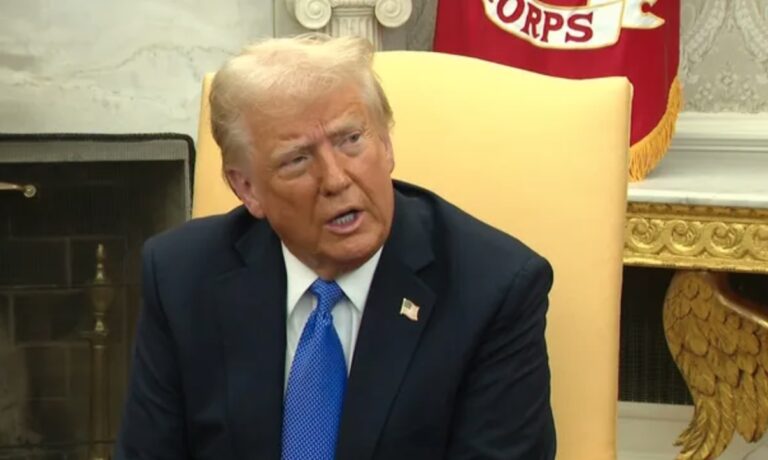
In an effort to reassert the constitutional rights of American citizens, President Donald Trump issued an executive order on Friday directing federal agencies to review all regulations and policies that may have infringed upon Second Amendment rights since former President Joe Biden took office in January, 2021.
The executive order, unveiled at the White House, focuses on the fundamental role the Second Amendment plays in preserving liberty and security.
“The Second Amendment is an indispensable safeguard of security and liberty. It has preserved the right of the American people to protect ourselves, our families, and our freedoms since the founding of our great Nation. Because it is foundational to maintaining all other rights held by Americans, the right to keep and bear arms must not be infringed,” said Trump, who survived two assassination attempts in the last year, but remains committed to constitutional protections.
Under his directive, Attorney General Pam Bondi has 30 days to conduct an extensive review of all executive actions, regulations, and agreements enacted between January 2021 and January 2025 that could potentially impede Americans’ right to bear arms. Attorney General Bondi will then present a proposed plan of action to the President, in coordination with the Domestic Policy Advisor.
As part of this review, key areas of focus will include:
Presidential and agency actions that may have restricted Second Amendment rights.
Department of Justice and Bureau of Alcohol, Tobacco, Firearms, and Explosives (ATF) regulations affecting firearms and Federal Firearms Licensees.
The White House Office of Gun Violence Prevention’s reports and policies.
The U.S. government’s legal positions in ongoing and potential litigation related to gun rights.
Agency policies on firearm and ammunition classifications.
The efficiency of federal processing for firearm-related applications, including manufacturing, transfer, and export licenses.
Once Bondi submits the proposed plan, the domestic policy advisor will work closely with the Department of Justice to finalize and implement measures to reinforce Second Amendment protections, which would be a likely rollback of regulations implemented under the Biden Administration and a return to constitutional boundaries on government interference with the public’s right to bear arms.