State Sen. Robert Myers renewed his calls for Congress to exempt Alaska from the Merchant Marine Act of 1920. He says it is an essential step toward avoiding what could be an energy crisis on the horizon.
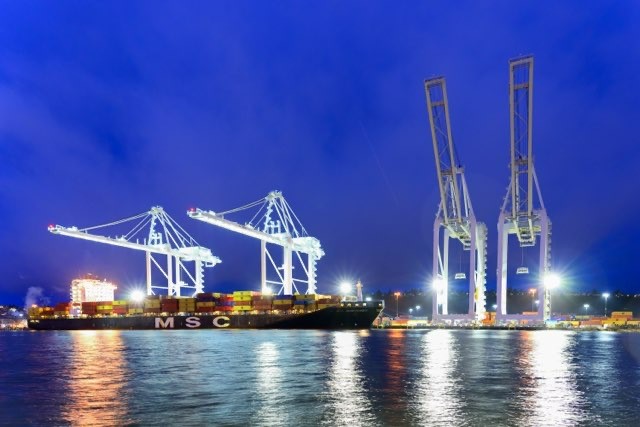
The law, more commonly known as the Jones Act, stipulates that only American-made, -operated, -registered, and -flagged vessels may ship cargo from one US port to another, without first calling on a foreign port, such as Canada.
For much of the country, the Jones Act is not a top-of-mind issue. But it’s a different story for Alaska, and Myers wants Congress aware of the state’s peculiar predicament: although Alaska is rich in resources like liquid natural gas, it has struggled to exploit them.
The Jones Act is part of that equation.
“Alaska is facing an acute energy shortage,” Myers told a State Senate Transportation Committee. “The Alaska Department of Natural Resources has projected shortfalls in the Cook Inlet natural gas supply beginning in the very near future.”
The Railbelt grid provides electricity to more than 75% of the state’s population. Over 70% of that electricity is generated with natural gas, primarily from Cook Inlet. There are concerns that current production in the inlet could start to experience shortfalls by 2027.
Thankfully, Alaska is rich in liquid natural gas. Getting it to consumers is the hard part. The North Slope reserves, for example, are plentiful but far removed from population centers, and a proposed pipeline project has struggled to find financial backing. It would also take time to complete.
“As such, various utilities are now discussing liquefied natural gas imports to solve the crisis,” Myers said. “Alaska is in a unique quandary in which it prides itself on its oil and gas resources yet is unable to utilize its own natural gas from the North Slope gas fields.”
The simplest, most cost-effective solution would be to transport liquid natural gas from more remote parts of the state to Alaska’s population centers by sea. The problem is that there are no Jones-Act-compliant tankers capable of transporting the fossil fuel at scale, making it illegal for Alaska to ship its own gas to its residents.
Supporters of the Jones Act cite national security exigencies for preventing shipping between U.S. ports from being dominated by foreign vessels. The solution could be as easy as a congressional waiver.
It wouldn’t be the first time.
In 2006, a waiver was granted to tow a jack-up oil rig from the Gulf of America to Alaska for drilling in Cook Inlet. A similar waiver was granted in 2010 in support of oil exploration activities off the coast of Alaska and, then in 2011, when a Russian tanker was allowed to make an emergency fuel delivery to Nome.
Near the end of the hearing, Myers noted Puerto Rico has also begun receiving shipments of liquid natural gas on a French-made tanker purchased by Crowley, a US shipping firm. It is only able to do that due to a loophole in the Jones Act.
Late Thursday night a fire broke out in a resident’s room on the second floor of the Anchorage Pioneer home on West 11th Ave. The sprinkler system activated immediately and contained the fire, and the Anchorage Fire Department responded.
No one was injured, according to a press release from the Alaska Department of Family and Community Services.
“However, due to fire and water damage, 10 elders have been temporarily relocated within the Pioneer Home while a restoration team begins cleanup efforts,” the press released said.
Now, the Pioneer Home is reaching out for help from the community. The facility needs a few things for some of the residents who were displaced and who lost belongings. The list includes:
Bedroom furniture (dressers and nightstands)
New bedding and linens, preferably white (twin-size comforters and pillows)
Small student desks and chairs
Small sofas
Those who wish to donate should first contact the Pioneer Home at 907-343-7298 between 8 am and 4 pm. to make sure those items are still needed and to learn about what other items might be welcomed.
Fall, 1989: an episode of The Wonder Years just finished. Kevin and his buddy Paul were having friendship troubles, stemming from a baseball card trade gone wrong. My phone rings.
“Hello?”
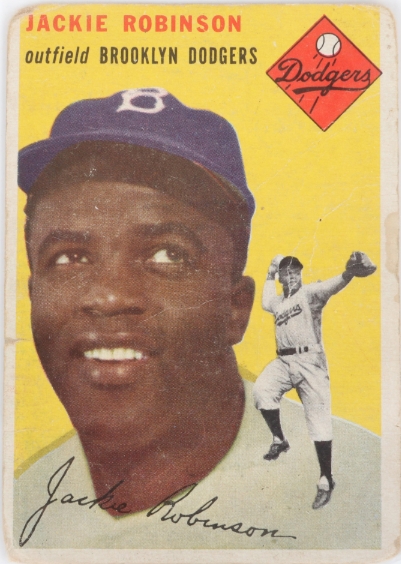
“Give me back my Jackie Robinson baseball card!” Click. It was my friend, Drew (formerly Andy). We joined the Marines together and were best men in each other’s weddings, but the episode triggered a bad memory from when we were kids. The abrupt call brought a smile to my face.
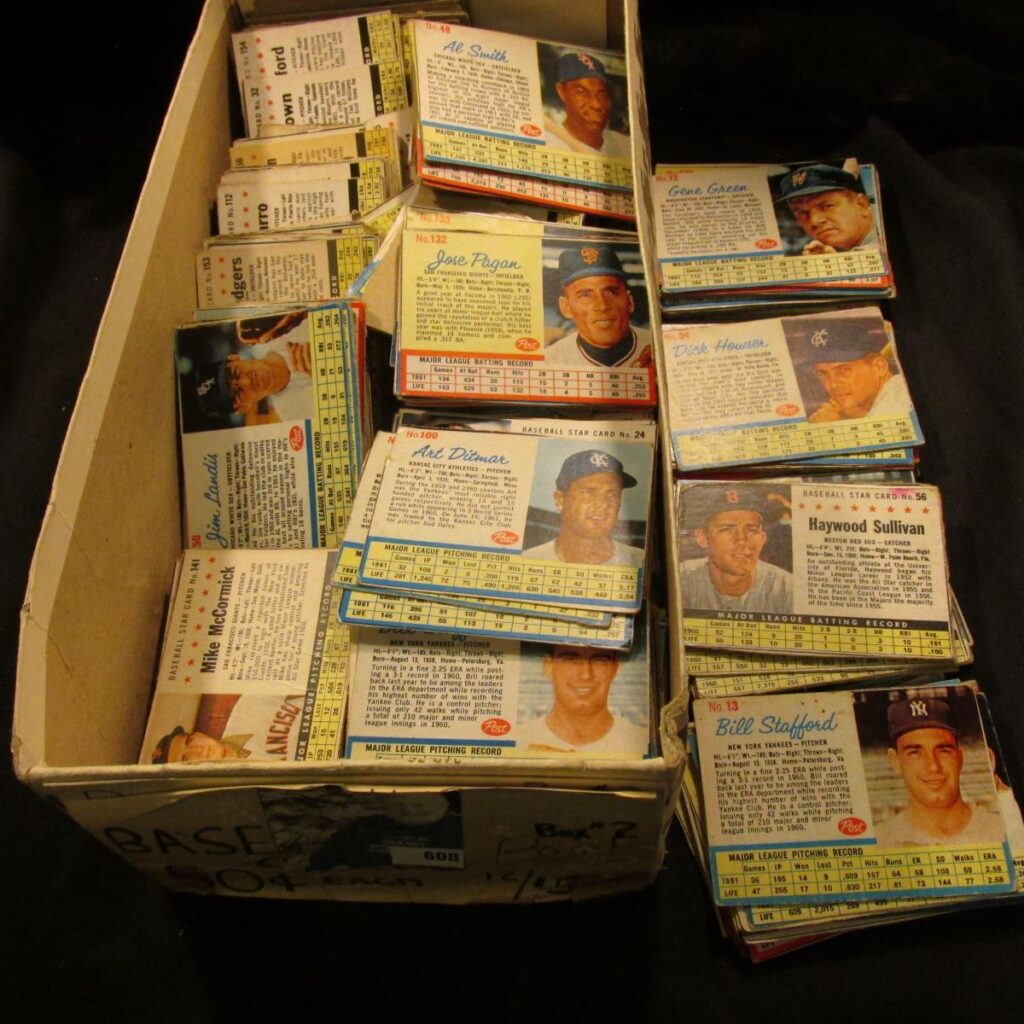
Back in the 1970s, baseball cards were purchased by young boys who collected them for fun. We were thrilled to see photos of our baseball heroes on small sheets of bubble-gum-scented cardboard with statistics and cartoons on the backsides. We arranged them by teams or years of issue, or positions, or in order of greatness, and we stored them in shoeboxes. We wrapped them in bundles, secured with rubber bands, and used clothespins to attach them to our bicycle frames so they would make a flicking sound when the rotating spokes contacted them. I tacked and stapled my favorite players’ cards to my bedroom wall.
It never dawned on us that they would someday be worth any more than the penny per card that we paid for them.
My friends and I traded cards with vigor, ever seeking to add our favorite players to our collections in exchange for as little as possible. And that is how I ended up cheating my half-best friend out of an authentic Jackie Robinson card.
Andy was one-half of my best friends; Steve, who we called Gertch, was the other half. They were quite different, but we all loved baseball. It was hard to get much past Gertch because he read the same baseball books I read, so he knew the history of the game. Andy, not so much. He read the daily box scores and standings and knew the present stats in depth and by heart, but he but didn’t, at that time, know much about the game prior to 1970, which turned out to be pretty unfortunate for him.
Andy had recently spent some time visiting one of his yet-to-be-incarcerated cousins who decided he was now too old and too cool to be collecting baseball cards, so Andy inherited several dozen pre-1970 cards. I, of course, was insanely jealous when he told me about this unexpected and totally unfair windfall. With impure intent, I requested a card trading session.
My friends and I had card trading down to an orderly and business-like process. We sifted through each other’s cards and set aside those in which we were interested. Once we had a stack of a half dozen or more, we laid them out next to each other and commenced haggling, taking back those players we could not do without, or demanding two or more cards for an All Star. It was while I was in the midst of this process that I came across an actual Jackie Robinson baseball card. I recently read the story of how Branch Rickey and he conspired to break the color barrier in 1947, and how Robinson was as good a baseball player as he was a courageous man.
Now, right in front of me was an authentic Jackie Robinson baseball card. It was pretty beaten up. The edges were frayed and there was a large crease running from top to bottom, but it was an honest-to-God Jackie Robinson card. Knowing Andy’s propensity for the here and now, I put the card in my row and bit my lip as my friend sorted through my stack of Phillies’ cards. He had, despite never venturing further west than Lake Tahoe, taken to rooting for Pennsylvania teams.
First, it was the Clemente-Stargell Pirates of the early 70s, then he got hooked on the up-and-coming Philadelphia Phillies, a franchise that had never won a world championship in their 80 years of existence. Andy was grabbing a half dozen Phillie cards he didn’t yet have. I laid out a handful of cards that, save one, shall forever remain in obscurity.
My heart was pounding as we set to looking over our chosen lines of battle, but I had not said anything or let on in any way that one of the legends of the game was on the trading block.
“Here’re my six. These for your six?” I felt a slight tinge of guilt as I began to realize that Andy had no idea who Jackie Robinson was, but the tinge lasted no more than a breath.
“Okay,” he said as he scooped up the six additions to his collection.
My hands shook as I reached for Jackie and the anonymous five. This was too good to be true. Andy would come to his senses and realize he overlooked an American hero . . . right? Nope. He started talking digging through my box for the next round of trading.
“Do you know who you just traded to me?” I asked, half out of shock and half out of sheer gloating and meanness. Andy just shrugged. I held up the holy grail of baseball cards to him and smugly informed him, “This is Jackie Robinson.”
Another shrug from Andy.
“The first black player in the Major Leagues.”
Andy was busying himself looking for more Phillies.
“He’s in the Hall of Fame.” I was starting to get annoyed now. Andy should know this, dammit. Any baseball fan should know this. Any American should know who this man was.
“I don’t care,” said Andy with genuine sincerity and without even looking up.
That did it. Any sense of guilt was now assuaged by the uncaring attitude. It took away some of my sense of victory, but also made me realize this card was meant to be in the hands of someone who appreciated the history of the game. Someone like me. My trickery was indeed justified.
After Andy left my house I called out to my Dad and big brother Rick. “Dad, Rick – look what I got!” I had to share this coup.
“Whatchya got, Sport?” asked Dad.
“You won’t believe this,” I said, as I placed the card on the kitchen table where they were both sitting and reading the paper.
“I’ll be damned. How’d you get a bubble gum card of Jackie Robinson?” Dad asked. It drove me nuts that he called baseball cards “bubble gum” cards, but that was beside the point right now.
“What? Where’d you get that?” Rick was now interested.
“From Andy. I traded him for it?”
“What did it cost you?”
“Six Phillies I never heard of.” Dad chuckled. Rick looked jealous.
“You ripped him off,” said my brother. “Didn’t he know who he was?”
“I don’t think so. I tried to tell him who Jackie Robinson was, but he acted like he didn’t care.”
“You should give it back,” offered my brother, more out of jealousy than righteousness.
“The hell he should,” retorted my Dad. “If Andy didn’t know who Jackie Robinson was then he had no right to this card. Don’t you dare give this back. Jackie Robinson’s part of history; he and Branch Rickey.”
“That’s who I’m named after,” said Rick.
“You’re named after Jackie Robinson?”
“No, you crockhead” (one of Dad’s favorite names for someone who says something dumb), “Branch Rickey. That’s why we spelled Rick’s fully name R-I-C-K-E-Y.”
“Really? I didn’t know that,” I replied as Rick beamed.
“He was a brave man. Without Branch Rickey there would not have been Jackie Robinson. He’s from Ohio, too. Like all three of us.” Dad never passed up a chance to promote the land of our birth. “You might not want to staple that one to your wall, Tim. It looks a little ragged. Keep it in a safe place.”
“Andy’s going to be mad when he finally realizes what he traded away,” said Rick, making me smile.
“Good night.” I headed up to bed. Once under the covers, I held that card up to my reading lamp, turning it over, reading every word printed on it, and coming to the realization it was mine.
That card remained in my possession until a few months after Drew’s phone call, when I sold my entire collection to raise enough money to buy my wife’s engagement ring; forever proving my unquestioned love for her.
Tim Barto is vice president of Alaska Family Council and overly romantic about baseball. Don’t tell his wife this, but on occasion he longs to hold that Jackie Robinson card up to the reading lamp.
President Donald Trump has signed an executive order titled Restoring Truth and Sanity to American History.
The order seeks to counteract what Trump describes as the increasing influence of ideological agendas that distort the country’s historical legacy and undermine national unity.
Trump’s executive order asserts that a revisionist movement grew during the Biden Administration that attempted to frame America’s founding principles and historical milestones as inherently oppressive rather than recognizing the nation’s remarkable progress in advancing liberty and individual rights.
Trump criticizes the promotion of a sense of national shame, rather than pride.
In his order, he mentions the Smithsonian Institution, which has become a vehicle for “divisive, race-centered ideology.” Examples include exhibitions such as The Shape of Power: Stories of Race and American Sculpture at the Smithsonian American Art Museum, which infused race into the art of sculpture.
The executive order seeks to remove “improper ideology” from federal museums and restore them as places of historical celebration rather than constant and unrelenting self criticism.
The executive order instructs key White House advisors to work through the Smithsonian Board of Regents to eliminate ideological influences and ensure that taxpayer funds do not support exhibits or programs that “degrade shared American values.”
The directive also explicitly prohibits the American Women’s History Museum from recognizing men as women.
The order mandates the restoration of historical monuments, memorials, and markers that have been removed or altered since Jan. 1, 2020, in “a false reconstruction of American history.” The Secretary of the Interior is tasked with identifying and reinstating such historical artifacts, ensuring they honor America’s achievements rather than disparage its past.
It also provides funding for the restoration of Independence National Historical Park in Philadelphia, home to Independence Hall.
Trump has set a deadline for the completion of these improvements by July 4, 2026, marking the 250th anniversary of the signing of the Declaration of Independence, when the park is expected to be a focal point of national celebration.
Is your municipal ballot you received still sitting on the kitchen counter? Municipal elections tend to arouse as much excitement as a Bernie Sanders’ diatribe on income inequality. But the reality is that the current Anchorage municipal election is important.
If nothing else, it’s important to the Left. The pronoun people love local elections. It’s where they test drive starry-eyed socialists to see if they have the mettle to move up the ladder to statewide offices and beyond; and they know it’s easier to implement their policies in local arenas, especially because not much attention is paid by conservatives who don’t read Must Read Alaska.
Just look at the make up of the current Municipal Assembly. Nine of the twelve would fit comfortably on the AOC political spectrum. They’ve been ruling the Assembly like a Brezhnev-era Politburo, and now that Mayor Bronson has been replaced by one of their own, there is little to hamper their march toward forced collectivism.
The Anchorage School Board is arguably even worse. Brezhnev be damned, their vision of a Mao-like central committee would be a reality if it wasn’t for the lone and long-suffering conservative, Dave Donley.
And that is why your vote in this municipal election is important.
There are six Assembly seats and two School Board seats up for grabs, and 12 propositions on the ballot.
CLICK HEREto check out our 2025 Values Voter Guide for the upcoming Municipality of Anchorage election.
Now here’s the rundown…
District 1 – Downtown Anchorage Incumbent Daniel Volland has two challengers: Daniel Goerge and Nick Danger. None of the three candidates returned Alaska Family Council’s Voter Guide questionnaire. The incumbent is most certainly not one of the three conservatives on the Assembly. Daniel George is endorsed by Randy Sulte, one of the three conservative members of the Assembly. Nick Danger is a perennial candidate, having thrown his hat in the ring for previous Assembly seats as well as mayor and state house.
District 2 – Chugiak, Eagle River, JBER Incumbent Mark Littlefield is stepping down, so the seat is wide open. Three candidates have thrown their names in the hat: Kyle Walker, David Littleton, and Jared Goecker. Only Goecker filled out AFC’s Voter Guide. Littleton did not pay property taxes on his Eagle River home until he filed as a candidate. He is, however, backed by unionists Kelly and Joe Merrick. The same unions are going after Goecker, running social media ads that warn against voting for Goecker without mentioning any other candidates. The ads are being run by “Putting Alaskans First” which lists their top three contributors as NEA Advocacy Fund of Washington, D.C.; Alaska AFL-CIO of Anchorage, AK; and NEA-Alaska PACE of Juneau, Alaska.
District 3 – West Anchorage Incumbent Kameron Perez-Verdia has a challenger in first time candidate Amie Steen. Neither responded to AFC’s Voter Guide. Perez-Verdia is as left wing as they come. There is little information available about Steen, other than she’s concerned about high property taxes and is serving in the Air Force Reserve.
District 4 – Midtown Anchorage This is an open seat race between Erin Baldwin and Don Smith. Neither candidate responded to AFC’s Voter Guide questions. Baldwin lists her occupation as economic justice organizer, which pretty much screams Leftist. Smith was an Assemblyman for 10 years back in the ‘70s and 80s.
District 5 – East Anchorage Angela Frank, John Stiegele, and Yarrow Silvers. None of these candidates replied to AFC’s Voter Guide questions. Frank gave Mayor LaFrance an A grade, and a B+ to the Assembly. Stiegele has not provided much information about himself, but he gave D grades to both Mayor LaFrance and the Assembly. Silvers describes herself as an environmental scientist, stay-at-home mom, political writer, and legislative aide. She helped found the liberal blog, Alaska Current.
District 6 – South Anchorage & Girdwood Incumbent Randy Sulte’s term is up, and there are two candidates seeking to replace him: Darin Colbry and Keith McCormick. Neither candidate responded to AFC’s Voter Guide questions. Colbry’s major concerns are crime and homelessness, and he gives Mayor LaFrance and the Assembly poor marks for their response to these issues. McCormick is a Physician Assistant and former U.S. Marine who wants to see more leadership out of the Mayor and Assembly to solve the homelessness and crime that plague Alaska.
School District Races
Seat A Margo Bellamy is the incumbent, and she’s being challenged by Alexander Rosales. Rosales completed the AFC Voter Guide questionnaire. Bellamy is the epitome of leftist ASD board members. She supports the District’s policy to not advise parents if students want to change their names, pronouns, or genders at school. Rosales is an Air Force veteran and father of two ASD students. He wants to save girls’ sports, give parents priority in making decisions about their children, and is against DEI in the school system.
Seat B Incumbent Kelly Lessens is being challenged by Mark Anthony Cox. Cox completed the AFC Voter Guide questionnaire. Lessens is an integral part of the Leftist school board majority. Cox is an Army veteran who is running for school board because he does not like the liberal policies of the current board. He favors cutting spending and finding a new superintendent.
Tim Barto is the vice president of Alaska Family Action.
Ontario Premier Doug Ford told reporters that Canada will “inflict as much pain as possible on the American people.”
Apparently the premier of Ontario has not seen the resolution passed by the Alaska House of Representatives earlier this week, when 33 members of the Alaska House voted for a resolution filled with accolades for Canada and the warm friendship it has with the United States.
The resolution lauded Canada as “Alaska’s only neighbor, reinforcing a unique and deeply interconnected relationship built on geography, history, and mutual economic and cultural ties, and pointed out how “the citizens of Canada and the citizens of Alaska have developed deep friendships, family ties, and collaborative relationships over the course of history.” The resolution is here.
Ford, along with British Columbia Premier David Eby, sees it more as a transactional relationship, rather than a friendship. Frenemies, if you will.
Ford told reporters he has asked the new Prime Minister Mark Carney to convene a ministers meeting to respond to President Donald Trump’s 25% tariffs on automotive imports, announced on Wednesday.
“I’m in full support of preparing retaliatory tariffs,” Ford told reporters. “Tariff for tariff. But, we want to see what [Trump is] going to do on April 2.”
Ontario is the center of Canada’s auto industry and could be significantly affected by the tariffs.
Premier Ford has been outspoken since Trump started trying to correct trade imbalances. Earlier, he treated to cut off the electricity supply to three states. Ontario supplies electricity to Michigan, Minnesota, and New York, powering about 1.5 million homes and businesses.
“I do not want to hurt other provinces, but I can assure you one thing, we’re going to make sure that we inflict as much pain as possible to the American people without inflicting pain on the Canadian population,” Ford said, apparently unaware of the deep friendship that the 33 Alaska House of Representatives members think Alaska has with Canada.
Earlier, Premier Eby of British Columbia introduced the Economic Stabilization (Tariff Response) Act, Bill 7, on March 13. It would give Eby the power to impose tolls, tariffs, or fees on US commercial vehicles traveling through the province to Alaska on the Alaska Highway. The bill passed its first reading on March 13.
Eby has said that tolls could pressure Alaskan politicians to influence Trump to reconsider his tariff policies.
The British Columbia Trucking Association strongly opposes the legislation, and has warned of potential US retaliation that could harm BC’s economy.
Even the mayor of Fort Nelson, BC has cautioned that such tolls could devastate local economies along the Alaska Highway. He told reporters that tolls would be “the last nail in the coffin” for Fort Nelson’s struggling economy, which relies on traffic along the Alaska Highway.
Mayor Rob Fraser said every foreign dollar from truck drivers — whether spent on a flat tire, a sandwich, or a cup of coffee — is vital to the local economy, especially after downturns in forestry and petroleum industries, a population decline, and setbacks from Covid-19 and wildfires.
Some Alaskans have raised questions about whether the BC tariffs or tolls would be legal under the international treaty that governs the Alaska Highway. It prohibits Canada from imposing charges on US travelers unless the same charges are applied to Canadians.
But the Alaska House Joint Resolution 11 is the response that Eby was looking for — a request from the Alaska House to President Trump to back down on the tariffs on Canadian goods.
Instead, Trump imposed the tariffs on all auto imports, which evoked the hyped-up response from Premier Ford, who clearly said that he intends to cause pain to Americans — “as much pain as possible.”
Former Alaska Rep. Gabrielle LeDoux’s election fraud retrial has been delayed yet again, as her legal team secured an additional extension on March 24, granted by Judge Kevin Saxby.
This delay of a trial-setting conference continues a pattern of postponements that have characterized the case since charges were first filed in 2020.
LeDoux, now 76, faces 12 charges, including five felonies, related to allegations that she encouraged people who did not reside in her district to vote for her during the 2014 and 2018 elections. She has maintained her innocence, pleading not guilty to all charges.
The trial has experienced multiple delays over the years. In July 2024, proceedings were postponed due to the late submission of new evidence by the prosecution. In November, the trial began but was further extended as jury deliberations continued beyond the Thanksgiving holiday. A mistrial was declared on Dec. 2.
Two of LeDoux’s associates, former campaign aide Lisa (Vaught) Simpson and Caden Vaught, entered plea agreements on misdemeanor charges and have apparently agreed to testify against her.
LeDoux was initially charged five years ago this month, after an extensive investigation that included the Federal Bureau of Investigation. LeDoux, who left office in January of 2021, had served in the Alaska Legislature from 2005-2008 and 2013-2021, when she lost to Rep. David Nelson.
The Permanent Fund dividend filing season is coming to an end. The filing deadline is March 31, 2025. More than 555,380 people have applied so far, all hoping to get hefty bit of financial help come October.
The online application will be available until March 31 through 11:59 pm. The PFD office lobbies and phone queue will be available Monday through Friday 10 am to 4 pm through this Friday, March 28.
Monday, March 31, is a state holiday, Seward’s Day, but the PFD division offices will be open to the public to collect applications from 9 am to 4 pm. The phone queue will not be open on Monday.
On March 31:
The Anchorage and Fairbanks office lobbies will be open.
The State Office Building in Juneau is usually closed on state holidays but on Monday the Permanent Fund Division office staff will be available for paper application pick up/drop off with a table on the 8th floor near the security desk. State Office Building front door entrances will be open from 9 am to 4 pm on both the Willoughby Ave. entrance and West 4th Street entrance. The elevator from Willoughby will only go as far as the 8th floor.
PFD applications received or postmarked after March 31, 2025, will be denied as late.
Payments are typically distributed in early October. In 2024, payments began on October 3 for those who filed electronically with direct deposit, with subsequent disbursements later in the month for other eligible applicants. Assuming a similar timeline, you can expect 2025 dividend payments to start around October 3 for direct deposit recipients, with paper checks and later batches following in the weeks after.
The amount may vary, depending on how much the Legislature takes for other purposes. The debate goes on in the halls of the Capitol. While Gov. Mike Dunleavy has budgeted a full Permanent Fund dividend, there has not been one since 2016, when Gov. Bill Walker used his veto power to reduce the dividend amount from what the Legislature had approved, capping it at $1,000 per Alaskan instead of the anticipated higher amount of approximately $2,052.
The rationale Walker used was low oil prices. The average price for Alaska North Slope crude in 2016 was approximately $42.91 per barrel.
Since then, the Legislature has followed suit. Even though the price of Alaska oil is in the high $70s per barrel, the Democrats who control the Legislature are likely to take 75% of Alaskans’ dividends to pay for ever-increasing cost of government.
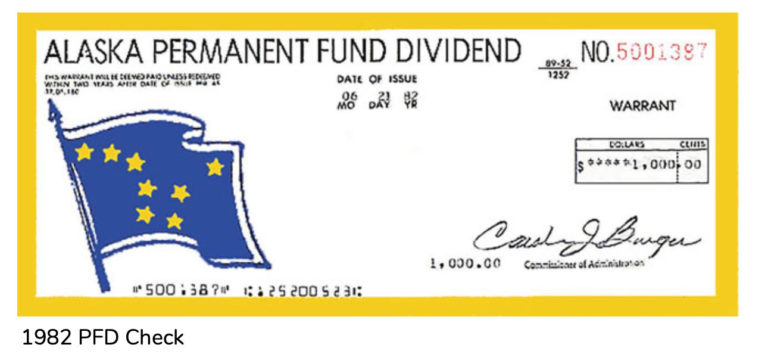
Alaska’s PFD, established in 1976 and first paid out in 1982, is funded by revenues from the state’s oil production. The Alaska Permanent Fund invests the revenues, and each year, eligible residents receive a dividend—typically ranging from $1,000 to $2,000 per person, though amounts vary based on investment performance and legislative decisions.
The dividend represents Alaskans’ ownership of the subsurface rights of the land, since no person or company in Alaska can own subsurface rights, as those rights belong to all the residents.
In 2024, the dividend was $1,312 per resident. What makes it unique in the U.S. is its universal nature: every resident, regardless of income, age, or status, gets the same payout as long as they’ve lived in Alaska for at least a year and intend to stay. Therefore, when the dividend is cut by the Legislature, it harms the poorest Alaskans most.
Last week, invoking his wartime authority under the 1798 Alien Enemies Act, President Donald Trump bypassed the courts and deported137 alleged Venezuelan members of the Tren de Aragua gang. Almost immediately, Judge James E. Boasberg, the chief judge for the U.S. District Court in D.C., issued a restraining order instructing President Trump to “turn the plane around” that was deporting illegal aliens with known criminal violations out of the country.
The incident has sparked a constitutional battle over the limits of judicial power over the president. The immediate question is whether U. S. District Court judges have the power to constrain the president by issuing nationwide injunctions or other rulings that seek to intervene in the execution of executive branch prerogatives or duties.
Some legal authorities regard Trump’s actions as flaunting the rule of law, while Trump and others argue the law is not fixed in this regard, and that Americans are tired of illegal immigrants seeking delay and refuge from an over-burdened court system. Others point to foreign manipulation and financing of the entire immigration wave, which they view as intentional and designed to destabilize our national security.
The Alien Enemies Act extends broad powers to the president that some argue he already constitutionally possesses, but which powers historically have only been invoked during wartime — most notably during WWII to justify imprisonment of Japanese Americans.
Alaska appellate attorney and Substack author Ralph Cushman is convinced federal judges do not have the power Judge Boasberg has asserted. In the first place, he says, only the Supreme Court has (“original”) jurisdiction to even hear such a case. Article III, Section 2, of the Constitution says:
“In all Cases affecting Ambassadors, other public Ministers and Consuls, and those in which a State shall be party, the Supreme Court shall have original jurisdiction. In all the other cases before mentioned, the Supreme Court shall have appellate jurisdiction, both as to law and fact, with such exceptions, and under such regulations as the Congress shall make.”
“Original jurisdiction” means it must be filed in that court.
And even if the Supreme Court does hear such a case, says Cushman, it does not have the power to issue injunctions or mandates against the president or his (cabinet) ministers. Otherwise “the executive power” is not “vested in the president,” — it is vested in judicial overseers.
Finally, even if the Supreme Court rules that a presidential action is unconstitutional, Cushman contends, it still cannot issue injunctions or mandates. Rather, it is up to the Senate to impeach him for it. If the Senate does not see fit to convict in impeachment, then the president is free to continue to execute the laws of the United States as s/he sees fit. The framers of the Constitution never intended for the federal courts to have the authority to order the president or his ministers around. National security and the well-being of the country do not have time for such interference with their executive duties.
Similarly, says Cushman, U. S. District Judge Reyes was without jurisdiction to order the Department of Defense to admit transsexuals. If a House member believes the president is breaking some law by banning transsexuals from military duty, s/he can float an article of impeachment.
But impeachment is all the president needs to, and should need to, worry about. Republicans have lately been criticizing the federal courts for issuing “nationwide injunctions” against the president, as if local injunctions would be permissible.
But they aren’t, Cushman contends, because the courts do not have jurisdiction to enter injunctions restricting the president’s exercise of his powers as commander in chief, or as executive.
American are divided on the subject of whether our Constitution should be interpreted by the courts using a narrow “strict constructionist” view of the original intent of the framers, or using a broader context that emphasizes present-day social, political and economic objectives.
A recent Washington Post story outlined Trump’s legal argument to the court, concluding that,“Years of experience have shown that the Executive Branch cannot properly perform its functions if any judge anywhere can enjoin every presidential action everywhere.”
The same article quotes U.S. Attorney General Pam Bondi as calling Boasberg’s order an “intrusion on the president’s authority…These are foreign terrorists. The president has identified them and designated them.”
While some legal experts criticize Trump for challenging a long-standing balance of power between branches of government, others believe its overdue. Regardless, there is consensus that the issue is ripe for review by SCOTUS.
“This issue has never been properly litigated,” states Cushman. “The encroachment by the Judiciary into the Executive branch has been slow and steady over time, but there is little case law to reference. Trump’s push-back to the federal courts is entirely justified — by the Constitution.”
The issue of judicial authority has broad implications for the executive, especially in the area of immigration. Trump’s recent Supreme Court filing urges SCOTUS to sanction Trump’s ban on birthright citizenship at a state level, but Trump’s ban is awaiting clarification by the high court.
Jon Faulkner is the president of Alaska Gold Communications, the parent company of Must Read Alaska.