Sunday, October 18, 2026
Home Blog Page 215

North Dakota is 15th state to ban ranked-choice voting

Last week, the governor of North Dakota signed into law a ban on the use of ranked-choice voting in state elections.

North Dakota is now the 15th state to disallow the practice, which is used in Alaska elections after a 2020 ballot initiative passed with the backing of tens of millions of dollars in outside dark money.

“Now more than ever, we need a consistent, efficient and easy-to-understand voter experience across our entire state to maintain trust in our election system,” Gov. Kelly Armstrong said. “This is one more in a series of proactive, common-sense steps our Secretary of State and Legislature have taken to support election integrity.”

As a second attempt at repealing ranked-choice voting is under way in Alaska, here are the 15 states that have banned the novel voting system that was created by liberals to help Sen. Lisa Murkowski keep her seat in the Senate:

  1. Alabama
  2. Florida
  3. Idaho
  4. Kentucky
  5. Louisiana
  6. Mississippi
  7. Missouri
  8. Montana
  9. North Dakota
  10. Oklahoma
  11. South Carolina
  12. South Dakota
  13. Tennessee
  14. West Virginia
  15. Wyoming

North Dakota, West Virginia, and Wyoming are the latest additions, with their bans signed into law this year. Only three states — Alaska, Hawaii, and Maine — use ranked choice voting, as does the District of Columbia.

In Alaska, the petition to repeal RCV and jungle primaries was certified on Feb. 17, allowing sponsors one year to collect over 34,000 signatures for a 2026 ballot measure. To get on the 2026 primary ballot or general election ballot depends on when the Legislature adjourns in 2026.

To get onto the 2028 ballot, the group has until the first week of March, 2026 to turn in the needed signatures.

The new Alaska effort, Repeal Now, follows the narrow defeat of the first repeal effort in November, which lost by just 743 votes, despite millions of dollars in dark money from liberal entities outside the state fighting to convince Alaskans that ranked-choice voting gives them better results.

The two main political parties in Alaska are split on the voting method, with the Alaska Democratic Party supporting it and the Alaska Republican Party opposed.

Pedro Gonzalez: 907 Initiative hits Kenai voters

Kenai Peninsula residents recently received a letter addressed to Rep. Sarah Vance, urging them to contact her about increased funding for public schools. 

“Even if the legislature passes a modest funding increase, the school district is looking at increasing class sizes, taking away extracurricular sports support, reducing staff, closing pools, and reducing support to homeschool families,” the document states. “This is why we can’t understand why our representative, Rep. Sarah Vance, is one of the leading voices in the legislature against supporting our schools.”

The letter was paid for by the 907 Initiative, a dark-money political group known for championing progressive causes. The group has a history of organizing aggressive campaigns across the full spectrum of media and advertising to attack politicians in a way that avoids tripping over finance laws.

As a 501(c)(4), its donors do not need to be disclosed, but it is also restricted from engaging in primarily political activity, such as attempting the influence the outcome of an election.

In 2023, the 907 Initiative went to the mat against Dave Bronson, then the mayor of Anchorage, deploying a flurry of hostile ads. Earlier this month, it also produced ads against Anchorage House Rep. Mia Costello for the same reason it attacked Vance. 

The line between influencing public opinion and electioneering is fine, but the 907 Initiative knows just how to avoid crossing it amid its latest campaign.

On April 17, Gov. Mike Dunleavy vetoed a proposed $680 increase to per-student funding. In a column for Must Read Alaska, Vance said she supported that veto because the bill “did not include the necessary reforms to improve education outcomes for Alaskans.”

However, Vance noted that she was open to supporting additional funding for education and raising the BSA under the right conditions.

“The question isn’t just how much we’re spending but whether we’re getting the best results for our investment,” she wrote.

Proponents of raising the BSA argue that the per-student amount has not kept up with inflation. They also point to low academic outcomes that show Alaska lagging behind the rest of the nation, a problem that they say boils down to insufficient funds.

But it might not be that simple. Alaska spends more than any other state on K-12 education as a percentage of taxpayer income and is sixth in the nation for per-student spending. 

Republicans who are willing to boost spending on education, like Vance, say that there are tough choices ahead and have proposed measures such as school consolidation. Above all, they stress the importance of deliberation in navigating the challenges confronting Alaskans. In contrast, dark money groups prefer to simplify narratives while concealing their own agendas.

Pedro Gonzalez writes for Must Read Alaska.

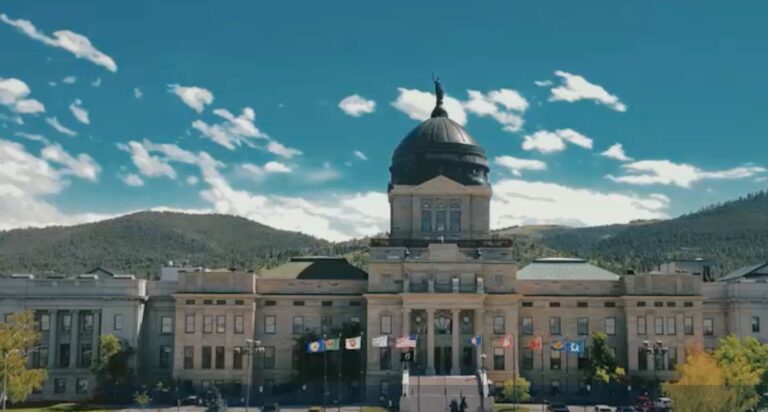
Montana Republican Party censures nine Republican senators for abandoning party’s legislative majority

The Montana Republican Party formally censured nine Republican state senators for repeatedly aligning with Democrat lawmakers during the 2025 legislative session, which undermined the elected Republican majority in the state Senate, just as some Republican lawmakers have done in Alaska.

According to a statement released by the Montana Republican Party, the party’s executive committee voted unanimously to censure Sens. Jason Ellsworth, Butch Gillespie, Gregg Hunter, Joshua Kassmier, Gayle Lammers, Denley Loge, Wendy McKamey, Russel Tempel, and Shelley Vance. The censure vote took place during a meeting on March 27.

The rogue Republicans had had advance warning. The party issued a press release on March 13 criticizing the nine, stating that the senators “frequently aligned with Democrats, creating obstacles for the Republican majority in the Senate.” The release referenced actions beginning on Jan. 6, the first day of the 69th Legislative Session, when the senators joined Democrats to overrule Republican leadership and create a coalition government.

“The MTGOP calls on these senators to cease obstructing key Republican priorities and return to the faithful representation of their constituents and the Republican platform. If their actions continue to damage the integrity of the Republican majority, the party will consider additional steps to address the situation,” Montana GOP wrote in its warning. The nine ignored the warning.

As a result of the censure, the party said it would no longer recognize the senators as Republicans and would not provide them with political funding in future campaigns.

In response, eight of the nine censured senators — all except Sen. Jason Ellsworth — issued an open letter to the citizens of Montana, which said, in part, “We were elected to serve you, not to follow orders from political insiders… Let’s be clear: this censure is nothing more than a distraction — meant to cover up the fact that party leaders have failed to deliver on the core priorities you sent us here to address… This censure changes nothing. We’ll keep showing up. We’ll keep delivering. And we’ll keep putting Montana first.”

The coalition in Montana mirrors Alaska Legislature’s problems. Although Alaskans elect a majority of Republicans, since 2023, the Alaska Senate has been governed by a majority-democrat coalition, with a few Republicans joining in — Sen. Cathy Giessel, Sen. Bert Stedman, and Sen. Gary Stevens, and Sen. James Kaufman, who eventually left the Democrat coalition and rejoined the Republicans.

In the Alaska House, a couple of rogue Republicans joined with the Democrats to create a majority. They are Rep. Louise Stutes and Rep. Chuck Kopp.

Michael Tavoliero: Alaska’s carbon reality and why we must reject the green fallacy

By MICHAEL TAVOLIERO

Let’s start with a simple but uncomfortable truth: If you believe that carbon dioxide (CO₂) is an existential threat to the planet, Alaska isn’t the problem — Alaska is the solution. And yet, in a breathtaking act of self-sabotage, some members of our Legislature are trying to make us the scapegoat anyway.

Let’s break it down in numbers that even a Washington, D.C. bureaucrat could understand:

  • The average mature tree absorbs about 48 pounds of CO₂ every year.
  • Alaska has roughly 31.75 billion trees.
  • That means our forests soak up about 691 million metric tonnes (MT) of carbon annually.
  • Alaska’s total carbon emissions? About 42 million MT per year.
  • That’s right — we clean 16 times more carbon than we create.

Globally, Alaska contributes just 0.1% of total CO₂ emissions while removing 1.65% of global emissions — and our people make up a mere 0.009% of the planet’s population.

By any honest metric, Alaska isn’t the climate criminal the environmental left makes it out to be. We are the unsung heroes of carbon capture. Yet rather than celebrate that, radical activists and their political enablers want to strap Alaska’s economy to the wrecking ball of Renewable Portfolio Standards (RPS) and a suicidal obsession with wind and solar projects that don’t work, don’t pay, and don’t serve the people they’re supposed to help.

Where Is the Logic?

The premise is straightforward: we are told that human CO₂ emissions are heating the planet to catastrophic levels, and that every ton emitted must be urgently offset. Fine — let’s assume that’s true. By that logic, Alaska should be heralded as a global champion. We should be receiving billions in carbon credits annually — not fines, not penalties, and certainly not regulations designed to cripple our industries and impoverish our people.

But that’s not what’s happening. Instead, we’re being punished, bullied, and coerced into adopting unreliable, expensive, and destructive energy policies. All while the real carbon mega-emitters — China, India, and even the industrial giants of the Lower 48 — churn out pollution at staggering rates with zero accountability.

This isn’t science.
This is religion.
And it’s a false religion, complete with its own commandments, high priests, indulgences, and heretics.

At its heart, this obsession with Alaska’s “carbon footprint” isn’t about saving the planet. It’s about control — political, economic, and social control — over what was once the freest and most resource-rich frontier in America.

The Government Is the Problem, Not the Solution

Consider what’s happening right now:

  • The Legislature is pushing two RPS bills that would force Alaska utilities to buy unreliable non-firm energy like wind and solar — despite decades of evidence that these sources raise costs and weaken grid reliability.
  • Fire Island Wind, hailed as Southcentral Alaska’s green miracle, is now the most expensive regularly used power source in the region — and that’s based on a decade-old contract. New wind generation would likely cost 140% more.
  • Hydroelectric expansion projects like the Dixon Diversion and Watana Dam — proven, stable, and cost-effective — are being sidelined in favor of ideologically driven, federally subsidized solar and wind experiments.
  • Coal resources west of Skwentna, once eyed for strategic development, are left buried while activists demand more expensive imports from out of state.

Meanwhile, the federal government, under the banner of “carbon reduction,” continues to lock up Alaska’s lands, kill projects, and deny permits — all while depending on Alaska’s trees to quietly scrub their carbon emissions for free.

This is not environmental stewardship.
This is economic sabotage under the false flag of climate virtue.

The Logical Fallacy: Sacrificing Alaska to Save the World?

Let’s expose the fallacy clearly:

If Alaska already removes vastly more CO₂ than it emits, then further “reducing” our emissions would have no meaningful impact on global carbon levels. None. Zero. Zilch.

Yet we are being told — over and over — that we must “do our part” by sabotaging our own economy, raising energy prices, and turning our communities into powerless eco-serfs.

It’s like asking the janitor who already mops the entire building to also pay for the building’s cleaning supplies out of his own pocket — while the actual polluters and litterbugs get tax breaks.

It’s insane.
It’s immoral.
And it’s deliberate.

Alaska Should Be Paid, Not Punished

If carbon capture is worth anything, then Alaska’s forests represent about $33 billion annually in global carbon offsets at the going market rate of $51 per metric tonne. That’s $33 billion that could fund our schools, our roads, our energy infrastructure — and yes, even meaningful, targeted environmental stewardship.

Instead, we get lectured by environmental lobbyists who think Anchorage should look more like Portland, and Fairbanks more like Berkeley.

They want Alaska to be a theme park — a pristine, undeveloped playground for the green elite — while our people live under economic bondage, high energy costs, and a suffocating regulatory regime that kills jobs and hope in equal measure.

If the green left wants to turn Alaska into their personal carbon sink, then it’s time we asked: What’s the price of admission?

A Rallying Cry for Alaska’s Future

Alaskans, it’s time to wake up.

We cannot allow our state to be sacrificed on the altar of a false environmental gospel. We must reject the green colonialism that seeks to chain our future to someone else’s guilt.

We must:

  • Reject any Renewable Portfolio Standard that sacrifices reliability and affordability for ideology.
  • Defend our right to develop our natural resources — responsibly, sustainably, and in service of our own people.
  • Demand payment for our carbon capture instead of accepting federal dictates that punish prosperity.
  • Hold politicians accountable — every lawmaker who votes to raise your energy bills in the name of “carbon reduction” needs to be exposed, challenged, and removed from office.

Alaska is not a problem.
Alaska is a gift — to America, to the world, and to the future.

But if we don’t fight for it, they’ll bury us under lies, regulations, and false promises until there’s nothing left but a hollowed-out memory of the Last Frontier.

The time to act is now.
Defend Alaska.
Defend the truth.
And defend the right of Alaskans to build a future rooted in freedom, not fear.

Michael Tavoliero writes for Must Read Alaska.

Breaking: Dan Fagan, columnist at Must Read Alaska and radio host, has passed

It’s with great sadness that we report that Dan Fagan, legendary longtime journalist and radio host in Alaska and Louisiana, has passed after a few months of heart-related issues.

This story will be updated as more information becomes available.

Update: KVNT has set up a message line at 907-802-8812 so that Dan Fagan’s friends and admirers can leave message, share memories, or make tributes to Dan, and the messages will be shared with his family.

The family said that they know he was loved in Alaska, but they are asking for privacy and will hold a private service for the family.

Fagan wrote columns at Must Read Alaska in recent years and was the host of a radio show for KVNT, and before that he hosted a show for 650 KENI. He was a reporter for many years for Channel 2, and he wrote columns for the New Orleans Times Picayune News, NOLA.com, and the Advocate, Louisiana newspapers. He was the originator of The Alaska Standard news blog.

He moved back to New Orleans a few years ago from Anchorage to be closer to his aging mother and care for her in her final years. After her death, he moved to Biloxi, Miss., where, after an 18-month break from broadcasting he returned to radio, broadcasting his show from his home to the KVNT audience in Southcentral Alaska.

He could leave Alaska, but Alaska would never leave him.

He had been struggling with health issues in recent weeks and told this writer that his heart was going out on him but he was not afraid of dying because he knew where he would end up.

“He was a man of strong faith, his whole family was that way,” said Charisse Millett, a close friend in Anchorage.

Fagan was born May 12, 1960 and grew up in Metairie, Louisiana, which is in the New Orleans metropolitan area.

He died in his sleep over the weekend.

Charisse Millett: Dan Fagan, we’ll dance again in heaven

By CHARISSE MILLETT

I’m struggling today with the heartbreaking news of our friend Dan Fagan’s passing.

From the moment his lovely sister asked me to call her early this morning, to right now as I try to put into words what our friendship has meant over the decades, it still doesn’t feel real.

I first met Dan during his early days as a reporter at KTUU. I was drawn to his reporting. He had this devilish twinkle in his eyes and an incredible talent for turning any news story into a must-see report. No matter the topic, Dan always found an angle that drew you in.

At the time, I was working in sales and marketing at Era Aviation. We had started a program to bring Santa Claus to the 18 rural communities outside Bethel that we served. Usually, it wasn’t hard to find someone local to play Santa. But one year, my usual Santa wasn’t available. I thought to myself, I wonder if Dan Fagan would do it? I reached out through a mutual friend, and to my surprise, he said yes!

Arrangements were made: Santa suit packed, tickets booked. Dan knew it would take three days to visit all 18 villages—it was an ambitious schedule, and the weather was beautiful but brutally cold, dipping to -30°F in some places.

I’ll never forget picking up Dan and his cameraman at the Bethel terminal. I was so excited! As he walked in through the -10°F wind, I noticed he wasn’t wearing a jacket. I asked if he’d left it on the plane, and he looked me straight in the eye and said, “Well, I didn’t think I’d need one.” I couldn’t tell if he was joking until he added, “I thought I’d have a Santa coat?” I burst out laughing. “You’re going to use the Santa coat as your jacket the whole trip?” He shrugged, “Yeah, I didn’t think the coat thing all the way through.”

That trip will forever be one of my favorite memories. With each stop, the crowds grew as word spread that Dan Fagan was the Santa. I got to play Mrs. Claus. In Chevak, when we landed in our Twin Otter, we were swarmed by excited kids. One little boy grabbed Dan’s arm, looked him right in the eyes, and exclaimed, “You’re not Santa—you’re DAN FAGAN!” We laughed and tried to convince him otherwise, but that moment was pure magic.

Evenings were filled with laughter, stories from the Era crews, and the camaraderie of a shared mission. Dan hated the cold, dreaded boarding the plane each morning—but he couldn’t wait to greet every child we met.

From that trip on, Dan and I became fast friends. He was witty, wicked smart, and always brought levity to any situation. He was my biggest cheerleader—and my sharpest critic—when I ran for office. We didn’t always agree; sometimes we argued, went weeks without speaking, but we always found our way back to each other with grace and forgiveness.

We shared a deep bond over our faith, our families, and of course—politics. We had so many adventures: taking the train to Seward with his nephew, road-tripping to Homer with our eclectic crew, visiting him in New Orleans with my friend Lynn, and the many hilarious memories on the golf course (those stories are for another time).

He stood by me through life’s highs and lows: when my dad passed, when I got divorced, when I was elected—and unelected. I followed his career from TV to radio and back again, joining him as a caller, a guest host, and sometimes just a listener.

We shared countless stories—about his beloved nieces and nephews, my kids, and eventually my grandkids. He never stopped seeing the beauty in this world. Even when life knocked him down, he always found his way back to hope.

Dan believed deeply in God, in the power of faith and prayer. He never hesitated to speak about God or the miracle of life. His heart was big—for Alaska, for this country, and for his faith.

I’ll never stop smiling about his constant teasing—especially his insistence that I wasn’t funny. “You’re just a big unfunny woman,” he’d say. It was his favorite line, and one of my favorite memories.

We supported each other through the loss of our dads, and when his beloved mother, Tommie, passed. I was so honored to call him my friend.

When I visited him in New Orleans, I heard his mom call him “Danny” with such love. Dan glowed when she said it. I asked her if I could call him that too. She smiled, winked, and said, “Absolutely.”

That’s how I’ll always remember him—Danny—and dancing in the French Quarter. The one and only time I ever saw him dance.

Charisse Millett served in the Alaska House of Representatives for the 25th District from 2009 to 2019. In the 29th Legislature, from, she was the House Majority Leader. In the 30th Legislature, she served the House Minority Leader.

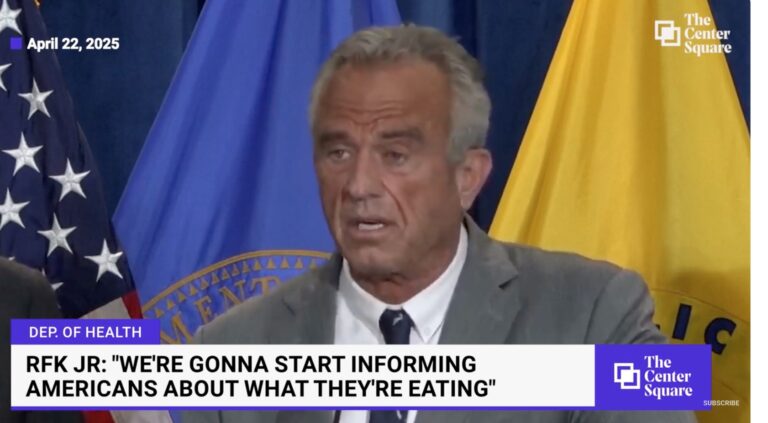
Petroleum-based food dyes must be phased out: RFK Jr.

By THERESE BOUDREAUX | THE CENTER SQUARE

Eight petroleum-based synthetic food dyes must be phased out of the American food supply and medications within the next year, according to U.S. Food and Drug Administration Commissioner Martin Makary.

The dyes, commonly used in ultra-processed foods, are Blue 1, Blue 2, Green 3, Red 40, Yellow 5, Yellow 6, Citrus Red, and Orange B. 

“We are simply asking American food companies to replace petroleum-based food dyes with natural ingredients for American children, just as they already do for children in other countries,” Makary said during a Tuesday news conference. 

Makary echoed concerns from some health groups that petroleum-based dyes are correlated with several health conditions in children, including ADHD, obesity, diabetes, cancer and allergic reactions.

The FDA will revoke authorization of Citrus Red and Orange B within the coming weeks. The food industry has until the end of 2025 to transition from the six other synthetic food dyes listed to natural alternatives.

To assist with the effort, the FDA will accelerate the approval process of natural food colorings.

“For too long, some food producers have been feeding Americans petroleum-based chemicals without their knowledge or consent,” Health and Human Services Secretary Robert F. Kennedy, Jr. said. “These poisonous compounds offer no nutritional benefit and pose real, measurable dangers to our children’s health and development. That era is coming to an end.”

According to the FDA in 2023, “the totality of scientific evidence shows that most children have no adverse effects when consuming foods containing color additives, but some evidence suggests that certain children may be sensitive to them.”

Foods that often contain petroleum-based color additives include sugary drinks and juices, cereals, snack foods, condiments, salad dressings, pudding, jams, yogurt, pickles, and sausages. Popular snacks such as M&M’s, Doritos, and Froot Loops include one or more of these dyes. 

The Center for Science in the Public Interest, which has long advocated for banning petroleum-based food dyes, said the announcement was a victory for food health and safety.

“The most important thing to know about food dyes is that their only purpose is to make food companies money. They are purely cosmetic, serving no nutritional function,” CSPI President Peter Lurie said. “We don’t need synthetic dyes in the food supply, and no one will be harmed by their absence.”

The FDA also revoked authorization for synthetic dye Red No. 3 as a food and drug additive in January, as The Center Square reported.

In light of the FDA’s announcement, the International Dairy Foods Association said it will voluntarily remove petroleum-based dyes from milk, cheese, and yogurt products sold to schools for the National School Lunch and Breakfast Programs beginning in 2026.

The National Confectioners Association said safety remains its top priority. Christopher Gindlesperger, the organization’s senior vice president of Public Affairs and Communications, said the FDA and other regulatory agencies have deemed its products safe.

“FDA and regulatory bodies around the world have deemed our products and ingredients safe, and we look forward to working with the Trump Administration and Congress on this issue,” Gindlesperger said in a statement. “We are in firm agreement that science-based evaluation of food additives will help eliminate consumer confusion and rebuild trust in our national food safety system. We follow and will continue to follow regulatory guidance from the authorities in this space, because consumer safety is our chief responsibility and priority.”

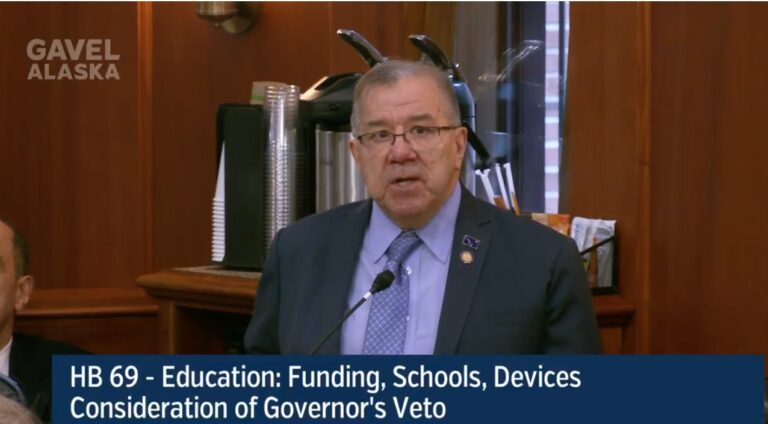
Fizzled fast: Democrats fail to override governor’s veto of spendy education bill

In a joint session of the Alaska House and Senate on Tuesday, Democrats’ and unions’ attempt to override the governor’s veto of House Bill 69 failed to get the 40 votes needed.

Democrats stood and pontificated, lectured, and insisted in no uncertain terms that the $1,000 extra to be made permanent per student is an existential need for Alaska schools. But they knew they did not have the votes.

Sen. Lyman Hoffman, a Democrat who dissented from his party, said it’s too much and had no funding. The Legislature needs to come up with the revenue, he said. Hoffman, who is co-chair of Senate Finance Committee, said that HB 69 would cost the state $100 million more per year, and he is worried that next year, the Legislature won’t have the money to pay for it.

Jesse Bjorkman, a Republican who caucuses with Democrats, argued it’s only $77 million, contradicting Hoffman. He asserted that it’s the constitutional duty of the Legislature to pass HB 69.

But after the Democrats stripped all of the accountability pieces from the bill, it ended up just being a blank check, with the final vote to override ending up at 33 to 27.

The old saying, “If you don’t have the votes, talk. If you have the votes, vote” became clear early on in the joint session.

The votes were not going to be there and the Democrat majorities knew it, and true to the old saying, the Democrats (and a few tax-and-spend Republicans) talked and talked and talked.

With lower oil prices, a smaller Permanent Fund dividend, and a drained savings account, the Alaska Legislature is in a pickle. The 90th day of the session came and went on Sunday and the body is now in the home stretch for the 120th day, which is the constitutional deadline three weeks away.

Meanwhile, Gov. Mike Dunleavy has filed new legislation for education, which has his policy pieces in it and a smaller permanent funding formula for education. House Bill 204 was only referred to the House Finance Committee, bypassing the Education Committee, a sign that it may get passed before the 120th day.

David Ignell: Media double standard of ‘due process’ for Kilmar Abrego-Garcia and Thomas Jack Jr.

By DAVID IGNELL

The recent obsession of the mainstream media over the due process rights of illegal aliens turns my stomach.  

Serving as an echo chamber to amplify opinions of Democrat politicians and judges appointed by them, the media has attempted to use the Trump administration’s deportation of 29-year-old Kilmar Abrego-Garcia to portray our President as a reckless and dangerous leader.  

Even Alaska’s Republican Sen. Lisa Murkowski has joined ranks with the Democrat choir, declaring “we are all afraid.” 

The media, politicians and judges have gone to great lengths to undermine police evidence and previous judicial findings regarding Abrego-Garcia’s affiliation with the dangerous M-13 gang.  They’ve minimized suspicions of his involvement in human trafficking and even downplayed the 2021 domestic violence restraining order his wife obtained against him claiming he “punched and scratched Petitioner, ripped off shirt, grabbed and bruised Petitioner.” 

In another deportation case, US District Court Judge Brian Murphy, appointed in 2024 by former President Biden, recently ruled that illegal aliens must be given a “meaningful opportunity” to assert their claims.  

It’s upsetting to observe this coordinated outcry for the due process rights of illegal aliens and then think of the silence regarding the injustice endured by Thomas Jack Jr., an Alaskan citizen incarcerated for the past 15 years. 

Jack is in prison because his due process rights were egregiously violated, yet the media and Democrat politicians and judges who know about his case have repeatedly ignored pleas for help.    

Jack, an Alaska Native, was twice denied a jury of his peers. The Tribal Council of the Hoonah Indian Association has specifically found that “reasonable doubt existed in considerable abundance regarding the charges brought against Mr. Jack, and that he would likely have been acquitted of all charges had he been tried by a jury of his peers.” 

The Tribal Council also specifically found that “not having been found guilty by a jury of his peers, Mr. Jack continues to be presumed innocent under the law.”   The Tribal Council has asked for Jack to be freed from prison pending the State’s decision whether to retry him in a fair trial before a jury of his peers. 

Jack’s conviction came only after a Juneau judge forced a patently unfair trial to proceed despite being told by Jack’s newly State-appointed attorney “there is absolutely no way I could be minimally competent to try this case.”

Pastor Bob Barton, a decorated military pilot and key witness in the Jack case, has stated: “I expected that the charges against Thomas would be dropped as soon as [the] allegations had been properly investigated.  I never expected Thomas’ case to go to trial and can’t imagine how he could be convicted in a fair trial by an impartial jury.”  

Judge Murphy, do you think Jack was given a “meaningful opportunity” under the Constitution before being sent away to prison for 50 years? 

The cases for Jack’s innocence and denial of due process rights are considerably stronger than Abrego-Garcia’s on both substantive and procedural grounds.  Abrego-Garcia entered the country illegally in 2012.  He doesn’t qualify for asylum because of his several year delay in applying for it.

Abrego-Garcia’s rights are limited to the effect of a Withholding of Removal order, signed in 2019 by an administrative law judge under the direction of the executive branch of the US Department of Justice.  

In that proceeding, Abrego-Garcia agreed the United States has the right to remove him.  The order specifically “confers only the right not to be deported to a particular country, rather than the right to remain in the US.”

The Trump Administration not only had the right to deport Abrego-Garcia, but they had his acknowledgment of that right.     

Jack has been incarcerated for 15 years, Abrego-Garcia for less than two months; Jack and his family have suffered considerably more hardship.  Both constitutional and humanitarian principles dictate that Jack should receive as much, if not more, support from the mainstream media, Democrat politicians and their judges.  However, Jack has received none whatsoever. Why is that?

US Sen. Chris Van Hollen provided the brutally honest admission Sunday during his appearance on NBC’s Meet the Press – it’s all political.    

In responding to California Gov. Gavin Newsom’s warning that the Abrego-Garcia situation is the “distraction of the day,” Van Hollen smiled and said:  

“I don’t think it’s ever wrong to stand up for the Constitution. And this is not about one man. If you deny the constitutional rights of one man, you threaten the constitutional rights for everybody. I think Americans are tired of elected officials or politicians who are all finger to the wind — what’s blowing this way, what’s blowing that way.  And anybody who can’t stand up for the Constitution and the right of due process doesn’t deserve to lead.

Van Hollen spoke the truth and, in the process, threw under the bus his fellow Democrat Party politicians in Alaska who have ignored the lack of due process in Jack’s case.  

For years I’ve tried in vain to get Juneau’s state politicians, all Democrats, to do something about Jack’s wrongful conviction.  Sen. Jesse Kiehl, Rep. Sara Hannan, and Rep. Andi Story are all aware of the disturbing facts behind the denial of Jack’s due process rights. Yet they held their fingers up to the wind and ignored the facts. Under Van Hollen’s standard, they don’t deserve to lead.

Matt Claman from Anchorage, currently Chair of the Senate Judiciary Committee is another Democrat politician familiar with the denial of due process behind Jack’s wrongful conviction but hasn’t spoke up in protest. He doesn’t deserve to lead.

On Elizabeth Peratrovich Day last year, Jack’s 80-year-old mother, family members and supporters rallied on the steps of the Capitol Building in Juneau holding signs requesting justice. Afterwards, the group fanned out throughout the building and handed out flyers specifying multiple violations of Jack’s due process rights. Democrat politicians again held their fingers to the wind and did nothing. They don’t deserve to lead.  

Van Hollen has now created a most interesting situation for himself, Newsom and other Democrat politicians. They can’t unring the bell. I’ll send a copy of my article to them and encourage you to do the same. Will they show resolve and stand up for the Constitution and Jack’s due process rights?  If not, they don’t deserve to lead either.

David Ignell formerly practiced law in California state and federal courts and was a volunteer analyst for the California Innocence Project. He is currently a forensic journalist and recently wrote a book on the Alaska Grand Jury.