Monday, May 11, 2026
Home Blog Page 1669

Going rogue: North Korea launches another missile

0

According to the Pentagon, North Korea fired an intercontinental ballistic missile around 9:17 a.m. Alaska Time on Tuesday. It was the first launch from the rogue regime in more than two months.

Initial assessments from the Department of Defense indicates that the missile was an intercontinental ballistic missile launched from Sain Ni, North Korea. It reached an altitude of 4,500 km and traveled about 1,000 km before splashing down in the Sea of Japan, within Japan’s Exclusive Economic Zone.

The missile flew about 54 minutes, landing 960 km from the launch site.

If the missile were fired on a flatter, standard trajectory, it would be have been able to reach any major city in the U.S., according to David Wright, a missile expert at the Union of Concerned Scientists.

“If these numbers are correct, then if flown on a standard trajectory rather than this lofted trajectory, this missile would have a range of more than 13,000 kilometers (km) (8,100 miles).

“This is significantly longer than North Korea’s previous long range tests, which flew on lofted trajectories for 37 minutes (July 4) and 47 minutes (July 28). Such a missile would have more than enough range to reach Washington, D.C., and in fact any part of the continental United States,” Wright said.

“We do not know how heavy a payload this missile carried, but given the increase in range it seems likely that it carried a very light mock warhead. If true, that means it would be incapable of carrying a nuclear warhead to this long distance, since such a warhead would be much heavier,” he added.

With the North Korean nuclear threat seeming to increase, Hawaii emergency officials announced on Monday that the state would resume monthly testing of its Cold War-era nuclear attack warning sirens for the first time in about 30 years, in preparation for a potential missile launch by Pyongyang.

The first such test of the air raid system will take place Friday.

[Read: Aloha oe: Hawaii prepariing for nuke] 

The air distance between the North Korea launch site and Honolulu is 4,599 miles. To hit Anchorage, the missile would only need to travel 3,564 miles.

Pro tip: Thompson & Co. unveils Blueprint Alaska

2

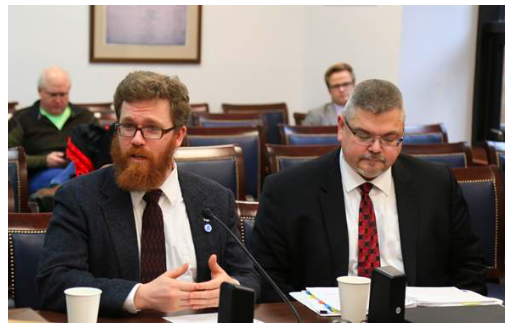
Photo: Sarah Erkmann Ward, Jennifer Thompson

Thompson & Co. Public Relations, will open a new public affairs agency, Blueprint Alaska, on Jan. 1, 2018.

President and CEO Jennifer Thompson hired longtime public relations professional and registered Alaska lobbyist Sarah Erkmann Ward to serve as Blueprint Alaska’s president and CEO. Ward has a track record in government relations, issues management, advocacy, and strategic communications counsel.

Blueprint Alaska will focus on influencing public policy and opinions, building and maintaining relationships with the public, and finding common ground with stakeholders. The agency says it will also assist clients “in navigating the challenges that occur when diverse interests of business, government, politics, and media intersect.”

Ward comes to her new role from the Alaska Oil and Gas Association, where she served as manager of external affairs. She was named the Public Relations Society of America Alaska Chapter’s “Communicator of the Year” in 2017. She is also accredited in public relations (APR) by the Public Relations Society of America.

The new agency will be headquartered in Anchorage.

Crackdown? Slightly harsher penalties now in law

1

Senate Bill 54 went into effect early Monday, with Gov. Bill Walker signing it into law upon the recommendation of the Department of Law, which said it will withstand a legal challenge by the ACLU.

“The passage of SB 54 helps to build a Safer Alaska,” Gov. Walker said in a press release. “While some portions of the legislation may need to be addressed by the court system, this law is an important first step in returning some important tools to the law enforcement community.”

Walker did not elaborate on which aspects might be addressed by the court system, nor in what manner they would be addressed, but he is clearly uncomfortable about the bill he signed.  The ACLU of Alaska has threatened a lawsuit that, if successful, could repeal SB54 and extend the crime wave that has swept over Alaska. That lawsuit would take place during Walker’s re-election year.

SB 54 has these main provisions:

  • Class C Felonies: The presumptive sentencing ranges are increased. First offenses changed from receiving mere probation to having up to two years of jail time. Second offenses went from 1-3 year sentences to up to 4 years. Third offenses remain unchanged. According to the governor, the courts should now be more willing to hold offenders on bail for a first C felony conviction, because the sentence can include active jail time.
  • Theft in the Fourth Degree – This is a Class B misdemeanor for theft of something valued under $50. SB 54 created a graduated sentencing structure for theft of property valued at less than $250. For a first conviction, a sentence can include up to five days of jail time. For a second conviction, up to 10 days and for a third conviction, up to 15 days. On a fourth conviction, the offense is upgraded to a Class A misdemeanor (theft in the third degree), which under most circumstances is punishable by up to 30 days of jail time.
  • Violating Conditions of Release – SB 54 restored this to a misdemeanor, punishable with up to five days of jail time. “Returning this offense to a misdemeanor clarifies for judges and law enforcement alike that a person may be arrested and held until bail is set on the new offense,” the governor said.
  • Mandatory Probation for Sex Offenders – SB 54 reestablished a mandatory period of probation for sex offenders. Unclassified felonies receive 15 years of probation, Class A or B felonies will receive 10 years of probation and Class C felonies, the lowest level, will get 5 years of probation.
  • Sex Trafficking Adjustments – SB 54 amended the statutes to ensure those who profit from other sex workers can be held accountable as sex traffickers.

The ACLU asserts that the  presumptive sentencing range for first time convictions of Class C felonies of zero to two years creates a condition where first time Class C and Class B felony presumptive sentence ranges are the same.

That identical sentencing range presents a problem for the ACLU, which says it will be forced to sue because:

“First, the new Class C felony presumptive ranges would violate a due process requirement under both state and federal constitutions that sentencing ranges bear a substantial relationship to legislative policy. The entire concept of graduated classes of offenses is to ensure that more serious crimes are sentenced more harshly. In reviewing the class of offenses for C felonies and B felonies, which would have identical presumptive penalties, it is likely the court would conclude that the sentencing for each of those classifications is arbitrary.”

“A second, related issue with Amendment 12 is the that sentences must bear some proportional relationship to the offense under the constitutional prohibitions of cruel and unusual punishment. “It is a precept of justice that punishment for crime should be graduated in proportion to the offense.” Those punishments are arbitrary when, as succinctly described by one court, “similar offenses are compared and conduct that creates a less serious threat to public health and safety is punished more harshly.”

But the ACLU opposed SB 54 from the beginning, writing in July of 2016 that: “In July 2016, Governor Walker signed SB 91, a comprehensive criminal justice reform bill, into law. The ACLU of Alaska commended the Governor and Legislature for adopting policies that make our criminal laws smarter, our justice system better, and our communities safer.

“SB 54, sponsored by Senator John Coghill (R-Fairbanks), threatens to roll back some of the reforms achieved by SB 91 in criminal sentencing and penalties for low-level crimes and first-time offenders. We oppose the bill and wrote to the Senate Judiciary and Finance committees explaining our concerns.”

MEANWHILE, CAR THEFTS STILL RISING

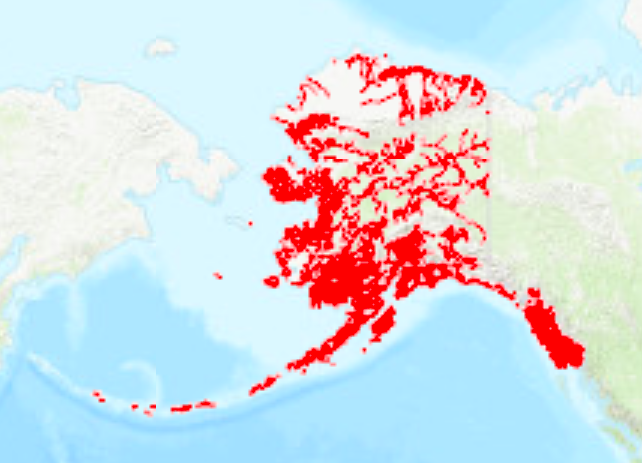
Car thieves may not have gotten the word yet about the crackdown and are still busy this November, according to LexisNexis crime data:


With ‘Friends of Maria’ who needs enemies?

5

BEGICH, BERKOWITZ, LOTTSFELDT HOSTED

Sen. Maria Cantwell came to Alaska in August, 2017 and took a tidy sum of contributions to her political action committee, “Friends of Maria.”

She was feted at a fundraiser by Mayor Ethan Berkowitz and former Sen. Mark Begich, and received tens of thousands of dollars in donations in the day she spent in Anchorage.

Cohosts of one fundraiser were regular Democrats and the event was at the home of Liz Perry and Lane Tucker.

A second event was held at Jen’s Restaurant and was hosted by labor lobbyist and Democratic campaign consultant Jim Lottsfeldt, Schawna Thoma, and Rachel Barinbaum.

Thoma and Barinbaum work for Mark Begich at his Northern Compass Group.

Now, Cantwell is flush with cash from her Alaska events, as well as others around the country that featured Democratic reliables like Sen. Elizabeth Warren, and she is leading the opposition to opening the 1002 Area of the Arctic National Wildlife Refuge.

A Seattle Times story last week about the conflict that is festering between Cantwell and the Alaska delegation says that she is “burnishing her green credentials,” just as she did back in 2005, when she was able to beat the late-Sen. Ted Stevens on this very issue:

“In 2005, a first-term Democratic senator from Washington came out on top in a bristling confrontation with Alaska’s senior Republican senator, then at the peak of his power and determined to fulfill his quest to open up the Arctic National Wildlife Refuge to oil development.

“It was a signature victory for Sen. Maria Cantwell, burnishing her green credentials, as she corralled enough votes to defeat efforts by the late Ted Stevens to attach a refuge oil-development measure to a military-spending measure.”

Some of the Alaska donors who gave Cantwell more than $1,000 in August, knowing of her long history opposing Alaska’s push to open the coastal plain of ANWR, include:

  • Richard Monkman, a Native rights lawyer in Juneau
  • Kriss Hart, Western Marine Construction
  • Stephanie Madsen, At-Sea Processors Association
  • Mike Szymanski, Fisherman’s Finest
  • Jeanette Wakefield, AAA Moving and Storage
  • Ann Vanderhoeven, Arctic Storm Management Group
  • Peter Van Tuyn, and Besseyey Van Tuyn
  • Fran Ulmer, former lieutenant governor
  • Andrew Teuber, Alaska Native Tribal Health Consortium
  • Robert Onders, Alaska Native Tribal Health Consortium
  • Lloyd Miller, Native Rights attorney
  • Amanda Mallott, Juneau Community Foundation
  • Jim Lottsfeldt, Lottsfeldt Strategies
  • Todd Loomis, Ocean Peace
  • Brian Hickey, Chugach Electric
  • Walter Featherly, Holland and Knight
  • Christopher Cooke, retired judge
  • Mark Begich

The complete list of about 70 Alaska donors supporting Cantwell in 2017 is here.

In an interview with the Seattle Times, Cantwell said she will do everything she can to block drilling in the refuge.

Pebble looking to finish year on a high note

1

The Pebble Partnership started the year with three big objectives: Make the Environmental Protection Agency back down from its pre-emptive sanctions against the proposed mine; bring in a major partner; and start the environmental permitting and review process known as NEPA — the National Environmental Policy Act.

The company completed the first item on its checklist by May and with just five weeks to go in the year, it’s looking at a big month of activity for a mine that doesn’t exist, but is a household word in Alaska.

Word has it that final arrangements are being made to bring in that major partner, although the details on that are still under wraps, and the first permit applications will be filed within a couple of weeks.

The U.S. Army Corps of Engineers is the lead agency to write an Environmental Impact Statement for the mine, the plans of which have been drastically scaled back from the original concept. The planned mine footprint is 50 percent smaller and has been designed to minimize the impact to the environment, the company says.

The review process is likely to take several years due to the approximately 60 permits that would be required. Beyond that, construction could take up to five years for a mine that could remain in production for 20 years or longer.

SINCE THE SETTLEMENT

  • On May 11, 2017, EPA settled litigation brought by the Pebble Limited Partnership. The settlement allows the company the chance to apply for a Clean Water Act permit from the U.S. Army Corps of Engineers, before EPA may advance its own Clean Water Act process that would put sideboards on how the mine would dispose of rock and gravel.
  • On Oct. 5, the company announced it has a new and smaller plan for the mine, located in Western Alaska.
  • In October, the Pebble Partnership promoted Stephen Hodgson as senior vice president of engineering and project director, and James Fueg as vice president of permitting.
  • Hodgson led the engineering group at Northern Dynasty and played a central role on the engineering team for Pebble for more than a decade.
  • Fueg is an Alaskan, geologist, and a geophysicist with more than 25 years of experience in mineral exploration and resource development.
  • Also in October, Gov. Bill Walker expressed his opposition to the Pebble Mine: “I am not supportive of the Pebble Mine,” Walker told Alaska Public Media.
  • In November, Pebble announced the addition to its staff of Mark Hamilton as executive vice president of external affairs. Hamilton is the former president of the University of Alaska and had a 31-year career in the U.S. Army, rising to the rank of Major General.

Aloha ‘oe: Hawaii readying for nuke

0

U.S. MILITARY TO START FIVE-DAY EXERCISES, WITH F-35s

The State of Hawaii has released a series of video messages letting Hawaiian citizens know that they may hear the air raid siren that has not been used much since World War II. The siren will be tested on Dec. 1, and the state is warning the public about what to do in the event of a nuclear attack from North Korea.

Japan, too, is on guard, with news reports that movement in North Korea indicates another missile is about to be launched. U.S. intelligence indicates the test site Punggye-ri is damaged by repeated underground nuclear tests. If the North Korea regime uses above-ground testing, it could appear as an imminent attack, especially if the test contains a warhead.

The exercise, dubbed Vigilant Ace, will deploy 12,000 U.S. military personnel and an unknown number of South Korean airmen, with 230 aircraft flying in and out of eight U.S. and South Korean military bases, including six F-22 Raptor stealth fighters that will be deployed to South Korea for what may be the largest deployment ever of that aircraft

South Korean media is reporting the F-22s from U.S. Kadena Air Base in Okinawa, and up to four F-35 stealth aircraft will take part in the exercise. Must Read Alaska wasn’t able to determine whether Alaska-based personnel and aircraft will take part.

The US Air Force’s first operational overseas deployment of the F-35A Lightning II Joint Strike Fighter is already operational on Okinawa, the US Pacific Command reported last week.

During the summer, North Korea launched two intercontinental ballistic missiles that were capable of reaching American mainland. Two more missiles passed over Japan, and North Korea conducted its sixth nuclear test in September.


History lesson: State government entrenched in self-preservation

1

By ART CHANCE
SENIOR CONTRIBUTOR

Part I: This was part of an introduction to a piece I helped author during the Frank Murkowski for Governor campaign in 2002:

  • A Republican governor cannot staff the State government with loyal, qualified appointees.
  • The Governor’s Office of Management does not manage and its budget functions largely duplicate those that are or could be performed at a lower level.
  • The current structure is ossified and intensely hierarchical.
  • Each department is stove-piped.
  • Most State employees have no sense of a corporate culture or values beyond bureaucratic self-preservation.
  • The integrity of the State’s human resources and financial management systems has been severely compromised.
  • There is no incentive to excel.
  • Employees generally know more about their work than their politically appointed managers.
  • The State’s statutory and contract pay schemes are inadequate to attract quality managers.
  • Only the first of these assumptions is a good thing.

* * *

ART CHANCE

Only the last sentence is somewhat less true than it was fifteen years ago when this was written.

The State’s managerial pay has improved but is still barely competitive in those agencies that adhere to and properly apply the State’s statutory pay plan.

We went on to set out a plan to reorganize State government to essentially widen and flatten the organizational charts and modernize and simplify lines of authority, thereby reducing the number of appointees with that authority.

We proposed to start the reorganization in the State’s then badly deficient and corrupted human resources and labor relations function and its grossly inefficient and excessively expensive information technology (IT) functions.

Gov. Murkowski and Chief of Staff Jim Clark approved the plan and ordered it to proceed.

The director of personnel and I (by then I was director of labor relations) worked with trusted subordinates, fleshed out the plan and an implementation scheme, and did it all, in essence, by dark of night.

We called the people who would be most affected into a meeting in the governor’s conference room, told them what their world was going to look like tomorrow, and gave them only the choice of whether or not to be in that world.

The opposition was swift and intense, but with fits and starts it was fairly quickly implemented and on the whole successful. That success was irrelevant to those who had lost power and position in the reorganization and they nipped and back-bit at every turn.

My co-conspirator and I had enough personal horsepower to fend off the attacks, but she retired a couple of years in and the attacks on the Personnel side intensified and became more effective. I retired in mid-2006, and there was nobody left who could effectively resist the congenital bureaucrats who wanted their power back, and sadly, nobody who really wanted to have the fight.

The return to the bad old days began, and from the outside looking in, it now appears worse than ever and for the same reason: Democrats are in charge.

On the IT side, the administration foolishly put the Administrative Services directors in charge of carrying out the reorganization and, as might be expected since it was their territory being diminished, the fought it tooth and nail. Of course the fight was always, in business buzzword terms, about “stakeholders” and “consensus” and “buy-in” and all that biz school BS calculated to make sure nothing happens.

At the end of the administration if there was any change at all in the mess that was in IT:  It was worse organized and less efficient than ever, but all the right people still had their power.

All the things we were trying to fix then exist today in every department of the executive branch; we just happened to have a desire to fundamentally change those two functions and had the power to at least initiate it. But we didn’t stay with the government long enough to finish it and couldn’t stop the bureaucrats from sabotaging the IT effort.

In retrospect, if we’d remained with the government the same forces that undid it in Palin/Parnell would have likely undone it in spite of us, and Palin, especially, wouldn’t have minded letting them do it over our dead bodies. Figuratively, of course.

The central organizational culture of State government is totally self-interested and deeply corrupted; there is absolutely no public service value proposition in the government.

The bureaucrats serve their self-interest. Political level management –the appointees — serve the administration and the specific constituencies important to the governor;. The general welfare of the people and the state isn’t even a consideration for most.

Most of this is a product of how the government is organized, and that is something a Republican governor with a bit of courage and some people who understand the government can do something about.

In the next pieces I’ll discuss how the State’s WWII era organizational structure guarantees that the State will be stove-piped, self-interested, and unresponsive and what can be done about it.

The State’s structure harks back to the days of manual typewriters and five-sheet carbon paper when all communication was by first class mail and most of Alaska wasn’t even accessible by telephone. The people in power got that power by knowing how to work that system and they know that any change in that system will reduce or eliminate their power and perhaps their position. Therefore, they will fight to the death, and anyone who wants to change that system, cut the operating budget, and make the State responsive to the people, rather than the lobbyists, has to be prepared to bring about some first class career funerals. I’ll show you how.

Art Chance is a retired Director of Labor Relations for the State of Alaska, formerly of Juneau and now living in Anchorage. He is the author of the book, “Red on Blue, Establishing a Republican Governance,” available at Amazon. He only writes for Must Read Alaska when he’s banned from posting on Facebook. Chance coined the phrase “hermaphrodite Administration” to describe a governor who is simultaneously a Republican and a Democrat. This was a grave insult to hermaphrodites, but he has not apologized.

Rep. Geran Tarr seeking that ‘#MeToo’ moment in the sun

5

She’s back, and looking for revenge.

THE BACKGROUND

Rep. Geran Tarr, a Democrat from District 19, had a verbal dispute last February with Rep. Mike Chenault, and it went something like this, according to those in the Capitol:

Tarr was yelling at Chenault and pointing her finger in his face in a jabbing motion. He told her, “If you ever get in my face again, I’ll bite back.” She accused him of threatening her, he denied it, and she marched over to Capitol Security armed officer, Rayme Vinson, who was standing about 10 feet away from the scene.

All of this took place in the vestibule between the hallway and the House Chambers.

Chenault, for his part, went to Speaker Bryce Edgmon and reported the dispute and the fact that Tarr had gone to Vinson to complain.

Each of them filed reports on the incident. The tape of the incident, which would not have had audio, would have been erased after 30 days.

WHAT HAPPENED THIS MONTH

During the fourth special session, just when the #MeToo women’s campaign against sexual abuse started getting traction, Tarr asked to see the Capitol Security report and the tape.

There was no tape, but she was allowed to see the report. When she read it, she asked to make revisions to it because she remembered more things about the incident.

Capitol Security told her no: She had already filed the report and she was not going to be allowed to revise it nine months later. She complained to House Speaker Edgmon, saying that she wasn’t being taken seriously by Capitol Security. Steve Daigle, head of Capitol Security, may have rolled his eyes at this point and pondered his retirement.

Tarr has a history of berating members in the House, but also has screamed at her own staff members as well as staff working for other legislators.

Must Read Alaska profiled some of her abusive behavior in February and wondered if it was time for an intervention.

[Read: Geran Tarr: Classic workplace bully?]

Now, it appears she is ginning up a #MeToo moment and dragging former House Speaker Chenault through the mud. But if it really happened like she now remembers it, why didn’t Speaker Bryce Edgmon take action at the time?

Sleeping monster: Health insurance tax about to hit Alaska hard

5

An onerous provision of Obamacare — the so-called Affordable Care Act — was delayed until 2018, but it’s about to hit with a nearly 3 percent tax on health insurance plans.

Alaska is one of the states that will get hit the hardest by the “health insurance tax,” known aptly as the “HIT.”

Premiums in Alaska are expected to increase by between $300 and $500 per insured individual per year in 2018 as a result, and even more in later years.

WHAT’S THE BACKGROUND?

Under Obamacare, every insurer that offers fully insured health insurance must pay what the federal government calls the health insurance provider tax.

The tax is supposed to fund the now nearly monopolistic health care markets, or “exchanges,” as the federal government calls them, although there are so few providers that the term “exchange” is euphemistic at best.

The exchange in Alaska is just Premera Blue Cross and it serves individuals and families who are not covered by an employer plan, Medicaid, or Medicare. Up to 18,000 Alaskans are covered by this insurance company, as Obamacare also levies tax penalties on those who don’t purchase coverage.

In 2017, Congress approved a one-year delay on collecting the HIT tax, but that delay expires on Dec. 31.

WHAT HAPPENS IN JANUARY?

If Congress does not eliminate the HIT, people buying insurance will see pass-through costs that will raise their rates. Premiums will increase by about 2.7 percent in 2018, and every year after that will go up between 2.6 and 2.8 percent.

Over 10 years, this will mean premiums will increase over $5,000 per person in Alaska’s individual market, to over $7,000 per family. Also, Medicare Advantage members will see their costs go up by over $3,000 and Medicaid enrollee’s costs will increase by a similar amount, which varies state to state. That latter increase gets passed along to taxpayers, not to Medicaid enrollees.

The tax will raise $14.3 billion for the federal government so it can run the federal health care exchange.

 WHAT ARE SOME OF THE OTHER POTENTIAL IMPACTS?
  • The tax burden’s impact on insurance premiums for small employers that are fully insured will be enormous, while self-insured companies and State of Alaska employee plans will not be required to pay the tax.
  • More younger and healthier people may simply avoid purchasing health insurance, which will destabilize rates as more of the insured pools will be made up of sicker people.
  • The health insurance tax also applies to Medicare Advantage, Medicare Part D, and Medicaid Managed Care.

In Alaska insurance rates will climb in 2018:

  • Single: $386 per year
  • Small group single: $263 per year
  • Small group family: $632 per year
  • Large group single: $238 per year
  • Large group family: $661 per year
  • Medicare Advantage: $269 per year
  • Medicare PDP: $21 per year

By 2027, this will result in total increases to Alaskans:

  • Single: $5,554
  • Small group single: $3,257
  • Small group family: $7,820
  • Large group single: $2,945
  • Large group family: $8,179
  • Medicare Advantage: $3,321
  • Medicare PDP: $266

(Source: Oliver Wyman analysis and report commissioned by United Health Care)

WHO DOESN’T PAY THE TAX

According to the IRS, the following entities are exempt from paying the HIT:

  • A self-insured employer
  • A governmental entity
  • Certain nonprofit corporations
  • Certain voluntary employees’ beneficiary associations (VEBAs)

ALASKA DELEGATION’S ROLE

A bipartisan group of 400 members of Congress passed a delay of the HIT tax for 2017 for one year, with Sen. Lisa Murkowski as a co-sponsor.

Now, Senate Bill 1859, introduced by Sen. Cory Gardner of Colorado in September would need to pass before Dec. 31.

That leaves little time, since Congress will likely recess for the Christmas break on Dec. 14.

A host of Republican senators have co-sponsored SB 1859, including James Inhofe-OK, Tom Cotton-AR, Ron Johnson-WI, Rob Portman-OH, Jeff Flake-AZ, Roy Blunt-MO, John Barrasso-WY, Ted Cruz-TX, Dean Heller-NV, Tim Scott-SC, Roger Wicker-MS, Johnny Isakson-GA, Shelly Moore Capito-WV, John Kennedy-LA, Todd Young-IN, Mike Rounds-SD, and Chuck Grassley-IA.

Must Read Alaska has reached out to Murkowski and Sullivan and will update this report with their comments and perspectives. Senator Dan Sullivan has voted to repeal all of Obamacare. Sen. Lisa Murkowski is on record to repeal the individual mandate, but has not yet made public her position on the HIT tax.