Wednesday, May 6, 2026
Home Blog Page 1582

Libertarian Billy Toien has running mate in Carolyn Clift

4

Libertarian Carolyn Clift, who ran for governor on the Libertarian ticket in 2014 and became the spoiler who handed Bill Walker the governorship, is the person who will fill the vacant lieutenant governor’s spot on her party’s ticket in 2018.

Billy Toien is running as the Libertarian candidate for governor; he was unopposed in the primary and there was no one running for lieutenant governor on that ticket. Without a running mate in place by Sept. 4, his name would have to be dropped from the ballot.

Clift made the announcement on Twitter on Thursday, but the party’s executive committee met in June and unanimously voted to advance Clift as the running mate for Toien.

She also made this statement in opposition to the Office of Children’s Services:

A retired teacher, she is a former secretary of the Alaska Libertarian Party. During the 2014 Primary Election, she won 10,436 votes for governor, 16 percent of all votes cast. In the General Election, 8,985 Alaskans chose her, some 3.2 percent of voters.

It could be said that she cost Republicans the election. Clift drained off enough votes from Republican Sean Parnell that he lost to Bill Walker by 6,223 votes.

Update: Libertarians contacting Must Read Alaska say no party meeting has been called, as required, to add Clift to the ticket, and therefore there is still no official ticket. This story will be updated.

Begich ‘fan club’ starts raising money

0

Some Alaska Democrat heavyweights have formed an independent group to support the campaign of Mark Begich for governor.

Led by former National Committeewoman for the Alaska Democratic Party Kim Metcalfe of Juneau, the Begich for Alaska group must operate separately from the candidate himself and cannot coordinate activities or messaging.

So far, it has $100,000 in commitments, but insiders say a huge check is about to arrive from the Democratic Governors Association, now that the primary is over.

Others involved with Begich for Alaska include Walter Featherly, an Anchorage attorney who serves as the group’s treasurer. Featherly is a registered nonpartisan whose practice includes Native law. His involvement in pushing for Begich’s election as governor may indicate a split is developing in the Native community. Both Walker and Begich have Native running mates.

In 2014, Featherly gave the maximum amount allowed by law to the Walker-Mallott campaign. He also ran for House in 2014, for District 28

Sen. Berta Gardner, an Anchorage Democrat, serves as deputy treasurer for Begich for Alaska, along with Kay Brown, the former executive director of the Alaska Democratic Party, and Robin Smith of Anchorage.

All three gubernatorial candidates have separate “independent expenditure groups” working in uncoordinated parallel play with the campaigns.

While the Dunleavy for Alaska Committee has been the most well-funded, with over $750,000 so far, the Unite Alaska for Walker-Mallott committee formed in mid-August, and has major commitments from a group formerly known as the Centrist Project, but now called Unite America.

Fifteen days after forming, however, no sign of life has been detected from the Unite Alaska group, which would have had to file a report with the Alaska Public Offices Commission if it raised money or spent money, within 10 days of the activity.

Troopers’ pay raise? Not legal without legislative approval

5

BUT WHAT ARE YOU GOING TO DO, ARREST HIM?

BY ART CHANCE
SENIOR CONTRIBUTOR

As Must Read Alaska reported, Gov. Bill Walker, with considerable fanfare, announced a 7.5 percent general wage increase for State Troopers, using the standard Democrat excuse of “recruitment and retention” problems.

In the last years of the Knowles Administration everybody was having “recruitment and retention” problems and looking to use it as an excuse to give themselves or somebody a raise.

This “recruitment and retention” problem got Gov. Walker the endorsement of the State Troopers’ union, the Public Safety Employees Association, otherwise known as the law enforcement wing of the Democrat Party.

That’s at least curious since Mark Begich is Democrat royalty and his administration raped Anchorage taxpayers on behalf of Anchorage’s Police and Fire unions.

Now I do pedantic really well and this is pedantic and legalistic, but I think it is important for politically involved people to understand.

Everybody who knows as much or more than I do about the State’s relations with its unionized employees has either left the State or left this earth altogether.  That said, for the first time in years, I read the Public Employment Relations Act (AS 23.40. 070 – 260).   The most important piece for this issue is Section 215, the Legislative approval section.

I’ll confess; I don’t have a clue what Section 215 means.

The issue is whether Gov. Walker can give this paycheck boon to the Troopers without the approval of the Legislature, and in this circumstance whether he has that approval.

First some history. Section 215 in the original Act just said that the monetary terms of a labor agreement under PERA were subject to legislative appropriation.  This is necessary to keep the Act constitutional because if a contract could be funded without the Legislative act of an appropriation, the Act would be unconstitutional.

Gov. Sheffield rewarded his union friends with all sorts of goodies complete with cherries, nuts, and sprinkles, and the one that really got the Legislature’s attention was when Sheffield made a State employee’s birthday a paid holiday.

The Legislature responded by amending the Act, and requiring that the “monetary terms” of an agreement be submitted for approval by the Legislature and setting out that the monetary terms could be disapproved by a majority vote on a concurrent resolution of disapproval. It went on to specifically define monetary terms in the definitions at Section 250.

The first time the Legislature used this power was to disapprove the monetary terms of the third year of several agreements with an 84 – 86 term.  The General Government Unit, all 8000 or so of them, were supposed to get a 3.6 percent increase on July 1, 1985 (I am working from memory here), and they didn’t get it.   I have that number burned into my brain, and for years two drinks and an hour of conversation with any union rep would bring on a conversation about the 3.6 percent that the State still owed them. Then the decade-long war began.

The Legislature used that power in its disapproval of a genuinely rapacious PSEA contract during the Hickel Administration, when it for the first time rejected an interest arbitrator’s award to the union. Yes, the courts upheld it.

The Legislature used the disapproval power several times during the Knowles Administration.

The unions/Democrats hated the legislative approval power and the Administration “worked with” the Legislature to try to clarify Section 215.

The unions/Democrats succeeded in getting the Legislature to make the law unintelligible.   The only thing that is clear is that the monetary terms are subject to approval and the terms must be submitted to the Legislature for “action;” what action isn’t specified.

The plain language of Gov. Walker’s agreement with PSEA says that the pay increase is effective on legislative approval.  That is boilerplate language that I’m not confident that whoever inserted it really knew what it meant.  The only person in State labor relations or Law who even worked with anyone who goes back to days of these battles is Kate Sheehan, the director of personnel and labor relations, a person I hired when I was director of labor relations.

Kate has the authority to do a salary survey and change the pay range of a State job classification to increase or decrease the pay of that job.   But, she must do that as a part of a State Classification and Pay Plan that must be submitted to the Legislature, which has the power to disapprove it.

Gov. Walker does have Kate’s determination that the pay range of the State Trooper classifications should be increased.  However, State Trooper contract ranges aren’t a part of the State Pay Plan at AS 39.27.011, but rather are collectively bargained range designations.

Consequently, I submit that the director’s authority is not controlling but rather the collectively bargained pay increase expressed by the Letter of Agreement with PSEA.

The Legislature is not in Session and the law requires that a monetary terms report be submitted to the Legislature within 10 days of the next Session of the Legislature.   Therefore, the agreement with PSEA cannot become effective until the Legislature next convenes and takes some action on the agreement.

GOVERNOR’S RATIONALE NEGATES SECTION 215 OF PERA

Now we get to the really pedantic part.  Gov. Walker’s press release suggests that a supplemental appropriation request and intent language in that request authorizes him to confer this increase.

If that is true, it negates Section 215 of PERA. In PERA litigation the Alaska Supreme Court has held that it will not countenance implicit repeal of legislation.

Going back all the way to IBU v. Hafling in 1978 or so, the Court held that PERA had to be construed in paria materia, law on the same subject, with other relevant legislation.

If either the director of personnel on her own authority or the governor on his own authority can do this, it repeals Section 215 of PERA and abrogates the authority of the Legislature over appropriations and State expenditures.

To be clear, a range change increase for Troopers may be justified.

That said, the last decade of my career I sat across the table with them and they threw down the Anchorage cops’ contract on the table. We said, “go to work for them.”

Here’s the problem in recruitment: There’s a dearth of applicants who can pee in a bottle and pass a background check.

The issue at hand in this column is not what is getting in the way of hiring, but whether a bureaucrat that only people like me know, the director of personnel, or a governor can do this, or whether the Legislature must authorize spending the public’s money.

Art Chance is a retired Director of Labor Relations for the State of Alaska, formerly of Juneau and now living in Anchorage. He is the author of the book, “Red on Blue, Establishing a Republican Governance,” available at Amazon. He only writes for Must Read Alaska when he’s banned from posting on Facebook. Chance coined the phrase “hermaphrodite Administration” to describe a governor who is both a Republican and a Democrat. This was a grave insult to hermaphrodites but he has not apologized.

Pete Kelly delivers: Clean-burning power plant starts at UAF

The turbines are spinning.

The biggest project in Fairbanks in years, which employed hundreds of workers in the making, and which will cut air particulates coming out of the University of Alaska Fairbanks by 45 percent, is nearly complete.

Today, workers are putting the new coal-fired, clean-air power plant through its paces before it’s considered “live” in a few weeks.

Sen. Pete Kelly was on hand for the ceremonial start-up and was asked to speak about it, as it’s been one of his key projects in the past few years for Greater Fairbanks. In his remarks, University President Jim Johnsen gave Kelly credit for its completion.

Clean air in Fairbanks is a huge concern. But the risk of the University of Alaska Fairbanks power plant failing in midwinter was unthinkable and would have meant the loss of the entire university, Kelly said. Programs would have spun off to other campuses and may have never returned. Enrollment and research funding would have sagged for years if the campus “broke” at -40, due to failure of the 54-year-old Atkinson heat and power plant.

“The power plant did go down in 1998. It did have a catastrophic failure and because of the heroics of some of the people on hand yesterday, the university kept from shutting down. There are still t-shirts around that read ‘Where Were You When the Lights Went Out?'” Kelly said. Back then, a pipe had burst in one of the original boilers and knocked out electricity, which nearly led to a campus-wide freeze-up.

“We could have lost the campus, and with that aging power plant, it was a looming risk to this entire community,” Kelly said.

Not only will particulates be reduced by 45 percent, the operating cost will also be reduced by between $4-5 million per year. And by some comparisons, this plant burns cleaner than natural gas.

But to Rep. Scott Kawasaki of Fairbanks and his former staffer, Mindy L. O’Neall, the response was that it was a short-sighted and was simply hardly worth mentioning. Yet they found something to say about it on Facebook:


DONE: BIGGEST DEFERRED MAINTENANCE PROJECT IN ALASKA 

The $245 million combined heat and power plant was the top community priority for Fairbanks in 2014. The plant provides electricity and steam heat to 3 million square feet of university buildings on campus.

In 2013, the Fairbanks Daily News-Miner editorial board wrote  that the UAF power plant “is probably the single most important structure on the campus, as the university cannot operate without the heat and light generated from the plant.”

It became the top priority for the university, the Fairbanks North Star Borough, and a top item for the Greater Fairbanks Chamber of Commerce.

In 2014, Sen. Pete Kelly, who was then the Senate Finance Co-Chair remarked, “If the plant goes down, it could be a significant problem. There will be a catastrophic failure so what’s the worst-case scenario? You have $1.4 billion worth of buildings, hundreds of millions worth of equipment, thousands of students, teachers and scientists. In the best-case scenario, you’re going to pay $20 (million) to $30 million a year for diesel.”

Along with Senate Finance Co-Chair Kevin Meyer, Kelly put together a financing package through a combination of capital appropriations, use of the Alaska Municipal Bond Bank, and revenue bonds to fund the $245 million replacement plant in the FY15 budget, even during a time when state funds were in short supply.

Kelly then made his case on the Senate floor, reminding his colleagues that it was not just a Fairbanks project, but impacted families from all over the state whose students attend school there.

The power plant is the largest construction project undertaken by the University of Alaska, and required:

  • 8,200 cubic yards of concrete
  • 981 tons of reinforcing steel
  • 4,050 tons of steel
  • 116 miles of wire and cable
  • 13.5 miles of piping
  • More than 1.1 million hours worked

In addition, the plant has the lowest particulate emissions ever guaranteed by a coal-fired plant manufacturer.

The use of locally sourced Usibelli coal while reducing the University’s emissions by 45 percent was something worth celebrating yesterday.

Sen. Pete Kelly, Perri Kelly, and Sen. Kevin Meyer take a tour of the new clean-burning power plant at the University of Alaska Fairbanks campus on Wednesday after the ceremonial start of the plant.

Celebrate they did, with the ceremonial “throwing of the switch,” for the power plant.

“It’s an environmental leap forward for clean air in Fairbanks,” Kelly said. “We are pounding a stake deep into the ground to keep this campus right here where it belongs.”

Rep. Kawasaki did not attend the celebration, but did give a Facebook “thumbs up” to his former staffer’s note that the whole thing cost too much, the state is broke, and that natural gas would have been better.

Walker, Begich agree with each other at forum

0

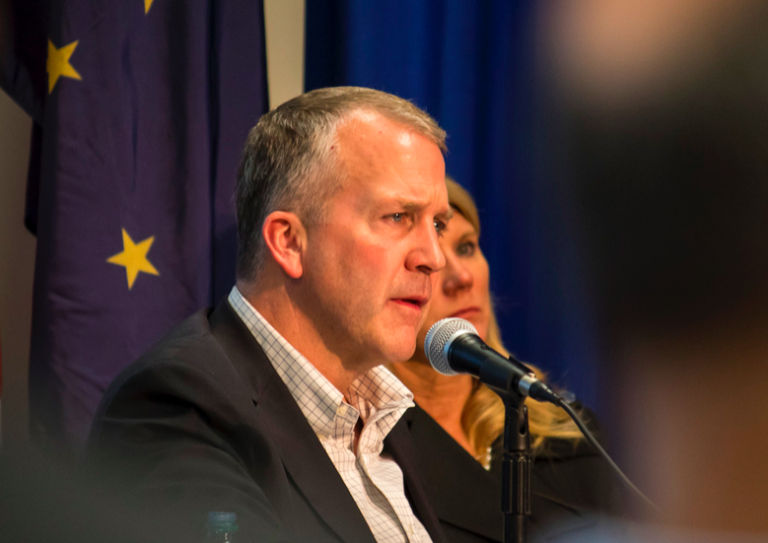
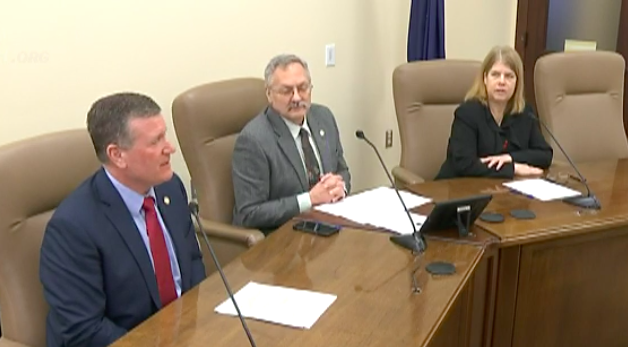
Above, the KTUU image shows a sparsely attended forum that Gov. Bill Walker and Democrat Mark Begich attended, but which Mike Dunleavy skipped. Walker used the KTUU report to criticize Dunleavy for not attending.

Gov. Bill Walker just can’t get over the fact that his main opponent Mike Dunleavy is controlling his own schedule. Every time he goes somewhere and Dunleavy doesn’t join him, he’s on the attack.

On Facebook, Walker complained that Dunleavy didn’t show up at a forum in Anchorage — one that he and Democrat Mark Begich attended.

It turns out that a lot of people didn’t show up at the forum, which was a first-time conference called Accelerate Anchorage. Hardly anyone knew about it.

Dunleavy had told organizers a week earlier that he would not be attending the forum, although KTUU and Gov. Walker characterized Dunleavy’s decision as “last minute.”

The decision was not unwarranted; only about 30 people attended the forum to listen to Walker and Begich agree with each other on nearly everything.

But Walker was going to make campaign hay out of it, writing:

“This is Dunleavy’s third no-show in a week: Alaska Municipal League candidate forum in Healy; AFL-CIO candidate presentations in Fairbanks; and today’s Accelerate Gubernatorial Hot Seat in Anchorage. These are lost opportunities for this candidate to interact with and learn from these Alaskans from communities across the state. You can’t stand tall if you don’t show up.”

A candidate could show up for 30 people in Anchorage, or could head out to the Alaska State Fair and show up for 10,000 people from all walks of life.

These are choices candidates make as they weigh whether a particular forum is something they can afford to do, with the short time frame they have in the General Election cycle.

Walker and Begich showed up in Healy for the Alaska Municipal League’s forum last week, where government officials gathered, while Dunleavy spent his time at the Kenai Peninsula Industry Appreciation Day, where the private sector was.

But Walker defined his attendance at the Healy debate as “showing up for work,” by calling out the other “boys,” as seen below:

Gov. Bill Walker, all alone at the Healy debate, waiting for Mark Begich to show up.

Final EIS issued for Greater Mooses Tooth 2

0

A major step forward for the proposed Greater Mooses Tooth 2 production pad in the  National Petroleum Reserve in Alaska was announced today by the Bureau of Land Management.

It will be the second significant project by ConocoPhillips in the Greater Mooses Tooth Unit.

The peak workforce during the winter construction period is estimated to be 700 and estimated peak production is 25,000 to 30,000 barrels per day going into the Trans Alaska Pipeline System.

ConocoPhillips applied for a permit to drill in August of 2015. Today, the Final Supplemental Environmental Impact Statement was released, which makes good on the Trump Administration’s commitment to jump-start Alaska energy. It will bring more jobs to the North Slope to develop a 14-acre pad and up to 48 wells. A pipeline and access road will cross Native lands as well as federally owned lands in the NPR-A. Infrastructure includes an 8-mile road and 8.6-mile pipeline.

ConocoPhillips has budgeted the project at $1.5 billion for development.

“Oil and gas development in the NPR-A is important to meeting our nation’s energy needs and this analysis provides a responsible path forward in balance with resource protections. And, throughout the process we are proud of our efforts of involving the people most affected by development activities on the North Slope of Alaska,” said Joe Balash, Assistant Secretary for Land and Minerals Management at BLM.

The area was leased in 1999 and development was originally approved as CD7 in the BLM’s 2004 Alpine Satellite Development Plan EIS.

ConocoPhillips submitted a new drilling permit application in 2015, relocating the drill pad.

A notice of availability for the Final Supplemental EIS for the Alpine Satellite Development Plan for the Greater Mooses Tooth 2 Development Project will be published Aug. 31.

A record of decision could be issued within 30 days.

Troopers get big raise from governor, but…

2

THESE ARE THE RAISES FOUGHT FOR BY SEN. MICCICHE

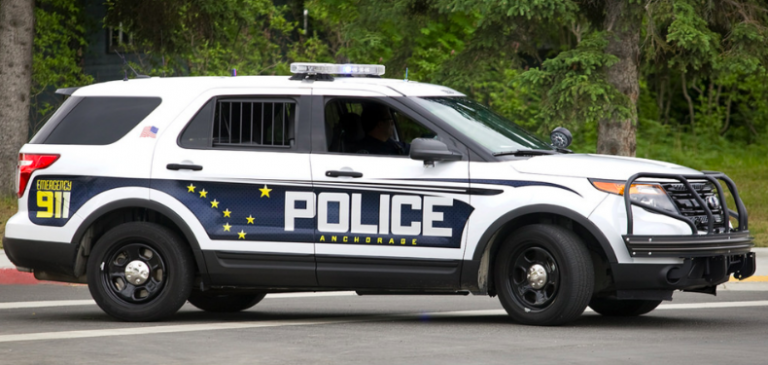
In the heart of Republican country, where his leading opponent for governor is the strongest, Gov. Bill Walker has announced the Alaska State Troopers will receive a 7.5 percent wage increase.

It’s not only good for Troopers and safety, it’s good press for his campaign for re-election prospects in the Mat-Su Valley, an area where the governor’s popularity is anemic.

By most accounts, the raises are needed. But Walker is taking credit for raises that were fought for hard by a senator from Soldotna.

Sen. Peter Micciche, Majority leader, Finance member and chair of the Department of Public Safety budget, butted heads with the governor in March, when Walker asked for more positions in his Public Safety budget, and Micciche said that what was needed was not more positions at this time — over 50 are unfilled of the 389 Trooper positions funded — but better pay to retain uniformed officers.

Micciche had talked to people throughout the Department of Public Safety, and they confirmed it: Alaska State Troopers are not compensated enough for what they are asked to do on a daily basis.

Micciche was also relying on a report on trooper retention to fight for the better pay.

Back then, the governor’s Chief of Staff Scott Kendall, took to Twitter and demanded that Micciche’s Senate committee restore the budget increases the governor had proposed for more positions.

“Budget served up by and slashes public safety by $4.5 Million from budget proposed by . Shameful. Funds for troopers/safety not a political football for negotiations. Enough games. Grow up and put the funds back. Now. ,” the chief of staff demanded in a fit of pique in April.

What the governor had asked for was $4 million for more rural law enforcement and various public safety programs.

The governor wanted two more pilots in the Department of Public Safety and some $600,000 for a records and statistics unit. He wanted more troopers in rural Alaska, although there were 50 positions in the department that were unfilled. All this, at a time when the governor was asking for taxes from everything that wasn’t nailed down, and not providing nearly enough budget cuts across the departments.

Micciche didn’t back down. Two years ago, Gov. Walker had come to the Legislature for millions of more dollars in public safety without providing any objective justification to the Legislature.

Micciche met with the leadership of the Troopers and told them to build a case for the money they needed, through an analysis that would withstand scrutiny. The Troopers’ hiring and retention study convinced Micciche of the need for better compensation first, before more positions, and he placed the language in the operating budget and pushed it over the finish line.

In recent months, the governor has come under criticism for overusing Trooper pilots and the King Air for his campaign-related stops around the state. Today’s announcement included a tactical pilot position in the Wildlife Troopers’ Aircraft Section to assist with search-and-rescue and counterdrug efforts.

Last week, the Troopers unveiled a new recruiting logo and branding package to help attract a new generation of law enforcement professionals.

Walker said he will recommend another 7.5 percent pay increase in the coming budget, although it’s uncertain he will be around to defend his budget. He faces a tough re-election cycle with two other heavy-hitters in the race for governor — Mike Dunleavy and Mark Begich.

The governor cites legislative budget intent language as his authority for appropriating the funds through a supplemental budget item, according to his press office.

TIMING WAS TO HURT MICCICHE, HELP WALKER’S RE-ELECTION

But the announcement comes weeks after Micciche sent a letter was sent to the Department of Administration, pleading with the State to release the funds he had fought for to boost Trooper salaries. It was something Gov. Walker had no intention of doing before the Primary Election, as that would have helped Micciche, who was in a tough primary battle with a Republican candidate who was criticizing him relentlessly on public safety issues.

Not until after the primary, and Micciche’s slim win was certain, did Walker finally announce that the wage increases would go into effect.

If Walker couldn’t hurt Micciche by withholding Trooper raises earlier this summer, at least he could help his own re-election chances,and announce the pay increases in a manner that would allow him to receive all the credit.

Little Chicago?

Oh, my. Voting irregularities? Dead people trying to vote? What are we, Little Chicago?

It turns out there may have been more than a little hanky-panky in the District 15 GOP primary pitting incumbent Rep. Gabrielle LeDoux against political newcomer Aaron Weaver.

[Read more at Anchorage Daily Planet]

Anchorage women’s club puts $10K into Dunleavy campaign

1

Anchorage Republican Women’s Club issued a $10,000 check to the Mike Dunleavy campaign for governor. The group made the presentation on Tuesday evening at a fundraiser in Anchorage. Over 75 people attended the fundraiser, including many Republican senators.