(1-minute read) POLICE RELEASE THIS DRAMATIC FOOTAGE
Anchorage police have released a video showing two men escaping from the Yakitori Sushi restaurant early on Feb. 4, when it caught on fire.
One of the men’s gloves caught fire before he finally shook it off and the two men tumbled through a fenced enclosure while the glow of the fire was behind them.
APD released the photo to its Facebook page, and it’s the same one that Yakitori had earlier posted on its own Facebook page, but then removed. It comes from the ring.com security camera.
Police are calling the fire arson and says both suspects appear to have been injured in the incident. One likely had some level of burns on his right hand. The other may also have burned his right hand.
“Detectives need the public’s help in identifying and/or locating two suspects in this investigation,” APD said today.
Police also posted these photos of the suspects, hoping the public will help in identifying them:
If you have any information about these two individuals and/or this investigation, including video (smartphone/and or surveillance), please call Dispatch at 311 or Crime Stoppers at 907-561-STOP to remain anonymous.
During the State of the Union Speech by President Donald Trump on Tuesday night, a group of Democrat women wore white in protest, and sat mostly wooden during much of the hour-long oratory.
They rose to cheer World War II heroes present who had landed in Europe on D-Day to secure freedom, at great personal cost. They applauded astronaut Buzz Aldrin, who once walked on the moon, one of the first two to do so (with Neil Armstrong). They encouraged the little girl who has endured chemotherapy. They supported the felon who Trump released from prison. They applauded record low unemployment, especially for African-Americans.
However, they saved their biggest cheers for themselves.
When Trump highlighted the achievements of women, and said that Congress has never had so many women serving, the women rose to their feet, clapped, pumped the air with their fists, and congratulated each other for what was close to a minute.
They were thrilled with his recognition of their mighty achievement of running and winning office, and they welcomed the praise from a president whom they openly loathe. The House now has more than 100 women in office, 90 of which are Democrats.
Even Rep. Alexandria O. Cortez, a socialist, was seen smiling with her white-clad colleagues during that moment of self-congratulations, while during most of the speech her eyes remained steely and her hands remained quiet.
Speaker Nancy Pelosi twisted her face throughout the speech, a visible distraction on camera, as she sat behind the president. Republicans everywhere noticed her struggle to contain herself.
Even Sen. Kamala Harris of California, now a presidential candidate, appeared pained, shaking her head when the president spoke about immigration and border security.
(4-minute read) WHAT HAPPENED IS COUNTER TO TODAY’S CONVENTIONAL WISDOM
By ART CHANCE SENIOR CONTRIBUTOR
Former Speaker of the House Bruce Kendall died in 2012 at the age of 93, but I had lost touch with him long before that, some time after he left the second Hickel Administration and returned to Anchorage.
Bruce and I had been pretty good friends in the late 1970s and early 80s.
One of Bruce’s proudest achievements was having been Speaker of the 20-20 split House of Representatives in 1963 and 1964, and he loved to regale anyone who would listen with stories of that time.
Art Chance
The State of Alaska was still aborning, completing the transition from the Territorial structure, and building and buying new things. In 1963, the State took delivery of the first “big” ferries, the Taku class, two of which were later enlarged and became the Malaspina and Matanuska, and brought mainline service to Ketchikan, Petersburg, Wrangell, Sitka, and Prince Rupert. The Tustumena was delivered in 1964 and service to the Gulf Coast, Kodiak, and The Chain began.
Indeed, liberating Alaska travel from Lower 48-controlled shipping concerns was almost as important as liberating Alaska from the Alaska canned salmon industry and fish traps.
Then life changed forever late in the afternoon of March 27, 1964: The Great Alaska Earthquake.
The Legislature was in its second session and remained in session through April 14, when it recessed until May 24 — when it reconvened until it finally adjourned on May 30.
Then Gov. Bill Egan called a special session from Aug. 31 through Sept. 2 to deal with appropriations to match federal revenue for earthquake relief and provide State relief to Alaskans whose homes and businesses had been damaged or destroyed by the earthquake and tsunami.
The State also retired or adjusted mortgages on homes damaged or destroyed and borrowed what was then the princely sum of $17.8 million for earthquake relief.
Along the way the Legislature established the Human Rights Commission, enacted Aid to Families with Dependent Children legislation, passed the Mandatory Boroughs Act, and started the first of many of Alaska’s Boondoggles to Nowhere, the Rampart Dam Development Commission.
In total, the Third Legislature was in session 164 days. Some 836 bills were introduced, and 231 bills were passed.
Some members of that Legislature went on to become household names in Alaska politics and government for a generation. A couple are still around and still politically active, and some have sons and daughters who followed in their footsteps. I knew quite a few of them; they were and are smart, industrious people, but none of them are superhuman.
Today’s conventional wisdom, at least the conventional wisdom of one House member, is that a tie or a narrow majority either guarantees stasis or causes individual members to have unwarranted veto power over legislation.
The actions and results of the Third Legislature graphically demonstrate that the conventional wisdom is either a delusion or a contrivance. To my mind, it is more likely the latter.
I think Rep. David Eastman has it exactly right in his column, in which he characterized the current situation in the House as a contrivance by the Democrats and three false-flag Republicans to deny the People the results of the last election and preserve the Holy Grail of the union-owned Democrats, an untouched operating budget with no cuts to the State’s extortionary education funding, no cuts to Medicaid, and no layoffs of employees paid from the General Fund.
The unions/Democrats could get away with this under Gov. Bill Walker by holding the Senate hostage; they had to pass a budget the Democrats and the governor would sign or have a government shutdown on their heads.
The only objective I can see the Democrats and their quisling allies have now is to force the governor to call a special session after the 90 day goes by without action, which would continue the session through the 120th day, the constitutional limit.
If they can stall until June 1, the governor has to give almost all State employees a layoff notice effective at 12:01 am on July 1.
At that time, the government of the State of Alaska will all but cease to exist.
School Districts/REAA’s totally reliant on State funds will follow suit as will “polisubs” (political subdivisions) with employees whose positions rely on State funds.
The School Districts that have local funding in addition to State funding don’t have to give immediate layoff notices, but since they’re all union chattel, they will. The unions/Democrats and their allies are counting on the governor not having the will to look into the abyss. We’ll see.
Frankly, nobody has ever seen anything like this before. There are only a handful of us still on this planet who’ve ever seen and dealt with significant labor strife at the State level and who remember when June 1 layoff notices were really a matter of routine. Everyone heard the wailing and gnashing of teeth over a few hundred requests for the resignations of political appointees, but wait until you hear the howl from 20,000 State employees getting layoff notices and perhaps as many as another 20,000 education and polisub employees potentially getting them as well.
I used to have a sign above my desk that said: “If you have to eat frogs, eat the big one first, and don’t spend too much time thinking about it.” Somebody is going to have to eat some frogs.
Art Chance is a retired Director of Labor Relations for the State of Alaska, formerly of Juneau and now living in Anchorage. He is the author of the book, “Red on Blue, Establishing a Republican Governance,” available at Amazon.
(2-minute read) CHAMPIONS NATIVE, WOMENS’ CAUSES IN SLEW OF RECENT LEGISLATION
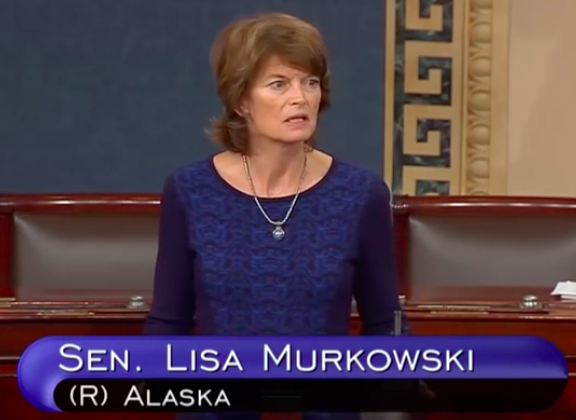
Sen. Lisa Murkowski has shifted her focus in recent weeks. She has paid more attention to issues affecting Native Alaskans, particularly women and children, with several bills specific to their concerns of these Alaskans. Since Jan. 1, nearly half of Murkowski’s sponsored or cosponsored legislation has dealt with this part of the Alaska population.
Here’s a look at the legislation she has her name on this year that pertain to Alaska Natives, women, and children, with links to the specific language of the bills:
S.290Cosponsored — A bill to protect Native children and promote public safety in Indian country. 01/31/19
S.288Cosponsored — A bill to amend the Indian Civil Rights Act of 1968 to extend the jurisdiction of tribal courts to cover crimes involving sexual violence, and for other purposes. 01/31/19
S.211Cosponsored — A bill to amend the Victims of Crime Act of 1984 to secure urgent resources vital to Indian victims of crime, and for other purposes. 01/29/19
S.256Cosponsored — A bill to amend the Native American Programs Act of 1974 to provide flexibility and reauthorization to ensure the survival and continuing vitality of Native American languages. 01/29/19
S.224Sponsored — A bill to provide for the conveyance of certain property to the Tanana Tribal Council located in Tanana, Alaska, and to the Bristol Bay Area Health Corporation located in Dillingham, Alaska, and for other purposes. 01/29/19
S.227 Sponsored — A bill to direct the Attorney General to review, revise, and develop law enforcement and justice protocols appropriate to address missing and murdered Indians, and for other purposes. 01/25/19
S.126Sponsored — A bill to direct the Secretary of the Interior to establish a demonstration program to adapt the successful practices of providing foreign aid to underdeveloped economies to the provision of Federal economic development assistance to Native communities in similarly situated remote areas in the United States, and for other purposes. 01/15/19
S.3247Cosponsored — Women’s Entrepreneurship and Economic Empowerment Act of 2018 01/09/19
Andrew Wheeler was approved to lead the Environmental Protection Agency by the Senate Environment and Public Works Committee today.
The committee, which has a slight majority of Republicans, voted along party lines, 11-10, allowing the nomination to go to the full Senate for a vote.
Alaska Sen. Dan Sullivan serves on this committee and voted in favor of Wheeler.
Wheeler was already confirmed by the Senate as the deputy administrator of the EPA, and was appointed as acting administrator when Scott Pruitt resigned in July, 2018. His nomination for the permanent position is opposed by Democrats and environmentalists, who have tried to slow down the process and leave him as “acting” administrator. That would put any of his major decisions in limbo, as they would be easily reversed if he remains unconfirmed.
Wheeler came to the EPA after working for Murray Energy, a coal producer. But he’s spent many years in the nation’s capital in the EPA’s Office of Pollution Prevention. An attorney, his first job with the EPA was as special assistant to the Information Management Division director in the Office of Pollution Prevention and Toxics.
In May, 2018, Politico authors wrote that his nomination to the EPA should “scare anyone who breathes.” The environmental industry has vociferously opposed him, calling him a “risk to public health.”
(3-minute read) OBJECTED TO NON-NATIVES ON THEIR LAND
Alaska Natives from Defending the Sacred AK and loosely associated groups took over a pubic meeting in Fairbanks, shouted at the federal officials, chanted, waved banners, and generally disrupted proceedings held for the purpose of gathering public input on developing oil and gas resources on the Coastal Plain of the Arctic National Wildlife Refuge.
Joe Balash, Assistant Secretary of the Interior and a former Fairbanksian, stood stoically, while Samuel Johns, a Gwich’in man, confronted him loudly, as seen in the Defending the Sacred photo above:
“It’s very disrespectful to just bring in a bunch of non-Natives into a community to tell us how you gonna handle our land — do you understand that? Yeah, bringing experts into people that have been living for thousands of years, and I’m just saying, change the ratio as to who’s in charge! Look at the people here who are working right now. How many of them are Alaska Native. How many of them are Alaska Native right now, can you tell me?”
Defend the Sacred AK called the meeting a “sham” that gave them no opportunity to voice their opinion. They demanded that the federal officials make time for the Native elders to give their testimony and they shouted, “Bring out the stenographer!” to take down their words.
The theme of the group of about 200 was that non-Natives and corporations have no business opening the lands, even though they have long been set aside by the federal government for such resource use.
The draft environmental impact statement for oil and gas exploration on the Coast Plain was issued Dec. 20. Now, the BLM is hosting a series of informational meetings across the state, but not in the fashion of hearings. They are set up to be more of conversations and dialogues, but the one in Fairbanks ended up being taken over by mob rule.
At the end of the evening, when officials were ready to close up the meeting at the Carlson Center, the Native protesters took over and started dancing, drumming, and singing.
After the partial government shutdown, the schedule for the hearings has been altered. The original comment period was to end Feb. 11.
“We received requests from Alaska communities and tribes as well as non-profit organizations from across the nation asking for additional time and meeting locations,” Balash said in a statement last month. “After considering these requests, we have decided to extend the comment period to March 13.”
The next public meetings will be held in Kaktovik on Feb. 5; Utqiagvik’s Heritage Center on Feb. 6; Fort Yukon on Feb. 7; Arctic Village on Feb. 9; Venetie on Feb. 10; Anchorage’s Dena’ina Civic and Convention Center on Feb. 11; and Washington, D.C on Feb. 13.
(2-minute read) DEMANDS TO KNOW HIS BELIEFS ON HUMAN CAUSES
In the confirmation interview of Fish and Game Commissioner Doug Vincent-Lang, Sen. Scott Kawasaki led off the questions by asking the designee to recite the politically correct creed on climate change that Kawasaki believes in:
“Do you concur that human activity, including the burning of fossil fuels, agriculture, deforestation, and industry is the primary cause of climate change?” Kawasaki asked the commissioner.
Vincent-Lang said he agrees climate change is affecting fish and wildlife management, that it is ongoing, and that it’s his job to address it as he does address any other factor.
But Kawasaki didn’t like that answer. He wanted to know what the Fish and Game commissioner believes.
“The question is do you actually concur that…there is a lot of science that backs this up as well. I know there’s mitigation…but I kind of wanted a straight answer on that…”
He was interrupted by Chairman of the Natural Resources Committee Sen. Chris Birch, who reminded him not to impugn the character of the commissioner by implying he wasn’t giving him a straight answer.
Kawasaki was not finished: “It’s a question because this is an agency that deals with science. And you mentioned science in your initial testimony, so I just wanted to get this on the record.”
Vincent-Lang answered: The Department of Fish and Game is the only department that has a climate change assessment on its website. Is climate change affecting our state’s resources? Yes, it is, he said.
“I’m not going to get involved in the causes of climate change, but I am going to get involved with what kind of factor it is in terms of sustaining our fish and wildlife resources.”
Kawasaki went on to ask about a fisheries important to him personally, the Chitina dip net fisheries. He wanted to know how Vincent-Lang would prioritize between subsistence, personal use, sports, and commercial interests.
Vincent-Lang politely reminded him that the decision for allocation belongs with the Board of Fish.
The man who murdered Duane Samuels off of De Armoun Road in South Anchorage in 1989 was denied parole today by the Alaska Parole Board.
More than 360 of letters opposing Jonathan Norton’s release were received by the parole board, said Ralph Samuels, the brother of the victim.
“The Samuels/Lindstam/Walsh families cannot express our gratitude for the outpouring of support we have seen in this most difficult time,” Samuels wrote. “A particular thanks to those that sent a short note to the parole board. The man can reapply to the board in ten years, but in the mean time, we do not have to have this worry. Thanks to the entire community.”
Families of victims often have to return to fight the release of murderers like Norton, who shot Duane Samuels in the forehead in cold blood during a car theft. These are wrenching experiences for them, as they have to relive the loss of a loved one and face the murderer again.
Through this website and one set up by the family of Duane Samuels, and with the strength of the word being spread on Facebook, the community of Alaskans rallied around the victim’s family to object to Norton’s release. Alaskans won.
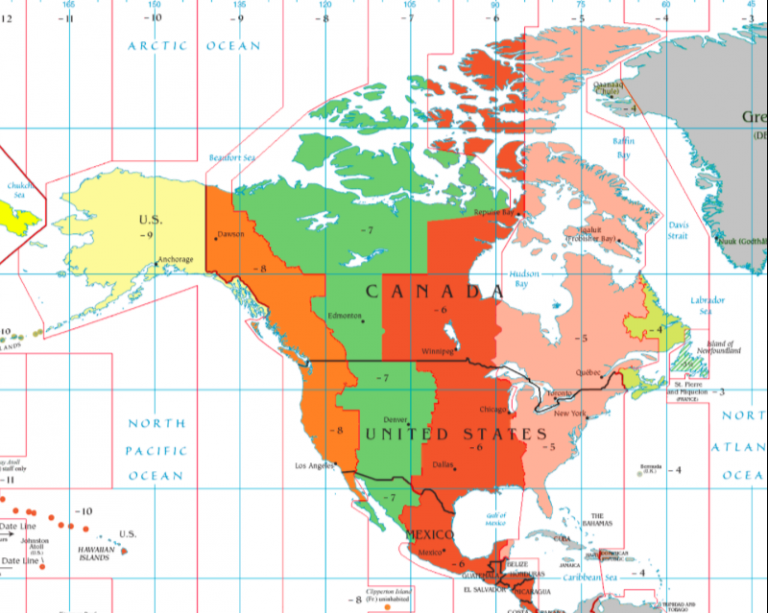
Metlakatla quietly went on Alaska Standard Time last month.
Until January 20 at 2 am, it was the one place in Southeast Alaska that remained on Pacific standard time, out of sync with the rest of the State, which has clocks that fluctuate between winter time — Alaska Standard Time, and summer time — Alaska Daylight Time
Late last year, the Metlakatla Indian Community of 1,460 people voted to align with the rest of the state, starting in November, 2019.
Then, the community sprang forward another decision — to move up the date when the clocks would change to Jan. 20, 2019. That means it is on Daylight Savings Time more than a month before the rest of the state.
When the rest of Southeast Alaska shifts its clocks forward by one hour to enter Daylight Savings Time on March 10, Metlakatla will already be there, and its residents won’t endure the sleepyheaded mornings that others suffer through when they change their clocks each spring. The next time it will change clocks is on Nov. 3, when most of the nation, including Alaska, sets clocks back an hour.
The state is wide enough to encompass four times zones, and actually had four until 1983, when they were merged into one main time zone, and one fragment time zone for the far Aleutian Islands, which are in the same time zone as Hawaii. Back then, the Annette Island Native community decided to to remain on its own time, and shared Pacific Time Zone with much of the West until last month. As land in trust with the U.S. government, it was entitled to do so.
As the years marched on, the management of a village-centric time zone has become more problematic. Ketchikan, where Metlakatlans travel regularly, is just 20 miles away and maintains the same time as the majority of inhabited Alaska.
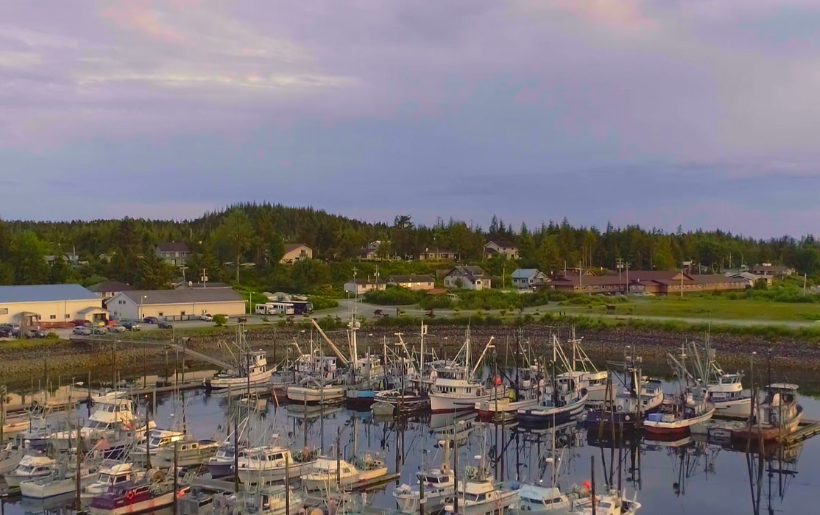
Metlakatla boat harbor.
HISTORY OF BOLD SETTLEMENT
Metlakatla is a Tsimshian settlement that arrived from British Columbia in the late 19th century with a missionary who had gotten into a doctrinal dispute with British Columbia church authorities and led his flock north to resettle. The United States government gave the Tsimshian colonists title to Annette Island, and eventually made it into a reservation.
In the 1970s, the reservation members opted out of the Alaska Native Claims Settlement Act, which was to extinguish reservations in Alaska. Metlakatla, with 132,000 acres of land and sea, has been considered a fortress of tribal sovereignty where most of its inhabitants achieve their status as tribe members through their families.