Tuesday, August 19, 2025
Home Blog Page 1512

Mueller and the political assassination of Ted Stevens

11

By FRANK MCQUEARY
SENIOR CONTRIBUTOR

It is the 10th anniversary of the political assassination of the late Sen. Ted Stevens, which occurred two years before his untimely death in a plane crash on Aug. 9, 2010.

I have been watching the coverage of the “Russian collusion investigation” and the trial of Paul Manafort.

A picture is starting to take shape:

If you were in Alaska in 2007 and 2008 you had a ringside seat to see the Federal Bureau of Investigation and the Department of Justice fabricate a criminal case against US Senator Ted Stevens.

The head of the FBI at the time was Robert Mueller.

While ultimately cleared of all charges, the case against him cost Stevens his seat in the US Senate in 2008.

The heart of the DOJ/FBI prosecution was the allegation that Stevens had failed to disclose over $250,000 worth of work on his Girdwood “chalet”.  It was $250,000 of work ostensibly done by his friend Bill Allen’s company, VECO, in addition to the $180,000 which Stevens had paid for the so-called improvements.

Events would eventually make it obvious that Stevens overpaid by $80,000 or more and should have been suing to get some of his money back.

But the FBI/DOJ team had a different narrative they were selling.

On July 30, 2007 they hired a locksmith and invited news and TV crews to observe their “raid” on Sen. Stevens home.

The Anchorage Daily News, in the person of Rich Mauer, as well as reporters from Anchorage TV station Channel 2 and commentator-for-hire Shannon (Shannyn) Moore were there by invitation.

What this intrepid band of reporters failed somehow to notice was that there was no way that $180,000 much less the alleged additional $250,000 from VECO, had been spent on upgrading Ted’s rather modest chalet.

Nor did they see any incongruity in the FBI, normally religiously silent about ongoing investigations, inviting them to what became a show and tell.

Nor, it is worth noting, have any of these intrepid souls had the moral courage to set the record straight by admitting that they were duped by the investigators.

But why would Sen. Stevens’ friend Bill Allen testify to something which was patently untrue?

Undisclosed by the FBI/DOJ team were several salient facts:

Bill Allen was in the process of selling his company, VECO, to CH2MHill for net cash proceeds somewhere in the neighborhood of $432,000,000.

The majority of those proceeds were allowed to flow through to Allen family members and trusts as well as several minority owners. Only the $70,000,000, which was to go directly to Bill Allen, was impounded by the DOJ pending his cooperation in the prosecution of Sen. Stevens.

Also undisclosed was the fact that Allen, once named Alaskan of the Year, now drunken and brain-damaged from a motorcycle accident, was himself under investigation by the Anchorage Police Department for illicit sexual relations with a minor, and that the investigation was being quashed by the FBI/DOJ.

The carrot for Allen’s cooperation was the release of his $70,000,000; the stick was the frozen investigation of Allen’s own corrupt criminal acts.

Ultimately the illegal prosecution of Sen. Stevens was thrown out, first by Judge Emmett Sullivan, and then by Eric Holder.

But it cost Stevens his seat in the US Senate.

In July of 2008, just months before the elections, a DC jury convicted Stevens. Using the suborned false testimony of Bill Allen, hiding evidence of Stevens’ innocence, the FBI and DOJ had piled on charges and leaked so much false and damaging evidence to the “press” that the Washington DC jury returned a conviction.

But all this was only part of the story. In Florida, a minor league Democrat named Vic Vickers, packed up his household goods and headed to Alaska. He changed his registration to Republican, filed to run for US Senate and proceeded to spend a million dollars on “campaign” ads that said little, other than “Stevens is a crook.”

And, in Washington DC, the Democratic National Committee, then under Chuck Schumer’s leadership, was grooming Mark Begich to replace Stevens. In Alaska Begich was cautious in his criticism of Stevens because of Stevens’ popularity. In DC where his financial and political support was based he was vicious in attacking Ted.

Apologists in the years since Stevens’ conviction was overturned have tried to paint the indictment as the work of the Bush Administration and the exoneration as the work of the Obama administration.

The reality is that it was an entrenched bureaucracy which was putting its thumb on the scales of justice.

When whistleblower Special Agent Chad Joy revealed just some of the improprieties and illegal activities on the part of the FBI/DOJ, you would have expected that heads would have rolled. But the only one in the FBI to suffer much more than a slap on the wrist was Chad Joy, the whistleblower who went public and revealed the ethical lapses on the part of both the FBI investigation and the DOJ prosecution.

Needless to say his career in a bureaucracy run by Robert Mueller did not thrive. One year later he was no longer with the FBI His partner, Mary Beth Kepner, who was found guilty of a myriad of ethical and legal lapses, was still with the FBI years later.

Similarly in the DOJ not much happened to the malfeasants. Only Nicholas Marsh suffered a self-imposed penalty when he committed suicide.

It was during this period of time under Mueller’s leadership at the FBI that Mueller first partnered with DOJ’s Andrew Weissman. Weissman had promulgated the practice of intimidating witnesses and soliciting false testimony, hiding evidence and procuring high-profile convictions, which were later overturned on appeal, but not before lives were ruined and in some cases lost. When his brutal and dishonest practices had been focused on racketeers and crime lords, no one seemed to care about his tactics.

In the summer of 2008 when I and others had encouraged Stevens to mount a vigorous campaign and proclaim his innocence loudly and broadly, the former federal prosecutor explained that he had to walk a very narrow path because under the RICO statutes that were being used, any public comments he made concerning the investigation could be interpreted by the DOJ/FBI investigators as “obstruction” and could lead to new charges.

Ultimately Stevens did hire a campaign manager in August of 2008. It was too little, too late. Many former supporters were either intimidated by the aggressive manipulation of facts by the FBI or convinced of Stevens’ guilt by the staged display and leaking of information about the investigation to sympathetic media.

Stevens ultimately lost the election by a mere 3,000 votes in spite of the false “conviction” and the overwhelmingly negative coverage in the Anchorage Daily News by the rabidly anti-Stevens reporter Rich Mauer.

Mark Begich, with the help of Chuck Schumer and the DNC went on to become Alaska’s Junior Senator, just in time to provide the 60th vote for Obamacare and vote in lockstep with Obama’s redistribution agenda.

In April of 2009 Judge Emmet G. Sullivan dismissed the ethics conviction of Ted Stevens. In a 14 minute diatribe he said that he had never seen “mishandling and misconduct like I have seen” in the Stevens trial. He then appointed a special counsel to determine if the prosecutors themselves should face criminal charges themselves.

A powerful US Sen. Stevens was the bureaucratic cabal’s first major political victim. But now it is after a bigger fish, the president of the United States.

Frank McQueary is a life-long Alaskan and political activist and student of Alaska history.

Update: Aaron Weaver now up by 9 votes over LeDoux

3

BALLOT COUNTING MACHINE BROKE ON ELECTION DAY

In the North Muldoon precinct of District 15, a ballot counting machine broke on Aug. 21, and 13 ballots could not be counted.

Those ballots were put into an envelope and sent to Juneau for counting, which is standard procedure.

The result of that count put Aaron Weaver up by 9 votes over Rep. Gabrielle LeDoux.

That’s six votes more than Weaver had on Election night, when he led LeDoux by three votes.

But there are many more ballots to be counted.

As of Monday afternoon in the Republican primary, 179 votes from absentee by mail, absentee in person, and special needs voters need to be counted and will likely be counted on Tuesday.

Also there are seven early votes and 10 questioned ballots that need to be counted by the Division.

The Division of Election is said to be concerned about 10-20 ballots that have doubts surrounding them.

[Read: Division of Elections finds irregularities in ballots from Gabrielle LeDoux race]

[Read: Gabrielle LeDoux’s absentee vote scheme raises eyebrows]

Aaron Weaver this afternoon told Must Read Alaska, “I have the upmost trust in the Division of Elections. They are consummate professionals. If they find anomalies I know they will take appropriate action. The integrity of our elections is paramount and is what makes our republic work. What’s most important is that the people have confidence that their vote matters.”

LeDoux spent over $73,000 for her campaign, including a $10,000 check to a California man named Charlie Chang in late July to get out the vote among minorities in the district.

Aaron Weaver, Gabrielle LeDoux

Weaver spent less than $2,000 on his campaign and realized he was outgunned from the start, and was surprised when he pulled ahead of LeDoux on Election night.

Division of Elections: ‘Irregularities’ in ballots from District 15

7

ABSENTEE BALLOTS FROM PHANTOM VOTERS IN GABRIELLE LEDOUX DISTRICT

The Alaska Division of Elections has announced it found irregularities in the House District 15 absentee ballots, enough to call for a series of measures to ensure that voters have confidence in the results.

“This is the first time we have had corruption that the Division of Elections has identified,” said Tuckerman Babcock, Alaska Republican Party chairman. “It looks like it’s as bad as anyone thought it was.”

A press release from the Division was sent this afternoon, explaining the problems:

The Division of Elections, in preparing for the 2018 primary election and in its initial review of absentee ballot applications, discovered some irregularities that prompted a second round of review of all absentee ballots from House District 15. This review only involves the application and the ballot envelope. The division will not be reviewing and counting the votes until tomorrow.

One irregularity was a high number of absentee ballots from House District 15 returned as undeliverable. In every election, some absentee ballots mailed out by the division are returned by the post office as undeliverable. The division makes efforts to contact those voters and get them new ballots, but there are always some voters the division is never able to reach. What raised suspicions in this election cycle is that of those voters that the division was not able to reach over 50 percent (40 out of 70) were from House District 15. 

Another irregularity was seven absentee ballot applications received for House District 15 from people whom state records indicated were deceased. For these applications, the division did not send ballots to those persons.

The division’s second round of review of absentee ballots from House District 15 revealed that there is no reason to be concerned about the vast majority of absentee ballots from the district. The division reviewed various records and confirmed that most absentee voters had long voting histories at their addresses and their signatures matched division records over many years. 

But other ballots raised concerns that the person identified as the voter either did not actually vote the ballot or was no longer living in House District 15. The division has been diligently investigating those concerns.

After identifying all such ballots, the division attempted to contact the voters on the phone to confirm whether they actually voted and where they were living.  Some of the phone numbers were no longer in service or no one picked up the phone. Among the voters that the division was able to reach, some confirmed that they had indeed voted, but two of the voters contacted said they had not voted in the 2018 primary election. The division will not count the ballots voted in those two voters’ names.

In light of the remaining questions over some of the ballots and the close race between two candidates in the Republican primary in House District 15, the division will do the following when it counts absentee ballots for House District 15:

* All absentee ballots from the district will be kept with their envelopes rather than commingled. This will ensure that any votes later identified as improper can be subtracted from the vote totals. 

* The division will first count the absentee ballots that do not raise authenticity concerns and then determine the candidates’ vote totals including those ballots.

* The division will then count the absentee ballots that do raise authenticity concerns, but about which the division does not currently have evidence to merit rejection, to see if those votes would affect the outcome of the primary election.

* The division will have a provisional count on the election completed tomorrow, but the final count will not be certified until Saturday.

* The division will continue to evaluate the legitimacy of those ballots until the deadline for certification of the election result on Saturday.

When there are questions about a ballot, the Alaska Supreme Court has said the law favors counting the ballot so that voters will not be disenfranchised without good reason. For this reason, the division will not reject ballots without clear evidence that the voter identified on the ballot did not vote the ballot or that the ballot is otherwise improper. 

“The integrity of our elections is vital to our democracy,” said Division of Elections Director Josie Bahnke. “The division will continue to look into this matter throughout the week and remove any ballots that we determine should not be counted.”

The division briefed the candidates and the Alaska Republican Party today on the matter. The division will certify the election results on Saturday, September 1 as required by statute. A candidate or group of voters may request a recount or file an election contest if they wish to challenge the result in court. Any challenge will need to be resolved quickly because the division needs to know the winner of the primary in time to print ballots for the general election.


Update: Aaron Weaver now up by 9 votes over LeDoux

Tick tock: Alaska’s unfunded pensions loom

5

By WIN GRUENING
SENIOR CONTRIBUTOR

A recently published report by the American Legislative Exchange Council shines a light on the growing problem facing state and local governments – the unfunded liability of government-sponsored pension funds.

Unfunded liability is the difference between the anticipated cost of paying retiree pension and medical benefits for decades to come and the future projections of pension fund balances available to support those payments.

Alaska’s total exposure is small compared to many states, but a more realistic comparison of unfunded liabilities to total population places us dead last among all states after adjusting for differences in rate of return assumptions.

Every man, woman, and child in the State of Alaska would need to cough up $45,689 to make up the current shortfall in Alaska public pension funds – 28 percent higher than Connecticut, which is 49th on the list.

The ALEC report, “Unaccountable and Unaffordable”, says that “absent significant reforms, unfunded liabilities of state‐administered pension plans will continue to grow and threaten the financial security of state retirees and taxpayers alike.”

The report surveyed more than 280 state-administered public pension plans.  Using prudent and reasonable long-term market expectations, the report exposes pervasive pension underfunding across the nation.

While Alaskan legislators have attempted to address this issue in the past, it’s notable that even with recent strong market returns, a large funding gap remains.

That’s especially troubling.  If state fund managers cannot make significant headway reducing pension liability in a robust investment environment, what happens during the inevitable next bear market?

An April 2018 University of Alaska ISER report estimates $10.815 billion in additional payments will be needed to eliminate the unfunded liabilities of PERS and TRS (the two largest Alaska state-sponsored retirement plans with slightly over 100,000 active and retired participants) under a 25-year amortization schedule the state adopted in 2014.

This funding gap is only a portion of the total since local governments that may participate in TRS or PERS, such as Anchorage, Juneau, and Fairbanks, must also make substantial annual payments to reduce sizable pension fund deficits.  While municipal annual liability is currently capped at 12-22 percent of payroll (with the State making up any difference), repeated efforts by the Alaska Legislature to shift more of the cost to local governments may ultimately succeed – further straining municipal budgets.

Ominously, state actuarial projections contained in the ISER report may understate the shortfall after examining Alaska’s liability computation method.  The use of overly optimistic rate assumptions artificially lowers the total liability, thereby masking the true fiscal exposure.

Federal regulators require private sector pension managers to use discount rates of approximately 4.5 percent – but ignore much higher rates used by public sector managers.

For example, as detailed in the City and Borough of Juneau’s 2017 FYE financial statements, auditors computed Juneau’s share of PERS unfunded pension liability at $176 million.  If their assumed investment rate (8 percent) was reduced only 1 percent to 7 percent, it would increase the city’s liability by over $50 million to $227 million – a 28 percent increase.

Presumably, even a small dip in expected investment returns would cause a similar percentage increase in Alaska’s total pension deficit.

Alaska is one of seven states with state constitutional provisions explicitly protecting pension benefits – thereby limiting the available options to mitigate this financial exposure.

The Legislature’s most important pension reform in 2006 moved new hires from a defined-benefit plan to a defined-contribution plan.  More recently, a $3 billion cash infusion was authorized under the Parnell administration.

Yet, while remaining defined-benefit payouts stretch out for almost another 100 years, some Alaska legislators and candidates insist on supporting a return to the unaffordable defined-benefit plan that got Alaska in this fix in the first place.

As states like Arizona, Pennsylvania and Michigan implement similar pension revisions, Alaskans need to remain vigilant to preserve their reforms.

Some believe with the uncertainty surrounding the health of Alaska’s pension funds that large tax increases are unavoidable, if not mandatory, on both the state and local level. Others believe fiscal restraint coupled with judicious economic growth initiatives will allow us to weather this storm.

Over the next several months, Alaskans will be voting for statewide and local candidates who will need to confront this ticking time bomb.

Make your vote count.

Win Gruening retired as the senior vice president in charge of business banking for Key Bank in 2012. He was born and raised in Juneau and graduated from the U.S. Air Force Academy in 1970. He is active in community affairs as a 30-plus year member of Juneau Downtown Rotary Club and has been involved in various local and statewide organizations.

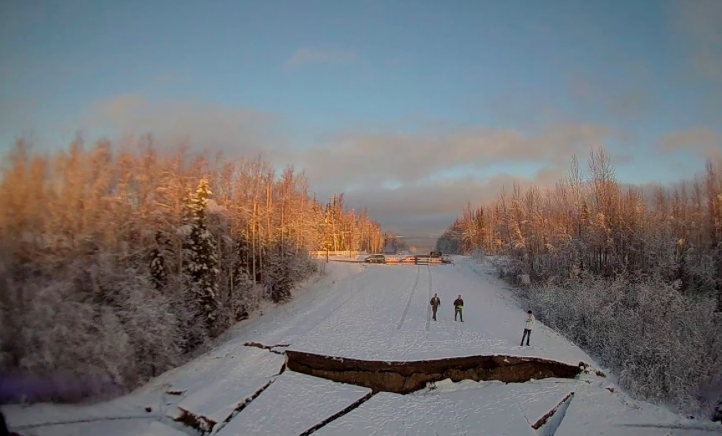
Sen. John McCain, the maverick, 1936-2018

0

HE HAD AN IMPACT ON ALASKA POLITICS AND LIFE

“Today we lost a true American hero. John McCain’s life embodied steadfast patriotism and sacrifice in the service of a cause greater than self. His courage and indomitable spirit inspired millions in America and across the globe. Our prayers go out to his wife Cindy, and the entire McCain family. To my friend John: Godspeed. Semper Fidelis. Fair winds & following seas. May you rest in peace.” – Sen. Dan Sullivan

Few Alaskans can remember a time when Sen. John McCain wasn’t a force in the American political landscape. And few Alaskans can forget the impact he had on the 49th State’s politics when he chose an Alaska governor as his presidential running mate in 2008.

McCain, a Vietnam War former prisoner of war, and a two-time Republican presidential candidate who made Gov. Sarah Palin a household name in America, has died following a long battle with brain cancer.

His death on Saturday was four days short of his 82nd birthday.

“American hero, remarkable intellect, iron will, and unquestionable integrity—those are just some of the words that come to mind when I think of Senator John McCain,” said Sen. Lisa Murkowski. “He was one who always did what he thought was right and motivated others to do likewise. I have been blessed to serve in the US Senate with him for the past 16 years and will dearly miss my friend and colleague.”

Although he was not an Alaskan, he had undeniable influence on Alaska politics. In a completely surprising move, he asked Palin to become his running mate in his bid for president in 2008. Her name on the ticket was somewhat of a “Hail Mary” for a candidacy that was falling behind the populist rise of Barack Obama.

Palin and her home state were thrust onto the national scene — she was a glamorous and well-spoken maverick politician who the Republican Party hoped would attract and connect with voters in a way McCain wasn’t accomplishing. Her hometown of Wasilla was subsequently scrutinized and often ridiculed by the mainstream media as an outback hillbilly haven.

Before the McCain-Palin ticket, few in America could have even placed Wasilla on the map, but suddenly it became a tourist destination, and remains so today because of the surreal episode that enveloped the state.

The McCain-Palin bid for president and Vice President was ultimately drama-filled, and after the November election and loss to Obama, Palin’s gubernatorial administration was hounded by an unrelenting and ridiculing media in such a way that she eventually resigned, saying that she had become more of a hinderance than an asset to good government.

Sean Parnell, the lieutenant governor, took her place and was governor for six and a half year years. With Palin’s surprising exit from office in 2009, a cascade of other political fortunes were made and lost. Craig Campbell became lieutenant governor, and then Mead Treadwell after him. Bill Walker won the General Election in 2014.

Congressman Don Young issued a statement on Saturday: “Anne and I are saddened to hear of the passing of Senator John McCain. Our prayers are with his family during this difficult time.  A war hero and a fighter who committed himself to a lifetime of public service, he will be deeply missed in the halls of Congress. Rest in Peace, Senator.”

Former Gov. Sarah Palin had issued a statement on Friday, after the McCain family announced the senator would no longer receive treatment for cancer. His age and the advancement of the disease made the outcome certain.

“May comfort and peace envelope them. May my friend sense appreciation for his inspiration to serve something greater than self,” Palin wrote of the McCain on Instagram.

Sen. Dan Sullivan had already made a statement on Friday, when the news of McCain’s impending death was made. On Saturday, Sullivan offered his further condolences to the McCain family: “Today we lost a true American hero. John McCain’s life embodied steadfast patriotism and sacrifice in the service of a cause greater than self. His courage and indomitable spirit inspired millions in America & across the globe. Our prayers go out to his wife Cindy, and the entire McCain family. To my friend John: Godspeed. Semper Fidelis. Fair winds and following seas. May you rest in peace.”

Sen. Lisa Murkowski was in Savoonga, Alaska, chairing a Senate Indian Affairs Committee field hearing on Saturday and could not be immediately reached for comment.

A LONG, HISTORIC LIFE

McCain was born Aug. 29, 1936 at the Naval Air Station in the U.S.-held Panama Canal Zone, where his father was stationed.

A graduate of the U.S. Naval Academy in 1958, he joined the Navy, became an aviator, and flew bombing missions over North Vietnam, where he was shot down and seriously injured in 1967. Captured by the North Vietnamese, he was held as a prisoner of war until 1973. He was tortured, but he refused an offer to be released “out of sequence” of others who had been held longer than he. His injuries from the war left him with lifelong disabilities.

He moved to Arizona after retiring from the Navy and entered politics, serving six terms as a U.S. senator.

McCain launched his second bid for president with an informal announcement in February, 2007 on the Late Show with David Letterman. He had previously run, but lost the primary in 2000 to George W. Bush.

McCain lost to Barack Obama after receiving 173 electoral college votes to Obama’s 365. He won 46 percent of the popular vote, Obama took 53 percent.

McCain was a frequent critic of President Donald Trump and in an autobiography also criticized his own choice of Palin as his running mate.

Turnout: Was it that low? Or are there a lot more phantom-voters?

1

The Fairbanks Daily News-Miner called voter turnout during Tuesday’s Primary Election “abysmal.”

But it might not be that bad.

The number of voters for the Alaska Primary bulked up since the last statewide election, going from 515,714 in the 2016 primary to: 567,403 this month.

And while the number of ballots cast in 2016 was 88,817, this year 103,714 ballots were cast. The turnout was 17.2 percent in 2016, but was 18.3 percent this year.

What are we to make of an additional 51,689 people who magically appeared as registered voters over the course of two years, even while the state’s population has contracted by several thousand?

The answer is the automatic registration of voters with the Permanent Fund dividend application. This occurred after voters in November, 2016, passed an initiative that requires Permanent Fund dividend applicants to be automatically registered as voters, if they are 18 years or older.

Here’s the clue: The number of “undeclared voters” increased by more than 49,000 in just one year. Those are voters who were assigned by the Division of Elections to the big U category because they were being automatically enrolled with the Division of Elections.

In reality, the turnout was likely better than it looks, because the automatic voter registration has registered people who are not eligible to vote or who have no intention of doing so. They are phantom voters, and they also represent votes that will be easier to defraud, because they are not engaged in the public process.

The real turnout is probably around 22 percent, if the artificially inflated voter base is backed out of the calculation.

While there are 567,403 people registered to vote in the state, according to the U.S. Census, there are only about 555,000 Alaskans over the age of 18.

Commissioner of Labor Drygas protests Fairbanks City Hall

3

AFTER HER APPEARANCE AT PROTEST, THE AFL-CIO GAVE GOV. WALKER ITS ENDORSEMENT

Alaska’s Commissioner of Labor and Workforce Development was in Fairbanks this week for the AFL-CIO convention, and took the opportunity to walk the picket line with union members protesting the City of Fairbanks.

Heidi Drygas held a sign that read “Fair Contracts Now,” with two dozen other union activists in a moment that was calculated to coincide with the AFL-CIO statewide convention in Fairbanks.

Vince Beltrami, president of the Alaska AFL-CIO, bellowed into the microphone that the union wanted the city to know that they were there. The bullhorn chanting continued between speeches from union officials demanding higher wages, more benefits, and better working conditions for city employees. It was loud.

The AFL-CIO drafted a resolution to boycott conventions in Fairbanks until the city negotiates in good faith with the Fairbanks Fire Fighters Association, the Public Safety Employees Association and the International Brotherhood of Electrical Workers.

Considering the city and the unions are negotiating actively right now, a visible presence at a protest by a sitting state commissioner is questionable from an ethical perspective, particularly since her paycheck comes from the people of Alaska. She was in Fairbanks ostensibly on the people’s business, representing the State at the big union convention.

AFL-CIO ENDORSES WALKER

The coveted endorsement of the AFL-CIO went to Gov. Walker today, perhaps helped along by the Labor commissioner’s Thursday enthusiasm for protest against the City of Fairbanks.

The endorsement was expected and foreshadowed by AFL-CIO President Beltrami several weeks ago in the media.

Mark Begich, the Democrat running for governor, had also attended the convention along with the governor and his entourage.

Both Walker and Begich spoke to the gathering of over 100 attendees before the vote was taken. This was clearly campaign business going on in Fairbanks, but the governor threw in a bill signing in Healy the day before to make sure he could write off the trip for himself and his staff, and so they could all attend the AFL-CIO convention on the the state’s dime.

Flying home from Fairbanks on Friday was a jubilant Walker and Mallott, a plane full of union leaders and executive staff from the Governor’s Office, including the governor’s Press Secretary Austin Baird, Deputy Chief of Staff Grace Jang, and Chief of Staff Scott Kendall. Also on the plane was Mark Begich without an entourage.

The governor’s campaign manager John-Henry Heckendorn was spotted in the airport lounge having drinks with Walker’s senior staff and on a flight to Anchorage on Friday.

Yesterday, Begich had won the endorsement from the Alaska Center for the Environment.

Today, Alaskans Together for Equality,  Alaska’s largest member-based statewide lesbian, gay, bisexual, transgender, and queer civil rights organization, announced its endorsement of Begich.

“The board considered the high stakes in this election and the looming threats against Alaskans’ civil rights. This is the first time Alaskans Together has endorsed a candidate for Governor,” the organization said in a release.