One more case of COVID-19 coronavirus was diagnosed during the most recent 24-hour snapshot by the Alaska Department of Health and Social Services. The new case is in the Southeast Fairbanks Census Area — the Interior.
The total case count in Alaska is 372. Recovered cases in Alaska now total 284.
Some 23,655 swab tests have been conducted in Alaska, or about 364 tests a day since testing began on March 2. No new hospitalizations were reported; the total cumulative hospitalizations to 38. Currently 8 Alaskans are hospitalized with the illness.
One new death due to COVID-19 was reported, which is the first death since April 11. This brings the total to 10 Alaskans who have died from the coronavirus since it arrived in the state in early March.
Two months after his 91st birthday, Robert M. Burnett slipped away from life. He had been in failing health for the last few months, and yet his death was peaceful, overlooking beautiful Lake Chapala in Mexico.
Born in Baker, Oregon, Robert had lived in the town of Chapala, in the state of Jalisco, Mexico for more than 25 years, where he had been involved in many charitable works on behalf of public education and the arts. Although he had lived in Alaska for 15 years, he lived in Chapala longer than anywhere else as an adult.
Robert Burnett in Chile in the 1950s.
Robert graduated from Lincoln High School in Portland and Lewis and Clark College in Lake Oswego, got married, and had two daughters before heading to Chile for a life of adventure for a few years.
Upon his return, he was a journalist for most of his career, writing for the Los Angeles Herald Examiner, and editing the Culver City Star News. He recalled standing on a jetty after the Great Alaska Earthquake waiting to record the tsunami that was expected to sweep the southern coast of California. Although many perished in Crescent City, California, the wave was barely registered in Los Angeles.
He went on to become the Associated Press Bureau chief in San Diego before he got the itch to go to Alaska.
Robert moved his family to Alaska in the fall of 1969, as he had headed north that summer to mine the Bering Sea for gold. When that venture failed spectacularly, he got a job with the State of Alaska as the public information officer for the Department of Fish and Game and lived in Juneau.
When Gov. Keith Miller ran for his re-election, Robert was his press secretary. Miller, the third governor of Alaska who had taken office when Gov. Walter Hickel was appointed Secretary of the Interior for President Richard Nixon, lost to Gov. Bill Egan, a populist Democrat, who had previously served as Alaska’s first governor.
Robert especially loved working alongside the well-loved filmmaker Amos Berg, and the two of them produced vast amounts of printed and filmed material for the Department of Fish and Game, under Commissioner Wally Noremberg.
Robert was also the editor of the Alaska Blue Book, an encyclopedic reference manual for Alaska officials in the 1970s. After leaving state service, he hand-trolled for salmon in Southeast Alaska, and was the administrator for the Kavilco, the Kasaan Village Corporation, before heading back to Oregon to care for his aging parents.
Robert already had his master’s degree in journalism from UCLA, and a master’s degree in Spanish, but later in life he earned a third master’s degree in archaeology. An archeological site in Oregon, known as the Burnett site, is named for him after he discovered it on his property on a bluff above the Willamette River in 1987. He worked for several years as an archeologist in Oregon.
He moved to Mexico in 1996 and never looked back. In those years, he developed a loving relationship with Carmen Magana, who became his life partner for a period that spanned 20 years. He returned to Alaska for the last time in 2014 and traveled the road system with his daughter, Suzanne Downing, the author of this obituary, assisting her as she campaigned for Gov. Sean Parnell’s reelection.
Robert Burnett and Suzanne Downing at the Alaska State Fair, August, 2014.
Robert was proud of his four children, Rebecca, Suzanne, Peter, and Joseph, who he raised with his first wife Marlys Burnett, formerly of Juneau. And he was also proud of Carmen’s children, Lucy, Mabel, and Siglinda, who he helped raise.
MAINSTREAM MEDIA GOES ALL IN FOR LIBERAL UNDERWRITING
When last year the Anchorage Daily News announced it had received a ProPublica grant to produce a series about the lack of law and order in village Alaska, some knowing observers nodded their heads and said, “They’re going for a Pulitzer.”
The project proposed had the distinct contours of what the Pulitzer committee members like to see: Social justice denied, dramatic and easy-to-tell plot line with gripping vignettes that illustrate a greater problem. A series. A cause to champion and a public policy needle to move.
It was not unlike the series that won the newspaper a Pulitzer just a few years earlier. “People in Peril” focused on rural alcoholism in Alaska villages, “the epidemic of despair that is robbing an entire generation of its birthright happens far from city lights,” the newspaper wrote at the time.
If only the booze was gone, rural Alaska would be a great place — that was the takeaway of the “People in Peril” series of 1988. The alcohol kept flowing and the drugs — meth and opioids — fuel family dysfunction and social destruction, as pointed out last year by independent writer/thinking/curmudgeon Craig Medred, an ADN alumnus who remarked on his old newsroom winding up the pitch for another Pulitzer project, this time with ProPublica financing:
“Now the ADN, in cooperation with ProPublica, is back with what it hopes will be another Pulitzer Prize-winning series redefining the problem. This time the newspaper has teamed up with Outside media to argue the problem is a lack of law enforcement to keep people from harming each other.
“The crisis of alcohol and despair has evolved into a crisis of crime,” Medred wrote of the moving target — what is it exactly that ails Rural Alaska: Drugs and alcohol, or crime unpunished?
A generation has passed since that “People in Peril” series. If anything, the problems seem to be worse.
But in 2019, the reporters and photographers followed the time-tested Pulitzer formula and pumped out another series, one that spoke to the rampant lawlessness, and a village public safety program run amuck with convicted criminals serving as village cops.
As predicted, this week it was announced that the newspaper had grasped the brass ring, winning the Public Service Pulitzer Gold Medal for the “Lawless series”, a year-long deep dive into what the newspaper calls the failures of the criminal justice system in rural Alaska. Rural Alaska is a place deeply committed to tribal sovereignty, but that’s a story for another day. It wasn’t the story the ADN set out to tell.
During the ADN’s project year, U.S. Attorney Bill Barr visited rural Alaska and listened to the travails of locals — mainly women — who are preyed on in villages, some of which are intergenerational rape camps.
In lightning speed, Barr released $10.5 million directly to tribes and tribal organizations to beef up the number of officers, to repair buildings, and buy equipment. No strings attached in the sense that there would be little, if any, accountability. More money followed in the way of grants.
It was parachute decision-making and it made for an effective part of the story — the newspaper followed Barr’s every move in Alaska. Barr declared public safety an emergency in Alaska. The newspaper can rightfully take some credit for getting the money to villages.
A year later, few if any village officers have been hired, and there is no accountability for the federal expenditure. It’s business as usual in villages.
“But what is certain is that the simple and dramatic story is easier to both write and digest than the complex and complicated story, much more likely to spark government action, and thus much more likely to win a prize,” Medred wrote in 2019 at the outset of the Lawless project.
It’s the third Pulitzer Prize for the Daily News in the newspaper’s history — all in the public service category. The gold medal for public service is among 15 Pulitzer Prize categoriesawarded for journalism this year. Without a doubt, this is a feather in the cap for the newspaper, which has seen better days. It’s like winning a Grammy or an Oscar. These are your peers telling you that you’ve done the best work in America during the past year.
Reporting for “Lawless” was led by undeniably talented Kyle Hopkins, and included contributions from many ADN staff members, all of whom get to own a Pulitzer medallion for touching any part of the series.
The project was funded by ProPublica, which calls itself an “independent nonprofit newsroom that produces investigative journalism with moral force. We dig deep into important issues, shining a light on abuses of power and betrayals of public trust — and we stick with those issues as long as it takes to hold power to account.”
Indeed. In 2020, ProPublica is an anti-conservative news organization. It’s not just liberal or progressive, but is committed to leftist cause journalism, and has been funded by the most left-leaning foundations in America, such as the George Soros’ Open Society, The Sandler Foundation.
What ProPublica specializes in is “cause journalism” that it defines as “independent investigations.” A scan of the group’s chosen journalistic endeavors shows that it is the house organ for the Democratic Party, at best.
In May of 2015, a scan of the ProPublica top headlines show a smattering of stories about a variety of topics, some of them having to do with water distribution in the West. These were during the Obama years:
But by November, 2016, the stories strongly focused on criticism of the recently elected President Donald Trump:
“How Journalists Need to Begin Imagining the Unimaginable.”
“In An Ugly Election Result, Hate Surges Online.”
“Surprise: Trump’s Adviser on Wall Street Regulations is a Longtime Swamp-Dweller.”
From November, 2016 point on, ProPublica has focused its muscle on discrediting the president.
But with cash to award compliant newspapers, it expands its reach beyond its own website. And during the past decade, as newspapers have seen both circulation and revenues decline and their share of the news market continuing to fall, they have found takers.
Newspaper circulation in 2016, the year Trump was elected, dropped to levels not seen since World War II.
Revenues have plummeted for newspapers, even before the Wuhan coronavirus destroyed their advertisers. The newsroom layoffs picked up steam and there was no investment in projects like the ones that win Pulitzers. Now, it’s just about survival.
For newspapers to compete for the Pulitzer Prize in the future, readers can expect more alliances with foundations that have a cause to champion.
The original phrase on the Pulitzer Medallion of “disinterested,” meaning objective journalism that is not beholden to any entity, is merely a vestigial concept, as newspapers make these alliances that influence their coverage and cripple their independence. In the fraternity of journalism, financial friendships such as these create undeniable relationships of a common purpose.
The danger for any traditional newsroom today is that the business model that has supported their product is no longer viable. And yet, liberal foundation funding is a Siren’s call to their own hastened destruction.
We wonder, as surely you have, why the Legislature is sitting on its thumbs in getting out to cash-strapped cities and businesses and nonprofits the $1.25 billion in federal COVID-19 relief funding sent Alaska’s way.
Gov. Mike Dunleavy’s was ready with a plan for the dough within two days of its arrival in the state treasury, but the Legislature? Well, lawmakers do not seem in much of a hurry. The Legislative Budget and Audit Committee last week approved only $125 million for state programs, leaving cities, businesses and non-profits hanging.
Dunleavy wanted $586 million for communities; $290 million for small business loans; $50 million for nonprofits, $10 million for homeless interventions, and $337 million for public health-related COVID-19 costs. He wanted $29 million to go to public transit; $32 million for Anchorage and Fairbanks airports, and $100 million in fisheries aid.
Lawmakers approved only six of Dunleavy’s requests:
$45 million for K-12 public education;
$42 million for child nutrition programs;
$29 million for rural transportation, including $10 million the Alaska Marine Highway System;
$5 million for UA;
$3.6 million for law enforcement; and,
$442,000 for Alaska State Council on the Arts.
It is up to the Legislature – the same Legislature that refused early Permanent Fund dividends or a $1,000 state relief check to help struggling Alaskans – to make the needed appropriations. Beneath the surface there is a simmering feud over who should control the expenditures, Dunleavy or the Legislature.
Meanwhile, Rome burns. Businesses are shutting their doors. Cities are choking. Nonprofits are out of money. Oil field layoffs are accelerating and Alaska’s situation only is getting worse.
Alaska not only is not open for business, it is close to going out of business.
The Alaska Department of Health and Social Services on Tuesday announced one new case of COVID-19 in Alaska. The new case is in Anchorage.
The total case count in Alaska is 371. In Anchorage, a total of 190 cases have been diagnosed, less than half a percent of the Anchorage population, since the first Anchorage case on March 2.
Anchorage has averaged three cases per day since the outbreak first arrived in Alaska’s largest city.
Recovered cases in Alaska now total 277, which leaves 94 active cases, a drop of about 10 percent from Monday.
Some 22,723 tests have been conducted, or about 345 tests a day since testing began on March 2. One more hospitalization was reported, bringing the total cumulative hospitalizations to 38.
No new deaths due to COVID-19 were reported. The last death in Alaska attributed to COVID-19 was on April 11, and brought the total who died inside the state to 7, while two other Alaskans died while out of state.
Currently 12 Alaskans are hospitalized with the illness.
The death rate in Alaska from COVID-19 stands at 2.44 percent. As for hospitalizations, nearly 10 percent of those who have gotten the virus have had to be hospitalized at some point.
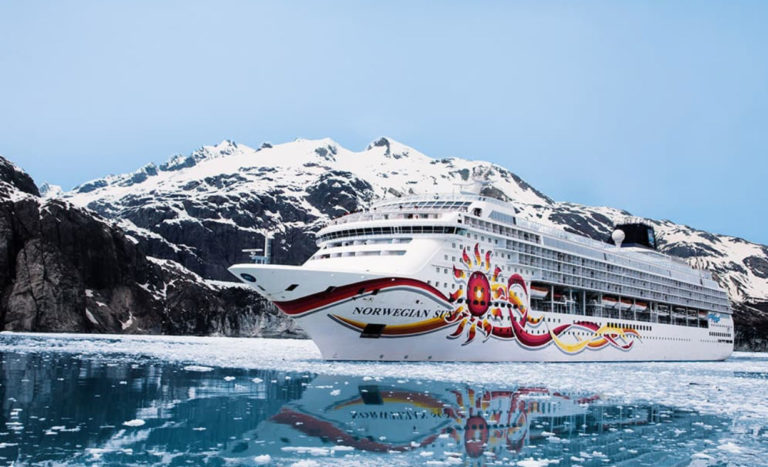
Carnival Cruise Line has canceled the remainder of its ship sailings to Alaska this summer and Norwegian Cruise Lines announced on Tuesday that its future is in substantial doubt due to crushing debt.
Carnival announced it would phase in other North American cruises beginning Aug. 1, but those are for trips from Miami, Port Canaveral, and Galveston.
“In connection with this plan, our pause in operations will be extended in all other North American and Australian markets through August 31,” the company said.
Carnival is the world’s largest travel leisure company, with a combined fleet of over 100 vessels across 10 cruise line brands, including Holland America and Princess. This week, 18 of the Carnival ships will rendezvous in the Bahamas to enact plans of repatriating more than 10,000 crew members back to their homelands in Asia, Africa, Europe, India and Latin America. Nine ships will be used to ferry the workers home. Details at the company’s news blog.
Norwegian Cruise Lines warned investors that the COVID-19 pandemic has “raised substantial doubt” about the company’s ability to continue operations.
“The suspension of cruise voyages and decline in advanced bookings, as well as debt maturities and other obligations over the next year, and the fact that management’s plan to obtain additional financing has not yet been completed, have raised substantial doubt about the Company’s ability to continue as a going concern, as the Company does not have sufficient liquidity to meet its obligations over the next twelve months, assuming no additional financing or other proactive measures,” the company wrote.
Norwegian offered seven- and 15-day cruisesto Alaska from Seattle and Vancouver, B.C. before the pandemic hit in January.
Costco is limiting purchases of meat in advance of what the company expects could be a run on protein and a weaker supply chain to resupply it.
“Costco has implemented limits on certain items to help ensure more members are able to purchase merchandise they want and need. Our buyers and suppliers are working hard to provide essential, high demand merchandise as well as everyday favorites,” the store said on its website.
Fresh meat purchases are temporarily limited to a total of 3 items per member among the beef, pork and poultry products.
Kroger, owner of Fred Meyer, is implementing a similar measures at some of its stores across the country, although it has not announced which stores will have rationed meats.
Tyson, the largest US meat producer, has closed many of its processing plants due to the COVID-19 pandemic. The shutdowns have led to fewer cuts of meat at stores around the country and rising prices.
“Now, Tyson Foods is facing a new set of challenges. In small communities around the country where we employ over 100,000 hard-working men and women, we’re being forced to shutter our doors. This means one thing – the food supply chain is vulnerable. As pork, beef and chicken plants are being forced to close, even for short periods of time, millions of pounds of meat will disappear from the supply chain. As a result, there will be limited supply of our products available in grocery stores until we are able to reopen our facilities that are currently closed,” John Tyson, CEO, wrote in an essay that was published widely last week.
Mixed reactions greeted Gov. Mike Dunleavy’s announced modifications easing emergency health mandates across the state. Some medical and government officials contended it was too soon to open up Alaska’s economy and that restrictive lockdowns should continue. Others disputed that claim, saying that with proper precautions (continuing social distancing, wearing of facemasks, and appropriate hygiene procedures), it was prudent to allow some businesses to open.
Governor Dunleavy wisely evaluated competing courses of action by balancing government’s responsibility for public safety against the economic, social, and health costs of extending lockdown mandates.
Earlier, hundreds of Alaskans had participated in an organized protest of Covid-19 restrictions. Anxious to get back to work to resuscitate their businesses, frustrated with constraints on their freedom and maybe suffering from old-fashioned cabin fever, the message was clear – enough is enough.
Andrew McCarthy, a senior fellow at National Review Institute, addressed this point in a recent article. “It does not mean that expertise, in particular the mastery of science, is insignificant. It is critical. But it does not have declarative authority. Expertise is not right because it says so. It is there to help us, not order us. It has to compete. It has to convince. And unless it does, it should have no power to infringe on our liberties.”
McCarthy’s contention is that inherent in the Constitution is the abiding principle that liberty may not be restricted unless the government first convinces us that it must be. Mandates are not imposed just because a government official says so. Indeed, like our court system, the burden of proof is upon the government to prove its case before an individual’s liberty is infringed.
Most Alaskans who have contracted COVID-19 have recovered from the disease, as of this week – more than 71% to date out of 370 cases. Only 37 have required hospitalization. Nine have died — two of them from out of state. Over 21,000 tests have been administered. The number of active cases peaked on April 2 and has been declining since.
These later numbers are even better than the ones Governor Dunleavy cited to justify re- opening the state’s economy.
“These are good numbers,” Dunleavy said. ”These are numbers that demonstrate to us, again, that we can take those steps methodically, in a calculated fashion, to get back to doing some of the work.”
Alaska’s Chief Medical Officer, Dr. Anne Zink, said the state is assessing four areas in weighing what to reopen, both at the state and local level. They include the number of cases; the amount of testing; contact tracing ability; and health care preparedness.
By beginning the re-opening process, the Dunleavy administration hopes to blunt the economic devastation the coronavirus has inflicted upon our state while minimizing health risks to the general population.
According to ISER Associate Professor of Economics, Mouhcine Guettabi, 62,000 individual Alaskans had filed for unemployment by late April, representing 17% of the labor force. It is expected this number will rise significantly as additional layoffs occur and self-employed workers qualify for benefits.
Alaska was already dealing with a severe structural budget deficit before the COVID-19 crisis hit. Now, our formerly robust visitor and fishing industries may essentially be closed this year. Alaska’s oil and mining industries are under extreme pressure due to collapsing worldwide demand. Government cutbacks and layoffs at the state and local level are inevitable.
While significant federal aid will pour into the state over the next several months, Alaskans should recognize this aid is only temporary and it will never compensate businesses for the unprecedented losses they have incurred.
The proponents of lockdown have framed the options going forward as returning to work or risking death. This is a false choice. With preventative measures and common sense, the odds of contracting the virus and being hospitalized are slight. The danger of dying in Alaska in a traffic accident is much greater than falling victim to the coronavirus.
With only five active COVID-19 cases and no current hospitalizations in Juneau, the CBJ Assembly sensibly endorsed the loosening of restrictions last week. Alaska is not New York. Taking incremental steps towards re-opening our economy is neither dangerous nor foolhardy.
Given the available evidence, it is imperative.
Win Gruening retired as the senior vice president in charge of business banking for Key Bank in 2012. He was born and raised in Juneau and graduated from the U.S. Air Force Academy in 1970. He is active in community affairs as a 30-plus year member of Juneau Downtown Rotary Club and has been involved in various local and statewide organizations.
The Alaska Department of Health and Social Services on Monday announced two new case of COVID-19 in Alaska. The two cases were in Anchorage.
This brings the total case count in Alaska to 370. In Anchorage, a total of 189 cases have been diagnosed, less than half a percent of the Anchorage population, since the first Anchorage case on March 2.
Anchorage has averaged three cases per day since the outbreak first arrived in Alaska’s largest city.
Recovered cases in Alaska now total 263, which leaves 107 active cases. Some 21,723 tests have been conducted, or about 345 tests a day since testing began on March 2.
One additional hospitalization has been reported, but no new deaths. The last death in Alaska attributed to COVID-19 was on April 11, and brought the total who died inside the state to 7, while two other Alaskans died while out of state.
There have been a total of 37 hospitalizations and nine deaths among Alaskans who have been infected with the Wuhan coronavirus. Currently 12 Alaskans are hospitalized with the illness.
The death rate in Alaska from COVID-19 stands at 2.44 percent. As for hospitalizations, nearly 10 percent of those who have gotten the virus have had to be hospitalized at some point.