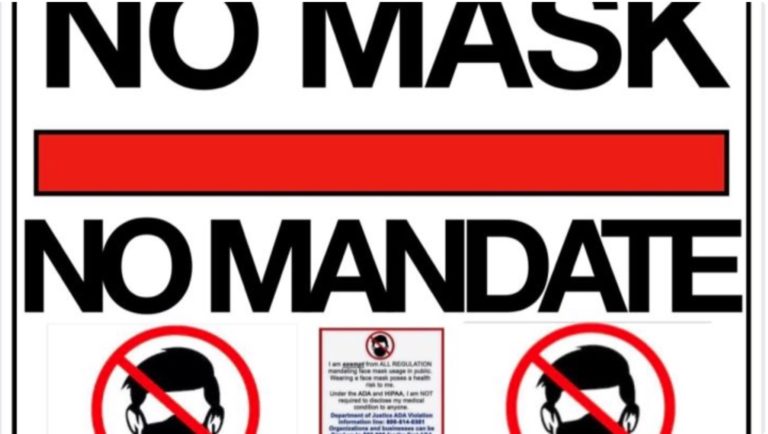
Anchorage resident Bernadette Wilson has started a fundraising campaign to produce high-quality videos featuring local doctors who have concerns about an upcoming face mask mandate that Mayor Ethan Berkowitz has warned he will order.
https://www.gofundme.com/f/truth-unmasked
Wilson said that the doctors who are willing to help with the message have already stuck their neck out during public testimony at the Anchorage Assembly meeting earlier this week. And she has a production team willing to turn around a few videos of about two minutes each.
She plans to raise at least $1,500 for the videos, and then purchase social media space and radio ads to educate the public about two main topics:
The alternative viewpoint that doctors have regarding masks for the general public, in the doctors’ own words.
The legal rights the public has regarding the mask mandate and how to proceed if you are denied service due to the mask mandate.
As of Thursday afternoon, her Truth Unmasked project had already raised $1,270.
Wilson was the recent organizer of the Open Anchorage rolling rally and the impromptu Memorial Day observance in Anchorage, after Mayor Ethan Berkowitz had cancelled the city-sponsored event.
She said any excess funds donated will be used to purchase radio ad time to get the messages out about legal rights for those who cannot wear masks.
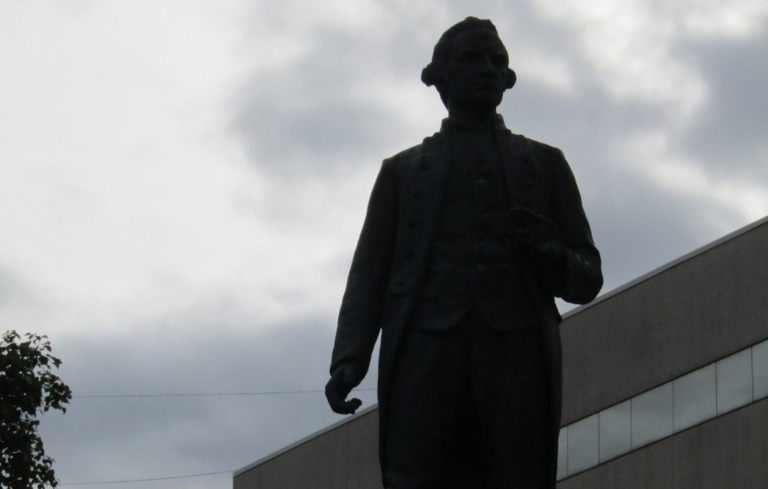
Anchorage Mayor Ethan Berkowitz has turned the fate of the Captain Cook statue over to the Village of Eklutna, he said on the Tom Anderson Show on KVNT on Thursday morning.
Anderson asked the mayor what he had intended to with with the bronze statue that stands at Resolution Park along the Anchorage waterfront downtown.
An online petition to have the statue taken down is active at Change.org.
Berkowitz said he’s turning the statue’s fate over to the Village of Eklutna, which he says Anchorage has government-to-government relations with. Because they are a sovereign government, he has given them control over the statue’s future.
“Because the desire to take it down is borne of some of the historic concerns about injustice in the way the colonialists treated the Native people, we have given the process of what to do with the statue to the Native village of Eklutna. We have a government-to-government relationship. It is a sovereign-to-sovereign relationship,” Berkowitz said.
He explained that Eklutna Chief Aaron Leggett will set up a process in consultation with other tribes in the region to decide the fate of the statue — it could come down or it could be “contextualized.”
The village of Eklutna is within the Municipality of Anchorage, but lies 24 miles northeast of Anchorage near Mile 142 of the Alaska Railroad and Mile 26 of the Glenn Highway. About 70 people live in Eklutna; they are either all or part Native.
Berkowitz said that Captain Cook was only in the Inlet for a couple of weeks, and the people who had lived there for centuries have the right to determine what happens to the statue.
Give a listen to that segment of the Tom Anderson Show:
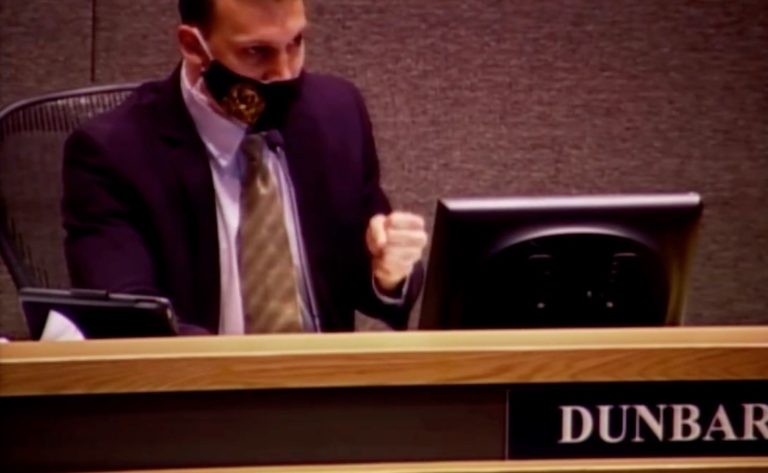
Candidate for Anchorage Mayor Forrest Dunbar has been pondering the U.S. Constitution lately and how this moment of civil unrest in the country, coupled with funds from the CARES Act and the new alcohol tax, can lead to a restructuring of the economy to make things more equitable.
“The fact is, that at that time, if you weren’t a white, landholding man, you were systematically excluded from those conversations. And we are still dealing with that legacy today,” he said during his closing comments at the regular Assembly meeting on Tuesday.
Dunbar then referred to a book by Akhil Amar: “The Constitution Biography,” that discusses constitutional law. Amar, a Yale Law School graduate, was named by Democrat Presidential Candidate Mike Gravel as someone he would appoint to the U.S. Supreme Court.
“What becomes inescapable when you read it is how shot through every portion of our constitutional law is with race when it comes to the three-fifths compromise, the way the Senate was apportioned in Congress, the Electoral College,” he said.
“All of it. All of it was tied to race,” Dunbar said, referring to the founding documents.
Dunbar said the country is now in a unique moment when the nation, state, and city can work on eliminating systemic racism by using tax funds that are newly available.
“We have this unique pot of money from the CARES Act, and we have another pot of money coming from the alcohol tax, and we have the ability to spend it in such a way where we can promote equity, and where we can materially improve the lives of the people of this city, and we can hopefully set up our economy to function long into the future,” Dunbar said.
NEIGHBOR: MAYOR BERKOWITZ WEARS MASK ONLY WHEN ON STAGE
Even as Alaska House Democrats posted a press release on Wednesday saying that hundreds of doctors want a face mask mandate for Alaskans and that “additional resources are also needed to enforce health mandates across Alaska,” not all doctors in Alaska are on board.
Three doctors testifying at Tuesday’s Anchorage Assembly meeting had a different viewpoint than the ones aligned with House Democrats.
Dr. Shawn Degler, an Anchorage anesthesiologist, told the Assembly that he can be considered a subject expert in face masks because he wears a mask all day due to his work but takes great pains to never touch his face.
He testified that personal liberty is a high societal value and that a mask mandate should only be used in extreme circumstances “where there’s compelling data and such interventions will merit the violation of the public’s rights.”
“To be clear, I’m not against wearing masks,” Degler said, adding that he has taken many precautions since the emergence of the COVID-19 virus, even going so far as to self-quarantine from his family during times he was caring for possible COVID-19 patients.
But he said this is not an extreme circumstance that overrides liberty:
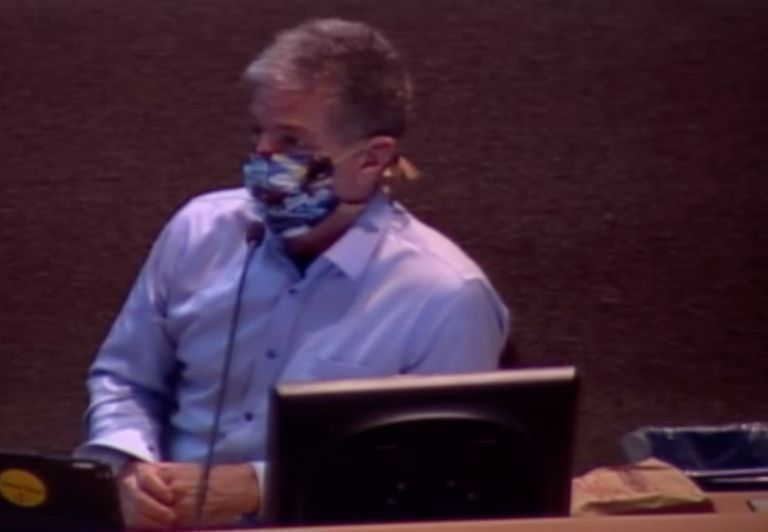
Dr. David Paulson, a neurosurgeon, also spoke to the Assembly, observing that everyone who was wearing masks on the Assembly panel was constantly adjusting their masks and touching them, an unsafe practice that defeats the purpose of the mask:
Dr. David Paulson, a neurosurgeon, discusses why there should not be a general mask mandate.
Throughout the meeting on Tuesday, Assembly members and some of the public testifiers pulled and tugged at their face masks, contaminating everything they touched with their fingers afterward. Testifiers pulled their masks down to speak, then used their hands to adjust the microphone, and then touched their masks again to put them back on.
Jasmin Smith, organizer of a Black Lives Matter rally earlier this year, pulls down her mask to testify on Tuesday about a grievance she has with an Assembly member, touching her mask in a way that is not recommended by medical professionals.
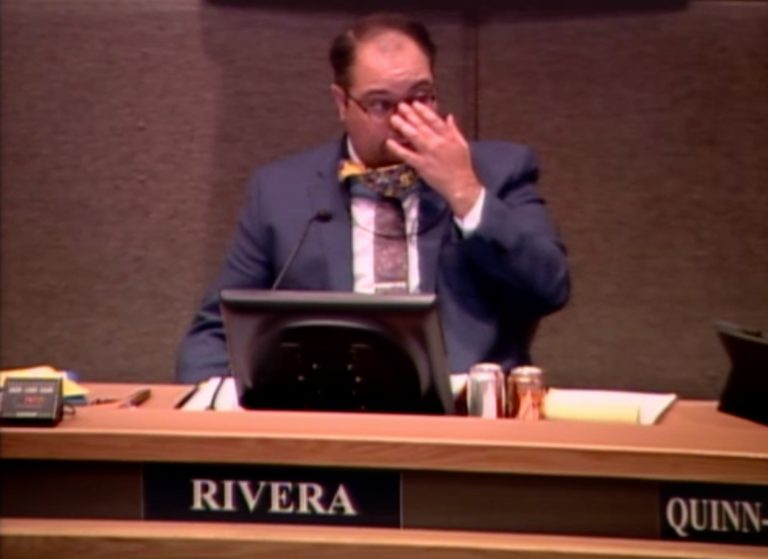
Assembly Chair Felix Rivera was one of the most visible repeat offenders, sitting in the center of the panel of elected officials and constantly fidgeting with his cloth mask while he kept the agenda moving.
Then came to testify Anchorage resident Rosalyn Griffin, a neighbor of Mayor Ethan Berkowitz, who said she observes him every day not wearing a mask — when not on camera.
Berkowitz is preparing to mandate face coverings for Anchorage residents and visitors through the use of his emergency powers granted by the Assembly. He said during the meeting that he’s likely to do so within days because “there is disregard for some of the public health measures that have kept us safe to this point.”
Griffin said that the mayor is setting the standard by his own behavior and she will not wear a mask if he won’t.
“Don’t put into law what you’re not doing at home,” Griffin said. The room applauded her enthusiastically.
Berkowitz was later seen in the back of the Assembly chambers conferring closely with Assembly member Austin Quinn-Davidson. He had no mask on, and was whispering into her face, which was only covered with a homemade cloth mask.
Mayor Ethan Berkowitz in the back of the Assembly Chambers, with no mask, speaking closely to Assembly member Austin Quinn-Davidson.
Many businesses and public buildings, such as Costco, Anchorage City Hall, and state ferries now require people to wear face masks when inside those facilities.
Other states and cities around the country have implemented mask mandates such as the one that Mayor Berkowitz is prepared to roll out. None of the mandates around the country that Must Read Alaska researched come with expiration dates on them — they are open ended laws.
The mandates have wide variability between jurisdictions. In Orange County, Florida, the home of Disney World, the county mandate makes an exception for government workers:
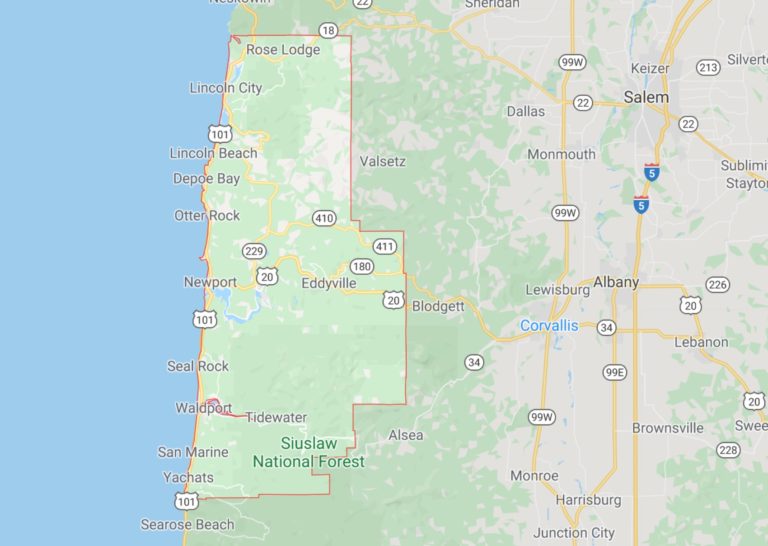
In Lincoln County, Oregon, the mask mandate comes with an exception for persons of color who feel that wearing a mask will expose them to racist profiling.
Lincoln County, Oregon has mandated face masks for everyone, except for persons of color who are fearful they will be racially profiled or harassed.
The coastal county’s health department announced that all residents must wear face coverings in public settings where they may come within six feet of each other.
Other exceptions include people with medical conditions.
Lincoln County is the home of Lincoln City, Newport, Depot Beach, and Yachats, all rural logging and cow grazing country along the Pacific Ocean, with a population of 46,034.
The racial makeup of the county is 90.59% White, 0.30% Black or African American, 3.14% Native American, 0.93% Asian, 0.16% Pacific Islander, 1.66% from other races, and 3.23% from two or more races. 4.76% of the population were Hispanic or Latino of any race, according to the 2010 Census.
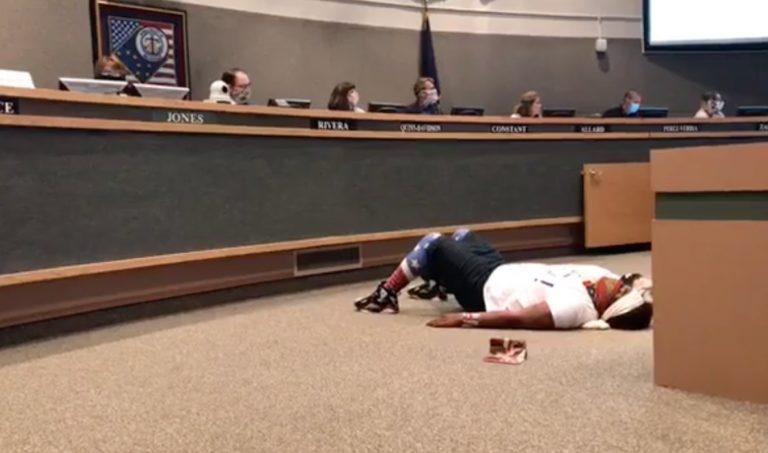
Bernadette Wilson, an Anchorage political activist, was sitting at home, monitoring the Anchorage Assembly meeting online, when she noticed two individuals lying on the floor directly in front of the Assembly panel.
Just lying there.
Earlier, the two had been doing pushups in the space between the podium for public testimony and the Assembly. But for most of the meeting, they just were prone, gazing up at the ceiling.
No one on the Assembly asked them to leave. No one in the audience knew what to make of it, but finally when it was time for public testimony, Dave Bronson scolded the Assembly Chair Felix Rivera for turning the proceedings into a circus.
“Dick Traini would never have allowed this,” Bronson said, referring to former assemblyman. Bronson told Must Read Alaska that for the Assembly to allow the antics in front of them shows disrespect for the institution of lawmaking.
“They need to stop with their virtue signaling and start treating this with respect,” Bronson said today.
Meanwhile, Wilson, watching the meeting from home, also decided that enough was enough. She grabbed a white plastic bucket and wrote “TIPS” on it, and drove to the Loussac Library, where the Assembly meets.
Without announcing anything in advance, Wilson strode to the front of the chambers and set the “tip bucket” down by the protesters. Then she walked out.
One of the protesters is known as MoHagani Magnetek, who is a transgender activist and performer who occasionally runs for office, most recently against Austin Quinn-Davidson. Born a man, Magnetek is in the process of living as a woman, although he has the burly body of a man and did pushups before the meeting, as captured in the video:
The other protester calls him/herself Dana Dardis, a person who is also involved in the petition to take down the statue of Captain James Cook at Resolution Park in Anchorage.
Dardis said on Facebook that the protest was because of racism, sexism, COVID-19, intersectionality, incarceration, children in cages, LGBTQ, and the “whiteness of the Assembly,” among other complaints. Dardis claimed that people of color are being attacked by design.
It wasn’t long before the tip bucket was removed to the hallway by a municipal staff member, but the protesters were able to continue on with their antics and eventually they testified.
Three Anchorage Assembly members introduced an ordinance Tuesday that would make it illegal for counselors to help teenagers seeking to overcome unwanted same-sex attractions or gender identity confusion issues.
The ordinance would use the full force of government to require all counselors to endorse the gay lifestyle and transgenderism when dealing with minors. Assembly Chair, Felix Rivera, Austin Quinn-Davidson, and Christopher Constant introduced the ordinance. All three do not have children and all are openly gay.
“Contemporary science recognizes that being lesbian, gay, bisexual, or transgender is part of the natural spectrum of human identity and is not a disease, disorder, or illness,” the ordinance reads in part.
The ordinance endorsing homosexuality and transgenderism may not sit well with traditionalists that typically evaluate such matters based on the teachings of their faith. Many Christians view homosexuality as an unhealthy distortion of God’s original design. They see the practice as self-destructive leading to a life of unhappiness. They believe homosexuality is a counterfeit of God’s purpose for sex which they view as best practiced between a man and a woman living together under the marriage covenant.
Scriptures are clear on homosexuality. The Bible describes those who practice gay sex as depraved, detestable, inflamed with lust, and haters of God.
The Christian worldview on homosexuality has steadily lost favor with many Americans through the years, especially among the young. Typically, pastors and clergy are fearful of taking on the topic from the pulpit worried they’ll lose parishioners.
Pew Research found 60% opposed same-sex marriage while 31% favored it in 2004. But a 2019 Pew poll showed the numbers flipped with 61% now favoring same-sex marriage.
It’s no secret we are in the midst of an intense culture war between those who favor traditional family values and those who loath them and in the case of Tuesday’s Assembly ordinance, want to make some of them illegal.
The Marxist social justice warriors backed by a mostly leftist media are taking advantage of the changing attitudes to legislate away family values traditionalists hold dear. One of the biggest differences between the two factions is traditionalists don’t seek to advance their agenda through changing laws. No one is calling for making illegal the practice of homosexuality.
But Tuesday’s Assembly ordinance would make it illegal for counselors, even some that work for churches, from discouraging teens from changing their gender or practicing gay sex.
“The Anchorage Assembly desires to protect minors within the Municipality from harmful and discredited approaches to change sexual orientation or gender identity with minors, including so-called “conversion” or “reparative” therapy,” reads the ordinance.
The municipality would fine counselors $500 for each day they violate the ordinance. The ordinance also opens the door for lawyers to step in and make money by targeting counselors.
“Any person aggrieved, harmed, injured, or suffering loss or damage” could be eligible for injunctive relief.
This provision will allow lawyers to seek out faith-based counselors refusing to endorse sex changes and gay sex and take them to court for damages. Much like attorneys have targeted cake makers and wedding photographers for not participating in gay weddings.
Social justice warriors like Rivera, Quinn-Davidson and Constant are savvy enough to advance their radical agenda only up to the point it won’t cost them their power.
The website, The Alaska Watchman reports Constant told an LBGT news site he was waiting until after the April election to introduce Tuesday’s ordinance “because his fellow gay Assembly members Rivera and Quinn-Davidson were up for reelection.”
Imagine what social justice warriors like Constant, Rivera and Quinn-Davidson would propose if they thought they could get away with it politically.
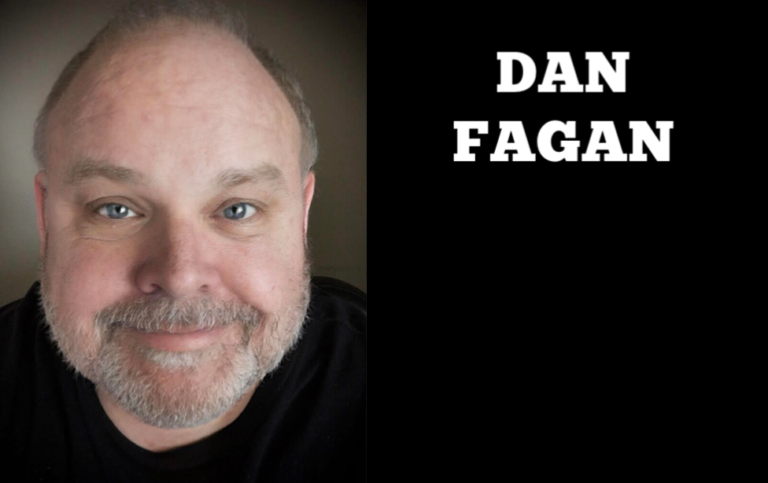
Dan Fagan hosts a radio show on Newsradio 650 KENI from 5:40 to 8 A.M.
Over the objection of numerous people who testified at the Anchorage Assembly on Tuesday night, Mayor Ethan Berkowitz says he has prepared an ordinance that will mandate face coverings in Anchorage when people are in public places.
If he does, the Assembly likely will not be able to muster the two-thirds vote it would take to override the mayor if he pulls the trigger on the order.
Assembly member Meg Zalatel was prepared to offer a resolution on Tuesday to support a mask mandate, but she did not do so after the mayor’s announcement that he was on the verge of going ahead with his ordinance, which he can do with his emergency powers. The Assembly has voted twice on a mask mandate, and it failed both times, 5-6.
“We have prepared an ordinance that will require the wearing of masks under certain circumstances,” Berkowitz said. “That order is ready and could be implemented at any time.”
Berkowitz said he is likely to implement the ordinance week, depending on the number of new cases of the COVID-19 coronavirus. He would allow people a few days to acquire masks before the ordinance would go into effect.
Some 502 Alaskans are known to have recovered from the COVID-19 virus, which has, to date, infected 778 Alaskans. There are 264 known active cases among Alaskans as of Tuesday. Twelve Alaskans have died who were known to have the virus, although it’s not evident that they died from the virus itself. Those who died were already seriously ill or very old. Two of those 12 died while out of state being cared for because of other illnesses.
Last week, Berkowitz said it was “entirely at this point up to the public,” saying people either begin wearing masks when in groups or stores or he’ll enact a mandate.
Several people testifying at Tuesday’s Assembly meeting objected. Some said they felt masks were actually unhealthy because they reduced oxygen levels.
Margaret Anderson said she purchased a blood oxygen monitor at a pharmacy and discovered that after wearing a mask for 20 minutes her oxygen level dropped 5 points. She suggested that every Assembly member purchase such a device and try the experiment on themselves.
Another member of the public offered that since the Wuhan virus can get into eyes, people should also be forced to wear goggles, and since beards interfere with a seal on masks, men should be forced to shave their bears. She was being facetious to make her point that the mandate is a bad idea.
Others offered the “My Body, My Choice” theory on masks, referring to the pro-abortion arguments that people have the right to choose what is right for them — if it’s ok to choose to have an abortion, why is it not ok to choose whether to wear a mask?
One testifier said that there is a growing local trend of public shaming for those who cannot wear masks, such as her son, who has medical issues related to developmental disabilities. She warned the Assembly that the shaming is a real issue and there have been verbal attacks on people who have medical and psychological conditions that prevent them from wearing coverings over their nose and mouth.
Only days after a complaint had been made about the American flag that flies on Flattop Mountain, and after the flag had been refreshed by a small group of intrepid legislators, the new flag went missing.
Several people contacted Must Read Alaska to say the American flag had been stolen, after Reps. Kelly Merrick, Lance Pruitt, Sara Rasmussen, and Laddie Shaw had replaced a tattered Old Glory on Friday.
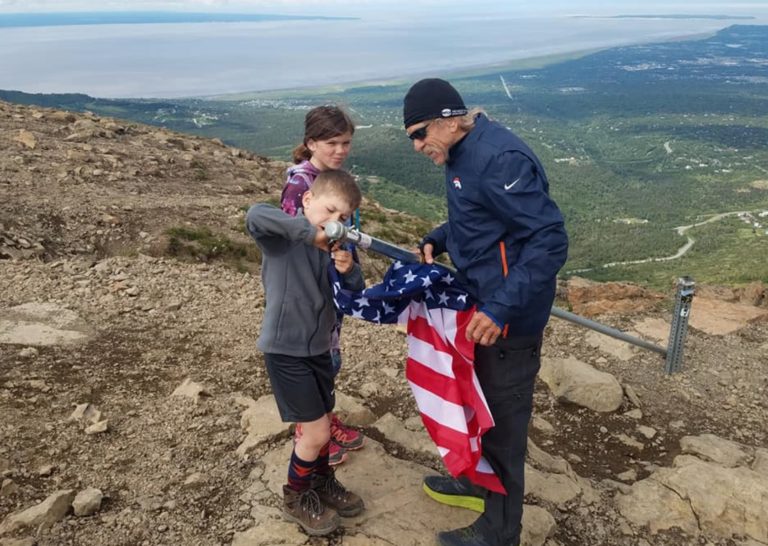
Shaw got the word this morning about the missing flag and raced to the top of Flattop, some 3,150 feet, to raise a new flag. On the way, he encountered a family with children. He waited for them to catch up with him at the top of Flattop.
“The kids were so disappointed when they got there because they had come to see the flag and it was missing,” Shaw said. “I told them, ‘I’ve got one right here, and if you’ll help me we’ll raise it up.'”
The children and Rep. Shaw then hoisted the new flag together.
Shaw says he has no idea who would have stolen the flag over the weekend, but the concept of stealing an American flag from the popular Anchorage hiking destination mystifies him.
“It’s our flag. It’s a symbol of who we are,” he said. “But you will never beat me with that flag. I buy 52 a year, and I’ll put one up a week if I have to. I buy them by the dozen,” said Shaw, who is a retired Navy SEAL.