Tuesday, April 14, 2026
Home Blog Page 1324

Mayor Ethan tells criminals to abstain from crime

30

While Mayor Ethan Berkowitz was advising citizens about tax relief, stay-home orders, and economic recovery efforts underway in Anchorage, he had a word for criminals in Anchorage: Give it a rest. This is, after all, a COVID crisis.

“I wish we could do what Bethel did and it and … Bethel sent out a text to its community and the department there suggested that the criminal element abstain from any kind of criminal activity during the duration of the COVID crisis and would encourage them to be — at least for this particular time — better citizens.

“I would encourage the criminal element in Anchorage to do their civic duty, and abstain from criminal behavior for the duration of the COVID crisis,” Berkowitz said.

He continued, telling criminals that by taking time off from criminal work, they might find out that “there’s a better way.”

The City of Bethel Police Department in Alaska had posted something online that has been going around the Facebook feeds of various police departments in the country, with a similar message: Crooks need to take some time off right now for the good of the community.

The Bethel, Alaska department referred to by Berkowitz evidently copied the advice from the Bethel, North Carolina Police Department’s Facebook page (shown below), Must Read Alaska has learned. Theirs is more colorful:

Listen in: Trump takes time to speak to small business owners in Alaska

Sen. Dan Sullivan spent much of Thursday on the phone with different Alaska groups in various industries — construction, mortgage, and banking, for example.

But none of the calls was as surprising as his call with members of the Alaska chapter of the National Federation of Independent Business.

During the call, while Sullivan was describing some of the details in the federal relief package working its way to the president’s desk, who should call Sen. Sullivan but President Trump himself. Sullivan was going to take that incoming call.

Sullivan excused himself from the call with NFIB for a moment, but then came back to the telephonic meeting and put the president on the speaker.

Donald Trump spent three or four minutes addressing the participants in the meeting, which was coordinated by the NFIB Alaska State Director Thor Stacey.

One participant noted that Trump was “engaged, enthusiastic, and energetic.”

Trump spoke about the importance of the oil fields in Alaska and his determination to open up the road between King Cove and Cold Bay, so the people of King Cove can access an all-weather airport for times of crisis. He also mentioned that his dad and grandfather were both small business owners, and that his grandfather had come north to the Yukon-Alaska Gold Rush, reinforcing his ties to Alaska.

In Alaska, NFIB has about 1,400 members, and has about 300,000 members nationwide.

Trump told business owners to hold fast, and what they need, the federal government is ready to get to them. Here’s a clip of the audio:

Alaska coronavirus cases: 69

Alaska has identified 10 more cases of coronavirus among Alaskans, bringing the state total to 69 that are known to health professionals.

The numbers have grown along with testing throughout the state, but the number of actual cases is likely higher, because test results take a few days.

Of the 10 new cases, two are travel related, four are not travel related, and four are close contact with another person who has the virus, according to the Department of Health and Social Services.

On Tuesday, the State reported a jump of 17 new cases, the largest number in a single day that have been reported. At this time, most of the cases are in Anchorage:

  • Anchorage: 33
  • Fairbanks/North Pole: 15
  • Mat/Su: 2
  • Ketchikan: 11
  • Juneau: 3
  • Kenai Peninsula communities: 5

To compare, Hawaii has 106 cases of the Wuhan coronavirus, and British Columbia has 659 cases, while the Yukon Territory has just 3 cases. This story will be updated.

‘Sick-foot’ rule in the Senate

Whether they’re scofflaws or simply magical beings, many members of the House and Senate don’t seem to heed the call of Dr. Anne Zinke, Alaska’s Chief Medical Officer, to create a six-foot space between Alaskans, in order to stop the spread of the Wuhan coronavirus, also known as COVID-19.

In the above photo, originally appearing at the Anchorage Daily News, several top Senate lawmakers confer on the Senate floor during the final days of deliberations. At least six and possibly eight lawmakers are crowded into a six-foot circumference.

Meanwhile, in the House, Rep. David Eastman of Wasilla has taken to wearing a protective mask during his time on the House floor, while the six-foot rule in the chambers appears to be merely a suggestion by state’s chief medical officer.

Fix the mess, bring back plastic bags

ANCHORAGE DAILY PLANET

We are huge fans of politics, with its attendant legerdemain and practiced sleight of tongue. Show the people one thing; hand them another.

A case in point: Anchorage Mayor Ethan Berkowitz’s showman-like dispatch of the city’s ridiculous 10-cent fee for disposable paper bags in retail establishments, such as grocery stores.

The fee is suspended for the duration, the Anchorage Daily News reports, but the city’s silly ban on single-use plastic bags remains in place. Good grief.

The fee was part of an ill-conceived ordinance that was supposed to “coerce people to change their behavior,” forcing them to shun single-use plastic bags and turn, instead, to paper bags, heavier reusable plastic bags or, worse, reusable fiber or cloth bags as part of the Left’s quest for environmental nirvana.

Unfortunately, reusable bags can be nasty, unsanitary things, bringing into stores all manner of cooties that end up in carts and on counters. During the ongoing coronavirus pandemic, who needs any more cooties to deal with? Most of us want to shop in a safe environment. Suspending the 10-cent fee for paper bags simply does not move us even an inch toward that goal.

To save us, if you will recall, the Anchorage Assembly ordered city retailers as of Sept. 15 to no longer provide shoppers with single-use plastic bags. It, instead, dictated they must provide paper bags upon request, and charge customers a dime for each for them. Many opted to bring their own bags.

At its best, Berkowitz’s fee suspension is a useless bit of political theater. The real problem, the single-use plastic bag ban, remains in place. While the mayor may have saved us all a few cents, the unsanitary, dangerous use of reusable bags remains a health threat and becomes more so each and every day.

The Assembly, the same group that gave us the ban in a 9-2 vote, should act to amend the ordinance and allow the use of single-use bags for the duration of this crisis – and beyond. And it should move quickly.

There are six seats up for grabs in the election. Four members running for re-election voted for the ban. You should call them.

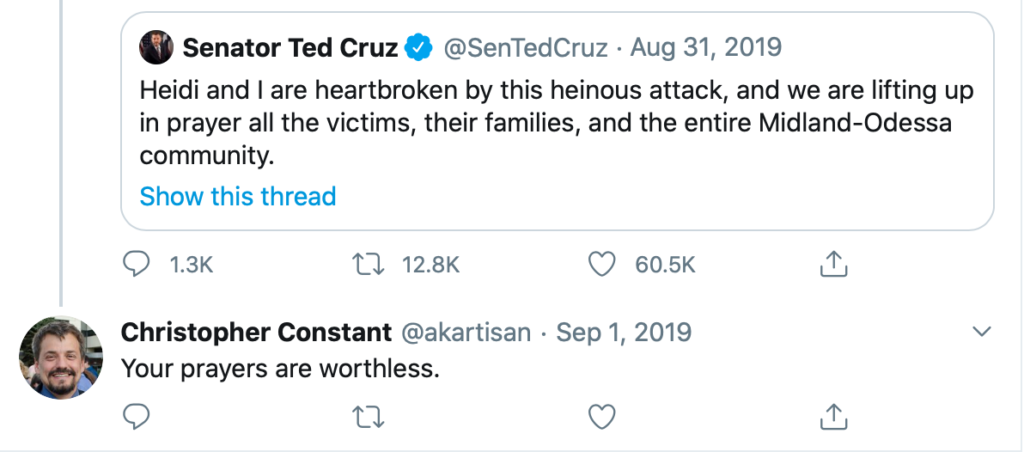
Assembly members Christopher Constant, Felix Rivera, Pete Petersen and Suzanne LaFrance were in the group that happily rammed their we-know-best plastic bag ban down the city’s throat. Austin Quinn-Davidson, also standing for re-election, had not yet joined the Assembly for that 2018 vote. The sixth open seat is being vacated by Fred Dyson.

The Berkowitz fee ban did nothing to make us safer. It is time the Assembly fixed its mess.

Read the Anchorage Daily Planet here.

Port of Seattle postpones cruise season indefinitely

7

Alaska’s cruise ship season may have been dealt its final blow this year, as the Port of Seattle announced the cruise season will be delayed until the resolution of the public health emergency. Earlier, the Canadian government had ordered cruise ships to stay away from its ports.

“At a time when Governor Inslee has ordered all Washingtonians to ‘Stay Home, Stay Healthy,’ we must consider public health and safety above all else,” said Port of Seattle Commission President Peter Steinbrueck.  

“The eventual return of our cruise season is something we fully expect as an important contribution to living wage jobs, local small businesses, and our region’s economic recovery.  We also recognize the critical role Seattle cruise plays in supporting the Alaska economy for over 20 years.”

The start of the Seattle-based cruise embarkations will depend on the status of the public health emergency. The CDC has issued a nonessential travel warning and a temporary no sail order for cruise ships, and the State and King County have imposed a number of strict limitations to limit the spread of COVID-19.

For those travelers with plans to cruise during this impacted period, please contact your cruise line regarding your itinerary.

Governor’s bill extending disaster declaration in House

11

SB 241, by Gov. Mike Dunleavy, extending COVID-19 disaster emergency, is on the Alaska House of Representatives calendar for today. By law, the governor can declare a disaster for 30 days, and needs legislative approval to extend it. SB 241 contains these provisions:

  • Extends disaster declaration until Sept. 1
  • Gives Chief Medical Officer Dr. Anne Zink the authority to issue standing orders to deal with the virus
  • Expedites professional and occupational licensing
  • Expands telemedicine and telehealth
  • Creates options for elections by mail
  • Extends time allowed to apply for a Permanent Fund dividend to April 30
  • Extends deadline for state tax filings to July 15, same as federal deadline
  • Allows shareholder meetings to be held telephonically

Recall oral argument: Short, inaudible at times, and done

The Alaska Supreme Court today heard a half hour from each side of the Division of Elections vs. Recall Dunleavy Committee case. The two sides argued their positions by telephone due to the coronavirus outbreak and only three of the Supreme Court justices were in the courtroom. The other two called in from Fairbanks, as the court practiced social distancing and kept all observers out of the courtroom.

Reception on Gavel Alaska was at times difficult for those tuning in to observe the historic proceedings, and some of what the lawyers and justices said was unintelligible.

Each side put forth their best arguments about whether the Recall Dunleavy Committee has a legally solid enough case to take to the voters and ask them whether they want to remove Gov. Mike Dunleavy prior to the next gubernatorial election. The group is busy collecting signatures; it needs over 70,000 to get onto a statewide ballot.

Justice Craig Stowers seemed particularly uncomfortable wading into what is pure partisan politics, and began the proceedings by tersely explaining, perhaps a writer listening in, that this proceeding would be handled as fairly as any other before the court.

Margaret Paton-Walsh, on behalf of the State Division of Elections, argued that the petition language is subverting the ballot process because it refers voters to outside material that they will not likely have meaningful access to, and that extends the recall group’s actual verbiage for far more than 200 words limited by law. That aspect of the recall petition breaks the intent of the the 200-word limit for recalls, she said, and puts the whole ballot into imbalance.

With that extra material that serves as an addendum to the 200-word limit, it lays out vast complaints against the governor that he only has 200 words to respond to.

But that argument didn’t appear to move the justices. They interrupted Paton-Walsh several times, and forced her to eat up time on her half-hour limit trying to explain the argument to them.

None of the justices seemed curious about Item 1 of the Recall Dunleavy petition. The five asked no questions that wondered whether when a governor takes a time-out before appointing a judge and misses the 45-day legislatively determined statute, he or she is being an actual “law breaker.”

In fact, Justice Craig Stowers referred to appointment controversies under Governors Walter Hickel and Frank Murkowski, saying, “This is not something new to governors; governors at some frequency chaff at the judicial selection process, but statute requires an appointment in 45 days.”

The statute that applies to the judicial appointment timing is legislative direction, not a misdemeanor or felony level of infraction, however, but that seemed lost on the justices. None seemed intellectually curious about how the Alaska Constitution also governs the process, and that Dunleavy met his constitutional duty by “filling a vacancy” in the Palmer District Court. There was, in fact, never any actual vacancy by the time he made the appointment.

Ironic in the proceedings was that attorney Jahna Lindemuth, arguing on behalf of the Recall Dunleavy Committee, was herself part of a “law-breaking” administration that didn’t follow Alaska Statute when issuing a Permanent Fund dividend.

When she was sworn into office, she and Gov. Bill Walker broke statute by allowing the dividend to be a political calculation. Under Lindemuth’s terms, Walker should have been recalled for breaking the law.

Also problematic was Item 2 in the charges the Recall Dunleavy Committee is making: The committee says Gov. Dunleavy violated Alaska law and the Constitution by misusing state funds for partisan political purposes.

Here, the judges didn’t appear concerned about whether the word “partisan” is being used correctly in the allegation. Because of the intentionally misleading language, the voters will not know that the governor was merely trying to drum up public support for his key policy pieces that were not partisan — things like a full Permanent Fund dividend and a state spending limit. He was trying to move his legislation out of committee. Instead, the voters reading the ballot language are being led to believe that he somehow took state money to use in a campaign or some other nefarious use.

But again, the trickery in the petition and ballot language didn’t seem to concern the judges.

They did seem a bit more concerned about Items 3 and 4 on the recall petition:

Item 3 says Dunleavy  violated separation-of-powers by improperly using the line-item veto to attack the judiciary and the rule of law.

Justice Daniel Winfree, speaking from Fairbanks by teleconference, asked Lindemuth about the “separation-of-powers” claim her group is making. He noted that the concept of separation is a doctrine, not a law, which guides governing bodies in interpreting the constitutionality of actions and who, in government, is entitled to do certain things.

Lindemuth, arguing for the Recall Dunleavy Committee, said that it’s up to the voters to decide and that the court should “reject legislating from the bench.”

Winfree asked Lindemuth: Since it’s a doctrine, not a law, how one would determine legal sufficiency of the claim?

Lindemuth responded that it should be determined by the voters.

The justices didn’t seem convinced on that point, with Justice Stowers noting that “I don’t even understand how the separation doctrine fits here.”

The separation of powers issue refers to the governor vetoing some of the appellate court’s budget last year. At least two of the judges expressed skepticism, saying that vetoes are within the governor’s constitutional authority. This was logic they did not apply to Item 2: The governor also has constitutional protection to aggressively advocate for his policy platform without being subject to a recall.

Item 3 also puts the judges in an awkward position. Two of the charges by the Recall Dunleavy Committee refer to matters involving the court, but Item 3 involves the court’s very operating budget. For the judges to let that go to the voters might look like they are taking out their budget displeasure on the governor, which could be viewed as a separation-of-powers issue — activist judges working to unseat a governor because he cut their budget.

The fourth item also raised the eyebrows of at least some of the justices. That charge says that the governor was incompetent because he mistakenly vetoed approximately $18 million more than he told the Legislature that he intended to veto. That veto was reversed when the administration discovered the error, and all parties agree no harm was done.

Justice Susan Carney, calling in from Fairbanks, wondered if any mistake made by an elected official could be deemed substantial enough for a recall, even if there was no harm done, as is was in this case.

Recall attorney Lindemuth said that should be left to the voters.

If the justices allow item 4 to stand, they’ll be essentially ruling that if a governor gets up in the morning and puts on one brown shoe and one black shoe, that is evidence of incompetence and might subject him to a recall.

The ballot initiative language that the Division of Elections said was legally insufficient:

Statement of Grounds: Neglect of Duties,Incompetence, and/or Lack of Fitness, for the following actions:

  • Governor Dunleavy violated Alaska law by refusing to appoint a judge to the Palmer Superior Court within 45 days of receiving nominations.
  • Governor Dunleavy violated Alaska Law and the Constitution, and misused state funds by unlawfully and without proper disclosure, authorizing and allowing the use of state funds for partisan purposes to purchase electronic advertisements and direct mailers making partisan statements about political opponents and supporters.
  • Governor Dunleavy violated separation-of-powers by improperly using the line-item veto to: (a) attack the judiciary and the rule of law.
  • Governor Dunleavy acted incompetently when he mistakenly vetoed approximately $18 million more than he told the legislature in official communications he intended to strike. Uncorrected, the error would cause the state to lose over $40 million in additional federal Medicaid funds.

References: AS 22.10.100; Art. IX, sec. 6 of Alaska Constitution; AS 39.52; AS 15.13, including .050, .090, .135, and .145; Legislative Council (31-LS1006); ch.1-2, FSSLA19; OMB Change Record Detail (Appellate Courts, University, AHFC, Medicaid Services).

Arguing for the Division of Elections, State Department of Law Attorney Margaret Paton-Walsh told the justices that the language on the ballot question itself was problematic because it refers to documents outside the 200-word limit, sending voters to documents that most have no way to access in the voting booth. This gives the Recall Dunleavy Committee an advantage but puts the voters at a loss, since they cannot reasonably understand what actually occurred by reading the ballot language itself.

Because of the purposefully misleading the language in all counts, the recall petition is deeply flawed. But the “facts” of the allegations themselves were not something the judges seemed concerned about.

Alaska Airlines reduces flights by 70 percent

9

The Alaska Airlines management is responding to a dramatic drop in air travel, and as a result is cutting its routes by 70 percent.

“During this crisis, each of us is making the best decisions we can for ourselves, our families and our businesses. Over the past several weeks, as more of our guests shelter in place at home, demand for air travel has plummeted. In recent days, some of our flights have had only several passengers onboard,” the airline wrote.

“But it remains essential that we keep flying. Some of you have a critical need for us to get you somewhere, and it’s crucial we keep cargo moving, which includes transporting mail, food, medicine, medical supplies and an increasing amount of goods that are being ordered online.”

For April and May, throughout the airline’s national network, the 70 percent reduction means 900 fewer flights out of the 1,300 flights per day.

Some regions will be affected at an even greater reduction of service, such as Hawaii, where the governor of Hawaii has issued a mandatory, 14-day self-isolation quarantine for all travelers entering the state. The state of Alaska has also initiated a similar quarantine process.

“Outside of Alaska and Hawaii, we’re still maintaining our basic network footprint but with significantly reduced frequencies of service and the elimination of nearly all red-eye flights.”

Additional reductions are possible as the airline learns more about demand.