Whatever political clout that Pebble Mine CEO Tom Collier thought he had, had fast evaporated after leaked recordings from a covert environmental group hit the news this week. It has cost him his job.
Collier has resigned from the Pebble Partnership “in light of comments made about elected and regulatory officials in Alaska in private conversations covertly videotaped by an environmental activist group,” the company wrote in a press release.
Northern Dynasty named former Pebble Partnership CEO John Shively, a well-known and respected Alaska business and political leader who most recently served as Chairman of the Pebble Partnership’s general partner, Pebble Mines Corp., as interim CEO pending a leadership search.
Northern Dynasty in a statement said “Collier’s comments embellished both his and the Pebble Partnership’s relationships with elected officials and federal representatives in Alaska, including Governor Dunleavy, Senators Murkowski and Sullivan and senior representatives of the US Army Corps of Engineers (“USACE”). The comments were clearly offensive to these and other political, business and community leaders in the state and for this, Northern Dynasty unreservedly apologizes to all Alaskans.”
Conversations with Collier and others with Northern Dynasty President & CEO Ron Thiessen, were secretly videotaped by two unknown individuals posing as representatives of a Hong Kong-based investment firm with links to a Chinese State-Owned Enterprise (SOE). A Washington DC-based environmental group, the Environmental Investigation Agency, released the tapes online Monday after obscuring the voices and identities of the individuals posing as investors.
“The unethical manner in which these tapes were acquired does not excuse the comments that were made, or the crass way they were expressed,” said Thiessen, Northern Dynasty President & CEO. “On behalf of the Company and our employees, I offer my unreserved apology to all those who were hurt or offended, and all Alaskans.”
Alaskans are used to Sen. Lisa Murkowski waffling, but this week, she waffled to the correct position: She said she would wait to see who the president nominates for the Supreme Court. She’ll hold off judgment.
Trump is expected to make that nomination on Saturday afternoon.
Murkowski, who often mixes it up with President Donald Trump, had stated earlier this summer that the next president should be the one to appoint a new Supreme Court justice in the event that Ruth Bader Ginsburg died. Murkowski reiterated that position last week after the 87-year-old finally succumbed to her courageous battle with pancreatic cancer.
Murkowski said she would not vote on a Trump nomination. The new president should pick the replacement for Ginsburg.
Alaska Republicans were livid. As far at least 52 percent of them are concerned, Trump is going to be the next president.
Then, after it became evident the president would not back down from his constitutional duties, Murkowski flipped — she now says she’ll wait to see who Trump nominates.
It was a rare retreat for Murkowski, who many Alaska conservatives think has her finger in the wind too often, to see which way she will blow. She has often seemed far too comforting to the Democrats she serves with than her fellow Republicans.
Last time a nominee was offered by Trump, she went with the darlings of the Left. More than 100 women from Alaska went to Washington, D.C., and she met with many of them in her office while they pleaded and beseeched her to oppose Brett Kavanaugh. A letter from 350 women attorneys in Alaska arrived at her office in opposition to Kavanaugh.
“Believe all women,” was the mantra. And she meekly went along. The pressure was too great. But in the end, she didn’t vote at all. She simply was marked as a convenient “present.”
Political maturity is hard to measure and happens over a matter of years for all of us. For Murkowski, perhaps we are seeing a measure of political maturity that germinated from her experience with the Kavanaugh confirmation process, when she was photographed with Sen. Dianne Feinstein lording over her, looking like a junior high school thug trying to steal Murkowski’s math homework.
This Murkowski seems more politically savvy than the one who has held the president in political disdain for the past four years.
Today, she has come to realize that the confirmation vote will go on with or without her, and for her to be marked “present” again would be political suicide. This time, she has to pick a team.
People outside of Alaska often don’t understand why a bright red state would reelect Murkowski, but they forget some important points.
The first is that Alaska was a Democrat stronghold before the pipeline started revving up the economy in the 1970s. With jobs came workers who pay taxes and pay attention to politics. But many of those jobs are leaving the state under the current global economic shift, and they’ve been replaced by Obamacare expansion jobs in healthcare. Those jobs, funded by government, brought in thousands of Democrat voters to the state.
There are, in fact, a lot of liberals who call Alaska home, and many of them either have government jobs or get government checks for various reasons. The state is more blue than people realize. Without the Mat-Su Valley, a huge Republican stronghold, Alaska would be a Democrat-leaning state.
Second, Republicans in Alaska voted in 2010 for Joe Miller over Murkowski in the Republican primary, but she appealed to the non-aligned voters when she pulled of the most successful write-in campaign in U.S. history in the General Election, a feat that she accomplished in mere weeks.
She knows her base, and it only includes some of the Republicans. This has forced her to the Left to scoop up moderates and practical Democrats who want to avoid what they’d see as a worse choice.
Third, at least some Republicans in Alaska remember that Murkowski was one of the few who stood by the late Sen. Ted Stevens while he was being railroaded by the corrupt Department of Justice. Even Gov. Sarah Palin abandoned Stevens politically, as did many others in the public arena. Stevens had few friends who defended him. But Murkowski did, at her own peril. It was an act of courage and loyalty.
Some Alaskans will forgive her for a lot of her sins because she showed political courage during that witch-hunt.
Murkowski won’t have to face Alaska voters for two more years, but she has to start building back some of her support among less-forgiving Republicans if she wants to return to Washington, D.C. in 2023.
There’s a lot more work and influence ahead for her if she does return to serve, as she has since 2002, because she is now 20th in terms of seniority, and she may climb even a few steps after November’s election.
If the Senate flips blue, Alaska will be glad it has a senator who can work with the other side of the aisle.
Although her approval rating in Alaska is generally low — in the low 40s — Murkowski still has support here, and if she draws upon her constitutional training, she may be able to win back some of her harshest critics.
J. Bruce Ismay was the chair and managing director of White Star Line, owners of luxury passenger ships, including the Titanic.
As such, Ismay was the highest-ranking person from White Star Line on-board Titanic as she steamed across the North Atlantic into her destiny….and a rather large iceberg.
Bill Evans
Mindful of the woefully limited capacity of Titanic’s lifeboats and unconcerned about the chivalric code of “women and children first,” Ismay used his authority to secure a place for himself in one of Titanic’s too few lifeboats.
While many of his customers and passengers were consigned to the icy depths of the North Atlantic, Ismay ensured that he escaped the tragedy without even getting wet.
Taking a page from Ismay, the Municipality of Anchorage is taking steps to ensure that its budget remains unharmed by the fiscal tragedy wrought by the COVID-19 pandemic and government shutdowns, while many of its businesses and citizens founder.
Earlier this week, Anchorage’s Chief Fiscal Officer, Alex Slivka, reported that the Municipality plans to reroute federal Cares Act money to fill a $17 million shortfall anticipated in the Municipal Budget. That shortfall represents approximately 3 percent of the general government operating budget for the city. The shortfall is caused by a reduction in tax revenues from businesses that have been decimated by the pandemic and associated restrictions.
The method by which the Municipality plans on securing its fiscal lifeboat is by using $61 million of CARES Act funding to pay for “first responders.”
In other words, the Municipality will use the CARES funding to pay the normal costs of Anchorage’s Police and Fire Departments. This will, in turn, free up the general tax funds that would otherwise have been used to fund the police and fire.
In a scheme that would make Tony Soprano blush, the Municipality will essentially launder the federal money by simply using it to replace Muni funds, thereby washing the CARES Act money free from any pesky spending limitations.
Remarkably, federal funding — which the government does not even really have — and is simply an IOU from future generations — is to be used to ensure that the debilitating economic effects of the pandemic do not inconvenience Municipal government and its priorities.
While Anchorage residents and businesses are tightening their budgets and cutting their costs in an effort to simply survive the economic devastation stemming from the pandemic, they will surely be heartened to know that their Municipal government will be made whole.
Sitting safely and securely in its own federally funded fiscal lifeboat, the Municipality can look out upon the sea of businesses and citizens struggling to keep their head’s above water. J. Bruce Ismay would be proud.
Pebble Mine is a story of Alaskans and Native peoples being prohibited from using their natural resources. The mine is of tremendous significance to the Alaska people touched by it, but not in the ways that have been portrayed in media…incessantly.
Among the thousands of articles, press releases, documentary-style videos, and advertisements written and paid for by Outside environmental activist groups and wealthy donors, none mentions the people whose lands and lives will actually be affected by the mine.
While Alaskans love and care about their State, not all have had their voices heard. Many have been drowned out. Most of the general public outside these small remote communities are probably unaware that there even are other views about the mine, voices in support.
It’s time they were heard.
REALITY OF LIFE
The tiny rural native Alaskan villages of the Lake & Peninsula Borough, Newhalen, Nondalton, and Iliamna, and Bristol Bay regions are nearest the mine. The residents, whose families have lived there for generations, have had to learn and understand the mine. It’s literally about survival, preserving their way of life, and protecting their ancestral homelands.
Life there is hard, unimaginable for most Americans. Alaska’s Lake & Peninsula Borough and Bristol Bay regions are among the most impoverished areas of Alaska, with high levels of unemployment (nearly twice the State average), diminishingpopulation, and financially struggling schools.
Because these small rural communities are shut off from transportation systems and roads, everything must be brought in by barge or plane, from the fuel to their heat homes and generate electricity, to the basics of daily living.
The cost of living is high. People struggle with fuel costs double those of Anchorage, and electric rates nearly 18 cents per kW/h. The average residential electricity rate in Nondalton, for example, is 17.88 cents/kWh, more than 50 percent higher than the national average, and industrial electric rates are more than one and a half times the national average.
Former Village Tribal Chief Bill Trefon of Nandalton endeavored to explain to people outside their villages that traditional fishing, once passed down generation to generation, could no longer sustain them. Local fishing permits had dropped by half in just a single generation, he wrote.
Yet, there are no jobs or economic opportunities to make it possible for them to live and support themselves.
When permits for commercial fishing were limited in 1975, Alaska residents received 81.7 percent of the permits, with nonresidents getting 18.3 percent. By 2016, as permits were transferred and bought, local rural residents saw their permits drop by 30 percent. Some areas like Bristol Bay lost over 50 percent of their local permits. Meanwhile, nonresidents garnered 10 percent more permits. Permit ownerships also moved out of rural Alaskan areas to the cities, which grew 25 percent.
A quarter of all Alaska fishing permits are now held by nonresidents. The greatest percentage, nearly half, of all permit transfers were to people outside family units.
In Bristol Bay, half of all salmon permit holders live outside Alaska, taking jobs and revenue with them.
The big money is made by commercial fisherman and processors harvesting the salmon from Bristol Bay, but less than a third of it stays in Alaska and most of that flows into larger communities outside the Bay area.
Fishing jobs aren’t going to locals. Only a third of all fishing jobs in Bristol Bay are held by Alaska residents. Fishing processing has also moved out of state. According to University of Alaska-Anchorageresearch, 75 percent of the Bristol Bay salmon industry jobs and $300 million in processing income had been moved out of state by 2010. Jobs for fishing crews similarly moved out of state, and only one out of every eight Bristol Bay processing workers were even Alaskans.
Cost of a fishing permit has grown out of reach for most rural local people. A Bristol Bay drift salmon permit now goes for$180,000 or more. Increasingly, these high-priced permits end up with big money out-of-state fisheries and wealthy hobbyists who find commercial fishing a fun way to spend the summer, wrote Alaskan journalist, Craig Medred.
Fishing opportunities for small rural traditional fishing communities are limited, Medred said. Jobs are growing scarcer, and about 30% of the people in the communities impacted by the Bristol Bay fishery now live below the poverty line.
For the people in these remote rural areas nearest the Pebble mine project – far from the fisheries and abundance of the Brisol Bay watershed − life is very different from the commercial fishing industry of the Bay. It’s also different from the larger surrounding towns or cities hundreds of miles away. Fuel and food are painfully expensive, and stable employment scarce. Myrtle Anelon, who owned a bed and breakfast in Iliamna, told former environmental journalist, Edwin Dobb, writing for National Geographic in 2010, that the Pebble Partnership is the first outside economic business to take an interest in her community’s welfare.
“The others make money in our backyard,” she said (referring to seasonal residents who own lodges that cater to high-end sport fishers), “but they don’t hire locals, they don’t buy from us.”
“Outsiders want us to go back to the old ways,” Lisa Reimers, head of Iliamna Development Corporation, explained to Dobb. “Some mine opponents promote a self-serving, sentimental view that ignores what it actually takes to survive,” she said. Her family and their community living around Iliamna Lake do still practice subsistence fishing and they treasure the wild habitat. But they also have truck payments, mortgages, and medical bills to pay. They want to send their kids to college. They need cash and welcome mining jobs, she said.
According to the latest Distressed Communities Report from the Alaska Department of Labor and Workforce Development, these remote rural villages suffer significantly greater hardships than many nearby communities and cities across Alaska. Half of the villages in the Lake & Peninsula Borough were rated as “distressed” in 2019. The average earnings for Newhalen, for example, are $20,941 a year, with only 39 percent of people having year round employment. The poverty rate in Iliamna is about 30 percent higher than the entire state of Alaska.
Sixty percent of Iliamna and 70 percent of Newhalen workers earn under $9.84/hour.
Not all Alaskan communities face the same hardships as those closest to the mining area. In the town of Dillingham, 131 miles to the north, with a population 23 times larger, the average earnings are nearly double those of Newhalen. The poverty rate is almost half and 23 percent more people have year round employment.
Igiugig, a small village on the south shores of the Kvichak River, 48 miles southwest of Iliamna, has the highest percentage of year round employment in the Lake & Peninsula Borough, with renowned trophy fishing lodges and big game and sport fishing guides that cater to celebrities.
Along with financial hardship come crippling problems with alcoholism, abuse and suicide. Suicide rates among Alaska Natives are nearly four times the national average.
“So many young people …feel they have little opportunities for themselves in our Village,” Reimers wrote on the Iliamna Facebook page. People opposing the mine “don’t have a clue that a project in an area of poverty can change peoples perspective on life, for the better. A project can give them hope to build a home and raise their families in their home. Instead we get people’s negative opinions on a project and who go along with the special interest groups to stop any opportunity for these young people, who may have good future of this project if it was given a chance. They don’t see the damage this is doing to our young people, who are trying to make a good life for their families,” she wrote.
“I am not going to give up on our young people. I am going to continue to believe that people will see the truth of the devastation stopping a project does to other humans… the damage it is doing to the people to stop them from prospering.”
One of the Corps meetings in 2018 for local input on the Pebble mine, as part of the EIS process, was held at Newhalen School. Those who went to the meeting posted an account on Facebook. The Corps listened to their input and specific environmental concerns.
The majority of the locals from Iliamna and Newhalen wanted economic opportunities and jobs so that they could stay in their communities and raise their families, they reported. Families said “they would like to see their kids work and not have to depend on the government for assistance.” Right now, they have to leave their families for work. Pebble would give them an opportunity to work at home and “allow them to be with their families.”
At another 2019 Corps meetings, held in Kokhanok, local and nearby Iliamna residents also mostly spoke in support of the mine proposal noting the few jobs and poor economy. One mother said she’d lived in Iliamna her entire life.
“This is my home, there is where I want to be. And I am able to live here because I have a job,” said Chasity Anelon who had gotten an operations job with the Pebble Project. While many are afraid, “I’m also willing to see the process work and if they can prove that it can be done safe, I feel like it’s important for people in our lake area to have jobs. There’s been so many people that have left our communities because there’s no opportunities here. And when somebody has a job and they’re able to come to work and they have pride, is shows. You can tell.”
At the meeting held in Newhalen that evening, the “overwhelming message was that community members were struggling to find jobs,” reportedAlaska Public media. “People there largely supported the mine.”
PEBBLE HAS BROUGHT OPPORTUNITIES
The local villages have forged good working relationships with Pebble. More than a hundred members of the communities, especially in the Lakes region and in Newhalen, had jobs working for Pebble during the exploration and study years, doing the field work as well as providing a wide range of support services, as a University of Alaska-Anchorage study documented. Pebble gave preference to local hiring and contractors were required to hire locally as much as possible, the study found. Apprentice and job training programs also enabled the locals to get the more advanced skilled and specialized jobs.
“Work earned on the Pebble Project continues to have positive impacts on Alaska Peninsula Corporation,” a recent quarterly member newsletter, APC Now!, reported. “The relationship between APC and the Pebble Partnership proves to be especially valuable in other ways,” it said. “Pebble work has demonstrated its value to the villages of Kokhanok and Newhalen by contributing to local economies through resident hire, doing business with local vendors and partnering with tribal governments. What we know for certain, is that working with Pebble has had a profound impact on community well-being for shareholders working to support their families.”
Iliamna Natives Ltd Board of Directors discussed the economic benefits the mine will bring. Pebble will bring about 750 to 1000 well-paying six-figure mining jobs, along with 1,000 mining support jobs. The project is also estimated to generate up to $420 million in revenue for Lake and Peninsula Borough over the next twenty years, on top of state taxes and royalties of between $970 million to $1.32 billion. These are nothing short of life saving for these communities.
Mining offers the best solution for Alaska, as well, they told their shareholders. With Alaska being among the richest mineral areas on Earth, it offers stability from the swings in the global markets and can produce the minerals the world energy supply will need.
A personal connection with the local people may have begun with John Shively, the original CEO of the Pebble Partnership, but it undeniably continues today, much of it given little fanfare or recognition outside the local communities. Pebble had said it was committed to partnering with local businesses and people to make certain the mine will benefit local communities and would contribute to the sustainability of the villages and native cultures. The local people have seen that commitment in action.
One little publicized initiative is Pebble’s sharing its on-site power infrastructure development to help lower fuel costs and bring affordable low-cost electricity or natural gas to local villagers. Pebble already began the RFP process last June. It also launched a revenue sharing plan to give 3 percent of their net profits to residents of Bristol Bay.
Working with local businesses, Pebble signed a Memorandum of Understanding last July with APC. It turned over the operation of all logistics for the project related to the proposed northern transportation corridor to the local native village businesses, which will bring them more than $20 million, and give the local businesses preferred contractor status.
More than a decade ago, Pebble established the Pebble Fund, a $5 million endowment to support local community-led projects to improve the health of the Bristol Bay fisheries, build community infrastructure, and other community projects to contribute to the people’s sustainable future. The fund awarded grants for an elderly food bank, libraries, schools, and cultural programs, street lights, vocational training, and other community projects.
NATIVE-OWNED LOCAL BUSINESSES SPEAK OUT
Others believe they know what is best for them, but “we are among the people who live closest to the proposed mining site and have the most to lose or potentially gain in terms of Pebble’s fate,” Reimers and Mary Jane Nielson with APC wrote six year ago. “We are a proud people who believe in the rule of the law. The mining project should be judged by the legitimate process established by law.” Not by politics or those with the most money, they wrote..
“These lands are some of the world’s most productive, supporting subsistence fishing and hunting that represent a significant part of our livelihood. They are also a cultural treasure, as our ancestors have existed and subsisted on their bounty for thousands of years. They are our lands, and we have the rights to control what goes on here. Yet our rights to manage these holdings…are being stripped away, seriously threatening our ability to provide for our own people.” It is being supported, they added, “by activists who seem to want to turn all of Alaska into a national park.”
APC is made up of more than 800 local businesses of the Aleut, Dana’ina, Sugpiag, and Yupik native peoples. It has taken an active role in collecting information on the impact of the proposed mine, educating themselves on the facts of the project, and making sure their people have had a place at the table with Pebble.
As Brad Angasan, APC Presidentand lifelong Bristol Bay commercial fisherman, wrote, unless one takes time to understand the permitting process and the facts of the mine proposal, one may continue to believe only what certain environmental groups publicize and want them to think. “We are immersed in opinionated, emotional hype,” he wrote, with “a common belief that resource development will kill the fishery.”
Alaska’s business leaders don’t have the luxury of making emotional decisions or deciding business strategies on public opinion polls, he said. We must consider every aspect. We back Pebble Mine, he wrote.
Considering the greater good is, in this case, the preservation of our people “in villages on the brink of abandonment,” Angasan said. “What we know for certain is that we are in a race against the clock to prevent abandonment of some of our region’s most historic villages. When communities die, cultures die. People need jobs and communities need healthy sustainable economies to survive. These are desperate times for many people.”
As Iliamna Natives Ltd posted last year that the more they’ve learned and have developed a trust with Pebble Partnership, the more their support has grown.
“We just defeated an anti-Pebble candidate for Governor. We just defeated an anti-Pebble ballot initiative. And an overwhelming majority of Alaskans believe Pebble should have a fair shot at the permitting process,” the group wrote.
PEBBLE OFFERS CHANCE FOR LONG-TERM SOLUTIONS
Their decision to support Pebble mine and desire for it to have a fair opportunity to prove its science and engineering was not made by the lure of immediate money and wasn’t a decision made lightly.
The villagers studied the Pebble documents and research, including the in-depth Preliminary Assessment of the Project completed in 2011 in preparation for the permitting process.
During the early development, exploration and study years, between 2004 and 2011, many of them had worked alongside Pebble doing field work and studies for that Assessment. The local people had also taken part in the more than 4,000 meetings with Pebble Partnership, with translation services provided to make sure their native elders could participate in the consultations.
Thousands of people had also taken part in the 350 tours of the mine that Pebble had offered for everyone potentially impacted by the mine. They asked questions, voiced concerns, and learned everything they could about the mine project.
The engineering studies for that Assessment found that the Pebble mineral resources were incredibly rich and had the potential to produce far beyond the first 25 years, which was the initial phase of the project. The mine had the potential to extend “78 years and beyond.”
Expansion appeared most promising to the higher grade minerals in the eastern portions. But they understood the importance of starting off with a smaller initial project to give the mine a chance to go through the scientific reviews and permitting process, then prove itself and its safety to the communities and to Alaskans. Research would continue, though, and based on the conditions existing during those first 20 years, they’d determine if expansion was feasible. Then, or course, they’d have to go through the permitting process all over again.
For the local people, it was a chance they wanted to take. It was an opportunity that could help their villages survive.
It was those long-term prospects that offered them hope for their children and for future generations.
“What we know about the project is that it will operate for somewhere between 70 and 100 years. We will permit an 18 to 20 year mine as the first phase. That limits risk to the region so we can see how we operate. Over the long term, we provide opportunities for several generations of people.”
– John Shively, 2013
This first permit will also be an opportunity to build other infrastructure, like improved roads and energy, with power provided at cost to help the local communities. That would help the local communities get goods cheaper.
“This winter someone sent me a picture of a gallon of orange juice in Dillingham for $24,” said Shively. “We can change the economy out there and in the long run have a very positive impact.”
LOCALS CLAIM THEIR RIGHTS
After years of discussions with Pebble and among their members, a group of 1,500 village businesses including APC, Iliamna Natives Ltd, Kijik Corporation and Tanalian, came together and gave their unanimous supportfor a fair permitting process for Pebble and other exploration activities throughout the region.
They claimed the right to evaluate Pebble and to base their determination on the merits of the process, not on political interference.
“Jobs and economic activity brought forth by Pebble and other resource development exploration has been significant,” they wrote. “These projects have allowed village corporations to hire local[s] and contract for services offered by various local governments, including tribal organizations. The resources created through seasonal and viable employment by exploration activities have contributed to sustainable communities, created jobs in an area with high rates of unemployment, and created access to energy for many who suffer the high cost of living in many parts of the Bristol Bay region.”
The growing frustration and anger of the local rural communities against interference from outsiders with money, though, is palpable. While honoring and respecting those working in commercial fishing, there’s an undeniable economic imbalance between the local Native peoples who live and work where resources are taken and where nonresidents go to spend their seasonal bounty of wealth, said Angasan.
“For years, we have fought to have our voices heard in the debate about whether or not Pebble should be allowed to proceed through the permitting process and for years we have had to put up with organizations from outside Alaska taking positions without affording us the basic courtesy of hearing our views about this issue,” APC and Iliamna Natives wrote in a letter to the President of the National Congress of American Indians (NCAI) in February.
Having been engaged in the Pebble issue for some 15 years, they objected to “so-called regional and tribal organizations that tell the world they speak with a united voice on the Pebble issue. Let’s be clear – this is simply not the case.”
They were referring to and disputing the “Bristol Bay Proclamation” from the NCAI which called for the Pebble permitting process to be halted. The Proclamation was issued to sell the perception to the general public around the country that all native people oppose the mine.
Locals knew, but probably most of the general public didn’t, that NCAI is not what it appears. And it clearly doesn’t represent the voices of the local Alaskan native peoples. This Washington, D.C.-based organization is just one example of the outsiders organized against the local people.
NCAI calls itself one of the most important intertribal political organizations in modern times, playing a critical role in activism, litigation efforts and lobbying activities. But it is a front group. Among its foundation partners are the most radical, wealthy and influential left political organizations in the country, such as George Soros’ Open Society Foundation, Kellogg Foundation, Ford Foundation, Robert Wood Johnson Foundation, and Northwest Area Foundation — none based in Alaska and all with political agendas far beyond concerns about salmon or the environment. NACAI also partners with the EPA. Many of its legal and policy activities oppose any natural resource development, including pipelines and mining, and lobby for climate change energy policies,
Just a few grant examples reveal how well NCAI is funded. It received $6.2 million in grants from Kellogg Foundation in October 2017. Ford Foundation gave it $400,000 this year alone. And another progressive nonprofit, W.F. Hewlett Foundation, funded it $950,000 just between 2018-2019.
NCAI even has its own news organization,Indian Country Today, LLC (a non-profit news company owned by NCAI), with a Washington newsroom for its online publication, along with a new newsroom at Arizona State University. It’s soon to launch its own national television news program. Additional funding came with $1 million earlier this year from the Southern California-basedSan Manuel Band of Mission Indians, a member of the Southern California Association of Governments.
“The thought of losing the power to exercise self-determination is an insult and contradiction to the Forefathers who devoted their lifetimes fighting for Alaska Native rights,” said Angasan. Our people’s support of Pebble mine goes along with our mandate to protect and preserve the interest of those places we hold sacred, said Angasan, APC President. “The places we come from and continue to live.”
From theirvoices: “Our Lands are vast. Our Lands are plentiful, sacred and rich with Opportunity. Our Waters are pristine and abundant with life-sustaining purity. These are the elements of a life unique to our People. The relation between the Land and our People exists in perpetuity. This is our Identity, and what we must protect for the generations to come.”
Sandy Szwarc, BSN, RN is a researcher and writer on health and science issues for more than 30 years, published in national and regional publications and public policy institutes. (Pebble Partnership did not contribute to, or have any role in, this series.)
God not only gave us this glorious gift of life, but He also trusted us enough to manage that gift by granting us all free will. He could have made us puppets. He didn’t. That’s why the world is such a mess. It’s also why the world holds such wonder, majesty, and beauty.
Mankind has proven itself through the years capable of great courage, nobility, and virtue. But we’ve also seen displayed a capacity for unspeakable evil.
Using cold, sharp instruments, saline solutions, or powerful vacuums to kill a defenseless child living in the peace, comfort, and sanctuary of their mother’s womb is the vilest evil of all. To deny that vulnerable baby the gift of life or the option of adoption solely for the sake of convenience is indefensible.
Abby Johnson worked for eight years at a Texas Planned Parenthood clinic. Her last two years she managed it. Johnson ran the clinic but was not involved directly in the aborting of babies. One day, the nurse normally tasked with viewing the abortion procedure through an ultrasound monitor in a viewing room was sick. Johnson filled in for her. It was the first time she viewed live a baby being vacuumed out of a woman’s uterus. Johnson says at that moment, she knew abortion was wrong.
“I just thought I can’t do this anymore, and it was just like a flash that hit me, and I thought, that’s it,” said Johnson.
Lisa Murkowski is about nothing if she’s not about defending and funding abortion. Even if it’s up to the point of birth. It’s long been her priority.
I wonder if Murkowski’s cold, hard heart for the unborn would tenderize, if, like Johnson, she too witnessed live a defenseless baby being sucked out of her mother’s womb.
Murkowski’s defense of the cruel procedure of ending the life of a baby at the hands of an abortionist has won her praise with Planned Parenthood, the deadliest organization in U.S. history. Planned Parenthood abortionists have murdered close to 8 million babies since the evil organization began its killing spree in 1973.
Planned Parenthood President Cecil Richards praised Murkowski in 2017 when the Alaska senator cast the deciding vote that blocked President Donald Trump’s attempt to repeal Obamacare. Murkowski voted against the repeal because the bill called for defunding Planned Parenthood. Imagine being so loyal to Planned Parenthood you’re willing to save Obamacare for it.
In 2018, Murkowski was one of just two Republicans to vote against a federal ban on abortions after 20 weeks and up to the day of birth. But Murkowski’s most consequential move to preserve the barbaric killing of millions of American babies came when she refused in 2018 to vote to confirm Justice Brett Kavanaugh to the U.S. Supreme Court.
Murkowski, in a most cowardly move, voted present. That allowed her to maintain her sycophant status with Planned Parenthood without voting no.
Now Murkowski is a big question mark on the next Trump nominee for the High Court. On Friday, Murkowski said she would oppose a vote on a nominee to replace Ruth Bader Ginsburg until the next president is elected. But on Tuesday, after Trump hater, Republican Sen. Mitt Romney of Utah came out and said he would favor a vote, Murkowski waffled. Now she says she won’t rule out voting for Trump’s nominee.
Murkowski finds herself in the middle of what’s at the heart of the cultural and cold war raging in our country. You may think the war is over racism, socialism versus capitalism, or police brutality. It’s not.
Just as Democrats and the Left were obsessed with preserving slavery 160 years ago, the same is true today for abortion. They were willing to do anything, even die on the battlefield, to keep slavery legal. The same is true today when it comes to abortion.
Don’t count out anything in the days ahead in their attempts to block Trump’s nominee to the Supreme Court.
Murkowski is a general in the movement to promote the culture of death through abortion in America. It’s not too late to change sides. Hopefully, she’ll have an awakening and do the right thing and support our president’s nominee.
Dan Fagan hosts the number one rated morning drive radio show in Alaska on Newsradio 650, KENI. He splits his time between Anchorage and New Orleans.
Alaska District 28 is a voting district that spans from Anchorage midtown to Girdwood. It is remarkably similar in size to Anchorage Assembly District 6, with not as much midtown.
Historically, it has looked at smaller government and fiscal accountability as the preferred approach to government.
In the August 2020 primary, there were three candidates. On the Republican ballot, we saw incumbent Jennifer Johnston against newcomer, James Kaufman. On the Democratic ballot, we saw Adam S Lees.
James Kaufman prevailed over Jennifer Johnston and moved on to the general election ballot.
On the Democratic side, after the primary election, something mysterious happened.
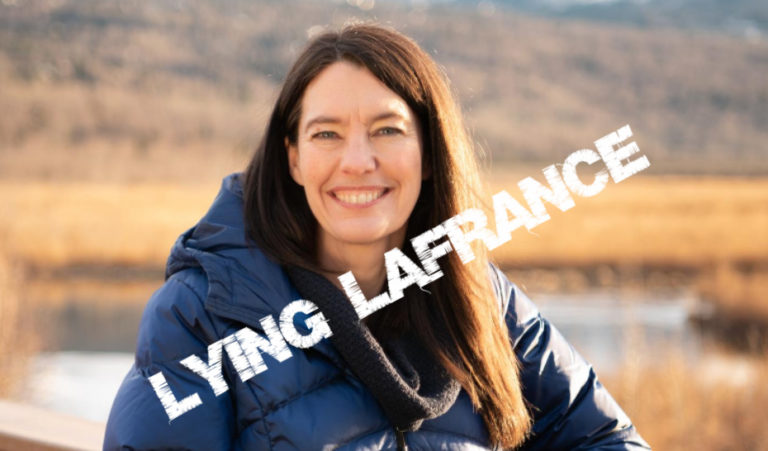
Anchorage assembly aide Lees, who assisted Assembly Member Suzanne LaFrance with community outreach, engagement, presence, and policy research, disappeared from the general election ballot. He vanished , without so much as the sound of a light wind,
Has anyone noticed the change up in District 28 after the primary?
The current commentary on his withdrawal from the general election is non-existent.
Does anyone find that strange?
District 28 had Lees, a Democrat. He was the only Democrat in the primary. His name is not on the General Election ballot for District 28 as a Democrat.
Now a Democrat who calls herself “not a Democrat” has replaced him on the District 28 general election ballot.
In baseball, we call this a pinch hitter. A pinch hitter is a substitute batter.
Batters can be substituted at any time while the ball is dead (not in active play). The team manager may use any player who has not yet entered the game as a substitute. The replaced player in baseball is not allowed back into that game. The pinch hitter assumes the spot in the batting order of the player whom he replaces.
While the ball was not in play Anchorage Assembly member LaFrance became the pinch hitter for the Alaska Democratic Party in District 28.
Perhaps the team manager, Alaska Democratic Party Chair Casey Steinau saw the need for a pinch hitter, as Lees had no discoverable batting stats.
With her recent political history on the Anchorage Assembly, will LaFrance’s record provide the needed home run Alaska Democrats need in District 28?
LaFrance, in her own words, decided to run for her state house campaign as a nonpartisan, instead of a Democrat, yet her political values have aligned with the Democratic Party long before her entry into the Anchorage Assembly in 2017.
In 2014, she signed the petition to repeal SB 21, the oil tax reform legislation, she supported marijuana legalization, and supported increased minimum wage.
On her website, she states, “In 2017, I ran for Assembly, and since elected, I’ve fought for the best interests of this diverse district. I’ve focus on improving public safety in our neighborhoods and along Turnagain Arm, ensuring our district schools are the best they can possibly be, removing obstacles for business owners, and respecting our property tax cap.”
But the proof is in her actions.
Suzanne LaFrance insists she is a nonpartisan. This claim has been through her Assembly seat campaign and occupancy and is also the foundation of her District 28 campaign.
The term, “non-partisan”, is defined as “free from any party affiliation”.
Can the voters of District 28 honestly conclude this definition fits the political ideology and affiliation which Mrs. Lafrance is asserting?
In reviewing her Alaska Public Offices Commission report, on November 6, 2019, Mrs. Lafrance paid the Alaska Democratic Party for $1,000 for “Voterbuilder Access”. VoteBuilder is one of the software systems used by the Democratic Party and associated campaigns to track interaction with potential voters.
On April 1, 2020, Mrs. Lafrance’s campaign also wrote two checks totaling $176.35 to the Alaska Democratic Party for robocalls during her Assembly race.
Will the voters of District 28 consider these as nonpartisan?
During the 2020 District 6, Seat K, race in South Anchorage for the Anchorage Assembly featuring challenger Rick Castillo and first-term incumbent LaFrance, the Anchorage Daily Planet reported that as of March 6, 2020, LaFrance amassed a campaign war chest of over $55,500, almost $15,000 was from public employee unions. Union donations, in fact, amounted to nearly 27 percent of her contributions.
Will the voters of District 28 consider this as non-partisan?
On July 6, 2020, LaFrance created a future campaign account with surplus funds.
On September 10, 2020, LaFrance filed her candidate registration form for her current campaign for House District 28.
During her representation of Anchorage Assembly District 6, LaFrance joined Assembly members Christopher Constant, Felix Rivera, Forrest Dunbar and Pete Petersen as part of the 9-2 majority that happily rammed their we-know-best plastic bag ban down the city’s throat.
Will the voters of District 28 consider this as nonpartisan?
In front of a sparse crowd and after rejecting a broad-based sales tax that actually would have helped property taxpayers, the Anchorage Assembly put on the April 7 ballot a 5 percent retail alcohol tax – the same tax voters rejected just nine months before.
LaFrance, together, with her “nonpartisan” allies voted to put this on the ballot.
Will the voters of District 28 consider this as nonpartisan?
The recent actions which LaFrance as an Anchorage Assembly member participated with the Mayor of Anchorage’s lock down of the Anchorage produced the decimation of many small businesses and the implosion of our schools.
Will the voters of District 28 consider this as nonpartisan?
She led the charge and sponsored an amendment to have protestors wear masks and social distance or be thrown out of chambers and thrown off municipal land if violated outside.
Will the voters of District 28 consider this as nonpartisan?
She has failed to protect the rights of the citizens of her Anchorage District 6 by voting to keep the public out of public testimony during the Mayor’s attempt to use CARES Act funds for questionable purposes.
Will the voters of District 28 consider this a nonpartisan?
The term, “nonpartisan”, is defined as “free from any party affiliation”.
LaFrance’s assertion that she is nonpartisan is not honest and a poor start for winning the trust of the voters of District 28.
Her party affiliation uncertainty and her tendencies support big government and not protecting the rights and wallets of working Alaskans, especially the hard-hit voters of District 28.
It may be a difficult choice for LaFrance when the time comes to choosing between loyalty to District 28 constituents and those constituents who paid for her entry into the state house.
Alaska State Senator Mike Shower recently stated, “It’s recently become the norm for left wing candidates in Alaska … to infiltrate politics because Alaskans have (often rightly) been skeptical of our two major political parties. Al Gross flat-out admitted it when speaking to those major democrat donors. I don’t care if you’re a left winger but step up and admit it – run as who you are – democrat. Stop the lying and deception. If you’re going to lie about who you are and what you truly represent from the start – why should anyone trust you’ll not do the same once elected? Perhaps that’s the first question people should be asking.”
For the voters of District 28, the choice is clear. Vote James Kaufman.
Michael Tavoliero is a realtor at Core Real Estate Group in Eagle River, is active in the Alaska Republican Party and chairs Eaglexit.
They’d been hot on the trail to recall Gov. Mike Dunleavy for months, but it wasn’t until January, 2020 that the Recall Dunleavy Committee actually registered with the Alaska Public Offices Commission as a “group” working to recall Gov. Mike Dunleavy.
The group didn’t have to register, to be clear. Because it is ostensibly a “recall” committee, it follows no rules until it turns in to the Division of Elections the second list of signatures it has gathered and is certified for a statewide election, special or otherwise.
The dirty little secret is, however, the group never has to turn in those signatures. And that means it can operate in the dark until November, 2022.
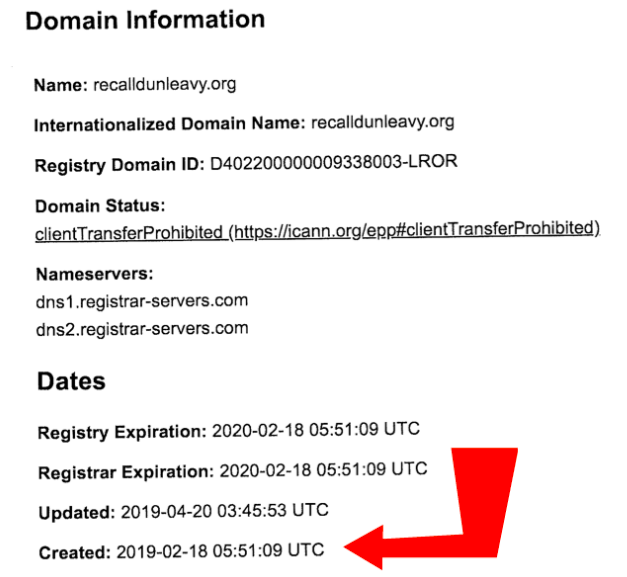
The group had reserved the website name “RecallDunleavy.org” a year earlier — back in February of 2019, four days after Dunleavy filed his first budget; the public rollout for gathering signatures was a couple of months later.
The summer of 2019 was when the first round of signatures were gathered, and how quickly those names came. Rallies were held across the state. The recall committee was on a roll.
By January, 2020, it was a mature operation, with paid, experienced staff, paid signature gatherers, and lots of events under its belt as it went for the second round of signatures. It kept raising money, but no one knows how much or where the money comes from.
The group, led by a former chief of staff to former Gov. Bill Walker, has obtained some 45,700 signatures and email addresses on the second round of signature gathering, roughly 25,000 short of what’s needed to get a recall onto the ballot this year. The effort has, on the surface, failed.
But the Recall Dunleavy Committee can continue its shadowy work until the General Election of 2022, when the governor comes up for reelection. It can act as an opposition group to his reelection.
As long as it doesn’t turn in those signatures for certification by the Division of Elections, the group can work in the shadows of other campaigns, too, without transparency or oversight by the Alaska Public Offices Commission.
What’s become evident to critics is that the recall committee is a new form of political action committee.
Call it the Kendall Loophole. Scott Kendall, the group’s leader and chief litigant, is a lawyer who specializes in dark money since leaving office with the deeply discredited Walker Administration in late 2018.
Few in Alaska are paying attention to the recall group’s activities, because voters have other fish to fry: Trying to make a living, trying to help children with their online school work, and getting ready for a cooped up winter of dodging COVID-19 viral fragments.
Also, Gov. Dunleavy’s approval rating is soaring, according to one recent poll.
But with over 50,000 email addresses in its email file, the Recall Dunleavy Committee continues to campaign against the governor, sending out emails on a regular basis, most recently to motivate its base to attend a virtual town hall meeting the governor was hosting.
Is the Recall Dunleavy Committee repurposing its email, cell phone-text lists, and donations? Did its leader Kendall raise the money for one mission, but does he use it for another?
There’s nothing stopping the paid staff of the Recall Dunleavy Committee — whatever size it is — from being assigned to get Democrat candidates elected in 2020. In real political action committees that were being monitored for legal and illegal activity, such coordination would be prohibited without disclosure.
There’s also nothing stopping Kendall from transferring those 50,000 email addresses over to his other political project, the ballot measure known as Ballot Measure 2, another project funded by dark money.
Ballot Measure 2 also required signatures, and its proponents, like Kendall and former Rep. Jason Green, must follow campaign finance laws. It takes sleuthing to discover the sources of the funds for the group that wants to remake Alaska’s currently well-understood election process.
That money — an estimated $3 million — comes mainly from Outside the state through groups like “Unite America” and “Represent Us.”
It’s not easy, but a dogged effort can uncover some of the bigger contributors to those funding funnels, such as:
Kathryn Murdoch is a billionaire New York climate change activist and trustee for the Environmental Defense Fund (a group supportive of the Green New Deal, whose president raked in$666,000 in compensation in 2018). She previously aligned with Communist China in its battle against Hong Kong.
Marc Merrill is a billionaire California video-game developer whose toxic workplace was ground zero for “me-too”accusations last year. He sold his company to a Chinese media conglomerate, although he continues to be the public face of Riot Games in the western world.
John Arnold is a billionaire former Enron executive who walked away with thelargest employee bonus Enron ever awarded while regular employees were left with nothing as the company imploded.
What all this dark money activity has in common is Kendall, lining his pockets with donor dollars as he litigates and lobbies against the governor, which has become his cottage industry.
A clever lawyer knows just where the legal line is, and Kendall knows how to do this to a T, turning the recall effort into a political slush fund to be used for any purpose his group desires.
It’s been 19 months and no one has discovered the group’s true source of funds or how it’s using them. Likely no one ever will.
Kendall knows there’s nothing the Alaska Public Offices Commission can do about it, even if it was paying attention.
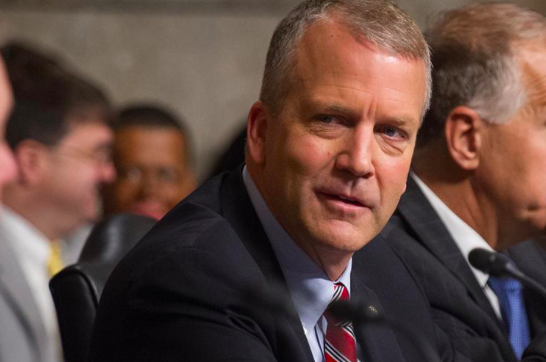
Sen. Dan Sullivan of Alaska did not go the way of Sen. Lisa Murkowski and say he will refuse to vote on a Supreme Court nomination by President Donald Trump.
Instead, he said if the president nominates someone, as he said he will do this week, the Senate should consider that nomination. That’s the constitutional duty of the Senate, Sullivan said.
“The historical precedent and principle of an election year nomination to the Supreme Court, dating back to the founding of our republic, is that the Senate has generally confirmed a President’s nominee from its own party and not confirmed one from the opposing party. President Trump is well within his constitutional authority to nominate an individual for the Supreme Court vacancy, and the Senate will undertake its advice and consent responsibilities on confirmation, as authorized by the Constitution.
“I have a long record of voting to confirm judges to the federal judiciary who will interpret the law, not make new law, and who will respect the values of Alaskans, particularly as it relates to a robust respect for the Second Amendment, access to our lands, the rights of Alaska Natives, and a skeptical view of the power of federal agencies.
“I look forward to seeing who the President nominates and thoroughly assessing her or his qualifications for this important role, as Alaskans expect me to do.”
Earlier this summer, Murkowski said she would not vote on a nominee for the seat of Justice Ruth Bader Ginsburg, should Ginsburg die before the election.
After Ginsburg’s death last Friday, Murkowski repeated her vow to not vote on a replacement offered by this president. She believes the next president should pick the replacement.
Sen. Mitt Romney of Utah today also issued a statement that he will consider a nomination and vote based on the merits of the individual nominated.
“My decision regarding a Supreme Court nomination is not the result of a subjective test of ‘fairness’ which, like beauty, is in the eye of the beholder. It is based on the immutable fairness of following the law, which in this case is the Constitution and precedent. The historical precedent of election year nominations is that the Senate generally does not confirm an opposing party’s nominee but does confirm a nominee of its own,” he wrote.
“The Constitution gives the President the power to nominate and the Senate the authority to provide advice and consent on Supreme Court nominees. Accordingly, I intend to follow the Constitution and precedent in considering the President’s nominee. If the nominee reaches the Senate floor, I intend to vote based upon their qualifications,” Romney wrote.
A big turnout for President Donald Trump took place in Homer, Alaska, on Monday evening.
The local news media didn’t take notice that 200 people from around what’s known as the “Cosmic Hamlet” rallied for the reelection of the president.
At Lands End Resort on the end of the Homer Spit, the crowd spontaneously joined in as young Aspen Etzweiler and Hannah Gerasimof sang the National Anthem. Many in the audience were moved to tears.
Speakers during the two-hour event included remarks from Rep. Sarah Vance and Borough Mayor Charlie Pierce. Singers Kenny Lee of Nashville and Stephen Patrick of Alaska, author and singer of Vote America Great Again, entertained the crowd.
Country singer Kenny Lee entertained the crowd at Land’s End.
Vance reminded the audience that “Our children are watching us, as we weep over our nation. They need to see that there’s hope and that we are winning,” she said. Alaska has not yet stepped into her destiny and the best is yet to come, was her message.
Pierce told the crowd that if they want to see change, they need to get off the couch and get involved, run for school board, and engage with local political leaders. He gave a rip-roaring patriotic speech to a crowd that was greatly approving. Check out the clip from the Must Read Alaska YouTube channel, as Pierce talks about the American flag: