Sunday, June 14, 2026
Home Blog Page 1234

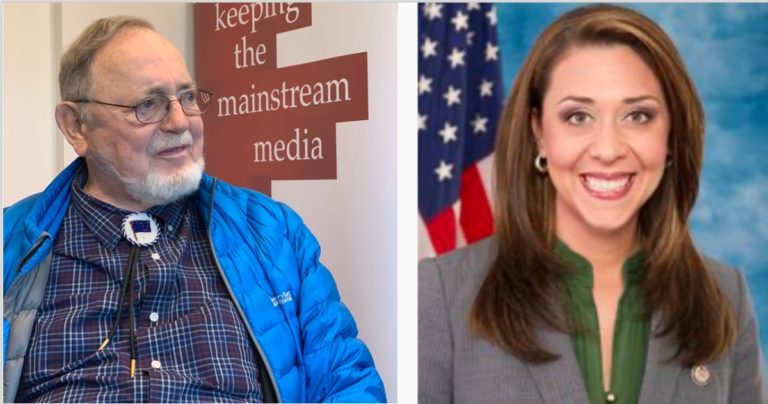
Reps. Don Young and Jaime Beutler: Two remaining Republicans are Left Coast lighthouses of hope

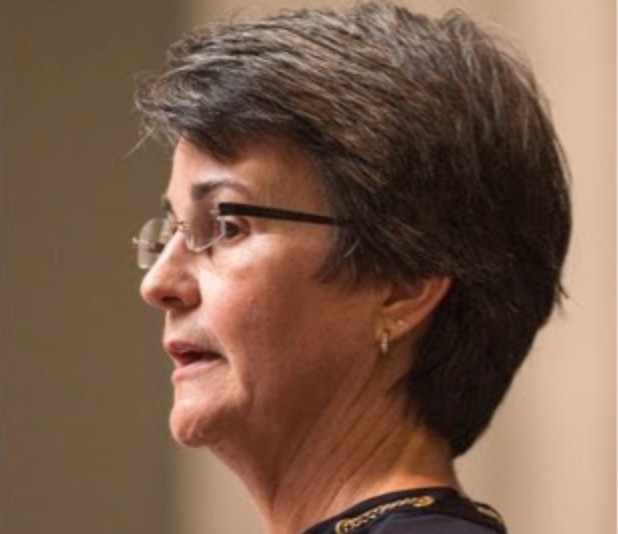
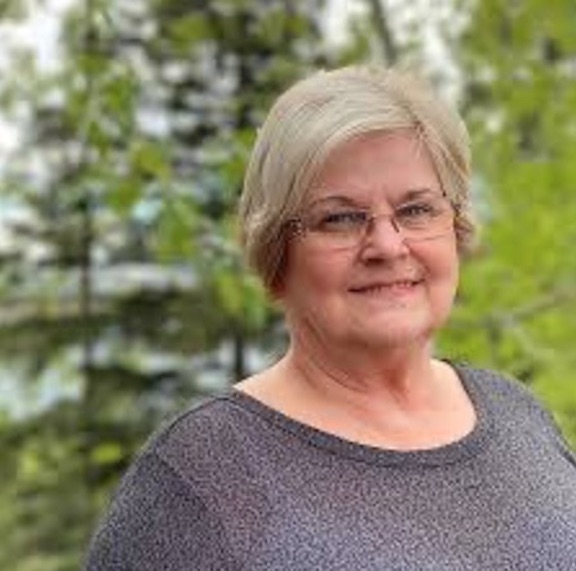
Two final Republicans are holding the line on the Pacific Coast — Congressman Don Young in Alaska and Jaime Herrera Beutler, who represents the Third Congressional District in Southwestern Washington.

If both are eliminated in the General Election, the entire West Coast — where it touches the Pacific Ocean — will become Democrat-controlled congressional districts.

There are 21 congressional districts in the contiguous United States that border the Pacific Ocean, and just one in Alaska for a total of 22. All but Young and Herrera’s districts are now in Democrat hands.

Herrera Beutler and Don Young are a generation apart, but they share similarities in that their districts are Pacific Ocean-facing, Northwest, working class, Republican, and also Indian Country.

In addition, Young and Herrera Beutler are facing candidates who ran against them in 2018, and they are both feeling the targeted money-driven attacks of the National Democrat political action groups, which see both seats as vulnerable.

Herrera Beutler is running against Democrat Carolyn Long, the same candidate who challenged Herrera Beutler in 2018. Herrera Beutler beat Long 53% to 47%.

Coincidentally, that’s the same percentage that Don Young beat Alyse Galvin by in 2018.

This primary season, 135,726 voters in Washington’s Third Congressional District voted for Herrera, while 95,875 voters picked Long in the state’s nonpartisan primary.

Meanwhile, Young won 51,972 votes in his August primary, with 16,000 votes peeled off for competitors John Nelson and Gerald Heikes. Republicans run a semi-open primary in Alaska and only exclude voters who are registered members of other parties.

But in the Democrat primary, Galvin busted through with 53,258 votes, with nearly 9,000 choosing one of her two competitors.

There are still more Republican votes out there for Young than Democrat votes for Galvin, but the race is considered tight.

Herrera Beutler’s opponent is focusing on Medicare for all, and an anti-Trump platform.

Young’s opponent Galvin, however, is trying to appear more Republican than the Dean of the House himself. She’s backed by Nancy Pelosi and the Alaska Democratic Party, and has tried to avoid taking controversial stands, but has the support of the Democratic establishment.

Young and Herrera Beutler have worked together on legislation that passed and was signed into law that made it possible for Indian Reservations to operate distilleries. Young was an original cosponsor of HR5317, which removed archaic laws that prohibited such commercial activity on reservation land.

Although both Young and Herrera Beutler are having to defend their seats under attack from national Democrats, both are considered to be in the safe zone for Republicans. But neither campaign appears to be letting down their guards as they run through the Election Day tape.


State bringing in resources to meet COVID challenge

23

Alaska Gov. Mike Dunleavy and the Alaska Department of Health and Social Services are ramping up efforts to contain the spread of COVID-18. The efforts announced by the governor come as an increase in cases has hit the hundreds for days in a row. The mobilization of new resources include:

Testing Supplies:

  • Increasing weekly allotments of test kits from the federal government.
  • Additional 25,000 Abbott BinaxNOW rapid test cards supplied from Health and Human Services.
  • 50 new rapid testing machines that will be focused on cluster response and congregant settings from HHS.
  • Procuring 189 additional rapid testing machines and 186,000 tests that will focus on staff who serve vulnerable populations.
  • 14,000 easy to use antigen tests for rural hospitals and clinics to have rapid results.
  • Improving the testing supply chain to allow small and mid-size hospitals who can’t compete with vendors the ability to purchase equipment from the DHSS. 
  • Expanding testing with schools.

PPE supplies:

  • Purchasing 3.5 million pairs of gloves that will resupply all hospitals, clinics, and communities.

Infrastructure:

  • Opening a new commercial testing lab in Alaska which will add capacity decrease turnaround time for results.
  • Opening a new testing site in Nome.
  • Preparing alternate care sites to be on standby across the state.
  • Improving IT systems and connections so results are returned faster.

Assisted Living Facilities:

  • The Infection Prevention Team will expand current prevention work for Assisted Living Facilities and Skilled Nursing Facilities.
  • Setting up the CorrectCare app so Assisted Living Facilities can find qualified employees to work if low on staffing.

Personnel:

  • Expanding contact tracing utilizing the National Guard, UAA staffing.
  • Developing provider agreements that allow providers to bill the State of Alaska the hours that a COVID positive employee would have worked while in isolation.
  • Developing patient movement coordination and maximizing available beds around the state so patients don’t have to be diverted out of state.

“From the early days of COVID-19 reaching Alaska, my team has worked around the clock to meet the needs of our communities and provide necessary equipment to slow the spread of this virus,” said Governor Dunleavy. “I commend the tremendous effort made by our public health and emergency operations teams in coordination with our federal and local partners. Together, we remain committed to fighting the virus and protect our most vulnerable populations.”

“Our work to provide added layers of protections for Alaska’s most vulnerable populations has continued and is increasing,” said Alaska Department of Health and Social Services Commissioner Adam Crum. “However, even if we isolate the most vulnerable, we are all connected. These efforts to support and protect workers who assist our vulnerable populations are critical, as we also work to ensure that all Alaskans are as healthy as possible.” 

“Hospital capacity is always limited in Alaska, which is one reason it’s so critical to keep our cases as low as possible,” said Alaska’s Chief Medical Officer Dr. Anne Zink. “Many Alaskans, and not just the elderly, are at high risk for severe illness from COVID-19. We must ensure we have adequate testing supplies and PPE throughout Alaska, especially in congregate settings and in rural areas where access to health care is more limited. I’m grateful to Governor Dunleavy for his support in obtaining these needed supplies.”  

This weekend: Trump rallies in Anchorage, Mat-Su and Fairbanks

13

After weeks of Trump rallies across Alaska, the final ones are planned for this weekend.

On Saturday in Fairbanks a full day of American Pride will be on parade, starting at 10:30 am at the Regal Cinemas parking lot, where a Trump road rally will begin, ending at The Event Center, where Congressman Don Young, Senator Dan Sullivan, Governor Mike Dunleavy, will be speaking at a “get out the vote rally,” along with other Republican candidates running in Fairbanks state races. The event includes food and music and then the road rally will head out and cruise through Farmers Loop and North Pole, with an extended gathering at the Santa Claus House. Weather will be in the low teens.

On Sunday, another Trump rally and motorcade through Anchorage is happening at 3 pm at the parking lot at Carrs on the corner of Northern Lights Blvd. and New Seward Highway.

Weather in Anchorage will be in the low 20s.

New: A Trump get-out-the-vote rad rally in Palmer is still being firmed up, according to MRAK sources.

At this time, the event is planned for the Four Corners Lounge parking lot at 1 pm on both Saturday and Sunday, and the convoy will roll around 2 pm.

On Saturday, the group will end at the Sunrise Grill at approximately 4 pm for Halloween festivities, including music, games, and treats.

This ‘John Doe free pass’ judge deserves a ‘no’ vote from Alaskans who care about violent sex crimes

11

By TOM ANDERSON, G. SCOTT CAMPBELL, TOM CLEMONS, JOHN MURPHY, AND JOHN TIDWELL, JR.

Susan Carney has served on the Alaska Supreme Court for just four years. But during that brief time, she has handed down two controversial rulings that should concern all Alaskans who care about our state’s shocking rates of sexual assault and domestic violence.

In both cases, Justice Carney was part of a narrow majority. The court was divided by a vote of 3 to 2.

This means that Susan Carney’s vote was decisive, and had a different justice occupied her seat, the outcome could have been different.

The first case involved a family in Utqiagvik (Barrow) who sued two police officers and the North Slope Borough, alleging that the police entered their home unlawfully. However, the officers had been sent to the home to investigate a potential domestic violence emergency.

The police dispatcher had received a phone call from a friend of the couple in question. The friend reported the couple were having a fight, and that the woman had suffered bruises and a cut on her head.

The trial court judge, Michael Jeffery, ruled in favor of the police and the North Slope Borough, arguing that the officers acted responsibly. But Justice Susan Carney, joined by two others, overturned the judge’s decision.

The best summary of the impact of Justice Carney’s ruling comes from the dissenting opinion of Justices Joel Bolger and Craig Stowers. They wrote:

“The court’s opinion complicates the police response to domestic violence situations by limiting a court’s consideration of a victim’s report conveyed to a police dispatcher. Ignoring this information endangers some of the most vulnerable victims: those whose pleas are silenced by threats or violence. The court offers no persuasive reason to restrict the use of this information when assessing whether the police have acted lawfully in responding to a domestic violence emergency.”

Yet this is not the only case where Justice Susan Carney seems tone-deaf to Alaska’s crisis of domestic violence and sexual assault. In John Doe vs. State of Alaska, Department of Public Safety (2019), Justice Carney joined an opinion declaring that Alaska’s public sex offender registry violated the constitutional rights of persons convicted of sex crimes.

The “John Doe” of this case was convicted in the state of Virginia of aggravated sexual battery. He later moved to Alaska. The Department of Public Safety determined that John Doe’s offense in Virginia had the same elements of first-degree sexual assault under Alaska law. This would carry a presumptive sentence of 20 to 30 years for a first-time offender, and probation supervision for 15 years. In other words, this was a very serious crime.

Nevertheless, Justice Carney and two other justices concluded that John Doe and all other sex offenders could be exempted from the public registry, provided the offender requests a hearing and proves, to the satisfaction of one judge, that “he does not pose a risk to the public sufficient to require continued registration.”

Alaskans should ponder these words carefully. The court majority just seized the power, in defiance of the provisions of the law, to exempt any sex offender from having to register. Are you entitled to know if a convicted child molester lives 100 feet away from where your children play? Justice Carney thinks the court is best equipped to make the decision about whether the risk to your children is “sufficient” to warrant registration of the offender. How will the all-wise judges, who don’t live in your neighborhood, decide what level of risk is acceptable to your family?

In this case, Justices Joel Bolger and Craig Stowers once again dissented, noting: “…most courts that have considered the question have agreed that sex offender registration is reasonably related to the legitimate state goal of protecting the public from sex offenders.”

Yes, most courts do—but not Alaska’s. Our court is different. It sides with criminals, and against the police and public safety. Susan Carney is not the only Supreme Court justice who hands down these dangerous rulings, but she’s the only one on the 2020 ballot. Alaskans should hold her accountable by voting no on her retention. 

Colonel Tom Anderson is a Alaska State Trooper (Retired) who earned the Lifetime Achievement Award for 50 years of Public Safety Service

G. Scott Campbell is a Alaska State Trooper (Retired) and former Director of Public Safety & Chief of Police for the North Slope Borough Police Department. He is a retired U.S. Marine.

Tom Clemons is the former Seward Chief of Police and former Alaska State Trooper.

Colonel John Murphy is a former U.S. Marshal, former director of the Alaska State Troopers and Navy veteran

SGT John Tidwell, Jr. is a 25 year veteran of the Alaska Department of Corrections – (Retired)

Anchorage Assembly’s new meeting broadcast system cuts off internet attendees in more ways than one

THOSE WAITING TO TESTIFY BY PHONE ARE NOT BEING CALLED BACK

The public has been more engaged than ever this year with the Anchorage Assembly. But also this year, Anchorage residents have found themselves cut out of meetings — both in person and on the internet broadcasts.

For several weeks this summer, the Assembly didn’t permit the public inside the Assembly chambers. The protests grew and the Assembly finally permitted limited entry into the chambers and the spill-over room at the Wilda Marston Theater, both of which are on the ground floor of the Loussac Library.

But also this year, the Municipality has started migrating all of its online broadcasts to a new YouTube platform.

That platform is irregular and frequently goes black with an error message, leaving those who are watching the meetings from home struggling to find a way to get back into the meeting.

The technology problem is pervasive, according to reports received by Must Read Alaska.

Assembly member Jamie Allard said that at times during the Tuesday, Oct. 27 meeting, her phone “started blowing up,” when people all of a sudden saw their screen go black and were unable to reconnect to the meeting.

The entire meeting is usually posted hours later, but is frequently not available in real time to the public, which has been discouraged from attending the meetings in person. The online observation system is one that the Assembly says meets the requirements of the Open Meetings Act.

But relying on online broadcasts is not giving the public a true picture of what goes on during Assembly meetings.

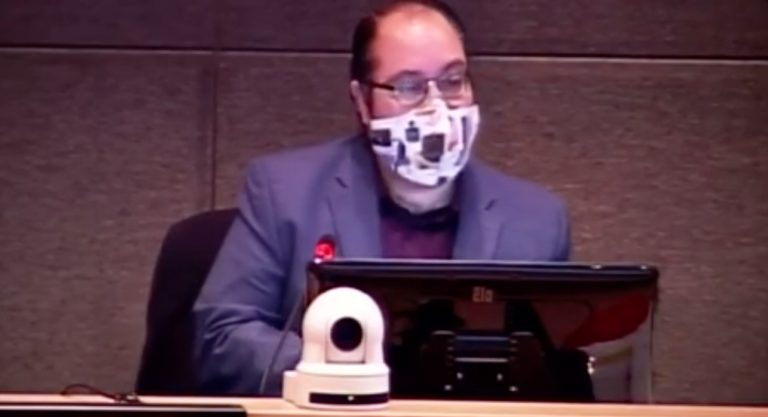
In a previous meeting of the Assembly, Acting Chair Austin Quinn-Davidson had a person removed from the room when that person would not don a face mask.

The video of that section of the meeting was edited and the incident was removed, as seen in this eight-second clip:

Critics say that part of the meeting was not a small incident and and that the public has a right to witness its lawmakers throwing people out of meetings.

Being able to testify is also an increasing problem. During the meeting on Tuesday, Chairman Felix Rivera cut off public testimony after 10 pm, even though several people were waiting in the queue. The phone testifiers normally get into a queue and Rivera then asks the Clerk to call them when it’s their turn to testify. This is so the public doesn’t come down to sit in the room for hours waiting to testify.

“So far from the technology standpoint they have done a very poor job. they have left dozens if not hundreds of people stranded on line, thinking they are going to be able to testify, but never being able to do so. The public testimony by telephone has been basically a failure.” said Frank McQueary, president of Alaskans for Open Meetings.

It’s also impossible to see the documents the Assembly and mayor’s staff are sharing online. The slides being shown in the room are unreadable for those observing online, McQueary noted.

The Assembly is struggling to get through its agendas, a problem that appears to be increasing. During Tuesday night’s meeting, the Assembly was unable to get to at least seven items on its agenda, including a big decision — whether or not to hold a special election for an acting mayor.

Was avoiding the special election question just poor meeting management or was it by design? It’s impossible to know. Frequently, the Assembly adjourns by the midnight deadline, with a lot of work left undone.

The next Assembly meeting will be a special one on Nov. 4, the day after election.

Early vote surges in Alaska

5

Some 100,569 Alaskans had cast their early and absentee ballots by Monday, according to the latest report from the Division of Elections.

In 2016,  161,061 early votes were cast in the General Election, and a total of 321,271 votes were cast that year, which was the last presidential election.

Nationally, the 2020 early vote is greater than 43% of all votes cast in the 2016 election.

The pace of some states’ early voting indicates that many states will begin surpassing their total 2016 total vote this week, according to the United States Elections Project.

Some 48 percent of the early vote is from Democrats, according to the Elections Project, which gleaned the data from states that break down the partisan divide in their reporting (AZ, CA, CO, CT, FL, IA, KS, KY, MD, ME, NC, NE, NJ, NM, NV, OK, OR, PA, SD). 29.1 percent are Republicans, 22.3 percent are unaffiliated.

Ledford leads in runoff for Wasilla city mayor

0

Glenda Ledford has a slight lead in the runoff for mayor of the City of Wasilla. But all the early and absentee votes won’t be counted until Friday, and there are 423 of those to be tallied.

For the tally so far, Ledford leads Doug Holler 183 to 163.

Wasilla’s mayoral election went to a runoff when neither candidates Ledford nor Holler received over 40 percent of the vote during the Oct. 6 Wasilla municipal election.

Ledford was endorsed by the Alaska Republican Assembly Forum as the conservative candidate in the race. As deputy mayor, she was appointed to the Wasilla City Council in 2017 and was then elected to the position. She owns a business that trains hair stylists. 

Holler is an Airport police officer in Anchorage and has previously served on the Wasilla City Council. He has lived in Wasilla for more than 40 years.

Another Gross lie? Candidate Al tells two versions of his views about Puerto Rico, D.C. statehood

25

THE PROBLEM WITH LYING? IT’S IMPOSSIBLE TO KEEP TRACK

Another day, another story from Alan Gross, who is running for U.S. Senate against U.S. Sen. Dan Sullivan.

This time, it came during a video debate between the two on Tuesday, when Sen. Sullivan asked the Democrat nominee if he thinks Washington D.C. and Puerto Rico should be granted statehood.

Gross said no, he did not think that was best for Alaska.

“I would not support expanding that. I think that’s a bad idea. I support 50 states in our country,” Gross said.

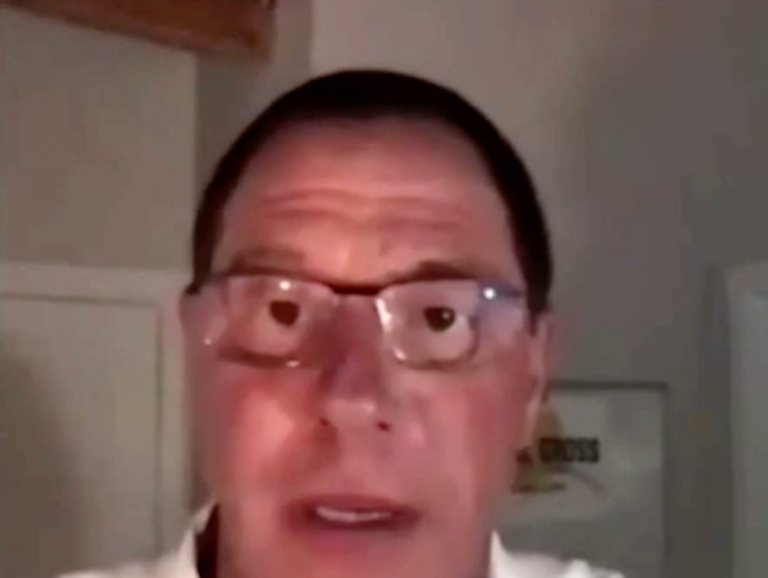
That’s when Sullivan called him out for lying to the Alaska people, and said it has been Gross’ modus operandi for his entire campaign — telling Alaskans one thing, but then telling Outside liberal groups something else.

The Sullivan campaign had the video of the previous position that Gross had taken, when speaking to an Outside group and they shared it with the public, comparing them side by side:

Gross has also been caught speaking in favor of Medicare for all, and has boasted of his conversations with Sen. Chuck Schumer, and how the two spoke about optimism for passing the Green New Deal.

Gross has come under scrutiny for fluffing up his Alaska resume by saying he purchased a fishing boat when he was just 14 years old by getting a loan, and that he killed a bear once — a tale that has been strongly challenged by Alaska Department of Fish and Game reports. His campaign is heavily financed by Outside liberal groups and the political action committee controlled by Sen. Chuck Schumer.

Fagan: LaFrance weaves a tangled web; deception her only path to victory

17

By DAN FAGAN

Suzanne LaFrance sits on the Anchorage Assembly. She leans hard-left and enabled disgraced former Mayor Ethan Berkowitz and his unprecedented tyrannical assault on the city’s private sector.

Berkowitz, LaFrance, and several other power-drunk Assembly members left behind a wake of economic destruction with their unreasonable and punitive lockdown mandates.

The pain and hardship they caused are so deep and wide, they are difficult to measure.

Now, LaFrance wants to take her dismal record as an Assembly member and move on up to the Alaska Legislature. She’s running as a Democrat challenging James Kaufman, who beat the incumbent Jennifer Johnson in the Republican primary for District 28.    

LaFrance obviously can’t run on her record of economic carnage as an Assembly member, so she’s attempting to reinvent herself as a conservative. Big Labor is sending out a mailer featuring LaFrance sandwiched between Congressman Don Young and U.S. Sen. Dan Sullivan. The goal of the flyer is to trick the voter into believing LaFrance is ideologically aligned to the conservative Young and Sullivan. Nothing could be more untrue.

The flyer is an obvious attempt to deceive voters. LaFrance is playing her constituents for the fool.

Some may argue, “That’s politics. All politicians lie.” But do they?

If one were to encapsulate the strength and formidability of President Donald Trump, it would be this: He tells the truth.  

Trump may very well be the most straight-shooting man, next to honest Abe Lincoln and “I cannot tell a lie” George Washington, to ever hold the office of the presidency.

It’s true the media consistently labels Trump a liar. But most of what the media says is the opposite of what’s real and true.

LaFrance blatantly lying to voters about her political leanings may work in the short term, but it’s far from a solid play long term.

We know many Leftists like LaFrance don’t believe in the concept of truth or absolutes. You often hear people of her persuasion say things like speak “your” truth. But there is no “your” truth or “my” truth. There’s only the truth and it does not bend to anyone’s opinion or perspective.   

Renowned clinical psychologist Dr. Jordan Peterson writes a lot on the concept of telling the truth. In his book, “12 Rules for Life,” the 8th rule is “always tell the truth or at least never lie.”

Peterson argues you have reality on your side when you tell the truth.  

“If reality is against you, you’re not going to win, you’re going to get flattened,” writes Peterson.  

Peterson’s philosophy can be summed up this way: Do what is meaningful, not what is expedient.

“Telling the truth is hard because you have to know the truth,” writes Peterson. “But you can know when you are lying. Lying makes you weak. You can feel it. You put yourself in disharmony with reality. If you act in truth, then the order you produce is good.”

Peterson points out no parent is ever pleased when they catch their children in a lie. He says “when you go into a situation, if you tell the truth as carefully as you can, then, whatever happens, is the best that could have happened in that situation no matter how it looks.”

“Don’t underestimate the power of truth. There is nothing more powerful,” writes Peterson. “I’m going to state what I think as clearly as I can and I’m going to live with the consequences no matter what they may be.”

We’ve learned a lot from Trump but nothing more important than freely and confidently speak your mind.

Unfortunately, for Leftists like LaFrance, telling the truth is not an option. LaFrance knows her radical ideology is not palatable with most voters. If she would run on what she wants to do as a legislator, she wouldn’t stand a chance of getting elected.  

Former Senate President Cathy Giessel understood this. It’s why four years ago she lied when she promised to work with Gov. Mike Dunleavy to provide a full Permanent Fund dividend check. Instead, she did the opposite. The lie that got her elected is also what caused voters to reject her four years later.

LaFrance’s blatant attempt to fool voters may work for her in the short term and fool enough voters into believing she’s a conservative. But when she runs again, she’ll have to bank on voters having a short memory.

In many ways, we should feel sorry for LaFrance and other lying politicians. Imagine knowing the only way to get where you want to go in life is to fool as many people as you can. That’s hardly a meaningful existence.

“Truth is like surgery. It hurts but it cures. A lie is like a pain killer. It gives instant relief but has side effects.” – Unknown philosopher.  

Dan Fagan hosts the number one rated morning drive radio show on Newsradio 650 KENI. He splits his time between Anchorage and New Orleans.