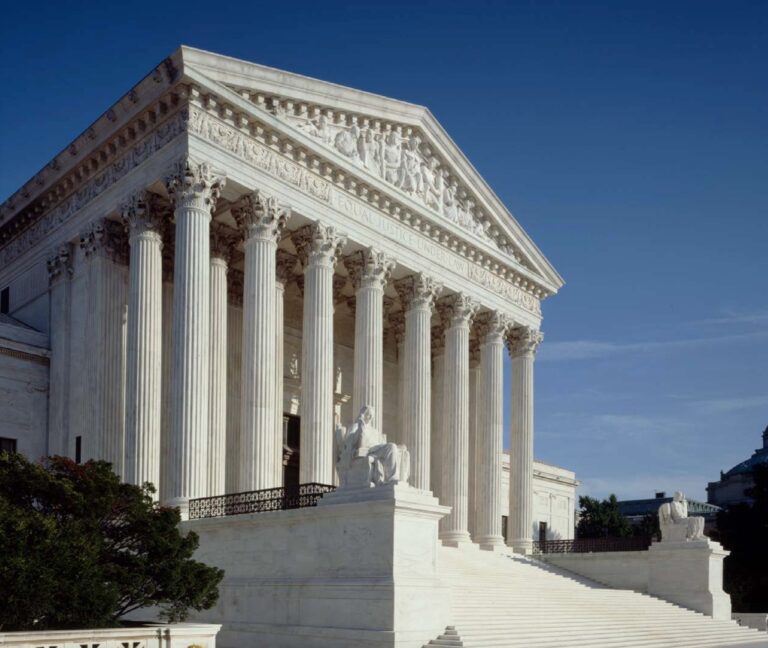
The Supreme Court on Thursday, on a 5-4 vote, allowed the National Institutes of Health stop $783 million in grants linked to diversity, equity, and inclusion (DEI) initiatives.
The cuts are part of a larger estimated $1.8 billion in NIH grant terminations, affecting over 1,700 research projects nationwide. The NIH is a major funder of biomedical research, and has projects at universities, hospitals, and research institutions, including in Alaska.
The University of Alaska Fairbanks and Anchorage campuses receive NIH funding for programs like the Alaska Network of Biomedical Research Excellence, which conducts biomedical research that usually focuses on health disparities in Natives. These could be classified as DEI-related due to their focus on equity.
The Alaska Native Tribal Health Consortium also receives NIH grants for research on Alaska Native health, including studies on chronic diseases, behavioral health, and infectious diseases, with an eye toward social determinants that may lead to health disparities. That may fall under the DEI umbrella.
In an unsigned order, the justices sided with the Trump Administration’s request to pause a ruling by Massachusetts Judge Angel Kelley, a Biden appointee, who said the policy was needlessly reckless and likely would cause damage to vital medical research.Kelley had ordered the government to continue spending money on the grants. NIH, the world’s largest public funding source for biomedical research, had argued that it should not be forced to continue the programs while litigation proceeds.
In the same decision, also by a 5-4 margin, the Court left intact another part of the judge’s ruling, which had struck down internal NIH guidance documents that set out the agency’s DEI-related policy priorities.
Justice Amy Coney Barrett cast the decisive vote in both decisions. She sided with Justices Clarence Thomas, Samuel Alito, Neil Gorsuch, and Brett Kavanaugh in allowing the grants to be terminated. On the separate issue of the guidance documents, she joined Chief Justice John Roberts and the Court’s three liberal justices — Sonia Sotomayor, Elena Kagan, and Ketanji Brown Jackson — in preserving the lower court’s ruling.
President Donald Trump signed an executive order on Monday directing federal agencies to take aggressive steps against desecration of the American flag, reviving one of his longstanding campaign promises.
The order instructs the Justice Department to prioritize enforcement of federal and state laws that could be applied to flag desecration when it is tied to violence, property destruction, or civil rights violations. It also authorizes the Departments of Justice, Homeland Security, and State to deny visas, revoke immigration benefits, or pursue deportation of foreign nationals who engage in flag desecration under certain circumstances.
While the Supreme Court has held that flag burning is protected symbolic speech under the First Amendment, Trump’s order argues that the Court has left open the door to criminal penalties when such acts incite violence, amount to “fighting words,” or otherwise violate content-neutral laws such as fire safety or disorderly conduct regulations.
Americans can expect the order to draw immediate constitutional challenges. In Texas v. Johnson (1989), the Court struck down state laws banning flag burning, declaring that government cannot prohibit expression simply because it is offensive or disagreeable. Trump’s directive appears to test the boundaries of that ruling by tying enforcement to other criminal conduct or immigration law.
The move fulfills one of Trump’s repeated commitments to “restore respect and sanctity” to the American flag, a theme he has emphasized at rallies and in his 2025 campaign platform. Supporters view the executive order as a defense of national unity and patriotism, while critics see it as a direct attack on free speech rights.
Because the order relies on existing statutes rather than creating new crimes, its practical impact may be limited to encouraging prosecutors and agencies to act more aggressively in cases where flag burning overlaps with other offenses. Still, the administration signaled its intent to pursue litigation aimed at clarifying or narrowing the scope of First Amendment protections in this area.
The executive order also includes a severability clause, meaning if portions of the order are struck down, the remaining sections would remain in effect.
With the directive, Trump has reignited one of the nation’s most potent free speech debates — one that will now likely be litigated again in federal court.
My previous article of Aug. 16 had two objectives. First, to help gain the attention of US Attorney Pam Bondi and FBI Director Kash Patel of the urgent need for federal intervention in draining Alaska’s massive swamp. Second, to further inform the court of public opinion of the truth behind the wrongful indictment of former Ketchikan Police Chief Jeff Walls.
The day after my column ran, Attorney General Treg Taylor wrote a column attacking me and defending his actions, claiming “The rule of law doesn’t work unless it applies to all of us.” Taylor’s article was riddled with misleading and inaccurate statements of fact and law.
On Aug. 20, Yvette DeBlois, the oldest sister of Thomas Jack, Jr., posted a comment to Taylor’s article defending me and stating her brother’s “investigation was a farse, the trials violated his civil rights, and you lied when you said he was tried by a jury of his peers.” DeBlois ended her comment by saying, “Justice is NOT EQUAL IN ALASKA!”
DeBlois, a Hoonah High School alumnus, graduated with honors from Temple University with a Masters in Social Work and lives in Virginia with her husband, who has worked for the FBI for 28 years and is currently a supervisory special agent. During her career, DeBlois worked with the Commission on Domestic Violence and Human Trafficking in Los Angeles County. She knows a thing or two about how the rule of law is supposed to work.
On Aug. 21, Walls’ wife Sharon wrote a column defending me and stating, “AG Taylor puts the truth in a chokehold.” Sharon called out Taylor’s hypocrisy, his gross misrepresentation of the facts, and his reckless abuse of the grand jury process. Sharon has a background in law enforcement and investigation of public corruption. Like DeBlois, she also knows a thing or two about how the rule of law is supposed to work.
Sharon, a mother of four children, was viciously attacked from behind at the Salmon Falls restaurant while dining with her husband. She sustained injuries.
Yet Taylor not only dropped charges against her assailant but threatened her with prosecution. As you’ll read further on in this column, Taylor also ignored evidence that she was being criminally stalked by an Alaska State Trooper.
AG Taylor, your column touched the nerves of the wrong women, each a victim of your version of equal justice.
My column today will continue with its dual objective of gaining the attention of Bondi and Patel while continuing to supply more evidence of Alaska’s systemic corruption to the Court of Public Opinion. Today’s column will tie in this evidence to the national emergency we face.
The intertwining of Southeast Alaska and President Trump’s Executive Order declaring a National Emergency
On Feb. 1, President Trump signed his Executive Order Imposing Duties to Address the Flow of Illicit Drugs Across our Northern Border. The order invoked the Power vested in the President under the National Emergencies Act, identifying drug trafficking organizations which smuggle illicit drugs into the US, “utilizing clandestine airstrips, maritime routes, and overland corridors.”
This order recognized “Canada’s heightened domestic production of fentanyl, largely from British Columbia, and its growing footprint with international narcotics distribution.” President Trump stated in this order, “I hereby declare and reiterate a national emergency under the NEA and IEEPA to deal with that threat.”
Alaska’s border with Canada is over 1,500 miles long. Most of that stretch is rural, remote, and rugged. In Southeast Alaska alone, more than 80 mountain peaks ranging from 5000 to 18,000 feet serve as boundary markers. Expansive, shifting icefields connect some of those peaks while dozens of salmon rich rivers drain the valleys below. During the winter, freezing Taku winds clocked at over 200 mph howl down the mountains from the glaciers in this region. Building a wall to separate Canada from Alaska is obviously not an option.
There are only three roads connecting British Columbia to Southeast Alaska. Two of them dead-end in the northern end of the region at Haines and Skagway. Both of those roads have border crossing stations maintained by US Customs and Border Protection.
The third dead-ends at the tiny border town of Hyder in the southern end of the region. Hyder is way off the beaten bath. Its population in the 2020 census was 48 people, down from 87 in 2010. The border crossing is not protected by US Customs.
The closest Alaska city to Hyder is Ketchikan, situated about 75 air miles away on Revillagigedo Island. Ketchikan, accessible only by boat or plane, is the first port of entry into Alaska from the Lower 48.
Significant evidence exists that Ketchikan doubles as a major gateway for fentanyl into the US from British Columbia. This is where Chief Walls’ municipal police force increased fentanyl seizures by over 500% in his first year on the job in 2022.
It only takes two milligrams of fentanyl to kill an American citizen. A single suitcase or box of cargo smuggled into Ketchikan from British Columbia containing 50 pounds of fentanyl can kill over ten million Americans. Those who aren’t killed by fentanyl become drug addicts and many of those soon become homeless.
The primary law enforcement agency covering the rural areas outside of Ketchikan city limits is the Alaska State Troopers. Ketchikan’s International Airport, the fifth busiest airport in Alaska, is located on nearby Gravina Island, and falls under the jurisdiction of the Troopers.
Like most Alaska towns and cities, Ketchikan has their own police department. However, Taylor’s Attorney General’s office prosecutes all felonies in the state, including those which arose during Chief Walls’ tenure.
To successfully deliver on President Trump’s Executive Order, Bondi and Patel will have to rely on Alaska State Troopers and prosecutors to honor their oaths and to follow the law. As this article will show, Bondi and Patel can’t do that.
The investigation into Walls’ wrongful indictment by a current law enforcement officer reveals the extent of the corruption and complicity that infests the Attorney General’s Office and the Alaska State Troopers.
Welcome to what I’ll term “Alaskagate.”
The report by retired AST Lieutenant Jeff Hall ignored by his former colleagues: A recap.
My second column about Chief Walls was published on July 23 and introduced the Court of Public Opinion to the evidence furnished by retired Lt. Jeff Hall of the Alaska State Troopers. Lt. Hall once served as the major crimes investigation sergeant for all of Southeast Alaska, based in Ketchikan, from 1992 to 1995.
Following Taylor’s first indictment against Walls, Hall investigated the Walls’ case. His resulting report was set forth in its entirety in my column. Hall concluded, “This case should never have been brought forward. Every person has a right to protect himself and others from aggression. Law enforcement officers have the right to use force in this manner to detain criminal suspects. The chief showed great restraint in dealing with a large, aggressive, intoxicated man, and was ill-served by the trooper and the prosecutor.”
Just as AG Taylor tried to discredit me, he also tried to discredit Hall. In his Aug. 17 article, Taylor called Hall “a paid expert” and asserted his analysis was not an independent one.
Once again, Taylor twisted the facts. Hall sent his report to the Alaska State Troopers nearly a week before Walls’ attorney filed it with the Ketchikan Superior Court. The Troopers did nothing.
As my second article describes, Hall’s report was dated August 31, 2023. That same day he emailed it to Major Anthony April, Deputy Director of the Alaska State Troopers. The next day, April forwarded the email with a “High Importance” tag to Captain Mike Zweifel, Commander of the “A” Detachment and Colonel Maurice Hughes, Director of the Alaska State Troopers.
On Sept. 5, 2023, Walls’ defense attorney sent Hall’s report to Taylor’s Office of Special Prosecution and filed a Notice of Expert Witness which clearly stated, “Lt. Hall is freely available for interview by OSP by appointment with the undersigned attorney.”
Any prosecutor interested in carrying out their oath to pursue the truth would have spoken with Hall. But none did.
Not to be forgotten is that fact that AST’s Hughes, April, and Zweifel were all aware of Hall’s findings and conclusions. Yet no other emails or evidence of related communications between their offices were ever produced by Taylor’s office to Walls’ attorney as required.
It’s incredulous that these three high ranking Troopers would completely ignore Hall’s assessment that the “investigation conducted by Trooper Larry Dur’an was a travesty – he ignored almost all basic investigation techniques.” Especially when the target of this highly questionable investigation was Walls, a decorated police chief and extremely successful in our nation’s war against fentanyl.
But Hall’s expert opinion wasn’t the only one in the possession of April, Zweifel and Hughes. They had in their possession another report that corroborated everything Hall said. This report was from a current law enforcement officer, and it was more detailed.
The corroborating report by a current law enforcement officer
My Aug. 16 article referenced but did not go into significant detail about a second report by another law enforcement officer. This article will provide that detail. The officer is still employed, so their identity will not be disclosed here.
This officer read the Trooper’s initial report and listened to the audio recordings from the scene and the first grand jury proceeding – something any of the prosecutors could have done. What follows are this officer’s findings verbatim (I have underscored portions and noted such by “emphasis added”):
On Sept. 10, 2022, Jeff requested troopers to be contacted and respond to the assault that occurred to him and Sharon.
Jeff told Trooper Duran what happened and relayed that the bartender would be able to tell Duran about both incidents. (emphasis added)
Trooper Duran interviewed Jeff and immediately turned to talk to another witness, Jason Koss, Restaurant and Bar Manager. Koss tells the trooper his statement will be completely different from Jeff’s statement. (Police protocol is to interview witnesses independently) The trooper asks him if he overheard the conversation to which Koss replies, “No.” The trooper did not ask any additional questions as to why the statement would be different. This dialogue was changed in Trooper Duran’s written report. He simply wrote Koss overheard what was said with Jeff. Koss lied and did hear Jeff being interviewed by Trooper Duran.
Koss states the male never attacked Jeff or Sharon and was not intoxicated. Multiple witnesses, including the bartender state the male was highly intoxicated. Five hours after the incident the male’s breath alcohol concentration was .07%, according to the jail intake report.
Trooper Duran tells Koss he is going to interview the bartender. Koss said he would go talk with him. Koss leaves the interview. (Again, Trooper Duran fails to maintain a scene by allowing one witness to tamper with another; this is considered failure to obtain potential exculpatory statements.)
Trooper Duran refused to interview witnesses Sadie Manabat and victim, Sharon Walls, and said they are bias because they are married to Ketchikan Police Department officers.
Typical police protocol for working an active crime scene are to identify the suspect and detain. (In this case, the male was arrested, un-arrested and re-arrested.) Identify all victims and provide emergency care if needed or requested. Preserve all evidence, identify witnesses, separate and obtain independent statements. This is basic crime scene information taught at the Department of Public Safety Police Academy run by the Alaska State Troopers in Sitka.
Trooper Duran did not attempt to separate witnesses, nor identify all potential witnesses. Trooper Duran did not enter the crime scene for nearly one hour of being on scene at which time he interviewed the bartender. During this time, Koss stated blood was everywhere but already cleaned it up. Witness and video evidence disprove this statement.
Sharon took video of the scene and noted a small amount of blood on the floor.
The bartender stated Jeff and Sharon are not intoxicated and the male attacked them twice. The bartender said he heard and felt the attack but did not see it all. Trooper Duran told the witness who was the Bartender that he did not see anything and ended the interview. It is clear that Trooper Duran is not interested in obtaining statements from witnesses who support Jeff Walls.
Trooper Duran did not interview anyone else inside the restaurant despite it being full with customers and potential witnesses. Trooper Duran had another Trooper on scene to assist but did not use him to help investigate.
Jeff asked the trooper to have a supervisor respond. No supervisor responded. Jeff spoke with Trooper Lieutenant Nick Zito on the phone and asked for a supervisor because the Trooper Duran was not interviewing witnesses. Lt. Zito said he had been drinking alcohol and could not respond and the sergeant was unavailable.
Trooper Duran arrested the male the second time and told him what happened to him was wrong. He said Jeff put him in a chokehold and asked if he wanted to press charges. (This is a leading statement and is not accepted police interview protocol.) The male said repeatedly he was never in a chokehold and did not want to pursue charges. Durn told him there would be no camera footage of what happened at the bar. Duran told him he was in a chokehold but that he just could not remember it.
Jeff took photos of Sharon’s injuries the night they went home. He took additional photos one week after the assault. The photos were shared with Trooper Duran. Trooper Duran testifies at grand jury that he did not know when or where the photos were taken and that Jeff sent some that week and another a month later. All photos have digital date and time stamps.
Trooper Duran called Jeff about one month after the incident. He repeatedly asked Jeff if he put the male in a chokehold. Jeff denies it each time. He asked about the photos of Sharon and said he has not looked at them yet. Trooper Duran did not give any of that context to the grand jury insinuating the photos were suspect.
Trooper Duran returned to Salmon Falls the following day to retrieve video surveillance. He did not review the cameras and Koss provided a 2-minute video from the front door view that shows Jeff being pulled back. In grand jury, a juror asked Koss which person he is in the video. Koss was a telephonic witness and could not see the video. He asked which video they were referring to and that there were different videos and angles. The state only provided the one (1) 2-minute video.
On Sept. 15, 2022, Officer Manabat spoke with Deputy Chief Mattson, stating Trooper Duran contacted him via the phone. Duran asked Manabat if he wanted to change his statement because it did not match what Koss said. Manabat refused and said he provided the truth. Trooper Duran told him if he did not change his statement, he could be charged with a crime. This action is Tampering with a Witness in the 1st Degree, a class C Felony. Chief Walls was notified of this phone call. He called Lt. Zito requesting a meeting to report Duran’s behavior. Lt. Zito did not respond and no action was taken with this complaint on Trooper Duran.
Trooper Duran did not produce the audio recording of the phone interview with Kevin. Months later, May 22, 2023, he wrote a report about this conversation and that he allegedly did not record this interview. (Failure to retain and discover exculpatory evidence).
Trooper Duran testified in grand jury contrary to what was spoken and recorded on scene and what was written in his reports.
On Sept. 15, 2022, Lt. Zito approached Kayla Howe, who was at Salmon Falls customer at the time of the incident. Lt. Zito asks her about the incident. He told her he was a lover and not a fighter, and would not have responded to this incident like Jeff. Howe also knows Koss and spoke with him about this incident. Howe contacted Duran at the direction of Zito for a recorded interview. Howe said the male was visibly intoxicated the date of the incident. She did not see him hit Jeff and Sharon. She saw the end. She saw Jeff push the male down. Duran interrupted her statement and asked her about the chokeholds, trying to lead another witness. She said the male charged Jeff but did not see the male get slammed into a wall or see blood everywhere. Duran asked her about chokeholds, she said Koss had Jeff in a chokehold. She said the whole thing lasted about two minutes to break everything up and that the drunk male was still fighting. Duran changed her statement in his trooper t to say that she claimed it took two minutes to pull Jeff off the male. He altered her statement for the report and the probable cause statement.
On Feb. 7, 2023, Duran called Howe and asked her if she had been influenced to give a statement to which she said, “no.” She did say she was there with a group of people and she was very intoxicated and did not feel as though she was a good witness. She said there was another female in her group that was under 21 and not drinking but did think she saw anything based on where she was seated. She gave the female’s name but Duran did not ask for any other names for potential witnesses from the group that Howe was with that night.
The law enforcement officer concluded the State’s investigation was both illegal and unethical, citing 1) the amount of misleading questions to witnesses, 2) the lack of identifying other witnesses on scene, 3) the failure to secure critical exculpatory evidence, 4) changing words and statements to make the probable cause statement fit criminal charges, and 5) intentionally writing the narrative in the police report in contradiction to what was said.
Yet Taylor’s band ignored this critical evidence, continued to prosecute Walls, and played on with their off-tune and off-beat syncopation.
Criminal stalking? Taylor lets that slide too
The actions of Trooper Duran as described in the findings of the law enforcement officer are certainly disturbing. But the actions of Taylor’s office in covering up those findings and misleading dozens of grand jurors are even more reprehensible. And the story gets even worse.
On Dec. 14, 2023, Sharon exchanged emails with former Commissioner of Public Safety Dick Burton regarding incidents where she claimed Duran harassed her. The subject matter of the emails was “criminal stalking.” In responding to Burton’s questioning, Sharon said on the advice of attorneys she had begun keeping a log and photos and after a particular disturbing encounter had ordered a dash cam.
The attorneys had further advised Sharon that if she “filed a complaint there was likely to be retaliation and that of course it would be my word against his and unless he did some more drastic there was not much to be done.”
Sharon’s continued her response to Burton, “I did contact a friend from the FBI who was the ASAC in New Orleans just to ask what I could do. He thought that maybe the trooper’s unit would have data verifying the dates and times and hopefully there would be a log of why he was in the same proximity as me at those times. He said that he knew the ASAC out of Anchorage and was not very complimentary of him.”
ASAC is an acronym for Assistant Special Agent in Charge. Consider for a moment the implications of this. Sharon, the wife of the Ketchikan Police Chief, believes she is being criminally harassed by a State Trooper yet essentially has no effective recourse. If she files a complaint with the State, she is warned there is likely to be retaliation. If she goes to the FBI, she is also warned that could be a mistake too.
On the evening of Dec. 14, Burton forwarded his email exchange with Sharon to AST Deputy Director Tony April. The next morning at 9:08 am, Dec. 15, April responded to Burton with the names and addresses of Zweifel (“A” Commander), Lt. Michael Henry (“A” Deputy Commander), Lt. Jack LeBlanc (Ketchikan Lieutenant), and Sgt. James Halbert (Ketchikan Post Supervisor).
An hour and a half later, Commissioner Burton forwarded Sharon’s emails to LeBlanc who in turn forwarded them to Zweifel and Henry.
On Jan. 8, 2024, April forwarded some of Burton’s earlier emails to Robert Henderson in Taylor’s office. I won’t get into more detail regarding the content of those emails, but they involved the FBI’s investigation of the Alaska State Troopers.
Despite the evidence of criminal stalking, an FBI investigation into the Troopers, and former Commissioner Burton’s concerns, Taylor’s band continued to play on. In gaining their second and third indictments against Walls, they withheld all of this evidence from the grand jurors as well.
The arrogance of Alaska’s Deep State
Ms. Bondi and Mr. Patel, the silence of the Alaska State Troopers on the credible evidence of criminal stalking directed towards Sharon; their silence on the manipulation of evidence against a local police chief who was successful in the war against fentanyl being railroaded out of Alaska by the Attorney General; the silence of the Attorney General in responding to complaints of criminal stalking by the chief’s wife; and the severe manipulation of fact and law by multiple prosecutors under Taylor, begs a couple of questions:
First, if the Attorney General’s Office and the Alaska State Troopers can do this to a decorated police chief and his wife, how many other Alaskan citizens are victims of their actions? The facts in cases such as Thomas Jack, Jr. and AK Mom suggest the number of victims is in the hundreds if not thousands.
Victim Yvette DeBlois believes these State agencies terrorize innocent families simply because they can.
DeBlois’ comment to Taylor’s article reminds me of something Patel told Sean Hannity towards the close of his interview on the historic day that Presidents Donald Trump and Vladimir Putin met: “Years of excavating documents, that these Deep State actors held and buried and documented their own corruption because they were arrogant enough to think no one would ever find it. That Donald Trump would never become president and appoint a cabinet that would go in and investigate this matter thoroughly.”
The arrogance Patel spoke of is deeply seeded in Alaska
Second, who is in control of Alaska and its critical natural resources? Who is in control of a region which is likely a major gateway for fentanyl entering the United States?
Is Taylor under the control of someone besides Gov. Dunleavy? Is the great State of Alaska already subject to a heavy dose of foreign influence?
Could this frightening control of Alaska be one of the objectives of the masterminds behind “Russiagate” and their effort to keep President Trump out of power?
The close nexus between “Russiagate” and “Alaskagate”
I believe the Walls’ case just scrapes the surface of Alaskagate.
One of the executive orders signed by President Trump on his first day in office is titled “Unleashing Alaska’s Extraordinary Resource Potential.” The order is designed to help facilitate resource development on both state and federal lands. It prioritizes the development of Alaska’s LNG potential, emphasizing that its associated economic and national security benefits must be given due consideration.
Much of these natural resources are located in rural areas where the Alaska State Troopers are the primary law enforcement agency. Physical protection of these development assets, law enforcement over the companies and their workers who build and operate the infrastructure, and protection of the constitutional rights of the rural residents who live near these areas, will primarily rest with the Alaska State Troopers.
The Alaska Attorney General’s office will handle any criminal prosecutions associated with the actions of the Troopers in these area. On the civil side, the Alaska Attorney General’s office will oversee much of the legal and financial aspects of these development projects. If one of our nation’s enemies has influence over their office, the results could be disastrous not only for Alaska, but for our nation.
The end of my July 16 column cited Alaska Deputy Attorney General John Skidmore, who stated the following in announcing Taylor’s settlement with Walls. It bears repeating:
“Neither Ketchikan, nor any other community in Alaska, nor any community in the rest of the country will be at risk that Mr. Walls’ poor judgement will impact them while wearing the uniform of a law enforcement officer.”
The Walls’ case demonstrates that Bondi and Patel can’t trust the Alaska Attorney General’s Office or the Alaska State Troopers to help carry out President Trump’s orders. The corruption and/or complicity of State officials involved in the wrongful indictment of Chief Walls extends to the highest levels of those two agencies.
The announced resignation of Taylor, effective on Aug. 29, likely won’t change anything. The Walls case shows that under a best-case scenario, several other prosecutors within Taylor’s office have not been loyal to their oaths. Under a worst-case scenario, they may be associated with a criminal enterprise.
Russiagate concerns the “who.” Who was behind the effort to keep President Trump out of office?
Alaskagate concerns the “why.” Why the masterminds behind Russiagate wanted to keep President Trump out of office. At least two critical Executive Orders hang in the balance.
Ms. Bondi and Mr. Patel, fortunately you can turn to many trustworthy Alaskans to help you in the war to save our nation. Chief Walls and Sharon, retired Lt. Hall, the current law enforcement agent, DeBlois, AK Mom, the Tribal Council of the Hoonah Indian Association, Bob Barton, and Thomas Jack Jr., are among many Alaskans who wouldn’t submit to the Deep State. They’re the ones you can trust most.
David Ignell was born and raised in Juneau where he currently resides. He formerly practiced law in California state and federal courts and was a volunteer analyst for the California Innocence Project. He is currently a forensic journalist and recently wrote a book on the Alaska Grand Jury.
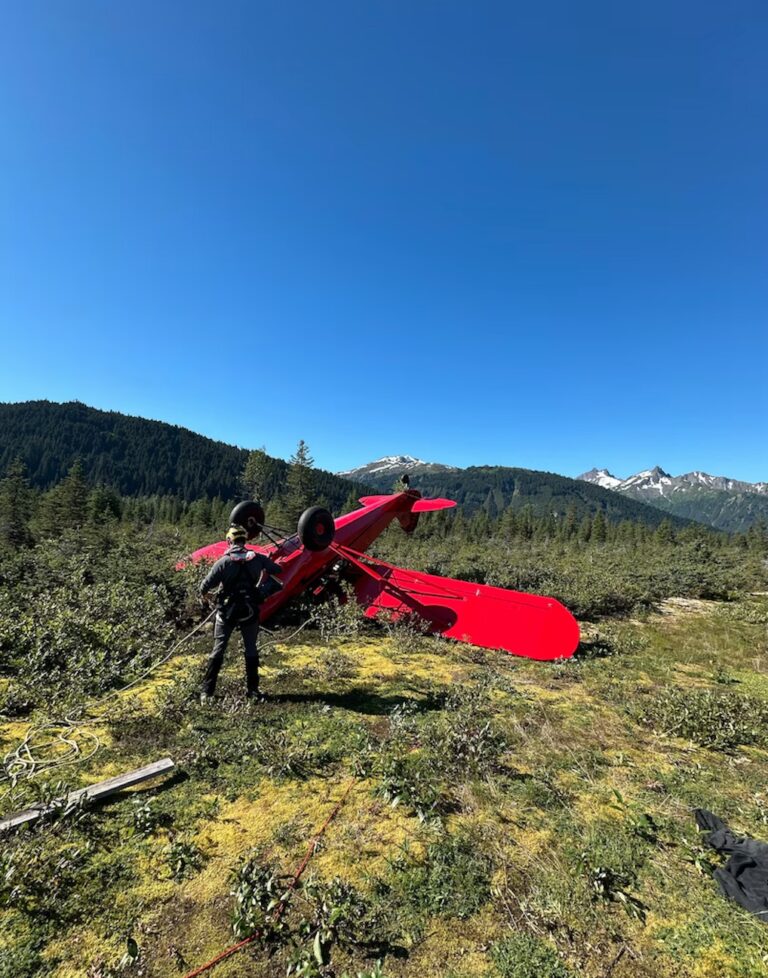
The US Coast Guard rescued a pilot Sunday morning after his small aircraft went down in the Chilkat Mountains, about 35 miles south of Haines.
At 8:30 am, watchstanders at the Coast Guard Arctic District Command Center in Juneau received an alert from the aircraft’s Emergency Locator Transmitter. Personnel at the Haines Airport reported the missing plane, a two-seat single-engine aircraft that had departed earlier in the day but had not returned.
Coast Guard Sector Southeast Alaska assumed command of the search-and-rescue mission and directed an MH-60 Jayhawk helicopter crew from Air Station Sitka to the area.
At 10:25 am, the aircrew located the overturned plane near the Endicott River. They landed near the site and recovered the pilot, who was the only person on board. He was not injured and was flown to Juneau in good condition.
The National Transportation and Safety Board will open an investigation into the cause of the crash.
I continue to follow climate and energy issues that affect Alaska and its economy. My concern this year is the lack of action by government personnel — whether elected or employed — and by those in private leadership roles. Too few are encouraging Alaskans to take steps that would accelerate programs to add crude oil to our exports, strengthen natural gas reserves for Cook Inlet, and assess climate realities to determine whether Alaska truly faces a climate crisis.
These actions are critical. They would not only increase state revenue, giving Alaska the resources to address major challenges, but also spur long-term economic growth. A clearer understanding of Alaska’s climate is essential, so that oil, gas, and mineral development can proceed without constant threats of court actions tied to greenhouse gas concerns.
I have noted in past commentaries that Arctic sea ice near Alaska—the Beaufort, Chukchi, and Bering Seas—has been recovering since the low summer ice extent of 2019. In his July 2025 Arctic Sea Ice Update, climate specialist Rick Thoman stated: “The Chukchi and Beaufort Seas really stand out for high ice extent, though the Chukchi Sea extent is slightly lower than the past two years.” Thoman, with 40 years of professional experience in weather and climate, works with the Alaska Center for Climate Assessment and Policy at UAF’s International Arctic Research Center.
I also reviewed data for the Bering Sea and found that ice was still present on August 5—the first time since 1985 that ice remained this late. For those who doubt my findings, this evidence from a recognized expert further confirms increased ice extent in the Beaufort and Chukchi Seas, suggesting that claims of extreme Arctic warming may be exaggerated.
My research into sea ice data is part of a broader effort to show that Alaska is not warming two to four times faster than the global average. Yes, the state’s average annual temperature is about 8–9°F warmer than it was more than 40 years ago. But that change is largely due to fewer extreme winter cold spells. Summer temperatures, by contrast, have remained much the same for a century. Although last winter was warm because Arctic Express winds pushed cold air south to Florida and pulled warm, wet Pacific air into Alaska, this summer has been relatively cool, even cold.
The goal of my climate work is to demonstrate that CO₂ emissions from hydrocarbon fuels cannot be driving major warming. Our climate has warmed since the Little Ice Age, but evidence shows warmer periods in human history than today — receding glaciers reveal ancient forests, and Vikings once farmed southern Greenland a thousand years ago. The logical explanation for recent warming is the sun. A modest recovery from Little Ice Age cooling does not guarantee ongoing, runaway warming.
This perspective underpins my opposition to “Net Zero” policies for power generation. Alaska needs energy strategies that are sensible, practical, and affordable. Each community should rely on the resources most available to it. Natural gas is abundant in Cook Inlet and on the North Slope. Remote communities can turn to tidal, river, hydro, or geothermal power, supplemented by wind and solar where practical. Having worked with solar installations for more than 15 years, I support renewable resources when they strengthen, not destabilize, the grid.
Cook Inlet gas remains vital for Southcentral Alaska and the Railbelt. Furie has produced new wells from its offshore platform for the past two years, with plans to continue. Yet output still falls short of utility needs. Utilities want reserves comparable to the North Slope, where injected natural gas supports oil recovery and builds reliable storage. Moving Cook Inlet gas into storage wells requires funding, whether from Enstar through rate adjustments approved by the Regulatory Commission of Alaska, or from AIDEA with legislative support. However structured, Alaska must ensure storage capacity sufficient to guarantee reliable supply for one to two years.
At the same time, Alaska should commit to building the AK LNG project. A pipeline from the North Slope to a processing plant in Nikiski would enable LNG exports, providing significant state revenue. The project would also allow gas “drop-offs” along the route for communities like Fairbanks and Ambler. Once economics align, producers will be motivated to drill more wells, add platforms, mine more minerals, and expand exploration, which would strengthen Alaska’s economy.
Another area of concern is education. I was disappointed by legislators’ lack of support for policies that could strengthen Alaska’s schools. We need a system that prioritizes reading, writing, arithmetic, science, and true American history — the kind that reflects both our nation’s flaws and its progress.
Instead, too many teachers and boards promote Marxism over capitalism, dismiss the Constitution, or treat patriotism as outdated. Simply adding more money will not fix this. Until we return to rigorous instruction and principled teaching, as we had decades ago, we will continue to shortchange students. Poor education discourages families and businesses from relocating to Alaska, while teachers with high standards will choose to work elsewhere.
Alaska must prepare for a more productive and financially secure future. That means ensuring climate concerns do not derail energy development or resource extraction, securing stable natural gas supplies, building major infrastructure like the LNG pipeline, and reforming education. On an individual level, it means building resilience — yes, even by planting a garden and recognizing the benefits of higher CO₂ levels.
Robert Seitz is a professional electrical engineer and lifelong Alaskan.
The last decade in the United States has been saturated with alleged conspiracies. For some, skepticism has become a default posture; for others, the chaos has validated long-standing distrust of political elites. At the center of this period stands the Covid-19 pandemic, officially declared in March 2020 by the World Health Organization, and widely recognized as the most disruptive global event in a century. In May 2023, the WHO declared an end to the public health emergency of international concern.
While public health authorities have examined its biological origins and epidemiological impact, where are the political narratives which increasingly framed Covid not merely as a natural disaster but as a potential instrument in shaping the outcome of the 2020 presidential election?
Political climate before the pandemic
The seeds of suspicion were sown well before 2020. The 2016 election brought allegations of Russian influence and questions about President Donald Trump’s legitimacy. Former President Barack Obama’s 2012 “hot mic” exchange with then-Russian President Dmitry Medvedev, where he suggested greater flexibility after his re-election, fueled narratives of behind-the-scenes dealings. Meanwhile, Hillary Clinton’s long career, including her 1969 thesis on Saul Alinsky’s community organizing, provided a basis for critics to connect her and Obama to a style of political mobilization that emphasized conflict and negotiation.
When Trump won the presidency, his critics mobilized legal and bureaucratic tools to investigate his administration, while his supporters perceived a “deep state” determined to undermine him. By 2020, partisan divides had hardened into outright suspicion and clandestine activities, priming the public to interpret any crisis through a conspiratorial lens.
The pandemic as a political flashpoint
Covid arrived in this combustible environment. On top of the staggering death and human suffering, governments-imposed lockdowns, triggered supply shortages, issued sweeping emergency orders, and delivered ever-changing medical edicts, these blind actions not only fueled chaos but also magnified public distrust and uncertainty worldwide.
Was the timing significant? This pandemic required altering voting procedures, expanding mail-in ballots, and curtailing traditional campaigning unfolded in the very year of Trump’s re-election bid.
While scientists and the mainstream media continued to persuade the public with animal origin, the political debate rarely discussed the possibility of laboratory origins. Was Covid more than a virus? Was it a tool? Would a Hillary Clinton presidency have faced the same crisis? Was the pandemic’s mismanagement uniquely designed to damage Trump? Was it a weaponized component deployed at the precise moment when the political establishment faced the threat of a Trump second term?
I offer these speculations, though not supported by conclusive evidence, because they appear to align with preexisting distrust of institutions and leaders.
In Frank Herbert’s Dune (1965), we read about the mantra used by the Bene Gesserit order to master fear. The phrase “Fear is the mind-killer” means that fear doesn’t just cause hesitation. It destroys reason, clarity, and judgment. If fear takes over, it paralyzes thought and prevents decisive action.
And the world was paralyzed.
Hypothetical scenario one: Covid without weaponization
At its public inception, the pandemic, we were told, had emerged naturally out of a nearby wet market in Wuhan. The Huanan Seafood Wholesale Market (wet market) had operated for approximately 17 years, serving as a major wholesale live animal and seafood marketplace in Wuhan prior to the pandemic. Three months before the official WHO declaration in March 2020 of the pandemic, it was permanently closed on Jan. 1, 2020, by the Jianghan District Health Authorities, in conjunction with the Administration for Market Regulation, who ordered the closure for environmental cleaning, sanitization, and disinfection following alleged indications that the market was linked to the emerging Covid-19 outbreak. The wet market was almost 9 miles from the Wuhan Institute of Virology. Ultimately, every shred of evidence pointing to this plausible origin was not just dismissed. It was deliberately wiped from existence.
As a result of the pandemic outbreak, the world saw supply chains collapsing, hospitals strained under patient loads, and emergency orders reshaping daily life. But the political consequences, while severe, were largely incidental. The outbreak would be remembered as an unavoidable biological crisis. Under this interpretation, the election of 2020 was disrupted by circumstance, not design.
Hypothetical scenario two: Covid as a weaponized event
Now consider a darker possibility: Covid-19, whether deliberately engineered or opportunistically exploited, was weaponized to reshape the political destiny of the United States. In this scenario, the virus was more than a pathogen; it was a calculated instrument. Its eruption in 2020 unleashed maximum disruption at the precise moment of a presidential election, guaranteeing that emergency powers, lockdowns, and mass mail-in voting would redefine the rules of engagement. Restrictions on public gatherings crippled Trump’s hallmark rallies and momentum, while media narratives relentlessly framed his administration as fatally inept in crisis management.
If Covid-19 was indeed weaponized, the effects were far-reaching. Mail-in and absentee voting surged, decisively altering turnout in key swing states. Meanwhile, the public narrative narrowed to Trump’s alleged failures, overshadowing pre-pandemic economic strength. Did institutional trust not erode as shifting medical guidance, selective enforcement, and glaring double standards, permitting mass protests while shuttering churches, fueled suspicions that the pandemic was not merely a health crisis but a political tool?
Hypothetical scenario three: A Clinton presidency instead of Trump
An equally provocative question follows: would the pandemic have unfolded the same way under Hillary Clinton? If Clinton had won in 2016, there may not have been the same political incentive to unleash, time, or exploit a pandemic in 2020. Under this hypothetical, the outbreak might still occur but without the same electoral consequences, or it might not appear at all.
Consequences of the weaponization yypothesis
Even if unproven, the hypothesis itself has lasting effects. It cements distrust in institutions and fuels the belief that political elites will go to any lengths to maintain power. It reframes the Covid virus not just as a health emergency but as the most sophisticated political operation in modern history. It sets a precedent where every future national crisis will be interpreted not as coincidence but as deliberate design.
Remember that several films have explored the concept of a lab-engineered pandemic used as a political or military weapon, for example, 12 Monkeys (1995), Outbreak (1995), the Resident Evil series, and the Hong Kong action-thriller Viral Factor (2012).
Conclusion: A thought experiment with real implications
Whether Covid was a naturally occurring tragedy or a weaponized event remains unresolved in public opinion. What is clear, however, is that the possibility of weaponization has permanently reshaped how Americans interpret crises. Once a population begins to believe that pandemics themselves can be political tools, trust in governance and science is fractured, perhaps beyond repair. In this sense, even the idea of the Covid-19 virus as a weapon may prove as destabilizing as the virus itself.
Conspiracy narratives and their consequences
Is the pandemic entangled in broader narratives about Obama, Clinton, Biden, and the “deep state?” Whether the Covid virus was viewed as a man-made virus, a weaponized event, or simply a global tragedy, it reinforced a perception among Trump supporters that unprecedented obstacles were placed in the path of his presidency. Conversely, critics of Trump saw his pandemic response as proof of incompetence.
Exposing these divergent interpretations reveals less about the actual biology of the Covid virus and more about the state of the American constitutional republic. In moments of national crisis, conspiracy theories thrive not merely because of secrecy or cover-ups but because trust in government is already fragile. The pandemic, then, did not just test public health infrastructure, it tested the resilience of political legitimacy.
Conclusion
The question, Would the world have experienced the Covid virus if Hillary Clinton had been elected president?, cannot be answered empirically. What can be analyzed, however, is why such a question resonates now that we have seen the perverse evidence of deep state evil. It is because political trust in the United States has eroded to the point where coincidence appears conspiratorial, and crises are interpreted as deliberate weapons in partisan struggles.
The Covid-19 virus may never be proven to be man-made or politically engineered, but its role in reshaping perceptions of our republic, elections, and governance is undeniable.
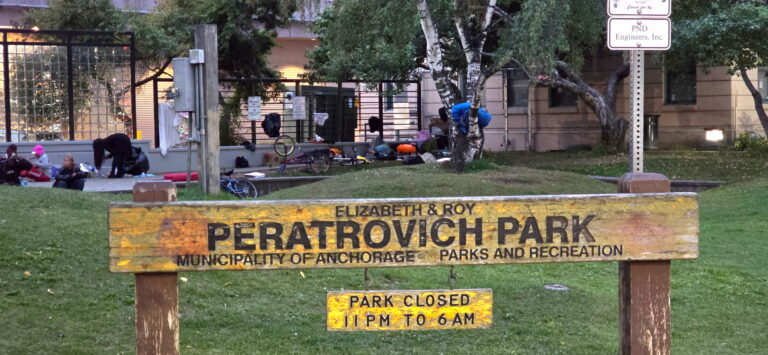
Anchorage Parks and Recreation is moving forward with plans to upgrade Peratrovich Park, at 4th and E Street in front of the Old City Hall building, aiming to turn it into a vibrant downtown destination. With taxpayer dollars, city officials are crafting a design to improve user experience, address “existing problems,” and make the small park a focal point for the community.
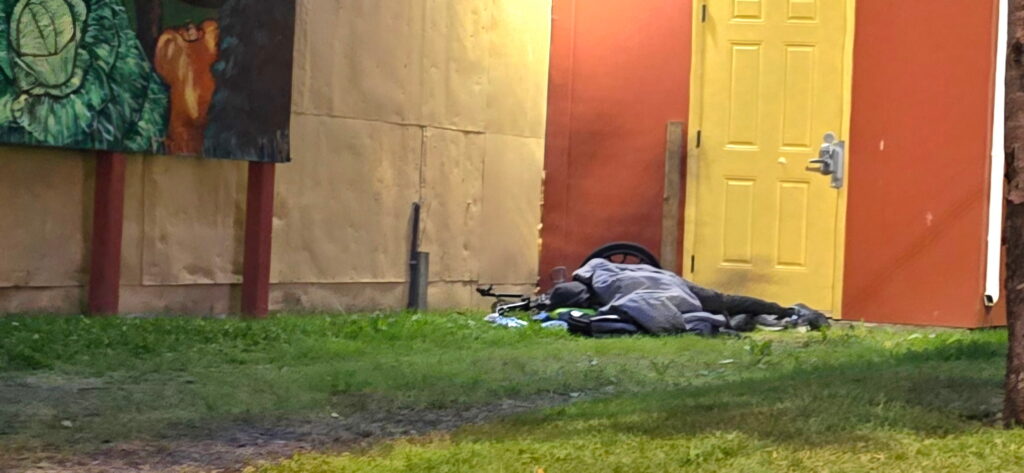
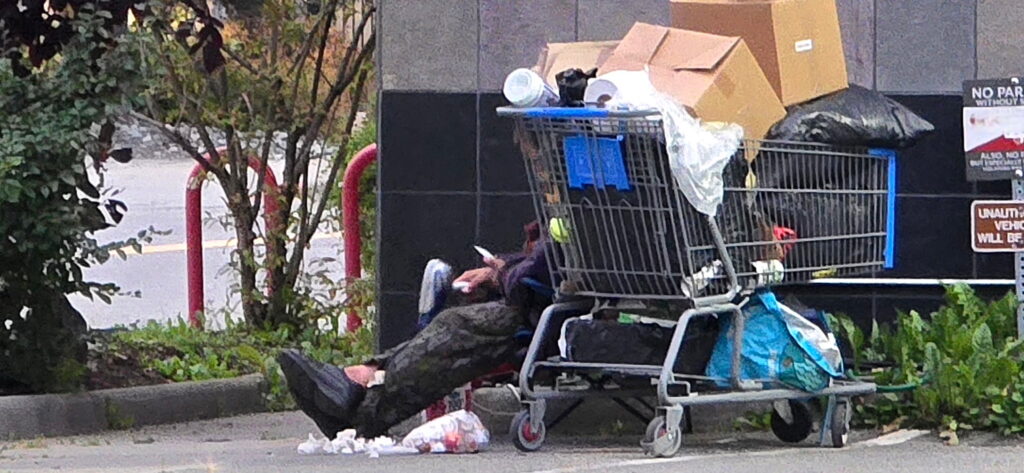
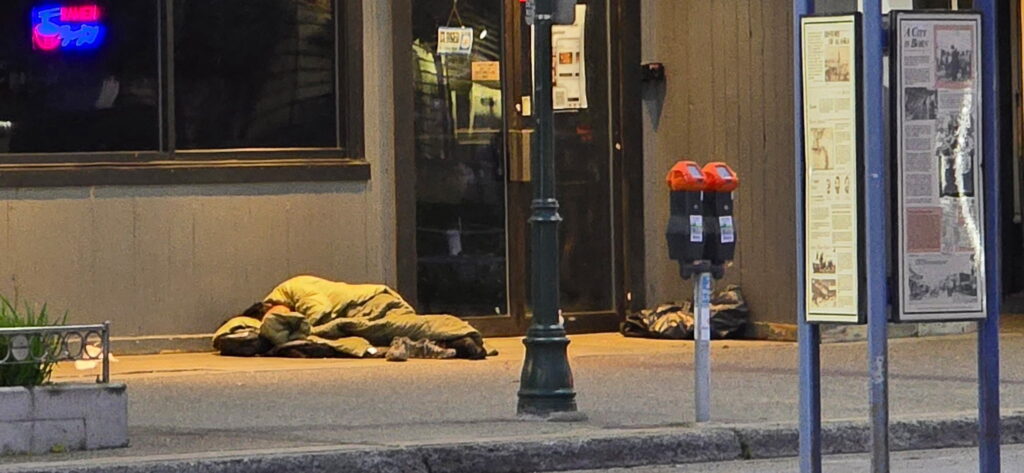
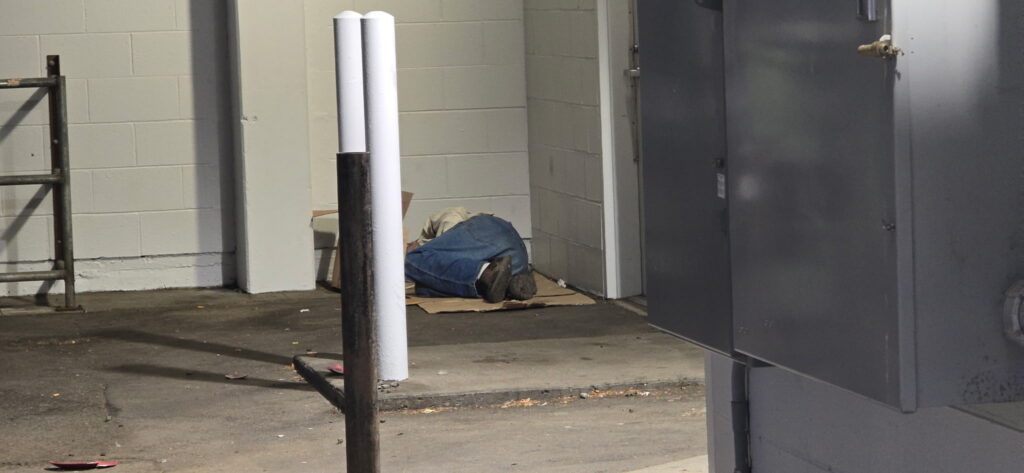
But the vision of a revitalized park contrasts sharply with the reality on the ground. On Monday morning, Aug. 25, Peratrovich Park is the site of a sprawling urban encampment. Several individuals, some asleep on benches or sprawled across the grass, others gathered in groups with shopping carts and piles of belongings, occupy the space, even though the sign says the park is closed from 11 pm to 6 am.
While planners draft blueprints for a more welcoming civic hub, the downtown core continues to struggle with vagrancy, drug abuse, public intoxication, and safety concerns that deter visitors and local businesses alike.
In our series on the decline of Anchorage, here’s our photo gallery from Monday morning in downtown Anchorage — photos you won’t see in the visitor brochures:
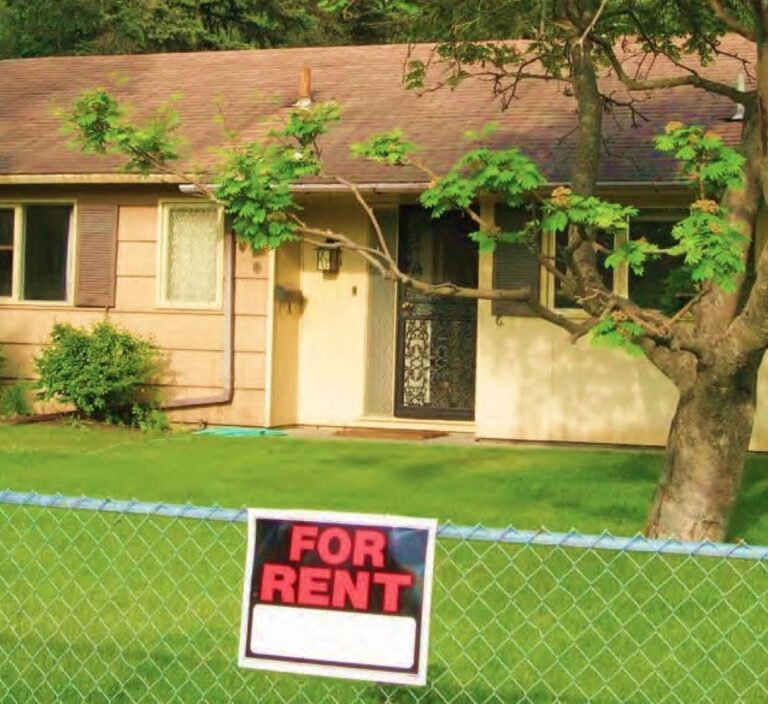
Anchorage lawmakers are advancing an ordinance that could significantly raise the costs of being a landlord in the city. The measure would require rental property owners to provide tenants financial relocation assistance equal to twice the tenant’s monthly rent, plus any deposits and prepaid rent, if a building is deemed unsafe and tenants are ordered to vacate.
Under the amendment to Anchorage Municipal Code 15.05.060, landlords would have just seven days after a notice to vacate to make these payments. If they fail to do so, the city could use a new Relocation Assistance Fund to cover the cost and then pursue repayment from the owner. Daily penalties would accrue for landlords who do not reimburse the municipality within 60 days.
The ordinance also amends Title 8 to make noncompliance with notices to vacate or enforcement orders a misdemeanor offense. Property owners who fall behind on repairs, or cannot afford relocation payments, could find themselves facing both steep financial penalties and criminal charges.
The proposal is similar to what is on the books in several Southern California cities, such as Los Angeles, Santa Monica, and Long Beach.
The ordinance is presented as a response to Anchorage’s aging multifamily housing stock and a punishment for property owners who defer repairs on their properties. The measure adds another layer of cost and legal exposure for landlords who are already struggling with high maintenance bills, property taxes, and limited rental income.
By forcing landlords to foot the bill when tenants are displaced, the city is effectively raising the cost of owning and maintaining rental housing. Opponents warn that some property owners may simply sell or leave the rental market altogether, further tightening Anchorage’s already limited housing supply.
The Assembly will take up the measure during its Tuesday meeting. If passed, it would mark one of the strongest examples yet of local government using criminal penalties and financial mandates to shape the rental housing market at the expense of property owners.
The item is 10.G.2 on the Assembly agenda for the meeting that begins at 5 pm on the ground floor Assembly Chambers of the Loussac Library in Anchorage.
The Alaska Legislative Council will take up its stalled plan to move the Capitol’s mailroom out of the downtown Juneau building at its Aug. 27 meeting.
The project was approved by the council in December as a security measure, with the goal of having the offsite mailroom in place before the 2026 legislative session. But the relocation has been on hold since lawmakers failed to secure funding in this year’s budget.
In a memo to council members, Legislative Affairs Agency Director Jessica Geary noted that about $30,000 has already been spent preparing the new space, but the Senate Finance Committee cut the operating budget increments needed to fully staff and maintain the facility. The funding was not restored in the final budget.
The project would have added about $324,000 annually, including administrative services and rent. Without those increments, work was halted, leaving the partially prepared site unfinished.
The Legislative Council, which manages internal legislative operations between sessions, is now being asked to decide whether to continue pursuing the relocation or to keep mail operations inside the Capitol.
According to the memo, if the council wants to proceed, one option would be to redirect unspent legislative funds that lapse each year, rather than seek new appropriations. If the council decides the relocation is no longer a security priority, mail services will remain in the Capitol, while offsite spaces already secured will be used solely for storage.
A confidential December 2024 memo outlining the original security rationale for moving the mailroom will be reviewed during the council’s executive session on Wednesday.



 education reform" title="Robert Seitz: Alaska’s path forward needs energy development, real climate science &