Wednesday, June 3, 2026
Home Blog Page 1110

Tim Barto: Spring baseball in Alaska: Story of recovery

By TIM BARTO

A couple months ago, Must Read Alaska was kind enough to share my lamentations as I began a trial separation from Major League Baseball (MLB); the latter party having necessitated the split by joining the NFL and NBA in putting social activism over sports.  

Read: Why time didn’t begin on Wednesday but still has a chance

So, you may be wondering how the separation is going.  It’s going surprisingly well.  A little too well, actually.  My family and friends were really worried about my mental well-being, being a baseball addict, and all. Now I’m worried about myself.

You see, the oddest thing happened:  I found out I can live without Major League Baseball, and live rather comfortably, thank you very much.  

I came to the realization after talking over the phone with a baseball buddy of mine. He asked if I was still not following the MLB and I said I was not, and then I said, “And you know what?”

“You don’t miss it,” he said, beating me to the punch.

“Right.  I don’t miss it.”  Did I jut say that?

The first road to recovery is admission, right? Well, there it was. I admitted I didn’t miss Major League Baseball. It surprised me; kinda’ like the feeling a guy gets after kicked to the curb by the one and only . . . only to realize it’s Friday and he has a free weekend ahead. 

Fifty years of checking box scores and watching The Standings (capitalized out of a nostalgic reverence) first thing in the morning; five decades of card collecting, late-night game highlights, scoreboard watching, and heaving various household items at television sets and radios when my team lost.  

How could this be? Was I duped? Is my collection of 423 Cincinnati Reds pennants all for naught?  (Yep, I have over 400 pennants of one team.  Just one team!  You still doubt the sincerity of my calling it an addiction?)

Well, I’m not ready to say it was all for naught — although I really like using the work naught –- because I have great memories. The Big Red Machine of the 1970s will always have a place in my heart, but I learned I can do without developing ulcers because the Reds are playing below .500.  (I actually don’t know if their below .500 at present, but I’m taking an educated guess.)

So, now, as alluded to back in those dark, early days of April, I turn my attention to the Alaska Baseball League. As president of the Chugiak-Eagle River Chinooks, I have directed my baseball passion to that team.  

Program layouts, sponsorship deals, keychains, decals, and host families. Outfield banners, posters, pennants, and mini baseball bat pens. Presentations at churches, soliciting post-game meal volunteers, and trying to sound intelligent with the coaches who humor me enough to not tell me I don’t really know what I’m talking about.    

I’ve found an addiction to replace my MLB addiction. But this one is pure baseball; young men who play hard and are still learning the game; coaches who coach because they love the game; fans who learn the players’ names, numbers, and abilities to hit in the clutch . . . or not; and umpires who travel all the way to Alaska to sleep in spartan quarters and get yelled at by all the above.

I love it. And I recommend it.  

The five-team Alaska Baseball League opens this Saturday, June 5, and runs through the first week of August.  There are games in the Anchorage bowl almost every day for the next two months. Quality college baseball played by guys who love to play the game.  

I hope to see you at the ballparks.

Tim Barto is Booster Club president for the Chugiak-Eagle River Chinooks – who play at Loretta French Park where admission is FREE.

State may pay Alaskans to return to work

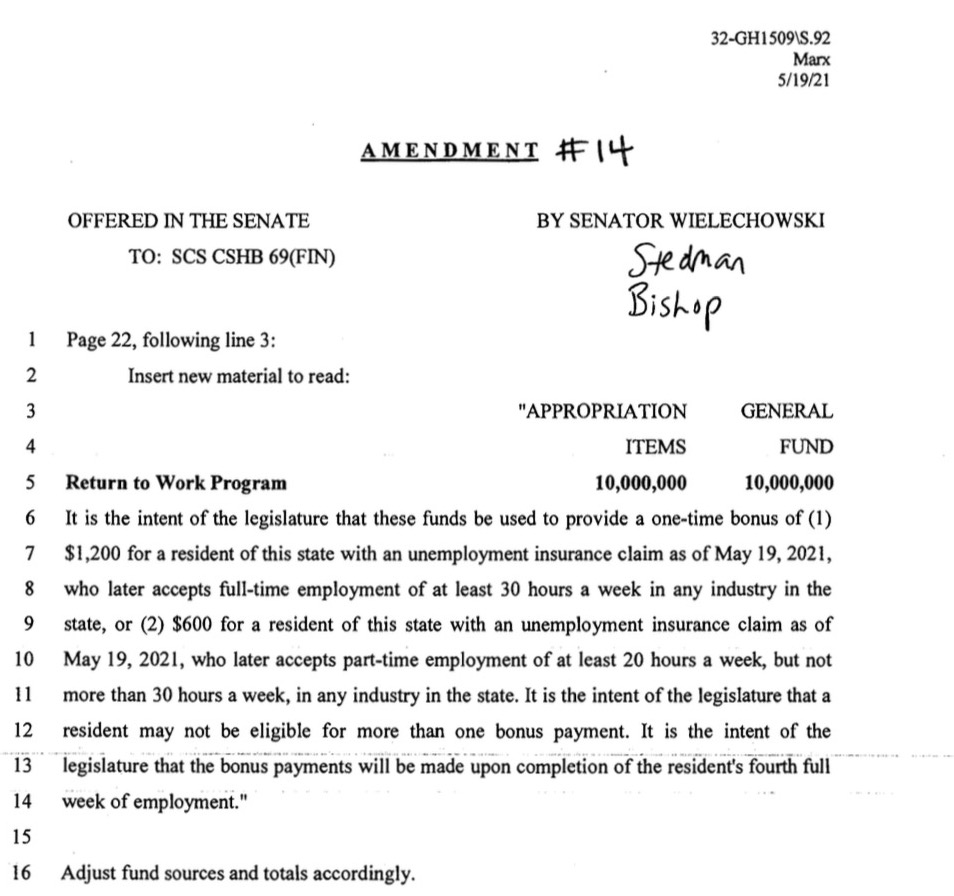
A budget amendment offered by Sen. Bill Wielechowski would pay Alaskans to go back to work.

The budget intent language says, “It is the intent of the legislature that these funds be used to provide a one-time bonus of $1,200 for a resident of this state with an unemployment insurance claim as of May 19, 2021, who later accepts full-time employment of at least 30 hours a week in any industry in the state or $600 for a resident of this state with an unemployment insurance claim as of May 19, 2021, who later accepts part-time employment of at least 20 hours a week, but not more than 30 hours a week, in any industry in the state. It is the intent of the legislature that a resident may not be eligible for more than one bonus payment. It is the intent of the legislature that the bonus payments will be made upon completion of the resident’s fourth full week of employment.”

The budget appropriation item is for $10 million. The budget is now in Conference Committee, a special committee set up to iron out differences between the House and Senate versions of the budget. Evidently the measure has bipartisan support, since so many Alaskans simply won’t work.

The federal unemployment bonus payments ended May 31. Employers across the state say that the bonus payments were so generous and long-lasting that they can’t find anyone willing to work.

Memo: Anchorage health chief warns that licensing homeless shelters could mean more will be unsheltered in Anchorage

Heather Harris, the director of the Anchorage Health Department, says the proposed ordinance that would require homeless shelters to be licensed by the municipality comes with a number of risks that need to be addressed first.

In a memo to Assemblywoman Meg Zaletel and the acting mayor’s chief of staff, Harris warned about several of the unintended consequences of requiring licenses for nonprofit shelter operators, including:

Provider burden: Although it may not be the intent of the ordinance, licensing may burden shelter providers with additional costs, including employee costs, Harris said.

Timeline and costs of process: Harris pointed out that regulatory compliance such as background checks will increase the costs of running a shelter, and such background checks can take a lot of time, which can additionally burden the shelter operators, who are not generally operating with a lot of excess staff or funds.

“Has the Assembly investigated costs shouldered by providers to go through the Conditional Use Permit (CUP) process?” Harris asked. “Are the insurance requirements in alignment with threshold norms, or will this licensing process increase costs?

“If there are costs on either side, what level of risk are we asking providers to take and are they going to be willing to take those risks to provide a public service?” she asked in her memo.

Unintentional decrease in shelter system capacity: “… space limitations and the burdensome nature of these regulations could minimize the amount of people experiencing homelessness served,” Harris wrote.

Fiscal risk: “Compared to other business ventures, like alcohol and marijuana distributors, who stand to make a significant profit at the end of their licensing process, shelter providers are not in a profit-seeking structure. The initial capital investment has a financial benefit once achieving licensing that bears a cost/benefit analysis. This may not be true for future providers.”

“Some providers currently providing services (some outside of their core service) may decide to stop delivering services. In October 2020, at least two providers publicly stated that they would stop sheltering this population if required to comply,” Harris wrote.

While the municipality is working to get homeless out of the Sullivan Arena, “increasing the risk of decreasing the shelter system capacity is a significant concern,” Harris added.

Background checks: In addition to potentially being slow and/or fiscally burdensome, the ordinance could threaten removing the ladder for employment opportunities that many providers allow for in having previous participants become staff. This means as people become more functional, they can be paid to take on duties in the shelter, and this provides them with structure, work experience, and a sense of purpose, all important to finding other work in the future. Requiring a background check for client-to-staff members would create a barrier to overcoming homelessness.

“Are the background check requirements for all facilities and all clients? Clarification about the motivation for background checks could be helpful. Moreover, weighing out that motivation to the benefits of staff with lived experience (who may be barred from employment by currently drafted license requirements) would be important,” Harris noted.

Human capital: Harris said that two or three municipal staff will be required to start a shelter licensing program and maintain it over time. She said that the initial investment to establish processes at the municipality and the workflow would be substantial.

“Therefore, there needs to be at least a supervisor and a coordinator to do this work, though two coordinators would be more realistic,” she wrote. She added that the relationships required to be an effective compliance officer are time intensive and that providers need to trust that the compliance officer understands them and their services to actively work with them on improvement plans as needed.

“When there are problems, they are incredibly time-intensive, be that inspection, re-inspection, improvement planning, investigations, revocation processes, etc.,” she wrote.

Harris on April 21, 2021 also made a formal request for an economic impact summary as it relates to the added work burden at the municipality.

Harris also noted that public hearings about homeless shelters are “extremely volatile” and “politicized.” Rather than the Anchorage Assembly having public hearings about possible licensing of shelters in Anchorage, she recommended that “making hearings of this nature public, rather than running it through the Administrative Hearing Office, potentially provides a platform for ridicule and rancor. It would be recommended to explore alternative options.”

Read: Targeting faith-based shelters, Assembly plans to require a license to operate

An ordinance to require licenses for shelter providers is being discussed by the Anchorage Assembly, and those providing shelters, such as faith-based groups, are concerned that the regulations that follow the ordinance will be burdensome and are intended to put them out of service.

The ordinance has been the subject of two town hall meetings this week and will be on the Tuesday agenda of the Anchorage Assembly, whose meetings start at 5 pm at the Loussac Library ground floor Assembly Chambers.

Best high school in Alaska? Petersburg

2

U.S. News and World Report says that Petersburg High School in Southeast Alaska is ranked Number 1 within Alaska.

The advanced placement participation rate at Petersburg High School is 30%, the total minority enrollment is 32%, and 50% of students are economically disadvantaged. Petersburg High School is ranked #904 in the National Rankings. Schools are ranked on their performance on state-required tests, graduation and how well they prepare students for college. 

The rest of the top 10 schools in Alaska, according to the annual report, are:

2. Mat-Su Career & Tech Ed High School

3. Homer High School

4. South Anchorage High School

5. Cordova Jr/Sr High School

6. Polaris K-12 School

7. Eagle River High School

8. Juneau-Douglas High School

9. West Valley High School

10. Chugiak High School

Thomas Jefferson High School for Science and Technology in Virginia is No. 1 in the publication’s national ranking of best high schools, as well as among magnet schools. BASIS Chandler in Arizona is at the top of the list for charter schools, and High Technology High School in New Jersey is the No. 1 STEM school.

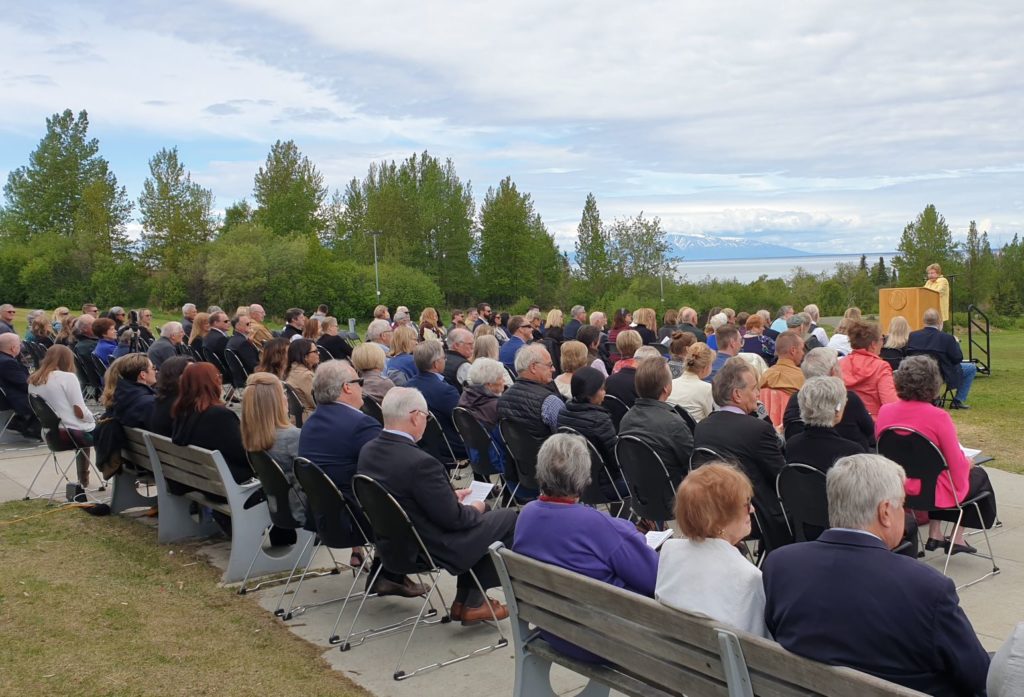
Slide show: Over 200 attend memorial for former Speaker Gail Phillips

2

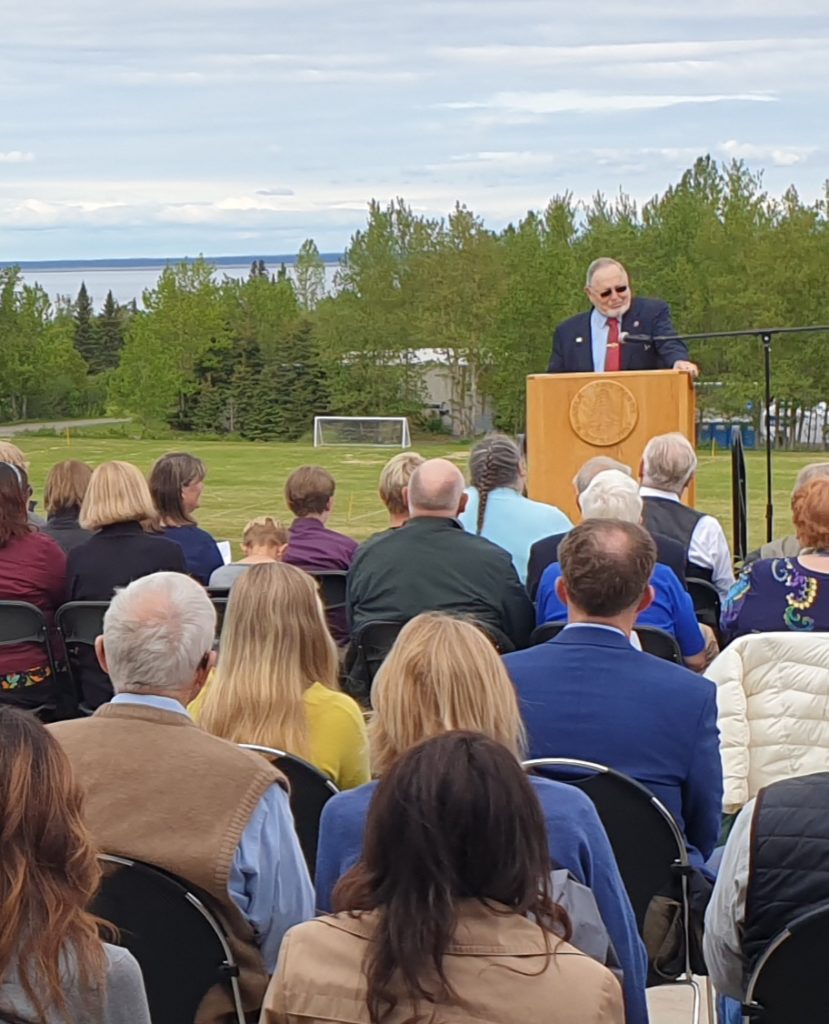
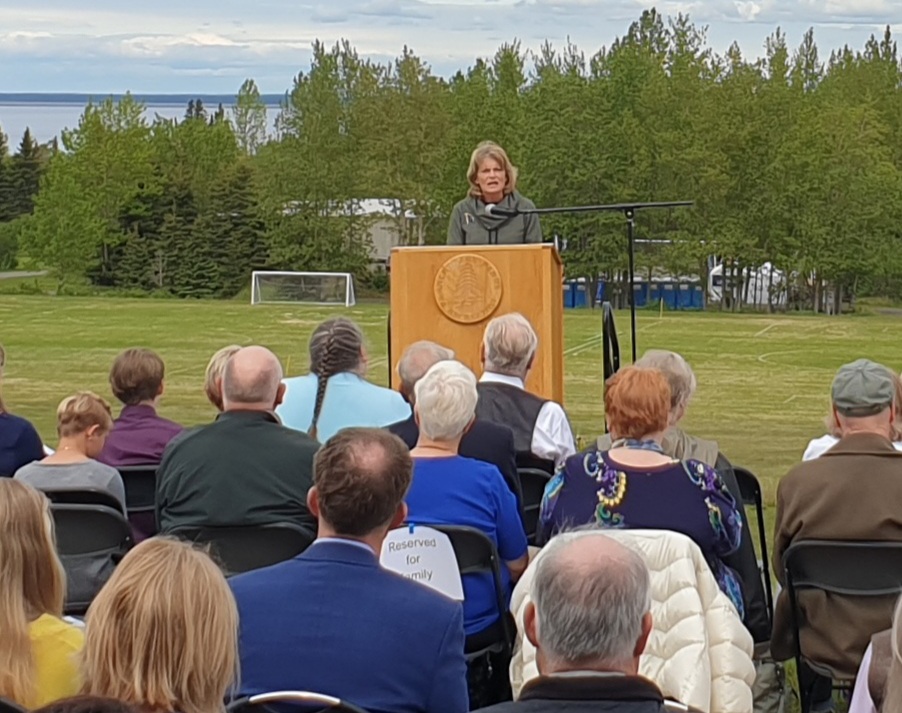
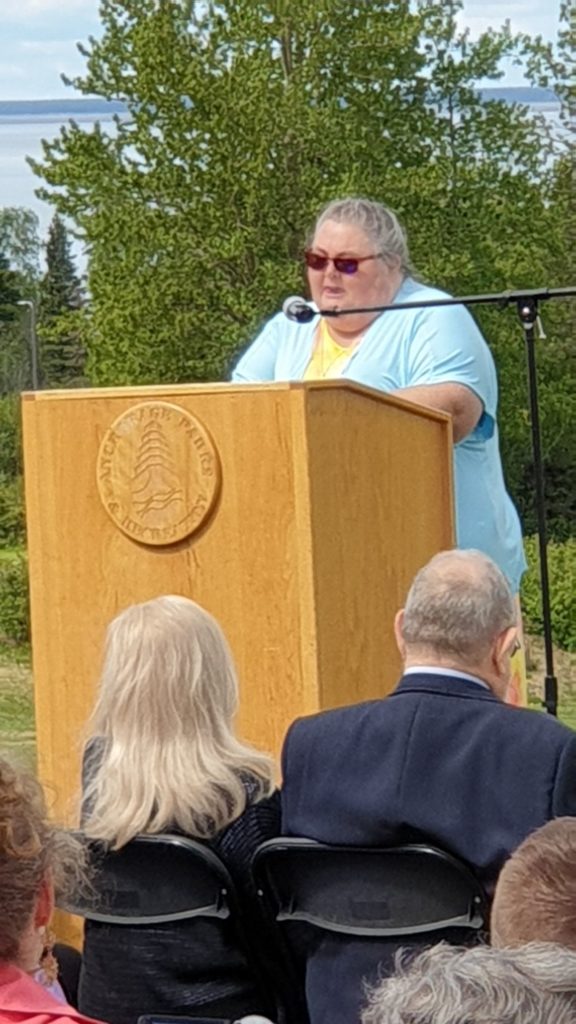
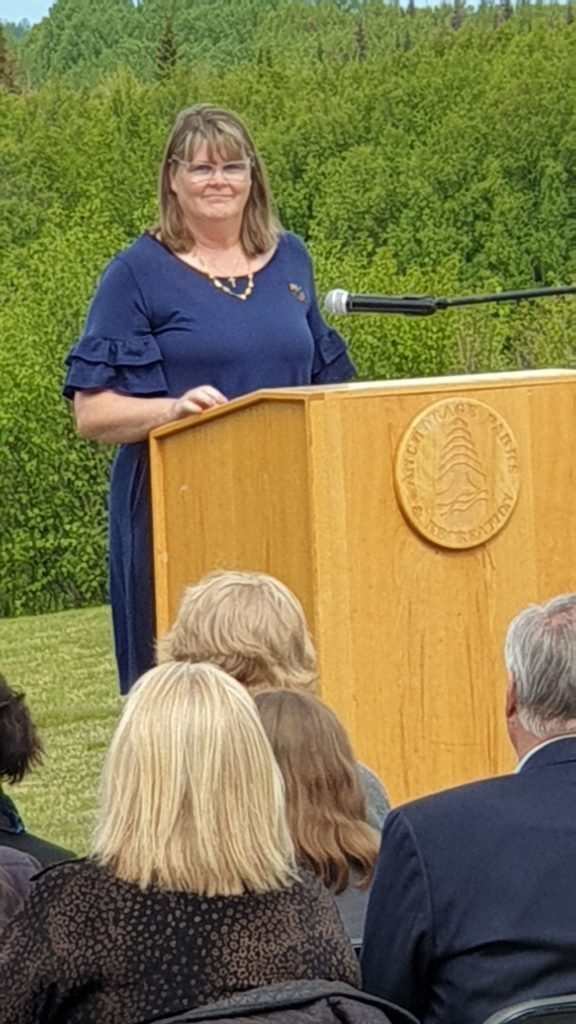
The political leaders of Alaska turned out en masse to remember former House Speaker Gail Phillips, who died in March.

Among those who attended were former Gov. Sean Parnell and former First Lady Sandy Parnell, U.S. Sen. Lisa Murkowski and Congressman Don Young. Lt. Gov. Kevin Meyer, Senate President Peter Micciche, and Anchorage Mayor-elect Dave Bronson and his wife Deb.

Alaska Republican Party National Committeewoman Cynthia Henry attended, and former Rep. Larry Baker was spotted, as was senatorial candidate Kelly Tshibaka. State Sen. Natasha Von Imhof and former State Sen. Ben Stevens were in the crowd, as was Nick and Dharna Begich.

Hobo Jim sang a ballad in Phillips’ memory outside of Kincaid Chalet under partly cloudy skies.

An open house continued after the memorial service until early evening. The family accepted donations to the newly created Gail Phillips leadership fund, a scholarship at University of Alaska Fairbanks. More about her life can be found at https://gailphillipsalaska.com.

Read: Passing Gail Phillips, former Alaska House Speaker

Born on May 15, 1944, to Lois and Wallace McIver in Juneau, Phillips was the oldest of seven girls and grew up in Council and Nome, Alaska. She spent her early summers in Council at the mining camp owned by her father and grandfather.

Phillips worked for Senate President Tim Kelly before she was sworn into the 25th Alaska State Legislature in January 1991. In 1993, Rep. Phillips became House Majority Leader before being elected Speaker of the House in 1995, a position she held for four years. She served on many boards and councils throughout her life, many with the University of Alaska, Alaska Aviation Museum and resource development causes. Phillips was an active member of the Homer United Methodist Church, and served on its Board.

Speaker Phillips won many awards and recognitions throughout her life. She is survived by her husband of 56 years, Walt; daughter, Robin Phillips; daughter, Kim Griffith; grandsons, Scott and Jace Griffith; her sisters, Barbie, Kay, Janny, Cheryl, Susan and Karen and their families; and many more grandnieces, grandnephews, cousins and friends.

Raffle: Trip to McNeil River to see the bears

The Alaska Department of Fish and Game and the Outdoor Heritage Foundation of Alaska have a raffle for anyone wishing to visit the McNeil River State Game Sanctuary this summer.

Viewing the world’s largest congregation of brown bears at McNeil River is a highly sought-after privilege. The 2021 season lottery has concluded, and all permits have been issued; however, to provide an additional opportunity and to raise funds to help support Fish and Game’s programs, two additional permits are being offered through a raffle conducted by OHFA.

One winner will be selected and entitled to assign the two permits to whomever they wish (certain limitations will apply). The permit holders will also be provided lodging in Homer, Alaska, and seaplane transportation to the sanctuary.

Further information and online ticket purchases are available at OHFA’s website at www.OHFAK.org. Individual raffle tickets cost $20, or 6 for $100, and 40 for $500.

Revenue generated from this raffle will help support wildlife conservation including projects in Alaska state sanctuaries and refuges, and education in outdoor traditions.

Denali Commission announcement in 3-2-1

Garrett Boyle, a legislative aide to Sen. Lisa Murkowski, and Gretchen Fauske, of the University of Alaska, are the two finalists for the federal co-chair of the Denali Commission, according to sources who say that the announcement will be made this week.

Former State Sen. John Torgerson serves as the acting federal co-chair; he was appointed after the resignation of Jason Hoke of Glennallen, who came under scrutiny after an employee filed a sexual harassment complaint against him.

Read: Hoke out at Denali Commission after complaints filed

The Secretary of Commerce appoints the co-chair after consultation with the federal delegation.

The Denali Commission came as a result of legislation championed by the late Sen. Ted Stevens in 1998 and has since been a catalyst for rural development across the state. It helps fund transportation facilities, clinics, fuel storage and assists communities being harmed by coastal erosion.

The appointment is political in nature.

Fauske is the associate director for the University of Alaska Center for Economic Development. She is responsible for leading the entrepreneurship, marketing, and outreach efforts of CED as well as providing strategic leadership for both CED and the UAA Business Enterprise Institute. Prior to joining CED, she worked in the State of Alaska Division of Economic Development, for U.S. Senator Lisa Murkowski, and in the private sector.

Boyle oversees the drafting of legislation and drives the policy initiatives for Murkowski. He also advocates for Murkowski’s legislative and policy agenda and is considered her lead subject expert on Medicare, Medicaid, FDA, Social Security, private insurance, the Affordable Care Act, and all other health related issues. He has helped her vet various judicial nominees, including two Supreme Court nominations.

.

Dunleavy reappoints Craig Richards to Permanent Fund Corp. board

Alaska Gov. Mike Dunleavy today announced the reappointment of former Attorney General Craig Richards to the Alaska Permanent Fund Corporation Board of Trustees for the term of July 1, 2021 to July 1, 2025. Richards served on the Board of Trustees from 2015 to 2016 and was reappointed in 2017.

“As a Trustee, Craig has a proven record of professional stewardship of the Alaska Permanent Fund. Following a year of record growth, I am fully confident in his continued efforts with the Board to wisely manage and protect the state’s most valuable asset,” Dunleavy said.

Craig Richards majored in finance at the University of Virginia, received his Masters in Business Administration from Duke University and Juris Doctorate from Washington & Lee University. After serving as law clerk for Judge Beistline, Richards worked in private practice with a focus on oil and gas. He served as Attorney General for the State of Alaska from 2014 to 2016 and has since reentered private practice in Anchorage.

The Alaska Permanent Fund was established in 1976 via a constitutional amendment approved by the voters, and today has a balance of $80,719,900,000. A State-owned corporation, its earnings help pay for state government and a portion of the earnings are returned to the people of Alaska as their share of oil royalties, also known as Permanent Fund dividends.

Alaska deserves a senator who will unleash fullness of our energy potential

By KELLY TSHIBAKA

In many ways, Alaska’s lands are sacred; they have been blessed with rich resource endowment, which have always been the key to our subsistence and economy.

The problem is that environmental extremists, now given renewed power by President Joe Biden’s administration, have prevented us from realizing our true potential of rising prosperity, self-sufficiency, and economic independence, balanced with environmental conservation. 

Alaskans deserve a U.S. senator who will fight for an Alaska-centric agenda that will unleash our enormous energy potential to create jobs and lower our fuel costs, not one who bows down to extremists and enables a radical D.C.-based agenda that wants to turn our state into a national park for the rest of the country. My energy platform will promote environmentally responsible growth and job creation in the energy industries which drive the Alaska economy.

Permitting processes for oil and gas leases on public lands are onerous and time consuming, taking years to complete. In the case of access to the Arctic National Wildlife Refuge (ANWR), federal regulatory restrictions were in place for 60 years before President Trump cleared the way for energy production. Biden then suspended oil and gas leases in ANWR on his first day in office.

When bureaucrats don’t support something, they love to drag out the process. “Go slow” means “no go.” It costs our companies a lot of time and money, which often makes projects cost prohibitive, preventing Alaska workers from earning money to support their families. When I’m your senator, I will call for permitting processes to be completed within a defined time frame.

As your senator, I also will advocate for Alaska and First Alaskans—not the federal government—to own a majority of the land in Alaska. Alaskans should have the right to access and develop resources on the federal land within our state. President Trump was in the process of transferring 28 million acres of land to Alaska before Biden took office and promptly stopped the plan.

To make matters worse, Biden’s Interior Secretary Deb Haaland has started the process of seizing 44 million more acres, trying to take more land from Alaskans and federalizing nearly 73% of the state. 

We are owed land by the federal government, it’s as simple as that. Alaskans know best how to manage and responsibly develop our land and resources. No D.C. insider cares about the Alaskan environment more than the Alaskans who live and work here. We also develop resources in a more environmentally responsible way than the other countries from which the U.S. imports when the Biden administration prohibits Alaskan energy production. As your next senator, I will fight for timely completion of environmental and other regulatory reviews required for us to access and develop federal land. I also will demand the timely and orderly conveyance to Alaska of its public lands for potential development of natural resources.

Additionally, I will oppose carbon taxes on energy industries because it will increase costs on hard-working Alaskans who struggle to pay their bills. Carbon capture and sequestration technologies are much preferable to a carbon tax, because the private sector can develop and employ them to better deal with pollution, rather than simply making energy more expensive for Alaskans.

Our incumbent Sen. Lisa Murkowski has expressed openness to a carbon tax, as recently as October 2020, and it’s not the only area where she is failing us.

President Trump’s policies were demonstrably beneficial to Alaska, but Murkowski openly opposed him, both in his first election in 2016 and in his re-election campaign in 2020. This open antagonism of a president who was good for Alaska is not the kind of leadership our residents want. Nor does it help Alaska for Murkowski to openly support the Biden administration that is anti-mining, anti-oil and gas, and anti-Alaska.

Worse, Murkowski was the deciding vote in the Senate committee which advanced Haaland’s nomination for Interior Secretary. This means Murkowski is personally and singularly responsible for the imposition of the radical environmental agenda relentlessly targeting Alaska and opposing fossil fuel development in America. 

A senator’s real value is in the big moments, the critical votes, and Haaland’s nomination was one of those crucial times. Murkowski’s approval of Haaland will cost Alaska billions of dollars. It may make her popular with the D.C. cocktail party crowd, but it seriously hurts us back here at home. 

Murkowski also has failed to gain Alaska’s entry into an offshore revenue sharing agreement. Under the Gulf of Mexico Energy Security Act of 2006, Alabama, Louisiana, Mississippi, and Texas share hundreds of millions in revenues annually, which also support environmental conservation programs. Alaska has never been included in such an arrangement, which would have provided much-needed incentive for offshore exploration and production in Alaska. An energy revenue sharing pact for Alaska, similar to the one enjoyed by Gulf of Mexico states, would have grown the state’s economy, created jobs, and protected the environment.
 
All Alaskans ever want is fairness and the opportunity to access what is rightfully ours. The Gulf compact has been in place for 15 years and Lisa Murkowski has been in the Senate that entire time. Why was Alaska never brought to the table?

Alaska was once a place that afforded people abundant opportunity, but those days seem distant because of federal government overreach and overregulation, something our current senator has failed to adequately address. I have a fire in my heart to rebuild Alaska, and I believe that embracing the blessings of our bountiful natural resources is the key to that future.

Kelly Tshibaka is a Republican candidate for the United States Senate in Alaska.