Thursday, June 4, 2026
Home Blog Page 1105

Report: Suicides on Alaska military bases spiking in 2021

11

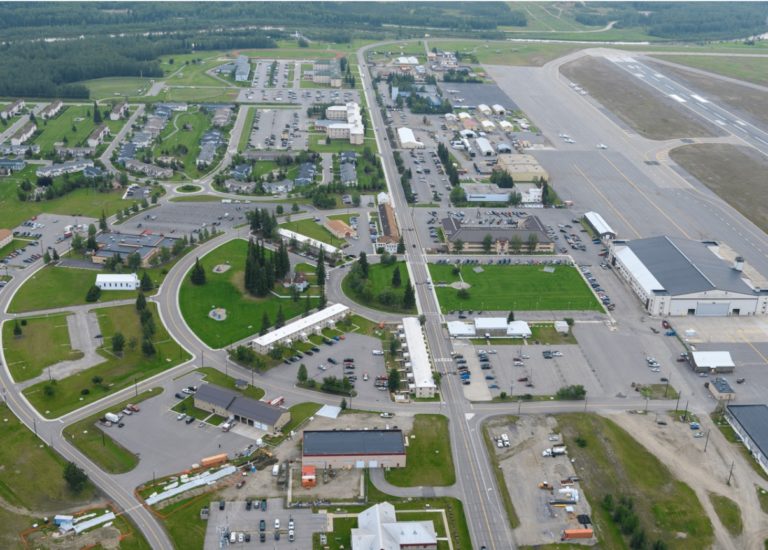
 Six soldiers stationed in Alaska have died by suicide between January and May of 2021, a surprising statistic, considering the U.S. Army spent more than $200 million in Alaska to address a mental health crisis that it identified in 2019, according to USA TODAY.

“The 2021 suicide toll among the roughly 11,500 soldiers stationed there already has nearly matched last year when seven soldiers died by suicide while stationed with U.S. Army Alaska, whose principal posts are Fort Wainwright in Fairbanks and Joint Base Elmendorf-Richardson in Anchorage,” the newspaper wrote.

In a survey of 4,000 soldiers, 10.8 percent had had suicidal ideas, according to the newspaper. That’s four times the general U.S. rate of suicide.

The survey also found that soldiers at Fort Wainwright report having trouble sleeping, worry about being able to buy high-quality food to eat, worried about finances, and a third of the soldiers said their leaders tolerate hazardous drinking while the soldiers are off duty.

 Alaska had the second highest suicide rate in the nation in 2019. But the Army was seeing problems with a cluster of slides at Fort Wainwright from 2014 and 2019.

Read more at USA TODAY.

National Democrats don’t want to hurt your feelings, so they’ll opt you out of Fathers Day

As if Fathers Day wasn’t already kind of an afterthought with unimaginative gifts like ties and drill bits, the communication from the Democratic National Committee says it all. Fatherhood, as a concept, is disturbing to people.

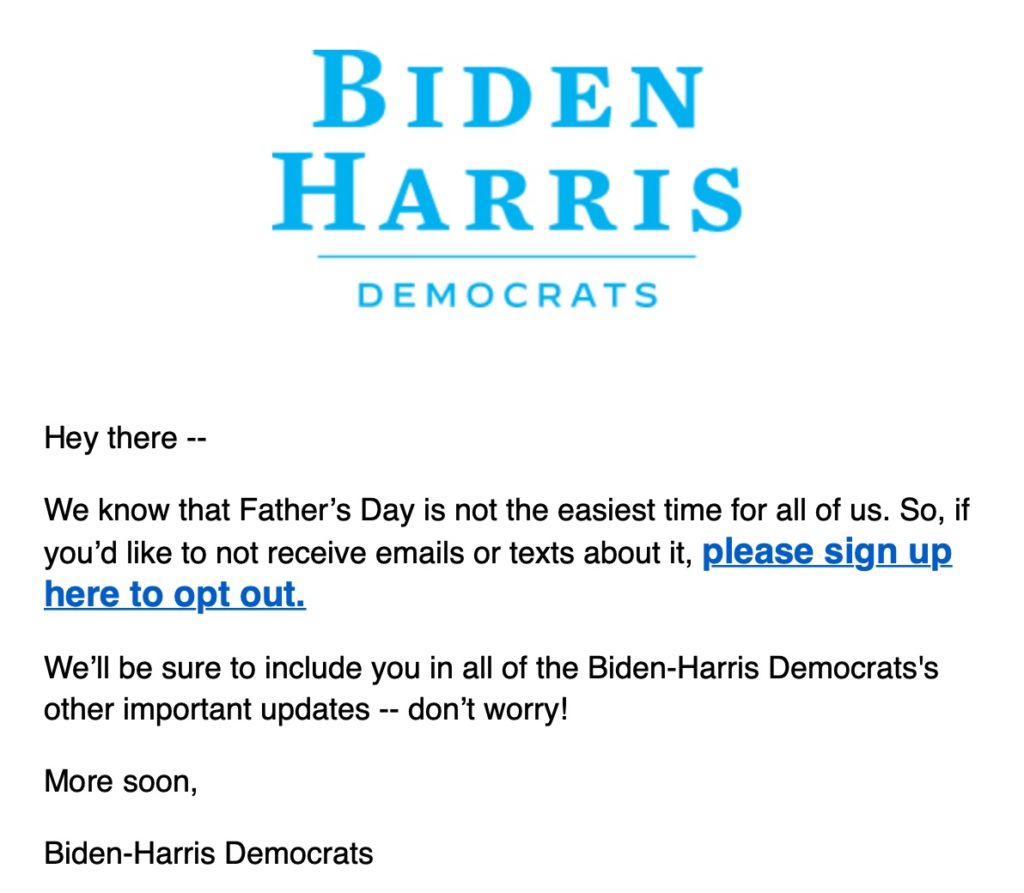
Worried that some Democrats are triggered by the word “father,” the DNC has offered to its list of millions of email recipients the chance to opt-out of receiving any official Fathers Day greetings from the Democratic Party.

“We know that Father’s Day is not the easiest time for all of us. So, if you’d like to not receive emails or texts about it, please sign up here to opt out. We’ll be sure to include you in all of the Biden-Harris Democrats’s other important updates — don’t worry! More soon,”

The message came from the Democratic National Committee. Fathers Day is Sunday, June 19.

Fathers, as in persons with X and Y chromosomes, aren’t the only ones targeted by Democrats for removal. During a congressional hearing Wednesday, President Joe Biden’s Deputy Director of the Office of Management and Budget Shalanda Young doubled down on the definition of mothers as “birthing people,” as stated in the 2021 Biden budget.

The Biden Administration has removed motherhood for a more gender-free phrase. “Birthing people” has never before appeared in a presidential budget proposal.

“There are certain people who do not have gender identities that apply to female and male, so we think our language needs to be more inclusive on how we deal with complex issues,” Director Young said. Issues such as X chromosomes.

Biden’s budget contains over $200 million to help reduce the high rate of maternal mortality and “race-based disparities in outcomes among birthing people.”

Alexander Dolitsky: Multiculturalism in America, Old Believers in Alaska

Edited by ALEXANDER DOLITSKY

The charges that white privilege, systemic racism, and critical race theories are tearing our country apart do not match the facts or the true cultural landscape in our country. 

Many Americans blame multiculturalism as a main cause and source of these three dysfunctional socio-political diversions, introduced by progressive activists/leftists.

My colleague and friend, the late Emeritus Professor of Anthropology Wallace M. Olson (1932–2015), elegantly addressed the issues of multiculturalism in his foreword in my book, “Old Russia in Modern America: Living Traditions of the Russian Old Believers.” Below is a summary of Olson’s essay. (I am a copyright holder of Olson’s foreword, with the rights to use it for educational purposes.)


As social scientists, anthropologists attempt to formulate theories that help us understand and compare societies and their cultures. These theories must be tested and evaluated against the data through field investigation or historical research. This testing of theories is critical in the areas of culture change and applied anthropology, where government agencies try to assist those undergoing socio-cultural change resulting from external pressure by dominant cultures. Efforts may fail and large amounts of resources can be wasted on projects based on a flawed or otherwise inaccurate theory. 

Some early theories in anthropology and philosophy, such as unilineal evolution, have proven to be inadequate and even misleading. We now know that societies do not progress through the same stages of cultural change. Structural-functional theories emphasize the integration of culture by showing how technology and economics, social and political systems, and beliefs and values influence each other. According to this way of looking at societies, as one part of the system changes, such as the economic condition, the social organization and religion will eventually adjust to the new situation. 

Recent research shows that societies respond to new situations, experiences, or challenges in various ways. For example, in the United States we say that our goal is to have all citizens assimilate or blend into a cohesive socio-economic union, commonly known as the “melting pot” society. A ‘melting pot’ is a country, place or region in which immigrants of various nationalities and races are assimilated with a dominant culture [Dolitsky]. 

But, in fact, many ethnic and religious groups have not ‘melted’ into the mainstream. In reality, historically, prejudice and discrimination against ethnic and religious minorities have been widespread in the United States. The fact is that many people have been denied access to the benefits of life in America. Throughout the history of this country, we have demanded that our indigenous peoples—American Indians and Alaska Natives—give up their land, their traditional hunting, fishing, farming, subsistence activities, their family life, their beliefs and rites for a ‘more civilized way.’

Missionaries and government agencies have worked hard to eradicate many of the ancient traditions and cultures in the Arctic, a vast region shared by the circumpolar countries. But what has this policy done for these people besides leave them much worse off than before? In response, some groups have preferred to keep themselves separate from the dominant society; and some groups feel that they benefit much more from their separatism than by abandoning their traditional ways.

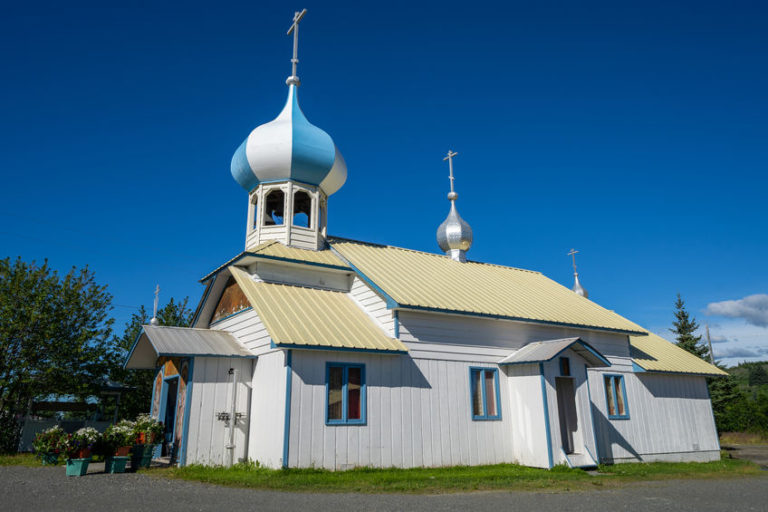
The case of the Russian Orthodox Old Believers in Alaska highlights the importance that people place on their beliefs, worship practices, and traditions. Old Believers find strength and security in their belief that they are following God’s plan. Outsiders may look at them as unusual or ‘backward’ and try to force them into a new lifestyle that conforms with the dominant society. In response, Old Believers have established what is known in modern anthropological theory as ‘boundary maintaining systems.’ That is, they have found ways to keep themselves separate and distinct from the dominant society. People build social boundaries by maintaining and preserving their own native language, appearance, foods and, most of all, their own traditional religious beliefs and practices. 

In the past, Russian Old Believers took the only option left to them if they wished to keep their faith and practices—they moved to new and remote locations. They fled their homeland to avoid persecution by hostile neighbors and oppressive governments. Some have remained in the former Soviet Union’s republics while others moved to the United States—Oregon and Alaska. The latter are a vivid example of people who are willing to give up nearly everything for their religious principles and cultural traditions. In Alaska, some feel that they have finally found a home.

The drive of dominant cultures to transform others by attacking and insulting their traditional cultures, with the dominant cultures values and beliefs, has resulted in social and psychological disaster in many regions of the world, including our own state—Alaska. The process has been based on the false assumption that the dominant and technologically-advanced culture is superior to all others. What we have to face and recognize in our public policy and planning is that we live in a pluralistic society in which we must respect the rights and cultural traditions of all people, even if they are distinctly different from our own.

There is beauty in diversity. On our national coinage is the inscription E pluribus Unum—from many to one. In theory and practice, while seeking unity, we should not fail to respect the rights of those who prefer to follow their traditional customs, religious beliefs and practices.”


In his new book “Facing Reality: Two Truths about Race in America,” Charles Murray, a prominent American sociologist, stated: 

“America’s most precious ideal is what used to be known as the American Creed: People are not to be judged by where they came from, what social class they come from, or by race, color, or creed. They must be judged as individuals. The prevailing Progressive ideology repudiates that ideal, demanding instead that the state should judge people by their race, social origins, religion, sex, and sexual orientation.

“We on the center left and center right who are the American Creed’s natural defenders have painted ourselves into a corner. We have been unwilling to say openly that different groups have significant group differences. Since we have not been willing to say that, we have been left defenseless against the claims that racism is to blame. What else could it be? We have been afraid to answer. We must. Facing Reality is a step in that direction.”

Edited and compiled by Alexander B. Dolitsky.

As Tongass trees get locked up by Biden, will lumber prices to go even higher?

20

The Tongass exception to the national forest Roadless Rule will be reversed by the Biden Administration, meaning that virtually no commercially viable logging can take place in Southeast Alaska on federal land.

During a time when lumber in the United States is setting record prices, there won’t be enough logs to support a mill in Southeast. What logs that will be cut will have to be shipped to China whole, and marketed to the world, rather than America.

The Tongass National Forest has a sustained yield of about 450-500 million board feet, and coincidentally about that much dies every year in the forest, which is three times the size of the state of New Hampshire.

Alaska Gov. Mike Dunleavy called the decision by the Biden Administration to repeal the Trump Administration’s lifting of the roadless rule a bad idea.

“I am yet again disappointed in the Biden Administration’s latest suppression of Alaska’s economic opportunity,” said Dunleavy.

Alaska’s petition for rulemaking led to the 2020 Tongass Exemption Rule by the US Department of Agriculture, but with the new Administration and Biden’s promise to radical environmentalists, little activity resulted since the exemption went into effect in October.

Meanwhile, lumber and plywood prices are at an all-time high, and across the nation the prices for building new homes are also going through the roof. It’s a matter of supply and demand, with new housing being the largest usage for wood products, followed by home repair and remodels of existing housing.

An additional choke point on timber prices is the Covid impact on lumber mills, which came to a standstill for much of last year, as U.S. pandemic policy caused a ripple effect throughout many industries. While production at pharmaceutical companies kept pace, lumber mills shut down, truckers are in high demand, while workers have generally been paid premiums by the government to not work at all.

Norton Sound Health Corp mandates Covid vaccines, and it appears is losing dozens of employees over the requirement

62

Norton Sound Health Corporation has mandated that all of its workers, board members, and volunteers must be vaccinated for Covid-19 by Monday, June 14, or they will be placed on unpaid leave. If they still don’t comply, they will be fired.

In a letter to employees in May, CEO Angie Gorn outlined the new rules, which are to prevent the spread of the virus to patients and coworkers in the NSHC region, which includes Nome.

The policy applies to all board members, employees, contractors, students, and volunteers, Gorn said.

Also, any booster vaccines that the CDC recommends will be mandatory and there are no religious exemptions, only medical exemptions that must be approved by the corporation’s medical director.

“If you have not yet taken the Covid-19 vaccine, you will have until Monday, June 14, 2021, to show proof of your first dose. Any employee who remains unvaccinated by Monday, June 14, 2021, will be placed on unpaid admin leave for a period of 30 days. During this wait period, NSHC will not pay for any housing, bonuses, reimbursements, or incidentals on behalf of the employee. Failure to comply with the mandatory COVID-19 vaccine policy after 30 days, will result in termination of employment (unless a medical exemption is granted),” Gorn wrote.

Must Read Alaska has learned that there are several people working for the corporation who have chosen to leave, due to the new policy. By several, our sources say, there may be over 20 employees leaving or forcing the corporation to fire them.

But those who would be hired to replace them must be vaccinated, according to Gorn’s letter.

“Any ‘new hire’ offers of employment will be contingent on the applicant’s current COVID-19 vaccination status or willingness to receive the COVID-19 vaccine two days after new hire orientation.  Any new or existing contractor, volunteer, and/or student must also comply with this policy,” she wrote.

Getting qualified health care workers to move to Nome is not an easy task. Health care workers are in high demand all over the country, so NSHC will be competing for those specialized workers — nurses, technicians, and therapists, for example, and may not have the ability to compete due to the remote nature of the communities the corporation serves.

On the NSHC vacancy list, for example, there are eight openings for lab workers, five nursing positions open, and 11 vacancies in behavioral health, just a few on the list that the company seeks to fill.

Adding another 20-25 vacancies to that list of more than 50 specialists needed could imperil the health of Alaskans from Shishmaref to Stebbins, and from Gambell to Diomede.

Jim Crawford: Concerning the PFD, just say no to special interests this year and next

17

By JIM CRAWFORD

Eddie Burke and I co-chaired the statewide “Just say No” campaign in 1999 to save the Alaska Permanent Fund. The people understood that earnings were vital to the success of their 1976 Amendment to protect the Alaska Permanent Fund. 

Simply, the earnings from the fund would make dividends sustainable. They also understood that the Permanent Fund was established for all Alaskans, each and every one of us. All the talk we heard then and now was and is only meant to let the special interests spend the Fund.  We said NO then and we must reinforce that NO again this year.

We must reestablish Permanent Fund dividends at 50% of net income after inflation proofing. We then are assured of two things:  1. The dividend is sustainable and 2. Fund managers will maximize the earnings and growth of the Fund.  This is the capitalist philosophy that built America.

The sustainable approach to the PFD limits spending from the Fund to 50% of earnings less inflation. The experiment called the Percent of Market Value failed and resulted at year end FY 2020 in reducing the Fund balance by nearly $1 billion after the POMV draw was made. The balance of the Fund went down by $998 million under POMV while our dividends crashed after the Legislators got done carving up the POMV draw.  

Eighty percent for government and 20 percent for the Alaska owners of the fund is not fair. The people’s dividend was their last priority.  

In the last election, voters removed nine senior incumbents in the Legislature who opposed the people’s plan. Have we elected a majority that supports our majority? The people’s plan was supported by 83% of the voters in 1999.  I’ll bet that majority hasn’t gone down 5 points, even with the constant pounding of the news media and the big spenders.

Past Legislatures have proven they cannot enact a long-term fiscal plan. The people, therefore, must do it for them through constitutional amendments just as Gov. Mike Dunleavy has urged. If we can’t get the votes in the Legislature to pass constitutional protection, let’s have a constitutional convention and approve them that way.  We must bring back accountability in Alaska’s budgetary battles.

If the Legislature again blocks protection of our dividend and the Fund itself, there is a provision in the state constitution that allows the public’s voice to be both heard and obeyed. The people, not the Legislature or the courts, have the power to overrule and enforce any provision that is passed by a simple majority vote in a properly called Constitutional Convention. You could call it the people’s final trump card.

Let’s prepare for a constitutional convention. The last time, voters were asked if they wanted to convene a constitutional convention was in 2012. This plebiscite is required every 10 years.  The 10 years is up next year, in 2022. The plebiscite question must be on the ballot every 10 years, according to Article XIII our Alaska Constitution.

Section 3, Article XIII of the Alaska Constitution says, “Constitutional conventions shall have plenary power to amend or revise the constitution, subject only to ratification by the people. No call for a constitutional convention shall limit these powers of the convention.”

This is the ultimate take back of government by the people.  If voters want to protect their dividends and the corpus of the Fund, we can do so.  If a majority votes to hold a Constitutional Convention, we will have one.  That convention can solve a number of Alaska’s problems. Together, we can build a grand coalition of people who understand that in Alaska, the People control government, not the other way around. 

Those in the Legislature who align with the people’s interest will enjoy huge support. Those who are satisfied with the short shrift given to dividend supporters to sustain “Jabba the Hutt” government will be accountable to the People.

Here’s the deal:

1. Set the dividend at 50% of Fund earnings less inflation proofing.

2. Cap draws and never exceed the earnings of the Fund less inflation.

3.  Constitutionally protect the whole Fund.

4.  Cancel the POMV and adopt a strict actual earnings discipline.

5.  Provide an effective spending cap that limits the expansion of Alaskan government.

6.  Require a majority vote of Alaskans to raise taxes or reinstate the Alaska income tax.

If you read the financial statements of the state and our agencies, you quickly understand that we have billions tucked away and yet spenders demand more. I still don’t know what our state and local governments did to spend an additional, federal covid gift of $6.5 billion in the last fiscal year.

The only ones getting stiffed are those Alaskans who get their earnings in the form of dividends.  Alaskans are smart.  We decided and voted decades ago to save and invest our earnings in resource development through the Alaska Permanent Fund.  Our savings are growing. Thanks to all who took part in making the fiscal plan to turn barrels of oil into barrels of renewable cash.  It worked.

Let us convince our friends in the Legislature to make the best deal for Alaskans.  And thank them for investing our savings.  Our little fund now has $81 billion and earned $16 billion so far this year.  

Jim Crawford is a third-generation Alaskan entrepreneur who resides in Anchorage with his bride of 37 years, Terri.  Capital Alaska LLC is a capital funder which studies and reports on and may sponsor projects of sustained economic growth for the Alaskan economy.   Mr. Crawford known as the Permanent Fund Defender was a member of the Investment Advisory Committee, appointed by Governor Hammond to plan and execute the Alaska Permanent Fund Corporation.

Don Young releases infrastructure framework he hopes gets bipartisan support

12

Alaska Congressman Don Young released an infrastructure framework on Thursday that he hopes will earn bipartisan support and bolster America’s infrastructure for years to come.

“This week, talks between the White House and my Senate colleagues have broken down. This impasse appears not only to be over the definition and price tag of an infrastructure package, but also over how to pay for it. I understand that this is a sensitive topic, but I am prepared to have this conversation. The Congress should not move forward via the budget reconciliation process, and it is my hope that President Biden will not give up on negotiations,” Young said.

Young’s plan would spend $1.25 trillion on these components:

Surface Transportation Reauthorization Legislation (Roads, Bridges, Safety, Transit, and Rail) – $500 billion

  • The current authorization expires at the end of this fiscal year. Congress should negotiate and pass a bipartisan 5-year surface transportation reauthorization through regular order that provides long term solvency for the Highway Trust Fund.
  • The bill should include a onetime increase to the federal motor fuel excise tax for gasoline and diesel to account for post-1993 inflation, and index it to the CPI thereafter.
    • Part of the controversy over how much to invest and where to invest in our nation’s transportation system will be alleviated by putting the Highway Trust Fund on a trajectory for long term solvency.
    • According to the Congressional Budget Office, beginning in FY 2008, and in each subsequent fiscal year to date, Highway Trust Fund outlays have exceeded revenues received. As a result, Congress has transferred approximately $157 billion to the fund from the general fund of the Treasury and other sources.
  • The bill should address the issue of electric vehicles by requiring that the Department of Transportation study and implement the phasing in of a user fee for passenger and commercial electric vehicles over a period of five years. 
  • Additionally, the bill should require that DOT study and implement a plan for how gas, diesel, and alternative fuel vehicles should be transitioned away from the fuel excise tax to a user fee over a period of no more than 10 years. 
  • The bill should also include project financing along with delivery and permitting reforms to ensure that additional federal investments are not mired in bureaucracy and litigation.
  • Addressing the solvency of the Highway Trust Fund will give users and states long-term certainty to finance projects and plan investments.

Supplemental Appropriations for Infrastructure Investments (Airports, Ports & Waterways, Water Infrastructure, Electrical Generation & Grid Modernization, Broadband, and  Congressionally Directed Project Spending) – $750 billion

  • Both the Republican Roadmap and the American Jobs Plan have not met a middle ground on the amount of new federal spending and how to pay for it. Young says his framework seeks to find this middle ground.
  • The bill should include an increase in the corporate tax rate, excluding small and family owned businesses, to offset some of the cost of this additional spending. The rate increase would be limited to no more than a 4% increase to a rate of 25%.
    • Small and family owned businesses will be exempted from this increase.
    • Congress should recognize that there is wisdom in the “user pays user benefits” principle. Corporations benefit from and are users of America’s infrastructure. The benefits of a modernized national transportation system over the long term will outweigh the costs of a rate increase.
  • Congress should allocate a portion of the $750 billion for congressionally directed spending on projects in their states and home districts.
    • Members of Congress are closest to their constituencies and understand their needs better than the federal government agencies that currently award federal infrastructure monies through existing formulas or competitive grant programs.
    • The return of Community Project Funding in the FY22 Appropriations Process and Member Designated Projects for the Surface Transportation Reauthorization bill have drawn significant interest from members and when paired with strong disclosure and ethics requirements these are a valuable and way to demonstrate the value of federal investment in member’s districts.  

Meanwhile, on the Senate side, a group of 10 senators will begin negotiating with President Joe Biden, who wants infrastructure money to pay for day care and elder care, which have never before been considered infrastructure.

Read Murkowski and 9 senators take infrastructure plan to White House

Murkowski and bipartisan Senate group say $1.2 trillion infrastructure plan would work

13

After talks between the White House and Republicans broke down on Monday, a bipartisan group of senators has agreed to offer President Joe Biden a $1.2 trillion, eight-year infrastructure package. It’s their first offer in what is expected to be a negotiated deal that will satisfy both sides of the aisle.

The group includes five Republicans and five Democrats: Republican Alaska U.S. Sen. Lisa Murkowski, Mitt Romney of Utah, Bill Cassidy of Louisiana, Rob Portman of Ohio, Susan Collins of Maine and Democrats Joe Manchin of West Virginia, Kyrsten Sinema of Arizona, Jon Tester of Montana, Jeanne Shaheen of New Hampshire, and Mark Warner of Virginia.

Their offer is far less than the $1.7 trillion plan from the Biden White House, which fell apart when Sen. Shelley Capito of West Virginia, who led the Republicans, got the call from Biden that talks were done.

Biden has sought to redefine “infrastructure” as including social programs such as day care and elder care, but the 10 senators who he will negotiate with have limited their offer to just regular infrastructure programs like roads and bridges, sources said.

“We are discussing our approach with our respective colleagues, and the White House, and remain optimistic that this can lay the groundwork to garner broad support from both parties and meet America’s infrastructure needs,” the 10 senators said in a joint statement on Thursday.

Win Gruening: Cruise ship tourism, moving forward or looking back?

By WIN GRUENING

The unsuccessful effort to gather sufficient signatures for three proposed initiatives limiting cruise visitors to Juneau was a welcome relief to many.  

Cruise Control, the group seeking these changes to the Juneau City Charter, claimed they gathered a “substantial number of signatures” but declined to reveal how many.  The group blamed their failure on the pandemic, the weather, and what they termed “an intense suppression campaign” by Protect Juneau’s Future, a group supported by a wide range of individuals and organizations opposing the measures, including local businesses, a number of Juneau Assembly members, Native corporations, unions, and civic leaders. 

The excuses offered overlook the initiatives’ harmful economic consequences that weighed heavily on voters’ minds and surely influenced their decision not to sign the petitions.

Most Juneau residents understand that a healthy economy requires trade-offs, and solutions won’t be found by going backwards as it appears Cruise Control prefers to do.

Now Cruise Control wants the Assembly “do the right thing” by adopting ordinances restricting hours for cruise ships and not allowing ships on Saturdays and in evenings, the very same ideas that were summarily rejected by the community.  Cruise Control also continues to refuse to acknowledge the work done by the Assembly-appointed Visitor Industry Task Force or by the Tourism Best Management Practices program.

Indeed, the Visitor Industry Task Force report recommendations, including whether a fifth cruise ship dock should be built in Juneau, would address concerns expressed by Cruise Control.  Several recommendations, in particular, are worth noting.  

It may seem counterintuitive, but the Norwegian Cruise Line dock proposal, endorsed with a variety of caveats, will help reduce congestion downtown.  If properly permitted with a Memorandum of Understanding, a fifth dock would divert passengers from the downtown core and reduce bus traffic through the center of town.

The new dock will accommodate a single cruise vessel on one side of the pier with the Coast Guard and NOAA utilizing the other side.  The dock will be built perpendicular to shore so as not to obstruct the view plane and would be equipped with electric shore power.  As envisioned, it will be a world class venue, incorporating the long-planned Alaska Ocean Center, a connecting seawalk, and local retail and cultural activities.  Below grade parking for buses will provide for public green space and waterfront access.

As important,  associated recommendations signal that “hot berthing” of large cruise vessels would no longer be allowed and capacity in Juneau’s harbor will be limited to 5 large cruise ships per day – with the requirement that an additional ship at anchor be limited to a small ship – the currently proposed definition of which are those carrying fewer than 500 passengers. 

Effectively, this means, even with an additional dock, there would be no net increase in large cruise ship capacity.

Other recommendations, including prohibition of cruise ships docking in Auke Bay’s Statter Harbor and the potential permitting of tourism activities to avoid over-crowded venues, will serve to moderate growth during peak periods.

All the recommendations in the Visitor Industry Task Force report deserve consideration and the Assembly should waste no time evaluating and acting on them.  Cruise ship itineraries for 2023 are being finalized now so 2024 may be the earliest schedule that can realistically be influenced.  Even before deciding on a detailed plan to address cruise ship capacity, the Juneau Assembly can, at a minimum, pass broad resolutions that state their intentions, so businesses and the cruise industry have time to adjust.

While action on these recommendations is important, the public should recognize that, ultimately, long term solutions include creating additional experiences and activities for visitors to enjoy.  This will require the Assembly to continue improving and expanding infrastructure to allow Juneau’s entrepreneurial spirit to flourish elsewhere in the borough.  

As an example, enhancing summer activities at Eaglecrest, building the second channel crossing and completing the West Douglas Road would all serve as catalysts for new recreational and cultural opportunities for the benefit of both residents and visitors.

The best solutions will always be attained by moving forward, in a positive, not punitive way  That’s how Juneau will not only remain a great place to visit, but more importantly, a great place to live.

After retiring as the senior vice president in charge of business banking for Key Bank in Alaska, Win Gruening began writing op-eds for local and statewide media. He was born and raised in Juneau and graduated from the U.S. Air Force Academy in 1970. He is involved in various local and statewide organizations and currently serves on the board of the Alaska Policy Forum.