Thursday, June 4, 2026
Home Blog Page 1090

ADN lets attorney for Recall Dunleavy Committee bash governor in op-ed, without acknowledging writer’s role in recall

An opinion piece authored by one of the most rabid opponents of Gov. Mike Dunleavy appeared in the Anchorage Daily News, with no mention at all by the newspaper that the author is one of the founders and has served as a lead attorney for the Recall Dunleavy Committee.

Scott Kendall, who was chief of staff for the failed administration of former Gov. Bill Walker, wrote in his opinion piece this week that the governor’s proposal to allow voters to vote on a constitutional amendment to lock in a formula for the Permanent Fund dividend was a bad idea. “Half-baked,” the headline read, with a “deficit of honesty.”

The ADN was snagged by its own deficit of honesty: Kendall, spanked by the voters who couldn’t wait to get rid of Walker & Co. in 2018, helped form up the Recall Dunleavy Committee in early 2019, has defended in court the recall charges that he himself wrote, and is still the man behind the curtain of the now-failing movement to off the governor prematurely.

But the newspaper described him thus: “Scott Kendall served as chief of staff under Gov. Bill Walker. He is now an attorney in private practice.

No mention that he is Mr. Recall, who also served as Sen. Lisa Murkowski’s campaign manager, or that he was the author of Ballot Measure 2.

The real message in his op-ed was hidden in plain sight at the end: Kendall wrote that it’s time to get a new governor in 2022. That is all-but an admission that his recall efforts have failed. And the ADN is allowing Kendall to distance himself from the failure.

Alexander Dolitsky: Religious freedom is guarded by ethnic minorities in America

By ALEXANDER DOLITSKY

Ethnic minorities, religious refugees, and other groups segregated by a dominant society have developed and implemented strategies and tactics to protect their national identity, religious practices, ancient traditions, and community cohesiveness.

In most cases, the tactics and strategies of these unique orthodox groups, created to secure cultural continuity and “living memory” among their members, have historic roots and have resulted from rational conservative choices of their members, boundary maintenance of their communities, and migration.

Russian Old Believers in America have developed ways of dealing with people of superior wealth, power, and prestige, whether these people are officials, wealthy landlords, merchants, or simply educated people who know the world outside of the Old Believer universe and are able to operate effectively in it.

Some progressive (i.e., liberal-minded or less conservative) Old Believers seek ties with such people in order to gain increased economic security, to have political protection, and to have an influential person on whom they can rely for guidance in dealing with people and institutions in the wider society. 

Russian Old Believers in Alaska are not quite politically and economically self-sufficient. To some degree, they depend on a wide network of people and institutions with whom they interact and from whom they purchase the goods and services that they themselves do not produce. Old Believers live in a social world in which they are economically and politically disadvantaged. They have neither sufficient capital nor power to make an impression on the urban society.

They have no illusions about their position and use all available devices to protect their rights and socio-economic boundaries.

Religiously–oriented Amish farmers in North America, for example, have remained mostly unmechanized and virtually self–sufficient for the past 260 years, while in rural America, in general, there has been a tendency to accept and use technological changes and inventions. 

The Dukhobors, members of a religious sect derived from Russian Orthodoxy in the 18th century, currently live in rural areas of Western Canada. In defending their values of religious communism, their members exercise pacifist strategies among their adherents and condemn those who violate them. The Dukhobors’ pacifist tactics have helped to preserve them as a distinctive group and have delayed assimilation as long as the powerful trends toward social uniformity (which are deeper and less visible than those towards political uniformity) will allow.

The Dukhobors emphasize the supreme authority of inner experience and believe in the embodiment of the Spirit in different persons whom it follows as prophets and leaders, and that rejects all external ecclesiastical and civil authority to do military service or pay taxes. The Dukhobors have no church organization and hence no form of internal census. They neglect the Bible in favor of their own body of orally transmitted doctrine.

Hutterite religious practices began in Switzerland in 1528 and expended to form the contemporary Hutterite society in North America. They were close to extermination several times. In 1770, a remnant of the sect found refuge and a promise of religious toleration in southern Russia. The Hutterites left Russia to America a little more than a century later to escape enforced Russification and military service.

Within the Hutterites, a Mennonite sect that originated in the 16th century in Europe, when social changes among their youth and a desire to assimilate with a dominant culture are detected, the elders tend to accept cultural innovations before the pressure for them becomes so great as to threaten the basic cohesiveness of the social system. They rewrite the rules of the society in accordance with new demands from members of their community. Rules tend to be written down only when this common consensus starts to break down.

Almost 2,000 years ago, many Jews were forced to leave their homeland in Palestine. This diaspora sent Jews to different parts of the world. Wherever Jews settled, they maintained their identity as a people by living in close-knit and cohesive communities and obeying their religious laws and traditions. These traditions set Jews apart from outsiders; yet, these traditions also helped them survive centuries of persecution and antisemitism.

Historically, East European Jews lived in small cohesive villages in Russia, Belorussia, Poland, Ukraine, and other regions of Europe during the tsarist regime or prior to the October 1917 Socialist Revolution in Russia.

The film Fiddler on the Roof quite accurately depicts the life of Jewish families in those villages—isolated from urban centers, protective of their village boundaries and national traditions, obeying elders’ and rabbis’ advice for religious and secular matters, and following orthodox rules and traditions of Judaism. For centuries, their faith helped them survive as a nation, despite continuous hostility from their non-Jewish neighbors and oppressive governments. Today, modern Jewish families, mostly in Western urban societies, assimilate with dominant cultures at will, with the exception of certain Orthodox Jewish groups in a variety of locations.

The process of assimilation in which an individual has changed so much as to become dissociated from the value system of his/her group, or in which the entire group disappears as an autonomously functioning social system is evident in today’s many ethnic minority, religious refugee, and immigrant groups in the United States, including Alaska, and, presumably, in other free democratic societies around the world. 

Indeed, in my opinion, religious freedom and conservative moral values are the guards for preservation of the core cultural values and traditional norms of behavior in America today. 

Alexander B. Dolitsky was born and raised in Kiev in the former Soviet Union. He received an M.A. in history from Kiev Pedagogical Institute, Ukraine, in 1977; an M.A. in anthropology and archaeology from Brown University in 1983; and was enroled in the Ph.D. program in Anthropology at Bryn Mawr College from 1983 to 1985, where he was also a lecturer in the Russian Center. In the U.S.S.R., he was a social studies teacher for three years, and an archaeologist for five years for the Ukranian Academy of Sciences. In 1978, he settled in the United States. Dolitsky visited Alaska for the first time in 1981, while conducting field research for graduate school at Brown. He lived first in Sitka in 1985 and then settled in Juneau in 1986. From 1985 to 1987, he was a U.S. Forest Service archaeologist and social scientist. He was an Adjunct Assistant Professor of Russian Studies at the University of Alaska Southeast from 1985 to 1999; Social Studies Instructor at the Alyeska Central School, Alaska Department of Education from 1988 to 2006; and has been the Director of the Alaska-Siberia Research Center (see www.aksrc.homestead.com) from 1990 to present. He has conducted about 30 field studies in various areas of the former Soviet Union (including Siberia), Central Asia, South America, Eastern Europe and the United States (including Alaska). Dolitsky has been a lecturer on the World Discoverer, Spirit of Oceanus, andClipper Odyssey vessels in the Arctic and sub-Arctic regions. He was the Project Manager for the WWII Alaska-Siberia Lend Lease Memorial, which was erected in Fairbanks in 2006. He has published extensively in the fields of anthropology, history, archaeology, and ethnography. His more recent publications include Fairy Tales and Myths of the Bering Strait Chukchi, Ancient Tales of Kamchatka; Tales and Legends of the Yupik Eskimos of Siberia; Old Russia in Modern America: Russian Old Believers in Alaska; Allies in Wartime: The Alaska-Siberia Airway During WWII; Spirit of the Siberian Tiger: Folktales of the Russian Far East; Living Wisdom of the Far North: Tales and Legends from Chukotka and Alaska; Pipeline to Russia; The Alaska-Siberia Air Route in WWII; and Old Russia in Modern America: Living Traditions of the Russian Old Believers; Ancient Tales of Chukotka, and Ancient Tales of Kamchatka.

Read: Old believers preserving faith in the New World

Read: Duke Ellington and the effects of Cold War in Soviet Union on intellectual curiosity

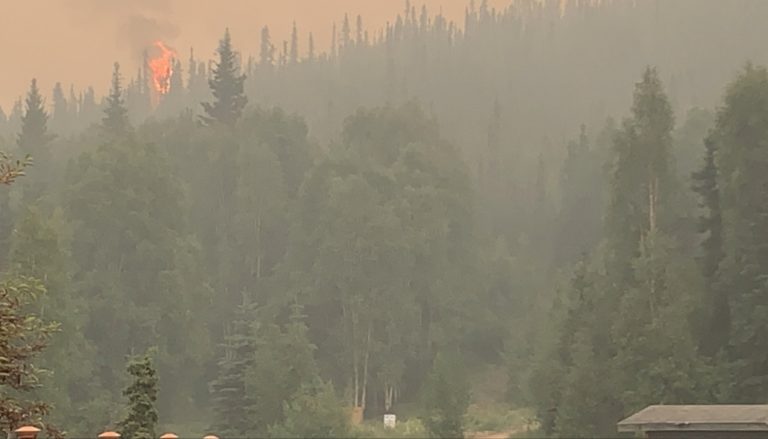
Fire rages near Chena Hot Springs, but owner says he’s as prepared as he can be with years of work after big 2004 fire

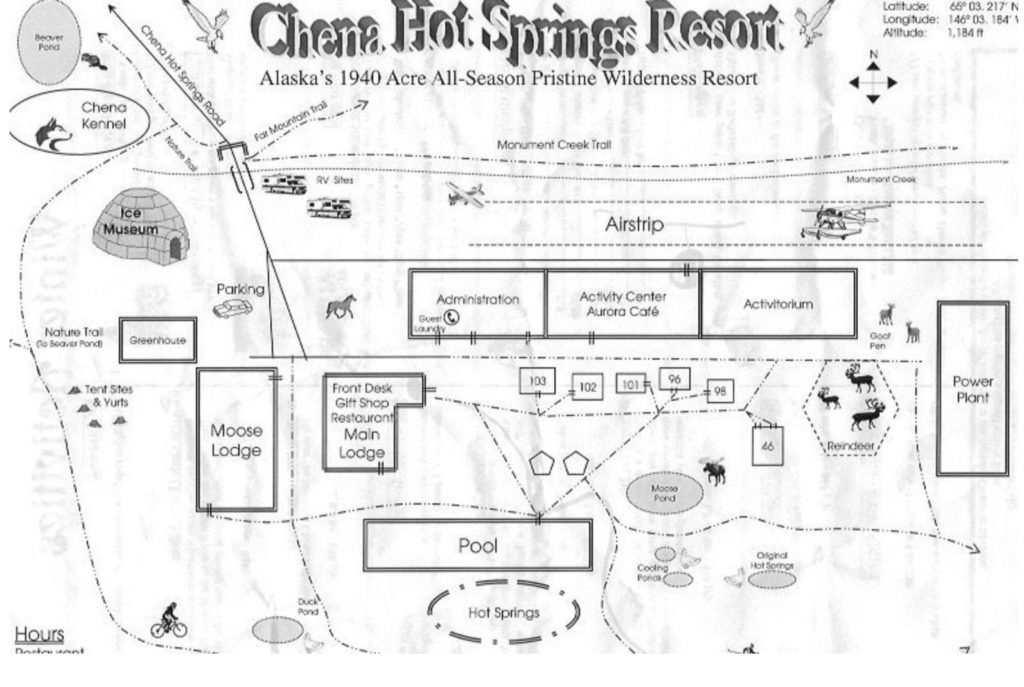
Bernie Karl, owner of the Chena Hot Springs resort, owns three firetrucks, bulldozers, loaders, backhoes, track rigs, lots of hoses, sprinklers and he even has water trucks.

He also is providing support and a conference room for about 120 state firefighters who are battling the Munson blaze that threatens the iconic resort on Chena Hot Springs Road, 61 miles northeast of Fairbanks.

Karl said he’s grateful for the firefighters and their hard work, and he also says years of preparation make him feel good about the chances Chena Hot Springs Resort has against the Munson Fire.

He cut a fire break all around his property after the 2004 blaze, which burned 6.4 million acres and sent burning embers onto the roofs of his buildings. After that fire, all but one of his buildings now have metal roofs.

“In my opinion we’re in no imminent danger because I’ve made all the proper decisions, all the preparations,” he said, having survived the worst wildfire in Alaska state history in 2004.

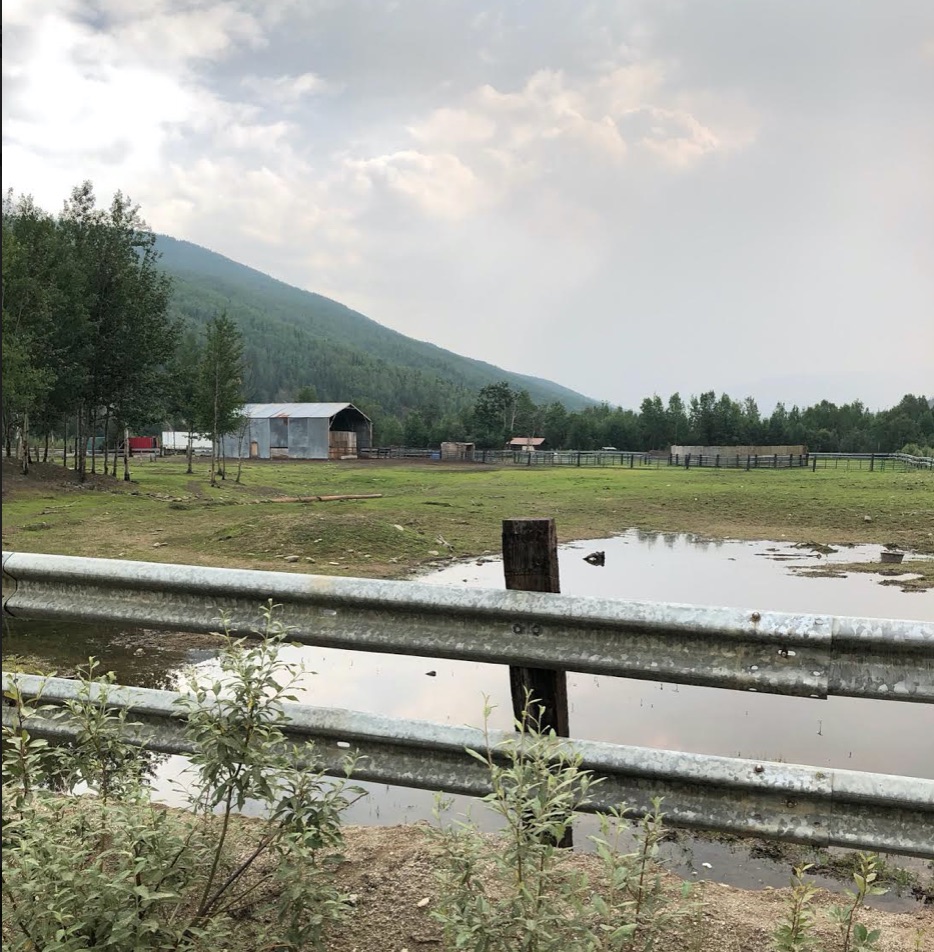
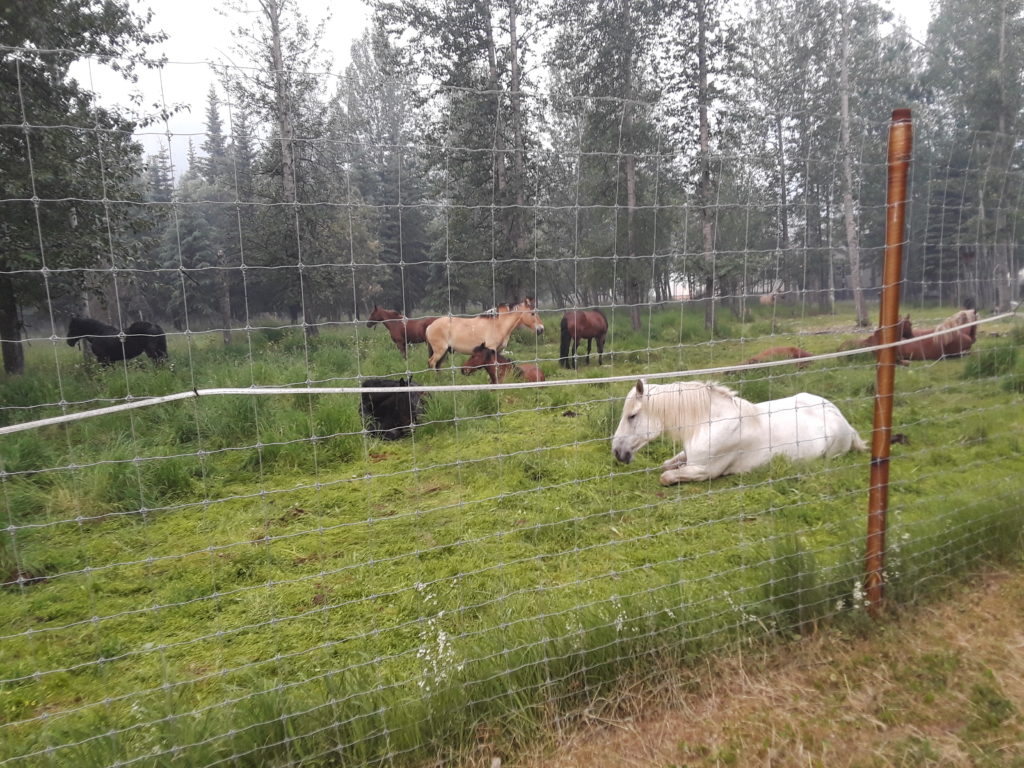
Karl said some well-meaning people came by to evacuate his horses, and others came by to evacuate his dogs, but he says his animals are safe right where they are.

The social media narrative that he sent the horse trailers away is half right — Karl said he wasn’t planning to evacuate them and was not ready to hand over his animals to others. Some of his employees have left, while others have stayed, and he still has guests at the resort.

From the Division of Forestry from the Monday 8 pm report:

The fire has reached Monument Creek a few miles east of the resort but had not crossed the creek at last report. The western edge of the fire has moved closer to Chena Hot Springs Road but remains 1-2 miles south of cabins and homes along the end of Chena Hot Springs Road from Mile 48 to 56. 

Firefighters have spent the last week assessing structures, clearing brush around them and installing pumps, hose and sprinklers around the resort and cabins and homes along the road to wet down the area around them to protect them if the fire could reach them.

Fire intensity on the 19,700-acre fire ramped up Monday afternoon at around 3 p.m. The increased activity prompted fire managers to issue a “Go” evacuation order for residents from Mile 48 Chena Hot Springs Road to Chena Hot Springs Resort at the end of the road at Mile 56.5, including guests and staff at the resort.

Alaska State Troopers responded and went door to door at each cabin along Chena Hot Springs Road between Mile 48 and Chena Hot Springs Resort at the end of the road to ensure those occupying the cabins are aware of the evacuation order. Troopers compiled a list of residents who are not evacuating so fire managers know how many people have not evacuated. As of 8 p.m., approximately 25-30 residents said they were not evacuating. Troopers also spoke to guests and staff at Chena Hot Springs Resort to make them aware of the situation.

Most of today’s fire growth has been on the east side of the fire, east of the hot springs but the fire continues to spread slowly in all directions. Firefighters cutting a fire break along a trail on the hillside behind the resort pulled back when fire intensity increased late Monday afternoon. Firefighters are now focused on protecting structures at the resort and along Chena Hot Springs Road in the event the fire advances that far. Pumps, hose and sprinklers have been set up around structures at the resort, in addition to cabins and homes along the end of Chena Hot Springs Road from mileposts 52 to 56.

Read: Chena Hot Springs evacuated as fire approaches resort, cabins

Rise of the fakes: Gregg Brelsford, Republican for Congress

There are likely to be a lot of names on the primary ballot for Alaska’s lone congressional seat next year. Congressman Don Young’s name will probably be one of them, as he announced earlier this year to run for reelection.

Many will claim they are Republican. Many, like Gregg Brelsford.

Brelsford says he is a new kind of Republican running for Congress against Congressman Young.

At 72, Brelsford says a lot of things about the Republican Party, but according to recent voter records, he is an “undeclared” voter and has been a Democrat in the past, when he lived in Utah, for instance. MRAK can find no trace of him being registered as a Republican until July 5, when he used the Republican pedigree in his filing with the Federal Elections Commission.

“I refuse to be a Republican who stays silent as many in our party chip away at our state and national ideals for petty, self-interested, short-term, goals. I am a principled, new generation, conservative,” he said on his Facebook announcement.

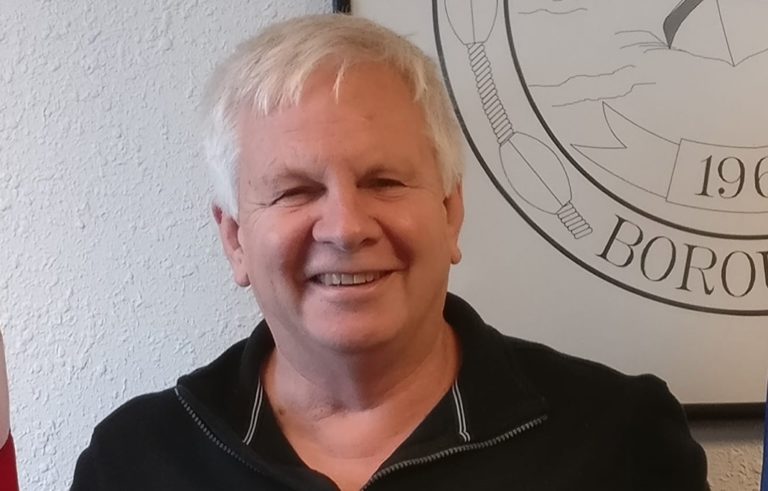
Brelsford, who is registered to vote in Anchorage but was recently an interim manager of the Bristol Bay Borough, isn’t the only challenger.

Randy Purham registered with the FEC several weeks ago to run for Alaska’s congressional seat, but he lists his mailing address and voting address as Killeen, Texas. That will take some explaining to voters.

Brelsford, if he continues his campaign, will have an uphill battle with traditional Republicans and conservatives in general. He’ll have to talk about his long history of donations to Democratic candidates for Congress, his maximum donation to Hillary Clinton’s campaign for president in 2007, and the $5,000 he gave to a political action committee for Hillary Clinton in 2008. All of those donations, and more up until 2017, were from him while he was living and working as an attorney in Utah.

Legislature’s comprehensive fiscal plan working group first meeting is Wednesday

A joint special legislative working group to propose a “comprehensive fiscal plan” for the state’s budget is on the legislative calendar for Wednesday at 1 pm, in the Anchorage Legislative Office’s Denali Room.

The group was created at the request of the House at the end of the special session in June, and is meant to formulate a plan to pay for government, a proposal that would be considered by the Legislature in the August special session that has been called by the governor to take up remaining budgetary matters, including the amount of the Permanent Fund dividend this year.

Gov. Mike Dunleavy vetoed the $525 Permanent Fund dividend appropriated by the Legislature, saying it was an insult to Alaskans, considering Alaska statute says this year’s dividend would be well over $3,000. The law that establishes the formula has been broken since Gov. Bill Walker arbitrarily cut the dividend in half in 2016, and many in Alaska want the law to be followed or changed , but not broken annually.

The Fiscal Year 2022 total budget amounts to $12 billion in all funds, with $4.3 billion in Unrestricted General Funds, and at least $1 billion is from federal Covid-19 relief money.

To compare, total expenditures in fiscal year 2021 were $11.3 billion, but revenues were $10.3 billion, leaving a fiscal gap of $863 million.

Last year, the Percent of Market Value (POMV) draw from the Earnings Reserve Account of the Permanent Fund was $2.4 billion to be used for government. About $680 million was drawn from the ERA for payment of the Permanent Fund dividend to Alaskans. The legal statutory draw for the dividend was $1.2. billion, but legislators cut the dividend for the fourth year after Walker’s 2016 veto of the dividend.

The meeting will be streamed on Gavel Alaska.

Read: Budget error makes it harder for Legislature to pay itself per diem in August

Chena Hot Springs evacuated as fire advances

5

Evacuations have begun for the Chena Hot Springs Resort and residences along Chena Hot Springs Road from Mile 48 to Mile 56.

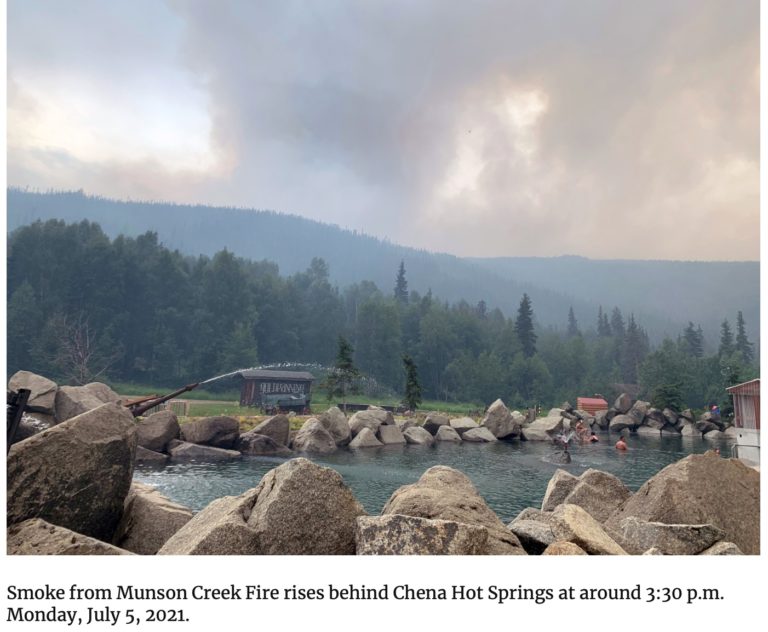
The Munsun Creek Fire picked up strength Monday afternoon as the wind changed, influencing the fire behavior. The growth of the fire is to the east of Chena Hot Springs.

No structures have been lost, the Alaska Division of Forestry reports. Chena Hot Springs owner Bernie Karl said he was not planning to evacuate, and will shelter in place, although some guests and staff are leaving.

With two well-developed smoke columns behind the hot springs showing the fire advancing toward the resort, Division of Forestry public information officers advised people to evacuate because visibility could decline and make leaving later problematic.

Firefighters were cutting fire breaks behind the hot springs but were pulled back and are now focused on protecting structures around the resort and at homes and cabins along Chena Hot Springs Road.

More resources have been ordered for the fire, including additional engines and crews to assist with structure protection, the division reported. Pumps, hoses and sprinklers have been set up around structures at the resort and around cabins/homes down to Mile 52 Chena Hot Springs Road. Crews will be setting up additional structure protection measures around homes as far west as Mile 48.

Security personnel are being ordered to patrol the area to protect vacant cabins and homes due to the evacuation.

Anchorage Assembly to hold hearings for Bronson’s fire chief, attorney, city manager

This week the Anchorage Assembly will hold work sessions, during which three of Mayor Dave Bronson’s choices for his new municipal government will be interviewed in confirmation hearings.

Appointees to be heard Friday, July 9:

  • 10 am – Confirmation hearing for Doug Schrage as Anchorage Fire Department Chief. To attend telephonically, (907) 273-5190, code: 721227#​​​​.
  • 10:30 am – Confirmation hearing for Patrick Bergt, Municipal Attorney. To attend telephonically, (907) 273-5190, code: 721227#​​​​.
  • 11 am – Confirmation hearing for Amy Demboski, City Manager. To attend telephonically, (907) 273-5190, code: 721227#​​​​.

The meetings are held at City Hall , Conference Room #155 , 632 West 6th Ave., Anchorage, AK 99501 and will be live-streamed on the Assembly’s YouTube channel.

Mount Marathon race is back

After taking a year off because of the Covid-19 pandemic, the 93rd Mount Marathon Race is a go. The race will take place Wednesday, July 7 in Seward, Alaska. Normally the event is on July 4, but was moved this year to reduce the number of people in downtown Seward.

The course is a 1.5 mile climb up, and down that shale-slippery Mount Marathon, which attracts runners from around the country, although mostly from Anchorage and the Kenai Peninsula.

Mike Heatwole of Anchorage has run it 21 times, and will be running it again on Wednesday. He describes it as a race that has four parts: The first part is a run to the base of the mountain, which is about a half-mile uphill on a normal grade. Then it’s a mile to the top of the mountain, the first section being a scramble trough through the trees on steep cliff-like conditions.

“The downhill is one of the most unique aspects of the race. The shale allows you to open it up [as a controlled fall], if you dare. Then you hit the road again and run to the finish. You put all that pressure going uphill then all the pressure downhill, and then hit the road … and your legs just protest. They can only take so much,” he said.

For the amateur athlete, the reward is the experience of the cheers of the crowd, which is is exhilarating.

This year’s Covid protocols has 50 runners released from the starting line every 2 minutes.

Heatwole’s son will be running again in the youth boys division and his daughter will be running again; this will be her first race in the adult women’s division. For the Heatwole’s, this is a family affair.

The race starts at 8:30 am with the youth division.

More information about the iconic race at the official Mount Marathon webpage.

Budget error will make full dividend harder to attain, but also makes legislative per diem harder to restore

Gov. Mike Dunleavy vetoed the $525 Permanent Fund dividend, and in his announcement on Friday he surprised lawmakers by vetoing their per diem.

To get their per diem back, they’ll need to restore a set Permanent Fund dividend calculation. Or they can face the wrath of voters next year.

But then something happened. A budgeting error from the Governor’s Office gives legislators a $4 billion bit of extra worry and another reason to argue over and shortchange the dividend.

The governor intended to veto a $4 billion transfer the Legislature had made to the principle of the Permanent Fund, but there was a scrivener’s error on the budget — somebody blew it in the final, admittedly hastily reviewed budget that the governor had only hours to review and sign.

Some lawmakers don’t want to allow that scrivener’s error to be reversed, and so a $4 billion appropriation to the corpus of the Permanent Fund is squirreled away, off limits to solve fiscal problems, and not usable to pay a dividend or government expenses this year. Anti-dividend lawmakers are overjoyed with the oversight.

Without that veto, it makes it a lot harder for the Legislature to fulfill its promise to come up with a long-term solution for the budget in August.

Make no mistake, even after the $4 billion transfer, there is almost $20 billion available in the Earnings Reserve Account. That balance is more than sufficient for any fiduciary responsibility to keep adequate reserves in place. It does serve the narrative of the anti-PFDers, who have put almost $9 billion into the corpus in the last two years, and said they don’t have money for full dividends.

The liberals are probably going to look at taxes, and blame will go both directions.

The chances of a constitutional amendment to protect the dividend are increasingly more difficult as Democrat election politics start gearing up and Democrats look for ways to hit Dunleavy with some body blows before he stands for reelection.

Not allowing the $4 billion to fall back into the General Fund will, however, also make it difficult for them to explain their $300 per diem, vs. Alaskans’ $525 Permanent Fund dividend.

Read the actual per diem that each lawmaker received last year at this link

Some in the Legislature kept a social media silence about the cut to per diem. Others hopped on their social media accounts and complained loudly on Friday. For some, the per diem is a handsome benefit, while for others, it barely covers their cost of having to have a place to live in Juneau.

But it also serves as a reward for not getting work done. And a few legislators use their time unwisely in Juneau, partying excessively on that per diem.

Starting Jan, 19, 2021, the Legislature was in session for the 90 statutory days. Not able to get its work done in the law-specified timeframe, legislators blew through the deadline and stayed until the 121st day, a constitutional limit. That is something they do year after year, rewarded by per diem for every day they stay in session.

They still could not provide a budget.

The Legislature went another 30 days of special session, and toward the end, lawmakers still could not come up with a legal budget, because it didn’t have an appropriate effective date. Some legislators argued that it didn’t need one, but they finally made the budget legal and the government did not shut down.

They handed the governor an error-ridden budget at the 11th hour. He and his team had just hours to look it over and send back errors they found to the Legislative Finance Office, allowing the Legislature to get its errors corrected. In the end, it was his own team’s oversight that led to a $4 billion lock-up of funds into the Permanent Fund. The Legislature is saying, “Thanks for letting us correct our budget errors, but also “No do-overs” to the governor.

All that time in Juneau, the per diem racked up. The total a legislator could have made in per diem so far this year? It’s north of $45,300, untaxable.

That’s in addition to the $50,000 taxable income they earn as salaries for being legislators. According to the House’s estimate, the per diem for this fiscal year will total $2 million.

Few Alaskans realize that legislators get rewarded for not doing their work in the time allowed by law.

Read Legislators received up to $8,700 in per diem for special session

Particularly awkward is that legislators have changed their per diem laws three times in 15 years, and most recently passed a law that said they could not get per diem after the session ended if they had not passed a budget on time. They just ignore that law an award themselves the money retroactively.

Gov. Dunleavy has given the Legislature the opportunity to get it right in August. They can override some or all of his vetoes, they can even restore their own per diem with an override. But the $4 billion that just went into the corpus of the Permanent Fund? That is a five percent gain for the Fund, and is going to make August extremely difficult.