Sunday, October 18, 2026
Home Blog Page 1090

Murray Walsh: Welcome to NETPower, energy without emissions

By MURRAY WALSH

Part three of a four-part series

We have previously examined fossil substances (or maybe we should say carbon-based substances so we can include traditional biomass) and the essential role they play in sustaining the world economy and society.  Are there ways to use them to get the energy and heat without harmful emissions?  

The answer is yes and two such methods will be discussed here. Hydrogen and oxy-combustion, have “arrived,” so to speak, and they mean that climate activists and fossil fuel defenders can have common cause if they want it.

Hydrogen has been around for centuries as an interesting substance and in various useful roles since the dawn of the industrial age.  It is pretty easy to make and there are several ways of doing so.  At least one of those ways, electrolysis, splitting the water molecule into pure oxygen and hydrogen, can be done with zero emissions. You do it with electricity. 

So, was the electricity generated cleanly? Sure! But we’ll get to that later. 

The thing about hydrogen is that it can be used as a transportation fuel like gas or gasoline.  It is compressible, even to a liquid state, and thus storable in tanks in vehicles. 

The most dramatic recent demonstration of the use of hydrogen was in Elon Musk’s recent sub-orbital tourism rocket launch. Do you remember what the exhaust flare on that rocket looked like? It was a solid blue torch that gave off no smoke or clouds of vapor. It reminded me of the Bunsen burners we used in high school chemistry. The key thing is that when you burn hydrogen, the only emission you get is a cool blue flame and plain old water. To create it, you crack the water molecule with external energy. To use it, you re-combine it with oxygen and blammo! You’ve got power to drive a piston in a reciprocating engine or to provide reaction mass to drive a rocket ship or jet airplane.

Electrolysis is a clean way to generate hydrogen but not very efficient. More efficient ways include cracking carbon-based substances. This is a quote from the USEIA website:

Steam-methane reforming accounts for nearly all commercially produced hydrogen in the United States.  Commercial hydrogen producers and petroleum refineries use steam-methane reforming to separate hydrogen atoms from carbon atoms in methane (CH4). 

Natural gas is the main methane source for hydrogen production by industrial facilities and petroleum refineries. Landfill gas/biogas, which may be called biomethane, is a source of hydrogen for several fuel cell power plants in the United States. Biofuels and petroleum fuels are also potential methane sources.

On that same federal webpage, other techniques are mentioned as in development or under study:

  • Using microbes that use light to make hydrogen
  • Converting biomass into gas or liquids and separating the hydrogen
  • Using solar energy technologies to split hydrogen from water molecules

The key points here are that hydrogen has great potential as a transportation fuel and that carbon-based feedstocks are increasingly efficient and effective means to obtaining it.

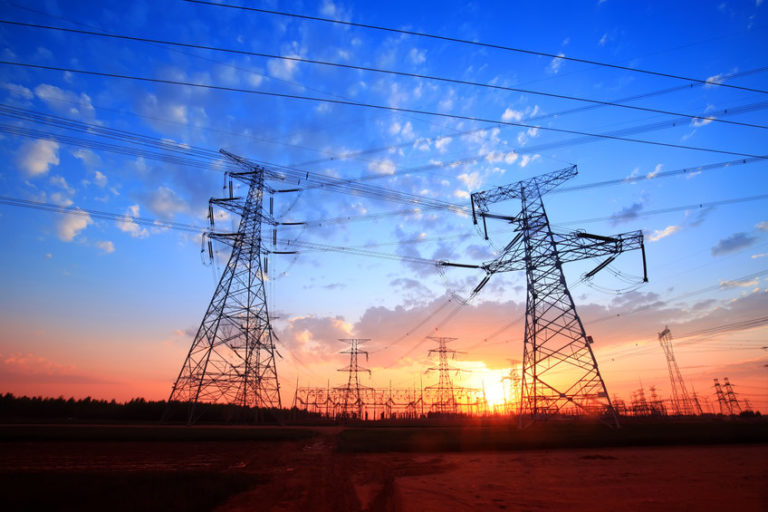
We now turn to the non-transportation side in energy production and that is the facility needed to produce electricity.  We have the means to distribute electricity (although it sounds like they need to tune it up a bit in California) but the primary issue is creating electricity without emissions.  

Welcome to the world of oxy-combustion.  Take a look at the website for NETpower.com/ for a more complete explanation than I can provide here.

Typical power plants, whether fossil fuel-fired or nuclear, use fuel to create heat which is used to create steam that turns a turbine assembly in which there is a rotor spinning within a stator.  It is the magic of this spinning motion that produces electricity.  In the past, the fossil fuel was combined with air to produce the heat and all manner of emissions spewed forth out the smokestack while the heat was applied to water to make steam.

Oxy-combustion is the mixing of pure oxygen with carbon-based gas to generate superheated high-pressure CO2 that is used instead of water-based steam to turn the turbine.   The CO2 – now at low pressure – is then processed, and re-pressurized to be sent back through the system or sent out of the plant in containers for other uses.  Not least of these other uses is to inject the CO2 into oil fields to help pressurize the crude oil from beneath to make it easier to pump. This sequesters the CO2.  

NETPower has a 50-megawatt plant in Texas that they built to demonstrate the technology.  Presumably, they also make money from it.  Let’s try to see how much. Fifty megawatts is a lot. It is 50 million watts. Over an hour’s time, that is 50-million-watt hours or 50,000 kilowatt hours.  

Electricity is sold by the kilowatt hour. Here in Juneau, we pay about 12 cents for one kWh. The local power company has to pay you the wholesale rate if you contribute power to the system. In Arizona, many homeowners have solar panels on their roofs that result in nearly zero payments to the electric company and maybe even a bit of money coming back because your roof generated more watts than your house needed. 

The local wholesale rate here in Juneau was $0.06 per kWh when I looked into it about 10 years ago. So, at that rate, the NETPower plant in Texas is earning about $6,000 per hour.  I have no idea how much gas they have to pay for, or how expensive it is to run the plant, but that works out to over $30,000,000 per month!  There might be some money to be made in the emission-free energy business.

Also, the NETPower development began with looking at coal as the carbon feedstock but they switched to natural gas for a lot of reasons.  This is good for gas and that might be the end of it but there are other forms of gas that are combustible. There is a group of such gases under the general name syngas and one such gas, maybe more, is derived from coal. Others can be derived from petroleum.  

The point here is that carbon is the common thread from all these feed stocks and all of them, including traditional biomass and landfill emissions could eventually feed an oxy-combustion plant.

This all sounds like the new energy holy grail, right?  Well, yes it does and I am sure you will be hearing more about it in the years to come, but just remember where you heard about it first, okay? 

Next in the series, how to use these new-fangled things in the near future.

Murray Walsh is part of the extended MRAK writing staff in Juneau. Check back for Part 4.



Republican Chairwoman McDaniel calls for firing of Sec. of State Blinken over hostage crisis in Afghanistan

Republican National Committee Chairwoman Ronna McDaniel called for the resignation of Secretary of State Antony Blinken over the hostage crisis in Afghanistan, where perhaps over 100 Americans are being held against their will as they attempt to leave the country.

“As the Biden administration continues to peddle lies and claim victory for their failed withdrawal from Afghanistan, Biden’s Secretary of State Antony Blinken admitted Americans are being held hostage by the Taliban. Organizing the safe evacuation of Americans was Blinken’s direct responsibility and he failed. Biden must fire Blinken,” McDaniel said in a statement.

For nearly a week, Americans onboard six jets that are at the airport in Mazar-i-Sharif, Afghanistan’s fourth-largest city. The Taliban will not allow them to exit, the State Department says. There are believed to be a mix of Americans and Afghan allies among the 1,000 passengers who are being held at the airport by the Taliban.

Blinken yesterday said “We are not aware of anyone being held on an aircraft or any hostage-like situation in Mazar-i-Sharif.”

Today, he said, “The Taliban are not permitting the charter flights to depart.”

Blinken said the Taliban hasn’t prevented the departure of those with a valid document. But there are people on the planes that may not have their documents, and they can’t leave, so the entire plane cannot leave.

“Because all of these people are grouped together, that’s meant that flights have not been allowed to go,” Blinken told reporters.

Among those planes is one chartered by Juneau-based Goldbelt Inc., an Alaska Native corporation with numerous military contracts. One of those contracts is to extract American citizens and Afghan allies from Afghanistan.

A person familiar with the evacuation operation told Politico that the Taliban are stopping flights from taking off because they want to see paperwork and manifests for all the passengers, but the reason the militants are demanding such things is because the State Department has told the Taliban it doesn’t know who is on the planes.

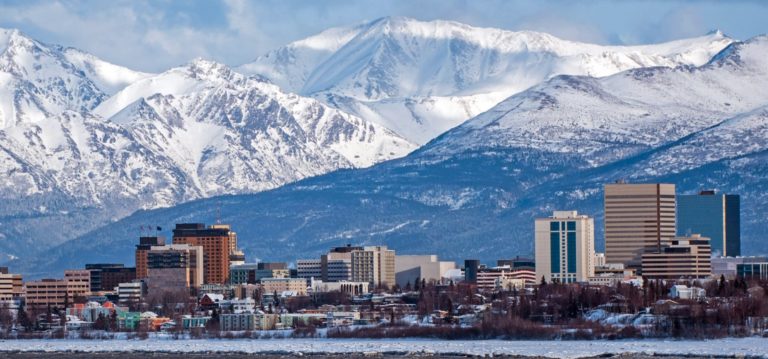
Mayor Bronson announces members of Anchorage economic revitalization team

7

Anchorage Mayor Dave Bronson announced the members of the Anchorage Economic Revitalization and Diversification Advisory Committee:

  • Paul Landes, Senior Vice President, Consumer Services, GCI
  • Shawn Williams, Vice President of Government Affairs & Strategy, Pacific Dataport, Inc.
  • Caren l. Mathis, Sr. Principal Strategic Planner/Senior Project Manager, Arctic Slope Regional Corporation
  • Bill Popp, President and CEO, Alaska Economic Development Council
  • Julie Anderson, Commissioner, Alaska Department of Commerce and Economic Development
  • Bill Taylor, President and Founder, Colony Builders, Inc
  • Evelyn Rousso, Associate Principal, MCG Explore Design
  • Alan Erickson, Chief Technology Officer, Covid Secure App
  • David Hoffman, Owner, Craig Taylor Equipment
  • Jim Szczesniak, Airport Director, Ted Stevens Anchorage International Airport
  • Lori Brewer, President, Café D’arte Alaska
  • Hugh Ashlock, President, Dimond Center Holdings LLC.
  • ACDA executive director Mike Robbins will serve as the chair for the committee.

“I have the utmost confidence in this group led by Mike Robbins to aggressively pursue economic revitalization, expansion and diversification for Anchorage,” Bronson said in a statement. “They have the skills to speed up our economy and a talent for being able to work with diverse stake holder groups.

The committee’s first task will be to identify and recommend for implementation immediate action items from Bronson’s transition report, Robbins said.

The committee will have its first meeting Wednesday, Sept. 8. The first report to the Mayor’s office from the Committee is expected to be complete by January.

Attorney General Taylor signs letter opposing ATF’s proposed rule on guns

Alaska Attorney General Treg Taylor joined 21 other attorneys general in opposing the Bureau of Alcohol, Tobacco, Firearms and Explosives proposed rule to require federal registration of handguns equipped with stabilizing braces.

The new rule, if it takes effect, would reclassify such handguns as “short-barreled rifles,” and subject them to the stringent requirements of the National Firearms Act. 

Stabilizing braces are devices that can be attached to the rear of a handgun’s frame. The brace extends rearward toward the shooter, allowing the handgun to be secured to the shooter’s forearm of the arm holding the handgun’s grip. Stabilizing braces are designed to assist in firing large format pistols without shouldering the weapon. Both stabilizing braces and large format pistols have gained popularity in recent years, with tens of millions in circulation.

“The federal government’s new interpretation of ‘rifle’ would result in the largest unilateral federal firearms registration program in American history,” Taylor said in a statement. “This definition would effectively force the registration or destruction of millions of privately-owned firearms and possibly criminalize the actions of otherwise law-abiding gun owners without any statutory authority to back it up.”

If the proposed rule becomes law, owners of these popular handguns would be forced to register them with the federal government, destroy them, or face a potential federal felony for illegally possessing an unregistered short-barreled rifle. 

The letter can be read here: http://law.alaska.gov/pdf/press/210908-ATF-Comment-Letter.pdf

Alaska joined the Ohio led comment letter with the attorneys general from Alabama, Arizona, Arkansas, Florida, Georgia, Idaho, Indiana, Kentucky, Louisiana, Mississippi, Missouri, Montana, Nebraska, New Hampshire, Oklahoma, South Carolina, South Dakota, Texas, Utah, and West Virginia.

WHO says Covid is here to stay, and Alaska numbers point to that

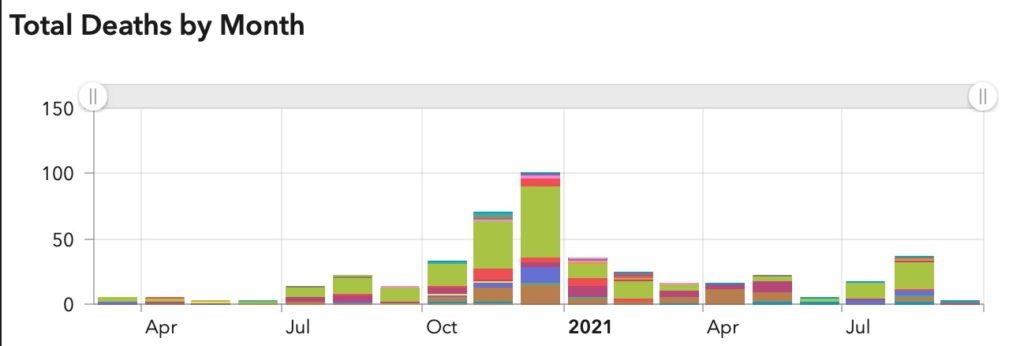
To date, more than 88,658 Alaskans have had a bout with the Covid-19 virus that originated in Wuhan, China in 2019 and has spread to every corner of the world. That does not count the perhaps-thousands of Alaskans who had the virus but never reported to a doctor, due to having mild symptoms or no symptoms at all.

Out of those 88,658 who were known to become infected, 2,059 ended up in the hospital, which is about 2.3 percent of the cases.

Covid has been the attributed cause of 437 deaths in Alaska, just under 1/2 percent of all known cases.

But, if you end up in the hospital with Covid, your chances of dying are over 21 percent, if past months are any indication. Over 20 percent of people in Alaska hospitals right now are needing treatment due to the Wuhan virus. Thus, a good reason to avoid the bug, if you can.

That may not be entirely possible. The World Health Organization says the virus is here to stay and, like the flu, will continue to mutate.

“I think this virus is here to stay with us and it will evolve like influenza pandemic viruses, it will evolve to become one of the other viruses that affects us,” said Dr. Mike Ryan, executive director of the World Health Organization’s Health Emergencies Program, during a Tuesday press briefing.

The number of people vaccinated against the virus in Alaska stands at 337,931, and when you add the vaccinated to that total, presuming there’s not a lot of overlap, well over half of the population, or 426,589 Alaskans, have either had the disease or received a shot to prevent it. That’s over 58 percent of Alaskans having some degree of protection.

And yet the numbers of those infected keep climbing, mostly among the 42 percent of Alaskans without protection, and with a smaller, unknown number of “breakthrough” cases, or cases that defied the vaccine.

With 432 new cases on Sept. 6, the virus has hit 17 percent more this week than it did last week. This would indicate that while more people have either medical or natural immunity, those not immune are being hit especially hard. However, the death rate is not climbing as it did during the first year of the pandemic, possibly because many elderly and medically fragile Alaskans have had the vaccine and have adjusted their lifestyles to limit their contact with those who might infect them.

Source: DHSS dashboard

Close call: FAA report shows one Cessna left tire marks on the other midair on Saturday

22

A midair collision with minor damage near Anchorage between two Cessnas was reported on the Federal Aviation Administration. The incident happened on Sept. 4.

A Cessna 185, owned by Above and Beyond Aviation of Anchorage was reported to have had to dive in midair to avoid a Cessna 182, according to the FAA incident reporting system.

“AIRCRAFT IN-FLIGHT DAMAGED WING TIP AND LEFT TIRE MARKS ON N737DM, ANCHORAGE, AK.,” reads one line on the incident summary.

“AIRCRAFT DOVE TO AVOID ANOTHER AIRCRAFT N21132, LANDED AND POST FLIGHT INSPECTION REVEALED WING TIP DAMAGE WITH TIRE MARKS, ANCHORAGE, AK.” reads another line.

Both incidents were reported to have happened in the late evening.

The Cessna A185F Skywagon, a float plane, left Lake Hood in Anchorage at 6:50 pm for a 30-minute flight. It was struck by the Cessna 182P Skylane, a wheeled plane, which is registered to an Aniak address.

Few other details were available but apparently both planes were able to land without anything other than the black tire scuffs and minor damage on the wing of the Skywagon.

Lake Hood is the busiest seaplane base in the world, with nearly 200 daily operations.

Hostage situation? Goldbelt-chartered plane still pinned to tarmac as Taliban, State Department negotiate terms

17

Six jets are said to be still stuck at the airport in Mazar-i-Sharif, Afghanistan’s fourth-largest city. The Taliban will not allow them to exit, the State Department says, and now word is the State Department is telling countries not to take the planes, which contain an unknown number of Americans who have been stuck on the planes for six days.

Texas Congressman Michael McCaul, the top Republican on the Foreign Affairs Committee, told CNN that the number of Americans on those planes is in the hundreds. There are also reported Afghan allies — those Afghans who helped the Americans during the 20-year war.

“(The Taliban) are not clearing the airplanes to depart. They’ve sat at the airport for the last couple of days,” McCaul said on Fox News Sunday. “We know the reason why is because the Taliban want something in exchange. This is … turning into a hostage situation where they’re not going to allow American citizens leave until they get full recognition from the United States of America.”

McCaul has referred to the passengers as hostages, a characterization disputed by the Newsweek editor who is monitoring the story. Newsweek editor-at-large Naveed Jamali wrote: “Also @RepMcCaul was absolutely incorrect as characterizing any of these people as hostages. There is nobody being denied exit of the country, or being detained on a plane. Instead the Taliban has not granted clearance for the planes to leave. Spoke to two sources who confirmed.”

He elaborated, saying, “Also the PLANES are being denied clearance, not the PEOPLE. Yes that is a pretty big distinction.”

Among the “planes denied clearance” is a charted jet from Goldbelt, an Alaska Native corporation based in Juneau. Goldbelt has numerous military contracts, which included vetting people for entrance into the former “Green Zone” in Kabul, which was a zone that was safe from terrorism, as people were checked in and out of it. Later, the company was asked to help with evacuating Americans and Afghan allies and charted a jet. The company was not able to provide comment because of what is described as a very dynamic situation in Afghanistan.

At first, the hold up was blamed on having manifests that did not exactly match who was on the planes. Then, the State Department was being blamed for telling allies not to receive the planes.

Secretary of State Antony Blinken traveled to Doha, Qatar, to negotiate with the Taliban and to thank Qatar for its role in facilitating the U.S. retreat from Afghanistan.

Blinken said Tuesday the Taliban “had been reminded in recent hours that the international community is holding the group to its commitment to let anyone with valid travel papers leave Afghanistan if they choose,” according to the Voice of America.

Blinken said the number of U.S. citizens, including those with dual citizenship, who are thought to be still in Afghanistan is about 100, and he said the State Department is in direct contact with them, according to VoA. He said the State Department is in direct contact with them.

He said the Taliban has “told the world that they intend to allow people to travel freely. The world is determined to see that they make good on that commitment. They told the world that they intend to uphold the basic rights of the Afghan people, including women and girls. We’ll be looking very, very carefully at that.  They told the world that they do not intend to engage in reprisals. We’ll be looking very, very carefully at that. And it’s not just the United States; it’s more than a hundred countries around the world that have come together and set clear expectations for the way forward.”

“We are not aware of anyone being held on an aircraft or any hostage-like situation at Mazar-i-Sharif. So we have to work through the different requirements and that’s exactly what we are doing,” Blinken told reporters.

The chair of the Republican National Committee, Ronna McDaniels, was not impressed: “When will Biden admit the Taliban is not offering ‘safe passage’ to Americans trying to leave the country? We’ve had reports of Americans blocked for weeks, but Biden is determined to believe the word of terrorists.”

Must Read Alaska reached out to Sen. Dan Sullivan’s office for comment; staff said that the senator is concerned and is monitoring the situation.

Jones Act penalties under new Biden interpretation add up for Alaska pollock shippers, could cause shortages

19

U.S. Customs and Border Protection has cause havoc in the Alaska pollock fishery by issuing Jones Act penalty of about S350 million, according to The Maritime Executive.

The trade publication reported that a lawsuit has been filed by Alaska Reefer Management, a subsidiary of American Seafoods Company over the massive fine. The $350 million in fines could mean pollock prices on the East Coast are seen, or shortages of the popular fish could result across much of the country.

Pollock is served in many restaurants and fast food chains. It is also used to make fake shellfish products, such as imitation crab.

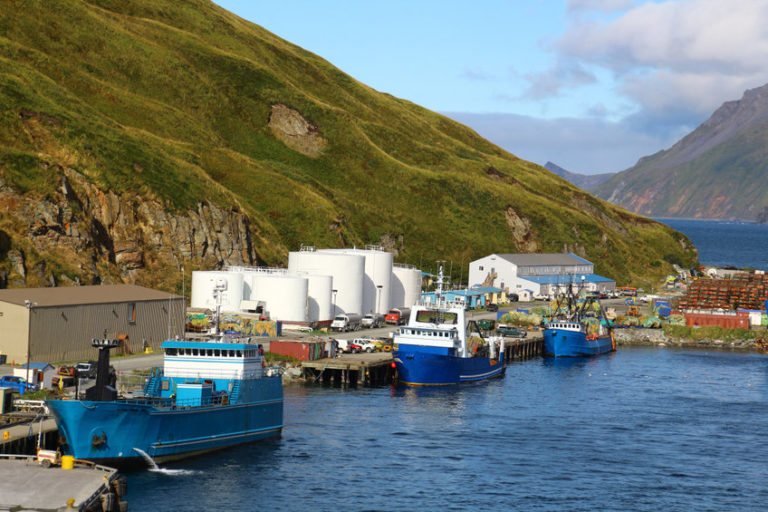
American Seafoods ships pollock through the Panama Canal on foreign-built vessels. After loading fish in Dutch Harbor, Alaska, the ships do not touch any other American port. The frozen product is unloaded in Canada and a very short railway from Bayside, New Brunswick takes the fish across the border to the U.S. The distance by rail is about 100 feet.

This has been going on for years and has been a clever work-around of the Jones Act, which prohibits the use of foreign-flagged vessels traveling from one U.S. port to another, without stopping in another country. According to Martime Executive, 90 percent of the fish offloaded in New Brunswick is then taken to the U.S. by this method.

The railway is certified and registered as a Canadian rail line with the U.S. Surface Transportation Board, said the attorneys for American Reefer and terminal operator Kloosterboer International Forwarding, according to The Maritime Executive.

Located along the south shore of New Brunswick on the Bay of Fundy at the mouth of the St Croix River, Bayside is one of the province’s major commercial centers, with frozen food storage available for up to 7,000 metric tons, and with 3,600 square meters of dry storage area to facilitate shipments of fish, agriculture, wood, and milled products. It formed as a private corporation in 1999 and now has three berths on the single wharf in what is an ice-free port.

Read the rest of this story at The Maritime Executive.

In July of 2018, then-Alaska Commissioner of Labor Heidi Drygas penned an editorial talking about how important the Jones Act is for the Alaska economy and the necessity for keeping it intact. She is now former Gov. Bill Walker’s running mate as they try to retake power in Alaska.

Read more here about Drygas defending the Jones Act.

Rep. Kevin McCabe: Disaster declarations — the cure that’s worse than the ailment

53

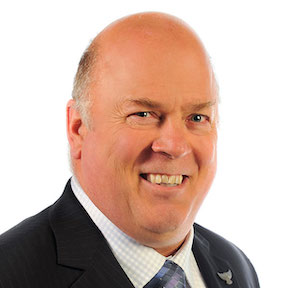
By REP. KEVIN MCCABE

After celebrating fleecing Alaskans of their Permanent Fund dividends yet again, the House Democrat Coalition and its allies began the drumbeat designed to pivot away from the damage they just inflicted upon Alaskans.

Now, the only thing that matters to them is the number of COVID-19 cases.

House leadership wants Alaskans forcibly masked, they want vaccinations, they want decreased capacities, and they want you to shutter your business and stay home. 

I ran for office during the original disaster declaration and every single constituent I talked to wanted it to end. They believed, as do I, that the cost to our economy and the loss of jobs, businesses, freedom, and liberty were not worth the limited positive effect such a declaration had. Every single person told me that the government’s cure was, in aggregate, worse than the disease.

As President Ronald Reagan said, “Government is not the solution to the problem, Government IS the problem.” Alaska cannot afford another shut down or even decreased business capacity at a time they are fighting to recover from previous Declarations and facing yet another fleecing of their annual PFD checks. Covid-19 is big business with lots of dollars being made on the backs, and the psyche, of Alaskans.

In response to the constant drone from the House Democrat Majority, Gov. Mike Dunleavy quickly moved to make the tools, already in the legislative process, available on the call to special session by adding HB83/SB67 to that call.

These bills are exactly what our hospitals and special healthcare systems are asking for; Acts relating to licensure of nursing professionals and relating to telemedicine and telehealth, healthcare capacity and workforce improvements that will accelerate the State’s ongoing response to Covid-19. These bills need to be heard and moved out of committee immediately if not sooner. 

In 2020, when the Legislature needed to get out of Juneau quickly due to Covid-19, they worked fast and furious. They were out of Juneau in 84 days. The House Democrat Coalition needs to get back to Juneau, hold hearings on the bills outlined above and move them through committee and over to the Senate so we can pass them in the most expeditious manner possible. These are the tools that will help our medical community, not a Declaration by the Governor who has stated many times that he does not need a disaster declaration. 

Keep in mind that this issue is “so important” to our colleagues that the ink wasn’t even dry on their press releases calling for action to fight Covid before they were on planes home to their districts to enjoy the holiday weekend; they couldn’t even allow a minority member enough time to clarify his one question of the hearing so they could adjourn. 

I’m angry. And every, single Alaskan has the right to be angry. 

Those in power in the House are assuming the average Alaskan is too ignorant to see the game being played. The House Democrat Coalition took Alaskans PFDs down to the studs – then openly politicized our state’s response to the virus – for their own benefit.

Granted, this game has a sympathetic ear with the media, which ran breathtaking opinion pieces from House Democrats as well as officials from former Governor Bill Walker’s administration, without disclosing their role in the recent recall campaign against Governor Dunleavy. 

If the folks in Big Lake, who sent me down here, ask me what’s going on, I’ve got one answer: dirty politics. It’s time for those in House Leadership to get a rag and do some cleaning. I’m here to help with that and that is why I will continue to write #thetruthmatters articles.

Rep. Kevin McCabe represents House District 8, Big Lake.