Wednesday, April 29, 2026
Home Blog Page 1088

Dunleavy distributes CARES Act funds for public safety

0

Gov. Mike Dunleavy distributed federal and state funds prioritizing Alaskans’ public safety as the 2021 fiscal year nears closure.

Some $2.4 million in state general funds and previously authorized federal CARES Act funds, the funds are going to combat domestic violence response and care, provide policing, and more resources for courts. The funds will be distributed to state agencies and non-profit organizations at the governor’s direction. 

“The lasting impact of the COVID-19 pandemic showed both the depth of Alaskans’ need for support, and the degree of need Alaska’s public servants have for resources to meet the extraordinary measures their call of duty places upon them,” said Gov. Dunleavy. “In order to meet the challenges our geography and remoteness present, made even more real in the last year, investments in our safety netting like these will make it possible for Alaskans to get help when they need it most.”

The $2.4 million in public safety investments include:

  • $1 million in grants to victim service providers combating domestic violence and sexual assault that contended with added costs of complying with COVID-19 safety protocols.
  • $400,000 for software addressing the Alaska Court System’s cyber security needs and responding to ongoing cyber security attacks.
  • $440,000 for de-escalation training customized for Probation Officers tasked with sexual assault and domestic violence offenders.
  • $350,000 for the Departments of Public Safety and Corrections’ Officer Wellness and Resiliency Mobile Applications.
  • $230,000 for the Department of Law’s costs managing Covid-19 conditions.

As the 2021 fiscal year nears an end, the Dunleavy Administration said it will announce further distribution decisions affecting other important segments of Alaska.

Should governor follow Alaska Constitution on budget date, or ignore? Attorney General asks Superior Court to decide

34

Alaska Attorney General Treg Taylor asked the Alaska Superior Court today to clarify whether, despite a failed effective date in the 2022 state budget, the governor can spend money to keep state services going starting July 1, which is the beginning of the new fiscal year.

The Legislature failed to amend the effective date on the budget, which means it would not go into effect until 90 days after it is signed; this could mean sometime in September and could lead to a partial government shutdown this summer.

Democrats in the House and Senate have said the governor should ignore the “effective date” clause, which is in the Alaska Constitution, and instead just push forward and sign the budget as it was given to him last week.

But Dunleavy has been criticized by Democrats for “violating statute” by not appointing a judge in time, according to the Recall Dunleavy camp. It’s unlikely he’ll want to put himself in the position where opponents can now blame him for violating the constitution.

“When there is a dispute between branches of government, we need the courts to step in,” said Taylor. “The executive and legislative branches need clarity now from the courts as to whether the governor can, if the bill is enacted, spend money immediately despite HB 69 not taking effect until 90 days after enactment.”

Article II, section 18 of the Alaska Constitution provides that, unless agreed to by two-thirds of each house, a law passed by the legislature becomes effective ninety days after enactment.  The legislature failed to pass a separate effective date with HB 69.  The Constitution’s plain language states that the bill, and therefore provisions within the bill, do not go into effect until ninety days after the bill’s passage. This includes any retroactivity provision within the bill. Despite the clear constitutional language, the Legislative Affairs Agency has sent notice to legislators and legislative staff that the position of the Legislature is that a functional budget was passed and the government can continue to function as normal beginning July 1, 2021.

Taylor said that as Alaska’s attorney general, he has the obligation to defend the Constitution. Statutes and common law provide him the authority to bring cases in the public interest. Ensuring that state funds are expended in accordance with the constitution falls within the Attorney General’s authority.

“I agree with the Attorney General’s decision to petition the court on this important matter,” said Gov. Mike Dunleavy. “We need the third branch of government to step in and resolve this dispute to ensure we all carry out our constitutional duties appropriately.  I will not ignore the constitution. I, along with my legal team, believe the Legislature should not ignore the constitution. The Attorney General’s actions are consistent with my goal of doing everything possible to avoid a government shutdown.”

The motion for summary judgment was filed Monday along with a motion for expedited consideration. The Attorney General is asking for a court decision by noon on June 30.

Syphilis cases spiked in 2020 during Covid-19 pandemic lockdowns in Alaska

Social distancing? Not so much in Alaska last year.

The Alaska Department of Health and Social Services says the number of syphilis cases in Alaska rose dramatically last year. 2020 was the year many Alaskans were locked down in their homes by government edict.

During 2020, 361 cases of syphilis were reported by health workers. This outbreak represented a 49% increase over 2019, which saw 242 cases in Alaska.

Of the 361 cases, 306 (85%) cases were in the primary, secondary, or early latent stages, and 47 (13%) cases were in the late latent stage. In other words, it was not known how long the individuals had had the disease. The remaining 8 (2%) were classified as congenital syphilis cases, or in babies.

Of the 306 primary, secondary, or early latent cases, 167 (55%) were in men, with 103 (62%) of the men having sexual contact with women and 39, (23%) of the men having had sexual experiences with other men.

For women diagnosed with syphilis, there were 139, with 90 of them of childbearing age. 107 (77%) said they were heterosexual and 7 (5%) said they were bisexual.

150 (49%) were in American Indian/Alaska Native people, 90 (29%) were in White persons, 23 (8%) were in Black persons, 26 (8%) were in Hispanic/Latino persons, 11 (4%) and 12 (4%), respectively, were in Native Hawaiian/Pacific Islander and Asian persons;

The outbreak is largely urban, with 93% cases in residents of urban communities (i.e., Anchorage/Mat-Su, Juneau, and Fairbanks). 56% of the cases were found in people under the age of 35, although the ages ranges from 15-85.

That’s not all: 104 (34%) were diagnosed with at least one other sexually transmitted disease. 72 (69%) diagnosed with syphilis were co-infected with chlamydia or gonorrhea, while 4 (4% of co-infections) were co-infected with HIV.

Alaska’s syphilis outbreak continues to grow, the Department of Health and Social Services notes, and congenital syphilis cases are at a record high. The primary drivers of this explosion in cases is in heterosexual men and women, with a drop off in cases among homosexual men.

The department noted that collecting complete information during the pandemic was difficult and many interviews were done remotely.

Alaska’s syphilis outbreak was first declared in early 2018, the department reported, and case counts have increased annually ever since. Because of the Covid-19 pandemic, risk assessments were not completed on every case report.

Syphilis is one of the reportable diseases, so the state keeps track of trends and outbreaks and reports the data to the Centers for Disease Control and Prevention.

.

Ninth Circuit reverses a key decision on Pebble Mine

19

Pebble is a proposed mine in Western Alaska that is being litigated through politics and the court system, with layers of lawsuits and briefings being filed over multiple legal actions. 

The latest legal volley is in the weeds and deals with a partial reversal of a regulatory ruling, but is an important win for the anti-Pebble people: A federal court last Thursday partially reversed a lower court ruling that had dismissed a lawsuit by environmental groups over the Environmental Protection Agency’s decision to withdraw certain regulatory restrictions on the proposed Pebble Mine.

The 9th Circuit Court of Appeals sent the case back to an Alaska District Court, saying the EPA decision to lift certain constraints on the proposed mine must be reviewed.

The action is a victory for groups such as Trout Unlimited and a long list of Bristol Bay and environmental entities, which sued in October, 2019.

The argument by Trout Unlimited stated that the July, 2019 decision by the EPA to withdraw its 2014 “proposed determination,” was a regulatory decision and reviewable by the courts.

That proposed determination was essential for a U.S. Army Corps of Engineers permit. Ultimately, in November of 2020, the Corps rejected the permit application for Pebble under Section 404 of the Clean Water Act, saying that as proposed, the mine would likely result in “significant degradation of the environment and would likely result in significant adverse effects on the aquatic system or human environment.”

That ruling is under appeal by Pebble.

The dissent in the 9th Circuit’s opinion, by Judge Daniel Bress, said that the majority’s ruling is a “serious misreading of the governing regulations, rewrote the rules that the EPA set for itself, and inserted courts into what was supposed to be the preliminary stages of a discretionary agency review process.”

Airlines ask Justice Dept. to crack down on unruly, mask-flouting passengers

34

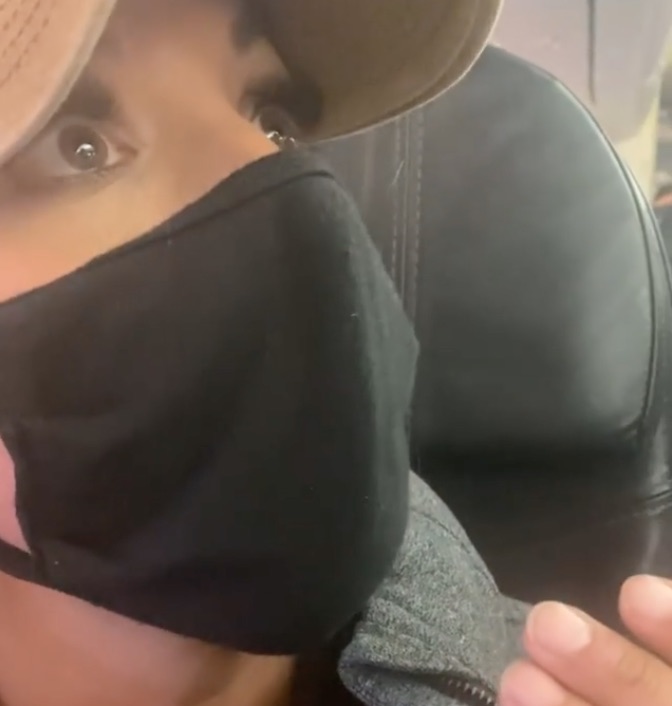
Airlines are tired of their misbehaving customers, and their customers are evidently tired of them and misbehaving even more. The behavior of airline passengers is now coming to a head, however, with a request that the U.S. Justice Department get involved.

In a letter to the Justice Department, Airlines of America, pilots associations, unions, and others, the aviation community is asking the federal government to take a more rigid stand to enforce against “egregious behavior” aboard airlines.

“We highly commend the Federal Aviation Administration (“FAA”) for adopting a stricter legal enforcement policy against unruly airline passengers through Administrator Dickson’s Special Emphasis Enforcement Program. We especially appreciate FAA’s ongoing efforts to investigate incidents, levy civil penalties for passengers’ behavior that interferes with crewmembers and publicize its enforcement actions. These efforts include FAA’s announcements of a combined $368,000 in civil penalty actions against 21 passengers to date,” the airline association wrote.

“However, we ask that more be done to deter egregious behavior, which is in violation of federal law and crewmember instruction. Specifically, the federal government should send a strong and consistent message through criminal enforcement that compliance with federal law and upholding aviation safety are of paramount importance,” Airlines of America continued.

Since January 13, the FAA has received more than 3,039 reports of unruly behavior onboard airlines, and has opened 465 investigations into assaults, threats of assault, or interference with crew members. The FAA has pursued some form of enforcement action more than 400 times through May, compared to a year-end total of 146 in 2019. Presumably the number is less for 2020, since much of airline travel was shut down.

Through the third week of May, the FAA had reported action taken against several passengers, with fines levied from $9,000 to $15,000. FAA said there were about 1,900 reports of passengers refusing to comply with the “federal facemask mandate,” including one case on Alaska Airlines on Jan. 7, 2021, when people returning from the election protest in Washington, D.C. were returning to SeaTac International Airport.

The cases are as follows:

  • $15,000 against a passenger on a Jan. 7, 2021, Alaska Airlines flight from Washington-Dulles International Airport to Seattle-Tacoma International Airport. The FAA alleges the passenger pushed and/or shoved a flight attendant when flight attendants walked down the aisle to document which passengers were not wearing facemasks.
  • $15,000 against a passenger on a Feb. 22, 2021, jetBlue Airlines flight from Miami, Fla., to Los Angeles, Calif. The passenger was seated in the main cabin. The FAA alleges another passenger brought her a glass of champagne, headset and food from the first-class section. A flight attendant noticed the main-cabin passenger had those items, picked them up, and carried them back to the first-class section. The main-cabin passenger yelled obscenities at the flight attendant and followed him to the first-class section, then assaulted the flight attendant by hitting him with her body and almost pushing him into the lavatory. As a result of her actions, the captain diverted the plane to Austin, Texas, where the main-cabin passenger was removed from the aircraft.
  • $15,000 against a passenger on a Jan. 10, 2021, jetBlue Airlines flight from Ft. Lauderdale, Fla., to Los Angeles, Calif. The FAA alleges the passenger twice drank his own alcohol after flight attendants told him it was prohibited. The passenger also talked on his cell phone during the flight. After the flight attendant again told him those activities were not allowed, he repeatedly yelled at the flight attendant. Flight attendants notified the pilots about the passenger’s behavior, which distracted them from performing their duties.
  • $10,500 against a passenger on a March 17, 2021, jetBlue Airlines flight from Orlando, Fla., to New York City. The FAA alleges that after the boarding door had closed and following multiple announcements about the requirement to wear facemasks, the passenger was not wearing his facemask or not wearing it so it covered his mouth and nose. Flight attendants repeatedly instructed him to wear his facemask properly. Each time, he failed to comply with the instructions and used profanity. A flight attendant knelt down next to him, quietly asked him to lower his voice, and reminded him of the facemask requirement. He refused to comply and continued to yell and use profanity. Flight attendants notified the captain, who called for a station agent and ground security coordinator to board the aircraft. When they arrived and asked the passenger to get off the plane, he became combative and irate and loudly refused to get off. The captain then called for law enforcement. After law enforcement arrived, the passenger continued to be combative and irate and initially refused to get off the aircraft. When he gathered his belongings to leave the plane, he started screaming at a flight attendant. The passenger’s actions delayed the flight’s departure by 28 minutes.
  • $9,000 against a passenger on a Feb. 20, 2021, Southwest Airlines flight from Oakland, Calif., to Houston, Texas. The FAA alleges a flight attendant asked the passenger to pull his facemask up so it covered his nose. The passenger refused to comply with the instruction. The flight attendant then gave the passenger a mask, and he threw it on the floor, saying he would not wear it. The flight attendant explained the CDC and TSA mask requirement again and asked the passenger to acknowledge what she was saying. He said he would not comply with the policy and that facemask-wearing would not be enforced in Texas. The cabin crew alerted the captain about the passenger’s behavior, and the captain arranged for law enforcement to meet the aircraft when it arrived in Houston.

Those signing the letter to the Justice Department were:

Airlines for America
Air Line Pilots Association
Allied Pilots Association
Association of Flight Attendants
Association of Professional Flight Attendants Coalition of Airline Pilots Association National Air Carrier Association
Regional Airline Association
Southwest Airlines Pilots Association Transport Workers Union of America

SIXWIRE will headline block party to celebrate new mayor’s inauguration

SIXWIRE, a country rock band from Nashville, will be headlining a big community-wide block party in Anchorage on July 1. Instead of having a formal inaugural ball with gowns, tuxes, and expensive tickets, Mayor-elect Dave Bronson opted for an event for the people at the Delaney Park Strip.

Details are still coming together, but sources say there will be food trucks, a beer garden by Carousel Lounge, cultural performances from Anchorage’s many communities, an area for children with a bouncy house, and door prizes. So far, the sponsors are IBEW Local 1547, Jacobs, Tote Maritime, Bold Media and Communications, and Odom Corp.

The members of SIXWIRE have played in the bands for Faith Hill, Randy Travis, Dolly Parton, RICHARD MARX, DON FELDER, in the band Alabama, and Little River Band,

SIXWIRE consists of Andy Childs (lead vocals, guitar), Steve Hornbeak (Keyboards, vocals), John Howard (bass guitar), Steve Mandile (guitar, vocals), and Chuck Tilley (drums, percussion). The band’s name references the six strings on a guitar. The band recorded one album for Warner Bros. Records in 2002, and charted two singles on the Billboard country charts, including the No. 30 “Look at Me Now”. In 2007, they placed second on the talent show The Next Great American Band, and was the house band for the ABC series “Nashville.”

Which state votes most Democrat? The one where Alaskans go to get away from winter

Hawaii is rated as the most Democrat-leaning state in the nation. 

According to World Population Review, Hawaiians vote for Democrat candidates 18 percent more than the average American voter does. Second place is Vermont, Socialist Sen. Bernie Sanders’ country; and third place is New York, where Democrat lawyer Andrew Mark Cuomo is governor.

Ohio, North Carolina, Iowa and Florida are the states closest to the average, in other words, they are the most swing states of all, but slightly to the Republican side.

Wyoming is the most Republican-leaning state, with a 25 percent Republican swing off the U.S. average, followed by Oklahoma and Utah, then Idaho and West Virginia.

The calculation is called the Cook Partisan Voting Index, also known as the CPVI. It measures how strongly a state leans Republican or Democratic compared to the entire nation. The index is updated after each presidential election, looking at the average Democratic or Republican share of the last two presidential elections compared to the national average.

Alaska is nine points off of the average, toward the Republican side of the scale.

See the entire list of states and how they rank at World Population Review.

Murkowski race just got more dynamic with Trump’s endorsement of Tshibaka

By SUZANNE DOWNING / MUST READ AMERICA / NEWSMAX

The Alaska political landscape shook like a 7.0 magnitude earthquake on June 18, the day Donald J. Trump endorsed Kelly Tshibaka for Senate. It’s not the biggest political earthquake the state has seen – that prize goes to former Gov. Sarah Palin. But this one will have aftershocks all the way until Nov. 8, 2022 and maybe beyond.

Tshibaka, who is not a household name yet in Alaska, met with Trump two weeks ago at Trump Tower in New York City. It went well.

The former president had been closely following her ascent as a Republican candidate who would challenge the powerful Sen. Lisa Murkowski. Tshibaka is a former state commissioner of the Department of Administration, reporting to Gov. Mike Dunleavy, who has a good relationship with Trump.

Murkowski, unlike Tshibaka, is very much a household name in Alaska. The Murkowski family has held the Senate seat for 40 years. First, it was Frank Murkowski, who was elected to the U.S. Senate in 1980. When he became governor in 2002, he appointed his daughter, Lisa, who was at the time in the Alaska House of Representatives. Murkowski is the second-most senior Republican woman in the Senate, after Sen. Susan Collins of Maine. She is, for the Republicans, the most unreliable vote.

Trump, who is not on Murkowski’s A-list, did well in Alaska during the 2020 presidential election. He won 53 percent of the vote, with the Libertarian candidate Jo Jorgensen peeling off 2.5 percent of votes from conservatives. 

In fact, Trump did better in 2020 than in 2016, when he was running against Hillary Clinton. Since last November, Trump has retained a majority approval rating in the state.

The conventional wisdom is that Murkowski can beat anything. She has had well-oiled and well-funded campaigns since she first had to run for the office in 2004. 

In 2010, she lost the primary to Republican Joe Miller, who ran to her right. She then launched a write-in campaign, and even though she had only been in office for eight years (two appointed, six elected), and had a name with a tough spelling challenge, won the general election. 

It was historic. Someone like Lisa Murkowski should never be underestimated.

But particularly in the Trump years, she has gotten herself sideways with conservatives. She went hard against the president on matters such as the nomination of Brett Kavanaugh to the Supreme Court, the retention of Obamacare, and she voted to impeach Trump, even after he had become a private citizen, something that even those who are not constitutional scholars find wrong.

In March, the Alaska Republican Party State Central Committee voted to censure Murkowski, ask her to not run as a Republican, and pledged to give her no support in her reelection. The vote was 77 percent in favor of the resolution to censure her and find a new candidate to represent the party.

It was historic. But the party vote tally may have underrepresented the actual sentiment amongst voting Republicans of the state.

Radio talk show host Dan Fagan has been covering politics in Alaska for decades and says he has never seen a politician as hated as much as Murkowski.

“Polls show 87 percent of Republicans don’t like her and 63 percent of all Alaskans view her unfavorably. It would be a miracle of all miracles if Lisa Murkowski ends up in the top three, when it’s all said and done,” Fagan said.

Top three? That is something most Americans don’t understand. Doesn’t the top vote-getter win?

Not in 2022. In November, Alaskans were persuaded by dark-money dollars to enact a new voting scheme – a wide-open, nonparty primary. The top four vote-getters head to the general election, where they compete in a ranked-choice system, such as Maine has been experimenting with.

It’s a voting scheme designed by Murkowski’s former campaign manager, with the understanding that, although Murkowski is a Republican, she cannot win a Republican primary. She needs to be in a jungle primary to get enough votes to advance to the general election, as she relies on liberal voters.

Then, when it comes to the November ballot, her campaign manager, using the dark national money to persuade voters they would have more choices, set in place a system where the more moderate candidate can win.

In addition to an untested ranked-choice ballot, where the second-place winner often is the victor, Murkowski has the backing of Sen. Mitch McConnell and the National Republican Senatorial Committee.

But what Murkowski’s campaign manager didn’t factor in was the Trump effect. He is still popular in Alaska, and with his endorsement, Tshibaka will be able to raise more money, get her name recognition elevated in record time, and get her message out to all corners of the state.

Kelly Tshibaka. Pronounced like Chewbacca. It’s a name you have not heard before in national politics. And it’s about to become one of the most talked about names for 2022.

Suzanne Downing is publisher of Must Read Alaska and writes for Must Read America and NewsMax. This column was written for NewsMax.

Guilty: Woman used $174,290 of Alaska Native Harbor Seal Commission grants to pad lifestyle

38

An Alaska woman has pleaded guilty to embezzling nearly $175,000 from the Alaska Native Harbor Seal Commission. The commission was primarily funded through federal grants issued by the National Oceanic and Atmospheric Administration and the Bureau of Indian Affairs, but NOAA says it has not been operational since 2017. Since the embezzlement incident, it appears to have folded and its website is no longer operational.

According to court documents, Joni Raelle Bryant, 44, embezzled the funds from ANHSC for her personal use between July 2014 and October 2016. Bryant was employed as the executive director of the commission and was responsible for managing federal grants, as well as the day-to-day financial management of the organization. The group stopped posting information on its Facebook page in August of 2016, and appeared to go dormant.

The grants were intended to support tribal nonprofits in collecting harbor seal and Steller sea lion harvest data as well as conduct bio sampling to monitor the health of marine mammal populations in Alaska.

Bryant embezzled the money by using the organization’s checking account and credit cards to make unauthorized personal purchases and cash withdrawals. The unauthorized expenditures included paying for personal travel for herself and family, personal purchases at various retail stores, gas and grocery purchases, wireless service charges and paying personal insurance and utility bills.

Bryant pleaded guilty to one count of embezzlement from an Alaska tribal organization.

As part of the plea agreement, Bryant has agreed to pay restitution to NOAA in the amount of $174,290.67. She is scheduled to be sentenced on September 17 and faces a maximum penalty of five years in prison, up to $250,000 fine and three years of supervised release. A federal district court judge will determine any sentence after considering the U.S. Sentencing Guidelines and other statutory factors.

The U.S. Department of Interior’s Office of Inspector General conducted the investigation leading to the charges in this case, with assistance from the U.S. Department of Commerce’s Office of Inspector General and the Anchorage Police Department.