Friday, June 5, 2026
Home Blog Page 1084

Juneau election filing period opens for mayor, assembly, school board

0

The filing period for the City and Borough of Juneau Assembly and School Board opened Friday, July 16, 2021. The filing period ends Monday, July 26, 2021 at 4:30 p.m. 

Voters will elect a mayor, two assembly members and three school board members at the Oct. 5, 2021, which will managed by the Anchorage Elections Office in a vote-by-mail election.

The Anchorage Municipal Election Office also handled the counting of the mail-in election for Juneau in October of 2020.

The candidate filing period closes Monday, July 26, 2021 at 4:30 p.m.

All offices on the ballot are at-large seats:

  • Mayor – 3 year term
  • One District One Assembly member – 3 year term 
  • One District Two Assembly member – 3 year term
  • Three School Board seats – 3 year terms each

Filed and certified so far are:

  • Beth Weldon, incumbent, for mayor
  • Paul R Kelly for Assembly District 1
  • Barbara Blake for Assembly District 1
  • Elizabeth (Ebett) Siddon for School Board

Filed with the State Division of Elections but not certified yet:

  • Troy Wuyts-Smith for Assembly

Bradley House restaurant dies death by a thousand Anchorage government cuts

For Bernie Bradley, owner of the Bradley House restaurant, the December shutdown of restaurants in Anchorage was the final straw. By order of former acting mayor Austin Quinn-Davidson, restaurants had to close once again, and during their busiest season. For Bradley, enough was enough.

Bradley had already endured multiple sudden shutdowns and partial shutdowns during the pandemic year of 2020, and she’d spent over $100,000 of her retirement savings upgrading the health and safety protocols of her restaurant in South Anchorage, where summer-times on the deck are a coveted destination for Anchorage residents. She felt she had gone to extraordinary lengths to make the restaurant safe against the sticky and communicable Covid-19 virus.

Bradley House, like other restaurants in Anchorage, needed more workers since the mandates lifted. Bradley tried raising wages, but that wasn’t enough, since the government was paying people so handsomely to stay home and since by the time the December government edict came down, the workers had had enough of the ups and downs. Restaurants, under Anchorage government rules that were in effect this past winter, could not even seat enough people to make payroll, and tips were lean. Workers moved on to jobs that are more predictable.

“They didn’t have confidence in the industry, anymore. I couldn’t guarantee them that the Assembly wouldn’t shut us down again,” Bradley said.

It was death by a thousand government edicts and regulations.

“That is when I realized, ‘they are trying to kill our jobs.’ Right during Christmas, here they were totally focused on millions of dollar for the homeless and yet they sent thousands of hospitality workers into poverty,” Bradley said.

“I was silly to think the Assembly was reasonable,” she said. “I would send them pictures of our barriers and how we changed everything. They praised me for it but would not let me open. I could have required my customers to be in hazmat suits, and my staff in hazmat suits, but because my business was a restaurant it had to shut down. They didn’t care.”

The hospitality industry has been some of the hardest hit in America in 2020 and 2021, and while many workers survived on the extra unemployment checks that came courtesy of the federal government, the destabilization of the sector by government edicts has led some owners to reflect on just how vulnerable they are.

Bradley started working in the family restaurant when she was 9, just like Trina Johnson did at La Mex Restaurant, on King Street, not far from Bradley House. Johnson also closed her restaurant a few weeks ago, for the same reasons Bradley is closing — regulations were tough enough before Covid-19, but with the virus and the business disruption that followed, Johnson said it was time to end a long family business tradition.

Bradley and Johnson shared their concerns about the troubles that stand-alone restaurants are having, and Bradley decided it was also time for her to sell. The building, the liquor license, the land is all up for sale now. Restaurants like hers, she fears, will be a thing of the past. The ones in strip malls may fare better, she said.

The restaurant’s final day is July 28 25.

White House blames Facebook for ‘killing people’ with misinformation on Covid-19

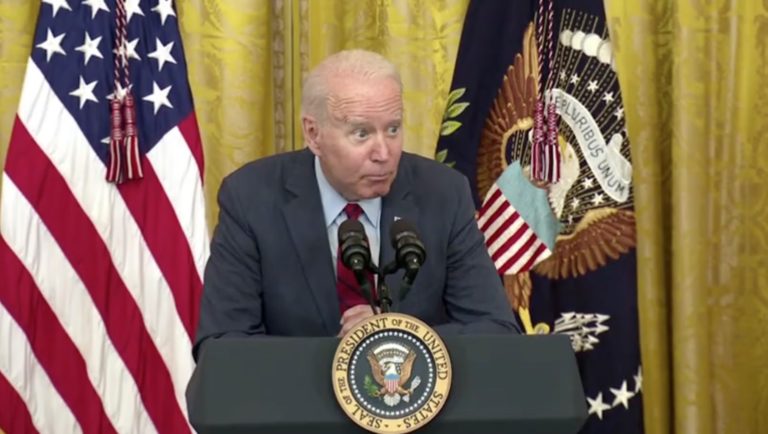
Facebook is on the defense as President Joe Biden’s said this week that Facebook is “killing people” by allowing misinformation about coronavirus and vaccines to spread on its platform.

“The data shows that 85% of Facebook users in the US have been or want to be vaccinated against COVID-19,” wrote Facebook’s Vice President of Integrity Guy Rosen. “President Biden’s goal was for 70% of Americans to be vaccinated by July 4. Facebook is not the reason this goal was missed.”

White House Spokeswoman Jen Psaki also said on Friday that more efforts need to be made to ban certain people from social media.

Psaki said once social media accounts are banned from one platform for spreading Covid-19 or vaccine “misinformation,” they should be expelled from all others simultaneously.

The previous day, Psaki had said the White House is pressuring Facebook over the spread of misinformation.

“We are regularly making sure social media platforms are aware of the latest narratives dangerous to public health that we and many other Americans are seeing across all of social and traditional media. We work to engage with them to better understand the enforcement of social media platform policy,” she said.

Psaki said social media companies should “create robust enforcement strategies that bridge their properties and provide transparency about rules. You shouldn’t be banned from one platform and not others if you are for providing misinformation out there.”

Rosen wrote on the company blog: “At a time when COVID-19 cases are rising in America, the Biden administration has chosen to blame a handful of American social media companies. While social media plays an important role in society, it is clear that we need a whole of society approach to end this pandemic. And facts — not allegations — should help inform that effort. The fact is that vaccine acceptance among Facebook users in the US has increased. These and other facts tell a very different story to the one promoted by the administration in recent days.”

Rosen said that according to the company’s surveys, U.S. citizens’ vaccine hesitancy has declined by 50 percent; and Americans are becoming more accepting of vaccines every day. 

“Since January, vaccine acceptance on the part of Facebook users in the US has increased by 10-15 percentage points (70% → 80-85%) and racial and ethnic disparities in acceptance have shrunk considerably (some of the populations that had the lowest acceptance in January had the highest increases since). The results of this survey are public and we’ve shared them — alongside other data requested by the administration — with the White House, the CDC and other key partners in the federal government,” Rosen wrote.

Read Rosen’s lengthy corporate blog post at this link.

Bear Paw Festival makes parades great again

Thousands of people turned out for the return of the Bear Paw Parade in Eagle River on Saturday, and Must Read Alaska got to see most of them from our parade truck.

The weather in Eagle River was Chamber of Commerce perfect, in the high 70s.

Also spotted in the parade was the Kelly Tshibaka for U.S. Senate float, which was accompanied by more than 40 people in Kelly for Alaska t-shirts and a few muscle cars. Mayor Dave Bronson rode a four-wheeler along with Assemblywoman Jamie Allard.

Assemblywoman Jamie Allard lines up for the parade in a four-wheeler, while First Lady Deb Bronson and Alexis Johnson get in line. Allard was co-chair of the parade.

The Must Read Alaska white GMC truck, provided by grassroots activist Jerrod Dunbar, stayed with the “America is Our Country” theme; the overall theme for the parade was the “Roaring 20s.” MRAK volunteers tossed and handed out candy and MRAK t-shirts, and when that was gone, they passed out the canvas Must Read Alaska bags that had carried the candy and shirts.

Thank you to all of the volunteers and riders who helped make it possible. We’ll do it again next year, with twice the candy, three times the t-shirts, and hopefully the same crew of amazing patriots.

The Bear Paw Festival, which includes fun-looking carnival rides, booths, and contests, runs through July 18. More info here.

Why Alaska can’t have nice things

Alaskans have been looking at states like Florida, Arizona, and Texas lately, as places that are the land of the free and home of the brave compared to the Last Frontier, which is taking a socialist turn for the worst.

Other Red State legislatures are working on substantive legislation, such as promoting civics education, voting security, gun rights, and heartbeat bills.

Some Alaskans are asking: Why can’t the Legislature of Alaska provide bills of substance for Gov. Mike Dunleavy to sign?

Florida Gov. Ron DeSantis signed bills last month to strengthen civics instruction and civics literacy in Florida’s kindergarten through postsecondary public schools.

HB 5 had 28 sponsors in the Florida House. It requires the Department of Education to develop or approve integrated civics education curriculum that meets certain requirements; requires the Education Department to curate oral history resources to be used with the curriculum; and requires the Department to approve civic education curricula submitted by school districts & charter schools.

Florida’s SB 1108 requires non-special education postsecondary students to complete a civic literacy course and pass a specified assessment to demonstrate competency in civic literacy as a prerequisite for graduation.

Florida’s HB 233 requires state colleges and universities to conduct annual assessments of the viewpoint diversity and intellectual freedom at their institutions to ensure that Florida’s postsecondary students will be shown diverse ideas and opinions, including those that they may disagree with or find uncomfortable. This bill is intended to curb the socialist-woke culture being promoted by the leftists who control education.

Alaska’s Legislature was, in the same year, busy passing bills such as HB 27, naming a bridge in Cordova for irene (lower case i) Webber. She may have been a good person, but naming a bridge after her is not substantive legislation. Not even close.

While Gov. Mike Dunleavy proposed strong legislation to create a spending cap, limits on taxes (must be approved by voters), and a constitutional 50-50 Permanent Fund dividend formula, the Alaska Legislature, controlled by a center-left group of lawmakers, passed five bills extending various boards, such as HB 109, extending the board for the Alaska Bar Association, or HB 117, extending the board for direct-entry midwives. It passed three bills to make mandatory adjustments for federal compliance. Yay.

Meanwhile, in Arizona, Gov. Doug Ducey signed a bill this month preventing local governments from teaching Critical Race Theory. Arizona’s HB 2906, prohibits “the state and any local governments from requiring their employees to engage in orientation, training or therapy that suggest an employee is inherently racist, sexist or oppressive, whether consciously or unconsciously,” Ducey’s office said in a statement.

The Alaska Legislature, in the same year, passed four bills that name bridges, license plates, roads and days, five board extension bills, two budget bills, four extending program bills, two reporting requirement bills, and eight good governance (“should have already happened”) bills.

Last month in Texas, Gov. Greg Abbott signed seven pieces of Second Amendment-related legislation. He signed a “heartbeat bill,” ensuring that babies in the womb cannot be killed via abortion after the sixth week of gestation. This bill will save millions of lives in the future.

The Alaska Legislature, in 150 days of session, did not pass one bill of substance. This represents a serious lack of quality leadership. In the House, the Speaker is a Republican in name only who puts her own provincial interests ahead of the greater good of the state. In the Senate, moderate Republicans are willing to gut the Permanent Fund dividend and few appear willing to step up and take a hard stand for smaller government.

The current legislative working group that is supposed to advance a fiscal plan for the state has less than two weeks left until August, and nothing has been accomplished. That group has heard the same presentation from Alexi Painter, Legislative Finance director, that it has heard umpteen times before, and a reasonable person might conclude that the working group is wasting its time and all Alaskans’ time.

Gov. Mike Dunleavy can’t sign legislation that’s not sent to his desk by the Legislature. He can’t rule by edict; our democracy is set up with three branches of government, each providing tension to the others.

Alaskans are suffering from a Legislature that is running a racket — racking up per diem and producing nothing of substance, except a budget that was a hot mess when it arrived at the governor’s desk.

Even the governor’s bill to create a question for voters — “Shall the PFD formula be a 50-50 split of available funds?” — barely received one hearing per chamber.

This week, Rep. Tom McKay of Anchorage filed a bill that bans racist teachings of “Critical Race Theory” in Alaska’s schools. With the Legislature we have right now, what are the chances that bill will ever be heard in committee? Co-Chairs Reps. Harriet Drummond and Andi Story will bury that bill so deep in the Education Committee it will never see the light of day.

Our Legislature is made up of 60 individuals, and it’s not fair to paint them all with the same broad strokes. But as a whole, the Alaska Legislature has failed the people of Alaska. Again.


Justices explain their ‘Recall Dunleavy’ decision; Justice Stowers issues a powerful dissent

Justice Craig Stowers, now retired from the Alaska Supreme Court, said the Superior Court’s decision to allow the Recall Dunleavy initiative to proceed to the ballot is violating the Alaska Constitution. Legislators need to fix the recall process, or there will be constant churn and chaos in government, he said, because any vile allegation of misconduct against an elected official is now presumed to be true by the courts.

“I urge every legislator to carefully consider the court’s opinion today. The opinion opens the door to standardless recall petitions. The court repeatedly says that Alaska courts are to apply the ‘prima facie’ standard to recall petition allegations and, accepting the allegations as true, if any logical connection can be made between an allegation and a statutory ground for recall, the petition must be found to be legally sufficient. I urge the legislature to, at the least, provide specific statutory definitions for the recall grounds to decrease the opportunity for judicial involvement in what is best done by the legislature — that is, legislating. This is not a partisan issue. The greatly expanded access to recall created by the court’s decision today can and will be used not to actually seek to recall an elected official for cause, but instead to seek to recall an elected official because of disagreements over policy. And in Alaska, disagreement over policy or political philosophy is not a proper subject for recall.”

The Alaska Supreme Court upheld the Superior Court’s ruling that the recall fit the parameters of Alaska Statutes. But Stowers pointed to the fact that the courts are now injecting themselves, and that is improper and a violation separation of powers and is an overreach by the court.

“In my view, the governor did not violate the separation of powers by using his constitutional discretion to line-item veto a small portion of the court’s budget. Rather, it is the court that violates the separation of powers, by intruding on and interfering with a power expressly granted to another branch of government — the governor’s express constitutional authority to exercise his discretion to veto or reduce a legislative appropriation,” he wrote.

“The doctrine of separation of powers prohibits one branch of government from ‘exercis[ing] any power that is not explicitly bestowed by the constitution or that is not essential to the exercise of that power.’ In doing so, it ‘avoid[s] . . . tyrannical aggrandizement of power by a single branch of government through the mechanism of diffusion of governmental powers.’ But it also ‘limits the authority of each branch to interfere in the powers that have been delegated to the other branches’ and, by doing so, ‘safeguard[s] the independence of each branch of government,'” he wrote.

“By permitting voters to recall the governor because he exercised a power explicitly bestowed on him by the constitution, the court interferes with the power delegated to the executive branch. In so doing the court unconstitutionally aggrandizes its own power and imperils the independence of another branch of government. The court’s decision undermines Alaska’s constitution and the separation of powers. I therefore dissent from this part of the court’s opinion,” he said.

Read the entire opinion at this link:

The application for a recall petition against Gov. Mike Dunleavy cited lack of fitness, incompetence, and neglect of duties as grounds for recall and made four different allegations of how those grounds were met. The director of the Division of Elections refused to certify the application, asserting that it was not legally or factually sufficient.

The Recall Dunleavy Committee challenged the director’s decision in Alaska Superior Court. That court granted summary judgment for the committee, deciding that except for one allegation, which it struck, the allegations in the committee’s application were legally and factually sufficient.

The committee was allowed to move on to the second phase of signature-gathering on its recall petition; if it was successful, the State would call a special election to allow the voters to decide whether the governor should be recalled.

The State appealed, and we affirmed the superior court’s decision in a summary order with an opinion to follow. We explain in this opinion why the committee’s recall application satisfied the legal requirements for presentation to the voters.

Gov. Mike Dunleavy issued a statement:

“The Alaska Supreme Court today issued an opinion that creates a standardless recall process, subjecting elected officials at every level, and across the political spectrum, to baseless, expensive, and distracting recall elections by their political opponents. The court has made it clear that even plainly false allegations of wrongdoing can trigger this process, undermining our election process, and prevents our elected officials from focusing on the many serious issues facing Alaskans,” he said.

“The Legislature can and should fix the law to create well-defined recall grounds, preserving the right of the people to recall elected officials for legitimate reasons, but preventing the political free-for-all created by today’s decision,” Dunleavy said.

“Unfortunately, the opinion today went far beyond what was needed to decide this particular case—it took the opportunity to attack the line-item veto power specifically granted to the Governor by the Alaska Constitution.  As Justice Stowers said today in his dissent to this decision, “the court unconstitutionally aggrandizes its own power and imperils the independence of another branch of government. The court’s decision undermines Alaska’s constitution and the separation of powers.'” he said.

“I have long argued that the Alaska Supreme Court—and the people of this state—would benefit if the Alaska Judicial Council would nominate a slate of candidates with more balanced and diverse judicial philosophy. I am not the first governor of this state to think this. Today’s decision underscores this view,” Dunleavy said.

Canada moves goalpost, now may open border to vaccinated Americans in mid-August

18

Canada has once again changed the timeframe for when it could open its borders to Americans. Those who have been fully vaccinated might be able to travel through the country in mid-August. Currently, the border closure is expected to end July 21.

Prime Minister Justin Trudeau discussed the border closures with premiers on Thursday night, and several expressed support for reopening, “and agreed on the importance of ensuring clarity and predictability as initial steps are taken.”

Nearly 80 percent of Canadians have received at least one dose of the Covid-19 vaccine, and 53 percent are fully vaccinated. The United States has a full-vaccination rate of 48 percent.

The border has been closed to all nonessential travel since March of 2020. There have been several extensions to the closure, which impacts Alaskans trying to move between Interior Alaska and Skagway, Haines, or the Lower 48.

Anchorage School District quietly removes Critical Race Theory reading list

Anchorage School Board member Dave Donley has been beating the drum for months: The Critical Race Theory reading list from the Anchorage School District’s Equity Office is partisan, racist, and Marxist.

Now, the reading list has mysteriously disappeared. Those books may still be on a recommended list that the district’s Equity Office may make available to those who call, but the district website has been scrubbed of the worst offenders, including:

  • Antiracist Baby by Dr. Ibram X. Kendi 
  • How to be an Antiracist by Dr. Ibram X. Kendi 
  • Stamped from The Beginning by Dr. Ibram X. Kendi 
  • The New Jim Crow by Michele Alexander 
  • An Indigenous Peoples’ History of the United States by Roxanne Dunbar Ortiz 
  • White Fragility by Dr. Robin DiAngelo 
  • So You Want to Talk About Race by Ijeoma Oluo

Now, there are only a couple of tame podcasts and other resources listed.

BACKGROUND

Last year the Anchorage School District’s director of “Equity and Compliance” announced the intent to use Critical Race Theory to develop new training and policies.  

In the Fall of 2020, the suggested reading list appeared on the ASD website of the Office of Equity and Compliance.  “White Fragility” and “How to be an Anti-Racist” were among other CRT publications listed as recommended reading for “Self Understanding.”  

The books, based on Marxist philosophy, contain radical racist propaganda and bias partisan attacks on Republicans, critics said. Donley, the only Republican on the Anchorage School Board, objected to these publications as inappropriate for a taxpayer-funded government website to identify as “recommended,” without any disclaimer and counter opinion being provided under Anchorage Municipal Code Section 1.15.110, prohibiting partisan use of public funds.  

District lawyers disagreed and said the potentially ordinance prohibited parts of the books “are not explicitly supporting or opposing a political party, candidate or ballot issue” so they were ok.

But Donley cited specific examples of attacks only on Republicans in these books and continued to object to the District Superintendent that endorsing these books on a taxpayer funded website without any listing or recognition of opposing thought literature was unfair and inappropriate.  Donley submitted a list of books that presented opposing opinions, but the Superintendent refused to list them.  

In late 2020, under public pressure, the ASD added the following disclaimer to the website: “These books have been recommended by staff as self and facilitated study resources on equity and race. The authors represent prominent voices in the ongoing national discussion about equity and race. These resources are not part of the ASD student curriculum, nor are the authors endorsed by ASD.”  

That was a start. But Donley continued to object at school board meetings to the unfairness and bias of listing only pro-Critical Race Theory books on the ASD website.  In early July, without prior notice, the list of “recommended” books was removed from the ASD website and replaced with: “For additional resources on equity please contact the Office of Equity and Compliance at 742-4132.”  A request from Donley for list of recommended resources was not responded to.

The ASD continues to provide classes in Critical Race Theory to its employees.  So far over 130 ASD employees have taken these classes based on “White Fragility” and “How to be an Anti-Racist.”

Read: Anchorage School District plunges into Critical Race Theory with reading list

Dan Fagan: Why are Alaska’s two U.S. senators advancing Joe Biden’s agenda?

By DAN FAGAN

Arkansas Republican Sen. Tom Cotton is a fighter. He understands his role as a U.S. Senator from a conservative state is to give his all when it comes to stopping the radical Leftist, anti-capitalism agenda of the villain currently and illegally occupying the White House, Joe Biden. 

Cotton did all he could to block Biden’s nominee to head the Department of Homeland Security, Alejandro Mayorkas. Mayorkas has long advocated for wide open borders and amnesty to all who illegally break into our country. 

It wasn’t just Mayorkas’ radical wide-open border advocacy that concerned Cotton. Mayorkas also has a checkered past. 

“Alejandro Mayorkas was found by Barack Obama’s Inspector General to be guilty of selling green cards to Chinese nationals on behalf of rich democratic donors,” said Cotton. “He is disqualified from leading the Department of Homeland Security.” 

Cotton’s worst fears over Mayorkas quickly materialized after he won confirmation. Texas Gov. Greg Abbott said recently with Mayorkas as DHS secretary, the U.S. has “abandoned the rule of law” at the Texas border.

Republican Virginia Congressman Bob Good said hundreds of thousands of illegals have crossed our Southern border since Biden became president. 

“We are not enforcing our laws,” said Good. “This is willful and intentional on the part of the administration to facilitate the illegal entry into our country of 10s of thousands, 180,000 in the month of May, some 700,000 this year, of the ones apprehended.” 

While Mayorkas has made it easier for hundreds of thousands of illegals to break into our country, he said something this week that encapsulates the blatant and glaring hypocrisy of Democrats when it comes to illegal immigration.  

Mayorkas warned Cubans fleeing the persecution of the nation’s Communist country not to come to America.

Cuban citizens have taken to the streets recently to protest abject poverty caused by the Communist regime running the nation. This has led Communist Cuban leaders to crack down on protestors. 

The harsh crackdown could lead to Cubans fleeing the country hoping to find safety in Florida. So, why would Mayorkas oppose Cuban immigrants while welcoming all others? Mayorkas knows most Cubans in America vote Republican. They’ve seen 62-years of Cuban Communist brutality up close and the misery it causes. They want nothing to do with Communist sympathizing Democrats.  

Mayorkas is more than happy to look the other way as a flood of illegals cross the Southern border, but he plays tough guy when it comes to Cubans seeking safety.  

“Homeland Security Secretary Alejandro Mayorkas warned Cuban refugees not to come while the border is open to practically everybody else,” wrote Epoch Times columnist Roger Simon. “After all, some of them might vote Republican.”

Anyone with an IQ above ten knows the diabolical game Democrats are playing with illegal immigration. They oppose voter ID laws while promoting mail in ballots and amnesty for illegals. The goal is simple. Flood our nation with enough illegals to make sure Republicans never control the White House, Congress, or the courts again. Allowing freedom loving, Communist hating Cubans in doesn’t fit with the plan. 

Not a single Democrat voted against the nomination of Mayorkas. Only six Republicans voted to confirm him: Susan Collins of Maine, Mitt Romney of Utah, Shelly Capito of West Virginia, Rob Portman of Ohio, and Alaska’s two senators, Lisa Murkowski and Dan Sullivan.  These senate Republicans are a gift for Biden with their go along to get along approach. 

Murkowski and Sullivan were two of only four senate Republicans to approve the nomination of an even more radical Biden nominee, Deb Haaland, for the position of Secretary of the Department of Interior. Haaland had a long and very vocal track record of opposing oil and gas development when Alaska’s two senators voted to confirm her. 

One of the first things Haaland did as Interior Secretary was to shut down all activity in ANWR.   

How do you think Ted Stevens, who fought with all he had to open ANWR, would have voted on the Haaland nomination? 

Of Biden’s 21 nominees, Murkowski voted in favor of 19. That’s highest among Republicans. Sullivan isn’t far behind with 14 yes votes. Sullivan approved more of Biden’s nominees than thirty-three of his fellow Republican senators.   

The conservative advocacy group, Heritage Action, ranks U.S. senators based on their voting record. It’s no surprise Sen. Susan Collins of Maine and Sen. Murkowski received the groups lowest rating among Senate Republicans. And who did Heritage Action score the third least conservative Republican in the senate? Sen. Dan Sullivan. 

The question must be asked. How did Alaska, a state that easily went for Donald Trump, end up with two politicians that are some of the most liberal Republicans in the senate? 

Dan Fagan hosts the number one rated morning drive show in Alaska on Newsradio 650 KENI.