Friday, June 5, 2026
Home Blog Page 1072

Donald Trump Jr. jumps in, supports Kelly Tshibaka for Senate

In June, it was President Donald Trump’s endorsement. In July, it was the Alaska Republican Party endorsement. Now, Donald Trump Jr. is supporting Kelly Tshibaka for U.S. Senate, with a fundraising letter that went out to the email list of Kelly for Alaska.

Donald Trump Jr. is a well-known hunting and fishing enthusiast and is a major force on social media, with an Instagram account followed by 4.7 million Instagram users.

“I’m taking over the Team Kelly email to send you all a special message! When my father endorsed Kelly earlier this year I was so excited. There’s finally a STRONG CONSERVATIVE running to take out Lisa Murkowski and her name is Kelly Tshibaka,” he wrote.

“I don’t have to tell you how important this election is. This is our opportunity to ensure Alaska has an actual Conservative representing them in the US Senate and not a swampy DC Insider like Lisa Murkowski,” he wrote.

Trump Jr. is the author of  Triggered: How the Left Thrives on Hate and Wants to Silence Us. He also authored Liberal Privilege: Joe Biden And The Democrats’ Defense Of The Indefensible.

Trump Jr. is known as an effective fundraiser, making it difficult to see where former Gov. Sarah Palin lands, if she decides to file as a candidate for Senate.

Read: Sarah Palin delivers click bait to mainstream media.

Facing confirmation headwinds, mayor’s health department director resigns

They can’t fire you if you quit.

The Anchorage Health Department Director has decided to withdraw from his appointment rather than be voted down by the Anchorage Assembly.

In a letter to Mayor Dave Bronson, Morgan said he didn’t want to put his family through the bruising confirmation vote on Tuesday, which appeared unfavorable.

The committee confirmation hearing for David Morgan was brutal, with the liberal-controlled Assembly asking him pointed questions about his politics, which are conservative, and his views on Covid-19. The Assembly, badgering him for over an hour, made it clear to all that he was not going to be confirmed.

Morgan has over 40 years of management in the health sector. The previous health department director, Heather Harris, had come into the job after running the Boys and Girls Club; she had no health management experience, but faced an easy confirmation process because she was chosen by former Mayor Ethan Berowitz, a Democrat, who three months later resigned in disgrace.

But Morgan has also been involved in Republican politics, and is well known as the chair of District 17 for the Alaska Republican Party. He has been outspoken on many topics, pandemic and otherwise.

Assembly Vice Chair Christopher Constant, who has had many gaffes in social media and with hot mics, was especially interested in short-circuiting Morgan. Constant was one of Forrest Dunbar’s key lieutenants in his failed campaign for mayor.

“I regretfully accept David Morgan’s resignation today as Director of the Anchorage Health Department. David Morgan has proven over many years in public health administration that he is highly experienced, qualified, and capable. However, due to what can only be described as a political campaign against him, David Morgan has decided to remove his name from consideration and avoid the months of partisan attacks that would follow him at every turn,” Bronson said. “The Anchorage Assembly has long acknowledged that a new Mayor should have the authority and ability to appoint his or her own senior leadership team. However, the Assembly is headed down a very dangerous path that challenges years of precedent and undermines any future Administration from performing its required duties.”

Following David Morgan’s resignation, Bronson today named Anchorage Health Department Deputy Director DeeAnn Fetco as Acting Director until the position can be filled on a full-time basis.

Read Chris Constant says he doesn’t want to give Assemblywoman Allard power over mask mandate removal

Susan Fischetti: Murkowski must continue to oppose Big Labor bill

By SUSAN FISCHETTI

Democrats in Congress are once again pushing radical proposals that would hurt the average Alaska worker and decimate small businesses. 

This time, Senate Democrats have banded together to cosponsor the innocuous-sounding Protecting the Right to Organize Act. Contrary to its feel-good abbreviation, the “PRO” Act would only come with cons for Alaska’s businesses, workers, and economy.

Alaskans can be thankful that Sen. Lisa Murkowski has not supported this legislation. The senator should stay strong on this and continue to do what’s right for Alaskans.

Among other things, the PRO Act would remove a worker’s right to a private ballot vote during union elections, violate worker privacy by handing over their personal information to union leaders, and make it much more difficult for individuals to work as independent contractors.

At the same time, it would undermine contractual relationships between businesses and shift massive new costs and liabilities to business owners.

This bill is the last thing Alaska needs, especially as local businesses are still reeling from the effects of the pandemic and economic slowdown. Sen. Murkowski should continue fighting this anti-business legislation for the good of all Alaskans and our economic recovery. 

Susan Fischetti of Eagle River was an elector for Alaska in 2000 and is an officer of the Anchorage Republican Women’s Club. She writes in her own capacity.

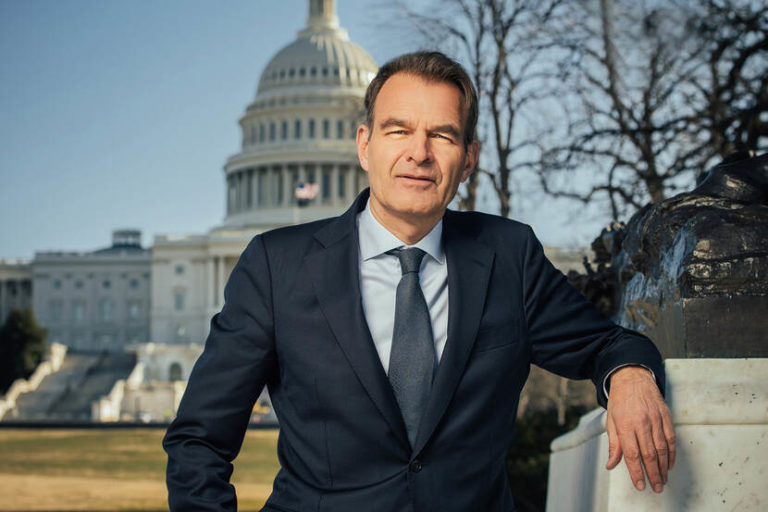
Incoming: Ambassador of the Netherlands

A delegation from the Netherlands will be in Alaska, Aug. 10-12.  

André Haspels, Ambassador of the Kingdom of the Netherlands to the United States, and Dirk Janssen, Consul General of the Netherlands, whose office is in San Francisco, will meet with business and government officials to strengthen the ties between the Netherlands and Alaska.

This is the first trip to the state for the two diplomats.

The Alaska Honorary Consul to the Netherlands is Irene Post-Green of Anchorage, who is coordinating the events. Since 2017 she has connected Dutch and Alaska businesses and has provided consular support to Dutch nationals in Alaska.

“Alaska is a state rich in resources and at the forefront of energy production, but also feels the impact of climate change. The Netherlands has an excellent track record in agriculture, energy and water management,” said Ambassador Haspels. “I’m looking forward to getting to know the Last Frontier state and to connect with its people and businesses.”

“Trade between Alaska and the Netherlands is fairly limited, but growing,” said Consul General Janssen, whose office in San Francisco covers all 13 most-western states, including Alaska.

Alaska exports $130 million in goods and services to the Netherlands, and 99 percent of that is seafood, he said. Alaska also imports $5.5 million in goods and services from the Netherlands, 95 percent of which consists of  computers and other electrical equipment.

“I see major opportunities to do more business together,” he said.

During their visit, the diplomats will meet local business leaders and government officials, such as Gov. Mike Dunleavy and Anchorage Mayor Dave Bronson. They will meet with representatives from the World Trade Center and visit Anchorage International Airport, which is the fourth busiest cargo hub in the world.

Agriculture is high on their agenda, as they will visit Bell’s Nursery, the largest greenhouse operator in Anchorage, and they will travel to Palmer to meet with the Director of Agriculture of the State of Alaska.

There they will also meet local farmers, including the largest potato farm in Alaska, which was founded by Bert and Suus Vanderweele, who are of Dutch descent.

The Netherlands is twice the size of New Jersey, and can fit into Alaska 41 times, but it is the second largest exporter of agricultural products, behind only the United States.

The Dutch have found innovative solutions to grow crops efficiently, in greenhouses for example. Ambassador Haspels stated, “Growing food in the Netherlands doesn’t need a lot of water, space, or even the sun. Dutch farmers are experts in sustainable food production by controlling the growing environment. This expertise could be very interesting for Alaska.”

Netherlands produces and exports natural gas. By 2050, the Netherlands wants to be nearly emission free. The country is experimenting with energy from waves, algae and biomass. To secure a resilient energy grid, the Netherlands is looking into smart and micro-grids, which are  more common in Alaska. The Dutch are initiating partnerships to share experiences and exchange expertise.

The ambassador is concerned with sea levels rising in his low-lying nation. The Dutch research institute Deltares works together with the United States Geological Survey on Alaska shore research and have created models to map the effects of climate change on the Arctic Coast. It’s an example of how the Netherlands and Alaska work together.

Laddie Shaw: In memory of Extortion 17

By REP. LADDIE SHAW

August 6 is an important date in American military history for many reasons; among other things, today is the 76th anniversary of the Hiroshima bombing in 1945.

But I would like to also commemorate a more recent event – one that has particular meaning for me personally.

Ten years ago today, the most tragic single loss of life in U.S. Special Operations took place in Afghanistan. The call sign of the mission was Extortion One Seven (17) and sadly the Chinook helicopter carrying 38 occupants, including 17 Navy SEALs, would not return from its mission.

The story of Extortion 17 shall never be forgotten.

Frogmen, Silent Warriors, Men with Green Faces, all titles given to a group of combat operators with a storied history in the Naval Special Warfare community, a history within the Underwater Demolition Teams that helped to establish today’s Navy SEALs.

Since their inception, Navy SEALs have played a part in every combat operation that has taken place since Vietnam, continuing well into today’s “war on terror.” Their mission extends from counter terrorism, to hostage rescue, deep reconnaissance, foreign internal defense support and training, and counter drug operations. Navy SEALs are trained to be a tactical force with a strategic impact. SEAL Teams are deployed worldwide, willing to face adversity at any level and accept any mission with the highest level of professionalism and integrity.

Of the many worldwide engagements the SEALs have taken part in, from Vietnam, Panama, Grenada, Iraq, and beyond, the battle that took place in the Tangi Valley of Afghanistan on Aug. 6, 2011 will go down in history as the costliest day in the existence of the Navy SEALs.

The planned mission was to reinforce a special operations team of Army Rangers fighting in the Tangi Valley. En route to the objective, the Chinook took a direct hit from a rocket propelled grenade fired by a Taliban insurgent, causing the helicopter to crash and killing all on board. 

Since the start of the war in Afghanistan in 2001 Extortion 17 brought about the single largest loss of U.S. forces to date, and the most devastating day in DEVGRU (Team 6) history. It was also the most fatal incident within the U.S. Special Operations Command with the loss of all 38.

This day will stand as the most somber day in Naval Special Warfare history since the D-Day invasion in Normandy, June 6, 1944.

For the Naval Special Warfare community, the losses, as all losses, are painful, heart wrenching and devastating to the soul of a group of warriors that are bonded by adversity and loyalty to one another. It is a brotherhood beyond reproach. 

From the Navy SEAL Creed:

My loyalty to country and team is beyond reproach. I humbly serve as a guardian to my fellow Americans, always ready to defend those that are unable to defend themselves… I voluntarily accept the inherent hazards of my profession, placing the welfare and security of others before my own.

I will never quit. I persevere and thrive on adversity…I will draw on every remaining ounce of strength to protect my teammates and to accomplish our mission.

“The cost of freedom is never free! For those who have to fight for it, freedom has a flavor the protected will never know.”

Laddie Shaw served two tours in Vietnam as a US Navy SEAL and 24 years in uniform. He currently represents the Lower Hillside of Anchorage in the Alaska House of Representatives.

Lydia Jacoby feted in Seward parade

Seward town folk and visitors turned out to celebrate its Olympic medal-winning 17-year-old Lydia Jacoby on Thursday. Seward had fire trucks and festooned flatbeds rolling through town with the Tsunami Swimmers waving at the crowd and a special balloon-decorated float for Jacoby, who won a gold and a silver medal in Tokyo.

Jacoby, who will be a senior at Seward High School this year, scored a major upset in the women’s 100-meter breaststroke. She won a silver in the 4x100m medley relay.

Jacoby had been home for a few days after having been gone from Seward and away from her parents for a month.

Gov. Mike Dunleavy attended for the celebration and presented her with a state flag and commendation. Also present was Senate President Peter Micciche, who was on the first float of the parade.

Crickets from mainstream media

ANCHORAGE DAILY PLANET

You have to wonder sometimes whether Anchorage’s news media are asleep at the switch or whether their failure to report the news goes to something deeper.

Take, for instance, Assembly Chairman Felix Rivera’s assertion there are too many white males in public office.

Rivera, an Hispanic gay Assembly member, made the comment during an Alaska Black Caucus Facebook page forum.

“I really think our political establishments need to get over this idea that only a certain typecast of individual can run for office, because when you do that, you’re typically going to go to someone who is white and someone who is male, and we need to get beyond that very rigid thinking in our political establishments,” he said.

That racially tinged nonsense was reported by MustReadAlaska.com. The rest of the city’s media? Crickets. One might think when the chairman of a city’s primary legislating body says such a ridiculous thing it might dutifully be reported by the news media as news. Not here.

As the website points out, Rivera’s statement was especially “curious because the Anchorage Assembly of 11 has at least two Hispanics, one Alaska Native, and several gay and lesbian members, some whom are public about their sexual preference, others who are not. The Assembly also has at least two Jewish members, and one veteran.”

The idea of public officials employing racism ostensibly in the pursuit of racial equity is not only silly and self-defeating, it is dangerous. Stirring racial prejudice, especially from positions of authority, can carry heavy consequences.

Of course, as a member of the public, you need know when a public official resorts to such a thing, but, frankly, in Anchorage the odds are against you.

Read more at the Anchorage Daily Planet.

200 turn out to protest forced vaccinations at Alaska Native Tribal Health Consortium

About 200 people with bold and colorful homemade signs showed up Thursday afternoon near the Alaska Native Tribal Health Consortium campus in Anchorage to protests the forced Covid-19 vaccinations of employees.

Several of them said they would be losing their jobs in October, when the deadline for getting the vaccine was in full effect. One woman works for an airlines and was there to support the medical workers, saying she fears her company will be next to mandate vaccines.

One woman holding a sign so her face could not be seen by her employer said she has a medical exemption because she reacts badly to the flu shot and gets a type of paralysis, and she said that ANTHC will not give her an exemption.

Both ANTHC and Southcentral Foundation have enacted the “jab or no job” policy. A shortage of medical workers in Alaska has already begun to create problems in the health care sector.

ANTHC and Southcentral employ more than 5,000 people.

Whether employers can force employees to get vaccinated is not settled law. But in June, a Texas judge ruled that a hospital can mandate the Covid-19 vaccine to all employees, and since then the tactic by employers has spread across the nation.  

Providence Hospital in Anchorage has said it is only encouraging its staff to be vaccinated.

Art Chance: Aug. 6, 1945 and the end of the world

By ART CHANCE

Five thousand years of the plodding progression of Western Civilization ended and a new World was born a little after 8:15 am Japanese Time (GMT +9) on Aug. 6, 1945.   

Five thousand years of history and human progress being dictated by the clashes of kings, emperors, tyrants, and Empires ended in a blinding flash 1,600 feet above Hiroshima, Japan. The end was sealed three days later with another blinding flash over Nagasaki, Japan, when the last of the ancient empires, Imperial Russia in the guise of the Union of Soviet Socialist Republics was stymied in its imperial ambitions in Asia.   

Little did the Soviets know that the United States was out of nuclear bombs, though the U.S. government was so riddled with Soviet spies that they may have known.

We don’t like to talk about it but the U.S., like England, was a very war-weary nation in the spring and summer of 1945.  The ink was barely dry on the German surrender when the British turned out Sir Winston Churchill for “free stuff.”   

The U.S. and England had agreed on a “Germany First” strategy. Huge Army and air resources as well as logistical support and military transport had been devoted to the European war and to aid to the U.S.S.R. The U.S. shouldered most of the load in the Pacific with enormous naval resources, including naval air power, but relatively limited use of U.S. ground troops. The U.S. and Commonwealth troops who fought the island-hopping campaign across the Pacific did most of it with tens of thousands of troops, not the hundreds of thousands devoted to the retaking of North Africa and Continental Europe.   

But as the Allies neared the Japanese home islands, the butcher’s bill became much, much dearer. Between June of 1944 and June of 1945, the U.S. took a million casualties. Men who had survived fighting from North Africa, Sicily, Italy, and Normandy were looking at being packed into troop transports and sent to the Pacific for the invasion of the Japanese home islands.   

Needless to say, morale was poor both in the ranks and on the home front. Years of wage and price controls and rationing had led to unrest and growing labor disputes. The U.S. was considering even drafting women for service in war production industries. The U.S. really needed to end the war.

In late July the Allies held the Potsdam Conference to settle the disposition of German and war-torn Europe and to set policy for ending the war with Japan. During the Conference, President Truman was informed that the first US atomic bomb test had been successful. He let Stalin know that the U.S. now possessed a new and powerful weapon, which of course Stalin already knew. The Allies delivered an ultimatum to Japan demanding its unconditional surrender or face destruction. The Japanese ignored the ultimatum. The U.S. made good on the ultimatum on Aug. 6.   

Two days later our gallant Soviet allies denounced their neutrality pact with Japan, turned their armies east and tried to scoop up as much Japanese held territory in Asia as they could, including much of China. We owe the existence of communist China, communist North Vietnam, and North Korea to that adventure.

So, you can get a good debate about whether the Nagasaki bomb was “dropped on Tokyo or Moscow.” It is a valid argument that the Hiroshima bomb had not persuaded the Japanese militarists to surrender, so the Nagasaki bomb was added persuasion.   

It is an equally valid argument that the Nagasaki bomb was dropped to demonstrate to the Soviets that the first one wasn’t a freak.  Imagine if you will the Soviets turning their vast following in the U.S. left against further prosecution of the war.   

Much of academia, media, and organized labor were sympathetic to if not allied with Soviet communism. An “End the War” campaign in England and the U.S. would likely have led to accepting terms with Japan that would have made Asia into Soviet chattel.

In less cynical terms, as a practical decision, the two atomic bombs saved millions of lives. The U.S. was estimating taking as many casualties in taking the Home Islands as it had taken while restoring Europe. Most of our literature and history about the Pacific war understates the ruthlessness of that front.   

We remonstrate a bit about the Japanese cruelty to prisoners and such, but generally Allied troops asked no quarter and gave none. The atomic bombings of Hiroshima and Nagasaki are barely in the top 10 list of civilian casualties from conventional bombing of German and Japanese cities. If necessary, the U.S. could and would have burnt every structure in Japan to the ground; in one night a B-29 low-altitude raid using incendiary bombs leveled most of Tokyo that March of 1945.

Just burning things down didn’t have quite the drama of a single big bang and a bright flash. The world is better for Aug. 6.

Art Chance is a retired Director of Labor Relations for the State of Alaska, formerly of Juneau and now living in Anchorage. He is the author of the book, “Red on Blue, Establishing a Republican Governance,” available at Amazon. 

Photo: Air Force Col. Paul Tibbetts waves from the cockpit of the Enola Gay moments before takeoff on Aug. 6, 1945. A short time later, the plane dropped the first atomic bomb in combat. Armen Shamlian/US Army Air Forces