Thursday, April 30, 2026
Home Blog Page 1069

Don Young campaign party scheduled

24

Congressman Don Young will have his annual Taste of Alaska fundraising party on Aug. 4, but at a new venue: The home of Stephen Routh, and with over 100 co-hosts. Notably, Gov. Mike Dunleavy and Sen. Dan Sullivan and Julie Fate Sullivan are the special guests.

Young has been representing Alaska in Congress since 1973 and this spring announced he would run for his 26th term. Rep. John Dingell, Jr., of Michigan, who retired in 2015, holds the record for longest consecutive serving congressman, with 59 years of service.

Kodiak kids Pre-K through grade 5 may have to wear masks when they return to school

11

The Kodiak Island Borough School District is developing plans to mask children from pre-kindergarten through fifth grade, once school opens on Aug. 30. Students in the 2020-2021 school year wore masks after schools reopened.

An earlier plan was to have masks optional for students and staff. But the district staff is now recommending to the school board that the younger students be required to wear masks this fall, but masks for middle and high school students will still be optional, although recommended for those not fully vaccinated against Covid-19.

The district required masks during summer school this year for all students, but if a big spike in Covid cases is seen in Kodiak, Superintendent Larry LeDoux will ask that the mask mandate be reinstated for the children too young to be vaccinated.

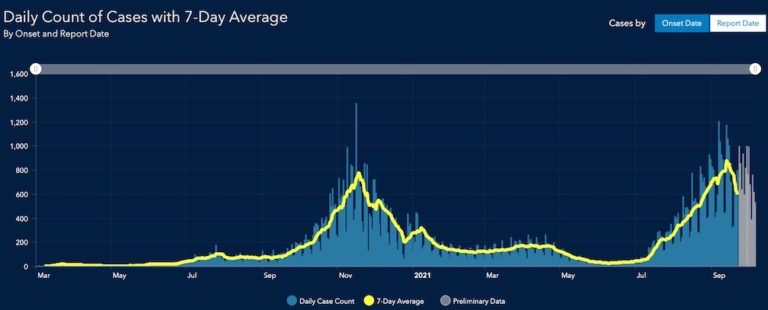
Kodiak has seen 1,161 cases of Covid-19 among the 13,500 residents, or about 9 percent of the population of the island. Six deaths are attributed to the virus.

Since July 17, some 33 new cases of the virus have been diagnosed in the Kodiak Borough, a slight uptick in cases mirroring the upward trends seen around the world this summer.

There are 219 students in the Kodiak Island School District in six “town schools” and five “rural schools.”

The district’s Covid-19 mitigation and racism/equity plan for the 2021-22 school year is at this link.

Head of RPEA resigns with scorching letter

21

The head of the Retired Public Employees of Alaska announced her retirement, effective Aug. 1, with a letter criticizing several members of the executive board, particularly the board secretary, Stephanie Rhoades.

Sharon Hoffbeck, who has served as RPEA president in an volunteer position for the past nine years, has a strong record of defending the rights of public employment retirees, including fighting to stop the diminishment of retiree health care benefits. A lawsuit she initiated against the state is expected go to trial at the end of August. Her resignation could imperil that lawsuit, which is fighting to save the medical benefits of retirees.

Hoffbeck said that the office manager and medical information committee director are also resigning due to the hostile environment she says has been created in the workplace by Rhoades.

Sources say that Rhoades, a former judge who has been on the board for about a year, has been constantly harassing Hoffbeck in what appears to be an attempt to force her out of the organization.

“It’s been pure hell since Stephanie came on the board,” said a MRAK source, who concurred with Hoffbeck’s assessment of the situation.

“There are several on the executive board who have allowed themselves to become convinced by the board secretary, Stephanie Rhoades, that my management style is not in the best interests of RPEA members and by extension, all retirees. She seems to disregard or ignore the many achievements under my leadership such as the completely successful DVA lawsuit, the establishment of the Retiree Health Plan Advisory Board, the hiring of an accounting firm to help assure fiscal responsibility rather than depending on volunteers who have been elected but may not have the appropriate skills, and the medical diminishment lawsuit that is currently set for trial at the end of August. Her complete resistance to my leadership has created a very hostile environment that I am no longer willing to endure,” Hoffbeck wrote.

“I expect you will hear varying stories from other sources that differ from my explanation. I leave you to draw your own conclusions based on your own experience with RPEA while I was the president,” Hoffbeck continued.

“There is still much to be done to resist and fight the state’s plan to reduce our retiree medical benefits as much as possible. I plan to continue to be involved in helping prevent this ever-increasing loss of retiree benefits, just not as president of RPEA,” she wrote.

The organization represents the interests of not only state retirees, but municipal and school district retirees statewide. The organization has about 5,000 members who pay about $35 a year to keep the organization going.

Will Interior Secretary Haaland see more than ducks and eel grass at King Cove?

ANCHORAGE DAILY PLANET

U.S. Interior Secretary Deb Haaland is slated to visit with residents of King Cove during a visit to Alaska in September.

During her confirmation meetings, she reportedly promised U.S. Sens. Lisa Murkowski and Dan Sullivan she would meet with villagers to talk about a short, one-lane gravel road skirting the edge of the 330,000-acre Izembek National Wildlife Refuge to reach Cold Bay’s all-weather airport for medical evacuations in inclimate weather.

Haaland’s department over the years, and under different administrations, generally opposed the road between the communities. When Interior, under President Donald Trump, approved a land swap that would allow the road to be built, U.S. District Judge John Sedwick rejected the deal. Trump’s administration appealed and Biden’s Department of Justice has filed a legal brief in the 9th U.S. Circuit Court of Appeals defending the exchange.

The Aleut fishing village of about 950 has fought for decades to get such a road to the Cold Bay all-weather runway for medical evacuations in poor weather, but without success. The roadway would be routed along the edge of the 330,000-acre Izembek refuge. Environmental groups claim such a road would endanger migratory birds and eel grass they feed on – despite there already being more than 40 miles of roads in the refuge used by hunters.

The 11-mile stretch would complete a 30-mile road that would provide a reliable ground link to Cold Bay’s all-weather runway when the area’s notoriously fierce weather grounds small planes.

King Cove is the poster village for the disconnect between Alaska and those who value a duck more than a human life. It is emblematic of forgotten federal trust responsibilities for Native Alaskans. Environmental interests fear allowing such a road would set precedent and pave the way for bars and convenience stores in refuges across the nation. That somebody surely will die at King Cove someday trying to reach medical help without the road is of little consequence to them.

King Cove is a tiny pin hole in a very large map, a wind-blown fishing village in the Aleutians East Borough. Located on the Pacific Ocean side of the Alaska Peninsula, out near its end, it is about 600 miles southwest of Anchorage and hard against the Izembek refuge.

Residents have been trying to get a road built since before the refuge was designated mostly as wilderness by the Alaska National Interest Lands Act in 1980. Unsurprisingly, they say, nobody bothered to tell villagers there would be a wildlife refuge nearby, or that it would contain wilderness or affect construction of a road to Cold Bay.

Ferocious weather grounds or delays King Cove’s aircraft about half the time. Eleven people have died in unsuccessful medical evacuations and other plane trips in and out of King Cove over the past four decades. The worst accident was in 1981, when a medevac crash killed all four aboard. Trying to reach Cold Bay by boat in bad weather is dangerous, too. It is a harrowing two- to three-hour trip through life-threatening, tumultuous seas.

Coast Guard helicopters regularly are used to evacuate residents in horrid weather. Each medevac mission presents a very real danger to pilots, crew and residents. Watching videos of the missions will make the hair stand up on the back of your neck.

Congress has done about everything it can do to appease environmentalists and avoid building a road. In 1997, it provided $37.5 million for a clinic and water access to Cold Bay that included a $9 million hovercraft later beached because of expense and reliability issues.

It turns out, a simple, gravel road is the only safe way to medically evacuate those who need to reach Anchorage, no matter the weather. Without the road, somebody, some day, again is going to die in King Cove trying to reach medical help.

It is simply a matter of time. Perhaps Haaland will see the importance of valuing human life over ducks and eel grass.

We can hope, but we will not hold our breath.

Read more at the Anchorage Daily Planet.

Anchorage’s deep state: New equity officer can’t be let go without OK from Assembly

CRITICAL RACE THEORY AT CITY HALL

The new Anchorage chief equity officer, who makes $115,000 per year, was hired in the final days of Acting Mayor Austin Quinn-Davidson’s 8-month duration at the helm of Anchorage City Hall.

This is one of the positions that could be trimmed by the new Mayor Dave Bronson, conservatives say.

After all, it’s Critical Race Theory in practice, something that conservatives find reprehensible.

Some who voted for Bronson have expected that the position had already been eliminated, since there’s already an equal opportunity officer at the city.

Clifford Armstrong, the director of equity and justice, cannot be fired or laid off, no matter how egregious his actions may be, without the express consent of the Assembly. The position cannot be left vacant, now that it has been filled.

Read: Equity officer hired out of Tacoma to run new office for mayor

That clause is written right into the ordinance. The mayor doesn’t get to decide if he is doing his job, which according to the ordinance, is to improve the lives and livelihoods of people with certain skin color, disability, and LGTBQIA+ status. 

Enabling legislation job description is downloadable here:

The “equity” term refers to “equal outcome,” as opposed to equal opportunity, which is why people who believe in hard work and merit-based rewards object to the new fad that has come from the Critical Race Theory concept.

Armstrong runs the Anchorage Office of Equity and Justice, which has been structured in the same way as the Office of Internal Audit. The auditor also can’t be fired without the approval of the Assembly.

“After the initial appointment effective immediately, the term of office for the chief equity officer shall be four years, ending on December 31, effective with appointment to the term beginning January 1, 2021,” the ordinance read. It went into effect before former Mayor Ethan Berkowitz left office after a major scandal involving a local news reporter.

“The chief equity officer may be dismissed by the mayor only for cause shown, and only with the concurrence of a majority of the assembly,” the law reads. According to the ordinance, “The office of equity and justice shall have such assistants and employees as are necessary to perform all required duties.”

There are no clear deliverables for the job, so firing the equity officer “for cause shown” is clearly an impossible task, unless the majority of the Assembly is flipped to conservative, which is unlikely in Anchorage. The next election is in April.

According to the ordinance, Clifford’s contract will remain for four years, beyond the next mayoral election. He will get to cruise for four years, collaborating with radicals who control the Assembly and passing information to the Alaska Democratic Party. All on the taxpayers’ dime.

Vice President Pence slips quietly in and out of Alaska to support wounded warriors

Former Vice President Mike Pence and his wife Karen slipped quietly into the Lake Clark area over the past few days to visit with military veterans and their spouses at the Samaritan’s Purse’s Operation Heal Our Patriots lodge at Port Alsworth, where wounded veterans and their spouses have solace and support for their marriages and their faith in God. Plus, they get to fish and hike.

“What an encouragement to these couples who have sacrificed so much,” said Franklin Graham, President and CEO of Samaritan’s Purse and the Billy Graham Evangelistic Association.

Learn more about Operation Heal Our Patriots at this link.

Win Gruening: Alaskans are finally getting back to work

10

By WIN GRUENING

Thanks to supplemental Federal unemployment benefits ending last month, Alaska workers, like those in many other states are finally getting back to work.  Republican officials across the country have long claimed that generous unemployment benefits were a disincentive for returning to jobs. 

In what has become a national trend,  many Alaska business owners have not been able to fill open positions.

In a recent ADN article, Misty Stoddard, an owner at Rain Proof Roofing in Anchorage said she wasn’t getting many applications. Some people have told her they’d prefer to continue collecting unemployment benefits.

Many business owners in the local hospitality industry have similar stories to tell. Trina Johnson, owner of La Mex restaurant in South Anchorage, said she’s had trouble finding workers.

A record-high 48% of small business owners in the U. S. reported unfilled openings in May, according to the National Federation of Independent Business.  Alaska’s reliance on the visitor industry has disproportionately affected our state as restaurant owners, tourism related businesses, and their suppliers are experiencing a growing labor shortage as the economy tries to recover.  

In many cases, the $300-a-week benefit, which was reduced from the $600-a-week payment authorized under the original CARES Act last March, meant that many unemployed workers were  earning the same or more by not working.  According to the Center on Budget and Policy Priorities, based on a 40-hour work week, the average unemployed American was getting the equivalent of $17.17 an hour – more than twice the Federal minimum wage.  In 21 states, unemployed households could potentially earn the equivalent of $25/hour while not working

In March 2021, there were 31,841 Alaskans collecting state unemployment benefits, over three times the number collecting unemployment benefits a year earlier. Yet, the Dunleavy administration had been hearing from employers for some time that a growing labor shortage was preventing businesses from fully re-opening as pandemic related precautions eased.  According to Alaska Commissioner of Labor, Tamika Ledbetter, the state’s available-jobs database had more openings than the number of people on unemployment.  Based on that information, on May 14, Gov. Dunleavy made the decision to discontinue the Federal supplemental payment beginning in June.

In doing so, Alaska joined 17 other states that announced they planned to end the special Federal benefit.  A week later, at least 25 states, including Alaska —all with Republican governors—had announced similar plans.  Some states even decided to offer bonuses to employees that returned to work.  “In Arizona, we’re going to….encourage people to work…instead of paying people not to work,” Governor Doug Ducey said announcing Arizona would be offering one-time bonuses to returning workers.

Dunleavy’s action was praised by Republican officials and many private sector business leaders.  Some Democratic lawmakers, UAA economists, and labor unions disputed that the higher unemployment payments discouraged people from work and criticized the cut.

However, evidence has continued to mount since then that ending the benefit has positively affected many states across the country, including Alaska.

Recently released U. S. Labor Department data on unemployment claims reflect welfare rolls expanding in the states where the unemployment bonus remains in place. Conversely, the number of people on welfare is shrinking in the states where the supplement expired. 

States that announced an end to enhanced federal unemployment benefits in June saw a 13.8 percent drop in residents receiving benefits from mid-May through June 12, according to an analysis by Jefferies LLC.  States announcing an end to the federal unemployment in July saw a 10 percent decline in residents receiving state benefits.  Meanwhile, some studies show states that continued the bonus posting increases in initial claims.

In Alaska, total unemployment claims dropped from nearly 30,000 the week before the extra federal benefit ended to just under 26,000 in late June, according to state data. They peaked at more than 66,500 a year ago.

As visitor numbers begin to increase across the state, it is critical that Alaska businesses are able to staff up to meet the demand. 

Thanks to Governor Dunleavy, one more impediment to accomplishing that has been removed.

After retiring as the senior vice president in charge of business banking for Key Bank in Alaska, Win Gruening began writing op-eds for local and statewide media. He was born and raised in Juneau and graduated from the U.S. Air Force Academy in 1970. He is involved in various local and statewide organizations and currently serves on the board of the Alaska Policy Forum.

Read: Ranked choice voting is not that simple

Wasilla City Council to vote on whether to oppose Mat-Su Borough proposed sales tax

12

The Wasilla City Council will on July 29 take up a resolution that opposes a proposed Matanuska-Susitna Borough ordinance that would place a 1.5 percent areawide sales tax to pay for transportation projects.

The tax would go into effect on July 1, 2022 for five years or until $73.6 million is collected, after which the tax would expire.

The sales tax question would be on the Nov. 2 regular borough election ballot, if passed by the Matanuska-Borough Assembly at its Aug. 3 meeting.

Then, if borough voters agree, the 1.5 percent areawide sales tax would be added to the Wasilla 2.5 percent sales tax for a total of 4 percent, which would harm Wasilla, especially when the City of Wasilla comes to voters to ask for a future project to be paid for by its forward-funding, no-debt method of paying for capital projects.

“Though the City is not opposed to infrastructure improvements, the 22 projects listed in MSB Information Memorandum No. 21-155 provides for only two projects within the City of Wasilla with a total cost of $5.5 million or 7.4% of the total bond package of $73,685,000.

Wasilla consumers would bear a disproportionate burden for the borough tax, as Wasilla is the economic powerhouse for the borough.

“Further, the MSB does not address the fiscal impact, administration of, or collection of a 1.5% areawide sales tax, which further undermines cities within the Borough and citizen confidence,” the report says.

“With the MSB currently generating revenue from the City of Wasilla in the form of property tax ($11.5m), cigarette tax ($4m), bed tax ($150k) along with alcohol tax and motor vehicle tax, an additional areawide sales tax ($12.5m) would be excessive,” it continues.

“The City of Wasilla has a proven track record with our citizens, where we have completed three major projects: The Curtis D. Menard Memorial Sports Complex early debt extinguishment, Library, and the Wasilla Police Department,” the Wasilla staff report says.

The City of Houston City Council has also approved a resolution opposing the tax.

The Wasilla City Council meets at 6 pm on July 29 at Wasilla City Hall.

Democrats advance legislation requiring women to sign up for military draft

23

The Senate Armed Services Committee has approved language in the 2022 National Defense Authorization Act that would require women to register for the military draft.

Currently, only men must sign up for Selective Service when they are between the ages of 18 and 25. The all-volunteer U.S. military has not drafted anyone since last draft call on Dec. 7, 1972, near the end of the Vietnam War. The Selective Service may, however, be reinstated in a national emergency.

The language came out of the subcommittee on personnel, led by Chairwoman Sen. Kirsten Gillibrand, a Democrat from New York. The ranking Republican member is Sen. Thom Tillis of North Carolina.

Highlights of the Act include a 2.7 percent pay raise for both military and the Department of Defense civilian workforce, as well as a change to the Military Selective Service Act to require the registration of women for Selective Service.

The Act also authorizes fiscal year 2022 active-duty end strengths for the Army of 485,000 (up from 480,000); the Navy, 346,200 (up from 332,528); the Marine Corps, 178,500 (down from 186,000); the Air Force, 329,220 (up from 327,878); and the Space Force, 8,400. It authorizes reserve component military end strengths in line with President Joe Biden or his successor’s request, with the exception of Air National Guard military technicians and full-time Reserve and Guard personnel, which are frozen at FY21 levels.

From the readiness and management support subcommittee, where Sen. Dan Sullivan is the ranking Republican minority member, the bill has language that requires defense contractors to publicly disclose employee training materials “for review and identification of Critical Race Theory or similar theoretical instruction.”

Sen. Jack Reed, of Rhode Island is the committee’s chairman, and Sen. Jim Inhofe of Oklahoma is the Republican minority’s ranking member.

A complete detailed summary of the bill is at this link.

The U.S. House is working on a similar bill, and the two will be reconciled in the legislative process.