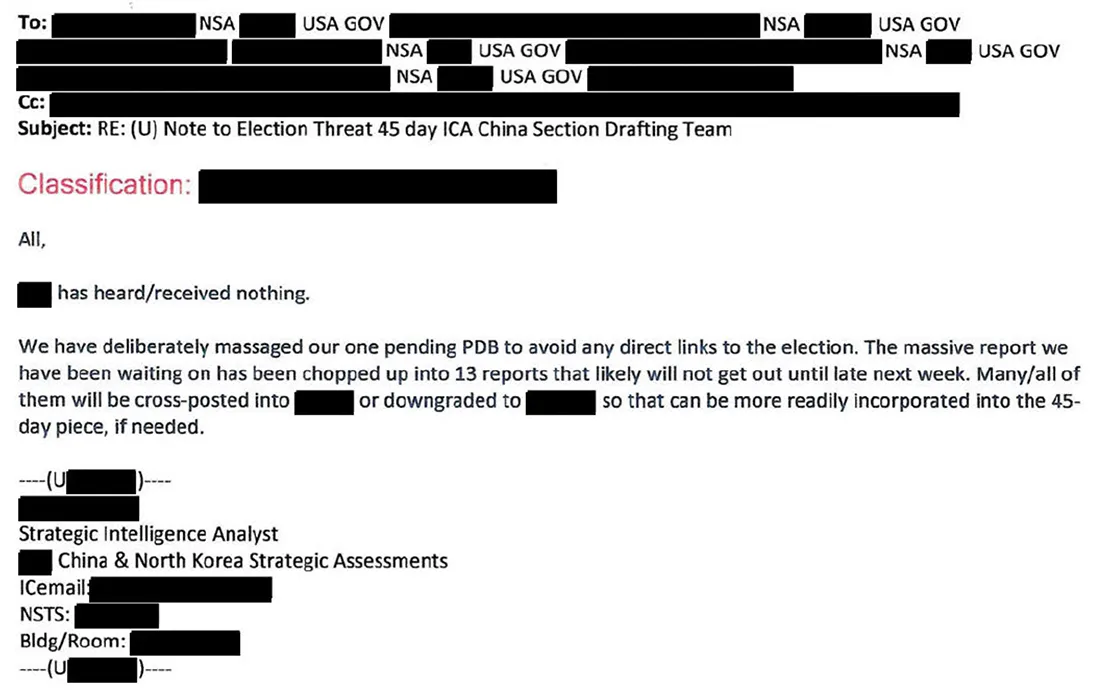
On July 16, 2026, the White House released a trove of previously classified intelligence reports and investigative files related to election integrity. These documents expose vulnerabilities in America’s election systems, foreign efforts to gather voter data, voting registration of thousands of non-citizens, and improper handling of that information inside government agencies.
According to the Trump Administration, the documents correct the record and expose lies Americans have been told about the security of the nation’s election infrastructure. The materials, spanning assessments from early 2020 through mid-2026, are now available on the White House election integrity page.
U.S. spy agencies have long judged that major adversaries— Russia, China, Iran, North Korea, and others— have the tools to break into election infrastructure. The newly released documents confirm that centralized databases holding voter rolls, poll books, and election websites stand out as especially weak points. One newly declassified report explicitly warns that adversaries have the means to disrupt or manipulate U.S. elections.

During the 2020 cycle, Chinese actors obtained personal information on roughly 220 million American voters, including names, addresses, phone numbers, and even political preferences. Intelligence reports call it the largest known compromise of election data in history. The breach touched at least 18 states, and China reportedly created a special unit to exploit the haul.
Some left-wing media critics argue that some of this data was already available publicly in certain states and that the breach did not change any election results. The White House counters that the sheer scale matters and that full details were not shared openly or briefed comprehensively to top leaders and Congress at the time. The point is not whether a previous election was manipulated or compromised; the point is whether the nation’s current infrastructure can effectively stop foreign election interferences in a future election. The documents suggest that the current election infrastructure has real, serious vulnerabilities that leave American elections exposed to foreign cyberattacks and espionage.
After left-wing media outlets decried President Trump’s announcement and expressed skepticism regarding the impact of the newly released documents, the White House published a release tackling the objections head-on.
Critics say, “There’s nothing new here.” The White House responds by pointing to internal details that were intentionally hidden: analysts adjusting the President’s Daily Brief to downplay certain election threats, and parallel processes inside agencies that kept key information from reaching the president. Key information never reached leaders or the public until now.
Other critics point out that the files do not prove foreign actors changed 2020 vote totals, which is true. The White House counters by saying that the argument misses the point. The point is “foreign adversaries have both the intent and capability to exploit” and “senior intelligence officials deliberately hid this intelligence from the President and the American people.” The newly declassified documents reveal why the system needs urgent reform regardless of past outcomes.
Although some critics try to claim the number of non-citizen voters is statistically insignificant, a Homeland Security report found about 278,000 non-citizens are registered to vote in just four states who cooperated with the Department of Justice’s request for voter information. Real numbers are likely higher because many states did not fully share data.
A specific Michigan case from 2020 underscores the reality of election fraud happening in the country, and agency suppression of election fraud evidence. Michigan State police raided a get-out-the-vote group where workers allegedly forged registrations and submitted fake applications for people who did not exist. The FBI believed crimes occurred, but federal investigators slow-walked the probe for years under the prior administration.
Mail-in voting is a particular weak-point identified by the documents. Bipartisan commissions and academic studies have flagged absentee ballots as one of the highest-risk areas for fraud due to verification challenges. Supporters of expanded mail voting note that most elections run smoothly, yet the referenced research underscores legitimate procedural weaknesses that deserve attention.
The White House also published a list of favorable reactions from political leaders and media.
Vice President JD Vance put it plainly: “Election integrity is not a partisan issue; it is an AMERICAN ISSUE.” He and others urge Congress to pass reforms such as the SAVE America Act, which would require voter ID and proof of citizenship for federal elections.
CIA Director John Ratcliffe and former officials like former National Security Advisor Robert C. O’Brien welcome the transparency, noting earlier warnings about interference had often been downplayed. They see the release of the documents as long-overdue, long-withheld transparency to the American people.