The moment of decision, that pivotal instant caught between “do” or “do not,” is the crucible of human freedom. According to St. Thomas Aquinas, it is not a cold calculation of the intellect alone, but a dramatic interior contest in which reason, will, and the sensitive appetite confront one another. In that instant, the passions—movements of the sensory soul toward or away from perceived goods and evils—rise with particular force. Whether those passions are rightly or poorly disposed determines, in large measure, whether the person chooses the true good or settles for a lesser one.
Aquinas distinguishes two classes of passions. The concupiscible passions concern goods or evils taken simply: love and hatred, desire and aversion, joy and sorrow. The irascible passions concern goods or evils that present difficulty: hope and despair, fear and daring, anger. Both sets are natural to human nature; neither is evil in itself. Rightly disposed—that is, following the judgment of reason and moderated by the virtues—they become powerful allies of the will. A rightly ordered desire for health strengthens the resolve to forgo an immediate pleasure; a rightly ordered hope sustains perseverance through hardship. Poorly disposed, the same passions disorder the soul. An unchecked desire for sweetness blinds the intellect to long-term consequences; an excessive fear of discomfort paralyzes the will before a necessary act of self-denial. The quality of the passions at the moment of choice therefore shapes the very options the intellect presents, and the ease or difficulty with which the will elects among them.

Concupiscence lies at the root of this struggle, since in its broadest sense it is simply the appetite for what is agreeable to the senses. After the Fall, however, concupiscence has become disordered. Original sin left the sensitive appetite no longer perfectly subject to reason. As a result, the concupiscible passions in particular tend to surge toward immediate sensory goods with a vehemence that can cloud judgment. Aquinas is careful here: concupiscence does not destroy freedom. The will remains free, and the intellect retains its capacity to deliberate. Yet the struggle is real and continuous. The human person experiences an interior conflict between the higher inclination of the rational appetite toward the universal good and the lower pull of the sensory appetite toward particular, present pleasures. This is the daily warfare of the Christian life: not a battle between good and evil in the absolute sense, but between a lesser good that is vivid and near and a greater good that is perfect yet more remote.
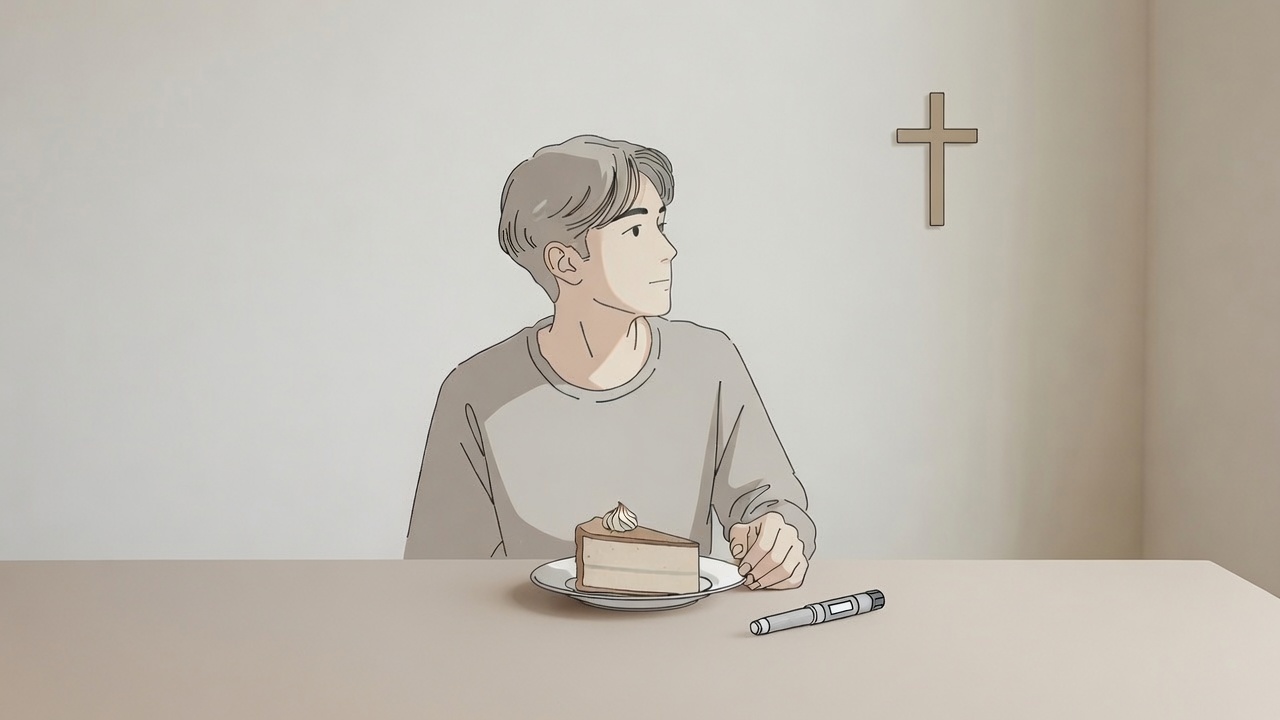
Consider the ordinary yet revealing example of a person trying to lose weight to avoid the necessity of insulin injections. Before him sits a piece of cake. The cake is not evil; it is a genuine good. Its sweetness delights the taste, its texture affords sensory pleasure, and the act of eating it produces a momentary joy. The concupiscible passion of desire is therefore rightly awakened by a true good. At the same time, the greater good of bodily health, the avoidance of chronic disease, and the preservation of long-term freedom from medical dependence stand before the intellect as more excellent still. Both objects are goods; the conflict is not between good and evil but between two goods ranked hierarchically. The cake is good in the order of immediate sensory delight; health is good in the order of the whole person ordered to his ultimate end.
In this moment the irascible passions may also be evoked. The difficulty of refusing the cake can arouse fear of deprivation or despair of ever achieving self-mastery. Conversely, a rightly disposed hope can fortify the will, and a moderated daring can move the person to confront the hardship of self-denial. The outcome depends on whether the passions are ordered by reason or allowed to dominate it. If the concupiscible desire for the cake is poorly disposed—if it is allowed to magnify the pleasure and minimize the cost—the intellect may temporarily judge the cake the greater good, and the will follows that distorted presentation. If, however, the passions remain subject to reason, the intellect continues to hold the greater good clearly in view, and the will, strengthened by the virtue of temperance, elects the higher object.
Temperance is precisely the virtue that disposes the concupiscible appetite rightly. It does not extinguish desire; it orders it. The temperate person still feels the pull of the cake, yet that pull no longer tyrannizes his judgment. Interior control, then, is not the suppression of passion but its education. Through repeated acts of choosing the greater good, the passions themselves are gradually reformed. What once required intense effort becomes, over time, almost connatural. The struggle does not disappear—Aquinas never promises a life free of interior conflict this side of heaven—but it grows less violent and more readily resolved in favor of reason.
Yet even the virtuous person does not rely on natural powers alone. Aquinas insists that the full healing of concupiscence and the perfect ordering of the passions require the grace of Christ. The theological virtues of faith, hope, and charity elevate the will beyond the natural hierarchy of goods and orient it to the ultimate Good, who is God Himself. In the light of that final end, the cake and even bodily health take their proper places. The struggle at the moment of decision is thereby transformed from a mere contest of self-control into an act of love: the free preference of the Beloved over every lesser satisfaction.
Thus the drama of human choice, as Aquinas presents it, is neither tragic determinism nor effortless autonomy. It is the free yet embattled exercise of a will that stands between the pull of disordered concupiscence and the call of the greater good. When the passions are rightly disposed, they serve reason; when poorly disposed, they obscure it. Between the two goods of sensory pleasure and integral health, only one is higher, and the capacity to recognize and choose it is the measure of interior freedom.
In the decisive words of Joshua 24:15—”As for me and my house, we will serve the Lord”—we encounter not merely a private vow but a deliberate, public act of the will that subordinates every lesser allegiance to the one true God. This declaration reaches its true fulfillment when the choice itself becomes habitual and joyful: a well-disposed passion that orders the affections, so that the heart spontaneously and steadily prefers the greater good of God above all competing goods. Cultivated within the household, such a rightly ordered desire transforms service from external duty into the free, loving orientation of the entire person and family toward the supreme Good who alone is worthy of undivided devotion.