By Jason Dutch
As the Alaska Legislature convenes for its third special session of 2026, the mood in Juneau is a mix of exhaustion and predictability. We are watching a multi-billion-dollar energy-security lifeline get strangled by the same old political paralysis. On one side, the administration and private developers warn that forcing a traditional, front-loaded property tax structure makes our $44 billion-plus gasline project unfinanceable to outside capital. On the other, local corridor boroughs are rightfully afraid that a 30-year deferred volumetric tax model leaves them subsidizing the infrastructure strain for decades with no immediate relief.
Add a session-killing fight over extending the state’s 9.4% corporate income tax to private “pass-through” oil and gas companies, and the result is a 19-19 House tie that helps absolutely nobody. Meanwhile, Southcentral utility leaders are warning that Cook Inlet is running dry — raising the specter of supply shortfalls and expensive foreign LNG imports for Alaska families.

We are told we must choose between the financial survival of our host communities and the economic viability of the pipeline. That is a false choice. The deadlock isn’t happening because the problem is unsolvable; it’s happening because leadership keeps forcing a vote on a fundamentally broken framework.
There is a clean, conservative path out of this corner: Bill 5, the Generating Revenue and Public Works Act.
Instead of asking local boroughs to wait decades for state-managed grants or downstream backfills that may never materialize, Bill 5 bypasses the state general fund entirely through a direct-invoice mechanism. The corridor operator is legally permitted to satisfy up to 15% of its defined state tax obligations by paying certified local public-works invoices directly to the host boroughs. The other 85% of the state’s stream flows to the treasury exactly as scheduled. And the mechanism only switches on when a host borough votes to turn it on — putting in a matching share of the new local revenue the project itself creates. The community isn’t a subsidizer; it’s an invested partner getting its share built up front.
The beauty of the framework is the timeline. The money lands in host communities the exact year the construction workers arrive — not five to ten years later, after the local roads are already destroyed and municipal debt has spiked. And the developer doesn’t pocket a dime of it: it fronts the cost from its own cash and recovers only what it laid out, at par and interest-free — a bankable, legally defined offset that international lenders can finance against, not a windfall. The state avoids massive execution risk, and the corporate pass-through tax fight becomes irrelevant to the pipeline’s progress.
This isn’t an untested academic theory. It’s a proven Alaska model. Teck’s Red Dog Mine has run a Payment in Lieu of Taxes structure with the Northwest Arctic Borough for nearly forty years — proof that resource development and stable municipal funding can coexist when you cut out the middleman in Juneau.
My companion Multiplier Thesis shows the economic power of front-loading local public works. Build the infrastructure alongside the industrial impact instead of lagging behind it, and you capture an estimated 1.5x economic multiplier within two to five years. That local capital compounds immediately — crowding in private investment, creating jobs for domestic support industries, and expanding the municipal tax base right away.
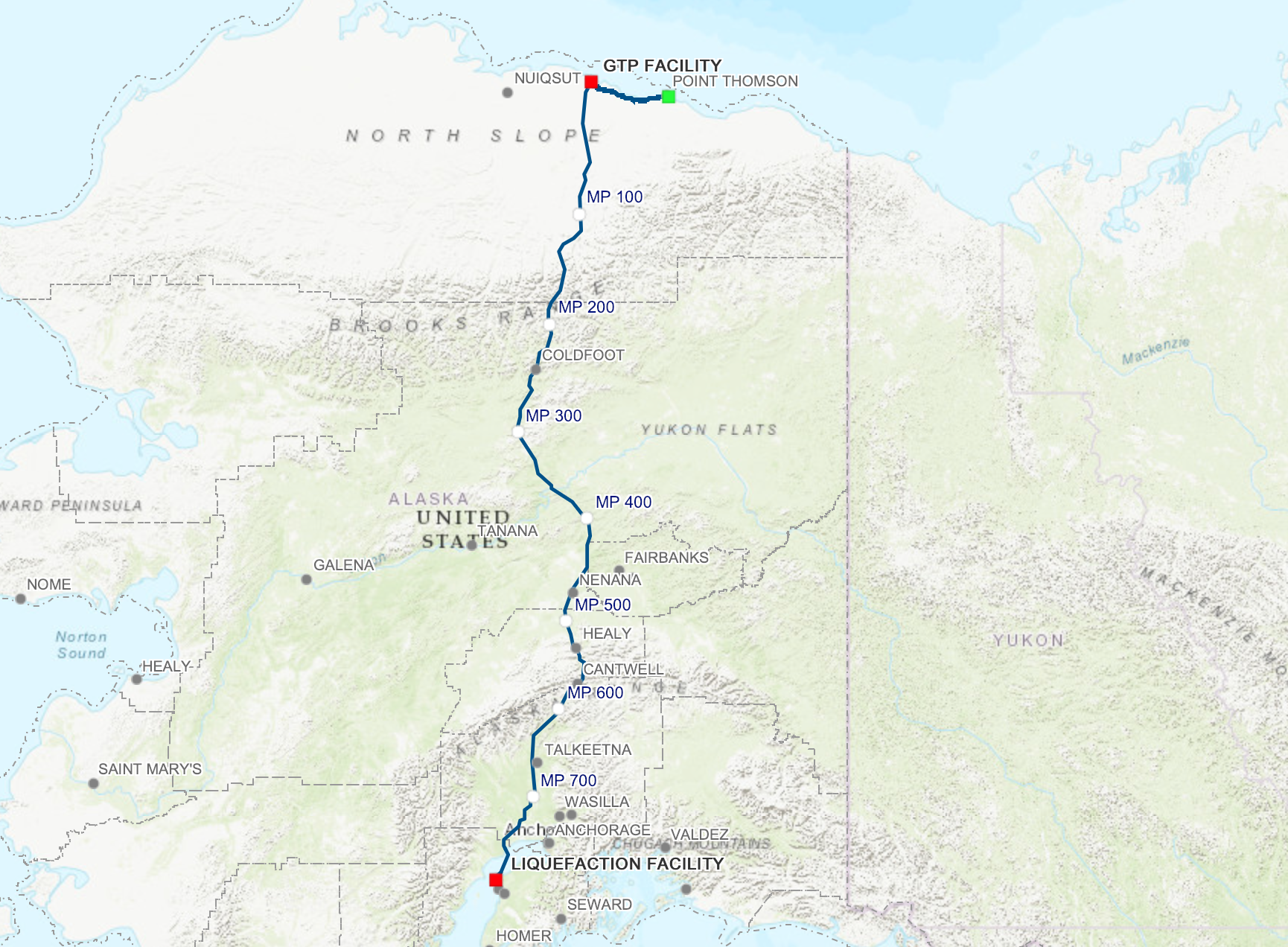
Alaska cannot afford another 30 days of lawmakers trading talking points while our energy security hangs in the balance. The six host boroughs along the route — from the North Slope to the Kenai — could pull forward $1.8 billion to $3.6 billion in immediate local infrastructure, with zero exposure to the state general fund or to borough budgets.
The fully drafted bills, constitutional defense memos, and economic multiplier math are finalized, updated, and hosted openly at AKLegacyPackage.com.
It’s time for Governor Dunleavy and legislative leadership to stop chasing a compromise on a deadlocked bill and pivot to a new vehicle. Bill 5 protects the communities, secures the developer, and builds the line. Let’s pass it and get to work.
Jason Dutch is an independent Wasilla resident and the author of the Alaska Legacy Package.