A tax bill by House Rep. Adam Wool that would kill the business of person-to-person vehicle rentals in Alaska passed the House on Wednesday, but its transfer to the Senate was delayed for a move to reconsider. The tax proposal comes at time when lawmakers are also considering a tax holiday for motor fuels, and giving Alaskans $1,300 or more to help them with their bills during a time of high gas prices and out-of-control inflation.
With the proposed Wool car rental tax, Turo and other companies that provide digital platforms allowing people to rent out their personal vehicles would get taxed. If an Alaskan wanted to rent a pickup truck from a friend to haul firewood or hay, the state would take between 8-10 percent on the transaction.
Wool says his new tax will help the state capture millions of dollars in what he calls lost revenue.
House Bill 90 mandates that private vehicle rental networks are treated as traditional car rental companies.
“As technology rapidly changes to meet consumer needs, the state has to be equally as nimble to catch up with an evolving industry,” said Rep. Adam Wool, a Fairbanks Democrat. “There are millions in lost revenue being left on the table, and by updating our statutes, we can ensure these new businesses pay their fair share, instead of the hardworking Alaskans looking to rent out their spare vehicles.”
But saying it is not a new tax does not make it a not a new tax. The people who rent the vehicles are the ones who will end up paying the tax, and the vast majority of person-to-person rentals in Alaska are to Alaskans, rather than visitors.
The assumption also is that the State Department of Revenue will try to collect back taxes from 2009 forward from everyone who has ever rented cars through a car-sharing app in Alaska.
Enterprise Rent a Car is pushing for this legislation.
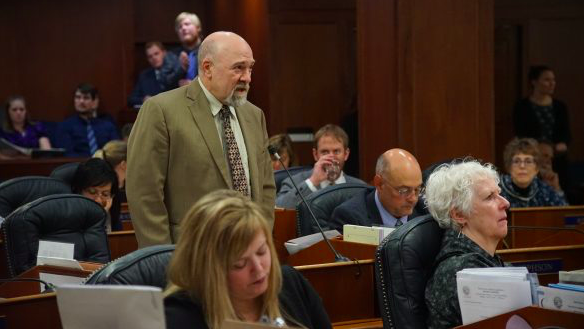
Wool, whose aide is former Revenue Commissioner Ken Alper, didn’t have the votes at first glance on Wednesday, and the bill was headed back to Rules. At the last minute, Wool and his tax-promoting aide Alper were able to make some deals to get the votes. However, after the bill passed, Rep. Kevin McCabe called for reconsideration, delaying the matter.