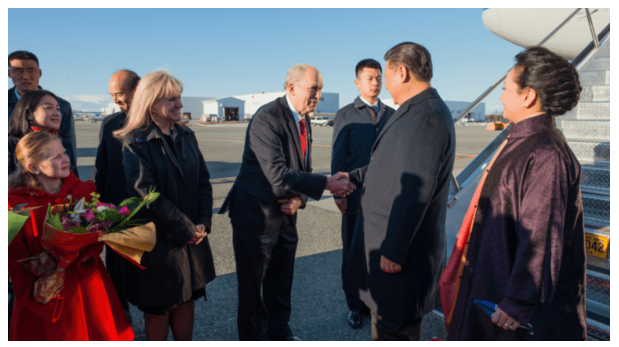
HE WANTS GASLINE TO GO TO VALDEZ, NO PALMER SPUR
Former Gov. Bill Walker is once again milking cash from the City of Valdez to bend the Alaska Gasline project away from the Kenai Peninsula and east to Valdez, his hometown and one of his largest legal clients.
He is the city attorney for Valdez, as he was prior to becoming governor. He was also mayor there briefly as a young man, although he left halfway through his term of office.
Walker’s argument to the federal regulatory group in charge of the environmental impact statement is that Anchorage, MatSu, and Kenai residents and businesses don’t need natural gas, so there’s no point in routing the gasline to tidewater at Nikiski.
The 800-mile yet-to-be Alaska Gasline has been a dream of Walker’s for his entire adult life, although most experts say it’s just not penciling out. The netback profit for the gas producers in today’s market would likely be a negative number, considering the world is awash in natural gas.
But there’s money to be made in pipeline consulting, and Valdez has wanted the terminus for the gasline for decades. Walker fought for it when he was the Valdez city attorney before he became governor, and like Groundhog Day, he’s city attorney again and wants to change the gasline route.
Valdez is rich enough as a community to be able to afford Walker’s billable hours: The municipality has its own permanent fund with more than $205 million that generates $3 million a year, and Valdez gets more than $38 million in oil and gas property tax.
Brena, Bell, and Walker, the law firm where the former governor rejoined after leaving office, makes over $1.65 million a year to fight the Nikiski alternative for the gasline, and to handle other legal matters for the city. That’s nearly as much as the city pays for its solid waste services for this city of 3,860 people. It’s over half of what the City of Valdez earns from its Permanent Fund.
(As an aside, Robin Brena is the author of the new oil tax ballot initiative, which is in the signature-collection stage. Brena has been trying to boost oil taxes for years and was the lead adviser for the Walker Administration’s transition team group on oil taxes.)
On behalf of Valdez, Walker this month filed an objection to the Federal Energy Regulatory Commission concerning the draft environmental impact statement on the gasline’s current proposed route to Nikiski.
Walker told FERC that Anchorage doesn’t need natural gas, therefore the argument that a natural gasline should come through Southcentral Alaska to Nikiski is irrelevant. Further, he argues that the purpose of the project never was to supply gas to Southcentral.
“No where in the statement of purpose for the Alaska LNG Project does delivery of natural gas to the greater Anchorage area appear,” Walker wrote.
That, of course, is not true. The stated purpose of the proposed gasline is clear in multiple documents over the years, such as this from the very draft environmental impact statement that he is criticizing:
“The purpose the Project is to commercialize the natural gas resources of Alaska’s North Slope by converting the existing natural gas supply to liquefied natural gas for export and providing gas for users within the state of Alaska.”
Who would main gas users be in the vast and largely unpopulated state of Alaska? Those folks living along the Railbelt, where more than half of the people live, and where more than half of commerce takes place.
Walker may have selective amnesia, for it was in his own administration that commissioned a 2018 report on Cook Inlet natural gas availability and reported that the Anchorage area could count on gas from the inlet until about 2030.
That’s 10 years.
[Read the Walker Administration report on Cook Inlet natural gas supply]
Upon leaving office, Walker wrote an op-ed in the Anchorage Daily News, encouraging the work to continue on the gasline to Nikiski:
“When the gas begins to flow, communities along the pipeline will immediately see a drop in energy prices – as much as a 75-percent reduction in the Interior. Twenty percent of the state’s available royalty revenue from gas sales will go to fund energy projects for communities without direct access to the gas, significantly reducing the cost of energy across the entire state. Low-cost energy would enable us to finally make value-added products, instead of just shipping out raw materials for manufacturing somewhere else. As a result of lower-cost energy, the Perryman Group forecasts 61,000 additional jobs in sectors such as the mining industry,” Walker wrote.
But Walker’s current client allows him to continue his war on the Kenai, and as a good city attorney he will say what benefits his client in the official filing with FERC.
Other comments were made about the draft environmental impact statement — some came from Native Corporations, others from environmental groups. All comments were due by Oct. 3.
None of the others made the bizarre claim that Southcentral Alaska in general and Anchorage in particular don’t need natural gas.
While he was governor, Walker told the public he had no intention to try to reroute the gasline, which the major gas suppliers (BP, Exxon, ConocoPhillips), the Alaska Gasline Development Corporation, and the federal commission itself said was best routed to Nikiski for export to Asia.
But now Walker is not a governor with the political realities hemming him in. It’s back to billing Valdez and trying to reroute the project.
A thorough description of the Walker/Brena filing is summarized at Petroleum News, and is not behind a paywall.
FERC’s final environmental impact statement for the project is due in March of 2020. But meanwhile, the Alaska Gasline Development Corporation has laid off much of its staff and did not renew the nonbinding joint development agreements it had with China. Whatever project goes forward, it will not be the one developed under Walker and former AGDC President Keith Meyers
The Dunleavy Administration has signaled it’s not comfortable with the State of Alaska taking all the risk with the project as the lead developer, as envisioned by the Walker Administration.