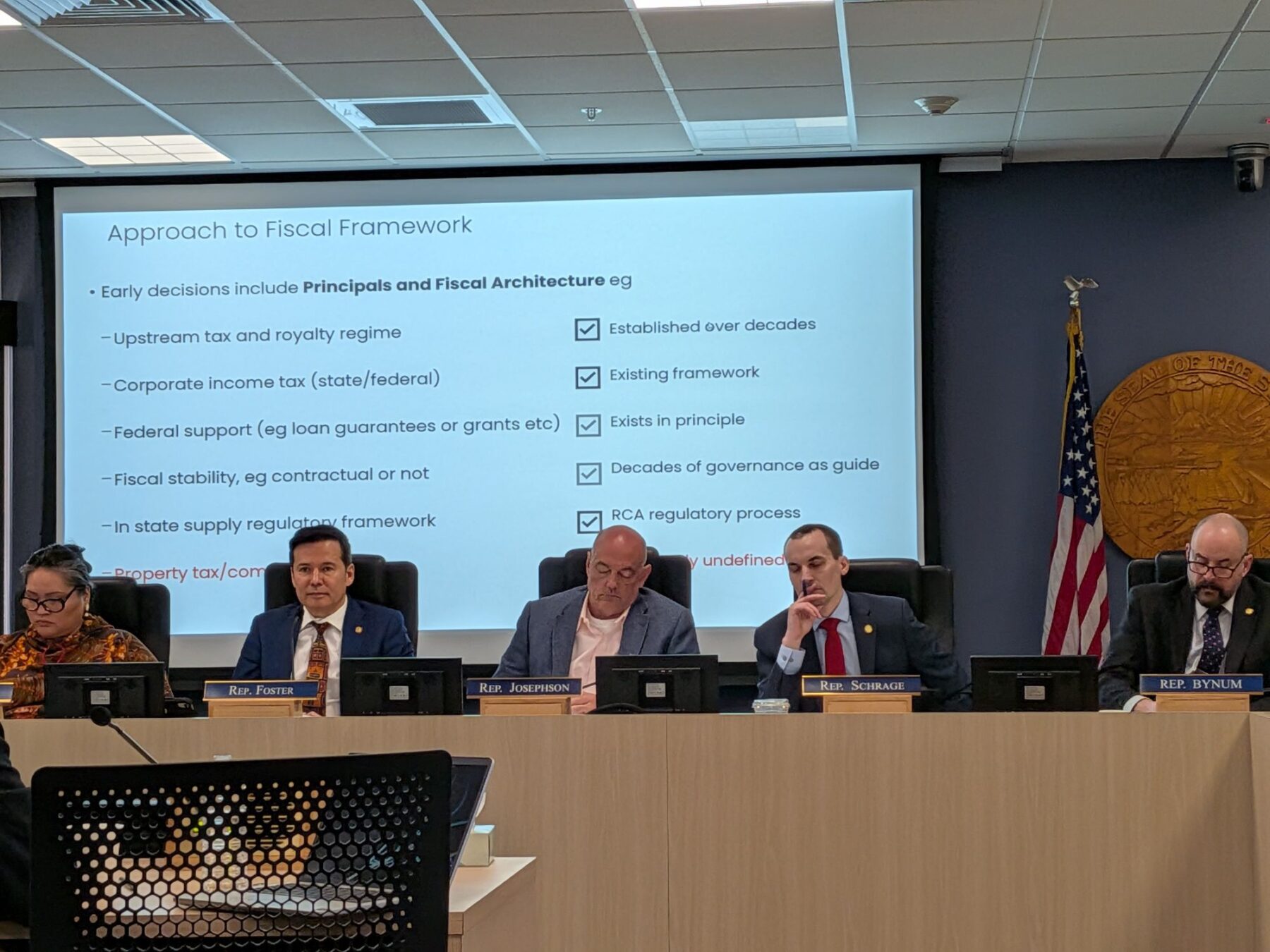
The House Finance Committee met May 26, 2026, to discuss HB 381 version T, a bill to restructure tax burdens for the Alaska LNG project.
Senior Director of GaffneyCline Nicholas Fulford presented economic models and argued for a property tax abatement of at least ten years. Fulford has worked in the industry for 40 years and has worked on multiple LNG projects worldwide. Fulford emphasized the critical need for tax burden reduction during the first ten years for the project to appeal to investors. “The first 10 years is far more important than what you do after those ten years,” stated Fulford.
When Representative Alyse Galvin (NA-Anchorage) questioned Fulford on the necessity of the 10 year abatement, Fulford replied, “The project will need 6-8 years to catch its breath” after major upfront costs.
Rep. Galvin stated the Legislature is trying to balance two priorities: affordable gas for Alaskans and increased State revenue. Fulford replied that other countries with LNG exports have negotiated domestic reservations where a certain amount of gas is set aside for domestic use and a set price (for example, $5) is agreed upon. The low cost of the domestic reservation would need to be subsidized.
After discussing several economic models with the Committee, Fulford concluded, “What is clear to me is that the project can be economic.” Fulford stated that the press often paints the project as economically unviable, which is misleading. The modeling is based on assumptions about the price of gas, the cost of the project, and the State’s tax structure. With the right tax structure, the project is economically viable.
“You need to think of the generational value for your kids and grandkids,” stated Fulford.
Rep. Galvin asked what the Legislature needs to do to get federal loans on board for the project. Fulford replied that there has been positive messaging from the federal government regarding the project. The number one thing he recommends the Legislature do is “put through a more appropriate tax structure,” especially regarding property tax. According to Fulford, removing the property tax issue is key to moving the project forward.