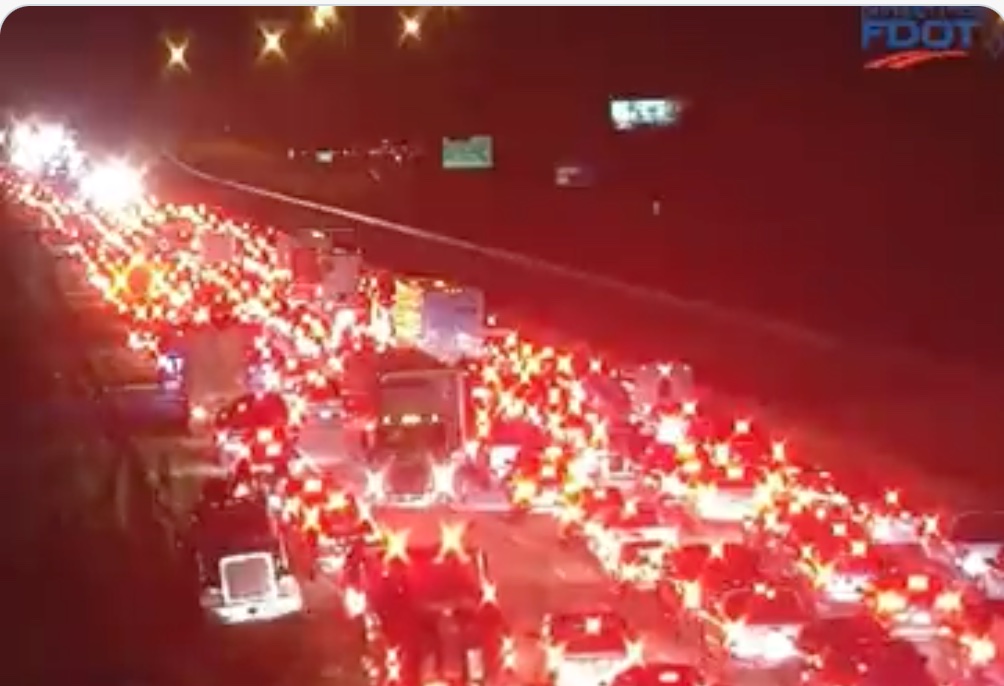
Evacuating hundreds of thousands of people from an impending disaster, as occurred in South Florida during Hurricane Ian this week, is hard enough with limited evacuation routes. There’s but one road out of Key West, and it takes hours to leave the Keys and get to the mainland. The challenge becomes daunting for those who own electric cars in places like Key West, Fort Myers, Port Charlotte, and Coral Gables, Florida.
The typical range for an electric car is just 200 miles. That would get a driver from Key West as far as Fort Lauderdale or from Fort Myers to Orlando. That is, if the driver isn’t stuck idling in traffic.
Florida, home to over 21.2 million people, doesn’t yet have enough charging stations to make it practical or for a majority of its people to evacuate in electric vehicles. The problem is compounded by power outages, such as the one that took power down for 2.6 million customers during the storm; days later, the power is still out for over one million Floridians.

“The 2020 Battery Electric Vehicle lineup features all-electric ranges between 123 and 402 miles, many older models have ranges under 100, which is not as practical for long distance highway travel,” a State of Florida report noted in 2020. “Despite the travel range increases, adequate infrastructure is still an issue, especially for those with EVs that have shorter travel ranges; a problem that seriously complicates planning for an evacuation.”
The problem is illustrated by the fact that there are only three public charging stations in Cape Coral, Fla., which was under evacuation orders for Hurricane Ian, and which is home to over 200,000 Floridians. Florida has fewer than 5,700 charging stations for its electric vehicles, which total over 200,000 this year, a number that increased 56% from July 2021.
“With the threat of a hurricane, EV drivers cannot spare much time to stop and charge their vehicles. Level 1 and 2 charging stations, which take hours to fully charge an EV’s battery, are not adequate for evacuation travel. Alternatively, DCFC stations can charge many batteries to 80 percent capacity in a half hour or less. EV charging lengths vary depending on the model and charger type, but even the quickest chargers take over three times the amount of time it takes to fuel a gasoline vehicle,” according to the 2020 report from the Florida Department of Agriculture and Consumer Services, linked below.
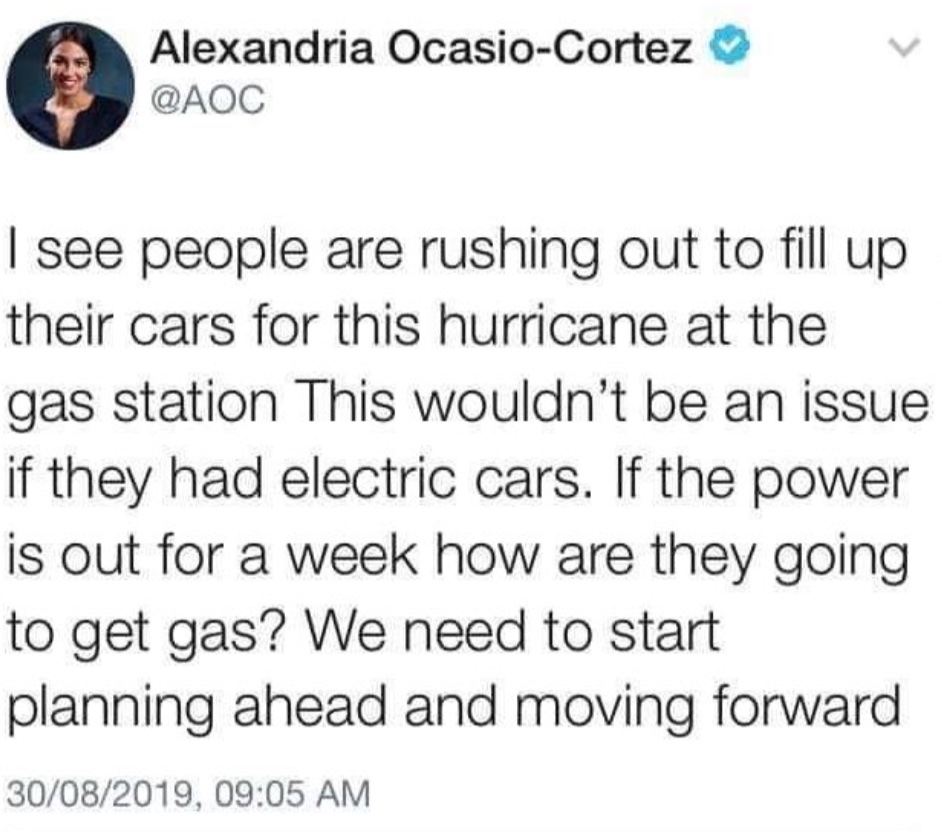
To be clear, even if someone is driving a gas-powered vehicle, he may have limited range if caught in a traffic jam, and if the power is out, drivers might not be able to find a gas station that has working pumps and electronic payment systems. But typically, a small SUV can go for about 480 miles on a tank of gas, more than double the range of an electric vehicle.
The short ranges that electric cars have in Alaska is even more of a challenge, because of long distances, remote areas, and the fact that cold weather affects battery life. There are few charging stations available across the state. Anchorage has 64 charging stations, including two DC fast chargers, while Juneau has 23 charging stations.
The distance from Kenai to Anchorage is 158 miles, which means drivers need to leave the peninsula fully charged, just in case they get stuck in a traffic snarl, as often happens along the Seward Highway.
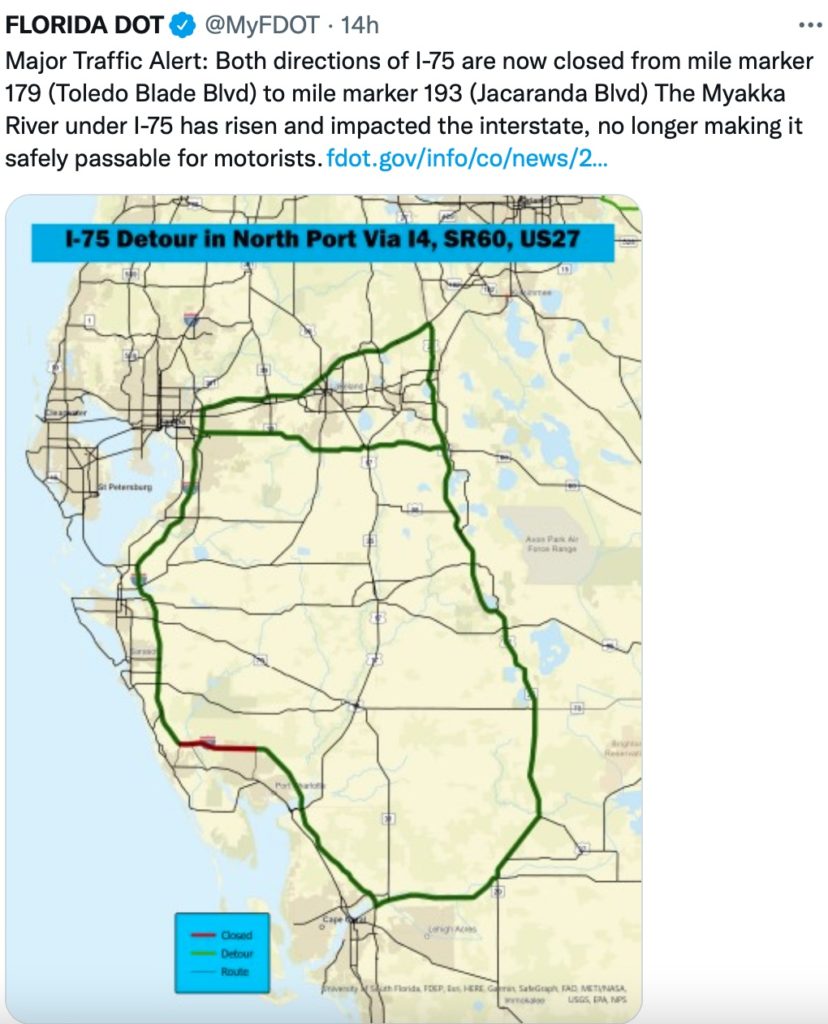
But while cold weather is one challenge, even in hot weather the range for batteries can be taxed because of the need to turn up the air conditioning in a vehicle that is idling in congested traffic, such as occurs during mass evacuations. For Floridians on Friday, the main north-south corridor of I-75 was suddenly shut down in both directions because of rising water from the Myakka River, which runs under an interstate bridge. People were stuck in their vehicles for several hours.
Click on this link to access the Florida report on the conversion to electric vehicles.