
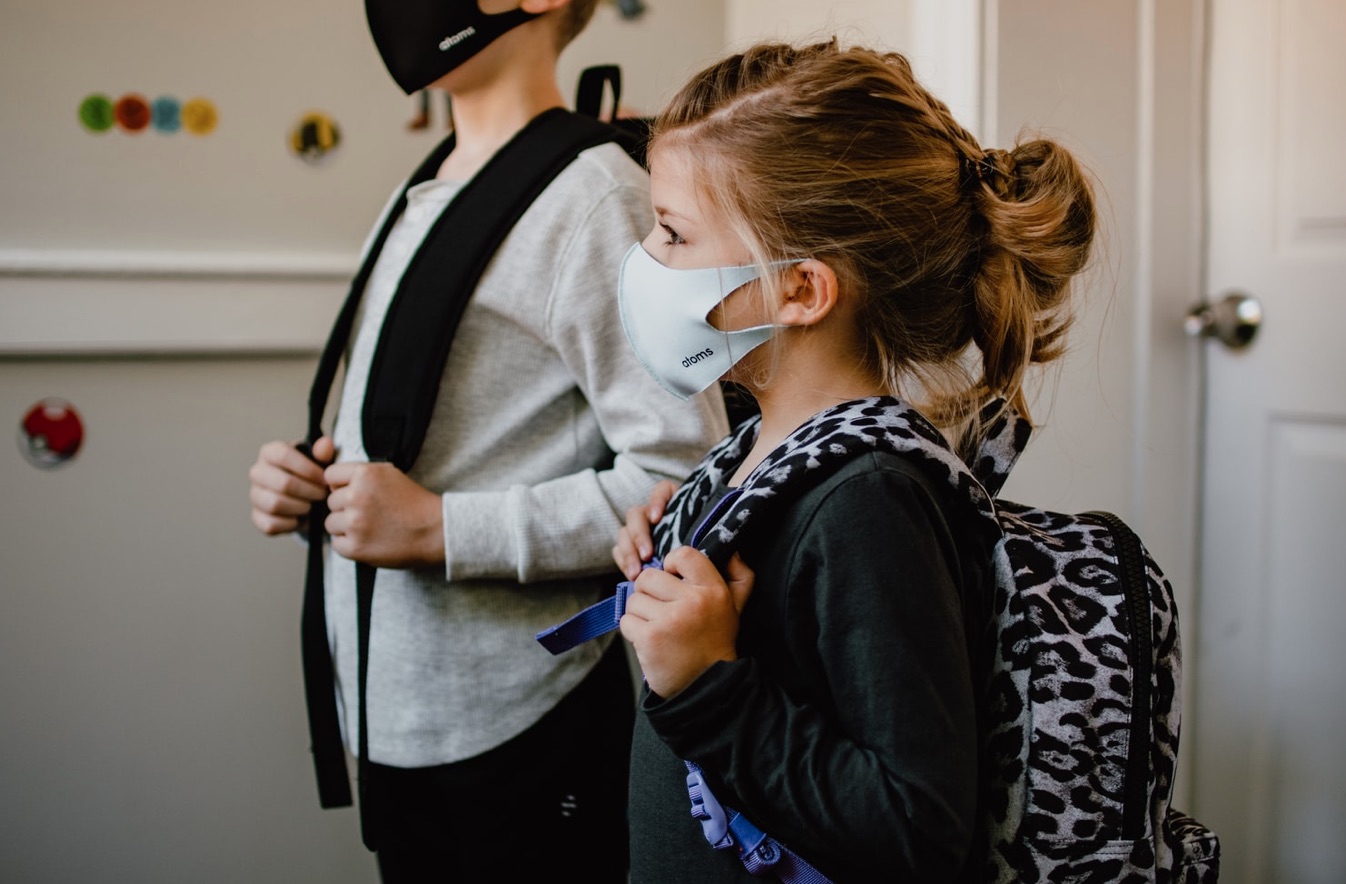
Anchorage School Board President Margo Bellamy should take note: Masking of children in school may not do much to prevent an aggressive coronavirus like Covid-19 from spreading, and it may lead to suicide and poor educational outcomes. But one thing a universal mask mandate can do is reduce effects of racism in schools, according to leading researchers.
The New England Journal of Medicine has published a study laced with speculation and opinion in which the authors say universal masking policies in schools work, if ever so slightly, to contain the spread of Covid. At least that was what their 15-week study showed. Lifting mask mandates in schools led to an increase of 45 cases of Covid per 1,000 persons.
But wait, there’s more: “We believe that universal masking may be especially useful for mitigating effects of structural racism in schools, including potential deepening of educational inequities,” the researchers with doctorates said in the study summary.
“Districts that chose to sustain masking requirements longer tended to have school buildings that were older and in worse condition and to have more students per classroom than districts that chose to lift masking requirements earlier. In addition, these districts had higher percentages of low-income students, students with disabilities, and students who were English-language learners, as well as higher percentages of Black and Latinx students and staff. Our results support universal masking as an important strategy for reducing Covid-19 incidence in schools and loss of in-person school days. As such, we believe that universal masking may be especially useful for mitigating effects of structural racism in schools, including potential deepening of educational inequities,” the authors wrote.
“Among school districts in the greater Boston area, the lifting of masking requirements was associated with an additional 44.9 Covid-19 cases per 1000 students and staff during the 15 weeks after the statewide masking policy was rescinded,” they continued. They wrote about historic oppression, structural racism, and settler colonialism, and that “Black, Latinx, and Indigenous children and adolescents are more likely to have had severe Covid-19, to have had a parent or caregiver die from Covid-19, and to be affected by worsening mental health and by educational disruptions than their White counterparts.”
The authors concluded that Covid-19 has helped lead to policies that will combat “structural racism codified in state-sanctioned historical and contemporary policies and practices (e.g., redlining, exclusionary zoning, disinvestment, and gentrification) eroded tax bases in some school districts and shaped the quality of public school infrastructure and associated environmental hazards. These processes left school districts differentially equipped to respond to the Covid-19 pandemic and concentrated high-risk conditions, such as crowded classrooms and poor indoor air quality due to outdated or absent ventilation or filtration systems, in low-income and Black, Latinx, and Indigenous communities.”
The study was published in the Nov. 9 edition of the New England Journal of Medicine, a peer-reviewed publication that is widely cited as a credible and accepted source for medical information that informs government policy.
“Understanding Covid-19 policy decisions requires attention to power and existing historical and sociopolitical contexts. Structural racism and racial capitalism operate through multiple pathways, including higher levels of household crowding and employment in essential industries and lower levels of access to testing, vaccines, and treatment; these structural forces differentially concentrate the risk of both SARS-CoV-2 exposure and severe Covid-19 in low-income and Black, Latinx, and Indigenous communities,” the authors wrote.
The researchers are associated with Harvard and Boston University, as well as the Boston Public Health Commission, New York Public Health Department, and similar agencies: Tori L. Cowger, Ph.D., M.P.H., Eleanor J. Murray, Sc.D., M.P.H., Jaylen Clarke, M.Sc., Mary T. Bassett, M.D., M.P.H., Bisola O. Ojikutu, M.D., M.P.H., Sarimer M. Sánchez, M.D., M.P.H., Natalia Linos, Sc.D., and Kathryn T. Hall, Ph.D., M.P.H.


